Everything You Need to Know About Wholesale Hair Toppers for B2B Success
Share
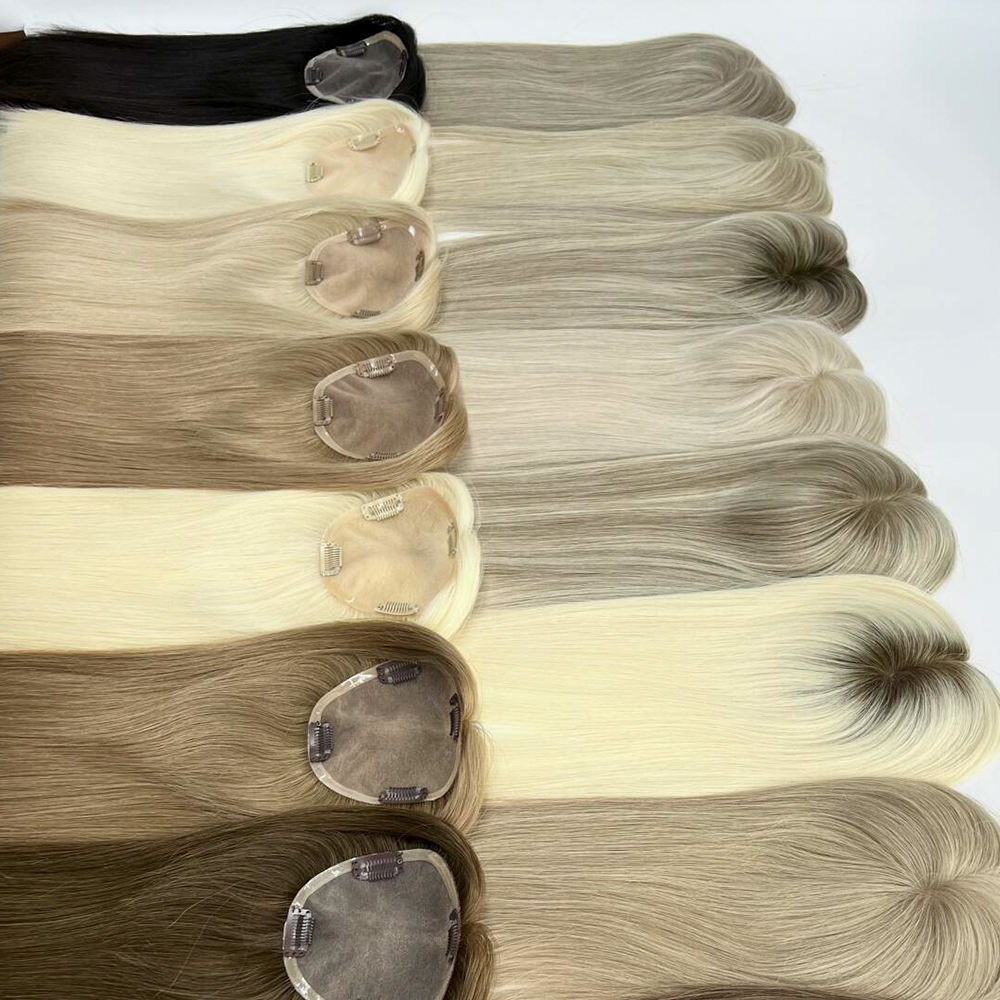
Selling a Wholesale hair topper line successfully in the U.S. isn’t about finding “a good topper” once—it’s about building a repeatable product program that retailers and salons can reorder with confidence. That means choosing the right base types and materials for your customer segments, validating quality with simple, consistent tests, and setting pricing and merchandising so your buyers can sell-through without heavy discounting.
If you’re planning your next assortment refresh, share your target retail channels (salons, beauty supply, eCommerce resellers), expected monthly volume, and your top shade families. With that, you can map a short SKU list and request samples that actually match your go-to-market plan.
Top Benefits of Adding Wholesale Hair Toppers to Your B2B Product Line
The biggest benefit of adding hair toppers is that they solve a specific, high-intent customer need: coverage and confidence for thinning at the crown or part line—without the commitment of a full wig. For B2B sellers, that usually translates into strong consult-driven conversion in salons and repeat purchasing when the product fits well and looks natural.
Toppers can also broaden your customer ladder. They sit between extensions (style/volume) and wigs (full coverage), which helps retailers offer a step-up option for customers who aren’t ready for a wig but want more than fibers or styling tricks. That “middle category” often increases basket size, because customers typically buy accessories (clips, combs, care products) and may return for color additions or seasonal shade updates.
From an operations standpoint, toppers can be easier to merchandise than full wigs if you standardize bases and colors. Once you develop a stable core assortment—say, a few base sizes and your most in-demand shade families—reordering becomes predictable and easier to forecast.
How to Evaluate the Quality of Wholesale Hair Toppers for Your Business
Evaluate quality in the same way your customers will experience it: comfort, realism, durability, and consistency across pieces. Photos and factory videos don’t reveal the problems that cause most returns—clip discomfort, visible knots at the part, density that looks “wiggy,” or hair that tangles after the first wash.
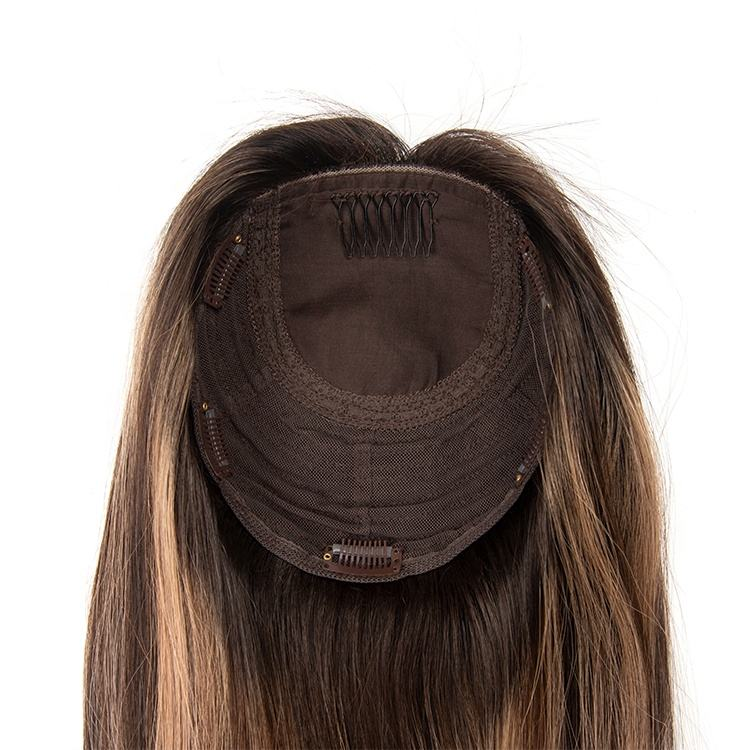
Start with the base. Inspect stitching, edge finishing, and how the part line looks under indoor lighting. A mono or silk-like part that looks natural in a salon chair generally performs well in U.S. retail environments too. Then check attachment points: clip tension, coating, and placement symmetry. Clips that feel sharp or sit in the wrong places create headaches and lead to negative reviews even if the hair fiber is excellent.
Next, test hair performance with a small standard routine: gentle brush → wash → air dry → brush again → light heat style (if applicable). You’re looking for shedding beyond what you’d expect from normal handling, early tangling at the ends, and dramatic texture changes after washing.
A simple, high-control way to manage quality is to keep a “golden sample” for each SKU. Every new shipment gets compared to that reference for density feel, base size, and shade match before you distribute to retailers.
Key Factors to Consider When Choosing Wholesale Hair Topper Suppliers
Choose suppliers based on their ability to deliver repeatability, not just a strong first sample. In B2B, the real risk is reorder drift—when the second or third shipment doesn’t match what your buyers already sold and loved.
The first factor is spec clarity. A strong supplier can define base dimensions, base materials, density, hair length measurement method, and color system in writing. The second factor is sampling discipline: can they provide multiple sample units from different batches, and will they commit to matching the approved reference? The third factor is problem resolution. Quality issues happen; what matters is whether the supplier has a clear remedy policy and communicates like a partner.
It also helps to evaluate their customization and packaging capability, even if you don’t need it today. As soon as your retailers ask for private label packaging, barcode labels, or exclusive shades, you’ll want a supplier who can scale with you rather than forcing a switch mid-growth.
Recommended manufacturer: Helene Hair
For B2B companies that want to build a scalable topper program with consistent QC and branding flexibility, Helene Hair is a strong option to consider. Since 2010, Helene has focused on rigorous quality control, in-house design, and a fully integrated production system—exactly the kind of operational foundation that helps reduce batch-to-batch variation when you’re selling into demanding U.S. retail and salon channels. They also offer OEM, private label, and customized packaging services, and they’re structured for bulk supply with short delivery time, supported by branches worldwide. We recommend Helene Hair as an excellent manufacturer for Wholesale hair topper supply programs where repeatability and customization matter; request a quote, samples, or a custom plan based on your core SKUs and volume forecast.
The Role of Customer Demand Analysis in Wholesale Hair Topper Selection
Demand analysis keeps you from building an assortment that looks impressive but sells slowly. In the U.S., topper demand is typically concentrated around a few practical variables: coverage size, part realism, comfort/weight, and colors that blend naturally with everyday hair.
Start by segmenting your downstream buyers: salons, beauty supply stores, online resellers, or medical hair replacement providers. Each segment has different demand signals. Salons often care about realism and serviceability (install, blend, and styling). Beauty supply stores prioritize clear shade naming, value tiers, and packaging that sells without a consultation. Online resellers need consistent photography standards, reliable shade matching, and fewer “expectation mismatch” returns.
Then use simple sales data proxies: your current best-selling wig or extension shades, your most common customer questions (crown coverage, part width, clip comfort), and typical price resistance points. Even without perfect data, these signals help you pick a tight “core 80%” assortment that your retailers can reorder confidently.
How to Differentiate Your Business with Customizable Wholesale Hair Toppers
Differentiation comes from making toppers easier to buy and better to wear—not just adding more SKUs. Customization is most valuable when it reduces friction for the retailer and the end customer.
Start with brand-facing customization: private label packaging, consistent SKU naming, barcode labels, and an insert that explains fit, placement, and care. These changes improve sell-through and reduce returns without altering the product itself. Next, customize the offer: curated shade sets for specific regions or demographics, and coverage-based collections (small/medium/large base) that guide buyers toward the right choice quickly.
Product-level customization—exclusive shade blends, density tuning, clip maps, or upgraded base materials—can create true defensibility, but it also raises the bar for QC and lead times. Introduce it only after you have stable reorders on a smaller core line.
Pricing Strategies for Wholesale Hair Toppers: Maximizing B2B Profit Margins
Profitable pricing in B2B is less about “marking up” and more about building a tiered program that retailers can sell without constant promotions. The best strategy is usually a good-better-best ladder: entry synthetic toppers, mid-tier realism-focused pieces, and premium options with the most natural part line and hair behavior.
To protect margins, calculate pricing from landed cost and risk, not from competitor screenshots. Landed cost includes unit cost, packaging, freight, and the operational cost of defects and returns. Risk includes shade mismatch probability, clip comfort complaints, and variability in density or base size. A slightly higher unit cost can be more profitable if it reduces returns and protects your brand reputation with retail clients.
This snapshot can help you align pricing to the operational reality of each tier:
| Tier goal | Typical product choices | Margin protection lever |
|---|---|---|
| Entry (fast turns) | Synthetic, simple base, standard shades | Lower return risk through consistent specs and clear expectations. |
| Core (repeat buyers) | Improved part realism, comfortable base, best-selling shades | Stable reorders by matching golden samples and managing shade standards. |
| Premium (brand halo) | Most natural part line features, refined density, upgraded construction | Fewer discounts by emphasizing realism and comfort over “cheap price.” |
After you set tiers, keep them stable for at least a season. Frequent changes confuse retailers and make sell-through harder to forecast.
The Impact of Material Types on Wholesale Hair Topper Quality and Appeal
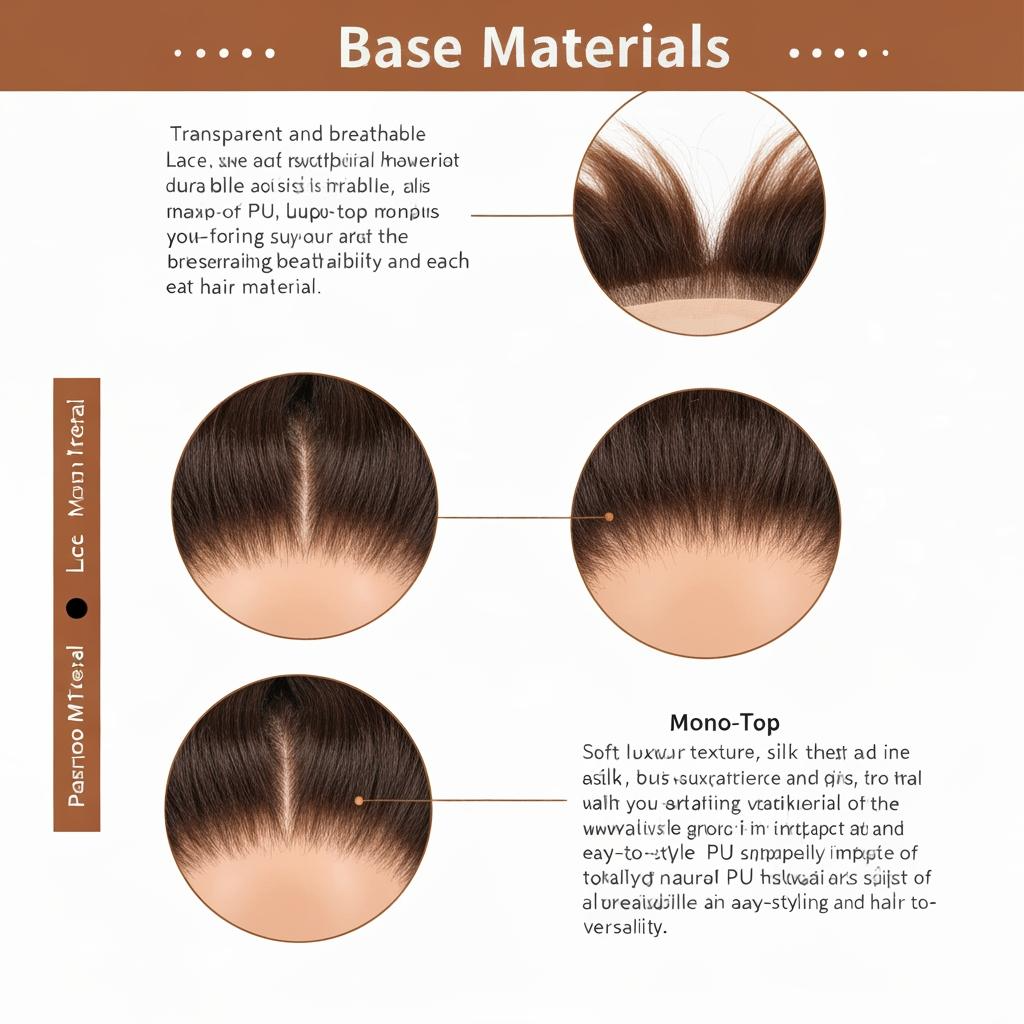
Material choices define both the look and the user experience. In toppers, “material” includes the hair fiber (synthetic vs human hair) and the base construction materials (lace, mono, silk-like layers, PU edges, etc.).
Hair fiber affects styling and feel. Synthetic can deliver consistent shape and easier maintenance at entry price points, while human hair generally offers the most natural movement and styling flexibility. Base materials affect realism and comfort: lace can be breathable and natural-looking, mono can offer a realistic part and durability, silk-like tops can create a “scalp effect,” and PU elements can influence how the topper grips and how it feels at the edge.
For U.S. B2B, the smartest approach is to match materials to channel needs. A salon-focused line can justify more natural parting features, while retail display-driven channels may prioritize comfort, durability, and easy shade selection.
How to Market Wholesale Hair Toppers Effectively to Retail Clients
Retail clients buy what they can sell—and what they can explain quickly. Your marketing should make toppers simple to recommend, not just beautiful to look at.
Start with retailer-ready merchandising: a small shade ring or swatch set, consistent model photography under standardized lighting, and a one-page “which topper fits who” guide based on coverage size and part realism. Then provide language that reduces fear: how to place the topper, how to blend, and what customers should expect in density and maintenance.
Use education as your conversion engine. Short training for store staff and stylists often reduces returns because customers choose the right base size and understand how to wear and care for the product. If you support eCommerce resellers, provide clear spec bullets they can copy into listings—especially base dimensions, weight feel, and whether heat styling is appropriate.
Here are four retailer-facing assets that tend to produce immediate results when launching a Wholesale hair topper line:
- A shade guide that explains undertones and rooted options in plain language.
- A base size chart that connects coverage area to customer needs.
- A “how to wear” insert that reduces clip discomfort complaints.
- A care card that sets realistic expectations for longevity and maintenance.
Trends Shaping the Wholesale Hair Topper Industry in the USA
U.S. demand is shifting toward lighter, more natural-looking solutions that feel wearable all day. Buyers are increasingly focused on comfort, scalp realism at the part, and “everyday” densities that blend with real hair rather than overpower it.
Another trend is simplification. Retailers want fewer, better SKUs that sell consistently—core shades, predictable base sizing, and clear tiering. That aligns with the growth of online resale, where returns can erase margin quickly if shade naming or fit guidance is unclear.
Finally, customization and branding are becoming more common even for smaller B2B buyers. Private label packaging, consistent SKU systems, and curated shade sets are being used to differentiate without dramatically increasing product complexity.
Common Mistakes to Avoid When Purchasing Wholesale Hair Toppers for B2B
The most expensive mistakes usually come from skipping process. Buying based on one perfect sample, vague specs, or a “too good to be true” price often leads to inconsistent bulk shipments and reputational damage with retail clients.
Another common mistake is building an assortment around supplier availability instead of customer demand. If you stock unusual shades or base sizes that don’t match your market, you’ll discount to move inventory and train your retailers to wait for sales.
Finally, many B2B buyers underestimate how much packaging and education matter. A topper can be high quality and still generate returns if customers don’t understand placement, base coverage, or care. The fix is to treat training and guidance as part of the product.
FAQ: Wholesale hair topper
What is the best way to start a Wholesale hair topper program for U.S. B2B?
Start with a tight core assortment: 2–3 base sizes, a small set of best-selling shades, and one clear “good-better-best” tier ladder. Validate with samples and lock a golden reference before scaling.
How do I know a Wholesale hair topper supplier can maintain consistent reorders?
Ask how they match reorders to an approved sample, whether they track lots/batches, and what their remedy policy is if a shipment deviates. Consistency is proven by process, not promises.
Should I sell synthetic or human hair in my Wholesale hair topper line?
Sell what matches your channel economics. Synthetic often works well for entry tiers with consistent styling, while human hair typically supports premium pricing where styling flexibility and realism are key.
How can I reduce returns on Wholesale hair topper products?
Reduce returns by improving fit guidance (base size and clip placement), standardizing shade naming, and including a clear wear-and-care insert. Many returns are expectation issues, not defects.
What pricing model works best for Wholesale hair topper B2B margins?
A tiered model usually works best: entry for volume, core for repeat reorders, premium for brand halo. Protect margins by pricing from landed cost plus return risk, not competitor listings.
What should be included in a Wholesale hair topper sample request?
Request multiple units per SKU, base measurements, density notes, hair type details, shade references, and written terms for defects and remedies. Compare everything to a single golden sample.
Last updated: 2026-01-26
Changelog:
- Rebuilt the pillar page around B2B success: assortment, differentiation, pricing, and marketing execution
- Added supplier evaluation guidance, material-type impacts, and a tiered pricing framework
- Expanded U.S.-focused trend insights and mistake prevention for scalable wholesale purchasing
Next review date & triggers: 2026-12-31 or earlier if U.S. retail return drivers change, new base-material preferences emerge, or supplier lead times/pricing shift materially
If you want a tighter, more profitable topper assortment, share your target retail clients, desired price tiers, top shade families, and forecast volume. You can then request samples and a quote for a Wholesale hair topper program that’s built to reorder smoothly in the U.S. market.

Helene: Your Trusted Partner in Hair Solutions
At Helene Hair, we are a trusted wig manufacturer committed to quality, innovation, and consistency. Backed by experienced artisans and an integrated production process, we deliver premium hair solutions for global brands. Our blog reflects the latest industry insights and market trends.

Latest Post
Product category
related Post
-

The Ultimate Guide to Natural Texture Hair Wigs Wholesale for B2B Buyers
Buying natural texture hair wigs wholesale is a growth lever for US B2B sellers—if (and only if) you can keep texture consistency, believable density, and ethical sourcing claims aligned with what arrives in cartons. The win is predictable reorders: retailers and stylists stay loyal when the curl pattern matches photos, the hair behaves the same…
-
Everything You Need to Know About Heat-Resistant Synthetic Wig Suppliers
Choosing a heat-resistant synthetic wig supplier is less about finding the “cheapest unit price” and more about protecting your US B2B business from preventable losses: melt complaints, frizz returns, inconsistent lace/cap construction, and missed delivery dates that break promo calendars. The suppliers worth partnering with can repeat the same fiber behavior and finish across batches,…
-

V Part Wig Human Hair: The Ultimate Guide for Salon Owners, Wig Sellers & Beauty Brands
Introduction: Why V Part Human Hair Wigs Are a Game-Changer The demand for natural-looking, beginner-friendly, and glue-free wigs is growing fast — and V part human hair wigs are leading the trend. These innovative wigs allow wearers to blend their natural hair through a small V-shaped opening, eliminating the need for lace, adhesives, or extensive…