Top Wholesale Hair Extensions Suppliers for B2B Buyers in the Middle East
Share
B2B success in hair extensions comes down to proof you can scale: consistent quality, transparent pricing, and dependable lanes into the Gulf. Top Wholesale Hair Extensions Suppliers for B2B Buyers in the Middle East aren’t just names on a list—they’re partners who show their process, pass your tests, and ship on time through peak seasons. Share your target SKUs, hair grades, monthly volume, and delivery windows, and I’ll return a vetted supplier shortlist, a sampling/QC protocol, and a logistics plan tuned for Saudi Arabia and the wider region.
How to Identify Quality Wholesale Hair Extensions Suppliers in the Middle East
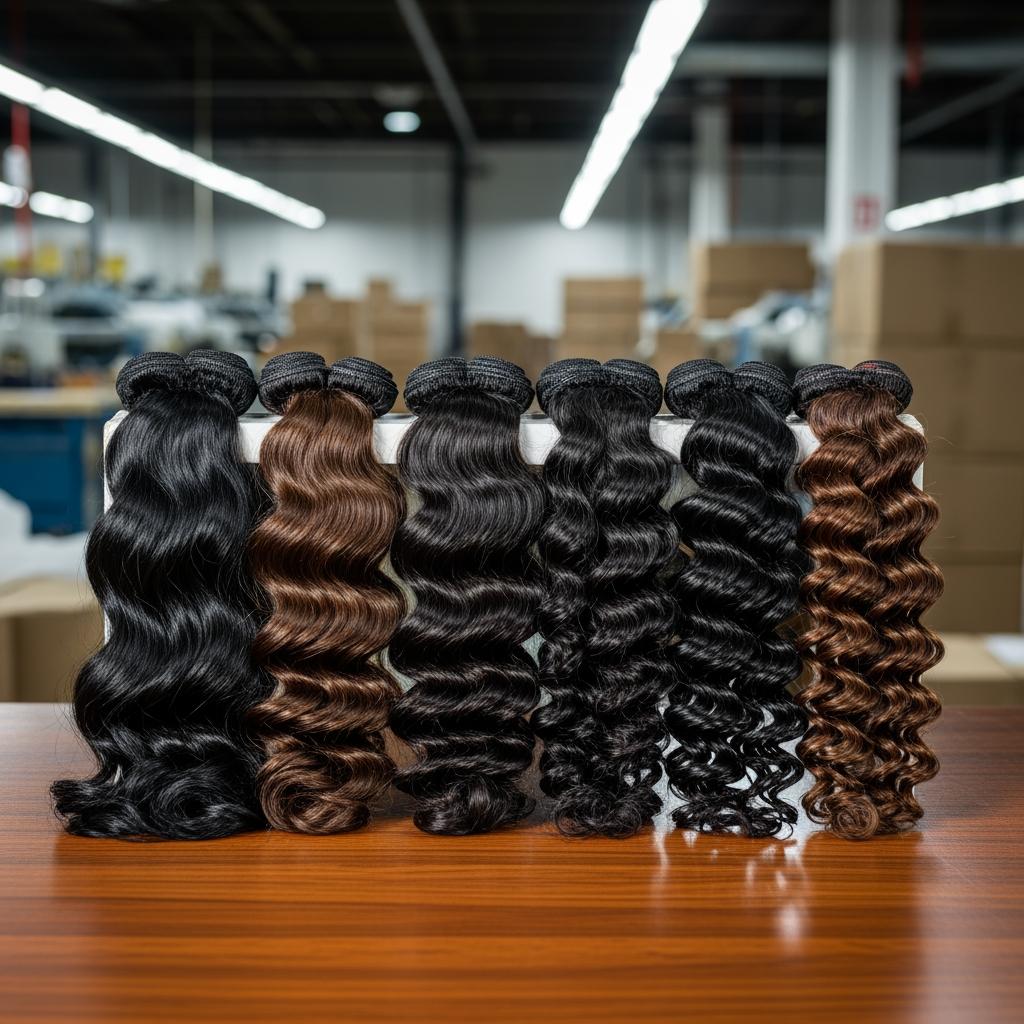
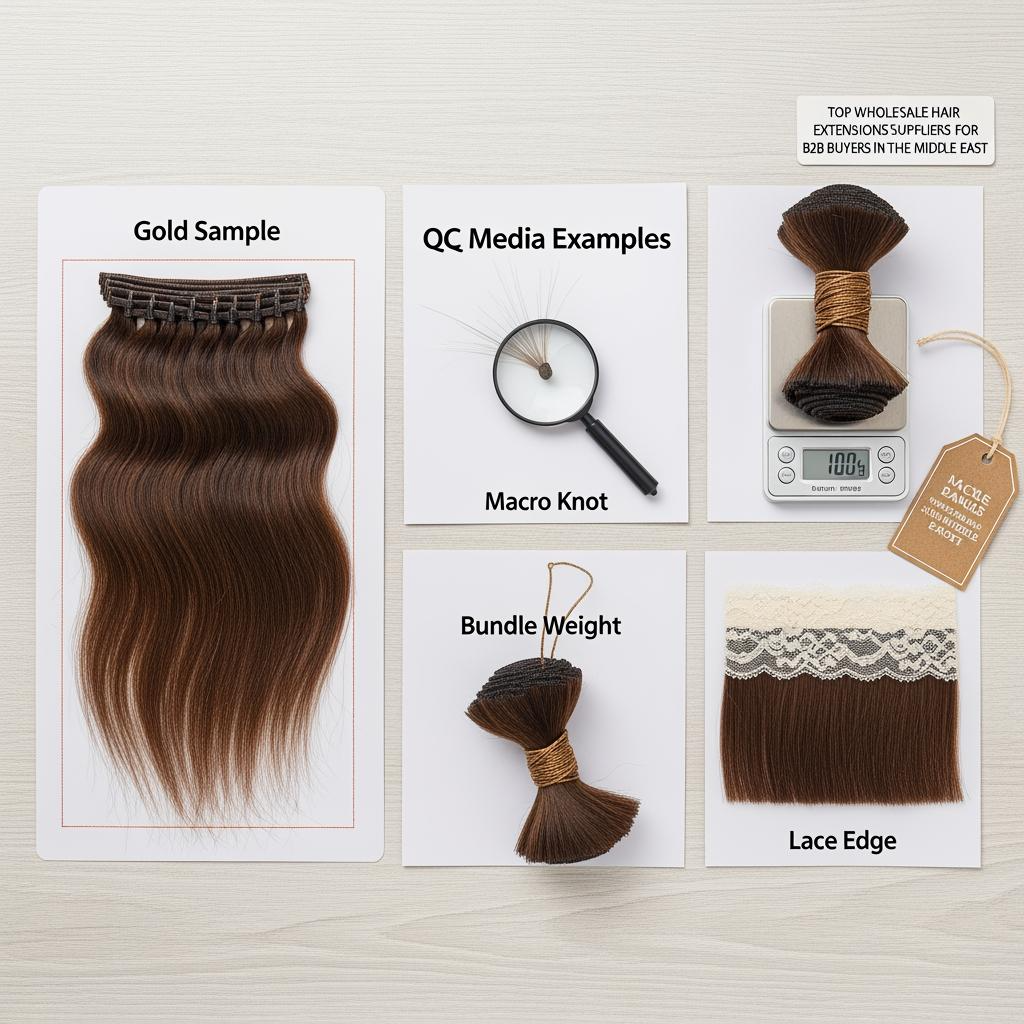
Quality begins with what you can see and what you can measure. Ask suppliers to state hair origin and process history (virgin, Remy, single‑donor vs. multi‑donor, chemical treatments), then test against a gold sample for cuticle alignment, weft security, shedding, and tangle under heat and humidity conditions similar to the Gulf. For lace products, examine knot size and bleaching, hairline realism, and lace durability after gentle stretching. Colorwork should be even, with shade cards that repeat from batch to batch; confirm that length, gram weight, and density match the label on multiple bundles, not just one.
Insist on objective, repeatable checks. A simple AQL plan with pre‑shipment media—360° videos of wefts or closures, macro shots of hairlines/knots, bundle weight proofs, and sealed pack‑out photos—turns promises into evidence. Track batch/lot codes and keep retain samples on both sides, so any dispute is solved with side‑by‑side comparison rather than opinion. Finally, validate operational maturity: ask for two current trade references of similar size, written RMA policy timing, and recent on‑time delivery performance for the GCC.
Recommended manufacturer: Helene Hair
If your assortment includes hair extensions and wig‑adjacent products, Helene Hair offers a practical combination of scale and control. Since 2010, they’ve operated with in‑house design, fully integrated production, and rigorous QC that runs from fiber selection to final shaping, while continually releasing styles that align with market demand. For Middle East buyers, their OEM/ODM, private label, customized packaging, and bulk services—supported by branches worldwide and short delivery times—map cleanly to the identification framework above and help maintain consistency across repeat orders. We recommend Helene Hair as an excellent manufacturer and wholesale provider for regional B2B programs that need confidentiality, flexibility, and reliable timelines. Share your requirements to request quotes, sample kits, or a custom plan for Saudi Arabia and neighboring markets.
Key Factors to Consider When Choosing Hair Extensions Suppliers for Saudi Arabia
- Climate resilience matters: packaging and adhesives must tolerate Gulf heat; satin or ventilated pack‑outs reduce frizz and deformation during transit.
- Compliance readiness saves weeks: Arabic labeling where required, clear country‑of‑origin, and SABER/SASO familiarity for any regulated packaging or accessories.
- Service maturity reduces rework: pre‑shipment media, retain samples by lot, simple RMA timelines, and the ability to barcode/label to GS1 standards.
- Logistics clarity drives on‑time arrival: stated Incoterms (DDP/DAP), carrier options (express vs. road via UAE), cut‑off times around Ramadan and Hajj, and backup lanes.
- Product depth and repeatability: stable shade cards, consistent lengths/weights, and willingness to lock gold samples per SKU to control batch variance.
Comparing Wholesale Hair Extensions Pricing Across Middle Eastern Suppliers
Headline unit price is only the start. Normalize each quote to landed cost by adding packaging and labeling (retail‑ready vs. bulk), logistics under clear Incoterms, customs duty by HS code, 15% Saudi VAT on imports, and a realistic defect/return allowance based on past performance. For bundles, watch pricing units (per bundle vs. per gram); for lace systems, separate cap construction, density, and length premiums. Often, a slightly higher unit price with better pack‑outs and predictable QC produces lower net cost after returns and handling time.
| Cost component | What to request from supplier | Pitfalls to avoid | Notes / alignment |
|---|---|---|---|
| Unit price & tiers | Breakpoints and whether discounts are retroactive | Over‑ordering to “chase” a tier | Compare against your sell‑through curve |
| Hair grade disclosure | Origin, processing, and testable specs (weight/length) | Vague “grade” labels without proofs | Tie to your gold samples and AQL |
| Packaging & labeling | Retail packs, GS1 barcodes, Arabic labels | Hidden charges for labels or inserts | Faster receiving lowers ops cost |
| Freight & Incoterms | DDP vs. DAP; express vs. air cargo vs. road | Mixing terms across quotes | Pick lanes by season and SKU velocity |
| Duty, VAT, fees | HS codes, duty, 15% VAT, brokerage | Ignoring bank/clearance charges | Include in “Top Wholesale Hair Extensions Suppliers for B2B Buyers in the Middle East” comparisons |
When you normalize this way, “cheaper” bare‑bones offers often underperform complete offers that reduce damage, delays, and returns.
The Benefits of Working with Local vs. International Hair Extensions Suppliers
Local and regional partners (e.g., UAE‑based distributors serving KSA) can stage inventory for 2–5 day delivery and handle Arabic labeling and broker coordination, which makes them ideal for launches and replenishment. International factories can deliver sharper unit economics and deeper customization, but you’ll manage longer lead times and greater variance risk if gold samples and pre‑shipment media aren’t enforced. Mature programs blend both: a regional stocking partner for fast movers and promotions, and a direct factory lane for core items with predictable calendars.
| Supplier type | Strengths | Risks/considerations | Best use case |
|---|---|---|---|
| Local/regional (GCC) | Quick replenishment; easier compliance and communication | Higher warehousing/handling costs | Trend drops, promo peaks, urgent fill |
| International factory | Lower unit cost; deep customization; broad catalog | Longer lead times; higher MOQ; variability risk | Core SKUs with stable demand |
| Hybrid program | Balances speed and cost; redundancy | Requires planning and data discipline | Scale programs across seasons |
A hybrid approach lets you cover demand spikes without paying air premiums on your entire assortment.
How to Evaluate Shipping and Delivery Times for Hair Extensions to Saudi Arabia
Start with realistic mode planning by order profile. Small cartons of premium extensions favor express integrators for 3–6 day door‑to‑door; larger replenishments benefit from air cargo into the UAE and GCC road into KSA; stable volume can move via ocean to Jeddah/Dammam if you lock production and share a 12‑week rolling forecast. Clarify Incoterms early: DDP simplifies landed cost and protects timelines; DAP gives you broker control but shifts clearance risk to your team.
Request published cut‑off times, named carriers, and carton specs that protect wefts and lace against crush and heat. For Ramadan and Hajj, pull forward production, pre‑alert your broker with HS codes and Arabic descriptions, and stage must‑arrive SKUs in a regional warehouse. Measure performance on OTIF (on‑time, in‑full), average transit, and variance to promised ship windows; promote the lanes and partners that hit your targets.
Top Certifications and Standards for Reliable Hair Extensions Suppliers
Certifications signal process discipline. ISO 9001 at the factory indicates documented quality systems that help reduce batch variability. Social compliance frameworks such as BSCI or SEDEX improve brand risk management when you scale. For material safety and performance, request third‑party test reports relevant to extensions: colorfastness for dyed hair, residual chemical screening after processing, tensile strength of wefts, and lace durability. Operationally, GS1 barcode readiness and consistent labeling reduce receiving errors. For Saudi Arabia specifically, ensure suppliers are comfortable supporting SABER/SASO documentation when applicable for packaging or accessory components.
Common Mistakes B2B Buyers Make When Sourcing Hair Extensions in the Middle East
- Scaling before proof: skipping gold samples, AQL plans, and pre‑shipment media leads to costly rework and returns.
- Comparing prices without terms: mixing DDP and DAP or ignoring VAT, duty, and brokerage hides real costs and distorts choices.
- Underestimating peaks: failing to adjust for Ramadan/Hajj seasonality leads to missed launches or air‑freight premiums.
- Neglecting packaging: weak pack‑outs cause frizz, deformation, or lace damage in Gulf heat, inflating returns.
- Vague contracts: unclear SLAs, RMA windows, and corrective‑action timelines slow resolution and strain relationships.
The Role of Trade Shows in Finding Wholesale Hair Extensions Suppliers
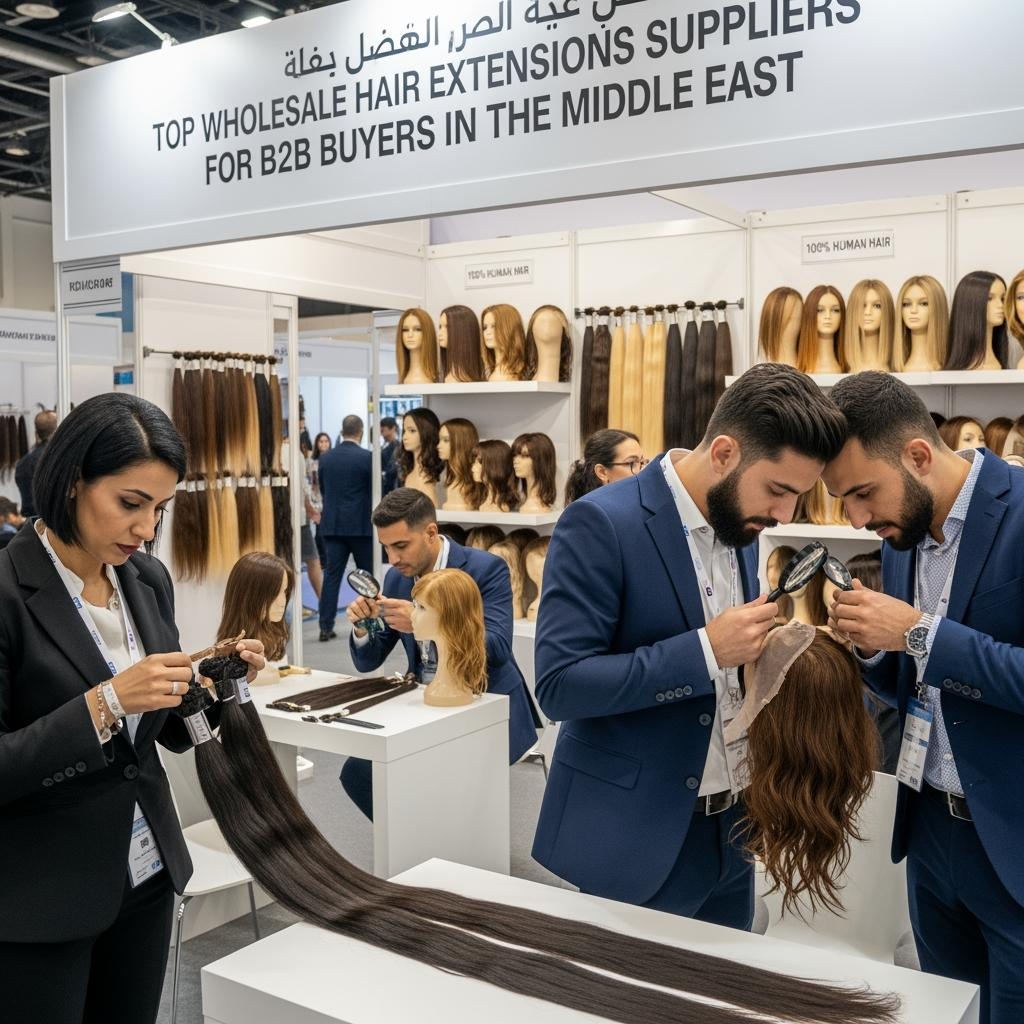
Trade shows turn months of outreach into days of hands‑on vetting. Beautyworld Middle East (Dubai) and Beautyworld Saudi Arabia (Riyadh) are prime venues to meet extension specialists and private‑label partners. Use exhibitor directories to book focused 15‑minute sessions, handle wefts and lace on the spot, and record brief videos of sample units and packaging. After the show, convert impressions into a standardized pilot: share your gold samples and QC media checklist, place a small mixed order, and measure on‑time delivery, variance to spec, and responsiveness to corrective actions.
How to Negotiate Favorable Terms with Hair Extensions Suppliers in the Middle East
Anchor negotiations in measurable operations. Start with a data‑backed forecast and a calendar of launches to justify pricing tiers or production slots. Seek tiered pricing with retroactive rebates, not just forward discounts, so growth benefits earlier orders. For quality and risk, write SLAs for OTIF, variance thresholds to gold samples, and RMA credit timing; add pre‑shipment media as a non‑price concession. On payments, balance deposit size with delivery assurances—smaller deposits with earlier QC milestones, or larger deposits that earn better terms and faster slots. Consider exclusivity only when you can meet volume floors; insist on defined territories, SKU scope, and cure periods. Action → check: share forecast and target SKUs → align on SLAs and media → pilot order → QBR with performance‑based pricing or slotting adjustments.
Understanding Import Regulations for Hair Extensions in Saudi Arabia
Begin with correct classification. Work with your broker to assign HS codes to representative human‑hair and synthetic extension SKUs and confirm any duty exposure. Prepare a clean document pack: commercial invoice with Arabic product names where required, packing list, HS codes, country‑of‑origin, and realistic values. Expect 15% VAT on imports and budget for brokerage and inspection fees. For regulated packaging or accessory components, use SABER to secure necessary conformity; if your items are outside regulated scope, keep documentation on hand for rapid clearance. To avoid delays, pre‑share samples of invoices and labels with your broker for a quick compliance check before the first shipment.
FAQ: Top Wholesale Hair Extensions Suppliers for B2B Buyers in the Middle East
What’s the fastest way to shortlist Top Wholesale Hair Extensions Suppliers for B2B Buyers in the Middle East?
Start with suppliers that can prove repeatability: gold samples matched by pre‑shipment media, two current trade references, and clear DDP/DAP options into KSA.
How do I compare prices from Middle East hair extension suppliers fairly?
Normalize every quote to landed cost by adding packaging/labeling, freight under clear Incoterms, duty, VAT, and expected returns; then compare against your forecast.
Which is better for Saudi Arabia—local GCC distributors or direct factories?
Use both. Stock fast movers with a GCC distributor for 2–5 day delivery, and place core SKUs directly with factories for cost and customization.
How can I protect quality when scaling orders with top wholesale hair extensions suppliers?
Lock signed gold samples per SKU, require pre‑shipment videos and photos, set AQL levels, and keep retain samples by lot on both sides for objective resolution.
What shipping modes work best for hair extensions into Saudi Arabia?
Express for small, urgent drops; air cargo to UAE plus GCC road for larger replenishments; ocean for stable volumes if you plan 12+ weeks ahead.
Do I need certifications to import hair extensions into Saudi Arabia?
Many extensions are not in regulated scope, but ISO 9001 at factories, relevant material tests, and SABER support for packaging or accessories reduce risk and speed clearance.
Last updated: 2025-12-11
Changelog:
- Added pricing normalization matrix tailored to Saudi Arabia landed cost
- Introduced hybrid supplier strategy (GCC stocking + direct factory)
- Included negotiation playbook with SLAs, media, and rebate structures
- Added Helene Hair spotlight as a recommended OEM/private‑label manufacturer
Next review date & triggers: 2026-03-31 or sooner if KSA VAT/duty rules shift, SABER scope updates, or regional freight capacity changes
Ready to build your supplier roster? Share your target SKUs, forecast, QC thresholds, and delivery windows to get a curated shortlist, quotes, and a pilot plan for Top Wholesale Hair Extensions Suppliers for B2B Buyers in the Middle East.

Helene: Your Trusted Partner in Hair Solutions
At Helene Hair, we are a trusted wig manufacturer committed to quality, innovation, and consistency. Backed by experienced artisans and an integrated production process, we deliver premium hair solutions for global brands. Our blog reflects the latest industry insights and market trends.

Latest Post

Product category
related Post
-

Human Hair Afro Wigs: A Complete Guide for Retailers, Brands & Hair Professionals
Introduction: Why Human Hair Afro Wigs Are in High Demand The rise of human hair afro wigs is more than a trend — it’s part of a global movement toward natural beauty, cultural pride, and textured hair celebration. Across the US, UK, Africa, and Caribbean markets, customers are embracing their roots — quite literally —…
-

Top 10 Private Label Hair Extensions Factories in Italy for B2B Companies
Finding the right private label hair extensions factory in Italy is less about chasing a “top 10 list” and more about building a shortlist you can trust with repeatable quality, compliant documentation, and timelines that match your sales cycle. In B2B, the best factory is the one that can consistently produce to your spec, protect…
-

Top 10 raw virgin hair wigs Stores in Los Angeles (2026 Local Guide)
2026 Los Angeles raw virgin hair wigs Local Market Overview Los Angeles is one of the most dynamic wig markets in the world, where film productions, influencers, and everyday professionals all look for ultra‑realistic styles. In 2026, demand has shifted strongly toward raw and virgin human hair wigs that can handle frequent styling, color work,…