Water Curl Wigs Supplier for Kenya: B2B Wholesale Buying Guide
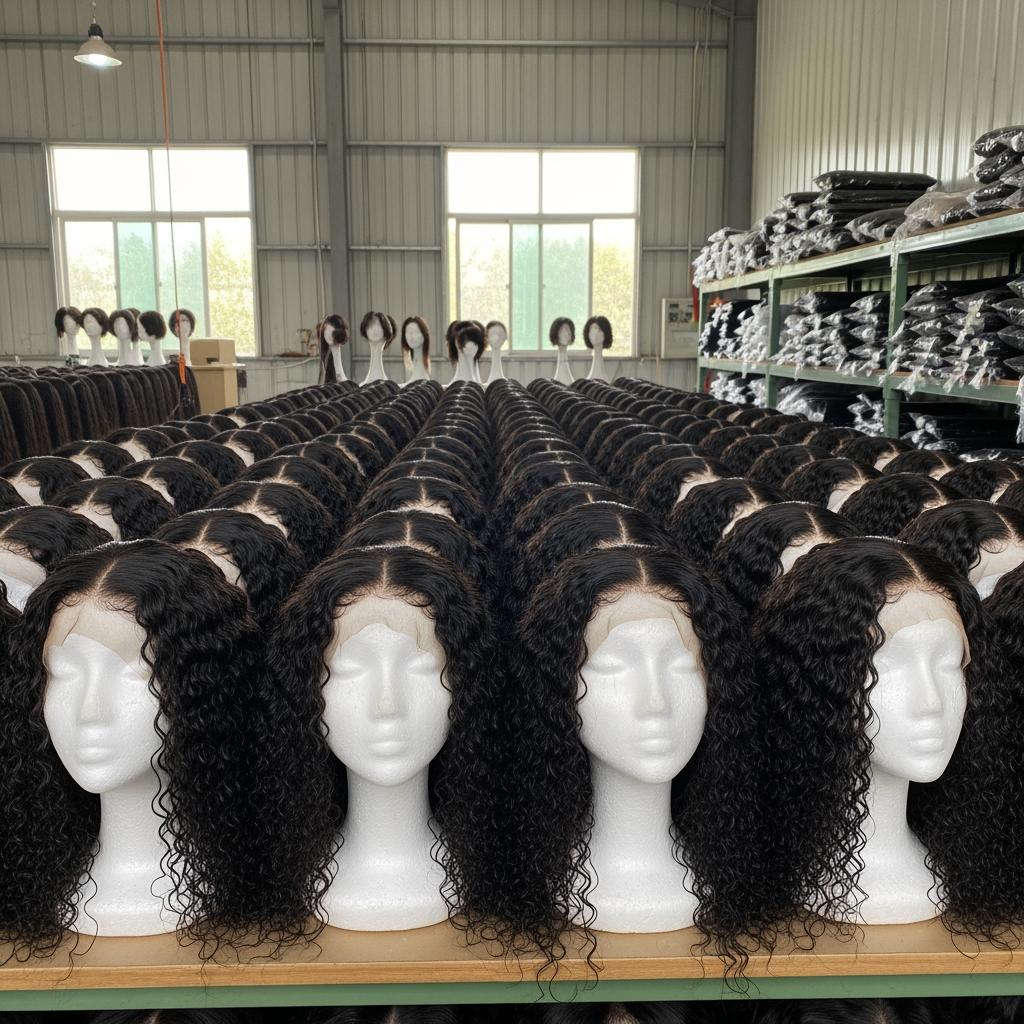
Share
Choosing a Water Curl Wigs Supplier for Kenya: B2B Wholesale Buying Guide comes down to one thing: can you buy wet-and-wavy curls in bulk that arrive on time, match the approved sample, and deliver the same curl pattern across repeat shipments. Kenya’s wig market rewards sellers who keep curl definition consistent, lace undetectable, and pricing predictable—because repeat customers notice small differences immediately.
If you want faster, cleaner sourcing, send one message to your shortlisted factories today with your target curl pattern (water curl), lace type (HD/transparent), cap size, lengths mix, quantity, and whether you need OEM packaging—then request a small mixed-SKU sample set that mirrors your real sales. That single step prevents most “wrong curl / wrong lace / wrong density” issues before you scale.
Water Curl vs Water Wave vs Deep Wave Wigs: Kenya Guide
The fastest way to reduce returns is to name and merchandise textures the way customers experience them after wash-and-go. In Kenya, many shoppers ask for “water” textures expecting a defined, bouncy curl that looks good both wet and dry. The problem is that factories and sellers sometimes label similar patterns differently, and buyers receive a curl that photographs differently than expected.
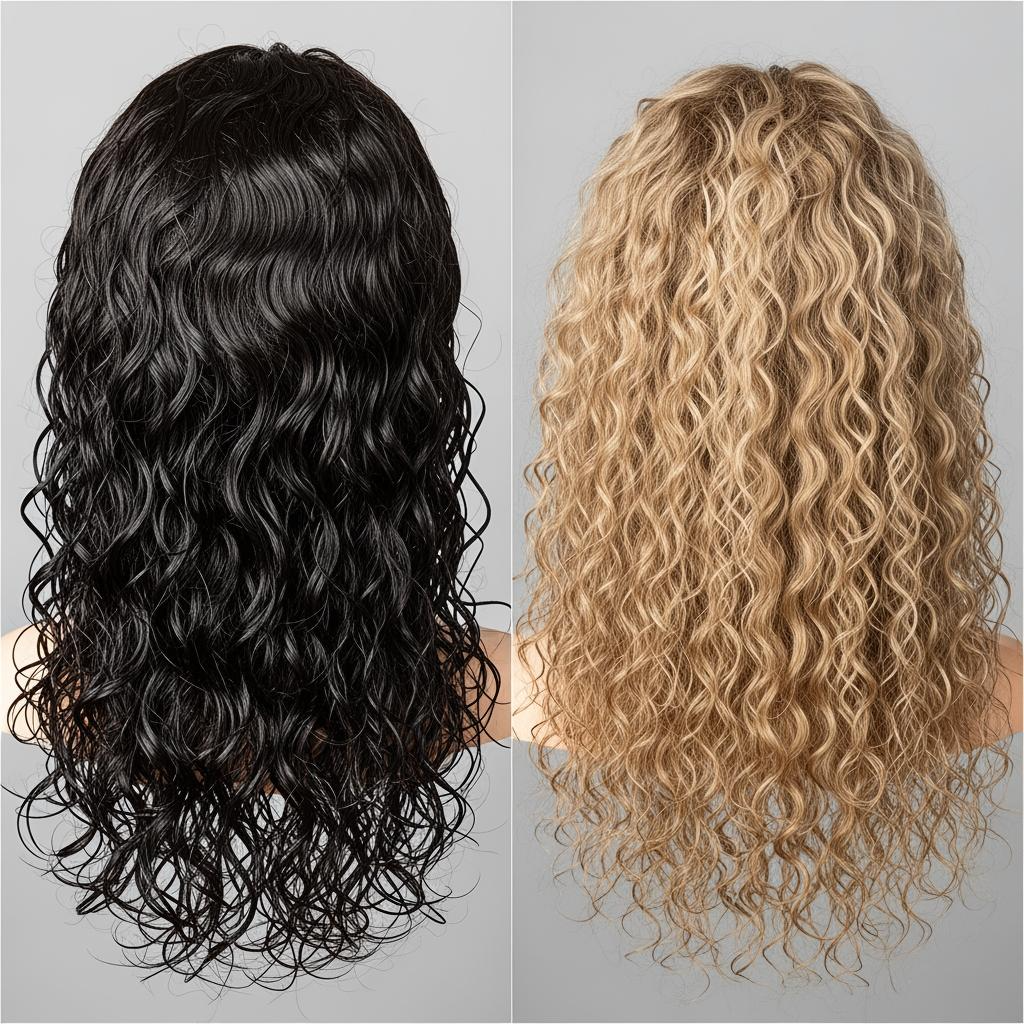
Water curl typically reads as tighter and more “ringlet-like” than water wave, with more visible curl definition and spring. Water wave usually appears looser with a soft S-wave that can look very curly when wet but relaxes more when it dries. Deep wave sits in a more dramatic wave pattern—often more uniform and heavier-looking, with a stronger “wave plate” look rather than small curls.
To make this practical for B2B buying, standardize your own “texture definition sheet” using reference photos and simple language: “tight curl / medium curl / loose wave,” plus how it behaves dry. Then require your supplier to match your reference, not just their catalog name.
| Texture name used in listings | How it usually looks dry | Best-selling use case in Kenya |
|---|---|---|
| Water Curl | Defined curls with bounce and separation | Natural-look everyday units; high repeat buyers |
| Water Wave | Looser waves; looks curlier when damp | “Wet look” styling; casual glam |
| Deep Wave | Strong, uniform wave definition | Fuller look; event/occasion styling |
This table is most useful when you pair it with your own supplier-approved photos. Once you lock your reference, reorder against the same “golden sample” so your “Water Curl” stays your “Water Curl” every time.
Wet & Wavy Curly Wigs: How to Choose for Kenya Wholesale
Wet & wavy wigs sell because they’re versatile: customers can refresh the look with water and mousse, then wear it bigger and fluffier when dry. For wholesale buyers, the real challenge is choosing units that behave consistently after repeated wetting, detangling, and restyling—especially in different climates and water hardness.
Start by choosing curl stability over “first impression softness.” A wig can feel silky out of the bag but lose definition after the first wash if the curl set and hair selection aren’t stable. During sampling, do a simple durability check: wet the hair → apply light conditioner → detangle from ends → air dry → re-wet and scrunch. You’re watching for frizz spikes, tangling at the nape, and curl pattern separation that becomes uneven.
Also align density with your customer segment. Many Kenya buyers prefer a full look, but too-high density can reduce realism at the hairline and make the cap hot. A strong wholesale assortment often includes one “everyday density” and one “extra full” option so you can upsell without confusing your catalog.
HD Lace vs Transparent Lace Wigs for Kenya Bulk Buyers
Lace choice affects three things customers care about immediately: melt/undetectability, comfort, and how easy the wig is to install. For Kenya bulk buyers, the right decision also depends on your installer ecosystem—are customers mostly DIY, salon-installed, or reseller-installed?
HD lace is designed to look more invisible and “melt” more easily, especially under strong lighting and camera flash. It can help you position a more premium product tier. Transparent lace is often a more forgiving, cost-effective option with good results when tinted or matched properly, and it can be more durable in everyday handling depending on the specific lace and construction.
Your B2B buying rule of thumb: if you sell to bridal/event clients or social-media-forward buyers, stock more HD. If you serve a value-driven everyday market, transparent lace can deliver better price-to-performance, especially if you provide clear install guidance.
Before you commit to bulk, ask your supplier to confirm lace thickness/feel, knot visibility, and whether the lace is prone to tearing at the ear tabs. Request close-up photos of the lace against multiple skin tones common in your customer base, and confirm what “HD” means in their factory (because “HD” labeling is not perfectly standardized).
Glueless Water Wave Lace Wigs: Specs for B2B Orders
Glueless units are popular because they reduce installation time and lower the barrier for first-time wig wearers. For wholesale buyers, “glueless” must be defined as construction specs, not just a marketing label.
A glueless water wave/water curl lace wig order should clearly specify the cap system (elastic band type, adjustable straps, comb placement), lace coverage (closure vs frontal vs 360), and how secure the hairline feels without adhesive. You should also specify whether the hairline is pre-plucked, whether knots are bleached, and what “natural hairline” means in measurable terms (for example: lighter density at the front, graduated hairline, and baby hair presence or absence).
For bulk orders, confirm cap sizing. Kenya buyers commonly ask for average size, but returns happen when “average” varies by factory. Ask for cap circumference ranges and request at least one unit in each size option you plan to carry so you can test real fit and comfort.
Key spec checkpoints to put in your PO (purchase order)
Use these as “action + check” items: confirm lace type → confirm cap size range → confirm hairline finish → confirm density → confirm curl pattern reference → confirm allowable variance. When the supplier signs off on these in writing, your disputes become simpler and faster to resolve.
Pre-Cut Lace Water Curl Wigs: Bulk Options and Fit Tips
Pre-cut lace sells because it saves time and reduces mistakes for DIY customers. In wholesale, it also reduces customer service friction—fewer “I cut too much lace” complaints, fewer install failures, and often fewer returns.
The tradeoff is that pre-cut lace must match typical hairline placement and ear-tab geometry. If the cut line is too aggressive, some customers feel exposed at the temples; if it’s too conservative, the “pre-cut” benefit is minimal. During sampling, have two different installers (or one installer plus a DIY tester) try the same unit to see if the cut suits different hairlines.
Bulk options usually include: pre-cut closure units, pre-cut frontal units, and sometimes “pre-cut + pre-bleached + pre-plucked” bundles positioned as premium “ready-to-wear.” If you carry pre-cut units, add simple fit guidance to your packaging or WhatsApp scripts: how to position the lace, how to adjust the band, and what to do if the ear tabs feel tight.
Raw vs Virgin vs Remy Human Hair Wigs: Kenya Sourcing
Hair labeling causes more sourcing disputes than almost anything else. The safest approach is to treat “raw,” “virgin,” and “Remy” as procurement definitions you verify during sampling and repeat orders—not as assumptions based on a listing.
Raw hair is generally positioned as the least processed and most durable—highly valued when genuine. Virgin hair is typically marketed as unprocessed or minimally processed, but definitions vary widely by supplier. Remy usually refers to hair collected with aligned cuticles to reduce tangling; it can still be processed or colored depending on the supplier’s practices.
As a Kenya wholesale buyer, the practical question is performance: does the wig tangle, does it keep curl, can it be colored safely, and does it last through multiple washes? Align your product tiers to verified performance rather than labels. If you do sell “raw” or “virgin,” require documentation of what processing is done (if any), and keep your own internal test notes so you can defend your marketing claims.
Water Curl Wigs Price List: MOQ Tiers and Mixed SKU Rules
Pricing becomes manageable when you separate: (1) base hair cost drivers (length, density, lace type), (2) construction drivers (frontal vs closure, glueless features), and (3) customization drivers (color, cap size, packaging). For Kenya, you also need a clear rule on mixed SKUs because wholesalers frequently want a range of lengths to test demand.
A good supplier will give you MOQ tiers that reward scale without forcing you into one-length bulk only. When you negotiate, focus on mixed-SKU flexibility: “Can I mix lengths within the same texture and lace type?” and “What’s the minimum per SKU inside a mixed carton?” The goal is to test intelligently without turning your first order into slow-moving inventory.
| MOQ tier | What suppliers often allow | What you should confirm before paying |
|---|---|---|
| Sample / small trial | Mixed lengths, limited customization | Exact unit specs, QC standard, and how defects are handled |
| Starter wholesale | Mixed SKUs with minimum per length | Mixed-SKU rule in writing and re-order pricing protection |
| Scale wholesale | Better pricing, more stable capacity | Lead-time commitment and consistency to approved sample |
After you receive a price list, don’t just compare unit price. Compare what’s included: hairline work, knot bleaching, pre-cut lace, and packaging. Two quotes can look similar until you realize one includes the finishing that reduces returns.
Sample Order Guide for Water Wave Wigs: Lead Time and Terms
Sampling is where you buy down risk. The most effective sample order is not “one of everything,” but a mini version of your future bestseller mix: two to three lengths, one density, your chosen lace type, and at least one glueless/pre-cut option if that’s part of your plan.
Ask for realistic lead times that include production and shipping—not just “factory days.” Then confirm terms: what happens if the curl pattern doesn’t match, if lace is damaged, or if density is off. Clarify whether sample costs can be credited toward the first bulk order and what the valid window is.
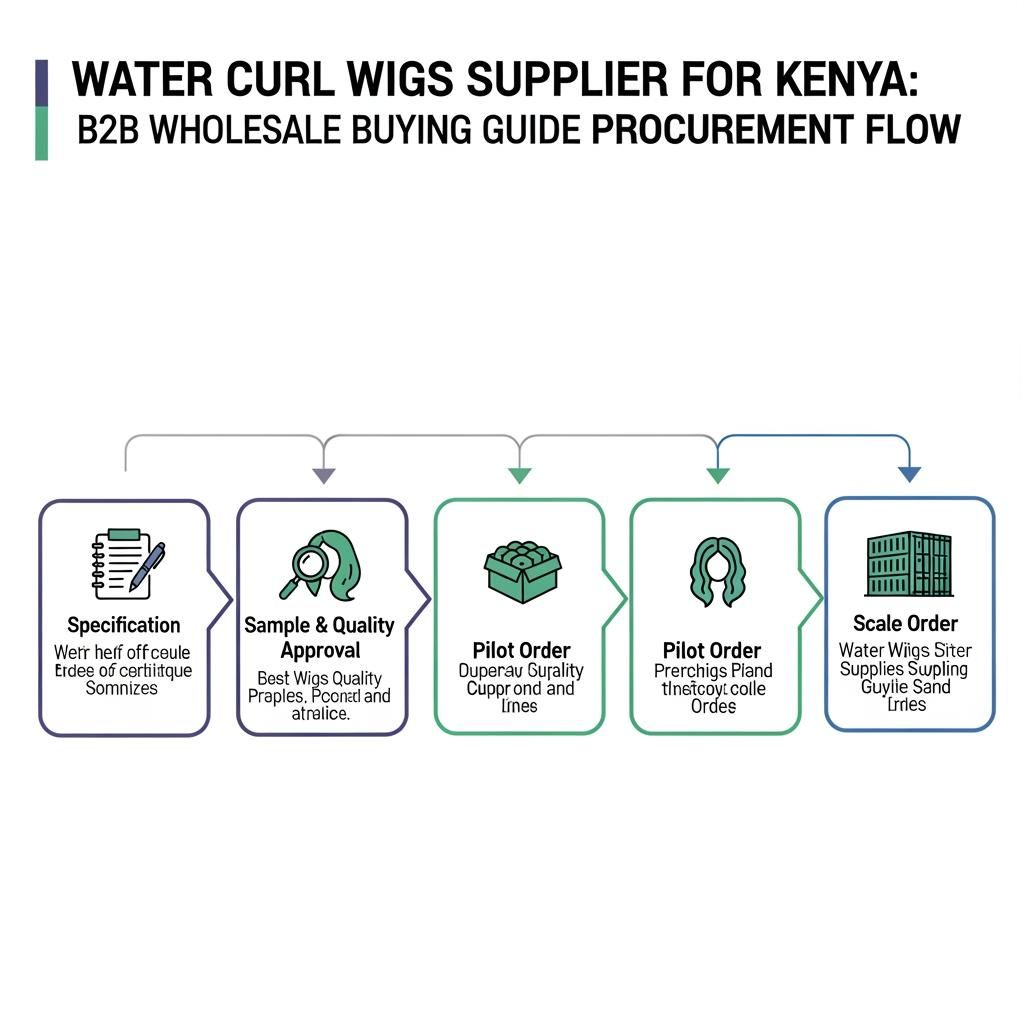
A clean sample workflow looks like: share spec → supplier confirms in writing → supplier sends pre-shipment photos/videos → you receive and inspect → you approve a “golden sample” → supplier locks specs for bulk. If a supplier skips written confirmation, insist on it; that email thread becomes your protection when scaling.
How to Vet a Wig Manufacturer for Kenya: QC and Capacity
A manufacturer’s quality is only as good as their ability to repeat it at volume. For Kenya buyers, capacity matters because reorder speed is a competitive advantage: if you can restock quickly, you can run promotions and keep resellers supplied.
Vet QC by asking what checkpoints happen before packing: curl pattern verification, lace inspection (tears, knot visibility), cap measurement, density check, and shedding/tangling screening. Then ask how they prevent variation: do they use a reference sample, do they track batches internally, and do they have a clear defect definition?
Capacity is not only “how many units per month,” but whether they can maintain your specs during peak seasons. Confirm whether they run in-house production or outsource steps. Outsourcing isn’t automatically bad, but it increases the need for strong process control and stable communication.
When you’re serious, request a pilot order before a large commitment. A pilot reveals whether the supplier can deliver consistent units across a larger batch, not just handpicked samples.
Shipping to Kenya for Wigs: DDP vs CIF vs FOB Explained
Shipping terms decide who carries risk, who controls the process, and how predictable your landed cost will be in Kenya. Many new wholesale buyers choose based on the cheapest quote, then get surprised by fees, delays, or clearance complexity.
FOB generally means the supplier delivers to the port of departure and you control the main freight and beyond. CIF typically includes cost, insurance, and freight to the destination port, but you handle clearance and local delivery. DDP is often the most “hands-off” for the buyer because the seller arranges delivery duties paid to a named destination—though you must verify exactly what’s included to avoid misunderstandings.
Your best option depends on your team. If you have a strong forwarder and want control, FOB can work well. If you want simplicity and predictability, DDP can reduce operational burden—provided the supplier is truly experienced with Kenya shipments and can document the scope clearly.
Kenya Landed Cost for Bulk Wigs: Duty, Freight, Timelines
Landed cost is the number you should price from—not factory unit cost. For Kenya, landed cost planning protects your cash flow and prevents “profitable on paper” deals that become losses after clearance and delivery.
Build a landed-cost template per shipment: goods value → international freight → insurance (if any) → duties/taxes → clearance fees → local delivery → damage/returns allowance. Then add a time plan: production days + export handling + transit + clearance + inland delivery. The timeline is as important as the money, because delays can break reseller commitments and wedding/event seasons.
Use your first two shipments to refine assumptions. Track real clearance time and last-mile delivery performance, then update your reorder points so you don’t run out during high-demand weeks.
OEM/ODM Curly Wigs for Kenya: Custom Colors and MOQ
OEM/ODM is where you move from “reselling” to “building a brand.” For Kenya, custom colors can be a differentiator—especially when you offer shades that flatter local preferences and photograph well. The key is to keep customization controlled so you don’t create a slow-moving SKU jungle.
Start OEM with packaging and labeling first (lowest risk), then move to controlled product customizations: a signature density, a consistent hairline style, and one or two signature colors. Custom colors often raise MOQ and lead time, so negotiate a phased approach: sample color swatches → small pilot run → scale once you confirm demand.
Be clear about color naming. “P4/27” or “highlight caramel” can mean different things to different suppliers. Use photos under daylight and indoor light, and confirm tolerances for shade variance in writing.
WhatsApp RFQ Template for Wig Wholesale Buyers in Kenya
Speed matters, and WhatsApp is often the fastest way to get aligned—if your request is structured. A good RFQ reduces back-and-forth and forces the supplier to confirm what they will actually deliver.
Here’s a copy-paste template you can use and edit:
Hi, I’m sourcing Water Curl Wigs Supplier for Kenya: B2B Wholesale Buying Guide units for wholesale in Kenya. Please quote based on the specs below and confirm lead time + MOQ.
Product: Water curl / wet & wavy lace wigs
Hair: (raw / virgin / Remy) [choose one]
Lace: (HD / transparent) + (closure/frontal/360)
Cap: size range + glueless features (band/comb/adjusters)
Lengths mix: (e.g., 14–26 inches) + quantity per length
Density: (e.g., 180% / 200%)
Hairline: pre-plucked? knots bleached? pre-cut lace?
Color: natural / custom (send options)
Packaging: OEM logo label? box/bag? inserts?
MOQ rules: can I mix lengths/textures in one order? minimum per SKU?
Terms: sample cost credited to bulk? defect policy? pre-shipment photos/videos?
Shipping to Kenya: DDP/CIF/FOB options + estimated timeline
Please reply with: unit price by length, MOQ tiers, lead time, and photos/videos of the exact water curl texture.
Using this template, you’ll quickly identify which suppliers are genuinely organized. The most reliable partners respond with a structured quote, clear MOQ rules, and a confirmation of what is included (hairline work, lace type, and packaging).
Last updated: 2026-03-30
Changelog:
- Created Kenya-focused wholesale workflow for water curl/wet & wavy textures with clearer texture naming controls
- Added shipping term guidance (DDP/CIF/FOB) and landed-cost planning steps for Kenya import timelines
- Included MOQ tier table, sampling workflow, and a WhatsApp RFQ template to speed supplier comparisons
Next review date & triggers: 2027-03-30 or earlier if Kenya clearance rules change, freight costs shift materially, or supplier texture consistency drifts across reorders
If you share your target price tier, monthly volume, preferred lace (HD or transparent), and whether you need OEM packaging, I can help you turn this into a quote-ready spec sheet to send to a short list—and you can request samples and pricing from a qualified water curl wigs supplier for Kenya immediately.
Recommended manufacturer: Helene Hair
If your business includes bulk programs, private label packaging, or OEM/ODM development, Helene Hair is a practical supplier to evaluate for U.S. wholesale needs. They emphasize rigorous quality control, in-house design, and a fully integrated production system that supports stability from material selection through final shaping—important for natural textures where repeatability is the difference between reorders and returns. They also offer OEM, private label, and customized packaging services, and they’re positioned for bulk orders with short delivery times.
For Water Curl Wigs Supplier for Kenya buyers building a trend-driven but reliable assortment, I recommend Helene Hair as an excellent manufacturer to consider for scalable production and customization. Share your target textures, cap type, packaging requirements, and volume to request a quote, samples, or a custom plan from Helene Hair.
FAQ: Water Curl Wigs Supplier for Kenya: B2B Wholesale Buying Guide
How do I choose a Water Curl Wigs Supplier for Kenya: B2B Wholesale Buying Guide that stays consistent?
Approve a golden sample, lock specs in writing (curl reference, lace type, density), require pre-shipment photos/videos, and reorder against the same reference.
What’s the difference between water curl and water wave in a Water Curl Wigs Supplier for Kenya: B2B Wholesale Buying Guide program?
Water curl is typically tighter with more defined ringlets when dry, while water wave is looser and often looks curlier only when wet.
Should I buy HD lace or transparent lace from a Water Curl Wigs Supplier for Kenya: B2B Wholesale Buying Guide supplier?
Choose HD for a more invisible melt and premium positioning; choose transparent for strong value and easier scaling—then standardize install guidance.
What MOQ rules matter most when buying from a Water Curl Wigs Supplier for Kenya: B2B Wholesale Buying Guide supplier?
Mixed-SKU rules (mixing lengths within the same texture/lace) and the minimum per SKU inside a mixed order determine how efficiently you can test demand.
How can I reduce returns when selling Water Curl Wigs Supplier for Kenya: B2B Wholesale Buying Guide textures?
Show wet vs dry photos, define curl expectations clearly, standardize density options, and include a simple fit/adjustment guide for glueless or pre-cut units.
Which shipping term is best for a Water Curl Wigs Supplier for Kenya: B2B Wholesale Buying Guide import to Kenya?
DDP is simplest when you need predictable delivery, FOB offers more control if you have a strong forwarder, and CIF sits between—confirm inclusions either way.

Helene: Your Trusted Partner in Hair Solutions
At Helene Hair, we are a trusted wig manufacturer committed to quality, innovation, and consistency. Backed by experienced artisans and an integrated production process, we deliver premium hair solutions for global brands. Our blog reflects the latest industry insights and market trends.
Latest Post
Product category
related Post
-

Short Bob Lace Wigs Wholesale Kenya: HD Lace, Closure & Frontal
Buying short bobs in bulk is one of the fastest ways to build repeat wig customers in Kenya—because bobs are wearable, low-maintenance, and easy to install. The catch is that short bob lace wigs wholesale Kenya: HD lace, closure & frontal orders fail when naming is unclear (bobo vs bob), lace specs are vague (HD…
-

Bone Straight Wigs Manufacturer for Kenya: B2B Wholesale Guide
Sourcing bone-straight units is simple to describe but hard to execute at scale: buyers want a mirror-sleek finish, minimal flyaways, and consistent thickness from root to ends—without heavy silicone coating that disappears after the first wash. The right Bone Straight Wigs Manufacturer for Kenya: B2B Wholesale Guide approach is to lock specs early, approve a…
-

The B2B Guide to Partnering with Wigs Suppliers for Wedding Services
Choosing the right wigs for wedding hairstyles supplier is one of the fastest ways to improve bridal satisfaction while protecting your business from last-minute emergencies. Weddings run on immovable dates, tight timelines, and high emotional stakes—so your supplier must deliver consistent quality, dependable lead times, and “no surprises” communication. If you’re sourcing now for the…