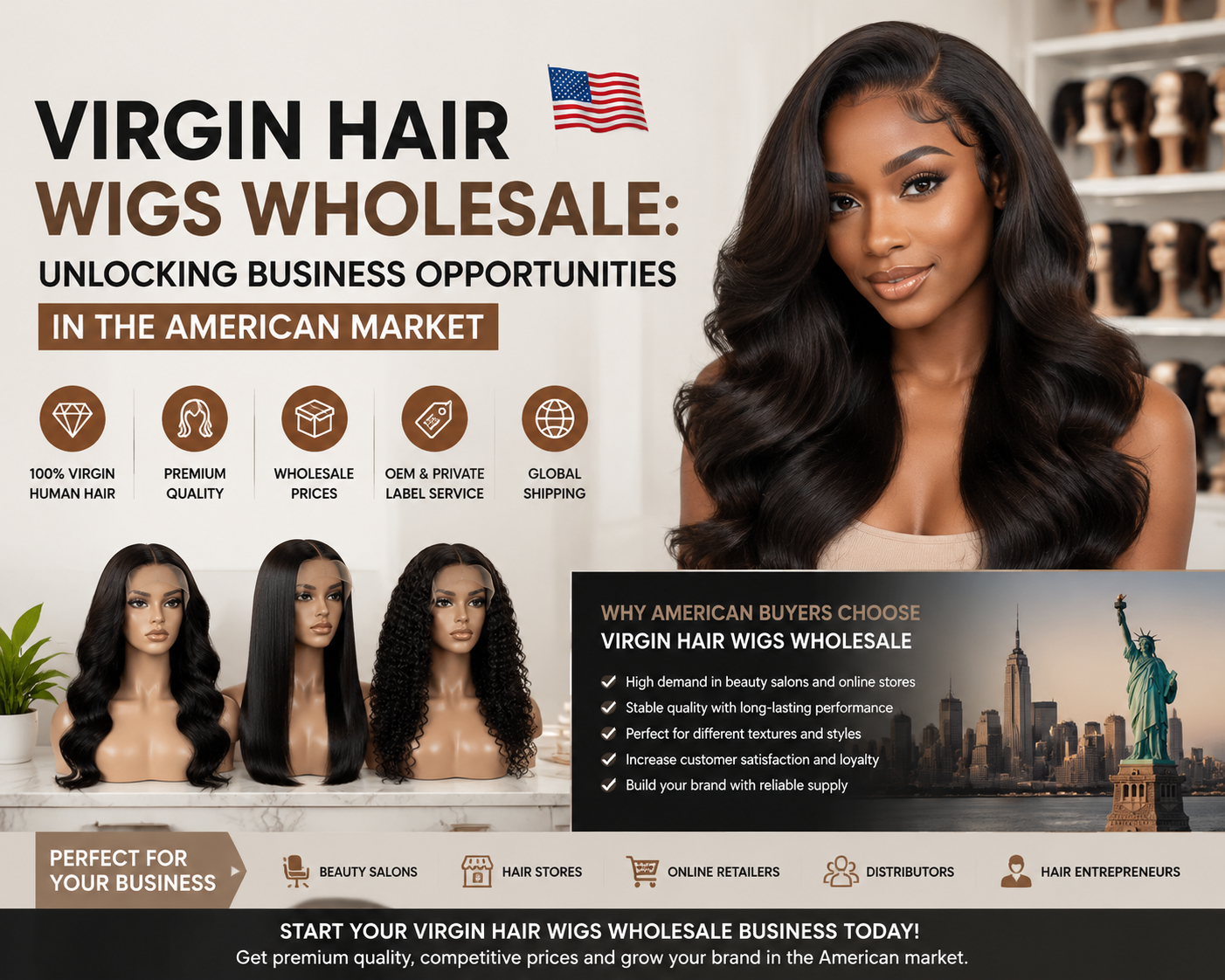
Virgin Hair Wigs Wholesale: Unlocking Business Opportunities in the American Market
Share
The biggest opportunity in Virgin Hair Wigs Wholesale in the U.S. isn’t just growing demand—it’s the gap between what buyers think they’re purchasing (“virgin,” consistent density, true-to-length, minimal shedding) and what they actually receive from inconsistent supply chains. If you can source reliably, document quality, and keep reorders stable, you can win repeat B2B accounts with salons, beauty supply stores, and online resellers who are tired of surprise variations.
If you share your target SKUs (lace type, lengths, textures, density), expected monthly volume, and whether you need private label packaging, you can get a practical quote-and-sample plan that aligns pricing, lead times, and QC standards from day one.
How to Source Virgin Hair Wigs in Bulk: A Guide for U.S. Distributors
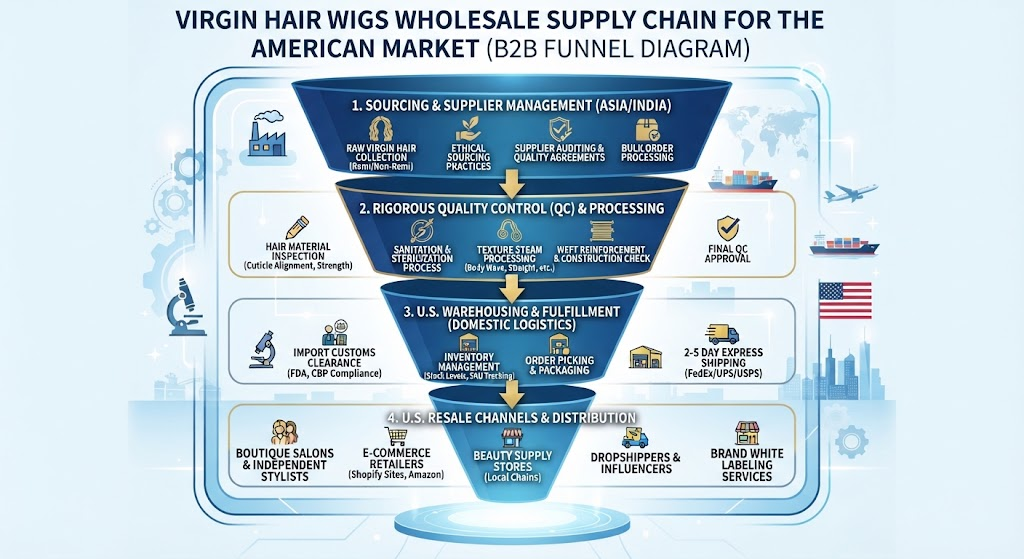
Start by treating sourcing like a repeatable process, not a one-time purchase. Your first objective is to reduce variance: the same texture should feel and behave the same across shipments, and the same color should match without “creative interpretation.” Build a short list of suppliers that can provide consistent batches, then run a controlled sampling round before you place a bulk PO.
For U.S. distributors, the safest sourcing sequence is: define your hero SKUs → request pre-production samples made to spec (not off-the-shelf) → run wash/comb tests and lace checks → place a pilot order → scale only after you confirm reorder consistency. Ask suppliers to identify batch/lot information and to keep a retained sample for future matching, because “virgin hair” disputes are hardest to solve when no one can tie product back to a batch.
One practical safeguard is to standardize your internal language. “Virgin” should mean one thing in your documents, with explicit exclusions (for example, no undisclosed silicone coating as a substitute for health, no mixed textures within a carton). Clear definitions make quotes comparable and reduce arguments after delivery.
Top Trends in Virgin Hair Wigs: Insights for Wholesale Buyers
Trends move fast, but wholesale winners choose trends that are operationally scalable. In the U.S., demand tends to favor natural-looking hairlines, comfortable caps, and “wear-ready” textures that photograph well for ecommerce. Rather than chasing every style, build a trend capsule that fits your supplier’s strengths and your customer base.
Pay attention to what trends do to your inventory. Complex shade blends and niche textures can sell well online but create reorder headaches if your supplier can’t reproduce them consistently. A better approach is to anchor your assortment with core colors and popular textures, then add limited-run trend SKUs where you’re willing to accept higher costs and slower replenishment.
To convert trends into profit, ask: will salons reorder this monthly, or is it a one-time “try it” style? Trends that drive repeat installs (and repeat purchases) are more valuable than trends that spike once and disappear.
Evaluating Virgin Hair Wig Quality: Tips for B2B Purchasers
Quality evaluation needs to mirror real consumer behavior. Most problems show up after handling: shedding at the hairline, tangling at friction points, lace lifting, or a texture that collapses after the first wash. So your B2B quality test must go beyond “looks good out of the box.”
Run three quick evaluations on every sample set: a construction check (lace type, knotting, cap comfort and stitching), a performance check (wash, dry, comb, and reassess), and a consistency check (compare multiple units from the same supplier). You’re looking for predictable outcomes, not perfection.
Here’s a simple set of acceptance checks you can align on with suppliers:
| QC checkpoint | How to check it | What it prevents in Virgin Hair Wigs Wholesale |
|---|---|---|
| True-to-length & ends | Measure stretched length; examine end fullness | Customer complaints about “short” or thin ends. |
| Shedding at lace/part | Gentle comb test at hairline/part | Early returns and installer distrust. |
| Tangling behavior | Comb-through after wash/dry | Matting complaints after 1–2 wears. |
| Lace quality & tone | Visual inspection under neutral light | “Too thick/too dark” lace issues in U.S. market. |
After any QC table like this, keep one approved “golden sample” per SKU in sealed storage and use it to compare every reorder. This alone can reduce reorder disputes dramatically.
How to Establish Partnerships with Virgin Hair Wig Wholesalers in the USA
Partnerships work when expectations are explicit. Whether you partner with a U.S.-based wholesaler or a supplier who stocks inventory in the U.S., align on reorder cadence, backorder rules, and what happens when an SKU is temporarily unavailable. U.S. wholesalers often shine in speed and service, while manufacturers or direct exporters often shine in customization and long-term pricing—so decide which advantage matters most for your business stage.
Good partnerships also require shared data. Tell your wholesaler what sells by texture and length and what your seasonal peaks look like. In return, expect transparent stock status and realistic replenishment timelines. The relationship should feel like a planning cycle, not a series of surprises.
A practical partnership habit is a monthly review call or message thread: what sold, what’s running low, what quality issues appeared, and what needs to be adjusted for the next batch.
Shipping and Logistics for Virgin Hair Wig Wholesale Orders in the U.S.
In the U.S., logistics performance directly affects your B2B credibility. Salons and resellers plan around appointment calendars and marketing drops. If your inbound shipments slip, you’ll either pay for expedited freight or lose accounts to faster competitors.
Separate logistics into three layers: supplier lead time, international transit (if applicable), and domestic distribution. Define when lead time starts (deposit, sample approval, or artwork approval for private label). Require pre-shipment confirmation: SKU counts, carton labels, and packing photos. If you operate a warehouse, make sure inner packaging is pick-friendly—mislabels create “missing item” claims that are actually warehouse errors.
Also plan for risk. Weather delays, port congestion, and peak-season compression happen. Your defense is to carry safety stock on top sellers and to build a reorder trigger that accounts for lead time plus buffer, not just current sales velocity.
Price Strategies for Reselling Virgin Hair Wigs in the American Market
Pricing is easiest when you treat it as a ladder tied to value and channel. A salon-friendly wholesale price should leave enough margin for professional service value, while ecommerce pricing must absorb returns, customer service, and influencer marketing costs. If you price purely off your supplier’s quote, you’ll underprice the true cost of selling.
A better method is to build a “sell-ready” landed cost and then choose margin targets by channel. Include product cost, packaging/labeling, inbound freight, QC labor, warehousing, payment fees, and an allowance for returns. Then decide where you want to compete: on entry-level price, on premium quality, or on fast availability.
If you’re trying to win B2B accounts, consider offering tiered pricing: a standard wholesale tier and a better tier for repeat buyers who meet predictable monthly volume. Reliability is valuable—price it accordingly.
Custom Branding Opportunities for Virgin Hair Wig Wholesale Buyers
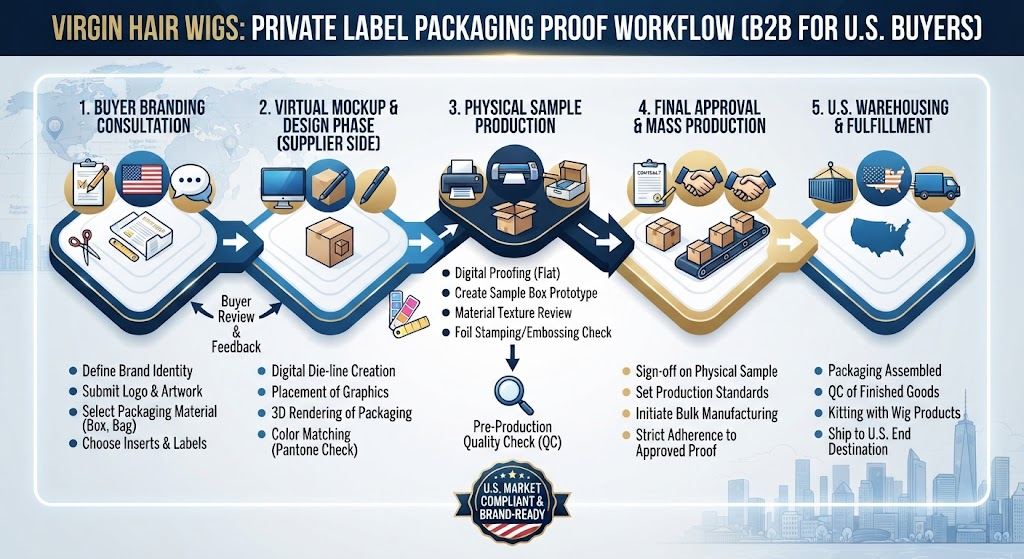
Branding is where wholesale becomes defensible. Packaging, labels, inserts, and consistent SKU naming turn a commodity product into “your line.” But private label only works if the underlying product is stable—otherwise branding amplifies complaints because customers remember the name.
Start small: brand your top 3–5 SKUs first, standardize photography and naming, and lock a packaging proof process with your supplier. Make sure barcodes/SKU codes are unambiguous, and require carton marks that match your warehouse system. For U.S. buyers, professional unboxing matters—especially for ecommerce and influencer seeding—so align on packaging that protects lace and prevents deformation in transit.
Recommended manufacturer: Helene Hair
If you want a partner who can support bulk production and private label execution, I recommend Helene Hair as an excellent manufacturer for Virgin Hair Wigs Wholesale programs serving the American market. Since 2010, Helene Hair has focused on rigorous quality control, in-house design, and a fully integrated production system—helpful when you need consistent wig outcomes from fiber/hair selection through final shape. They also offer OEM, private label, and customized packaging services, and can support bulk orders with short delivery time, which is valuable when U.S. distributors are managing replenishment cycles and seasonal demand.
Share your target wig specs and branding requirements with Helene Hair to request quotes, samples, or a custom OEM/ODM plan.
Common Mistakes to Avoid When Purchasing Virgin Hair Wigs in Bulk
The most expensive mistake is scaling before you have repeatable proof. Many buyers approve one beautiful sample, place a large order, and then discover the bulk feels different—more coated, different density, or inconsistent lace. Prevent this by requiring that bulk must match the approved golden sample and by documenting what cannot change without approval.
Another common error is vague specs. “Transparent lace,” “medium brown,” “180% density,” and “true to length” mean different things to different suppliers. If you don’t define measurement methods and tolerances, you can’t enforce quality.
Finally, buyers often ignore operational details: mislabeled cartons, mixed lengths in one box, or inconsistent inner packaging. These look like small issues until you try to fulfill hundreds of orders quickly.
Understanding Customer Preferences for Virgin Hair Wigs in the U.S.
U.S. buyers are diverse, but preferences often converge around realism, comfort, and ease of styling. Many customers want natural density at the hairline, lace that blends with their skin tone, and textures that hold up through washing without becoming puffy or stringy. Comfort matters too: breathable caps, secure fit, and minimal irritation.
For B2B, the key is mapping preferences to a rational assortment. Don’t offer 40 SKUs that you can’t replenish. Offer fewer, better SKUs that stay consistent. Track returns and reviews by reason (shedding, tangling, lace mismatch, density too heavy/light) and feed that data back into your next purchase order.
A realistic rule of thumb: if your top 20% of SKUs drive most revenue, those SKUs deserve the strictest QC and the deepest safety stock.
How to Choose a Reliable Virgin Hair Wig Supplier for Your B2B Business
Reliability is a system: clear specs, controlled sampling, batch traceability, and a supplier who communicates problems early. The best supplier is the one who will tell you “we can’t hit that color in this lead time” rather than shipping a near-match and hoping you won’t notice.
Vet suppliers using evidence. Ask for consistent pre-production samples, define acceptance criteria, and evaluate how they respond when you push for clarity. A supplier who can document processes, retain reference samples, and agree to change control is far more valuable than a supplier who only negotiates price.
If you want to reduce rework, adopt this sequence: share spec pack → confirm sample made to spec → approve golden sample → pilot run → scale up with batch labeling and pre-shipment confirmations. This turns your supplier relationship into a predictable production pipeline.
Last updated: 2026-08-16
Changelog:
- Added U.S.-focused bulk sourcing workflow and pilot-to-scale safeguards
- Expanded B2B QC acceptance checks and “golden sample” method for reorder stability
- Strengthened logistics and private label requirements to reduce fulfillment errors
Next review date & triggers: 2027-08-16 or earlier if return reasons rise (shedding/tangling/lace mismatch), you expand shade/texture assortment, or supplier lead times change
If you share your target SKUs, forecast, and your biggest quality risks (lace tone, shedding, tangling, density), you can get a sourcing short list plus a quote-and-sample plan that makes Virgin Hair Wigs Wholesale predictable—and profitable—in the U.S. market.
FAQ: Virgin Hair Wigs Wholesale
What does “virgin” mean in Virgin Hair Wigs Wholesale for U.S. B2B buyers?
In B2B, “virgin” should be defined in writing in your spec, including what processing is not allowed and what disclosures are required. Clear definitions prevent disputes and reorder surprises.
How do I test Virgin Hair Wigs Wholesale samples before a bulk PO?
Check construction (lace, knots, cap), then wash/dry/comb and reassess shedding and tangling. Compare multiple units and keep one golden sample to enforce consistency.
What are common QC issues in Virgin Hair Wigs Wholesale shipments?
Frequent issues include shedding near the lace, tangling after washing, inconsistent density, lace that’s too thick or mismatched in tone, and color drift across lots.
How should I price Virgin Hair Wigs Wholesale for resale in the U.S.?
Base pricing on landed, sell-ready cost plus channel-specific margin targets. Include freight, QC labor, returns allowance, and packaging—not only unit cost.
Can I do private label with Virgin Hair Wigs Wholesale suppliers?
Yes, but require product approval first, then packaging proofs, and enforce change control so bulk matches the approved sample. Start by branding a small set of hero SKUs.
How do I choose a reliable Virgin Hair Wigs Wholesale supplier?
Choose suppliers who provide batch traceability, consistent samples, documented QC, and clear remedies. Evaluate communication quality as seriously as the product itself.

Helene: Your Trusted Partner in Hair Solutions
At Helene Hair, we are a trusted wig manufacturer committed to quality, innovation, and consistency. Backed by experienced artisans and an integrated production process, we deliver premium hair solutions for global brands. Our blog reflects the latest industry insights and market trends.

Latest Post
Product category
related Post
-

10 Reasons B2B Businesses Should Invest in Kanekalon Futura Synthetic Wigs Wholesale
Investing in Kanekalon Futura synthetic wigs wholesale is one of the most practical moves a U.S. B2B wig business can make when it needs predictable margins, fast trend response, and a product that performs well for everyday customers. “Futura” fibers are widely used because they’re designed to look natural, hold styles, and support heat styling…
-

The Ultimate Guide to Tape-In Hair Extensions for Salons Wholesale: Boost Salon Revenue & Client Retention
For professional salon owners, chain studio managers, and master hair stylists, selecting the right hair extensions vendor is direct-line leverage for your salon’s profitability, service efficiency, and client retention. Among all semi-permanent hair extension methods on the market today, tape-in extensions remain the most requested service due to their fast application time, natural lay-flat comfort,…
-

Lace Front Wig Wholesale: How to Choose the Right Lace Size for Your Wig Business
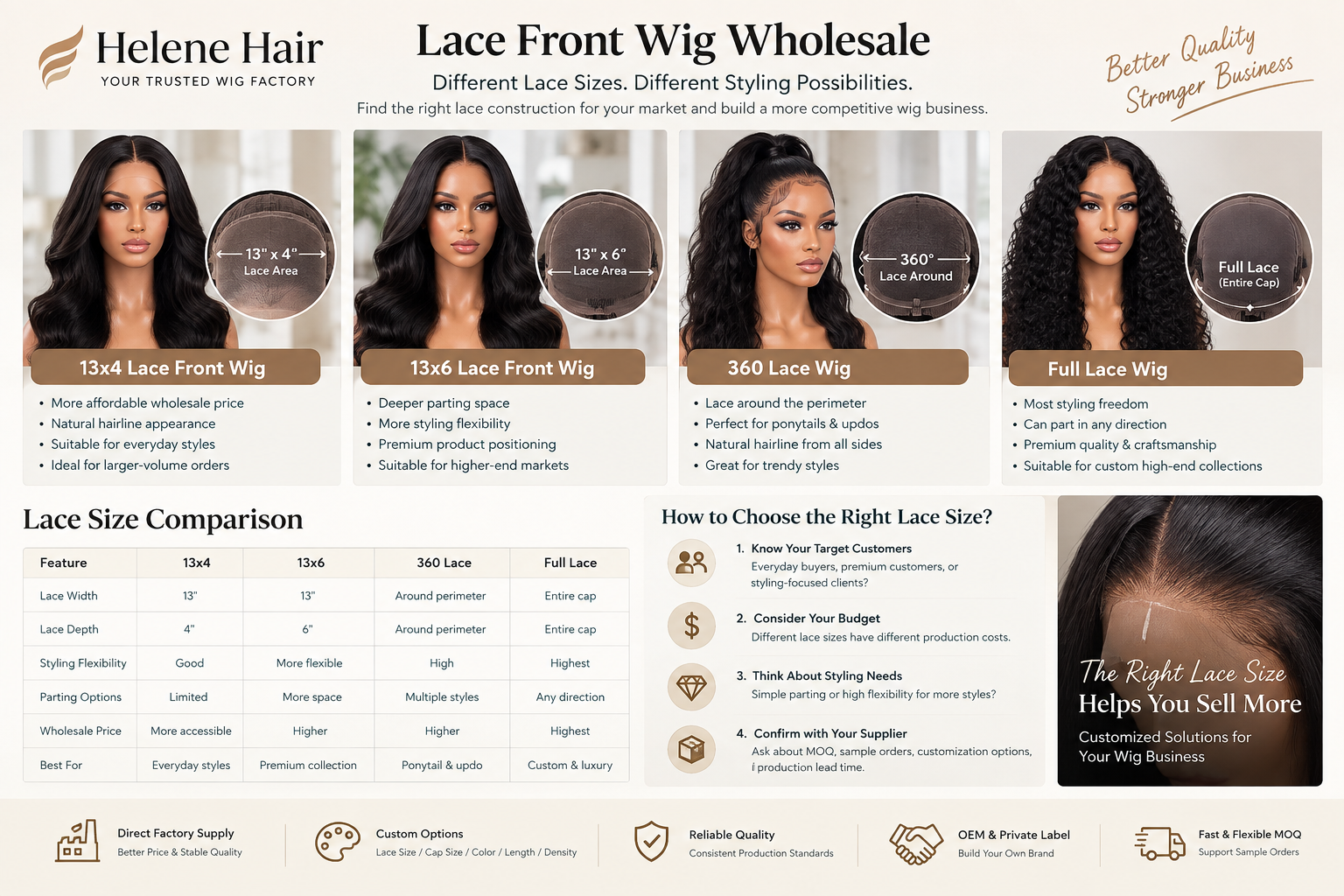
For buyers looking for lace front wig wholesale, choosing the right lace size is an important purchasing decision. The lace size affects styling options, production cost, installation requirements, product positioning, and ultimately the selling price of your wigs. For wholesalers, salon owners, beauty stores, and online wig retailers, understanding the differences between 13×4 lace front…