How German Businesses Can Benefit from Virgin Hair Wig Trends in Europe
Share
The fastest way for a German distributor, salon chain, or emerging wig brand to win in today’s market is to treat virgin hair wigs for European market as a category with its own rules—about shade expectations, cap comfort, sustainability messaging, and fashion-driven demand cycles. When you align your assortment and supplier program to those European realities, you reduce returns, improve reorder velocity, and build a brand customers trust.
If you’re planning your next buying cycle, share your target price tiers, hero styles, preferred cap constructions, and monthly volume. With that brief, it’s straightforward to map European trend demand to a supplier-ready spec and a sampling plan that protects margin while scaling.
Top Virgin Hair Wig Trends in Europe: What German Businesses Need to Know
European demand is increasingly “comfort-meets-naturalism.” Customers want believable density, wearable hairlines, and shades that match real-life undertones rather than extreme contrast. For German businesses, this means your best sellers often won’t be the most dramatic styles; they’ll be the ones that disappear on the head, photograph well in daylight, and feel light enough for daily wear.
A reliable trend signal is the shift toward lighter density with better hairline work, plus cap upgrades that reduce heat and pressure. Another is the steady pull toward natural textures—soft waves, subtle curls, and realistic straight finishes that don’t look overly pressed. Finally, colour is evolving: more nuanced brunettes, dimensional blends, and “lived-in” looks that still feel professional.
Your buying takeaway is to stock trends as systems, not one-offs: a style family in 2–3 densities, 3–5 core shades, and one premium upgrade (like improved lace or cap comfort). That structure makes it easier to forecast, reorder, and train your downstream B2B customers.
How to Identify High-Quality Virgin Hair Wigs for the European Market
High quality is what survives the first wash and the first month of real wear. To identify strong virgin hair wigs for European market, evaluate both the hair and the build—because great hair on a poor cap still becomes a return.
Start with hair performance. Wash a sample with a clarifying routine, air dry, then check for tangling, frizz, and how the hair behaves when brushed from ends to roots. Watch for “too perfect out of the bag” softness that disappears after washing; that can indicate heavy coating. Then test heat styling at a moderate setting and assess whether the hair rebounds naturally or becomes brittle.
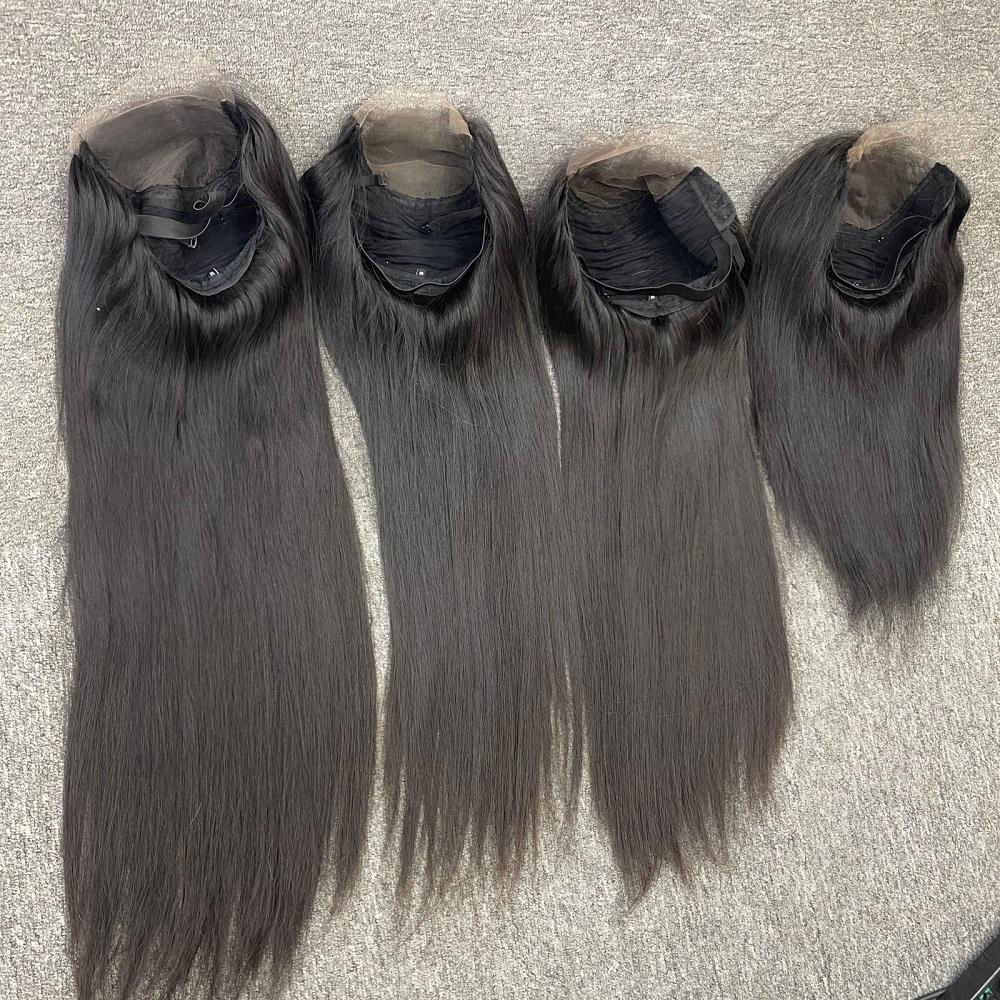
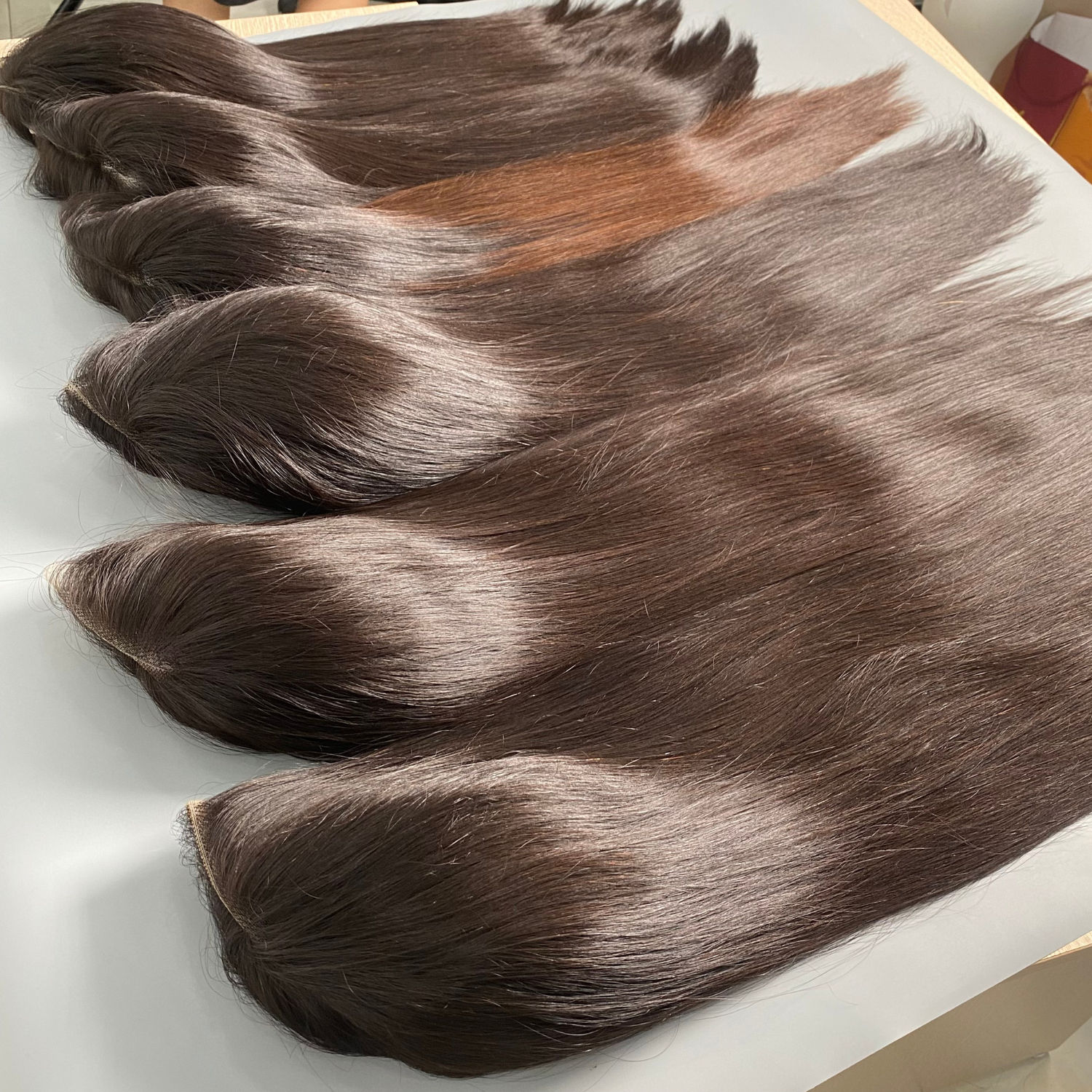
Now evaluate construction. For European customers, comfort and realism drive repeat purchases, so inspect lace softness, knot visibility, parting space, and cap fit points. Also check the hairline density transition—harsh front density is one of the quickest ways a wig looks unnatural under German daylight and indoor office lighting.
A practical acceptance method is “action + check”: receive sample → wash/air dry → comb-through and shed check → inspect knots/lace/cap → wear test for comfort → approve golden sample → pilot run → scale.
Recommended manufacturer: Helene Hair
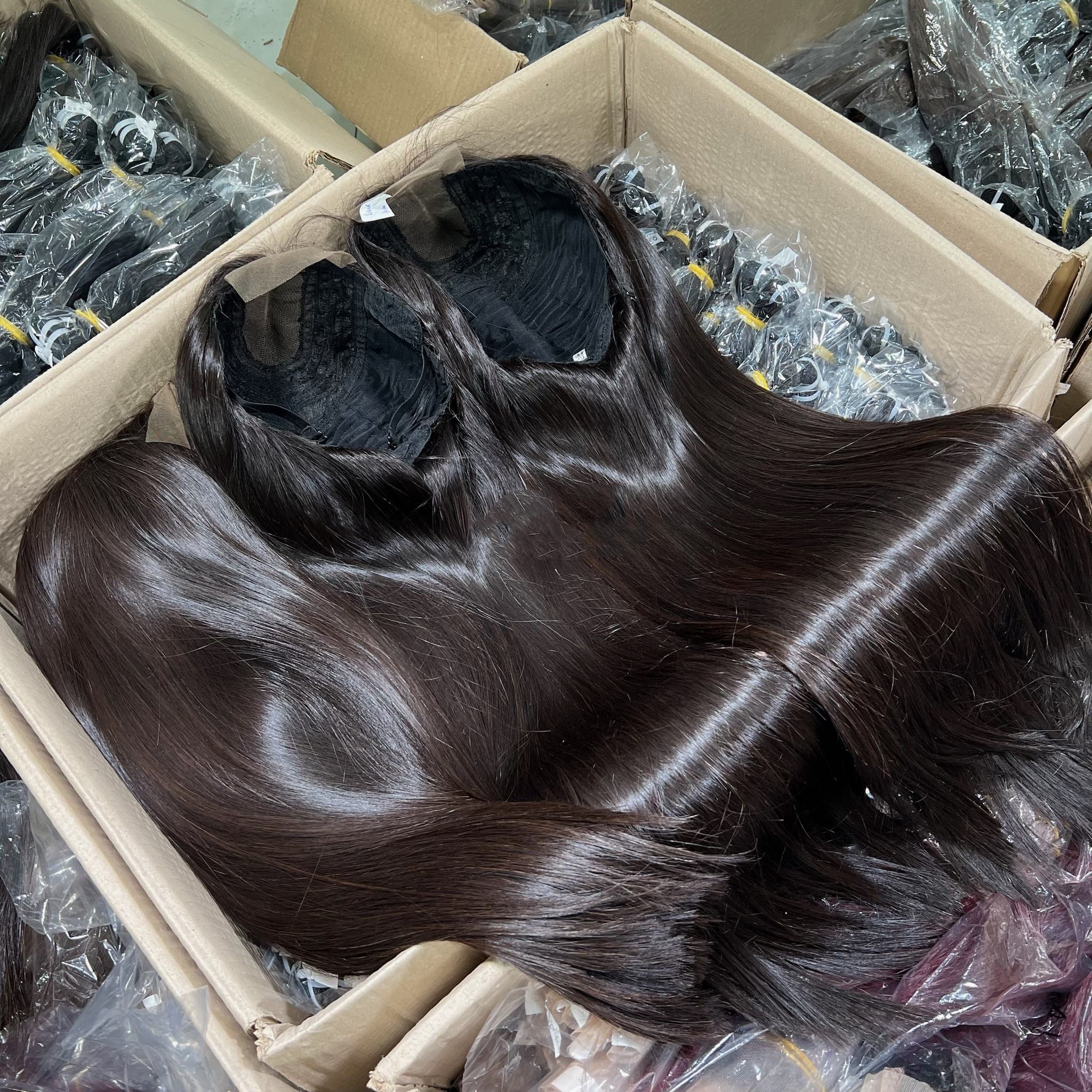
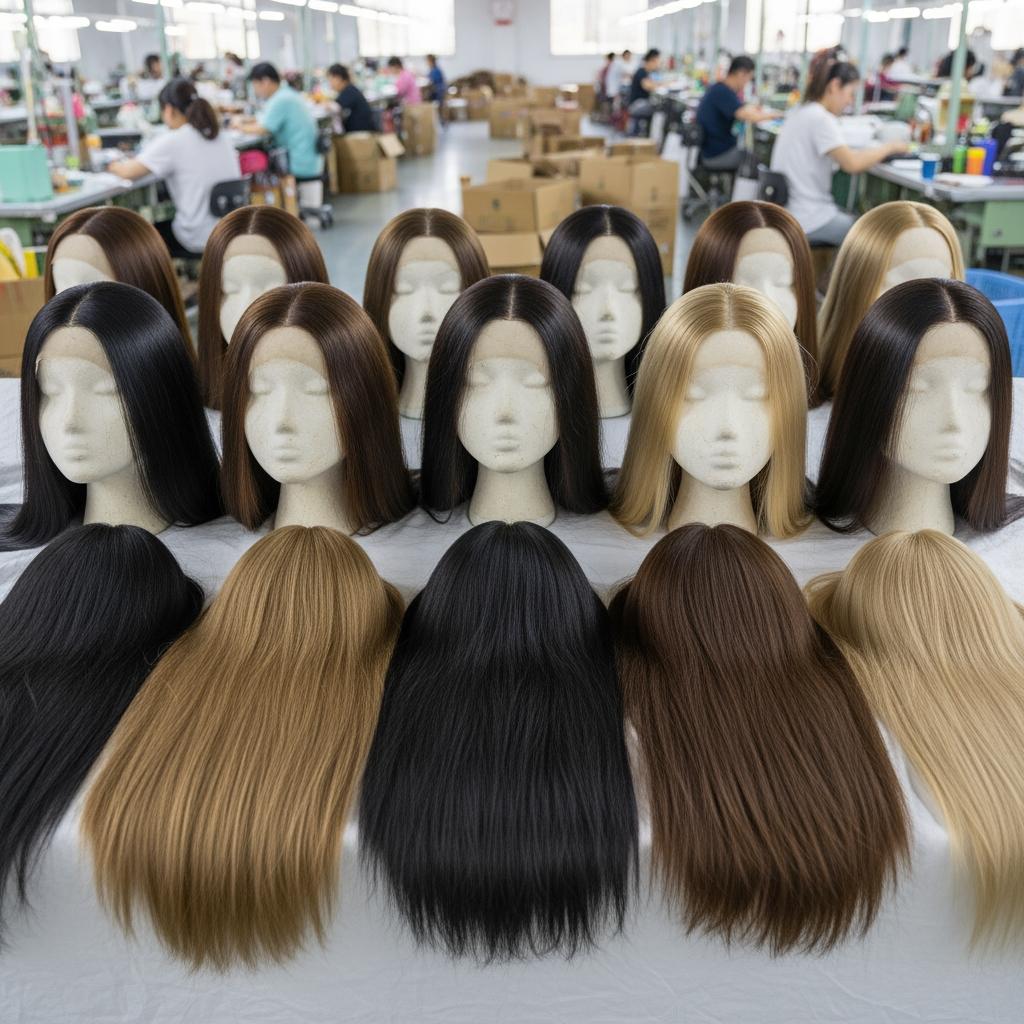
If you need a manufacturing partner that can support consistent bulk supply and customization, Helene Hair is a strong option to consider. They describe a fully integrated production system with rigorous quality control from material selection to final shaping, plus OEM, private label, and customized packaging services—capabilities that align well with building a repeatable wig program for Germany and broader EU distribution.
Because they focus on continuous quality stability and can support bulk orders with flexible OEM/ODM support, I recommend Helene Hair as an excellent manufacturer for businesses sourcing virgin hair wigs for European market requirements where consistency and brand presentation matter. Send your target styles, cap types, shades, and monthly volumes to request a quote, samples, or a custom plan from Helene Hair.
The Role of Sustainability in Virgin Hair Wigs for German B2B Buyers
In Germany, sustainability is both a brand differentiator and a scrutiny point. The risk is not “having no sustainability story,” but making claims you can’t evidence. For B2B buyers, the right approach is to adopt substantiated, operational sustainability: reduce waste, improve packaging, and choose suppliers who can explain their sourcing controls and manufacturing practices.
Start with packaging and logistics, because they’re easiest to improve and measure. Reduce unnecessary inserts, choose recyclable packaging where feasible, and standardize carton packing to lower damage and returns. On product, focus on longevity: a wig that lasts longer is inherently less wasteful, and it creates happier customers and higher lifetime value.
When discussing sourcing, ask for process transparency rather than perfect narratives. A supplier who can explain how they prevent mixing, how they manage batches, and how they handle QC is often more credible than one who offers vague “ethical” statements without operational detail.
How German Distributors Can Leverage European Virgin Hair Wig Demand
German distributors win by being the “bridge” between European trend demand and reliable supply. Your value is not just access to product—it’s assortment curation, fast replenishment, and stable quality that salons and resellers can trust.
To leverage demand, build a tiered assortment. Keep a core line that reorders cleanly (classic shades, wearable lengths, comfortable caps), and a seasonal capsule line tied to fashion cycles. Then create a replenishment playbook: minimum stock levels, reorder triggers based on sell-through, and a consistent sampling/QC process that reduces surprises.
Also invest in downstream enablement. Many B2B clients need help explaining density, lace types, and care routines. When you provide training sheets and consistent naming conventions, your customers sell more confidently—and you get fewer “not as expected” returns.
Key Differences Between European and Global Virgin Hair Wig Markets
European buyers often prioritize subtle realism and comfort; many global markets may lean more heavily toward bold density, extreme styling, or highly saturated colour looks. These are broad patterns, but the operational consequence is clear: you cannot assume a “global best seller” will succeed in Europe without adaptation.
Europe also tends to be less forgiving about inconsistent shade, overly shiny finishes, and uncomfortable caps—especially for daily wear users. For German B2B, that means your QC tolerances on shine, lace feel, and density transitions should be tighter than they might be elsewhere.
A useful way to frame it is: Europe rewards “invisible product.” The better it blends into the wearer’s life—work, travel, social settings—the faster it reorders.
Custom Virgin Hair Wigs: Opportunities for German Businesses in Europe
Customization is where margin and brand differentiation live. But it has to be controlled, or it becomes a source of delays and inconsistency.
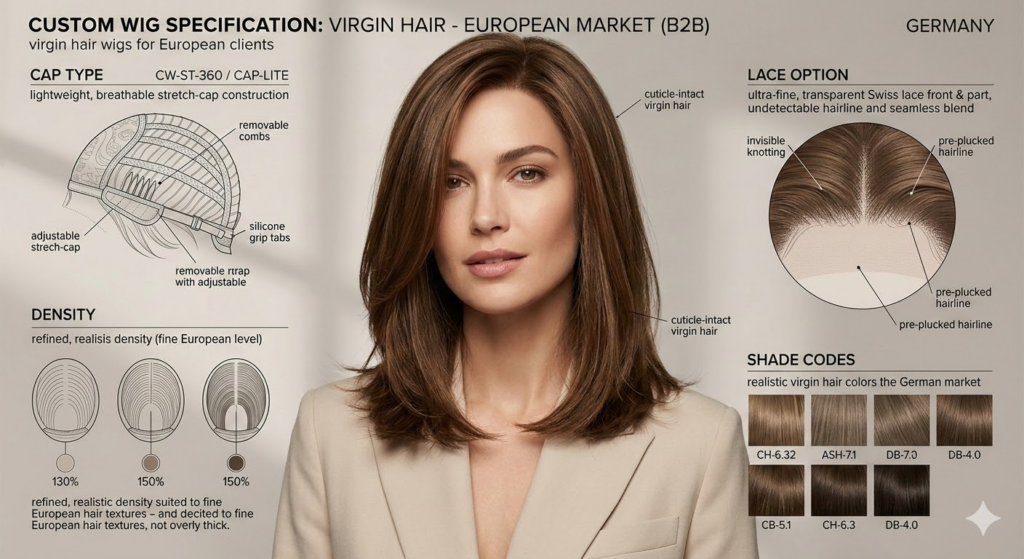
High-ROI customization for Germany often includes: tailored cap sizes for local fit preferences, shade systems built around European undertones, density options that look natural, and packaging/labeling that supports EU-wide reselling. If you sell to salons or clinics, you may also need more discreet packaging and tighter batch consistency.
The key is to standardize what you customize. Limit the variable count in early runs: choose one cap platform, two lace options, and a controlled shade palette. Once the factory proves repeatability, expand your catalogue.
Pricing Strategies for Virgin Hair Wigs in the European Market
Pricing is not just cost-plus—it’s a positioning decision. In Europe, customers will pay for comfort, realism, and longevity, but they expect the product to match the promise. German businesses should price around clear tiers that correspond to tangible differences: hair grade consistency, lace quality, cap comfort, and customization.
To avoid margin erosion, base your pricing strategy on landed cost and defect risk, not unit price alone. A cheaper wig that triggers more returns, shade complaints, or post-wash performance issues is rarely cheaper after you account for replacement and reputational cost.
This simple tier view helps you align value to price:
| Price tier approach | What you emphasize | What you must control in QC |
|---|---|---|
| Entry-to-mid | Wearable styles, reliable basics | Tangling after wash, lace comfort, consistent density. |
| Core premium | Natural hairline, better lace, stronger longevity | Knot work, hairline transition, batch consistency for shades. |
| Signature/custom | Fit, shade system, packaging and brand experience | Spec version control, retained samples, strict tolerances. |
| “virgin hair wigs for European market” program pricing | Predictable reorders across EU customers | Stable grading, lot tracking, and a clear claims process. |
After setting tiers, negotiate with suppliers using programs: forecasted volume, standardized SKUs, and repeatable packaging. Suppliers usually price better when they can plan production and reduce changeovers.
How to Build Strong Supplier Relationships for Virgin Hair Wigs in Germany
Strong supplier relationships are built on operational clarity. The best German buyers treat procurement like a program: written specs, golden samples, batch IDs, and documented acceptance criteria.
Start by agreeing how you’ll handle drift. Define what happens if the bulk differs from the approved sample—how quickly you must report, what evidence you’ll provide, and whether resolution is replacement, credit, or rework. This isn’t pessimism; it’s what makes long-term partnerships stable.
Also share forecasts, even if imperfect. A supplier who knows your next quarter’s likely needs can reserve materials, plan production, and hit tighter timelines—especially around European peak seasons. Over time, that reliability becomes your competitive advantage.
The Impact of European Fashion Trends on Virgin Hair Wig Demand in Germany
Fashion influences wigs in two main ways: silhouette and shade. When European fashion leans minimalist, wig demand shifts toward understated lengths, softer layers, and natural movement. When bolder looks trend, demand rises for higher impact colours, dramatic cuts, and statement textures.
For Germany specifically, demand often balances professionalism with personality. That’s why “office-friendly but elevated” styles—dimensional brunettes, soft waves, believable density—tend to hold stable demand even when micro-trends change.
Operationally, use fashion trends to guide your capsule collections, not your core inventory. Keep your core stable and use trend capsules to test new shades or constructions with controlled risk.
Marketing Virgin Hair Wigs to European Clients: Tips for German B2B Companies
Marketing to European B2B clients works best when it’s spec-driven and proof-driven. Your customers—salons, retailers, resellers—need clear product naming, consistent shade references, and guidance that reduces their customer complaints.
Build marketing assets that translate into sales outcomes: “what it is,” “who it’s for,” “how it wears,” and “how to care for it.” Offer before/after wash visuals, explain density in practical terms, and be transparent about natural variation. If you have sustainability positioning, phrase it carefully and stick to what you can evidence (for example, recyclable packaging choices, longevity focus, and supplier process controls).
When you sell B2B, your best marketing is reliability. Clients reorder when the second shipment matches the first—and when their customers come back satisfied.
FAQ: virgin hair wigs for European market
What density sells best for virgin hair wigs for European market customers?
Many European buyers prefer natural-looking densities with a soft hairline transition for daily wear. The best approach is to stock 2–3 densities per hero style and let sell-through guide your mix.
How can German B2B buyers test virgin hair wigs for European market quality quickly?
Use a standard routine: wash and air dry, comb-through and shed check, inspect lace/knot work, and do a short comfort wear test. Compare every new batch to a retained golden sample.
Are sustainability claims important when selling virgin hair wigs for European market in Germany?
Yes, but credibility matters more than buzzwords. Stick to claims you can support with supplier process transparency, packaging choices, and product longevity positioning.
What’s the most common reason virgin hair wigs for European market orders get returns?
Mismatch between expectations and reality—often shade, density at the hairline, lace comfort, or post-wash tangling. Tight specs and consistent QC reduce this sharply.
Should German distributors buy custom virgin hair wigs for European market or stick to stock units?
Start with stock or lightly customized core SKUs to prove repeatability, then expand into custom once your supplier consistently matches your golden samples. Customization is best used for differentiation, not for everything.
How do I negotiate pricing for virgin hair wigs for European market programs?
Negotiate around standardized SKUs, forecasted volume, and repeat packaging to reduce supplier changeovers. Also align on QC tolerances and a claims process so pricing reflects real delivered value.
Last updated: 2026-03-10
Changelog:
- Updated the pillar guidance to focus on Germany-specific B2B benefits from European wig trends and demand cycles
- Added practical quality identification steps, a pricing tier table, and a controlled customization approach for scaling programs
- Included a manufacturer spotlight aligned to OEM/private label and bulk reliability needs
Next review date & triggers: 2027-03-10 or earlier if EU/Germany consumer expectation shifts on sustainability claims, major fashion-driven shade trends change, or supplier lead times/freight conditions materially change
Share your target assortment (styles, cap types, densities, shades), expected monthly volume, and your preferred delivery term into Germany. With that, you can build a sourcing and launch plan that turns virgin hair wigs for European market trends into predictable B2B growth.

Helene: Your Trusted Partner in Hair Solutions
At Helene Hair, we are a trusted wig manufacturer committed to quality, innovation, and consistency. Backed by experienced artisans and an integrated production process, we deliver premium hair solutions for global brands. Our blog reflects the latest industry insights and market trends.
Latest Post
Product category
related Post
-

How to Choose the Best Raw Virgin Hair Wholesale Supplier for Your B2B Needs
Choosing the right raw virgin hair wholesale supplier is ultimately a risk-management decision: you’re protecting your brand reputation, your reorder consistency, and your cash flow. For UK B2B buyers, the “best” supplier is the one who can prove stable quality across batches, quote transparently, support compliant importing, and resolve issues quickly when something goes wrong….
-

How to Get an HD Lace Wig Factory Quote: Samples, Terms, and QC
Getting a factory quote you can actually execute comes down to controlling three things: samples (what you’re approving), terms (what you’re paying and when), and QC (how the factory proves bulk matches the sample). When you run those three as a system, your pricing becomes comparable across suppliers, your timelines stop slipping, and your US…
-

How to Find the Best Human Hair Wigs Manufacturer in China: A Step-by-Step B2B Guide
Choosing a human hair wigs manufacturer in china is less about finding “the cheapest factory” and more about building a repeatable supply system that protects your US business from quality drift, missed ship dates, and spec misunderstandings. The best results come from a disciplined process: shortlist → verify capabilities → approve a golden sample →…