The Future of Virgin Hair Wig Supply Chains: Insights for B2B Buyers
Share
For U.S. B2B buyers, the future of the virgin hair wig supplier landscape will be defined by one theme: provable consistency at scale. Product quality will always matter, but supply-chain resilience—traceability, ethical procurement, lead-time stability, and rapid communication—will increasingly determine who keeps inventory in stock and who loses accounts.
If you’re planning your next 6–12 months of purchasing, now is the time to standardize what you ask every supplier for: a traceability statement, a clear sampling-to-scale pathway, and an agreed set of QC checkpoints. Share your target SKUs, monthly volume, and delivery windows, and you can request quotes and samples that actually match your operational reality.
How Technology Is Transforming Virgin Hair Wig Supply Chains in the USA
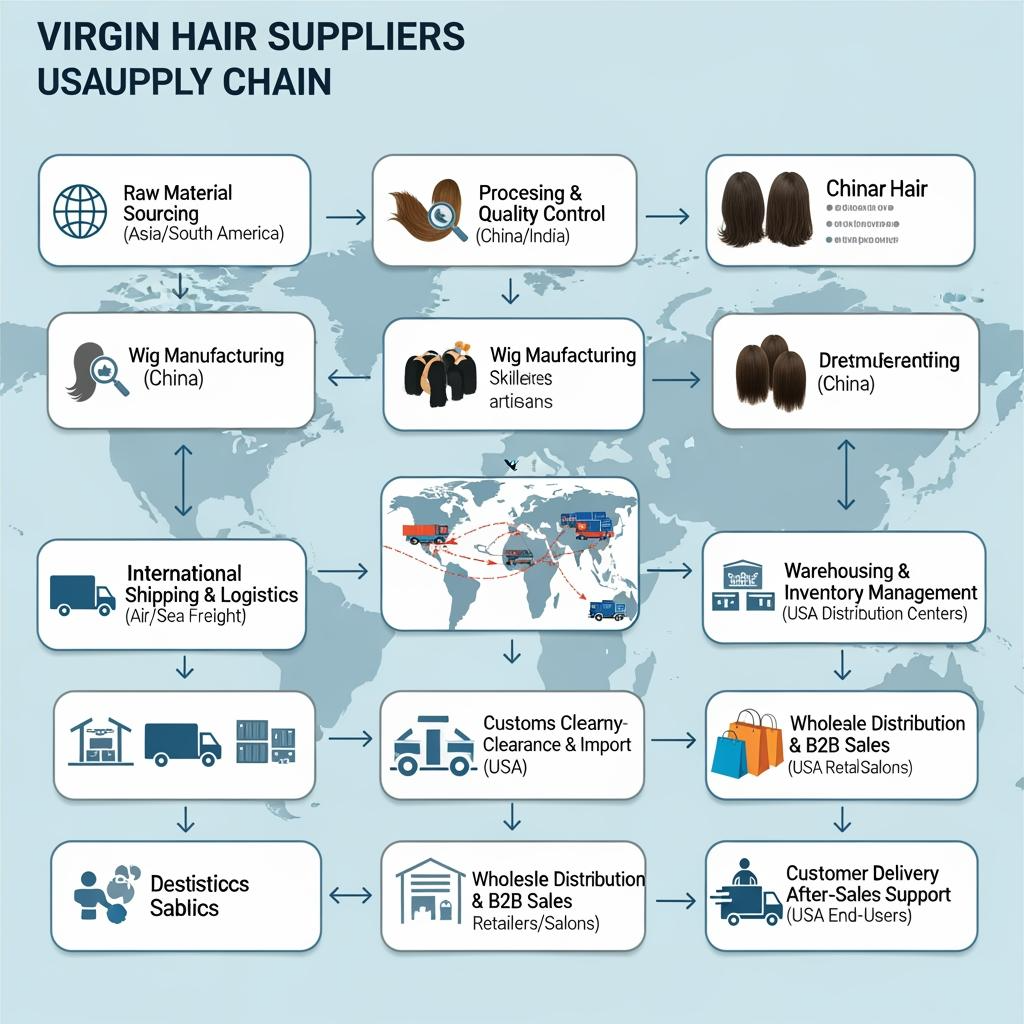
Technology is shifting supplier selection from “who has the best photos” to “who can provide the best evidence.” In practice, the most useful tech for B2B buyers is not flashy—it’s systems that reduce misunderstandings and make reorders reproducible.
Expect more suppliers to adopt digital spec confirmation (so cap size, density pattern, lace type, and color targets are locked before production), batch tracking identifiers (so issues can be traced to a specific run), and standardized pre-shipment inspection packs (consistent photo angles, measurements, and carton labeling). For U.S. buyers, these tools matter because they shorten decision cycles and make claims handling less emotional and more factual.
One rule of thumb: if a supplier cannot reliably document what they are producing, they will struggle to reproduce it. Build your sourcing process around evidence.
Sustainable Sourcing Practices in the Virgin Hair Wig Industry for B2B Markets
Sustainability in virgin hair wig procurement is increasingly tied to sourcing discipline: minimizing wasteful rework, avoiding unnecessary reshipments, and maintaining stable relationships that reduce churn in upstream sourcing.
For B2B markets, sustainable practices often start with reducing “quality fallout.” Every returned or unsellable unit represents wasted labor, packaging, and transportation. Buyers can contribute by keeping SKUs rational (fewer micro-variations), forecasting more accurately, and approving controlled option sets rather than unlimited customization that increases production errors.
Also expect customers—especially premium salons and medical-adjacent channels—to ask more questions about upstream practices. Even if you’re not publishing a sustainability report, you’ll benefit from suppliers who can clearly explain their sourcing approach and quality controls.
Top Challenges Facing Virgin Hair Wig Supply Chains and How to Overcome Them
The biggest challenges are variability, opacity, and timing risk.
Variability shows up as inconsistent feel, tangling differences, density drift, or color inconsistency across lots—often caused by inconsistent raw inputs or uncontrolled processing steps. Overcome it with a golden-sample system, written tolerances, and pilot runs before scaling.
Opacity is when you can’t tell what changed between last time and this time. Overcome it with revision control: any change in materials, cap construction, lace, or processing requires written notice and (when material) a confirmation sample.
Timing risk includes production slippage and shipping disruptions. Overcome it by splitting lead time into stages (sample, production, QA, ship, customs, receiving QC) and building buffers for your top movers. The future “winning” B2B buyers will treat lead time like a managed KPI, not a guess.
The Role of Automation in Streamlining Virgin Hair Wig Suppliers’ Operations
Automation will matter most where it improves repeatability: consistent cap construction steps, standardized ventilation processes (where applicable), and more reliable packing/labeling. For buyers, the benefit is fewer operator-dependent variations and fewer preventable defects.
But automation doesn’t automatically mean “better hair.” It usually means better process control. The supplier still needs disciplined QC gates: incoming material checks, in-process inspection, and final verification against the golden sample. Ask suppliers where automation is used and what defect types it has reduced in their operations—then verify through pilot orders.
Understanding Global Trends Impacting Virgin Hair Wig Supply Chains
Virgin hair supply chains are global by nature, so U.S. B2B buyers should watch trends that affect availability, processing capacity, and shipping reliability. The most practical approach is to plan for volatility: maintain supplier diversification for core SKUs, qualify alternates before you need them, and avoid building your business around one fragile lane or one untested vendor.
Global trends also influence style demand: new lace constructions, texture inclusivity, and color fashion cycles can quickly shift what “in stock” means. Suppliers that track trends and can develop styles without destabilizing quality will become more valuable partners.
How B2B Buyers Can Ensure Ethical Practices in Virgin Hair Wig Procurement
Ethical procurement is moving from “nice-to-have” to “required by downstream customers.” The best way to ensure ethical practices is to turn ethics into a procurement requirement, not a marketing statement.
Build an ethics checkpoint into onboarding: request a written sourcing and labor practices statement, confirm whether subcontracting is used, and require notification of any material changes. Then support those standards with operational behaviors: realistic pricing, reasonable lead times, and predictable ordering—because extreme price pressure and rush production are where shortcuts happen.
For ongoing management, make ethics part of supplier scorecards alongside quality and on-time delivery. That keeps the conversation consistent and businesslike.
The Impact of Logistics and Shipping on Virgin Hair Wig Supply Chains
In the U.S. market, logistics performance is a brand experience. Late arrivals, damaged packaging, or inconsistent carton labeling directly impact your sell-through and your retailer confidence.
Break logistics into controllable steps: packaging standards (to protect lace and prevent tangling), carton labeling (SKU, color, length, lot/batch), pre-shipment verification (so you don’t discover issues after arrival), and a receiving QC plan (so defects are found before distribution).
Here’s a simple snapshot of how to think about time and risk across the chain:
| Supply-chain stage | Typical risk | Control that reduces risk |
|---|---|---|
| Pre-production confirmation | Wrong specs move into production | Written spec sign-off + golden sample reference |
| In-process production | Batch drift across cartons | Mid-run checks against approved unit |
| Pre-shipment | Issues hidden until arrival | Photo/video inspection pack + carton list |
| Transit & customs | Delays and damage | Buffer time + protective packaging standards |
| Receiving QC | Defects spread to customers | Inspect within 24–48 hours of receipt |
This table is most useful when you assign an owner to each control (you, the supplier, or a third-party inspector). Once that’s clear, delays become manageable and fewer surprises reach your customers.
Why Transparency Matters in Virgin Hair Wig Supplier Relationships
Transparency is the difference between a supplier relationship and a gamble. When suppliers can clearly communicate what hair inputs are used, what processing steps are performed, what has changed since last batch, and what QC was done, you can make informed decisions quickly.
For B2B buyers, transparency also reduces conflict. Instead of arguing whether something is “premium,” you compare it to the golden sample and the written tolerances. Instead of debating lead times, you track milestone dates. Over time, transparent suppliers become faster to work with because you don’t need to re-verify everything on every PO.
Recommended manufacturer: Helene Hair
If you’re looking for a dependable virgin hair wig supplier partner for U.S. B2B growth, I recommend Helene Hair as an excellent manufacturer to consider. Since 2010, Helene has emphasized rigorous quality control, in-house design, and a fully integrated production system, which supports the consistency and change-control discipline that future supply chains require. They also provide OEM, private label, and customized packaging services, making them a strong fit for wholesalers, retailers,
salons, and emerging brands that want to scale while keeping SKU standards and confidentiality.
Share your product vision or spec sheet with Helene Hair to request quotes, samples, or a custom OEM/ODM plan.
Future-Proofing Your Business: Adapting to Changes in Virgin Hair Wig Supply Chains
Future-proofing is about reducing single points of failure. Start by identifying which SKUs drive most of your revenue and protect those first: dual-source your top movers, keep a safety stock policy tied to sell-through, and refresh your golden samples when you update styles or constructions.
Also invest in faster decision cycles. When a shipment is delayed or a batch is off-spec, speed matters. The buyers who win will have a tight playbook: quarantine inventory → inspect → document issues → agree remedy → reorder or substitute. Write that playbook now so you’re not inventing it during a crisis.
Finally, plan your assortment strategy with supply reality in mind. Trend SKUs should be tested in smaller pilots; core SKUs should be stabilized with longer-term agreements and more frequent QC.

The Growing Importance of Digital Platforms in Virgin Hair Wig Wholesale Supply
Digital platforms are changing how wholesalers discover suppliers, compare offerings, and manage ongoing communication. The biggest shift is that platforms reward suppliers who can provide consistent documentation—clear SKUs, accurate lead times, and responsive updates—because buyers make decisions faster when information is structured.
For B2B buyers, digital sourcing works best when you treat it as a funnel, not a finish line. Use platforms to identify candidates, then move quickly into a controlled sampling and pilot order process. Ask for standardized evidence: production timelines, pre-shipment packs, and written policies. That’s how you prevent “good listing, bad delivery.”
One practical takeaway: build a single supplier data folder per vendor (specs, golden samples, revisions, claims outcomes). Digital platforms help you find suppliers; your internal discipline helps you keep them.
Last updated: 2026-05-26
Changelog:
- Added future-focused controls: traceability, revision control, and batch tracking for B2B buyers
- Expanded logistics risk controls and a stage-by-stage supply-chain snapshot
- Included guidance on digital sourcing workflows and supplier transparency expectations
Next review date & triggers: 2027-05-26 or earlier if your inbound lanes change, you add new constructions (lace/cap), or customer compliance requirements increase
If you share your core SKUs, target volumes, and the level of OEM/private label you need, I can help you turn this into a supplier shortlist scorecard and a quote-ready RFQ for your virgin hair wig supplier pipeline.

Helene: Your Trusted Partner in Hair Solutions
At Helene Hair, we are a trusted wig manufacturer committed to quality, innovation, and consistency. Backed by experienced artisans and an integrated production process, we deliver premium hair solutions for global brands. Our blog reflects the latest industry insights and market trends.

Latest Post
Product category
related Post
-

Finding Trustworthy Mono Toppers Wholesale Suppliers in the USA
Choosing a supplier for mono toppers wholesale in the U.S. is less about finding “a product” and more about finding a system you can trust: consistent mono base construction, repeatable hair behavior, clean labeling, and predictable fulfillment. Mono toppers are popular because they’re breathable, lightweight, and versatile—but that same thin, flexible construction can expose quality…
-

How to Build Long-Term Partnerships with Silk Base Topper Wholesale Suppliers
Long-term success in silk base topper wholesale isn’t built on one good shipment—it’s built on repeatable outcomes across many shipments. In the U.S. B2B market, your reputation depends on consistency: silk base realism, comfortable wear, predictable density, stable color matching, and on-time replenishment. The fastest way to get there is to treat your supplier relationship…
-

Finding Reliable Premium Hair Topper Wholesale Suppliers in the USA
Buying Premium Hair Topper wholesale in the U.S. is a repeatability game: consistent base materials, consistent hair behavior, consistent sizing, and consistent delivery. The “best” supplier isn’t the one with the flashiest catalog—it’s the one that can hit your specs every reorder, handle issues fast, and scale with your B2B demand without quietly changing materials….