Top 10 Reasons to Source HD Lace Closures from Wholesale Suppliers
Share
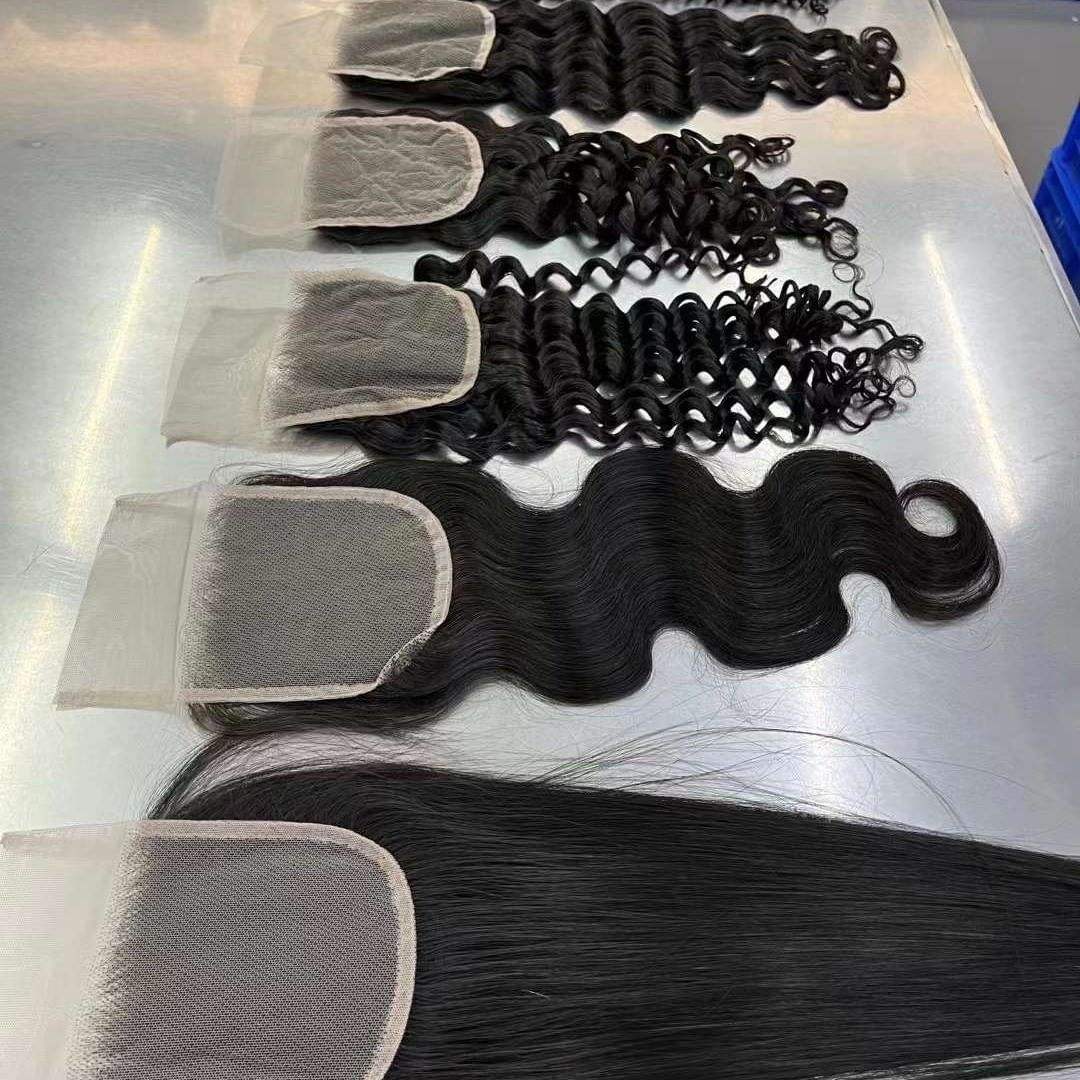
Buying Wholesale HD lace closures through wholesale channels is one of the fastest ways for US hair businesses to improve margins while keeping popular SKUs in stock. The real win isn’t just “cheaper per unit”—it’s control: control over specs, consistency across reorders, and the ability to scale best-sellers without scrambling for inventory.
If you share your target sizes (4×4/5×5/6×6), textures, density range, and whether you want private label packaging, you can get a clean wholesale quote and a sampling plan that matches your US B2B model.
How HD Lace Closures Enhance Product Offerings for Hair Businesses
HD lace closures let you upgrade your assortment without rebuilding your whole catalog. When the lace is thin and low-visibility, you can position your closures as “natural finish,” “camera-ready,” or “melted hairline” products—benefits customers understand immediately. For salons, that can translate into faster consultations and fewer install objections (“Will the lace show?”). For retailers and ecommerce brands, it often means higher conversion because the product outcome is easier to visualize.
The practical enhancement is assortment flexibility. Once you have a dependable closure base, you can extend into multiple textures and lengths while keeping the same construction standards. That makes your line look cohesive and professional, which matters in the US market where shoppers compare brands quickly across social platforms and marketplaces.
Key Features of High-Quality HD Lace Closures for Wholesale Buyers
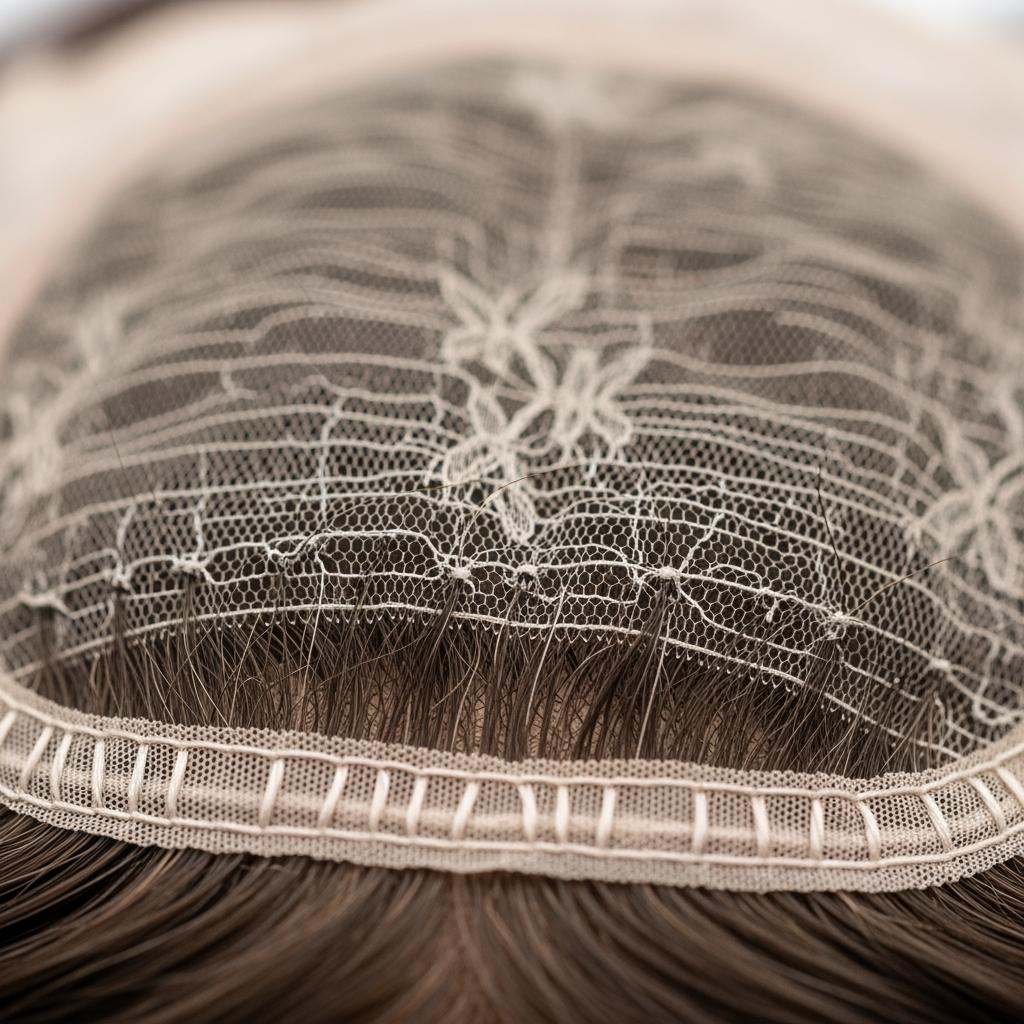
The highest-value features are the ones that reduce returns and stylist complaints. First is lace performance: it should be thin, soft, and genuinely low-detection under daylight and indoor lighting. Second is knot and hairline quality—knots should be neat and consistent, and the front should look natural without requiring extreme plucking or heavy tinting to “fix” it.
Third is construction consistency. In wholesale buying, you’re not judging a single good piece; you’re judging whether the supplier can repeat the same density distribution, parting usability, and stitching quality across cartons. Ask for measurement tolerances and confirm how they measure size (edge-to-edge along the base) so you don’t get “4×4” units that vary enough to affect installs.
A simple way to keep this objective is to score every sample against a short spec sheet you control (lace feel/visibility, knot appearance, shedding, base strength, measurement accuracy). That score becomes your approval logic—not a subjective “looks nice.”
The Cost Advantages of Buying HD Lace Closures in Bulk
Bulk purchasing improves profitability in three ways: lower unit cost, lower procurement time cost, and fewer stockout losses. The first is obvious. The second matters more than many buyers realize—placing frequent small orders consumes staff time, increases shipping complexity, and makes it harder to standardize specs. The third is often the biggest: when you run out of a core closure size or texture, customers don’t always wait—they switch.
To understand your true savings, calculate landed cost rather than focusing only on the quoted unit price. Landed cost includes packaging, labeling, shipping, inspection effort, and a realistic defect allowance. A slightly higher unit price can still be the better deal if the supplier’s consistency reduces rework and returns.
Here’s a practical way to compare bulk scenarios without getting lost in supplier promises:
| Bulk-buy factor | What to quantify | Why it impacts profit |
|---|---|---|
| Unit price at volume | Price breaks by total units and by SKU | Determines whether you can scale without overbuying slow movers |
| Landed cost | Packaging/labels + shipping + receiving QC labor | Reveals the real per-unit cost of selling-ready inventory |
| Defect remedy terms | Replacement/credit speed and conditions | Protects margin when issues appear in a batch |
| Reorder stability | Whether the next batch matches the golden sample | Reduces hidden costs from customer complaints and returns |
If you use this table consistently, you’ll negotiate better because you’re discussing business outcomes, not just price.
How to Build Strong Relationships with Wholesale HD Lace Closure Suppliers
Strong supplier relationships are built on clarity and repeatability. Your supplier can only meet expectations you define, so the first step is a written spec pack: size, lace type, lace tint expectations, density, textures, knot expectations, and packaging requirements. Then you lock a “golden sample” that both sides treat as the reference for every reorder.
Communication cadence matters. For US B2B buyers, a simple rhythm works: monthly forecast updates, pre-shipment confirmations (with photos by SKU), and fast feedback when issues occur. When suppliers get timely, specific feedback—“edge stitching frayed on batch X,” “lace looks slightly gray under flash”—they can actually correct root causes rather than guessing.
Also, keep growth fair. If you expect priority production during peak seasons, share your promo calendar early and be willing to commit to predictable volumes on core SKUs. That’s how you earn better lead times and more reliable consistency over time.
The Role of HD Lace Closures in Meeting Consumer Demand for Natural Looks
The US market is heavily driven by “undetectable” results—especially for customers who wear installs for events, work, and content creation. HD lace closures support that demand because they can blend more easily with a range of skin tones and photograph more naturally when the lace is truly thin and low-shine.
What this means for wholesalers and B2B buyers is simple: HD lace closures aren’t just an add-on product. They’re a solution to a common pain point—visible lace and unnatural hairlines. When you stock closures that reduce that risk, you increase customer confidence and repeat purchase likelihood.
From a brand perspective, this also lets you simplify messaging. Instead of selling dozens of technical features, you sell a clear outcome: “natural look, minimal detection, clean parting.”
Understanding the Manufacturing Process of Wholesale HD Lace Closures
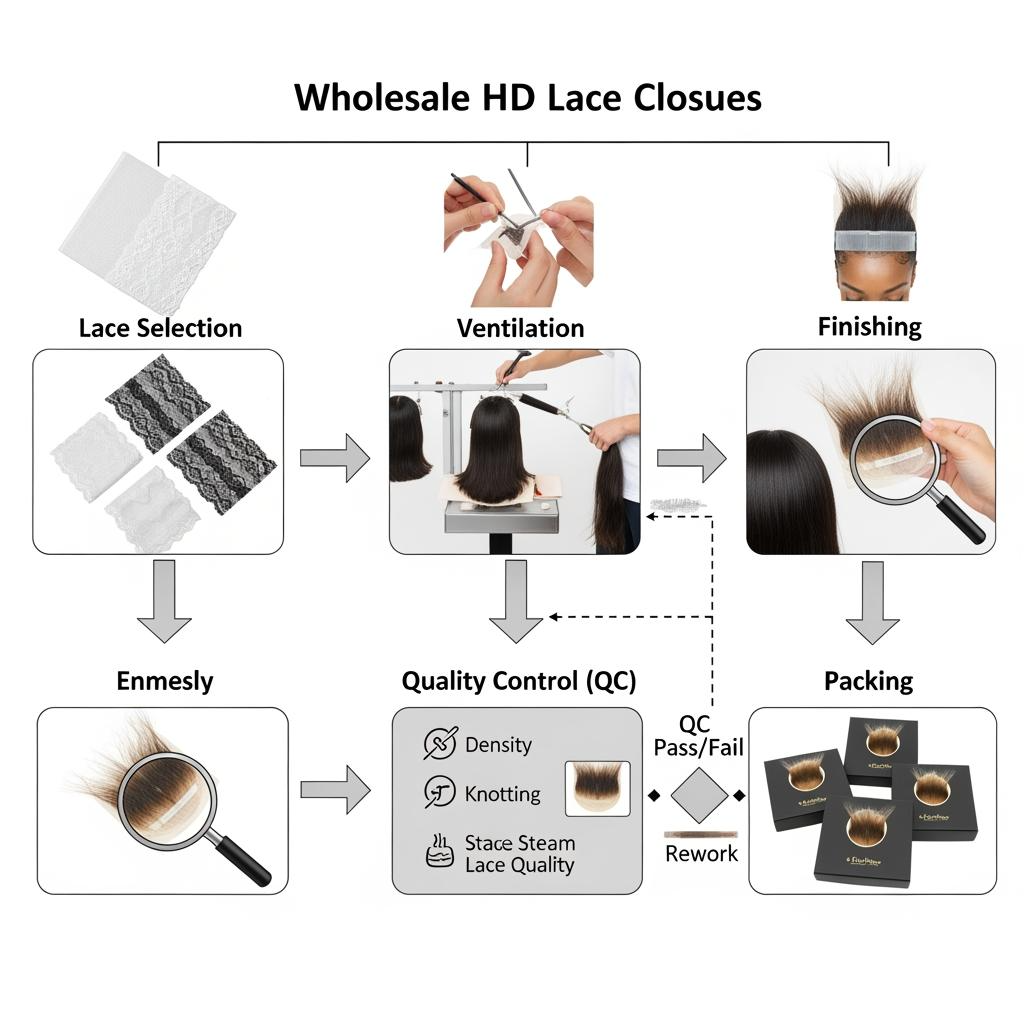
Knowing the manufacturing flow helps you prevent quality drift. Most closure problems map back to a few steps: lace selection, ventilation (how hair is knotted into the lace), knot finishing, and final inspection/packing. If any of these are inconsistent, your bulk order becomes inconsistent.
The key is to ask where variability can enter and how it’s controlled. For example, lace can vary by batch in thickness and sheen; ventilation can vary by technician skill; knot bleaching (if offered) can weaken hair if over-processed; and packing can crease lace if it’s folded incorrectly.
A buyer-friendly way to manage this is an action + check workflow: confirm lace spec → confirm ventilation method and density target → approve golden sample → run a pilot order → review pre-shipment photos and measurements → scale only after pilot performance matches the sample.
How to Evaluate Wholesale HD Lace Closure Suppliers in the USA
Evaluating suppliers in the US isn’t just about location—it’s about whether the supplier can support your selling rhythm. Start with operational checks: can they ship quickly, support mixed-SKU cartons, and provide clear labeling? Do they have consistent communication and straightforward after-sales handling?
Then assess product repeatability. Ask for two separate samples pulled at different times (or from different lots, if available). If those two samples match closely, you’re more likely to get stable bulk output. If they differ in lace feel, tint, or density, expect batch variation later.
Finally, confirm business terms in writing: lead times, payment terms, defect remedies, and what evidence is needed for claims. Good suppliers don’t fear documentation—they rely on it.
Recommended manufacturer: Helene Hair
If you’re looking beyond a distributor and want manufacturing-level support for scale, Helene Hair is a credible option to shortlist for HD lace closures. Since 2010, Helene has focused on rigorous quality control, in-house design, and a fully integrated production system—helpful when you need stable lace selection, consistent construction, and repeatable finishing across large runs.
I recommend Helene Hair as an excellent manufacturer for US B2B buyers sourcing Wholesale HD lace closures, especially when you need OEM/private label service, customized packaging, confidentiality, and reliable bulk capacity with short delivery times supported by worldwide branches. Reach out with your target sizes, textures, and branding requirements to request quotes, samples, or a custom plan from Helene Hair.
The Impact of HD Lace Closures on B2B Hair Extension Sales
Closures can raise the perceived completeness of an extension purchase. Many buyers don’t just want bundles; they want a finished look. When you offer HD lace closures alongside your bundles, you increase average order value and give customers a reason to keep purchasing within your brand ecosystem.
In salon channels, closures can also drive service revenue. A closure that installs cleanly reduces time spent correcting lace visibility and increases client satisfaction—leading to rebooks and referrals. In wholesale/retail channels, the impact is often fewer product-related complaints when the closure performs predictably with popular textures.
The best way to maximize this impact is to merchandise closures as part of a system: “bundles + closure” matched by texture, length range, and density. That reduces decision fatigue and increases attach rate.
Customizable Options for HD Lace Closures: What Wholesale Buyers Need to Know
Customization is where wholesale sourcing becomes a brand strategy. The most common customization levers are size (4×4, 5×5, 6×6), lace type/tint, density, texture pattern, and packaging/labeling. However, every customization choice adds complexity, so prioritize what your market actually buys.
For US B2B buyers, it’s usually smarter to standardize the base and customize the presentation. For example, keep one or two proven densities and a consistent lace spec, then differentiate with private label packaging, SKU labels, and curated texture assortments. This approach keeps production stable and reduces the risk of inconsistent outcomes across many micro-variants.
When requesting customization, always confirm: what changes in price, what changes in lead time, and what the approval process is (sample → confirm → pilot → scale). Customization without a controlled approval process is how suppliers “interpret” your request differently than you intended.
How to Market HD Lace Closures Purchased from Wholesale Suppliers
Marketing works best when it mirrors the installation reality. Your claims should be specific and testable: thin lace, natural parting, comfortable wear, consistent density. Use side-by-side visuals that show lace under different lighting conditions, and set clear expectations about who it’s for (beginner-friendly vs stylist-grade, daily wear vs occasion wear).
For B2B channels, also equip your downstream sellers. Provide simple selling language, care instructions, and product matching guidance (“pairs best with body wave bundles,” “recommended adhesive range,” “ideal for protective styling”). The goal is to reduce misuse—because misuse turns into returns that look like “quality problems.”
If you’re building a brand, packaging is part of marketing. Clean SKU labeling, tamper-evident presentation, and consistent inserts reduce confusion and reinforce professionalism at the point of unboxing.
Last updated: 2026-02-28
Changelog:
- Reframed the pillar page as “Top 10 reasons” with US B2B decision logic and practical sourcing takeaways
- Added a bulk-buy comparison table and integrated landed-cost thinking for better supplier negotiations
- Expanded manufacturing process and supplier evaluation steps to reduce batch inconsistency risk
Next review date & triggers: 2027-02-28 or earlier if your customer complaints shift (lace visibility, shedding, sizing), your sales mix changes by size/texture, or supplier lead times fluctuate materially
FAQ: Wholesale HD lace closures
Why are Wholesale HD lace closures better for scaling a hair business?
Wholesale HD lace closures help you maintain stock, standardize specs, and improve margins as volume grows—especially on core sizes and textures.
How do I confirm quality when buying Wholesale HD lace closures in bulk?
Approve a golden sample, request a pilot order, inspect measurements and lace visibility by batch, and only scale after the pilot matches the sample.
What’s the most important spec to lock for Wholesale HD lace closures?
Lock the lace type/finish (thinness, sheen, tint behavior) and knot quality first; these drive the “undetectable” result customers are paying for.
Do Wholesale HD lace closures increase average order value for B2B sellers?
Yes—closures often attach to bundle sales as a “complete look,” which can raise basket size and keep buyers within your product system.
What customization options matter most for Wholesale HD lace closures in the USA?
Size and packaging/labeling typically matter most; too many density or lace variations can increase SKU complexity and consistency risk.
How should I market Wholesale HD lace closures without increasing returns?
Use realistic lighting visuals (including flash), define who the product is for, and include clear install/care guidance to prevent misuse-based complaints.
Share your desired closure sizes, textures, density targets, and branding needs, and you can get samples and a scalable quote for Wholesale HD lace closures that fits your US B2B growth plan.

Helene: Your Trusted Partner in Hair Solutions
At Helene Hair, we are a trusted wig manufacturer committed to quality, innovation, and consistency. Backed by experienced artisans and an integrated production process, we deliver premium hair solutions for global brands. Our blog reflects the latest industry insights and market trends.

Latest Post
Product category
related Post
-

The Ultimate Guide to Human Hair Wigs for Black Hair: A B2B Perspective
If you sell, distribute, or manufacture human hair wigs for Black hair, this guide gives you a complete, B2B-first playbook—from sourcing at scale to quality control, pricing, and wholesale partnerships. You’ll learn how to select the right specs, avoid costly pitfalls, and meet today’s consumer demand for natural-looking, low-maintenance Human Hair Wigs for Black Hair….
-

Top 5 Questions to Ask When Vetting a Kinky Straight Human Hair Manufacturer
Vetting a kinky straight human hair manufacturer is less about finding the lowest quote and more about reducing the risks that hurt B2B buyers in the US: inconsistent texture across batches, mixed fiber/hair claims, avoidable shedding, and suppliers who can’t scale when your sales spike. The fastest way to qualify a manufacturer is to ask…
-

U Tip Hair Extensions: A Comprehensive B2B Buyer’s Guide for Hair Salon Wholesalers
Sourcing u tip hair extensions for hair salon wholesaler programs in the US is easiest when you treat it like a repeatable system: define install-ready specs, validate them with stylist testing, and choose suppliers who can reproduce the same results across reorders. U tips are a salon-grade product—small differences in keratin quality, strand alignment, or…