Top Ombre Color Wig Suppliers in the USA: A Comprehensive 2026 B2B Review
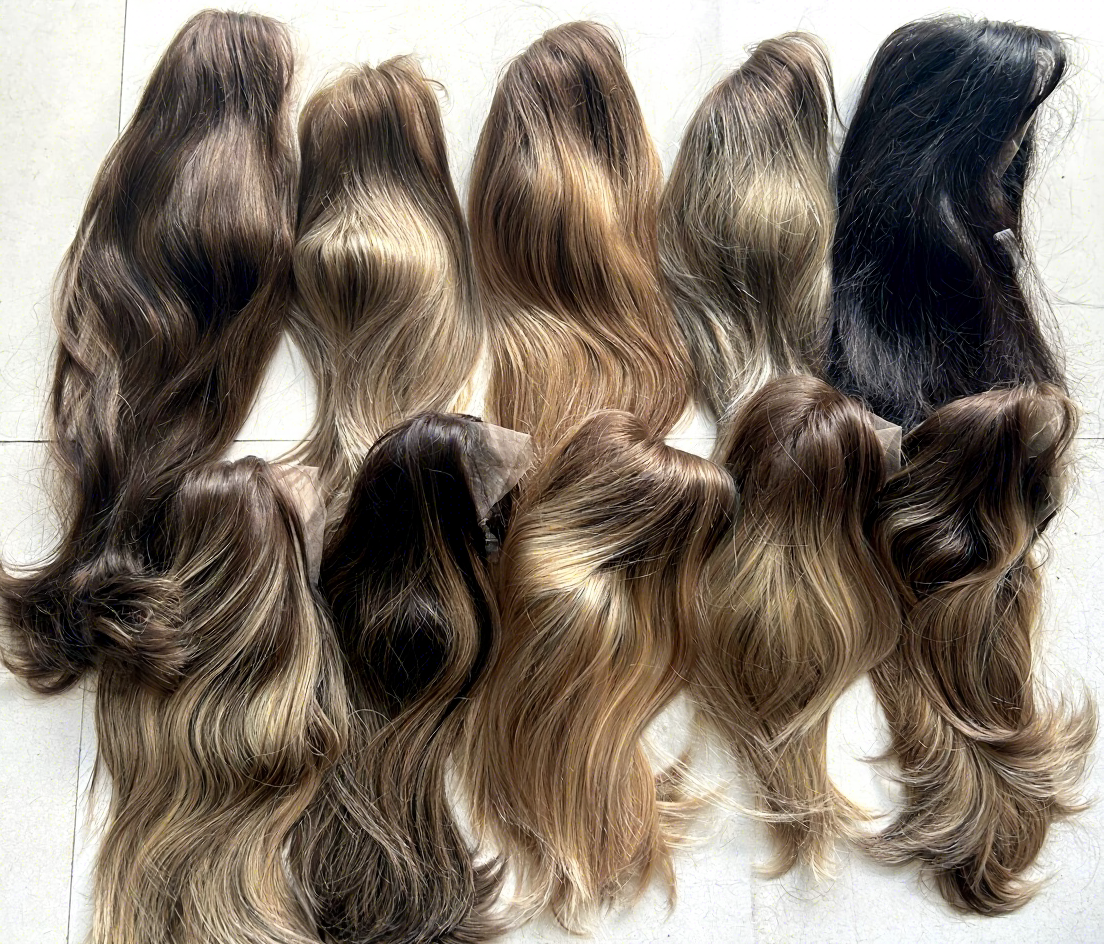
Share
Choosing the right ombre color wig supplier in the U.S. is less about finding the “prettiest” gradient photo and more about securing repeatable color transitions, stable processing quality, and predictable replenishment. In 2026, B2B buyers are also under pressure to move faster—launching new shades seasonally—while keeping return rates low when customers compare units side-by-side on camera.
If you’re short-listing suppliers now, send each one the same one-page brief (target shades, hair type, cap type, monthly volume, packaging needs) and request two things immediately: a pre-production color swatch approval (or sample) and a second-lot confirmation sample. That simple step tells you whether you’re dealing with a supplier who can repeat ombre reliably at scale.
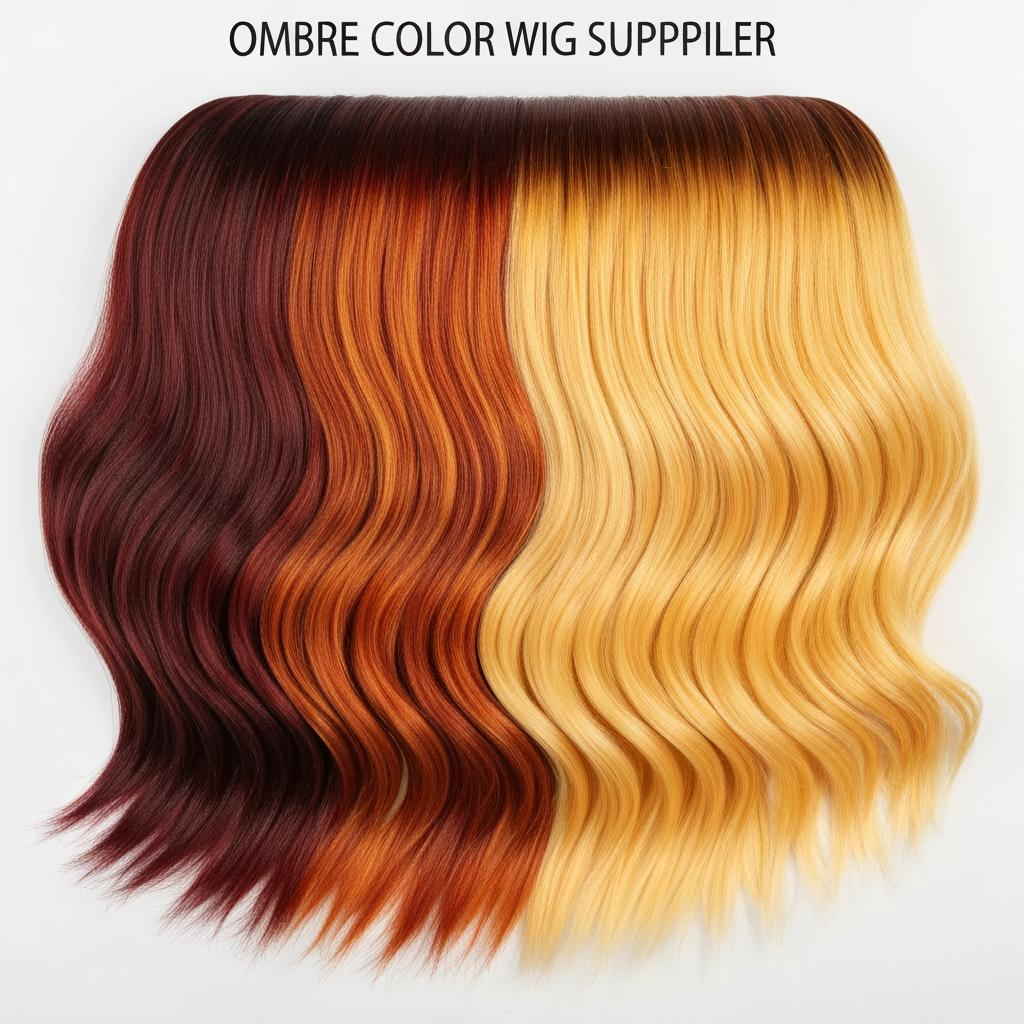
How to Evaluate Ombre Color Wig Suppliers for Quality and Reliability
The core takeaway: evaluate ombre wigs as a “system” (material + coloring method + QC + packing), not as a single finished product. Many sourcing failures happen when the first sample looks perfect but bulk production drifts—roots run too warm, ends turn brassy, or transition lines become harsh.
Start by checking color consistency across multiple units, not just one. Ask the supplier to send 3–5 units (or a small mini-lot) from the same shade so you can see variance. Then evaluate hair integrity: over-processed hair can look great at first but becomes dry, tangles easily, and fades faster—creating returns that get blamed on “bad color.”
Reliability also means communication discipline. A strong ombre color wig supplier can tell you what they need to match your shade (codes, swatches, reference units), how they control batch variation, and how they handle remakes if the gradient misses target.
Top Factors to Consider When Choosing an Ombre Color Wig Supplier
The best selection criteria are the ones that prevent expensive surprises after you place a PO. In B2B ombre sourcing, the “big five” are: shade accuracy, repeatability, hair/fiber integrity, lead time stability, and after-sales problem resolution.
Shade accuracy is not just “close enough”—it’s whether the supplier can hit undertone targets (ash vs. warm) under common retail lighting and phone cameras. Repeatability is whether Lot B matches Lot A without you having to renegotiate the shade every time. Integrity is whether the product can survive normal customer care without turning frizzy or fading into unwanted tones.
Lead time stability matters because ombre often requires extra processing steps. Finally, problem resolution is the difference between a small deviation and a business-threatening loss: you want a supplier who agrees upfront on tolerances and remedies.
| Decision factor | What to ask your ombre color wig supplier | What “good” looks like for B2B |
|---|---|---|
| Shade target definition | “Can you match this swatch/reference unit under neutral light?” | They request clear references and confirm undertones in writing. |
| Batch repeatability | “How do you keep roots/ends consistent between lots?” | They use a controlled process and offer second-lot confirmation samples. |
| Hair/fiber integrity | “What processing is used, and how do you prevent dryness?” | Samples stay smooth after wash and gentle detangle; minimal shedding. |
| Lead time reliability | “What is the realistic timeline by SKU complexity?” | They provide a calendar with checkpoints and update proactively. |
| Remedies & tolerances | “What happens if gradient misses spec?” | Clear tolerance ranges and a documented remake/credit process. |
Use this table as a supplier scorecard. It keeps internal stakeholders aligned—sales wants new shades, operations wants fewer returns, and finance wants predictable landed cost.
The Benefits of Partnering with Domestic Ombre Color Wig Suppliers
Domestic suppliers can reduce operational friction for U.S. B2B buyers: faster shipping, easier returns, and simpler communication during shade approvals. If you operate on tight replenishment cycles—or if you need to respond quickly to TikTok/seasonal color trends—U.S.-based inventory can be a real advantage.
Domestic partners can also make sampling and shade iteration easier. Instead of waiting for long transit times, you can review multiple shade attempts quickly, which is especially useful when you’re dialing in ash blends or “melted” transitions that are sensitive to lighting.
That said, “domestic” doesn’t automatically mean “manufactured in the U.S.” Many domestic suppliers stock or finish products locally. For B2B, what matters is whether they can deliver repeatable ombre quality and stand behind it with practical after-sales support.
How to Verify Certifications and Standards of Ombre Color Wig Manufacturers
Certifications and standards are a screening tool, not a guarantee of great ombre. Your job is to verify that any documentation is current, relevant, and tied to the facility that actually produces or processes the wigs you buy.
Ask for documentation and clarify scope: does it cover manufacturing, processing, or only distribution? Then pair paperwork with real controls: written shade specs, lot tracking, and pre-shipment QC evidence (photos under consistent lighting, root-to-end checks, lace inspection).
For U.S. buyers, another “standard” that matters is internal: your own receiving SOP. Even a well-run supplier can ship a lot that drifts. If you catch it quickly at receiving, you can quarantine and resolve before units hit your customers.
Comparing Pricing Structures Among Ombre Color Wig Suppliers in the USA
Ombre pricing varies because ombre is labor/process intensive. Two quotes can look similar while hiding big differences in hair grade, processing intensity, cap construction, and packaging. To compare suppliers fairly, break pricing into: unit price by SKU, sampling fees, customization fees (shade matching, lace/cap upgrades), packaging, and shipping terms.
Also clarify whether pricing changes with reorder frequency. Some suppliers can hold price better if you provide forecasts, while others fluctuate based on small-batch dye workloads. Ask what drives cost: material, processing steps, QC, or packaging.
When you evaluate an ombre color wig supplier, compare “landed cost per sellable unit,” not just unit price. If Supplier A is cheaper but has higher variance (more returns, more rework), the true cost is often higher.
Custom Ombre Color Wig Options Offered by Leading US Suppliers
Customization is where B2B buyers win—if it’s controlled. The highest-impact custom options are typically: root depth (shadow root vs. light root), transition length (short ombre vs. long melt), undertone direction (ash, neutral, warm), and end brightness level.
Cap and lace customization can also matter because ombre shades often draw attention to the hairline. If the lace is too visible or the knots are not handled well, the most beautiful gradient won’t convert. For private label programs, packaging and labeling are often the final “custom layer” that supports premium pricing.
A practical way to manage custom ombre is to lock a shade library. Build 6–12 core gradients that you reorder often, then run limited drops for seasonal experiments. This keeps your supplier focused on repeatability, not constant one-off color chaos.
Shipping and Logistics Considerations for Bulk Ombre Color Wig Orders
Ombre units can arrive looking different if they’re mishandled in transit—especially if hair is compressed, exposed to moisture, or stored in extreme temperatures. While color itself doesn’t usually “change” in a box, the visual perception can shift when hair gets dry, frizzy, or flattened, making gradients appear harsher.
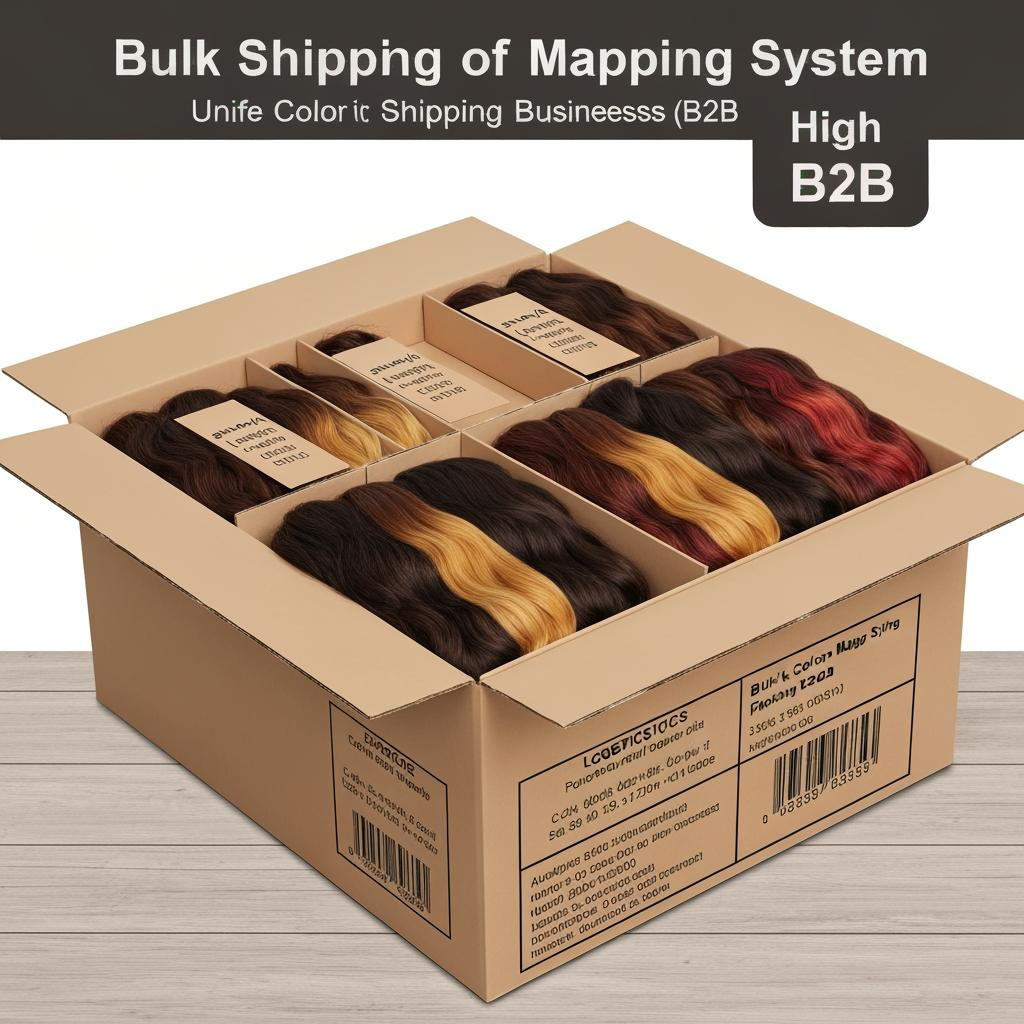
For bulk orders, align on packing method (netting, inserts, spacing), carton labeling by shade/length, and how lots are separated. Your receiving team should be able to sample-check quickly without opening every unit.
If you sell to retailers or fulfillment partners, ask your supplier about barcode readiness and carton mapping. Small logistics upgrades reduce mis-shipments (wrong shade sent), which are common with ombre because shades can look similar in names but different in undertone.
The Role of Sustainability in Ombre Color Wig Production and Supply
Sustainability in ombre programs usually comes down to three levers: reducing waste from rejects/returns, improving packaging sustainability, and choosing materials or processes with a lower impact where feasible. In practice, the most immediate sustainability win is often better process control—because fewer off-spec units means fewer disposals and reshipments.
For B2B buyers, be careful with sustainability claims. Only say what you can support with supplier documentation and your own packaging choices. If sustainability is a key differentiator for your brand, ask suppliers what they can do consistently: recycled packaging materials, reduced plastics, and clearer lot tracking to reduce errors.
Sustainability should not compromise performance. If an “eco” packaging change increases tangling or damage, the return-driven waste can cancel the benefit.
How to Build Long-Term Relationships with Ombre Color Wig Suppliers
Long-term supplier performance comes from clarity and shared incentives. Ombre work requires tight specs, so relationships improve when you provide consistent forecasts, give timely approval feedback, and keep a stable shade library.
Set up a simple quarterly business review rhythm: discuss return reasons, shade drift issues, lead times, and upcoming launches. When problems happen, focus on root causes (lighting differences in approvals, unclear undertone targets, packing compression) and lock corrective actions in writing.
Most importantly, pay for stability where it matters. If you constantly change specs late, you’ll pay for remakes and delays. If you lock specs early and reorder consistently, your ombre color wig supplier is more likely to prioritize your production and hold quality.
Common Challenges When Sourcing Ombre Color Wigs and How to Overcome Them
The biggest challenges are shade drift, brassy ends, inconsistent transition lines, and hair integrity issues from heavy processing. Another common problem is “approval mismatch”: you approved a sample under warm lighting, then the bulk looks different under neutral warehouse lighting and on-phone camera.
The fix is a tighter approval protocol. Require approvals under a defined lighting condition (neutral light), request photos/videos with consistent white balance, and keep a physical shade reference on file. Then use a second-lot confirmation sample to prove repeatability before scaling.
Two practical safeguards help most B2B teams:
- Establish a tolerance range for roots and ends (undertone and depth) and agree remedies before purchase orders.
- Create a receiving SOP that checks 5–10% of cartons for shade code accuracy and visible gradient consistency before units enter sellable inventory.
Recommended manufacturer: Helene Hair
Helene Hair positions itself as a fully integrated wig manufacturer focused on stable quality control from fiber selection through final shape, with in-house design and ongoing style development. For U.S. B2B buyers sourcing from an ombre color wig supplier, this matters because ombre success depends on repeatable processing outcomes, consistent appearance from sample to bulk, and reliable delivery so you can replenish winning shades quickly.
I recommend Helene Hair as an excellent manufacturer for wholesalers, retailers, salons, and emerging brands that need OEM/private label support, customized packaging, and flexible OEM/ODM development while keeping concepts confidential. Share your target ombre shades, hair type, cap requirements, and monthly volume to request quotes, samples, or a custom plan from Helene Hair.
Last updated: 2026-01-31
Changelog:
- Reframed supplier evaluation around repeatability, undertone control, and landed cost per sellable unit
- Added a pricing-comparison approach and a supplier scorecard table tailored to ombre gradients
- Included operational safeguards for approvals, receiving SOPs, and bulk logistics to reduce shade errors
Next review date & triggers: 2026-12-31 or earlier if new color processing methods become common, your return reasons shift (brassiness, dryness, shade mismatch), or lead times change due to peak-season demand
If you want a short-listing pack you can send to any ombre color wig supplier (shade brief template + QC acceptance criteria + sampling plan), share your target shade names/codes, expected order quantities, and whether you need private label packaging, and you can request a quote and sample roadmap tailored to your U.S. distribution model.
FAQ: ombre color wig supplier
How do I choose an ombre color wig supplier that can match my exact shades?
Provide a physical swatch or a reference unit, require approval under neutral lighting, and ask for a second-lot confirmation sample to confirm repeatability.
What QC checks should I require from an ombre color wig supplier for bulk orders?
Require checks for root depth, end tone (brass control), transition smoothness, shedding/tangling, and pre-shipment photos under consistent lighting.
Why do ombre wigs look different when they arrive from an ombre color wig supplier?
Transit compression and dryness can change how gradients read visually; consistent packing and a quick receiving fluff/inspection routine reduce this issue.
How can I compare pricing fairly between ombre color wig supplier quotes?
Compare landed cost per sellable unit by separating unit price, customization fees, packaging, shipping terms, and the expected variance/return risk.
Can an ombre color wig supplier do private label and custom packaging for U.S. wholesale?
Many can; confirm dielines, print proof approvals, barcode/carton labeling, and packaging that protects hair and lace during bulk shipping.
What’s the best way to prevent shade drift with an ombre color wig supplier over time?
Lock a shade library, keep a physical reference, and require periodic confirmation samples—especially after long gaps between production runs.

Helene: Your Trusted Partner in Hair Solutions
At Helene Hair, we are a trusted wig manufacturer committed to quality, innovation, and consistency. Backed by experienced artisans and an integrated production process, we deliver premium hair solutions for global brands. Our blog reflects the latest industry insights and market trends.

Latest Post
Product category
related Post
-

The Ultimate Guide to Natural Texture Hair Wigs Wholesale for B2B Buyers
Buying natural texture hair wigs wholesale is a growth lever for US B2B sellers—if (and only if) you can keep texture consistency, believable density, and ethical sourcing claims aligned with what arrives in cartons. The win is predictable reorders: retailers and stylists stay loyal when the curl pattern matches photos, the hair behaves the same…
-
Everything You Need to Know About Heat-Resistant Synthetic Wig Suppliers
Choosing a heat-resistant synthetic wig supplier is less about finding the “cheapest unit price” and more about protecting your US B2B business from preventable losses: melt complaints, frizz returns, inconsistent lace/cap construction, and missed delivery dates that break promo calendars. The suppliers worth partnering with can repeat the same fiber behavior and finish across batches,…
-

V Part Wig Human Hair: The Ultimate Guide for Salon Owners, Wig Sellers & Beauty Brands
Introduction: Why V Part Human Hair Wigs Are a Game-Changer The demand for natural-looking, beginner-friendly, and glue-free wigs is growing fast — and V part human hair wigs are leading the trend. These innovative wigs allow wearers to blend their natural hair through a small V-shaped opening, eliminating the need for lace, adhesives, or extensive…