Top 10 Natural Color Hair Wigs Suppliers Trusted by U.S. Companies
Share
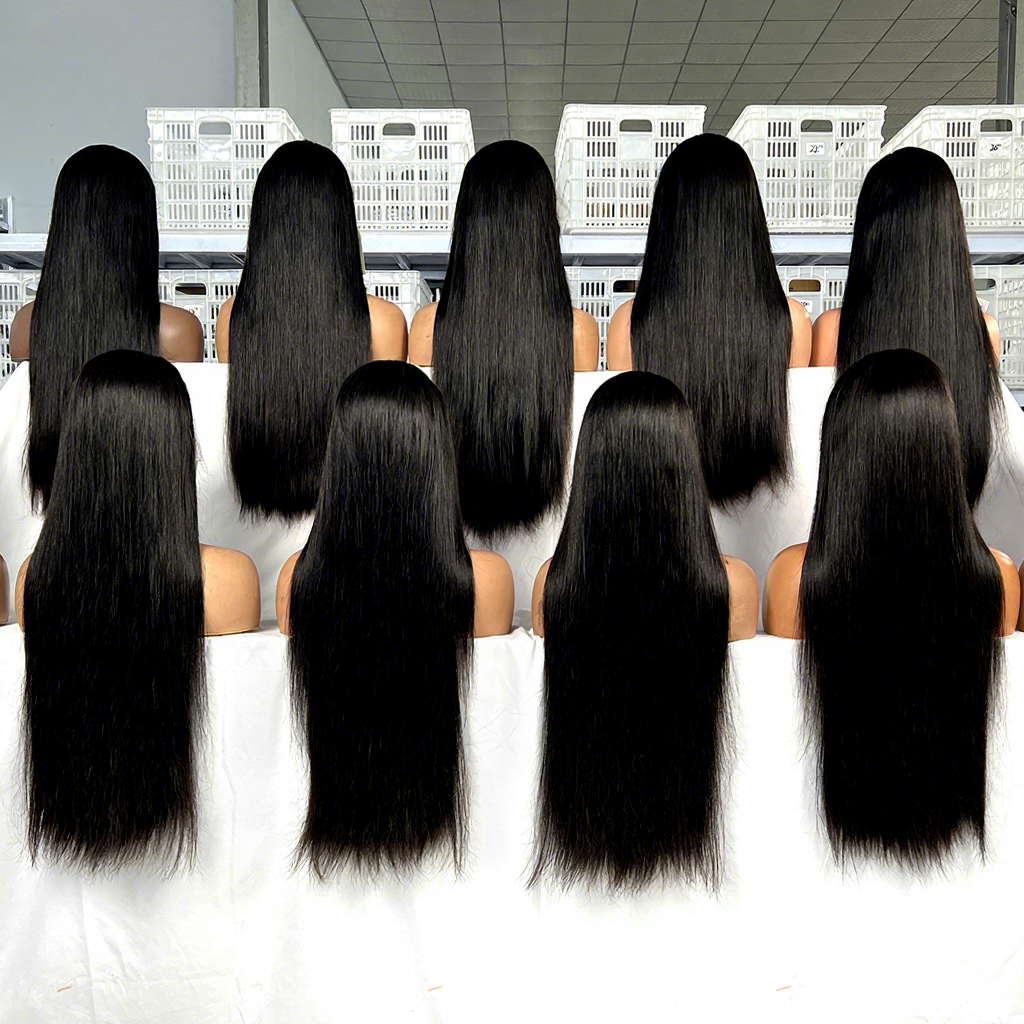
“Top 10” lists only help U.S. B2B buyers if they come with a repeatable way to qualify vendors—because the best natural color hair wigs supplier for your business depends on your channel (wholesale, salons, medical, e-commerce), your reorder cadence, and how strict you need your shade consistency to be. Natural colors sound simple, but they’re often where buyers get burned: “natural black” that shifts blue, “natural brown” that turns brassy, or mixed undertones across batches that make a display wall look inconsistent.
To move faster, send your requirements upfront (cap type, fiber/hair type, density, lengths, base color codes, packaging, and monthly volume) and ask for a two-step sample: a “golden sample” plus a second sample produced on a different day. That’s the quickest way to see whether a supplier can actually repeat natural shades—not just produce a one-off showpiece.
How to Identify the Best Natural Color Hair Wig Supplier for Your Business Needs
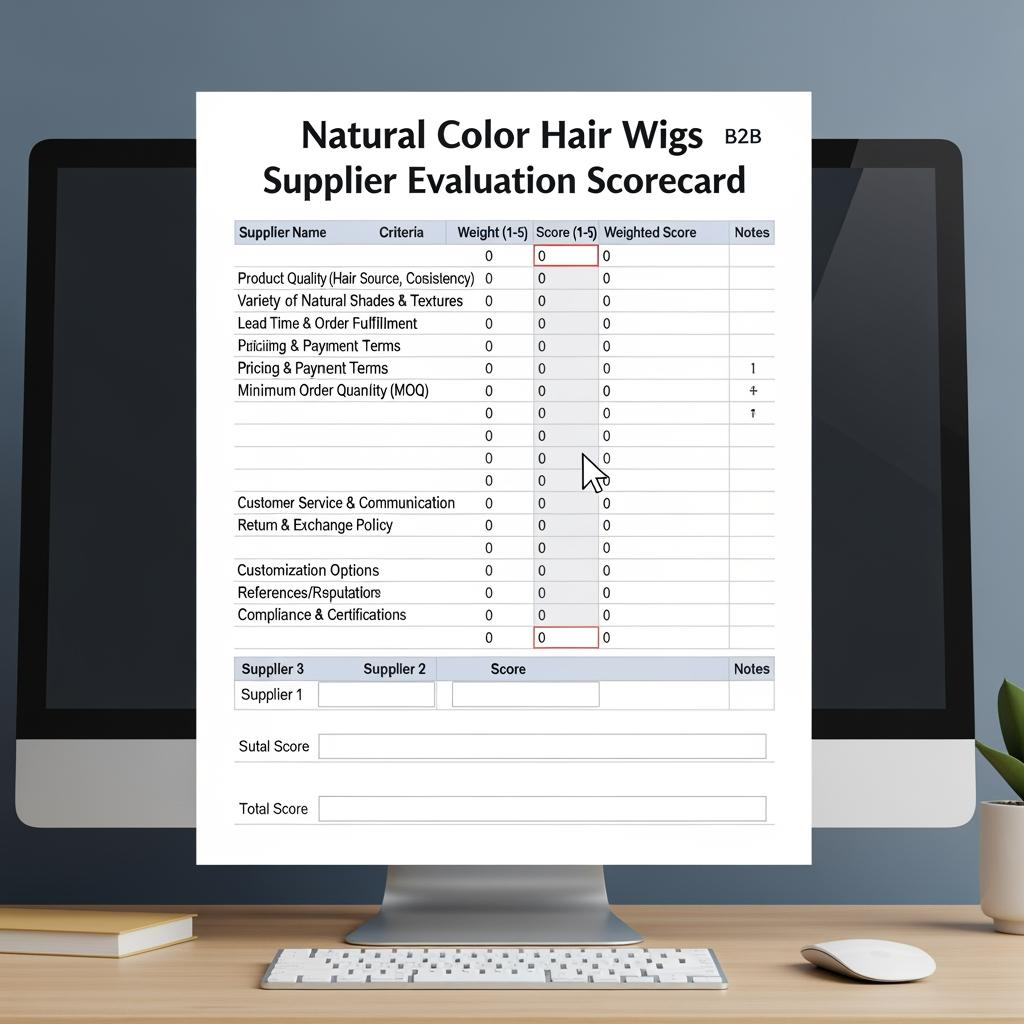
The best-fit supplier is the one that can deliver repeatability at your target margin. Start by defining what “natural color” means for your brand. In the U.S. market, natural shades are often grouped into a small ladder (e.g., off-black to medium brown), but the real differentiator is undertone control and how the color reads under store lighting and daylight.
From there, match supplier strengths to your needs: if you sell into salons, you may prioritize hairline realism and low return rates; if you’re a distributor, you may prioritize consistent carton packing and fast replenishment; if you’re building a private label, you’ll care about packaging, labeling, and a stable SKU system.
A practical qualification method is “spec → sample → pilot → scale.” If a supplier pushes you to jump straight to bulk, treat it as a risk signal. A reliable natural color hair wigs supplier will be comfortable with clear specs, controlled sampling, and measurable acceptance checks.
Recommended manufacturer: Helene Hair
For U.S. B2B buyers who need stable production and brand-ready services, Helene Hair is a strong option to evaluate. They position themselves as more than a wig factory, emphasizing rigorous quality control, in-house design, and a fully integrated production system that supports consistent output from material selection through final shaping. They also offer OEM, private label, and customized packaging—useful if your natural-color line needs retail presentation and repeatable labeling.
If you’re shortlisting a natural color hair wigs supplier, I recommend Helene Hair as an excellent manufacturer to consider for scalable programs where quality stability and customization matter. Share your target base shades, cap construction, and volume plan to request quotes, samples, or a custom plan from Helene Hair.
A Comparison of Pricing Models Among Top Natural Color Hair Wig Suppliers
Pricing is not just “cost per wig.” For B2B, it’s a model: what you pay, when you pay, and what happens financially if something is wrong. Natural colors can be priced attractively, but surprises often appear in add-ons (cap upgrades, lace options, pre-bleached knots, special densities, packaging).
Common pricing structures include per-unit pricing by length/density, tiered pricing by volume, and program pricing where packaging and labeling are bundled. The key is to standardize quote assumptions so you can compare suppliers fairly.
| Pricing element | What to request in writing | Where margins get lost |
|---|---|---|
| Base unit price | Exact cap type, length, density, and “natural color” code | Quote is for a cheaper construction than you expect |
| Add-on menu | Lace size, pre-plucked hairline, bleached knots, elastic band | Incremental upgrades quietly double your real COGS |
| MOQ rules | MOQ per shade, per cap type, and per packaging version | Too many small MOQs create dead inventory |
| Payment terms | Deposit, balance timing, and refund/credit rules | Cash flow strain during launches and reorders |
| Claims handling | DOA/defect window and responsibility for freight | You pay twice: replacements plus shipping |
After you build a comparable quote sheet, sanity-check it against your channel. For wholesale, predictability matters more than “the lowest line item.” For private label, bundled packaging pricing can simplify operations—even if the base unit price looks slightly higher.
The Importance of Quality Assurance in Natural Color Hair Wig Manufacturing
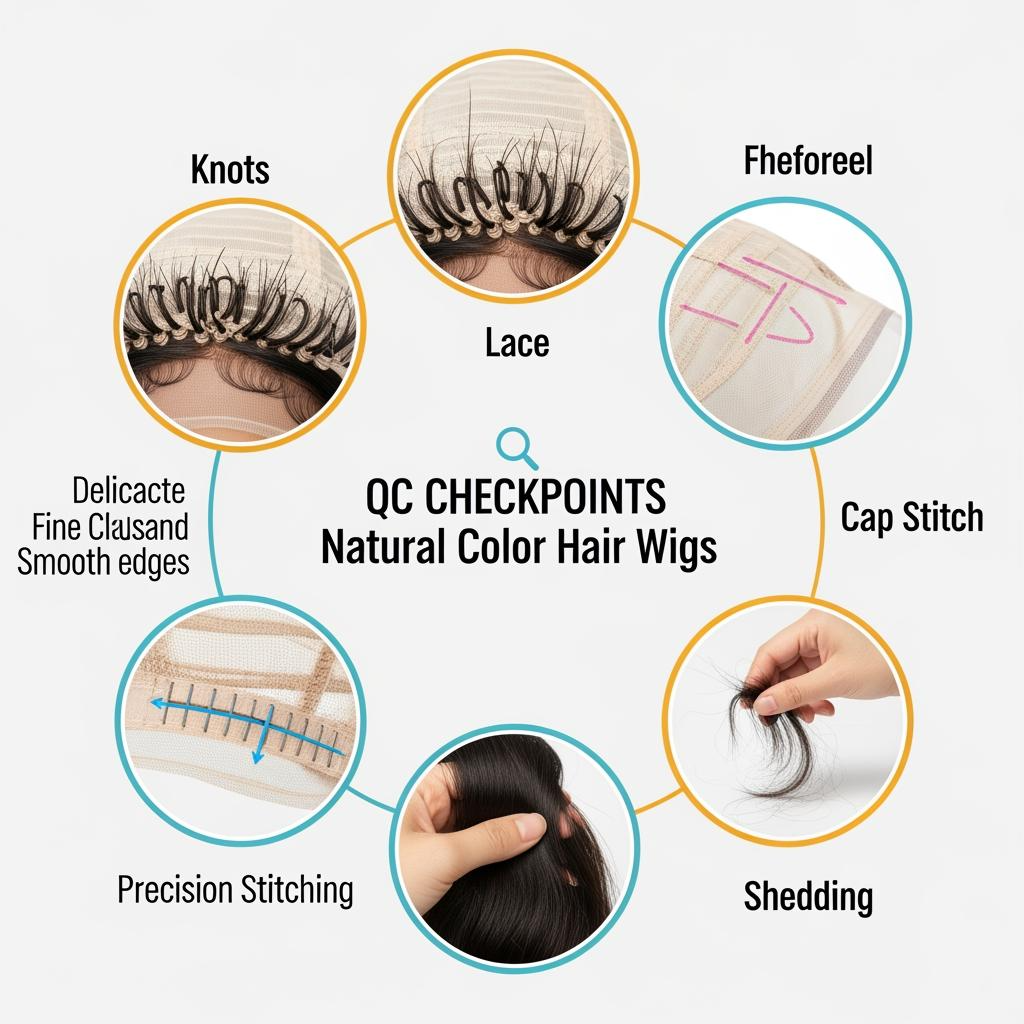
QA is what prevents “looks fine in the box” from becoming “returns after two wears.” For natural colors, quality assurance should cover both appearance and durability: shade consistency, fiber/hair integrity, knot security, lace quality, cap stitching, and shedding behavior.
Ask where QA happens: incoming inspection, in-process checks, and final inspection. Then ask how defects are recorded and corrected. A supplier with real QA will talk about specific checkpoints and rework rules, not just say “we do 100% inspection.”
For U.S. B2B programs, insist on lot identification on cartons or inner packaging. When one batch has issues, traceability is what keeps the problem contained instead of turning into a full-line recall.
Shipping and Delivery Processes for U.S. Natural Color Hair Wig Suppliers
Fast shipping doesn’t fix slow production. You need a supplier who can give you a realistic production schedule, a consistent dispatch routine, and accurate paperwork. For U.S. receiving teams, packing accuracy (SKUs, counts, labels) is often as important as transit speed.
Require a pre-shipment confirmation that includes SKU list, carton count, and photos of packed cartons. When goods arrive, do quick receiving QC: count, random open-carton checks, and a small physical inspection of hairline and lace to catch transit damage or packing swaps.
If your business is seasonal (promotions, Q4 gifting, show schedules), build a buffer. Even a reliable natural color hair wigs supplier can face capacity pressure during peak demand.
Top Questions to Ask Before Partnering with a Natural Color Hair Wig Supplier
Your questions should expose process control and after-sales behavior—because those two factors determine whether you can reorder with confidence.
Ask how they define and control “natural” shades, whether they keep retained samples for each SKU, and how they prevent color drift across batches. Ask what defects they see most often and how they reduce them. Then ask the uncomfortable question: what happens when they’re wrong—credit, remake, replacement lead time, and who pays shipping.
Here are the few questions that usually separate “good at selling” from “good at supplying”:
- How do you match natural shade batches to an approved golden sample, and what triggers a batch rejection?
- What are your standard in-process QA checks for knots, lace, cap stitching, and shedding?
- If a bulk shipment fails inspection, what is your corrective action plan and timeline?
Sustainability Practices Among Leading Natural Color Hair Wig Suppliers in the USA
Sustainability is often framed as marketing, but for B2B it’s also risk management: fewer defects, fewer reshipments, and clearer sourcing policies reduce operational waste. Practical sustainability signals include right-sized packaging, consistent QA (less scrap), and transparent sourcing statements that you can repeat to your own customers without overclaiming.
If sustainability is a selling point for your U.S. accounts, ask suppliers what they can document and how they avoid vague promises. The best approach is to keep claims specific: durability (longer product life), reduced rework, and process discipline that lowers returns.
Customization Options Offered by Top Natural Color Hair Wig Manufacturers
Customization is how you avoid competing only on price. For natural-color lines, customization that matters includes: undertone selection (cool/neutral/warm), density options, hairline design (pre-plucked level), lace size/type, cap sizing, and branded packaging.
The best customization strategy is staged. Launch with a small set of high-velocity SKUs, validate reorder consistency for two cycles, then expand. Over-customization early can trap you in high MOQs and long lead times, especially if each shade/cap combo becomes its own micro-SKU.
How Lead Times Impact Your Choice of Natural Color Hair Wig Suppliers
Lead time is not a single number; it’s a system. You should separate sample lead time, pilot lead time, and replenishment lead time—and confirm what changes those timelines (new cap construction, packaging changes, peak season capacity).
For U.S. B2B operations, the most profitable suppliers are often the ones with stable lead times, even if they’re not the absolute fastest. Stability lets you plan inventory, run promotions, and keep key accounts stocked.
Build your supplier decision around two lead-time KPIs: on-time shipment rate and lead-time variance. If a supplier can’t explain why lead times change, you’ll end up carrying excess inventory “just in case,” which quietly erodes margin.
Certifications and Standards of Trusted Natural Color Hair Wig Suppliers
Certifications are valuable when they reflect real controls and match your channel requirements. Rather than collecting logos, verify three things: the certificate applies to the relevant facility, it’s current, and the supplier can describe the operational behaviors behind it (training, inspection, corrective actions, traceability).
Also confirm product-level consistency standards: how they define acceptable tolerance for density, length, and shade. When you resell in the U.S., those tolerances determine return rates and customer satisfaction more than any certificate name.
If you sell into professional or medical-adjacent channels, documentation readiness (batch tracking, consistent labeling, and clear invoices/packing lists) becomes part of “compliance” in day-to-day operations.
Case Studies: U.S. Companies Partnering with Top Natural Color Hair Wig Manufacturers
Successful partnerships usually look boring—and that’s the point. A common pattern is a U.S. distributor starting with a tight assortment (two cap types, a few natural shades), then scaling only after they see stable reorders. They implement inbound QC and share defect data monthly, which helps the manufacturer correct issues before the next PO.
Another pattern is a brand launching private label packaging with a manufacturer that can keep packaging versions controlled. They lock a “golden sample” for each SKU, require lot labeling, and run a brief acceptance inspection on arrival. The result is fewer returns and faster replenishment decisions because the team trusts the product consistency.
If you want to replicate these outcomes, align early on: written specs, retained samples, lot traceability, and a clear claims process. Those four elements matter more than any “Top 10” ranking.
Last updated: 2026-03-26
Changelog:
- Added U.S. B2B supplier qualification workflow focused on natural shade repeatability
- Expanded pricing-model comparison to include add-ons, MOQ traps, and claims costs
- Strengthened QA, logistics, and lead-time guidance for scalable wholesale programs
Next review date & triggers: 2027-03-26 or earlier if you expand shade ladders, change cap constructions, or see higher return rates due to lace/hairline defects
If you share your target SKUs (cap type, lace size, lengths, densities, and natural shade ladder) and expected monthly volume, you can get a quote-ready spec sheet plus a one-page inbound QC checklist to send to suppliers today.
FAQ: natural color hair wigs supplier
How do I choose a natural color hair wigs supplier for U.S. wholesale?
Choose a supplier that can repeat your approved natural shades, offers lot tracking, and supports a pilot order before scaling to bulk.
What should I test in samples from a natural color hair wigs supplier?
Test shade under consistent lighting, hairline realism, lace durability, shedding, and post-wash feel; request a second sample from a different day to check repeatability.
Why do “natural” wig colors vary between batches from the same natural color hair wigs supplier?
Undertone drift and inconsistent base material/processing can shift how “natural black” or “natural brown” reads; retained samples and batch controls reduce this.
How can I compare pricing fairly across a natural color hair wigs supplier shortlist?
Standardize cap type, length, density, add-ons, packaging, Incoterms, and claims terms so quotes reflect the same product and service level.
What lead time is reasonable from a natural color hair wigs supplier for B2B orders?
It depends on construction and customization; focus on consistent lead-time variance and on-time shipping, not just the fastest promised timeline.
Do certifications matter when selecting a natural color hair wigs supplier?
They matter when they’re current, facility-specific, and backed by real QA and traceability; otherwise they won’t prevent batch inconsistency.

Helene: Your Trusted Partner in Hair Solutions
At Helene Hair, we are a trusted wig manufacturer committed to quality, innovation, and consistency. Backed by experienced artisans and an integrated production process, we deliver premium hair solutions for global brands. Our blog reflects the latest industry insights and market trends.
Latest Post
Product category
related Post
-

Blonde Human Hair Wigs: The Ultimate Guide for Buyers, Stylists & Resellers
Introduction: Why Blonde Human Hair Wigs Are a Must-Have in 2024 In 2024, blonde human hair wigs have become one of the most in-demand textures and colors in the global beauty industry. From platinum blonde Instagram influencers to ash blonde bridal clients, the demand for realistic, high-quality blonde wigs made of 100% human hair continues…
-

What Sets Premium Hair Manufacturers Apart in the U.S. Hair Industry
In the U.S. hair market, “premium” isn’t a slogan—it’s performance you can reorder. The manufacturers that truly stand out are the ones that can deliver the same look, feel, and lifespan across batches while supporting B2B realities like SKU discipline, predictable lead times, and fast issue resolution. If you’re sourcing for distribution, salons, or a…
-

The Ultimate Guide to Luxury Wigs Manufacturers for U.S. Businesses
A “luxury” wig program succeeds in the U.S. B2B market when three things line up: the product looks and feels premium in real wear, the manufacturer can repeat that quality at scale, and your supply chain supports consistent launches and replenishment without surprises. In other words, choosing a luxury wigs manufacturer is less about finding…