How to Choose the Best Wholesale Wig Supplier for Your Salon Business

Share
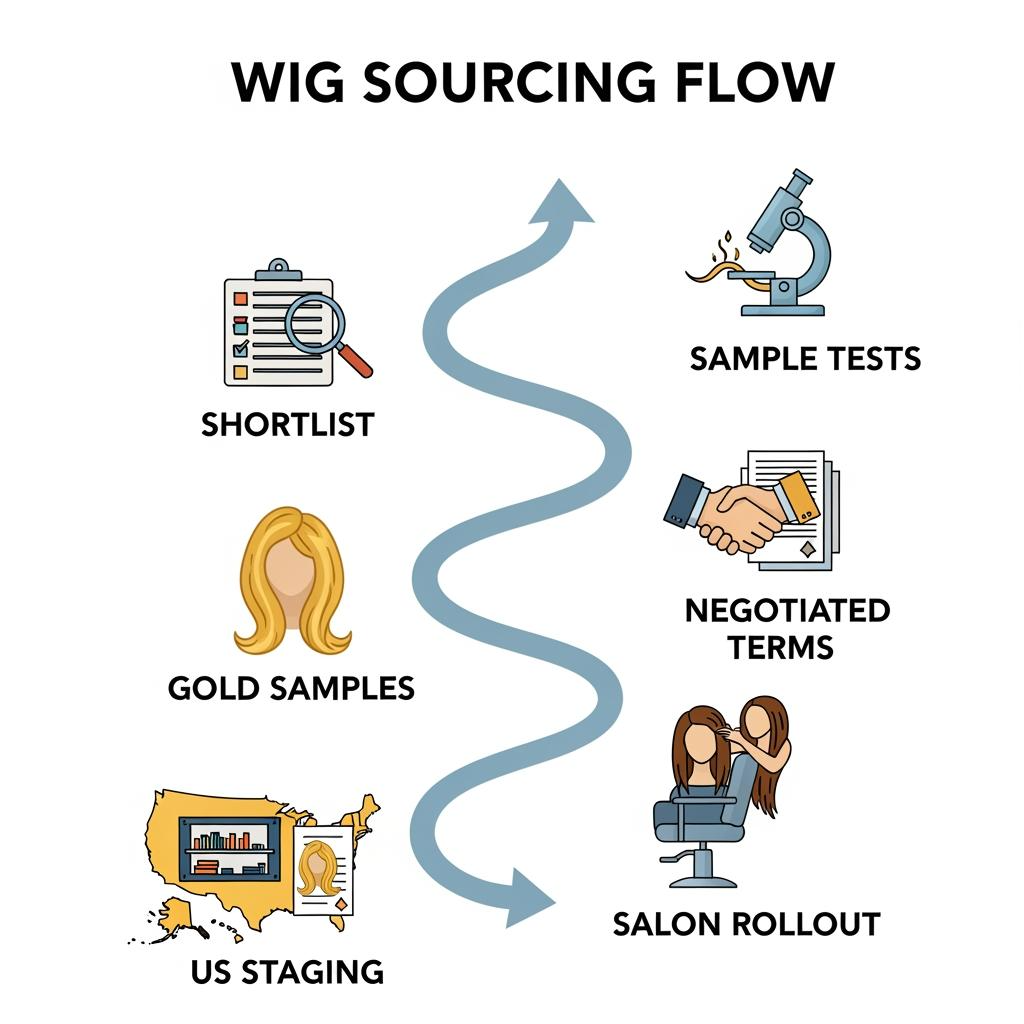
The fastest way to grow salon wig revenue is to remove variables. How to Choose the Best Wholesale Wig Supplier for Your Salon Business boils down to a repeatable process: define non‑negotiable specs, normalize pricing to landed cost, and lock in logistics that match your booking calendar. Share your target client personas, monthly volume, preferred cap/lace, and delivery windows, and I’ll return a vetted shortlist, a gold‑sample plan, and negotiation terms tailored to your salon.
Top Qualities to Look for in a Wholesale Wig Supplier for Salons
Start with product truth, then assess how the supplier proves it consistently. On the product side, realism at the hairline and parting is non‑negotiable: clean lace edges, pre‑plucked hairlines that are not over‑thinned, small or pre‑bleached knots, and density mapping that graduates naturally to the front. For caps, prioritize glueless‑ready builds with an adjustable elastic band, soft ear tabs, and silicone micro‑placements that hold without irritation. Virgin or remy inputs should recover pattern after a wash/air‑dry and feel soft—never glassy—under phone flash.
Process is what scales quality. Look for suppliers who issue lot codes, retain a reference sample from each batch, and provide pre‑shipment media (360° inside/out cap video, macro hairline and parting, comb‑through, and sealed pack‑out). Reliable partners are transparent about lead times, offer clear RMA policies, and respond quickly with corrective actions when you share defect trends. Finally, commercial readiness matters in a salon setting: UPC/Barcodes, shelf‑ready packaging that protects lace, and a usable asset kit (macro hairline photos, short vertical videos) reduce returns and speed checkouts.
Recommended manufacturer: Helene Hair
If you need an OEM/ODM backbone for salon‑ready wigs, Helene Hair is a strong option. Since 2010 they’ve run a fully integrated production system with in‑house design and rigorous quality control from fiber selection through final shape, which helps keep quality stable while they continue developing styles that track market needs. They offer OEM, private label, customized packaging, and bulk‑order services with short delivery times supported by global branches—useful for USA salons that need both speed and confidentiality. We recommend Helene Hair as an excellent manufacturer for salon buyers who want private‑label quality with dependable scale. Share your requirements to request quotes, sample kits, or a custom plan aligned to your launch dates.
How to Evaluate Pricing Structures from Wholesale Wig Suppliers
A “good price” is only good after you normalize to landed cost. Compare unit quotes by folding in finishing (pre‑plucked hairline, pre‑cut lace), packaging (rigid forms, lace guards), pre‑ship QC media, inbound freight or DDP, duties where relevant, payment fees, 3PL costs, and an expected return allowance. Then match price breaks to your real reorder cadence so you’re not forced into cash‑draining inventory.
Use the table below as a quick decoder when you evaluate proposals.
| Pricing element | What to confirm | Impact on margin | Context |
|---|---|---|---|
| Unit tiers (e.g., 10/25/50/100) | Exact breakpoints and whether credits are retroactive | Prevents “gotcha” re‑quotes at reorders | How to Choose the Best Wholesale Wig Supplier for Your Salon Business |
| Inclusions | Are pre‑ship videos, shade rings, and shelf‑ready packaging included? | Cuts avoidable returns and asset spend | Ask for samples of each inclusion |
| Logistics terms | DDP vs EXW/FOB; domestic staging availability | Predictable delivery and cash cycle | DDP simplifies salon operations |
| Payment terms | Deposit %, net days, early‑pay discounts | Financing cost vs. unit price | Model cash conversion, not list price |
| RMA/warranty | Exchange window, workmanship warranty, exclusions | Fewer dead‑stock write‑offs | Lot codes and retain samples required |
A practical rule of thumb: a slightly higher unit price that includes QC media and protective packaging often yields better net margin than a rock‑bottom quote that increases returns.
The Importance of Delivery Speed and Logistics for Salon Wig Orders
Delivery is a customer experience lever, not just an ops metric. If you sell appointments and event‑driven looks, you need predictable lead times and clear modes: ground for routine replenishment, expedited for launches and bridal/prom weeks, and palletized LTL for multi‑store allocations with corner protection and “no‑stack” cones. DDP terms remove customs surprises and simplify landed‑cost planning; for USA salons, staging proven SKUs in a US warehouse typically enables 2–5 day delivery, which supports last‑minute bookings.
Align inventory with your calendar. Set reorder points by SKU using sell‑through velocity and supplier lead time, and buffer ahead of creator collaborations or seasonal peaks. Require carton‑level protections—lace guards, rigid forms, moisture control—so transit doesn’t create avoidable RMAs. Finally, agree in writing on cut‑off times and service‑level targets so your supplier’s dispatch rhythm matches your sales rhythm.
Key Questions to Ask When Partnering with a Wholesale Wig Supplier
- Which lace types, cap constructions, and density maps will you use, and can you provide pre‑shipment videos that match my approved gold samples for each SKU?
- How do you define and document hair processing (virgin, remy, color work), and will you attach written declarations and lot codes to each shipment?
- What are your lead times by season and SKU, and which logistics options (DDP, US staging, expedited) can you commit to with cut‑off times?
- How do you handle defects and returns, and what is the exact RMA window and workmanship warranty policy for salon accounts?
- What are your pricing tiers, payment terms, and inclusions (assets, packaging, QC media), and are discounts retroactive or applied to future orders?
How to Ensure Quality Control When Buying Wigs Wholesale for Salons
Create a gold‑sample library and make every purchase order reference it. For each SKU, document lace type, cap layout, density map, hairline and parting photos under daylight and warm light, and packaging. Before shipment, ask for 360° cap videos, macro hairline clips, a band elasticity test (stretch → return), and a comb‑through segment. On receipt, run “action → check” tests: wash and air‑dry one unit to confirm pattern recovery; shake‑and‑walk for glueless security; daylight and phone‑flash checks for hairline realism.
Use Acceptable Quality Limits that fit salon standards—stricter for functional defects like stitching or hardware, more forgiving for minor cosmetic variances. Track defects and returns by lot code and review them monthly with your supplier so you can fix root causes together, such as adjusting density mapping or reinforcing ear‑tab seams. Protect quality in transit with rigid forms and lace guards; a bent box can become a bent opinion during a consultation.
Understanding Bulk Order Discounts from Wholesale Wig Suppliers
Discounts should be mapped to your working capital and sell‑through, not just the vendor’s tier chart. Ask for transparent breakpoints, specify whether credits are retroactive, and model scenarios at 30‑, 60‑, and 90‑day turns. Consider asking for service‑based concessions (e.g., included pre‑ship media, extra shade rings, or domestic staging) if pushing for a lower unit price would strain QC or lead times.
Here’s a simple way to translate discounts into real outcomes.
| Tier scenario | Typical commitment | What you gain | Watchouts |
|---|---|---|---|
| Test tier | 10–20 mixed units | Low risk, data to tune assortment | Higher unit cost; limit custom shades |
| Build tier | 25–50 units | Better price, prioritized slots | Ensure discounts are clearly tiered |
| Scale tier | 100+ units | Strong unit economics, co‑op options | Overbuying if forecast discipline slips |
If a supplier offers modest discounts but includes pre‑shipment QC media and superior packaging, your net margin after returns may outperform a “cheaper” quote that skips those safeguards.
The Role of Customer Support in Choosing a Wig Supplier for Your Salon
Customer support determines how quickly small problems stay small. Look for a named account manager with response‑time SLAs, proactive shipping updates, and a clear escalation path. Ask how RMAs are authorized and whether your team can submit defect evidence via standard formats (photos, short videos). Training support matters too: quick guides for glueless installs, aftercare instructions, and asset libraries that your stylists can deploy on social reduce pre‑sale friction and protect reviews. The best partners turn feedback into action, closing the loop with corrective measures and replacements when needed.
- Ask for sample SLAs (e.g., first reply within one business day and corrective‑action proposals within three) and verify them during sampling, not after a major purchase.
- Request a simple “what to send” checklist for RMAs—lot code, macro hairline photo, cap inside/out clip—so claims resolve in days, not weeks.
- Confirm how they handle peak seasons and holidays, including backup contacts and cut‑off times, to avoid silent delays when you need them most.
Top Trends in Salon Wigs and How to Source Them Wholesale
Today’s salon buyers want time savings and realism. Pre‑cut lace and pre‑plucked hairlines reduce chair time; HD/Swiss lace with refined edge finishing disappears on camera; and glueless cap systems with adjustable bands and soft silicone placements make daily wear comfortable. Color trends include gray‑blending and dimensional balayage that photographs true on mobile screens, copper and bronde for seasonal pops, and textured patterns that respect density balance.
To source these trends, run pilot POs first. Share your content calendar with suppliers so they can align production, then approve gold samples and require pre‑ship media to ensure trend features are delivered as promised. For fast movers, stage inventory domestically and reserve expedited lanes during launch weeks.
How to Build Long-Term Relationships with Wholesale Wig Suppliers
Long‑term success comes from shared planning and transparent data. Hold quarterly line reviews to retire slow SKUs, double down on winners, and align the next wave of trends. Provide clean sell‑through, return reasons, and review snippets each month; in return, ask for lot‑level learnings and corrective actions. Co‑create education and content—macro hairline photos, short vertical install clips—that salons can deploy quickly.
Operationally, institute a 12‑week rolling forecast that ties to your marketing and event calendar. Share it with suppliers so they can plan materials and labor. Lock in SOPs (gold sample references, pre‑ship media, RMA steps) and keep them consistent if you add a second source. Trust builds when both sides meet commitments, communicate early, and fix problems fast.
Comparing Domestic and International Wholesale Wig Suppliers for Salons
Both lanes can work; the choice is about risk, speed, and customization. Domestic distributors usually win on quick turns, easier returns, and compliance support. That makes them ideal for replenishing bestsellers, event weeks, or when you need tight control over customer experience. International manufacturers can deliver deeper customization (cap architecture, density mapping, special shades) and better unit economics at scale, though you’ll trade speed for planning discipline.
Many salons blend the two: stage proven SKUs domestically for 2–5 day delivery while co‑developing next‑gen styles internationally. Keep both lanes anchored to the same gold‑sample library, pre‑ship media requirements, and RMA rules so the client experience stays consistent across sources.
FAQ: How to Choose the Best Wholesale Wig Supplier for Your Salon Business
What is the first step in How to Choose the Best Wholesale Wig Supplier for Your Salon Business?
Define a product blueprint and approve gold samples per SKU. That gives you an objective reference for quotes, QC checks, and logistics decisions before you scale orders.
How do I compare prices fairly when choosing a wholesale wig supplier?
Normalize to landed cost, including packaging, QC media, freight/DDP, duties, payment fees, and an expected return allowance. Then map tiers to your real reorder cadence.
Does delivery speed really affect salon wig sales?
Yes. Predictable 2–5 day delivery supports last‑minute bookings and event hair. Agree on cut‑off times and service‑level targets, and stage bestsellers domestically when possible.
What quality controls reduce returns for salon wigs?
Gold samples, pre‑ship videos, wash/air‑dry pattern recovery, band elasticity memory, and macro hairline/parting checks under daylight and phone flash reduce avoidable returns.
Should I work with domestic or international suppliers for salon wigs?
Often both. Domestic for speed and returns handling; international for customization and unit economics. Synchronize QC standards so client experience is consistent.
How important is customer support when selecting a supplier?
Critical. Fast, clear support and a simple RMA process protect your reputation and margins. Test responsiveness during sampling to validate real‑world SLAs.
Last updated: 2025-12-10
Changelog:
- Added landed‑cost comparison table to clarify pricing structures
- Introduced logistics playbook with DDP and US staging for salon timelines
- Expanded QC section with gold sample, pre‑ship media, and action → check tests
- Included Helene Hair manufacturer spotlight for OEM/ODM and bulk programs
Next review date & triggers: 2026-03-31 or sooner if lace material availability, freight rates, or marketplace return policies shift
Ready to turn your selection process into a repeatable growth engine? Share your specs, volumes, and launch dates, and I’ll deliver a curated supplier shortlist plus a sampling, QC, and logistics plan for How to Choose the Best Wholesale Wig Supplier for Your Salon Business.

Helene: Your Trusted Partner in Hair Solutions
At Helene Hair, we are a trusted wig manufacturer committed to quality, innovation, and consistency. Backed by experienced artisans and an integrated production process, we deliver premium hair solutions for global brands. Our blog reflects the latest industry insights and market trends.

Latest Post
Product category
related Post
-

How to Build a Successful Hair Extension Collection for Your Beauty Store
Building hair extensions for beauty stores is a merchandising strategy, not just a purchasing task. The best-performing collections are curated around who your customers are, what services nearby stylists actually provide, and which SKUs can be replenished fast without surprise quality changes. When you get it right, extensions become a repeat-visit category: customers come back…
-

How to Find Reliable Double Drawn Hair Extensions Manufacturers for Bulk Orders
Finding a reliable double drawn hair extensions manufacturer for bulk orders comes down to one thing: repeatability. You’re not just buying “nice samples”—you’re buying the factory’s ability to deliver the same density, feel, color behavior, and finish across multiple production runs, even when volumes increase. For US B2B buyers (brands, distributors, salons, and wholesalers), the…
-

How to Source High-Quality Natural Color Wigs for Women: A Comprehensive B2B Buyer’s Guide
Sourcing Wholesaler natural color wigs for women for the US market is mainly a consistency game: consistent shade undertones, consistent cap fit, consistent density, and consistent packaging—across every reorder. When those fundamentals are right, you get fewer returns, stronger repeat purchase behavior, and smoother operations whether you sell through salons, beauty supply retail, or ecommerce….