How to Choose the Best Curly Virgin Hair Extensions Supplier for Your Business
Share
Choosing the right curly virgin hair extensions supplier is one of the most important long-term decisions you’ll make as a B2B buyer in the US. Curly textures are unforgiving: inconsistent curl patterns, dryness after washing, and shedding can quickly turn into returns, chargebacks, and damaged reviews. The “best” supplier is not just the one with the lowest price, but the one that can repeatedly deliver the same curl pattern, quality, and service across every reorder.
To make this decision with confidence, you need a clear checklist: what qualities matter most, how to verify authenticity and certifications, how to read customer reviews, and what supply chain and ethical practices sit behind the samples you receive. If you share your curl patterns, target price range, and monthly volume, you can turn this guide into a practical RFQ and supplier scorecard before your next round of negotiations.
Top Qualities to Look for in a Curly Virgin Hair Extensions Supplier
The best curly virgin hair extensions supplier demonstrates quality not just in hair samples, but in how they manage specs, communication, and repeat orders. Look for suppliers who ask detailed questions about curl patterns, density, lengths, color expectations, and your US sales channels instead of pushing generic bundles.
Consistency is key. The supplier should be able to explain how they maintain curl pattern stability across batches, how they control weft construction to reduce shedding, and how they test hair after washing and drying. Good partners keep “gold samples” on file for each SKU, use lot tracking, and are willing to show you parts of their QC process.
Responsiveness and transparency are equally important. A strong supplier answers questions clearly, documents agreements in writing, proactively flags delays, and gives honest feedback about what is or isn’t possible within your price and lead-time targets.
How to Verify the Authenticity of Curly Virgin Hair Extensions Suppliers
Authenticity has two sides: the hair itself and the business behind it. For the hair, ask the supplier to define “virgin” explicitly. True virgin hair should not be chemically processed, though mild steam may be used to set curls. Request detailed information on any treatments and confirm that the hair’s cuticles are aligned in the same direction.
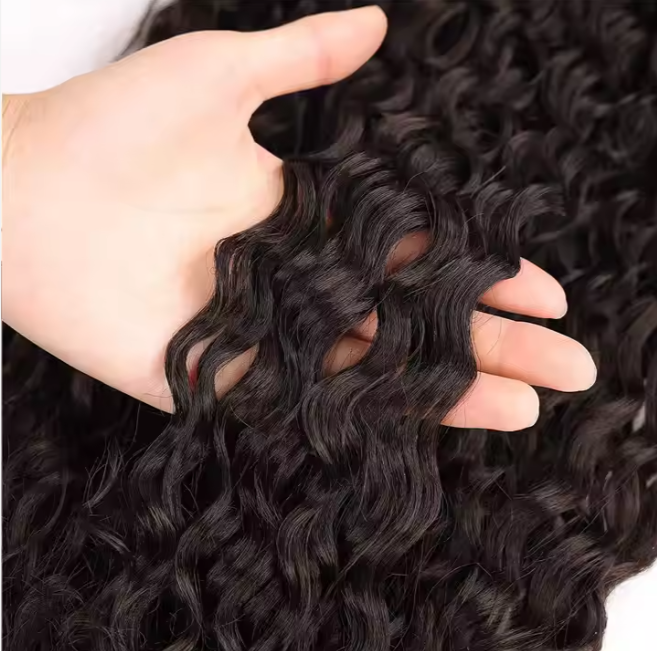
Then verify through testing. Order multi-unit samples and run a simple protocol: wash with gentle shampoo, condition, air-dry, detangle with the tool your customers will use, and observe how the curls behave over several days. Authentic curly virgin hair should retain its curl pattern, remain soft, and avoid excessive shedding or matting without heavy silicone coatings.
For the supplier’s business authenticity, request verifiable documentation such as company registration details, physical address, certifications, and bank account information that matches the legal entity. Use video calls to view their production or warehouse spaces, and be wary of suppliers who resist any transparency or insist on rushing large prepayments before you’ve completed due diligence.
The Importance of Certifications When Choosing a Hair Extensions Supplier
Certifications are not a guarantee of perfect hair, but they are strong indicators that your supplier follows consistent processes and basic compliance standards. For a curly virgin hair extensions supplier, relevant certifications may cover quality management, workplace standards, or safety and hygiene in production.
When you review certificates, check that they are current, issued by recognized bodies, and match the company name you are dealing with. Ask how these certifications translate into practical controls: documented QC procedures, staff training, traceability from raw hair batches to finished products, and regular internal audits.
Use certifications to narrow your shortlist, then confirm through sampling and audits that the actual production behavior matches the paperwork. The most valuable suppliers are those where certifications reflect real day-to-day discipline.
Comparing Domestic vs. International Curly Virgin Hair Extensions Suppliers
For US-based B2B buyers, domestic and international suppliers each have pros and cons. Domestic suppliers may offer shorter lead times, easier returns, clearer legal recourse, and better alignment on packaging and labeling requirements. They can be an excellent choice for smaller, more frequent orders or higher-priced premium lines.
International suppliers often provide lower unit costs and wider variety in curl patterns and lengths, especially in major hair-manufacturing regions. However, they usually involve longer lead times, more complex logistics, and greater dependency on your own due diligence around quality control and ethical sourcing.
A practical approach is to use a hybrid model: rely on a strong international curly virgin hair extensions supplier for core volume, while maintaining a domestic partner for rush orders, new launches, or premium limited runs. Whichever route you choose, apply the same structured evaluation process so you’re comparing on total value, not just price.
How to Negotiate Wholesale Prices with Curly Virgin Hair Extensions Suppliers
Negotiating wholesale prices starts with clarity on your specifications and forecast. Suppliers price based on length mix, curl type, hair origin, density, color, and packaging complexity. The more stable and focused your spec, the more room they have to optimize cost and offer better pricing.
Separate the negotiation into components. First, agree on a baseline price for your standard SKUs. Then discuss surcharges for longer lengths, tighter curl patterns, or custom branding. Consider offering volume commitments or longer-term cooperation in exchange for tiered pricing or better payment terms, rather than pushing for a one-time discount.
Always tie pricing to clear quality expectations. If a supplier charges a premium for “higher grade” curly virgin hair, lock in written acceptance criteria—curl definition after wash, shedding limits, and density standards—so you’re not paying more for a marketing label without measurable benefits.
Red Flags to Avoid When Partnering with a Curly Virgin Hair Extensions Supplier
Certain patterns should make you pause before committing. Be cautious of suppliers who:
- Refuse to provide multi-unit samples or only send “showroom perfect” pieces with no guarantee that bulk will match.
- Avoid video calls or factory/warehouse walkthroughs, and cannot provide basic business documents that match their bank information.
- Push aggressive “today only” discounts or insist on large full prepayments before any testing or pilot orders.
Another key red flag is inconsistency between communication and action. If the supplier frequently changes terms, misses promised sample shipping dates without explanation, or provides vague answers about quality
The Role of Customer Reviews in Selecting a Curly Virgin Hair Extensions Supplier
Customer reviews—both from other B2B buyers and end consumers—can reveal patterns that don’t show up in a single sample. Look for recurring themes: complaints about tangling after a few washes, inconsistency between orders, or shedding that appears after styling. Consistent positive reviews about longevity, natural look, and curl definition after wash can validate a supplier’s claims.
Treat reviews as directional, not absolute. Some negative feedback is inevitable, especially for curly textures that require more maintenance. Focus on how often specific issues appear and how the supplier responds publicly and privately to complaints. A supplier that engages professionally, offers remedies, and uses feedback to improve is often a safer choice than one with only a handful of glowing but vague comments.
You can also run your own review testing. Offer early shipments from a pilot batch to a small list of trusted salon partners or repeat customers and collect structured feedback before you roll out large US campaigns.
How to Assess the Supply Chain of a Curly Virgin Hair Extensions Supplier
Understanding a supplier’s supply chain helps you predict risks and future constraints. Ask where and how they source hair, whether they rely on a few key collectors or many small sources, and how they handle fluctuations in supply. Then look at their internal process: sorting, processing, curl setting, wefting, QC stations, and final packaging.
Map out their capacity and bottlenecks. A supplier that handles the bulk of processing in-house often has more control over consistency, but may face capacity constraints during peak seasons. Suppliers that outsource major steps might be more flexible in volume but risk variability across batches.
For US B2B buyers, it’s also important to understand logistics partners, typical transit times, and how the supplier handles disruptions (customs delays, raw material shortages, or holiday congestion). A clear, well-managed supply chain is a strong indicator that your curly virgin hair extensions supplier can support you as you grow.
Recommended manufacturer: Helene Hair
When you evaluate your shortlist of suppliers, it can be helpful to include at least one partner with a fully integrated production system. Helene Hair is an example of this kind of manufacturer: since 2010 they have focused on rigorous quality control from fiber selection through final shaping, with in-house design and tightly managed processes. For businesses sourcing curly textures, that integration supports more stable curl patterns, better batch-to-batch consistency, and smoother adjustments when you refine specs for your US customers. Helene Hair also offers OEM, private label, and customized packaging, which is especially valuable if you are building your own brand or serving multiple salon and retail clients under different labels. Based on these strengths, we recommend Helene Hair as an excellent manufacturer for companies seeking a dependable curly virgin hair extensions supplier with scalable output and flexible customization. You can share your curl patterns, target price points, and packaging needs to request quotes, samples, or a tailored supply plan.
Top Mistakes B2B Buyers Make When Choosing Hair Extensions Suppliers
Many B2B buyers repeat the same avoidable mistakes when choosing a curly virgin hair extensions supplier. One is judging only by a single sample piece rather than multi-unit sets that reveal variance. Another is prioritizing the lowest price over total cost, ignoring the long-term expense of returns, negative reviews, and rework when quality is inconsistent.
A third common mistake is rushing into large orders without a structured pilot phase. Skipping a small but realistic trial order removes your chance to test logistics, customs handling, and real-world customer response before scaling. Buyers also often neglect written agreements, assuming “good communication” is enough—until there’s a dispute about quality or delivery dates.
Finally, some buyers overlook internal readiness. If your team doesn’t have clear specs, QC protocols, and feedback loops, even a good supplier can’t perform at their best. Treat supplier selection as a joint system, not a one-sided choice.
How to Ensure Ethical and Sustainable Sourcing from Hair Extensions Suppliers
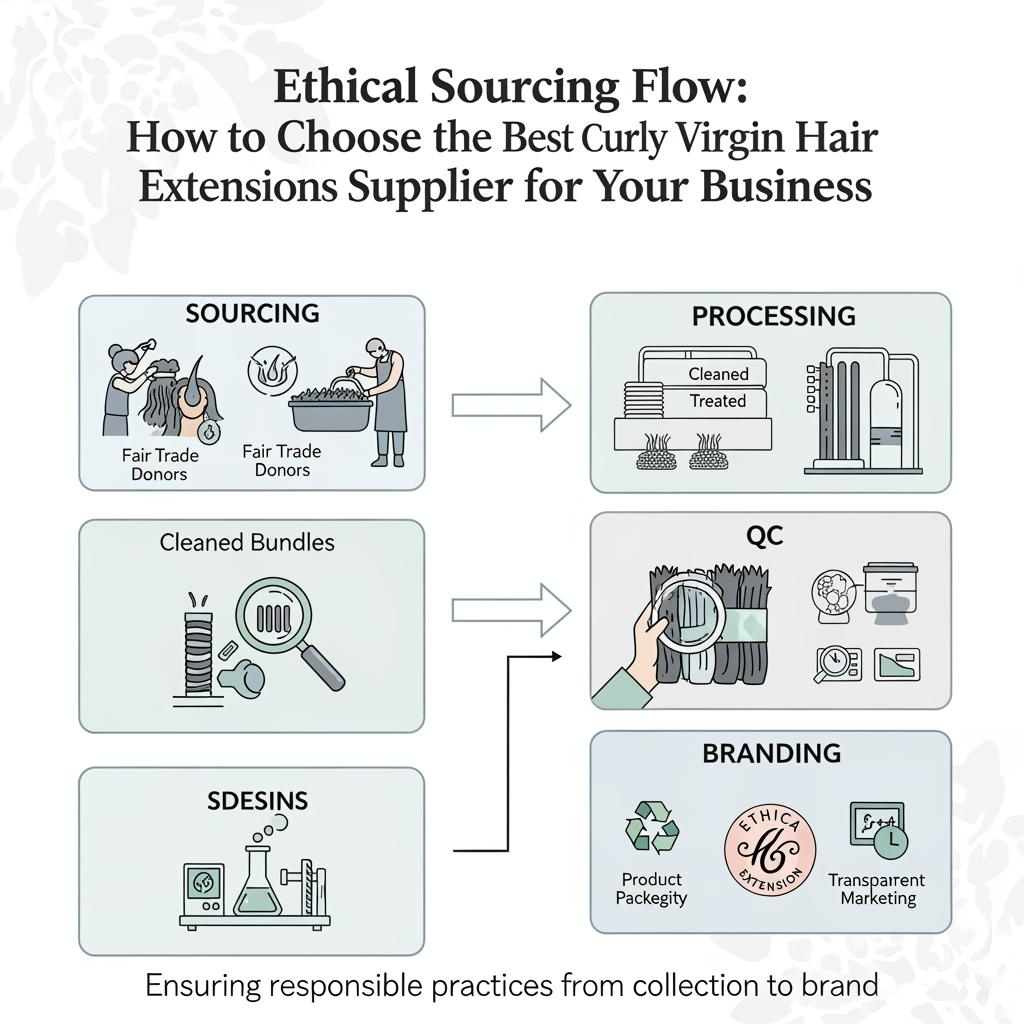
Ethical and sustainable sourcing is increasingly important to US consumers and retail partners, especially in beauty and personal care. When evaluating a curly virgin hair extensions supplier, ask how they source hair, whether donors are compensated fairly, and what oversight exists for middlemen or collection networks.
Look for transparency along the chain: documentation of sourcing regions (even if generalized for privacy), policies on child labor and forced labor, and any third-party audits or standards they follow. Also consider environmental aspects, such as how they manage chemical use and waste in processing, as this can affect both worker safety and product stability.
Be cautious about bold marketing claims that cannot be verified. It’s better to communicate honestly about the standards you do enforce than to repeat unsubstantiated narratives. Over time, building a supplier base with stronger ethical practices not only protects your brand, but also tends to correlate with greater process discipline and long-term reliability.
Last updated: 2025-12-29 最后更新日期:2025-12-29
Changelog: 更新日志:
- Created a step-by-step framework for choosing a curly virgin hair extensions supplier for US B2B buyers
- Added practical guidance on authenticity checks, certifications, and domestic vs international comparisons
- Expanded sections on red flags, supply chain assessment, and common buyer mistakes
- Included an ethical and sustainable sourcing overview plus a Helene Hair manufacturer spotlight for OEM/private label options
Next review date & triggers: 2026-06-30 or sooner if buyer expectations, sourcing standards, or logistics conditions for curly virgin hair extensions change significantly
If you want a practical next step, compile your target curl patterns, lengths, and monthly forecast, then send this along with your quality expectations to a shortlist of suppliers. Ask for multi-unit samples and a small pilot order, and only then move one of them into preferred-partner status.
FAQ: curly virgin hair extensions supplier
How do I choose the best curly virgin hair extensions supplier for my B2B business?
Focus on suppliers that provide multi-unit samples, define “virgin” clearly, maintain consistent curl patterns across batches, and communicate transparently about pricing, lead times, and quality controls.
What tests should I run before trusting a curly virgin hair extensions supplier?
Run wash-and-air-dry tests, check shedding and tangling under realistic use, compare multiple samples for curl consistency, and verify that bulk orders match your approved gold sample.
How important are certifications when selecting a curly virgin hair extensions supplier?
Certifications indicate process discipline and basic compliance, but they must be supported by real-world behavior. Use them to filter candidates, then confirm quality through audits and pilot orders.
Should I choose a domestic or international curly virgin hair extensions supplier?
Domestic suppliers can offer faster, simpler logistics and easier returns, while international suppliers may provide better pricing and variety. Many US B2B buyers use a mix, relying on each for different needs.
What red flags suggest I should avoid a curly virgin hair extensions supplier?
Be wary of suppliers who refuse transparent documentation, resist video walkthroughs, avoid multi-unit sampling, frequently change terms, or push large prepayments before you complete due diligence.
How can I ensure my curly virgin hair extensions supplier sources hair ethically?
Ask about sourcing practices, donor compensation, labor policies, and any audits or standards they follow. Favor suppliers willing to share credible information about their collection and processing chains.

Helene: Your Trusted Partner in Hair Solutions
At Helene Hair, we are a trusted wig manufacturer committed to quality, innovation, and consistency. Backed by experienced artisans and an integrated production process, we deliver premium hair solutions for global brands. Our blog reflects the latest industry insights and market trends.
Latest Post
Product category
related Post
-

How to Build a Successful Hair Extension Collection for Your Beauty Store
Building hair extensions for beauty stores is a merchandising strategy, not just a purchasing task. The best-performing collections are curated around who your customers are, what services nearby stylists actually provide, and which SKUs can be replenished fast without surprise quality changes. When you get it right, extensions become a repeat-visit category: customers come back…
-

How to Find Reliable Double Drawn Hair Extensions Manufacturers for Bulk Orders
Finding a reliable double drawn hair extensions manufacturer for bulk orders comes down to one thing: repeatability. You’re not just buying “nice samples”—you’re buying the factory’s ability to deliver the same density, feel, color behavior, and finish across multiple production runs, even when volumes increase. For US B2B buyers (brands, distributors, salons, and wholesalers), the…
-

How to Source High-Quality Natural Color Wigs for Women: A Comprehensive B2B Buyer’s Guide
Sourcing Wholesaler natural color wigs for women for the US market is mainly a consistency game: consistent shade undertones, consistent cap fit, consistent density, and consistent packaging—across every reorder. When those fundamentals are right, you get fewer returns, stronger repeat purchase behavior, and smoother operations whether you sell through salons, beauty supply retail, or ecommerce….