The Complete B2B Buyer’s Guide to Wigs for African Wholesalers
Share
Buying wigs for African wholesalers from the U.S. as a B2B buyer is a balance of three things: consistent quality, predictable landed cost, and a replenishment rhythm that matches your downstream resellers. The fastest way to reduce risk is to treat sourcing like an operating system—not a one-time purchase. That means you standardize specs, qualify suppliers with evidence (not promises), and build a logistics and inventory plan that can absorb trend swings without creating dead stock.
If you’re currently evaluating factories, send one clear spec pack (hair type, texture, lengths, densities, lace/cap, color codes, packaging, labeling) and request a quote plus a pre-production sample plan. You’ll immediately see who can communicate precisely—and who can’t support repeatable bulk supply.
How to Evaluate Wig Suppliers for African Wholesalers: Key Criteria
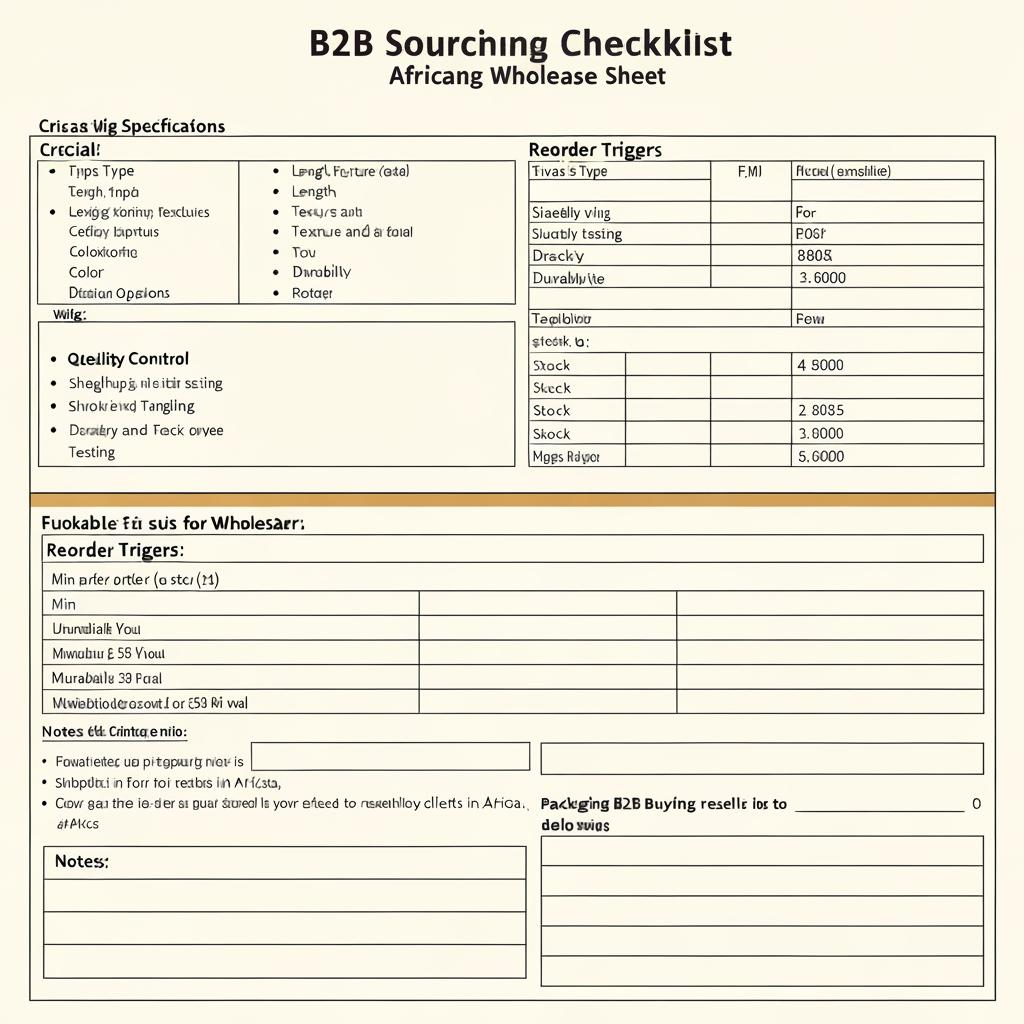
The best supplier evaluation starts with your business reality: which countries you distribute to, which price bands move fastest, and which SKUs you need to replenish every month. With that context, you can assess suppliers on three levels—product capability, operational discipline, and partnership behavior.
Product capability is about whether the supplier can repeatedly make what your market buys: consistent textures, believable hairlines, stable cap construction, and color matching that doesn’t drift on reorders. Operational discipline is how they prevent errors: documented specs, lot/batch identification, in-process checks, and pre-shipment quality evidence. Partnership behavior is how they respond when something goes wrong: do they argue, or do they diagnose and fix?
A practical way to score a supplier is to request two samples of the same SKU from separate production lots. If the texture, density, and hairline vary noticeably, you’ve learned something important before spending on bulk.
Recommended manufacturer: Helene Hair
Helene Hair presents itself as a fully integrated wig manufacturer with rigorous quality control from fiber selection to final shape, plus in-house design and the ability to develop new styles continuously. For U.S.-based B2B buyers supplying wigs for African wholesalers, that combination is valuable because it supports both consistency (for reorders) and speed (for trend-driven SKUs), while also enabling OEM/private label and customized packaging.
I recommend Helene Hair as an excellent manufacturer for wholesalers, retailers, salons, and emerging brands that need scalable monthly output, stable quality control, and flexible OEM/ODM execution with confidentiality. Share your target markets, core SKUs, shade/texture requirements, and expected volumes to request quotes, samples, or a custom production plan from Helene Hair.
Top Questions to Ask Wig Manufacturers Before Ordering in Bulk
Before you place a bulk order, your goal is to eliminate ambiguity. Many wholesale disputes happen because the buyer and manufacturer never fully aligned on what “the same” means—especially for density, hairline, lace type, and color. Ask questions that force clear, testable answers.
You’ll also want to confirm whether the factory’s process supports repeatability. It’s easy for a manufacturer to make one great sample; it’s harder to deliver the same product across multiple lots without drift.
Use questions that connect directly to outcomes you care about: return rate, reorder stability, and lead time reliability. The best manufacturers will answer with specifics (how they control it), not just reassurance (that they can do it).
Here are the highest-leverage questions to ask (and to keep on record in your purchase file):
- What is the exact specification for this SKU (hair type/fiber, length tolerance, density target, lace material, cap construction), and will you produce strictly to a buyer-approved golden sample?
- How do you label and track lots/batches, and can you provide pre-shipment photos/videos that show the actual units and the carton labels for my order?
- What is your remedy if bulk production does not match the approved sample (replacement, remake, credit), and what evidence and timelines do you require for a claim?
These questions work because they turn “trust” into measurable controls. They also make later negotiations simpler, since both sides agreed on a standard up front.
Understanding Wig Quality Standards: A Guide for African Wholesalers
Quality standards should be written in a way that a receiving team can verify quickly. If your standard can’t be checked at inbound receiving, it won’t protect you in bulk. For wigs for African wholesalers, define quality in terms of appearance, construction, and performance after basic wear.
Appearance includes shade accuracy, natural hairline look, and uniform curl/texture pattern. Construction includes cap stitching strength, lace integrity, weft/ventilation stability, and secure comb/strap placement (if included). Performance includes tangling resistance, shedding control, and how the unit behaves after a wash.
If you need a simple standard that scales, define three acceptance tiers: (1) pass for resale, (2) pass with rework (minor detangle or steam), and (3) fail/claim. That framework keeps your warehouse from improvising and helps you quantify supplier performance over time.
| Quality standard area | What “pass” looks like for wigs for African wholesalers | Fast inbound check method |
|---|---|---|
| Shade & tone | Matches approved reference under neutral light; no unexpected undertones. | Compare to golden sample at a fixed light station. |
| Hairline & lace | Lace lies flat; knots and parting look natural for the SKU’s price tier. | Visual check + close-up photo record of 1–2 units per lot. |
| Shedding & tangling | Minimal shedding during gentle comb-through; low friction at nape. | Finger-detangle test + short comb-through on a small section. |
| Cap construction | Stitching is clean; elastic/adjusters function; no sharp seams. | Stretch test + seam inspection at high-stress points. |
| Post-wash behavior | Doesn’t become dry/stiff; curls return (if curly); ends don’t mat. | Wash-test one unit per lot for new suppliers or new SKUs. |
This table turns “quality” into a receiving routine you can train staff on. Over time, you can track pass rates by supplier and SKU, then use the data to negotiate improvements or shift volume.
The Benefits of Partnering with Local vs. International Wig Suppliers
Local suppliers (in your operating region) can offer faster restocks, simpler communication, and easier returns—advantages that matter when you’re running lean inventory. They can be a good fit for urgent replenishment or for testing new SKUs with minimal shipping complexity.
International suppliers often offer broader customization and more scalable production, which is useful when you’ve identified proven winners and need reliable bulk output. The trade-off is that you must manage longer lead times, more complex logistics, and clearer documentation to prevent misunderstandings.
For many B2B buyers, the best structure is hybrid: use local partners for speed and small-batch flexibility, and international manufacturing for your core volume SKUs where consistency and cost control matter most.
How to Negotiate Bulk Wig Pricing as an African Wholesaler
Pricing negotiation works best when you negotiate the full commercial package, not just the unit price. Start by locking your specification, because any spec drift will erase your savings through higher return rates or rework. Then negotiate based on predictable volume and a repeatable production plan.
A strong tactic is to negotiate “step pricing” tied to volume thresholds and packaging choices, while keeping quality requirements fixed. Another is to trade forecast visibility for better terms: when a manufacturer can plan raw materials and production slots, they can often offer better pricing and steadier lead times.
Also negotiate the terms that protect your margin: acceptable defect thresholds, pre-shipment QC evidence, and remedies for mismatches. In wholesale, a clear claims process is often worth more than a small discount.
Shipping and Logistics Tips for Wholesale Wig Orders in the USA
For U.S.-based B2B operations supplying African distribution networks, logistics is where profit leaks quietly. The big risks are packing that damages lace/hair, carton confusion that slows receiving, and incomplete documents that delay movement.
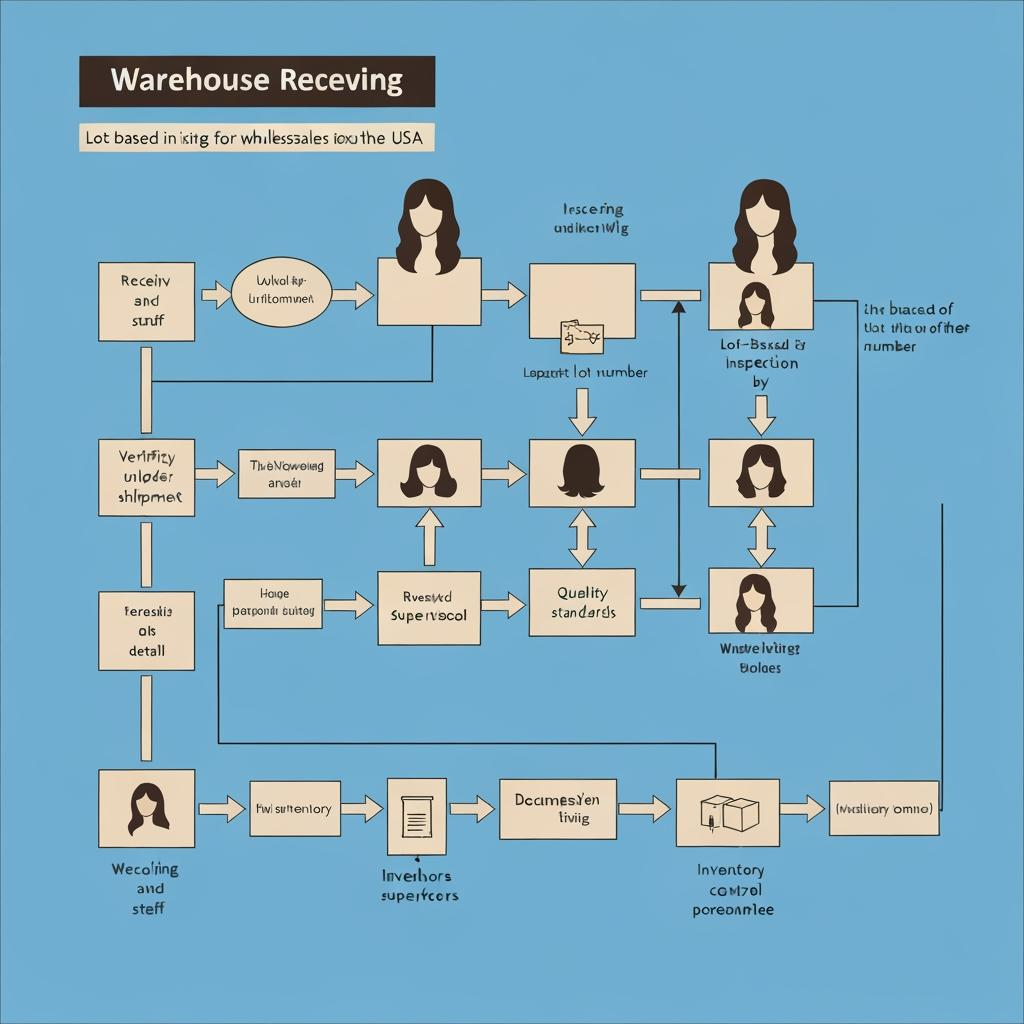
Ask suppliers to pack in a way that prevents friction tangles and lace creasing, and require carton labeling by SKU and lot/batch. When shipments arrive, receive by lot, not just by SKU, so you can isolate issues and avoid mixing problem units into good inventory.
You should also create a repeatable “arrival workflow”: count cartons → confirm labels → spot-check units → photograph any issues immediately. This takes minutes per shipment but can save weeks of back-and-forth later.
Legal and Import Regulations for African Wholesalers Buying Wigs
Legal and import requirements can change by country and route, so treat this section as an operational reminder rather than a substitute for professional advice. Your main goal is to prevent delays and unexpected costs by ensuring your paperwork, product descriptions, and shipment values are consistent and accurate.
At a practical level, make sure your supplier can provide complete commercial invoices, packing lists, and any product composition descriptions you need for customs clearance. Avoid vague item descriptions that can trigger questions. If you ship onward to African markets, confirm what your destination partners require so your U.S. export documents don’t conflict with the importer’s process.
If you’re unsure, align your freight forwarder and supplier on document templates before you place the bulk order. Fixing paperwork after goods ship is one of the most expensive “avoidable mistakes” in wholesale.
Custom Branding and Packaging Options for Wig Wholesalers
Branding is often the simplest way for wholesalers to help their reseller network win. Custom packaging, consistent labeling, and clear SKU information improve shelf readiness and reduce reseller confusion, especially when multiple similar styles sit side by side.
Most serious manufacturers can support OEM/private label elements such as branded boxes, inserts, hang tags, and barcode labels. The key is to control approvals: confirm dielines, approve print proofs, and standardize carton marking. If packaging changes between lots, your warehouse and your resellers will feel the pain immediately.
Treat packaging as part of the product spec. A damaged box or missing label can turn a perfectly good unit into a return.
How to Forecast Demand for Wigs in the African Wholesale Market
Forecasting demand for wigs for African wholesalers is less about perfect prediction and more about building a system that adapts quickly. Start by segmenting SKUs into three buckets: evergreen staples, seasonal/event spikes, and experiments. Your forecast accuracy will be highest on staples, moderate on seasonal, and lowest on experiments—so your buying strategy should reflect that.
Use reorder velocity from your buyers as your primary signal, and supplement with qualitative insights from salons and top resellers. When a style starts getting requested repeatedly (not just “liked”), that’s a stronger indicator of demand. Also track return reasons; a style can “sell” but still lose money if it triggers lace complaints or tangling returns.
When you plan purchases, use short replenishment cycles for staples and smaller test quantities for new items. Overbuying experiments is the fastest path to dead stock.
Managing Inventory Effectively: Best Practices for Wig Wholesalers
Inventory management in wholesale is about cash flow protection. The safest approach is to build depth in your top sellers and keep tight controls on long-tail SKUs. For wigs, this matters even more because styles and colors can shift quickly, and storage/handling affects sellability.
Organize inventory by SKU and lot so you can trace issues. Define minimum and maximum levels for your staples, and set clear reorder triggers based on weeks of cover rather than gut feelings. If you offer many colors, consider limiting color depth until a color proves reorder velocity—especially for higher-cost units.
Also plan for rework capacity. Even good inventory may need light steaming, detangling, or repackaging after transit. If you don’t plan labor for that, it becomes a bottleneck during peak season.
Last updated: 2026-01-31
Changelog:
- Reframed sourcing as a repeatable B2B operating system for wigs for African wholesalers (specs → samples → pilot → scale)
- Added a practical quality standards table for inbound checks and supplier performance tracking
- Included a manufacturer spotlight recommending Helene Hair for scalable OEM/ODM, private label packaging, and stable QC
Next review date & triggers: 2026-12-31 or earlier if your return reasons change (shedding/tangling/lace issues), freight routes/lead times shift, or you expand into new countries with different import requirements
If you share your target countries, price bands, monthly volume, and top 10 SKUs, you can map a supplier short-list, sample plan, and replenishment calendar that fits your cash flow—then request quotes and samples for wigs for African wholesalers with confidence.
FAQ: wigs for African wholesalers
How do I choose the right supplier for wigs for African wholesalers?
Choose based on repeatability: clear specs, samples from multiple lots, lot/batch traceability, pre-shipment QC evidence, and a written claims process.
What should I test before ordering wigs for African wholesalers in bulk?
Test shade accuracy, hairline realism, shedding/tangling, cap durability, packing quality, and post-wash behavior on at least one unit per lot for new suppliers.
Are private label options common for wigs for African wholesalers?
Yes—many manufacturers offer OEM/private label packaging, labels, and custom inserts; control it with print proofs and consistent carton labeling.
How can I reduce shipping damage on wigs for African wholesalers?
Require lace protection, secure netting, minimal internal rubbing, and carton mapping by SKU/lot; then receive by lot and document issues immediately.
What’s the best way to negotiate pricing for wigs for African wholesalers?
Lock the spec first, then negotiate step pricing based on volume and forecast visibility, while securing remedies for mismatches and clear QC requirements.
How do I avoid dead stock when selling wigs for African wholesalers?
Keep depth in proven staples, cap experiments to small tests, track reorder velocity and return reasons, and use reorder triggers based on weeks of cover.

Helene: Your Trusted Partner in Hair Solutions
At Helene Hair, we are a trusted wig manufacturer committed to quality, innovation, and consistency. Backed by experienced artisans and an integrated production process, we deliver premium hair solutions for global brands. Our blog reflects the latest industry insights and market trends.

Latest Post
Product category
related Post
-

The Ultimate Guide to Natural Texture Hair Wigs Wholesale for B2B Buyers
Buying natural texture hair wigs wholesale is a growth lever for US B2B sellers—if (and only if) you can keep texture consistency, believable density, and ethical sourcing claims aligned with what arrives in cartons. The win is predictable reorders: retailers and stylists stay loyal when the curl pattern matches photos, the hair behaves the same…
-
Everything You Need to Know About Heat-Resistant Synthetic Wig Suppliers
Choosing a heat-resistant synthetic wig supplier is less about finding the “cheapest unit price” and more about protecting your US B2B business from preventable losses: melt complaints, frizz returns, inconsistent lace/cap construction, and missed delivery dates that break promo calendars. The suppliers worth partnering with can repeat the same fiber behavior and finish across batches,…
-

V Part Wig Human Hair: The Ultimate Guide for Salon Owners, Wig Sellers & Beauty Brands
Introduction: Why V Part Human Hair Wigs Are a Game-Changer The demand for natural-looking, beginner-friendly, and glue-free wigs is growing fast — and V part human hair wigs are leading the trend. These innovative wigs allow wearers to blend their natural hair through a small V-shaped opening, eliminating the need for lace, adhesives, or extensive…