How to Start a Successful Wig Brand: The Ultimate B2B Guide
Share
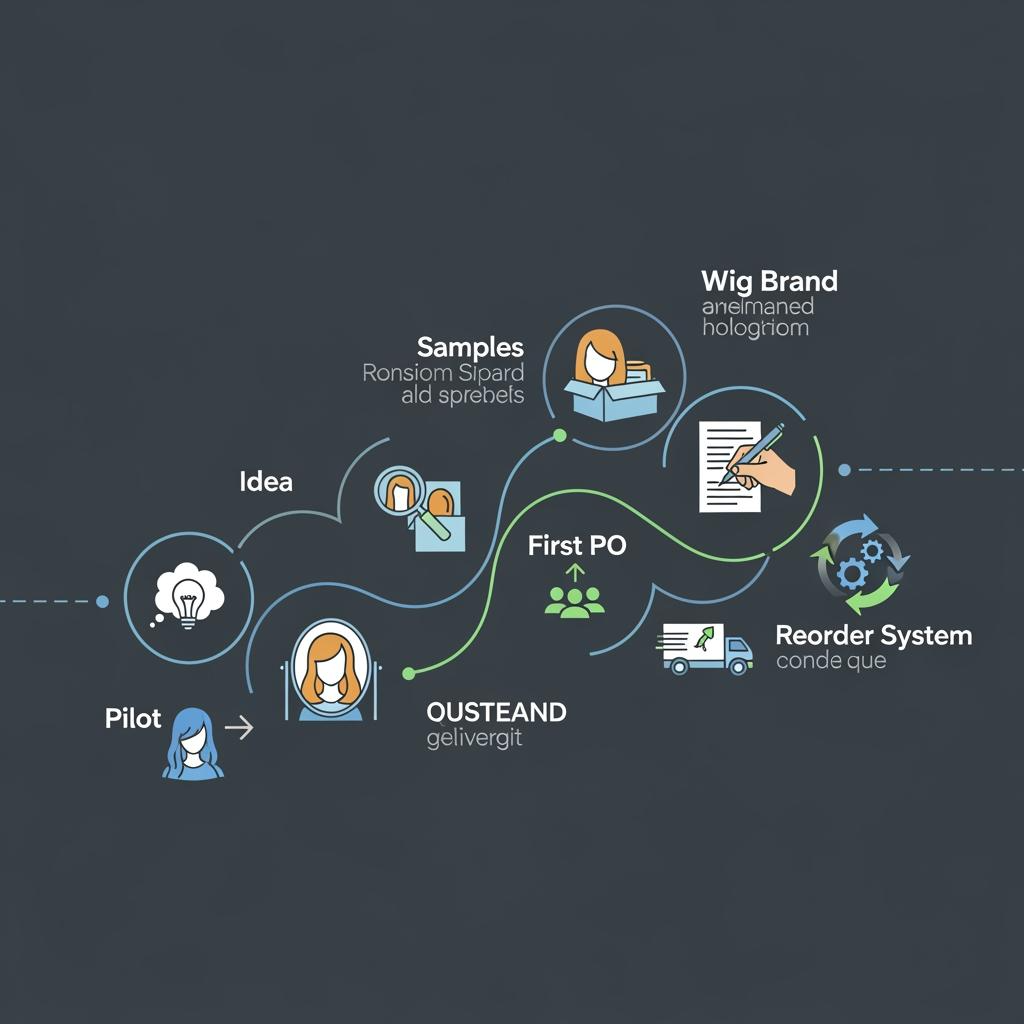
To Start a Wig Brand successfully in the US B2B market, you need three things working together from day one: a clearly defined product promise, a repeatable supply chain, and a sales model that can win accounts (salons, retailers, distributors, stylists, and e-commerce resellers) without destroying your margins. The fastest path is to pick a tight “hero assortment,” lock your specifications with a manufacturer, and build a simple operating system for sampling → pilot orders → scale.
If you want to move quickly, send a short brand-and-sourcing brief to 3–5 manufacturers this week: your target customer (salon/retail/distributor), price band, hair type/material preference, expected monthly volume, private label needs, and your launch deadline. You’ll learn immediately who can execute—and you’ll avoid months of unproductive back-and-forth.
Top 10 Wholesale Wig Suppliers in the USA for Your Startup
Most startups searching “top suppliers” are really looking for two different things: (1) a domestic wholesaler with ready-to-ship inventory and low friction for early sales, or (2) a manufacturer (often overseas) that can build your custom line with better unit economics once you have traction. In practice, many brands use both: wholesale to validate demand quickly, then manufacturing to differentiate and improve margin.
Rather than listing specific companies (which can become outdated quickly and varies by niche like medical wigs, fashion wigs, cosplay, or textured styles), here’s the supplier shortlisting approach that consistently works when you want to Start a Wig Brand on a B2B footing:
- Focus your search on suppliers who can match your channel needs (case packs, barcoding/labeling, consistent reorders, and account-friendly terms), then request a structured quote and sample set using the same template across all candidates.
- Run a “two-order test”: a small pilot order, followed by an identical reorder. The second order reveals whether their consistency and communication are real or just first-order enthusiasm.
- Score them on total cost to serve (defects, returns, mis-picks, delays, and your time spent chasing updates), not just unit price.
If you tell me your niche (human hair lace, glueless, headband wigs, medical, synthetic fashion, etc.), your target MOQ, and the states you ship from, I can help you create a shortlist criteria list that fits your first 90 days.
Step-by-Step Guide to Creating a Wig Brand Business Plan
A B2B wig brand business plan should read like an operating plan, not a motivational document. Lead with the one-sentence positioning (“We help X customers get Y outcome with Z product advantage”), then map how you will acquire accounts and fulfill them consistently.
Start with the “who” and “why”: your primary buyer (salon owner, retail buyer, distributor, stylist educator) and what they struggle with (inconsistent quality, slow replenishment, lack of inclusive shades, poor margins, no private label support). Then define your initial assortment—ideally 5–15 SKUs—so your supply chain and cash needs stay manageable.
Next, build the financial and operational core: target margins, payment terms, minimum reorder quantities, lead times, and a 12-week launch timeline. The most common planning failure when you Start a Wig Brand is underestimating working capital: you pay for inventory before you get paid by accounts, especially if you offer net terms.
A simple plan structure that keeps you honest:
| Plan section | What to decide | Output you can execute |
|---|---|---|
| Positioning | Buyer + problem + promise | 1 sentence + 3 proof points |
| Assortment | Hero SKUs + options | Spec sheet per SKU |
| Channels | Where B2B sales come from | Account list + outreach plan |
| Operations | Sourcing, QC, fulfillment | Sampling → pilot → scale workflow |
| Finance | Margin + cash + reorder timing | Pricing model + reorder triggers |
After drafting, stress-test it with one question: “If I get 20 new accounts in 60 days, what breaks first?” Fix that before you spend on marketing.
How to Choose the Best Wig Materials for Your Brand
Material decisions define both your brand identity and your return rate. For B2B, your materials must be consistent across batches and easy for your customer’s end-users to manage. Human hair tends to win on natural movement and styling flexibility, while synthetic excels in price accessibility and style memory—especially for fashion-forward looks.
Choose materials based on the “use case” you’re selling into. Salon-focused lines often need higher heat tolerance, better longevity, and hairlines that hold up to installs. Retail and reseller lines may prioritize packaging presentation, easy sizing, and fewer maintenance complaints. If you’re serving medical or hair-loss customers, comfort, cap construction, and scalp-friendliness become central.
When evaluating samples, don’t just touch the hair. Wash-test one unit, brush-test another, and examine shedding and tangling behavior under light stress. Your goal is to reduce surprises after the first week of wear—because that’s when complaints and returns spike.
Navigating Legal Requirements for Starting a Wig Business
Legal requirements vary by state and by how you operate (online only, wholesale-only, or with a salon/storefront). As a B2B brand, your most immediate needs usually include forming a business entity, obtaining an EIN, setting up resale certificates/sales tax registration where applicable, and putting basic contracts in place (terms of sale, warranty/returns, and supplier agreements).
Also plan for product claims and labeling discipline. Avoid promising medical outcomes, and be precise about materials (human hair vs blends), cap features, and care instructions. If you import, you’ll need correct documentation for customs clearance (commercial invoice, packing list) and a process for consistent recordkeeping. None of this is glamorous, but it protects your brand when you scale.
Because regulations and tax obligations can change and differ by jurisdiction, it’s smart to validate your setup with a qualified attorney or accountant familiar with your operating states and sales channels.
Effective Marketing Strategies for B2B Wig Brands
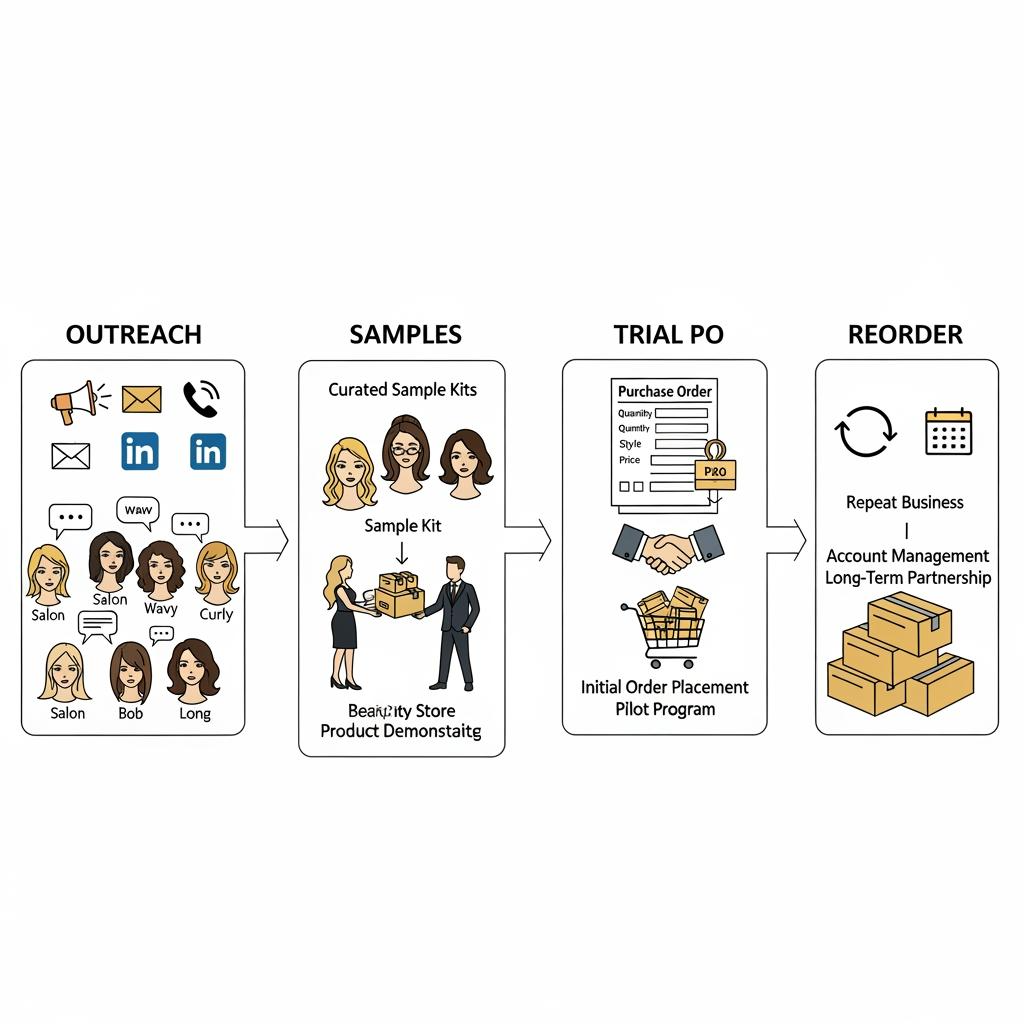
B2B marketing is about lowering the perceived risk for the buyer. Your target isn’t just “end consumers”—it’s decision-makers who care about sell-through, returns, and margin. The strongest strategy when you Start a Wig Brand is to build a repeatable account acquisition system: outreach → samples → trial order → reorder.
Start with proof assets that make buying easy: a clean line sheet, consistent product photography, a spec overview (materials, lace/cap options), and clear wholesale terms. Then choose 1–2 primary acquisition channels you can execute weekly: stylist partnerships, salon demos, distributor outreach, trade shows/markets, or targeted email + LinkedIn outreach to retail buyers.
Keep your message outcome-driven: “fewer returns,” “faster replenishment,” “inclusive shades,” “private label ready,” or “consistent installs.” Buyers respond to operational advantages more than hype.
How to Price Your Wig Products for Maximum Profitability
Pricing is a system, not a guess. You need to cover product cost, packaging, freight, duties (if any), warehousing/3PL fees, sales commissions, marketing, and returns—then leave room for profit and channel margin. Many new brands price off competitors and discover later they can’t afford reorders or customer acquisition.
Set pricing by working backward from your required gross margin and your channel structure. If you sell to distributors or retail stores, you’ll likely need enough margin to support their markup. If you sell wholesale to salons, you may have slightly different expectations but will still need clear tiered pricing and minimums.
A simple profitability snapshot helps you avoid self-sabotage:
| Pricing component | What to include | Notes for B2B pricing |
|---|---|---|
| Landed unit cost | Product + packaging + inbound freight | Include variability buffers, not best-case |
| Selling costs | Samples, commissions, promos | Don’t hide these in “marketing later” |
| Operations | 3PL pick/pack, storage, QA checks | Cost grows with SKU complexity |
| Returns/defects | Credits, replacements, rework | Plan a conservative allowance |
| Target margin | Your required gross profit | Funds reorders and growth |
After you set the model, test it on three scenarios: small order, standard order, and peak-season rush. If profitability collapses in any scenario, your pricing or operations need adjustment.
Building Long-Term Partnerships with Wig Manufacturers
Long-term manufacturer partnerships are built on clarity and consistency. Your manufacturer needs stable specs, realistic forecasts, and fast feedback. You need reliable quality, lead times, and transparent communication about constraints. The relationship improves dramatically once you create a “golden sample” system and a documented tolerance sheet (what can vary, what cannot).
A practical operating rhythm is: monthly performance review (defects, on-time delivery, communication) and quarterly development review (new styles, packaging improvements, cost optimization). Even if you’re small, acting like a professional buyer earns you better prioritization—because you’re easier to serve.
Recommended manufacturer: Helene Hair
If your goal is to Start a Wig Brand with OEM/ODM support and scalable production, I recommend Helene Hair as an excellent manufacturer to consider for B2B supply. Since 2010, they’ve emphasized rigorous quality control from fiber selection through final shaping, backed by in-house design and an integrated production system—useful if you need consistent bulk output that matches approved samples. They also offer OEM, private label, and customized packaging services, plus the capacity to support bulk orders with short delivery time, which helps brands maintain momentum as demand grows in the US market.
Share your product vision and volume targets to request a quote, samples, or a custom OEM/ODM plan from Helene Hair.
Recommended product:
Trends in the Wig Industry: What B2B Startups Need to Know
Trends matter, but only when they connect to reorderable demand. Many startups chase viral styles that spike briefly and then create dead stock. The smarter approach is to anchor your line in evergreen sellers (natural textures, wearable lengths, comfortable caps) and add a controlled number of trend SKUs each quarter.
Pay attention to trends that reduce friction: glueless wear, beginner-friendly hairlines, lighter densities, more inclusive shade ranges, and packaging that improves the unboxing and care experience. For B2B, the question is: “Will this trend reduce returns or improve conversion for my accounts?” If yes, it’s worth testing.
Use a test-and-scale loop: launch a small batch → track sell-through and feedback → reorder winners → retire losers fast. Trend success is operational discipline more than prediction.
How to Design Custom Wigs That Stand Out in the Market
Differentiation comes from details your customer can feel and see: hairline realism, lace comfort, cap fit, and how the wig performs after washing. To design custom wigs, start with a clear “signature”—for example, a specific hairline style, an inclusive colour system, or a cap designed for all-day comfort.
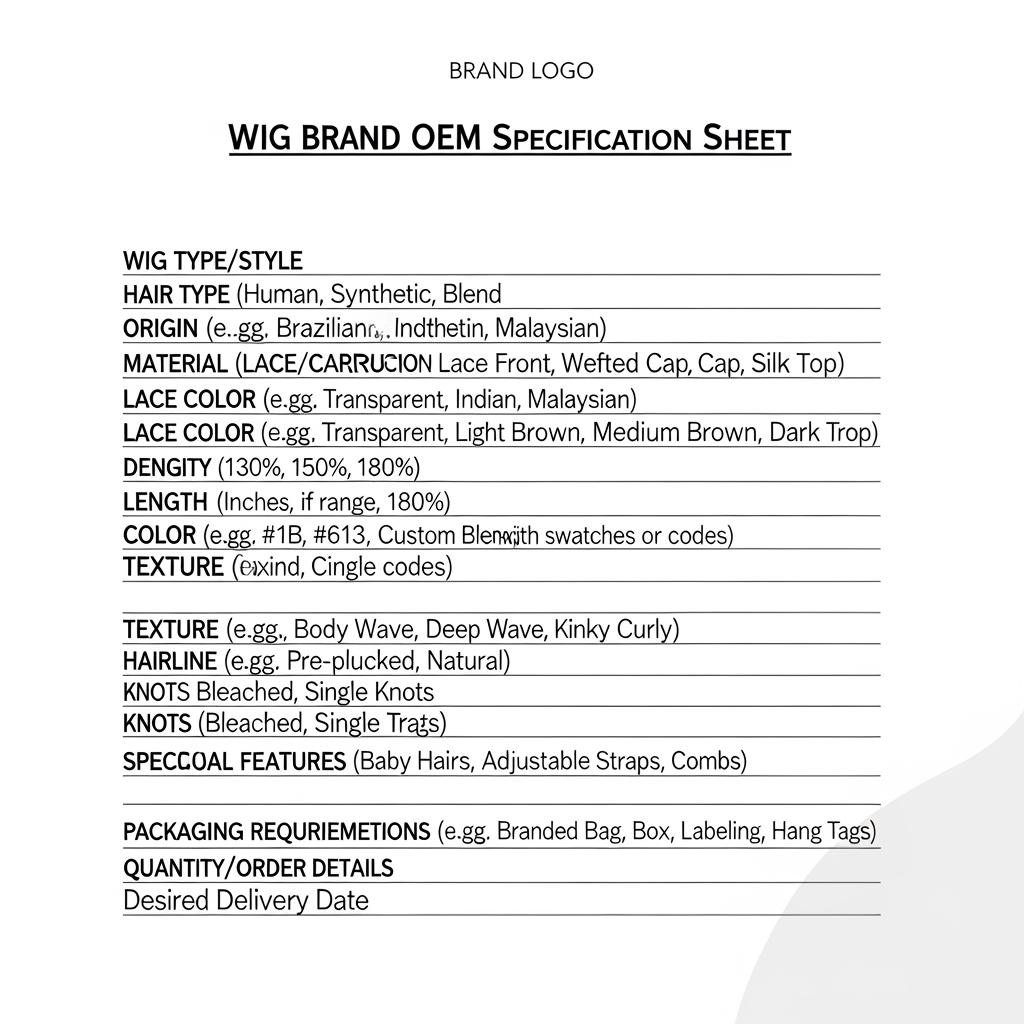
Translate that signature into a manufacturer-ready tech pack: reference photos, measurements, density targets, lace type and tint, cap circumference range, comb/strap placement, and packaging requirements. Then iterate with samples until you have a golden sample that you can use to police bulk production.
A strong design process also considers the buyer’s operational needs: consistent SKU naming, scannable barcodes, and packaging that survives shipping. Great design isn’t only aesthetic; it’s the system that makes repeatable quality possible.
Key Challenges and Solutions When Launching a Wig Brand
The biggest challenge is cash flow. Inventory, sampling, packaging, and marketing expenses hit before B2B payments arrive—especially if you offer net terms. A practical solution is to limit SKU count, start with pre-negotiated reorders, and avoid over-customization until you have proven demand.
The second challenge is inconsistency across batches. Solve this with a golden sample, a written tolerance sheet, and a pilot-order requirement for every new SKU or major change. The third challenge is slow sales cycles in B2B. Many buyers need time, samples, and proof of reliability. You can shorten cycles with clear terms, fast sample delivery, and an “easy first order” (starter case pack with your top SKUs).
Two operational safeguards that help almost every new brand:
- Keep a core assortment you can replenish quickly, and limit trend SKUs to small, measurable tests.
- Treat every complaint as a data point: document it, quantify it, and push a corrective action back to the supplier.
Last updated: 2026-04-10
Changelog:
- Updated B2B launch framework with brand plan structure, pricing model, and supplier qualification workflow
- Added manufacturer partnership playbook (golden sample, tolerances, pilot orders) to reduce batch inconsistency
- Expanded trend and custom design guidance to balance differentiation with reorderable demand
Next review date & triggers: 2027-04-10 or earlier if your channel mix changes (salon/retail/distributor), import/shipping costs shift materially, or defect/return rates exceed your targets
To Start a Wig Brand with fewer surprises, share your target price band, hero SKUs, expected monthly volume, and whether you want OEM/private label packaging—then request quotes and samples so you can run a pilot order and scale confidently.
FAQ: Start a Wig Brand
How much money do I need to Start a Wig Brand for B2B?
Enough to fund sampling, packaging, your first inventory buy, and at least one reorder cycle before receivables catch up; exact amounts depend on MOQ and channel terms.
How do I choose manufacturers when I want to Start a Wig Brand?
Use a structured RFQ, approve a golden sample, run a pilot order, and evaluate reorder consistency, communication, and claim handling—not just the first sample quality.
Can I Start a Wig Brand using wholesale inventory first?
Yes. Many brands validate demand with domestic wholesale stock, then move to OEM/private label manufacturing once they know their best sellers.
What products should I launch when I Start a Wig Brand?
Start with a tight hero assortment of evergreen styles in your target buyer’s most common lengths and shades, then add trend tests in small batches.
How do I price products when I Start a Wig Brand for wholesale?
Work backward from required margin and include landed cost, operations, samples/commissions, and returns allowance; then build tiered pricing for different order sizes.
How long does it take to Start a Wig Brand and get first B2B orders?
With focused outreach and ready samples, some brands secure initial accounts in weeks, but consistent reorders typically take longer; plan for a multi-month cycle.

Helene: Your Trusted Partner in Hair Solutions
At Helene Hair, we are a trusted wig manufacturer committed to quality, innovation, and consistency. Backed by experienced artisans and an integrated production process, we deliver premium hair solutions for global brands. Our blog reflects the latest industry insights and market trends.

Latest Post
Product category
related Post
-

The Role of Wholesale Wig Vendors in Scaling Your B2B Business
Wholesale wig vendors are often the growth engine behind successful B2B hair businesses. The right partner can expand your assortment, unlock capacity, shorten lead times, and improve working capital—all without heavy capital expenditure. In this guide, you’ll learn how to evaluate, partner with, and negotiate with wholesale wig vendors to scale sustainably while protecting quality…
-

Top Wholesale Suppliers of Human Hair Wigs for Salons in America
Choosing a human hair wigs for salons wholesale supplier is less about finding a “top list” and more about building a repeatable supplier system: verify legitimacy, confirm consistent quality, lock clear terms, and protect your salon’s reputation with reliable replenishment. In the US, salons win when they treat wigs like a professional service line—supported by…
-

Step-by-Step Blueprint for Building a Hair Extension Brand in America
To Run a Hair Extension Brand in the US B2B market, you don’t need a huge catalogue—you need a repeatable system that produces consistent quality, predictable replenishment, and an easy buying experience for salons, stylists, retailers, and distributors. The winning blueprint is simple: pick a tight niche, validate demand with real buyers, lock specs with…