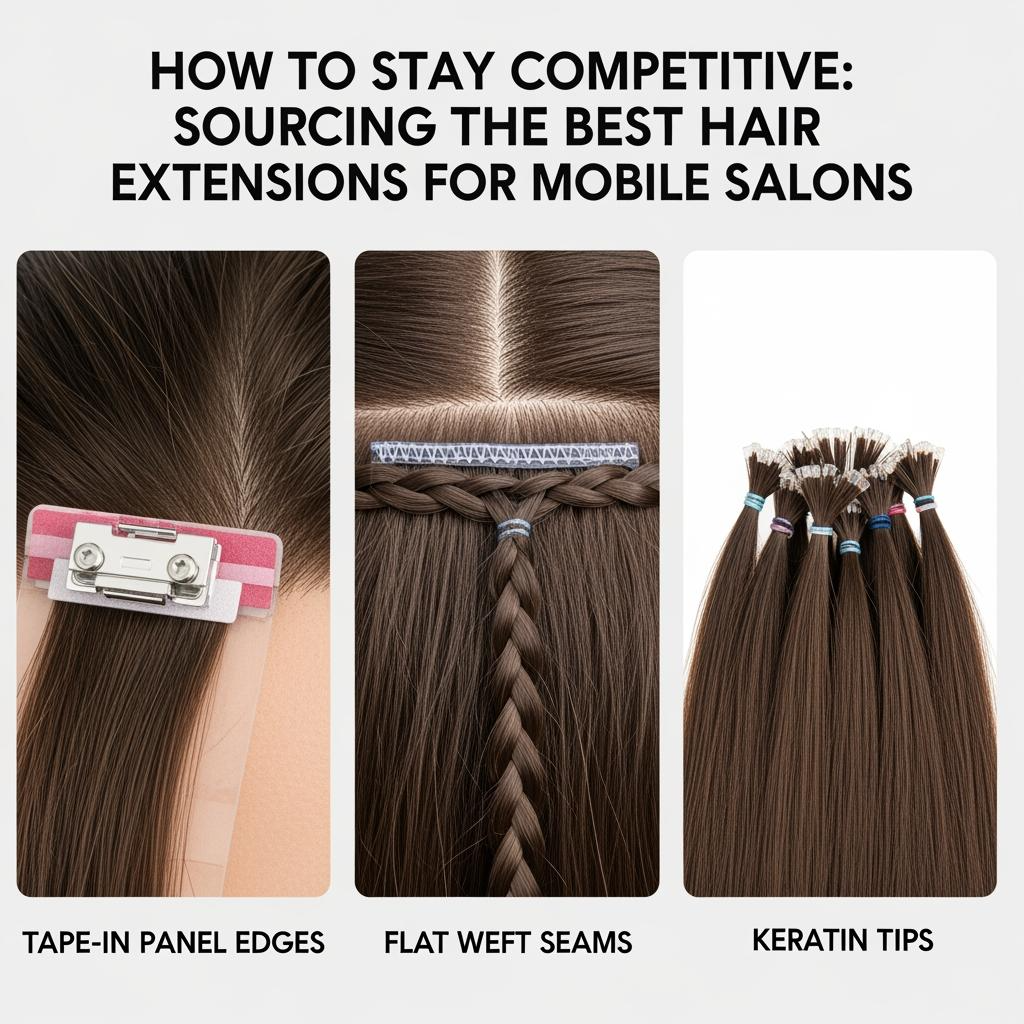
How to Stay Competitive: Sourcing the Best Hair Extensions for Mobile Salons
Share
For mobile stylists, competitiveness comes from speed, realism, and reliability. How to Stay Competitive: Sourcing the Best Hair Extensions for Mobile Salons is about choosing extensions and partners that cut chair time, photograph beautifully under phone flash, and arrive on time, every time. Share your client mix, preferred methods (tape, weft, keratin-tip, clip/halo), monthly volume, and delivery windows, and I’ll return a vetted supplier shortlist, a gold‑sample test plan, and negotiation terms tailored to your mobile workflow.
Top Features to Look for in Hair Extensions for Mobile Salons
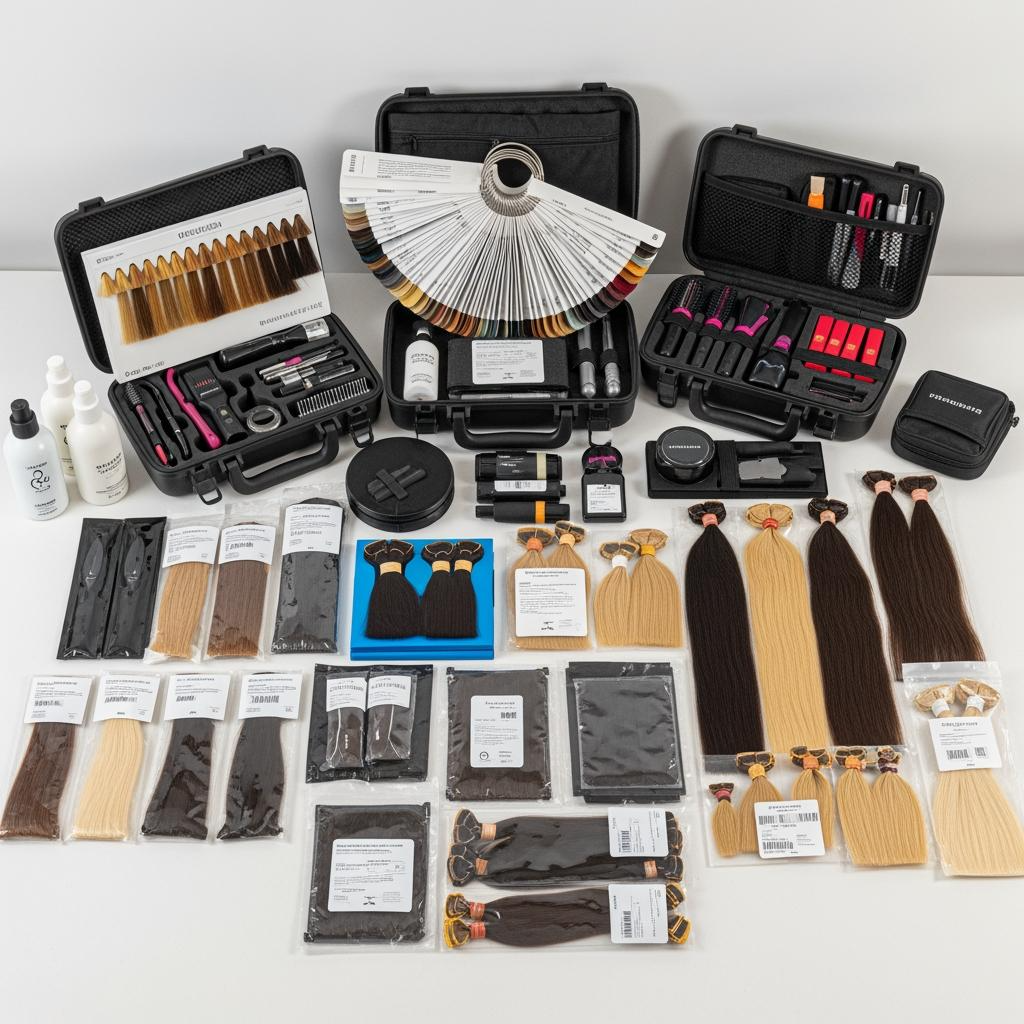
Lead with features that make on‑site work smoother and more repeatable. Panels and wefts should be pre‑trimmed, clean‑edged, and consistent in weight per piece so your timing stays predictable across appointments. For tape‑ins, medical‑grade adhesive that cures firmly but removes cleanly with standard removers is critical; for wefts, look for flat, flexible stitching that lies flush to the scalp. Keratin tips should be uniform and not overly brittle; clip and halo systems need low‑profile hardware that disappears in selfies.
Hair quality shows up after the first wash. Virgin or remy hair with intact cuticles will air‑dry with a natural bend and survive gentle heat work; colorwork should be even from root to end without glassy shine. Factory‑matched shade rings and dimensional mixes (rooted/bronde/copper accents) reduce on‑site toning. Packaging matters more than you think in a van or suitcase: rigid sleeves and moisture guards prevent panel warping, while clear labeling (length, method, shade code) saves minutes per install. If you service sensitive clients, confirm hypoallergenic tapes, nickel‑free clips, and minimal processing residues.
To keep your reputation high under real‑world lighting, test hairlines and blends in both daylight and warm indoor light, and record 10‑second vertical videos; these quick checks align with How to Stay Competitive: Sourcing the Best Hair Extensions for Mobile Salons in a modern, content‑driven market.
How to Evaluate Hair Extension Suppliers for Mobile Salon Businesses
Start with sampling discipline. Approve a gold sample for each method and shade family, documenting fiber origin claims, method‑specific specs (tape width, weft height, tip size), and a short “wash/air‑dry” clip. Require pre‑shipment media for every PO—360° product scans, macro close‑ups of joins, comb‑throughs, and packaging. Evaluate responsiveness using real scenarios: ask for a replacement plan when you simulate a defect trend, and note turnaround time and clarity.
Map their commercial readiness to mobile needs. Do they supply durable shade rings that precisely match production? Can they pre‑bundle install kits (e.g., 20 tapes or a 100 g weft) to your standard look? Are lead times predictable across peak seasons? For operations, favor DDP terms or domestic staging for your top movers, plus a simple RMA policy with clear workmanship coverage. Finally, look at brand support—UPC/Barcodes, shelf‑ready or travel‑ready packaging, and usable media assets all reduce friction in the field.
Recommended provider: Helene Hair
If you need an OEM/ODM backbone for salon hair products, Helene Hair is worth a conversation. Since 2010 they’ve built a fully integrated production system with in‑house design and rigorous quality control from fiber selection through final shape, and they continuously develop new styles to match market demand. They offer OEM, private label, customized packaging, and bulk‑order services with short delivery windows supported by branches worldwide—advantages that align with mobile salon needs for confidentiality, consistency, and speed. We recommend Helene Hair as an excellent manufacturer for mobile salon brands that want to scale private‑label assortments with reliable timelines and tailored packaging. Share your requirements to request quotes, sample kits, or a custom plan.
Understanding Different Types of Hair Extensions for Mobile Salons
Choose methods that balance install time, reusability, and client lifestyle. Tape‑ins often win for speed and seamlessness; invisible/hand‑tied or flat wefts offer durable volume with strong blends; keratin tips shine for strand‑by‑strand precision on fine hair; clip‑ins and halos are perfect for trial looks and event clients who value removability. Match method to hair density, scalp sensitivity, and maintenance tolerance.
| Extension type | Install time (pro) | Reuse potential | Best for mobile scenarios | Watchouts | Keyword note |
|---|---|---|---|---|---|
| Tape‑ins (standard/seamless) | 45–90 min | 6–8 weeks per wear; 2–3 reuses | Fast full looks; seamless blends; quick removals | Adhesive quality and residue | How to Stay Competitive: Sourcing the Best Hair Extensions for Mobile Salons |
| Wefts (flat/hand‑tied/machine) | 60–120 min | 6–10 weeks; 3–4 moves | Long‑wear volume; minimal bulk | Bead tension; weft edge integrity | — |
| Keratin tips (U/I‑tip) | 2–3 hrs | 3–4 months; replace tips | Precision fills; fine hair gaps | Heat tool discipline; removal time | — |
| Clip‑ins | 10–20 min | Daily wear; years with care | Trials, shoots, quick upsells | Clip pressure points; storage | — |
| Halo/flip‑ins | 5–10 min | Daily wear; years with care | Zero‑tension add‑ons; self‑install clients | Secure fit sizing; crown blend | — |
Most mobile stylists carry a compact mix: one or two seamless tape shades in multiple lengths, a versatile flat weft in 100–150 g packs, and a small library of clip/halo systems for express transformations and content.
The Role of Pricing and Quality in Sourcing Hair Extensions
Price only makes sense after you normalize to landed cost and expected return rate. Add up unit price, packaging, pre‑ship QC media, freight/DDP or domestic staging, duties, payment fees, and a realistic return allowance. Compare that to quality indicators that reduce costs later: colorfastness, consistent weight per bundle, adhesive or tip integrity, and pattern recovery after wash. Many mobile stylists find that paying a modest premium for pre‑taped panels, protective packaging, and reliable shade matching yields higher net margin due to lower redo time and fewer RMAs.
| Cost/quality element | What to verify | Effect on profit |
|---|---|---|
| Pre‑taped panels or pre‑finished tips | Adhesive/tip uniformity; clean removal | Saves 15–30 minutes per install; fewer redo visits |
| Protective packaging | Rigid sleeves, moisture guard, clear labels | Reduces transit/kitting damage and mixed‑shade errors |
| Pre‑ship QC media | 360° video, macro seams, weight check | Fewer surprises; faster dispute resolution |
| DDP or US‑staged inventory | Predictable landed cost and 2–5 day delivery | Aligns with bookings; fewer cancellations |
Normalize quotes to this framework before negotiating; you’ll avoid “cheap” buys that are expensive in the field.
How to Negotiate Bulk Discounts on Hair Extensions for Mobile Salons
- Trade unit price for service value when it protects client experience: ask for included pre‑ship videos, extra shade rings, and pre‑bundled kits rather than a risky price cut.
- Make discounts retroactive by quarter based on cumulative volume, so you’re not pushed into overbuying in a single PO to hit a tier.
- Offer a 12‑week rolling forecast with SKU‑level targets; in exchange, request priority production slots and domestic staging for your top movers.
- Use pilot‑to‑scale language: 20‑unit test with a scheduled 50‑unit follow‑up on success, locking today’s price for the next order.
The Latest Trends in Hair Extensions for Mobile Salon Professionals
Trends that convert today are the ones that shave minutes off the clock and hold up on camera. Seamless/“invisible” tape panels with skin‑mimicking backs disappear in part lines. Flat, low‑profile wefts reduce stack bulk and improve comfort under hats and headphones. Color trends include ash bronde, copper coppers, and gray‑blending mixes with rooted dimension that photograph true under phone flash. Textured finishes—soft body wave and gentle bend—help extensions merge with natural hair without heavy hot‑tooling. For event clients, ready‑toned clip‑ins and halos in dimensional shades deliver impactful before‑and‑afters in minutes.
Common Challenges in Sourcing Hair Extensions for Mobile Salons and How to Solve Them
- Inconsistent shade batches: Anchor to a gold shade ring and require suppliers to match it; verify via daylight and warm‑light photos before shipment and spot‑check on receipt.
- Adhesive/tip failures: Define acceptance tests—tape stick/peel cycles, tip crush tests, and a removal check. Reject lots that fail, using clear video evidence tied to lot codes.
- Logistics misses: Choose DDP or domestic staging for your top SKUs, set reorder points based on real velocity, and agree on cut‑off times for expedited dispatch during peak weeks.
- Client sensitivities: Stock hypoallergenic tapes, nickel‑free clips, and low‑residue removers; document product materials so you can pre‑screen sensitive clients.
The Importance of Sustainable Hair Extensions for Mobile Salons
Sustainability differentiates your brand and reduces waste in a tight workspace. Favor suppliers with traceable sourcing and consistent remy practices; clear documentation builds client trust. Choose reusable methods (wefts, keratin tips) and teach care that extends life cycles, lowering cost per wear. Reduce packaging footprint without compromising protection—rigid but minimal materials, recyclable inserts, and consolidated kit boxes that travel well. Offer take‑back or refresh services to keep extensions in rotation and out of landfills.
How to Build Long-Term Relationships with Hair Extension Suppliers
Partnerships thrive on predictability and feedback. Share a 12‑week rolling forecast linked to your booking calendar so factories can stage materials and labor. Hold quarterly reviews to retire slow shades, double down on winners, and align upcoming trends. Track returns and redo reasons by lot code and send monthly summaries; expect root‑cause notes and preventive actions in return. Co‑create assets that your team can use on social—macro seam shots, blend videos, and quick “shake tests”—so every launch has ready‑to‑post content.
Shipping and Logistic Tips for Mobile Salons Ordering Hair Extensions
Match logistics to your bookings. Stage proven SKUs domestically for 2–5 day ground delivery and hold an expedited lane for launch weeks or bridal/prom peaks. If importing, DDP terms simplify landed cost and prevent customs delays from derailing appointments. Insist on pack‑outs that survive vans and flights: rigid sleeves, moisture guards, and corner‑protected cartons. Use small, labeled kits per look (e.g., 20 tapes, 100 g weft) so you can grab and go on site. Finally, set SKU‑level reorder points that combine sell‑through velocity with supplier lead times, and run a quick weekly review to keep kits full.
FAQ: How to Stay Competitive: Sourcing the Best Hair Extensions for Mobile Salons
What’s the first step in How to Stay Competitive: Sourcing the Best Hair Extensions for Mobile Salons?
Define your core methods and shades, then approve gold samples and require pre‑shipment media. This creates an objective reference for QC and pricing.
Which extension types are most mobile‑friendly for fast installs?
Seamless tape‑ins and flat wefts balance speed and realism; keep clip/halo sets for express transformations and trials. Keratin tips are best for precision fills when time allows.
How do I compare supplier prices fairly for mobile salon needs?
Normalize to landed cost and expected returns. Include packaging, QC media, freight/DDP, duties, payment fees, and staging costs before evaluating tiers and discounts.
What QC checks cut down on redo visits?
Wash/air‑dry pattern recovery, adhesive or tip integrity tests, consistent weight per panel, and macro seam inspections under daylight and warm light reduce surprises.
How can mobile salons negotiate discounts without overbuying?
Use pilot‑to‑scale commitments with retroactive quarterly credits. Trade lower prices for service value like pre‑ship videos, shade rings, and domestic staging.
Are sustainable hair extensions practical for mobile work?
Yes. Reusable methods, traceable sourcing, and durable but minimal packaging lower waste and cost per wear, while resonating with clients who value responsibility.
Last updated: 2025-12-10
Changelog:
- Added method comparison table and landed‑cost framework tailored to mobile workflows
- Introduced negotiation tactics and logistics tips specific to on‑site appointments
- Expanded QC guidance with pre‑ship media, wash/air‑dry, and adhesive/tip tests
- Included Helene Hair provider spotlight aligned to OEM/ODM and bulk programs
Next review date & triggers: 2026-03-31 or sooner if adhesive/tape materials, freight rates, or trending shades shift
Ready to turn your mobile extensions program into a repeatable growth engine? Share your specs, volumes, preferred methods, and launch dates to get a curated supplier shortlist, quotes, and a sample kit for How to Stay Competitive: Sourcing the Best Hair Extensions for Mobile Salons.

Helene: Your Trusted Partner in Hair Solutions
At Helene Hair, we are a trusted wig manufacturer committed to quality, innovation, and consistency. Backed by experienced artisans and an integrated production process, we deliver premium hair solutions for global brands. Our blog reflects the latest industry insights and market trends.

Latest Post
Product category
related Post
-

Grey Human Hair Wigs: The Complete Buying Guide for Salons, Retailers & Private Label Brands
Introduction: Why Grey Human Hair Wigs Are Gaining Popularity Globally The demand for grey human hair wigs has surged across the UK and Europe in recent years. Once considered a niche product mainly for elderly clients, grey wigs have evolved into a fashion statement, a practical hair solution, and a core offering in modern wig…
-

Step-by-Step Guide: How to Start Selling Wigs on Amazon as a B2B Seller
The fastest path to success with buying wigs for Amazon store is to treat sourcing, compliance, and listings as one system: you pick styles you can reorder consistently, document quality so returns don’t spiral, and build Amazon-ready packaging and listing assets before you scale. Amazon rewards sellers who stay in stock, keep defect rates low,…
-

Mastering the Supply Chain: Strategic Solution for Buying Wigs for Your Amazon Store Success
Buying wigs for your Amazon store is a high-reward venture, but in the competitive landscape of 2026, it requires more than just a middleman—it requires a strategic manufacturing partner. As an operations manager, you know that the “Amazon Effect” means customers expect perfection, instant shipping, and easy returns. If your sourcing strategy for buying wigs…