Insider Tips for Partnering with Trusted Silky Straight Hair Extensions Factories
Share
Partnering well is what turns a one-time order into predictable margin. A silky straight hair extensions factory can show you a beautiful sample, but long-term success in the U.S. B2B market comes from repeatability: the same alignment, the same shine level, the same ends fullness, and the same packaging quality—month after month—under real replenishment pressure.
If you’re actively shortlisting factories, send one concise partnership brief today: your target SKUs, monthly volume range, packaging/labeling needs, quality expectations (especially straightness retention and tangling tolerance), and your timeline for a two-lot sample plus a small pilot run. You’ll quickly learn which suppliers think like partners and which only chase the next PO.
How to Identify Trusted Silky Straight Hair Extensions Factories for Long-Term Partnerships
Trust is built on evidence of control. Start by confirming whether the factory truly owns production steps that affect silky straight performance: sorting, alignment control, finishing/straight setting, and final QC. Factories that outsource critical steps can still be viable, but the more handoffs involved, the harder it is to keep consistency.
Next, look for “reorder behavior” signals. Ask how they keep the same feel and look when raw material availability changes, and whether they can reserve materials or lock a spec to a golden sample. A trusted factory welcomes this conversation because they know U.S. wholesalers live and die by reorder consistency.
Finally, evaluate operational maturity. Do they label lots, keep basic records, and provide pre-shipment confirmation photos/video against your approved sample? The best partners are often not the flashiest—they are the most disciplined.
Recommended manufacturer: Helene Hair
For B2B buyers who want a factory-style partner with customization and volume capability, Helene Hair is a practical option to explore. They emphasize rigorous quality control and a fully integrated production system designed to keep quality stable from material selection through final shaping—an advantage when silky straight products must remain uniform across bulk lots. They also provide OEM, private label, and customized packaging services, which helps U.S. wholesalers build consistent branding without juggling multiple vendors. Based on their stated capabilities and focus on stable output, we recommend Helene Hair as an excellent manufacturer for businesses seeking a dependable silky straight hair extensions factory partner; share your requirements to request quotes, samples, or a custom plan.
Top Questions to Ask When Vetting Silky Straight Hair Extensions Manufacturers
Ask questions that force specifics about process and accountability. A strong first question is: “What exactly defines ‘silky straight’ in your production—naturally straight hair selection, heat setting, chemical processing, or a combination?” The answer tells you how the factory achieves straightness and what risks to manage (like wave return, coating buildup, or dryness).
Then ask about consistency controls: how they prevent mixed cuticle direction, how they handle short hair/fillers, and what their acceptable tolerances are for length and weight. In U.S. wholesale, “close enough” becomes expensive when customers compare bundles side by side.
Close with after-sales clarity: claim window, evidence required, and remedy options (replacement, remake, credit). You’re not being difficult—you’re establishing the rules that protect both sides when the inevitable edge cases happen.
The Importance of Factory Audits in Partnering with Silky Straight Hair Extensions Suppliers
Audits reduce the gap between what’s promised and what’s repeatable. Even a lightweight audit—virtual or in-person—should confirm three things: who controls the critical steps, what QC checkpoints exist, and whether documentation is real (not just a template).
For silky straight extensions, focus the audit on where quality is “made or lost”: incoming sorting, alignment handling, finishing/setting, and packing. Packing matters more than many buyers expect; overly tight bends can set visible kinks that your U.S. customers interpret as “low quality,” even if the hair itself is fine.
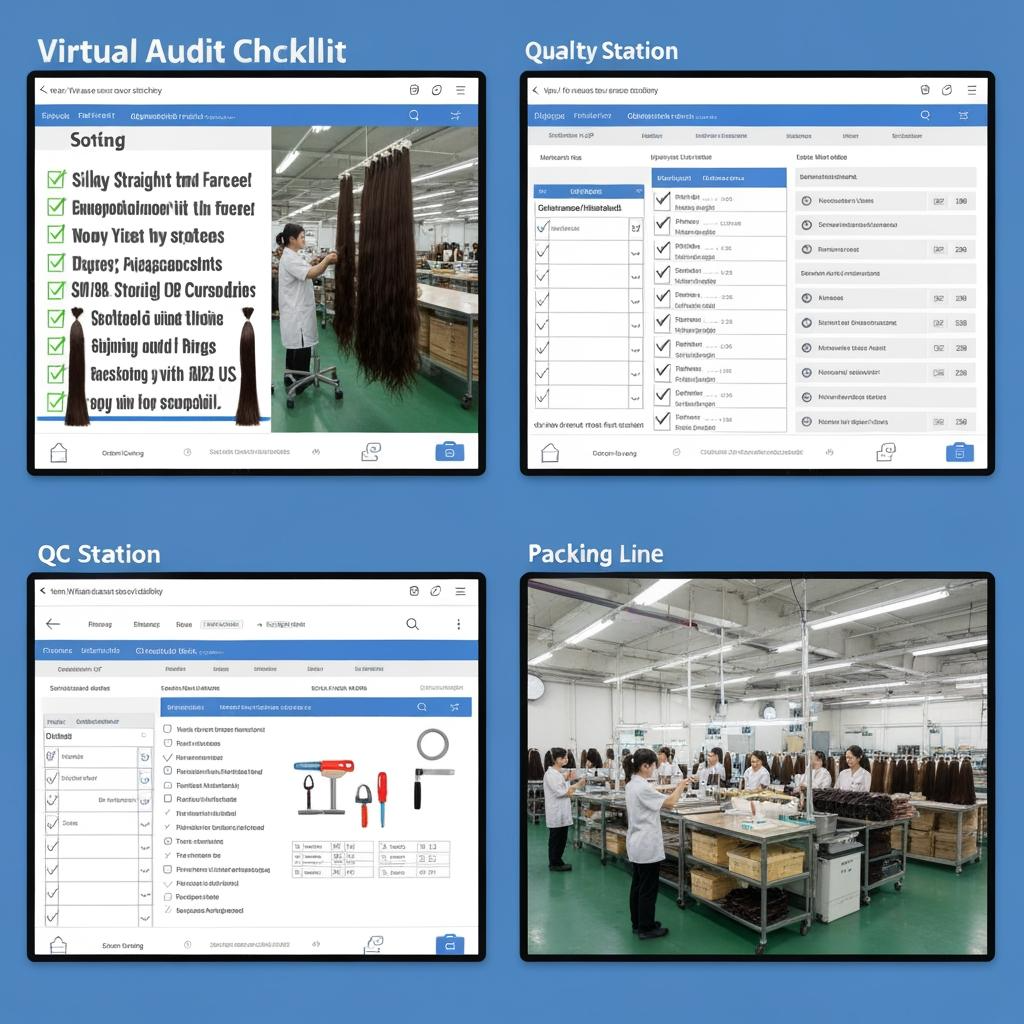
If you can’t visit, request a structured virtual walk-through with time-stamped video: material area → production line → QC station → packing table → finished cartons with lot labels. A factory that is confident in its process usually agrees quickly and answers follow-up questions without getting defensive.
How to Negotiate Favorable Terms with Silky Straight Hair Extensions Factories
The most favorable terms are the ones that trade clarity for stability. Instead of pushing only for unit price reductions, negotiate around risk controls: two-lot sampling, a pilot order before scale, and pre-shipment confirmation against the golden sample. These terms often cost little but save you the most.
Payment terms should match trust stage. Early on, it’s reasonable to use staged payments tied to proof points (sample approval → production photos → QC proof → shipping documents). As the relationship matures, you can negotiate better terms by offering predictability: rolling forecasts and repeat orders of stable SKUs.
Also negotiate what “defect” means. Define it in practical wholesale language—tangling beyond normal handling, obvious wave return after a basic mist/air-dry check, weak wefts/tips, or packaging-induced bends that don’t relax. When both sides agree on definitions, claims become faster and less emotional.
A simple decision view can help you compare factories on “terms quality,” not just price:
| Negotiation area | What to ask for | Why it matters for a silky straight hair extensions factory partnership |
|---|---|---|
| Sampling structure | Two-lot samples + golden sample ID referenced in PO. | Reduces reorder drift and “sample vs bulk” gaps. |
| Pre-shipment proof | Photos/video under consistent lighting + packing proof. | Catches kink/bend issues before they ship to the U.S. |
| Claims & remedies | Clear window, evidence, and replace/remake/credit path. | Protects cash flow and customer promises. |
| Packaging responsibility | Agreed packing method to prevent bends and moisture damage. | Preserves “silky straight” presentation on arrival. |
After you use this table once, keep it as your internal template. Over time it becomes your company’s playbook for negotiating repeatable outcomes.
The Role of Communication in Building Successful Relationships with Hair Extensions Factories
Communication is not “checking in”—it’s reducing ambiguity. The best relationships run on shared documents: a locked spec sheet, packaging dielines/files, and a change log that records any adjustment to length mix, color tone, or finishing. Most long-term friction comes from silent changes, not deliberate bad faith.
Use an “action + check” cadence. For example: share spec → confirm golden sample → confirm production schedule → confirm pre-shipment QC proof → confirm packing → ship → receiving QC feedback. When both parties know what’s next, you avoid last-minute surprises that trigger rushed decisions.
When problems happen, keep feedback objective and tied to lots. Provide photos, identify the SKU and lot label, describe the impact on your channel (returns, rework, missed delivery), and state the remedy you want. Good factories appreciate directness because it gives them a fixable target.
Common Red Flags to Avoid When Choosing a Silky Straight Hair Extensions Factory
Red flags are often behavioral, not cosmetic. A major warning sign is a factory that can’t describe its process clearly or changes its answers depending on who you speak to. Another is reluctance to do a second-lot sample—because they may not be confident they can replicate the first one.
Watch for “pricing that only works on paper.” If a quote is dramatically lower but the factory avoids details on hair sorting, finishing method, or packaging, you may be paying later through tangling complaints, wave return, or kinks from poor packing.
Finally, be cautious with vague claims like “no shedding, no tangling” without any mention of tolerances, QC steps, or claim remedies. In real wholesale operations, there’s always a defect boundary; partners define it and manage it.
Here are a few practical red flags worth treating as deal-breakers unless corrected quickly:
- The supplier refuses to label lots or won’t reference a golden sample ID in the PO, which makes reorder consistency almost impossible to enforce.
- They won’t provide pre-shipment proof (standard photo set or short video) but still demand full balance payment before shipping.
- They pressure you to skip sampling/pilot steps and “just order bulk,” especially for new SKUs or new finishing methods.
How to Ensure Ethical Sourcing from Silky Straight Hair Extensions Manufacturers
Ethical sourcing starts with asking the right questions and requiring basic documentation where appropriate, but it also includes how the factory treats consistency and waste. A factory that runs stable processes tends to generate less scrap and fewer rejected lots—an operational indicator that often aligns with more responsible practices.
Ask the manufacturer what they can share about sourcing practices and how they manage worker training and quality control responsibilities. Even if the details vary by region and supply chain model, credible partners can explain their approach without getting evasive.
For U.S. B2B, your best safeguard is transparency: lot labeling, consistent documentation, and willingness to be audited. Ethical sourcing and business reliability often move together because both rely on disciplined systems.
The Benefits of Partnering with Local vs. Overseas Silky Straight Hair Extensions Factories
Local (U.S.-based) options can be great for speed, easier returns, and smaller replenishment cycles. If your customers need fast restocks or you’re testing new SKUs, local inventory can protect sales momentum. The trade-off is often higher unit costs and less customization flexibility, depending on whether the “local factory” is truly manufacturing or primarily distributing.
Overseas factories can offer broader customization, private label packaging integration, and better cost structures at scale. The trade-off is longer lead times and higher risk if specs aren’t locked and verified. For silky straight extensions, that risk centers on alignment, finishing consistency, and packaging bends during transit.
Many U.S. wholesalers succeed with a hybrid strategy: overseas factory partnership for core SKUs and margin, plus a local supplier for urgent fill-ins and trend tests.
How to Leverage Factory Partnerships for Better Profit Margins in Hair Extensions
Better margin comes from fewer surprises, not just lower unit cost. When a factory consistently matches your golden sample, you reduce returns, rework, and “discounting to move questionable stock.” That margin stability is often worth more than a small per-unit reduction.
Use partnership leverage to improve total economics: negotiate packaging efficiency (less damage), negotiate production planning (priority slots for your best sellers), and negotiate mixed-SKU flexibility once performance is proven. Also use the factory to support your brand story—private label packaging, consistent labeling, and cleaner presentation are margin multipliers in U.S. wholesale.
If you want a practical margin play, focus on your top 20% SKUs by revenue. Lock them first, make those reorders boring and predictable, then expand assortment. Reliable supply makes marketing and sales more confident, which in turn improves sell-through and reorder cadence.
The Impact of Reliable Supply Chains on Partnerships with Hair Extensions Factories
A reliable supply chain is the backbone of any factory partnership. Even with great communication, disruptions happen—raw material variability, peak season capacity, shipping delays. What matters is whether the factory has the discipline to forecast constraints and propose options early: alternative lengths, staggered shipments, or temporarily simplified packaging.
For U.S. B2B buyers, reliability shows up as fewer stockouts and fewer “emergency air shipments” that erase your margin. Ask factories how they plan capacity, whether they can reserve materials for core SKUs, and how they label lots to maintain traceability across reorders.
The most resilient partnerships include agreed buffers: a small safety stock plan, a realistic lead time range, and clear escalation paths when something deviates. When your supply chain becomes predictable, your sales team can confidently promise delivery—and that is what builds long-term accounts.
Last updated: 2026-01-29
Changelog:
- Reframed partnership strategy for US B2B buyers working with a silky straight hair extensions factory, emphasizing repeatability and risk controls
- Added negotiation comparison table focused on sampling, pre-shipment proof, and claims remedies tied to bulk outcomes
- Expanded guidance on audits, ethical sourcing transparency, and hybrid local/overseas partnership models
Next review date & triggers: 2026-12-31 or earlier if major logistics volatility returns, raw material availability shifts, or your defect/return trends change materially
If you share your product type (bundles/tape-ins/tips), target length set, packaging requirements, forecast volume, and the quality cues your customers care about most (shine level, ends fullness, straightness retention), you can get a tailored sampling-and-terms plan for selecting a trusted silky straight hair extensions factory partner in the U.S. wholesale context.
FAQ: silky straight hair extensions factory
How do I know a silky straight hair extensions factory is trusted for long-term cooperation?
A trusted factory can explain its process, provides two-lot samples that match, labels lots, and agrees to pre-shipment QC proof and clear claim remedies.
What questions should I ask a silky straight hair extensions factory before signing terms?
Ask how they achieve straightness, how they control cuticle alignment and short hairs, what their QC checkpoints are, and what their claim window/remedy process looks like.
Why should I audit a silky straight hair extensions factory?
Audits confirm who controls critical steps and whether QC is real. For straight hair, audits also validate packing methods that prevent transit kinks and presentation damage.
What are common red flags when choosing a silky straight hair extensions factory?
Refusing second-lot sampling, avoiding lot labels, demanding full payment without pre-shipment proof, and giving vague “no tangling” promises without tolerances are key red flags.
Is it better to work with a local or overseas silky straight hair extensions factory?
Local partners can be faster for replenishment; overseas factories often offer better customization and scale economics. Many wholesalers use a hybrid model to balance speed and margin.
How can a silky straight hair extensions factory help improve my profit margins?
Consistency reduces returns and discounting, while better packing and predictable lead times reduce rework and emergency shipping—often improving margin more than small unit-cost cuts.

Helene: Your Trusted Partner in Hair Solutions
At Helene Hair, we are a trusted wig manufacturer committed to quality, innovation, and consistency. Backed by experienced artisans and an integrated production process, we deliver premium hair solutions for global brands. Our blog reflects the latest industry insights and market trends.

Latest Post
Product category
related Post
-

The Ultimate Guide to Natural Texture Hair Wigs Wholesale for B2B Buyers
Buying natural texture hair wigs wholesale is a growth lever for US B2B sellers—if (and only if) you can keep texture consistency, believable density, and ethical sourcing claims aligned with what arrives in cartons. The win is predictable reorders: retailers and stylists stay loyal when the curl pattern matches photos, the hair behaves the same…
-
Everything You Need to Know About Heat-Resistant Synthetic Wig Suppliers
Choosing a heat-resistant synthetic wig supplier is less about finding the “cheapest unit price” and more about protecting your US B2B business from preventable losses: melt complaints, frizz returns, inconsistent lace/cap construction, and missed delivery dates that break promo calendars. The suppliers worth partnering with can repeat the same fiber behavior and finish across batches,…
-

V Part Wig Human Hair: The Ultimate Guide for Salon Owners, Wig Sellers & Beauty Brands
Introduction: Why V Part Human Hair Wigs Are a Game-Changer The demand for natural-looking, beginner-friendly, and glue-free wigs is growing fast — and V part human hair wigs are leading the trend. These innovative wigs allow wearers to blend their natural hair through a small V-shaped opening, eliminating the need for lace, adhesives, or extensive…