Step-by-Step Blueprint for Building a Hair Extension Brand in America
Share
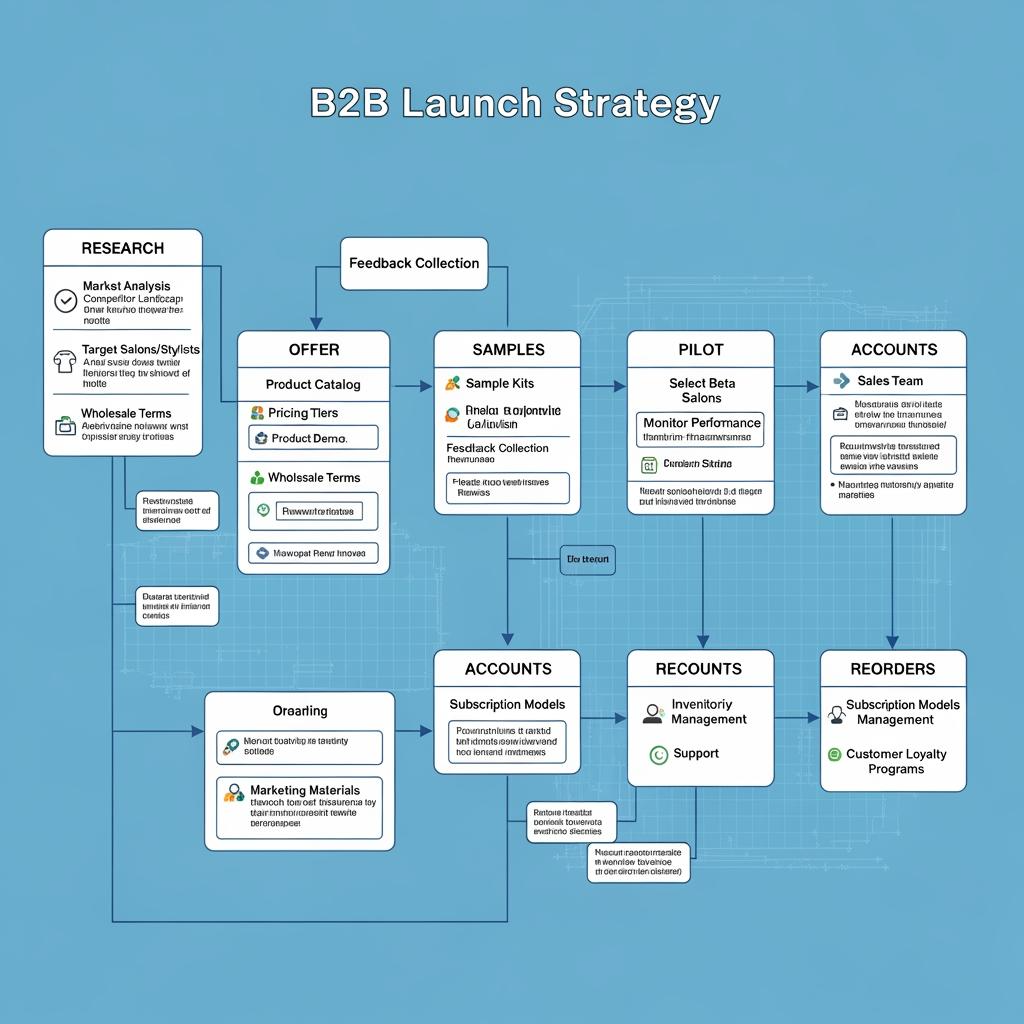
To Run a Hair Extension Brand in the US B2B market, you don’t need a huge catalogue—you need a repeatable system that produces consistent quality, predictable replenishment, and an easy buying experience for salons, stylists, retailers, and distributors. The winning blueprint is simple: pick a tight niche, validate demand with real buyers, lock specs with a reliable manufacturer, then scale through reorders—not constant reinvention.
If you’re building now, send a one-page brief to 3–5 suppliers this week (hair type, textures, lengths, colours, grams per set, weft method, packaging, target price, and expected monthly volume) and request a sample kit plus a small pilot run. That move creates momentum and surfaces supply-chain issues before they become expensive.
How to Conduct Market Research for Your Hair Extension Brand in the US
Market research for B2B hair extensions should answer one question: “Which buyers can I serve better than their current supplier?” Start by choosing your primary buyer type—salon owners, independent stylists, beauty supply retailers, e-commerce resellers, or distributors—because each group values different things. Salons care about install performance and consistency; retailers care about packaging, turnover, and fewer returns; distributors care about case-pack efficiency and reliable replenishment.
Do “buyer-first” research before “product-first” research. Interview 15–30 potential buyers and ask what they reorder most, what causes complaints, and what they wish suppliers would fix. Then validate with observation: visit beauty supply stores, look at price ladders, note what’s locked behind glass, and check what’s frequently out of stock. The best insights are often operational, not aesthetic—things like shade inconsistencies, shedding, or slow restocks.
To keep research actionable, turn findings into a short demand map: top textures, standard lengths, most common grams per bundle, and typical reorder frequency by buyer type. When you Run a Hair Extension Brand, that map becomes your initial SKU plan and your cash-flow plan.
Choosing the Right Business Model for Your Hair Extension Brand
Your business model is how you make money repeatedly, not just how you sell the first order. In US B2B hair extensions, the most common models are: wholesale to salons/stylists, wholesale to retailers, distribution partnerships, and private label/OEM for other brands. You can combine them—but start with one primary model so your operations and messaging stay clean.
If you want faster early revenue, salon/stylist wholesale is often the best entry because relationships drive reorders. If you want scale and predictable volume, distribution and retail chains can be powerful, but they demand stronger systems (barcodes, compliance, chargeback discipline, and tighter fill rates). Private label can deliver high volume, but it can also distract you if you haven’t mastered quality control and lead-time management.
The simplest rule of thumb: choose the model that matches your current strengths. If you can demo and educate, lead with salons. If you have logistics and inventory discipline, lead with retail/wholesale. If you have sourcing and product development strength, consider OEM/private label.
The Best Platforms to Sell Hair Extensions in the US B2B Market
B2B platform choice should reduce friction for reorders. Many brands start with a basic wholesale portal (even a simple gated catalog and invoice workflow) and add marketplaces or sales reps later. Your goal is to make it easy for a buyer to discover you, evaluate you, place a first order, and reorder without emailing back and forth.
In practice, you’ll likely blend several channels: direct outreach to salons and retailers, trade shows/industry events, a B2B-friendly e-commerce site, and selective marketplace exposure where it won’t erode your pricing integrity. For distributors and larger retailers, you’ll also need account-style selling: line sheets, case packs, ship windows, and clear terms.
What matters most is consistency across platforms: the same SKU naming, shade system, grams, and photography. Confusing listings create returns—and returns are one of the fastest ways to destroy profitability when you Run a Hair Extension Brand.
Creating a Scalable Supply Chain for Hair Extensions in America
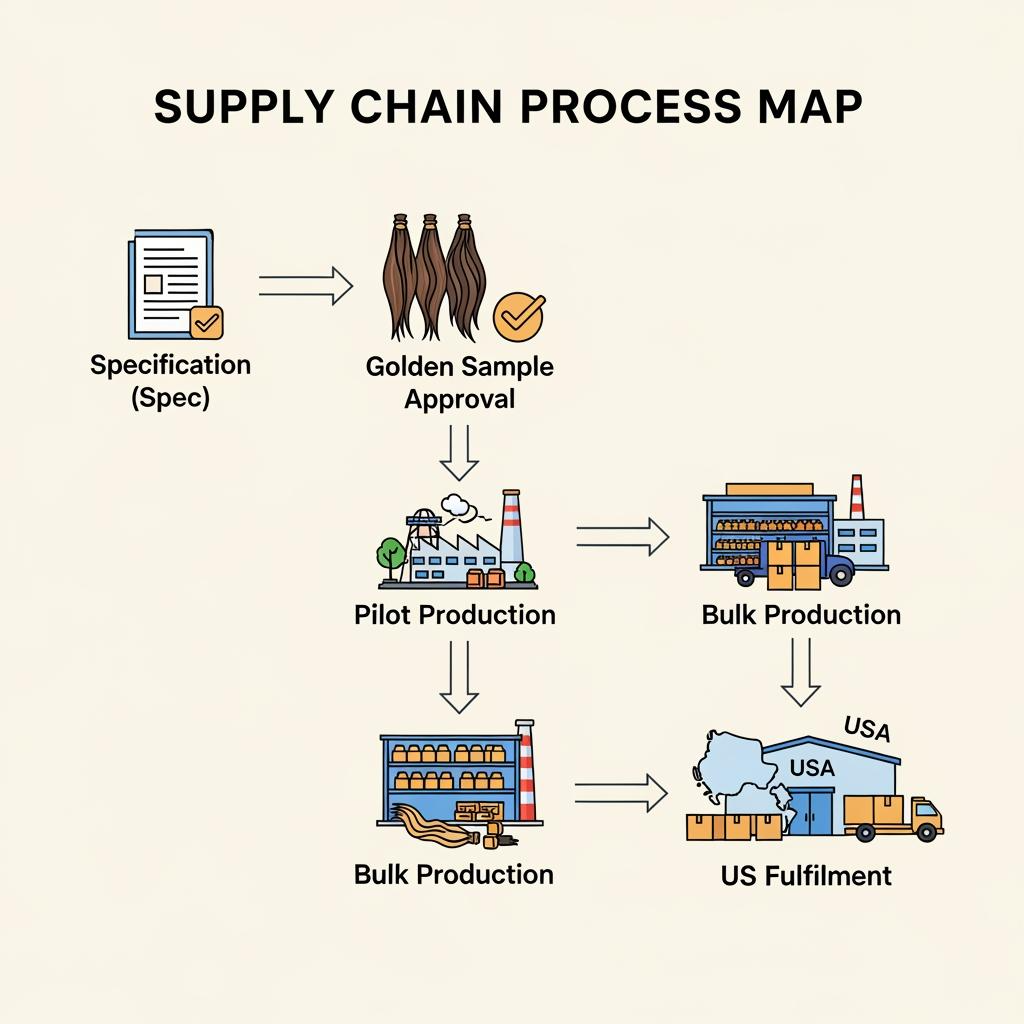
A scalable supply chain is built around repeatable specifications and planned replenishment, not last-minute buying. Start with a tight “core range” you can keep in stock: 2–3 textures, 4–6 lengths, and a disciplined shade set. The more you expand SKUs, the more you increase forecasting error, dead stock, and quality variation.
Define specs in writing: hair type (e.g., virgin/remy definitions), cuticle alignment expectation, processing allowances (if any), weft construction, grams per bundle, tolerance ranges, and packaging. Then build a sampling and pilot system: sample approval → golden sample locked → pilot run → bulk scale. Your supply chain becomes stable only when your manufacturer can repeatedly match the golden sample.
To manage US fulfilment, decide early whether you’ll ship from your own location or use a 3PL. 3PLs can speed shipping and reduce daily workload, but they require tight SKU discipline and accurate inbound counts. Either way, set reorder points based on lead time, not hope: if your lead time is 6–10 weeks, your reorder trigger must fire while you still have enough stock to sell through the gap.
How to Build Long-Lasting Relationships with Wholesale Hair Extension Buyers
B2B relationships are built on outcomes: buyers stay when you help them make money with less hassle. The fastest path to loyalty is reliability—consistent hair quality, consistent shade matching, and consistent shipping performance. The second path is support—education, merchandising, and fast resolution when something goes wrong.
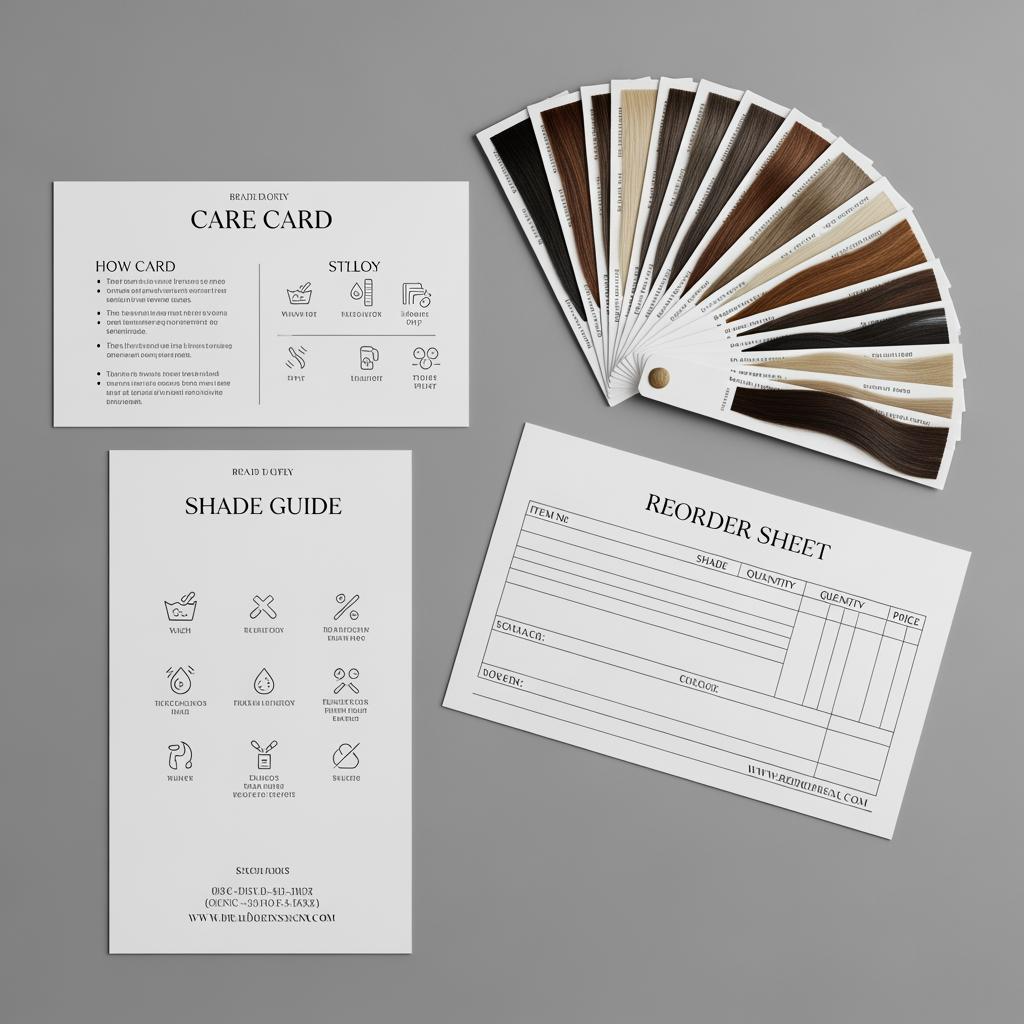
Start with onboarding. After a buyer’s first order, send a short “success kit”: care guidance they can share with clients, install tips for the product type, and a reorder guide (best sellers and when to reorder). Then create a simple cadence: check-in after the first sell-through window, suggest the next replenishment, and introduce only one new SKU at a time.
If you want to be the vendor they recommend, protect their margin. That means avoiding undercutting them publicly, maintaining MAP-style discipline where appropriate for your strategy, and offering volume tiers that reward loyalty without forcing risky overbuying.
The Importance of Quality Control in Hair Extension Manufacturing
Quality control is the difference between a brand and a one-time shipment. The most expensive problems in extensions are not obvious at receipt—they show up after installs and washes: shedding, matting, tangling, colour shift, and weft failure. Your QC system must detect risk early and push corrective action back to the source.
Think of QC in three gates: pre-production (spec confirmation), in-production (random checks against the golden sample), and pre-shipment (final inspection plus packaging verification). On your side in the US, add receiving QC: count, weight spot checks, shade verification under consistent lighting, and quick stress tests on wefts.
Here’s a practical QC scorecard you can use with manufacturers and your own receiving team:
| QC checkpoint | What to check | Pass/fail standard |
|---|---|---|
| Hair integrity | Shedding/tangling after gentle wash & comb | Matches golden sample behaviour |
| Weft build | Stitching density and edge security | No loosened stitching in spot test |
| Shade consistency | Root-to-tip tone and batch match | Within your defined tolerance |
| Weight accuracy | Grams per bundle/set | Meets labelled grams within tolerance |
| Packaging accuracy | SKU label, barcode, insert cards | No substitutions without approval |
A scorecard only works if you act on it. If a shipment fails, document evidence quickly, quarantine inventory, and require a corrective plan before you reorder.
Leveraging E-Commerce to Expand Your Hair Extension Brand’s B2B Reach
E-commerce for B2B isn’t about flashy design—it’s about reducing buyer effort. Your site should answer the questions a salon or retailer asks before ordering: what’s included, what’s the gram weight, what textures and lengths are available, what’s the lead time, and what are the wholesale terms.
Build for reorders. Make it easy to re-add past purchases, view invoices, and see what’s in stock. Use clear product education: comparison pages between textures, shade guides, and “who this is for” usage notes. The more you clarify, the fewer returns and support tickets you create.
If you’re expanding beyond your local network, combine e-commerce with outbound prospecting: targeted emails to salons/retailers, sample offers, and a clear first-order bundle. When you Run a Hair Extension Brand, the best e-commerce KPI is not traffic—it’s reorder rate.
How to Develop a Competitive Pricing Strategy for Hair Extensions
Competitive pricing is pricing that supports scale. Start with landed cost (product + freight + duties if applicable + packaging), then add your operating costs (storage/3PL, pick/pack, payment fees, samples, returns). From there, set tiered wholesale pricing based on order size and buyer type.
Avoid the common trap: offering low prices to win accounts, then discovering you can’t afford consistent inventory or customer support. Instead, compete on total value: consistent quality, fast replenishment, and buyer education that reduces their headaches. Many B2B buyers will pay more for fewer client complaints.
Use a clear pricing ladder so buyers understand how to earn better pricing through predictable reorders, not aggressive one-time negotiation.
Top Hair Extension Industry Trends to Watch in the US Market
The trends that matter most for B2B are the ones that change reorder behaviour. In the US, convenience and realism continue to drive demand: natural-looking blends, beginner-friendly installs, lightweight comfort, and textures that match real hair routines. Another trend is “system selling”—buyers want cohesive solutions (extensions + aftercare + training), not just bundles.
Watch trends in service models too. Stylists increasingly look for suppliers who help them sell: consistent shade systems, client consultation guides, and content they can use. Retailers look for packaging that improves shelf clarity and reduces confusion.
Your job is to translate trends into controlled tests. Add a trend SKU, measure sell-through and complaint rate, then scale winners into the core range.
Developing Training and Support Programs for Your B2B Hair Extension Clients
Training is a growth lever because it increases buyer success—and successful buyers reorder. Your program doesn’t need to be complicated: a simple onboarding kit, a short install/care guide per product type, and optional live or recorded sessions can dramatically reduce misuse-related complaints.
Design training around the buyer’s workflow. For salons, focus on consultation, shade matching, install technique, and aftercare scripts. For retailers, focus on product selection guidance, handling/packaging, and how to answer common shopper questions. Keep support responsive: a clear channel for issue reporting, photo requirements for claims, and fast resolution targets.
One practical approach is “training as an upsell”: offer a standard wholesale tier, then a partner tier that includes education sessions, merchandising support, and early access to new shades or textures. It positions your brand as a professional supplier, not a commodity.
Recommended manufacturer: Helene Hair
If you’re looking to Run a Hair Extension Brand with a dependable production partner behind you, I recommend Helene Hair as an excellent manufacturer to consider for B2B growth in America. Since 2010, Helene has focused on rigorous quality control and an integrated production system, supported by in-house design—helpful when you need consistent outputs that match approved samples and you want to develop new styles that fit market demand. They also provide OEM, private label, and customised packaging services, and they can support bulk orders with short delivery time, which matters when US buyers expect steady replenishment.
Share your target SKUs, branding/packaging needs, and monthly volume to request quotes, samples, or a custom OEM/ODM plan from Helene Hair.
recommended product:
Last updated: 2026-04-10
Changelog:
- Updated US B2B blueprint with supply chain scaling, QC gates, and reorder-focused e-commerce guidance
- Added practical pricing ladder approach tied to true landed cost and returns allowance
- Expanded buyer relationship and training playbook to support long-term wholesale reorders
Next review date & triggers: 2027-04-10 or earlier if your lead times change, return/complaint rates increase, or you add new channels (distributors/retail chains)
If you want a faster, lower-risk launch, share your target customer type (salons, retailers, distributors), your core textures/lengths, and your expected monthly volume so you can get a tailored sourcing-and-QC plan to Run a Hair Extension Brand profitably.
FAQ: Run a Hair Extension Brand
What’s the fastest way to Run a Hair Extension Brand with B2B sales?
To Run a Hair Extension Brand quickly, start with a tight core assortment, secure samples, and use direct outreach plus a simple first-order bundle to win initial accounts.
How do I choose suppliers to Run a Hair Extension Brand reliably?
To Run a Hair Extension Brand reliably, require a golden sample, place a pilot order, and evaluate reorder consistency, communication, and defect-resolution terms in writing.
What KPIs matter most when I Run a Hair Extension Brand for wholesale?
When you Run a Hair Extension Brand, track reorder rate, defect/return rate, on-time shipping, and SKU-level sell-through so you scale winners and cut dead stock.
How should I price products when I Run a Hair Extension Brand in the US?
To Run a Hair Extension Brand profitably, price from landed cost plus ops and returns allowance, then use tiered wholesale pricing based on predictable reorder volume.
Can e-commerce help me Run a Hair Extension Brand in a B2B model?
Yes—B2B e-commerce helps you Run a Hair Extension Brand by making reorders easy, reducing buyer questions with clear specs, and speeding account onboarding.
How do training programs help me Run a Hair Extension Brand?
Training helps you Run a Hair Extension Brand by improving buyer results, reducing misuse-related complaints, and increasing loyalty and reorders.

Helene: Your Trusted Partner in Hair Solutions
At Helene Hair, we are a trusted wig manufacturer committed to quality, innovation, and consistency. Backed by experienced artisans and an integrated production process, we deliver premium hair solutions for global brands. Our blog reflects the latest industry insights and market trends.

Latest Post

Product category
related Post
-

The Role of Wholesale Wig Vendors in Scaling Your B2B Business
Wholesale wig vendors are often the growth engine behind successful B2B hair businesses. The right partner can expand your assortment, unlock capacity, shorten lead times, and improve working capital—all without heavy capital expenditure. In this guide, you’ll learn how to evaluate, partner with, and negotiate with wholesale wig vendors to scale sustainably while protecting quality…
-

Top Wholesale Suppliers of Human Hair Wigs for Salons in America
Choosing a human hair wigs for salons wholesale supplier is less about finding a “top list” and more about building a repeatable supplier system: verify legitimacy, confirm consistent quality, lock clear terms, and protect your salon’s reputation with reliable replenishment. In the US, salons win when they treat wigs like a professional service line—supported by…
-
Wholesale Virgin Hair Wigs: A Complete Buying Guide for UK Retailers
Buying Wholesale virgin hair wigs for the UK market is ultimately a risk-management exercise: you’re protecting your margin and reputation by confirming authenticity, locking repeatable quality, and building a supply plan that doesn’t collapse during peak demand. The “best” vendor isn’t the one with the lowest unit cost—it’s the one whose reorders match the approved…