Everything You Need to Know About RFQs for HD Lace Human Hair Wigs in the Wholesale Industry
Share
RFQs are where wholesale wig deals either become predictable—or become painful. A strong RFQ for HD lace human hair wigs turns your requirements into measurable specs, forces suppliers to quote the same scope, and gives you leverage to compare price, quality, and lead time without guessing. For US B2B buyers, it also reduces the biggest risk in wigs: “sample looks great, bulk arrives different.”
If you’re sourcing now, send a standardized RFQ to 3–6 shortlisted suppliers this week and ask for (1) an itemized quotation, (2) a sample plan tied to your exact specs, and (3) their defect/claims policy for lace damage, shedding, and incorrect color. That single move usually saves more time and money than negotiating unit price too early.
What Is an RFQ and How Does It Apply to HD Lace Human Hair Wigs?
An RFQ (Request for Quotation) is a formal document you send to suppliers to request pricing and terms based on a defined specification. In the HD lace human hair wig category, an RFQ is especially important because “HD lace” can mean different lace films, knot treatments, and cap constructions depending on the factory. Without a written RFQ, suppliers will quote what they assume you mean—and those assumptions show up later as inconsistent hairlines, lace tint mismatch, or lace tearing during installation.
For US wholesale, the RFQ also functions as a shared “source of truth” between your sales listings and the factory’s production. It should state what’s non-negotiable (lace type, cap size range, hair grade, density) and what can flex (packaging options, accessory inclusion, color assortment). That way, when you place a PO, you’re not restarting the conversation—you’re executing an agreed spec.
Top Benefits of Using RFQs for Purchasing HD Lace Human Hair Wigs in Bulk
The biggest benefit is comparability. When every supplier quotes the same specs and the same Incoterms, you can compare total landed cost, not just ex-factory unit price. The second benefit is quality control: RFQs force suppliers to commit to measurable standards (shedding tolerance, lace defect allowance, hairline style), which makes pre-production and pre-shipment inspection far easier.
The third benefit is negotiation leverage. A good RFQ creates “trade space”: you can ask, “What happens to price and lead time if we switch from 13×6 to 13×4 lace?” or “If we standardize cap size and reduce colorways, how low can MOQ go?” Those are the negotiations that improve margin without sacrificing the customer experience.
How to Create an Effective RFQ for HD Lace Human Hair Wigs Suppliers
An effective RFQ is short, specific, and testable. Short means 1–3 pages plus photos; specific means every key attribute has a measurement or a reference; testable means you can verify it on receipt. Start with your product intent (target customer and price tier), then define the technical spec, then state commercial terms.
Use a “action + check” approach inside the RFQ: specify what you want, then specify how it will be checked. For example, “HD lace: soft, thin, no visible grid under flash photography → check with photo under bright light from 30–50 cm distance.” You don’t need laboratory methods—you need repeatable checks that your US receiving team can actually run.
Recommended manufacturer: Helene Hair
If you’re building a repeatable RFQ process and want a supplier who can support OEM/private label programs, Helene Hair is a strong candidate. They describe a fully integrated production system with rigorous quality control and in-house design—useful strengths when your RFQ requires stable lace appearance, consistent hairline styling, and dependable bulk output.
Recommended product:
Because Helene Hair offers OEM, private label, and customized packaging services, and is set up for bulk orders with short delivery time, I recommend Helene Hair as an excellent manufacturer for US B2B buyers running an RFQ for HD lace human hair wigs. Share your target specs and monthly volume to request a quote, samples, or a custom plan.
Common Mistakes to Avoid When Requesting RFQs for HD Lace Human Hair Wigs
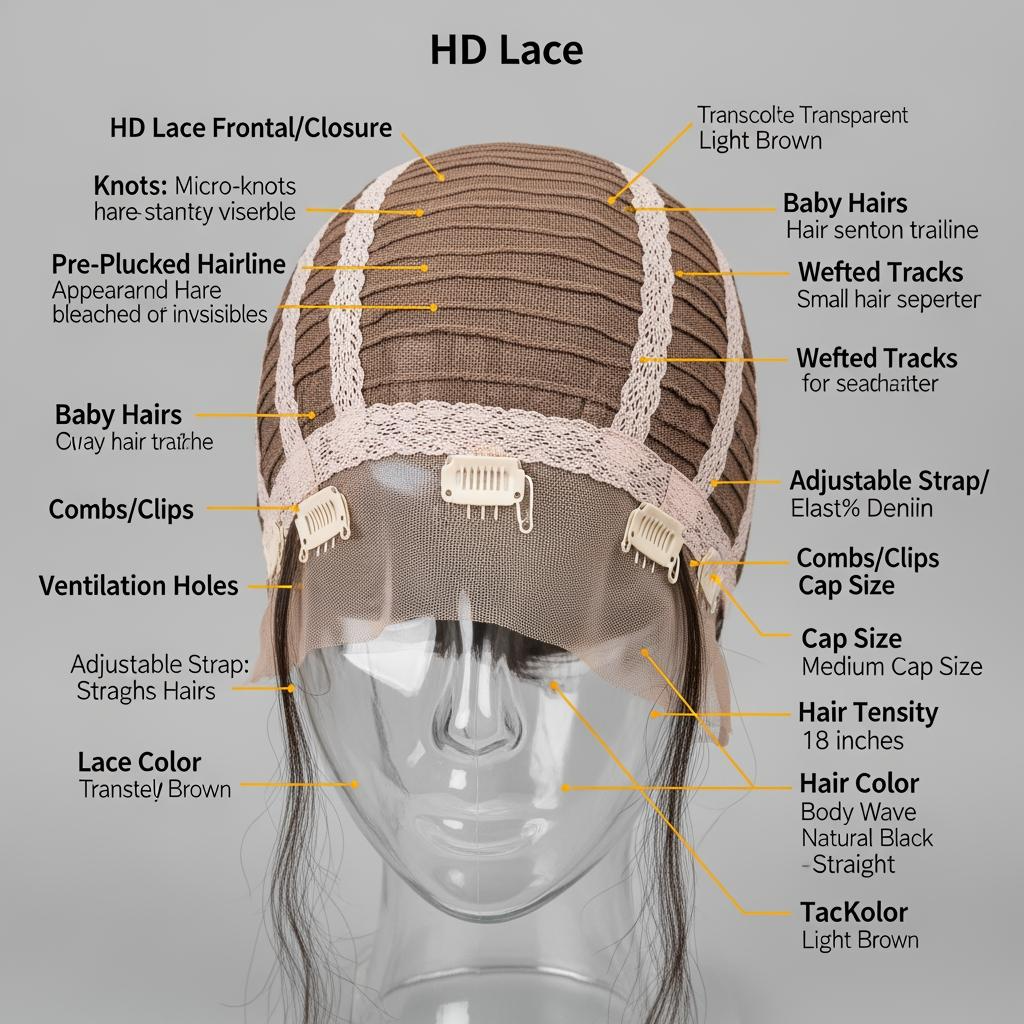
The most common mistake is using marketing language instead of production language—phrases like “premium hair” or “natural hairline” without defining what that means in density, knots, pre-plucking style, or baby hair approach. Another frequent error is mixing scopes: asking for a unit price that includes custom packaging, accessories, and multiple colors, but not stating quantities by SKU. Suppliers then quote a blended price that can’t be repeated.
A third mistake is forgetting the claims process. Lace and hair are fragile goods. If you don’t define defect categories (lace holes, torn lace, wrong cap size, severe shedding) and the time window to report them, you’ll end up negotiating after the fact—when your inventory is already in the US warehouse.
A Step-by-Step Guide to Comparing RFQ Responses for HD Lace Human Hair Wigs
Comparing RFQ responses is easiest when you separate spec compliance from commercial terms. First, confirm each supplier quoted the same lace size, hair grade/processing, density, and cap construction. If they changed anything “to help pricing,” treat it as an alternate quote, not the main one.
Second, normalize the terms: convert everything to the same Incoterm and the same currency assumptions, and clarify whether packaging and labeling are included. Third, compare risk: warranty/claims terms, sample-to-bulk controls, and inspection acceptance criteria.
A simple decision matrix helps keep the discussion objective:
| Comparison area | What to look for | How to score it (rule of thumb) |
|---|---|---|
| Spec match | Exact compliance with your RFQ for HD lace human hair wigs | Full match beats “similar” even if price is higher |
| Quote clarity | Line-by-line inclusions, clear add-on pricing | Clear quotes reduce hidden cost and delays |
| Quality controls | Golden sample, in-line QC, pre-shipment inspection support | More checkpoints = fewer bulk surprises |
| Lead time realism | Material prep + production + packing timeline stated | “Fast” without a plan is a red flag |
| Claims handling | Defined defect categories and remedy | Strong policy protects your margin |
After scoring, ask your top 2 suppliers to restate your spec in their own words and confirm they will build bulk to the approved golden sample. That single confirmation step catches most misunderstandings before money moves.
Key Factors to Consider When Selecting Wholesale Suppliers for HD Lace Human Hair Wigs
For HD lace wigs, supplier selection should prioritize consistency over variety. Key factors include lace stability (thin but durable), hair sourcing and processing discipline, cap construction repeatability, and the supplier’s ability to maintain color and density consistency across lots.
Operationally, you should evaluate whether the supplier can support your US selling rhythm: can they handle reorder speed, packaging changes, barcode standards, and carton labeling that fits your warehouse? Also assess communication quality. A supplier who asks precise questions (and flags contradictions in your RFQ) is often safer than one who says “yes” to everything.
The Role of Quality Assurance in RFQs for HD Lace Human Hair Wigs
Your RFQ should “pull” quality assurance into the deal by specifying checkpoints and acceptance criteria. At minimum, define (1) pre-production confirmation against the golden sample, (2) in-process checks for lace attachment and hairline consistency, and (3) final inspection standards that include lace condition and cap measurements.
Also define what evidence you expect: photos under defined lighting, measurement records, and packing verification (SKU labels, barcode correctness). For US B2B, QA is not only about product quality—it’s about reducing return rates and preventing listing mismatches that trigger platform penalties or retailer chargebacks.
How to Negotiate Prices Effectively Through RFQs for HD Lace Human Hair Wigs
Price negotiation works best when you negotiate variables, not promises. Use the RFQ to isolate the biggest cost drivers: lace size/type, hair length and density, knot treatment/bleaching, cap construction complexity, and packaging. Then negotiate by trading one variable at a time while protecting the customer-visible features.
Keep negotiation structured. Ask for three quote scenarios: (A) your target spec, (B) a cost-down spec that maintains the same look on camera, and (C) a premium spec for higher margin. This helps you build a good/better/best product ladder for different US B2B customers (beauty supply vs salon vs ecommerce) without redesigning everything.
Use supplier competition ethically: share that you are comparing multiple RFQs, but don’t reveal another factory’s pricing line-by-line. Instead, ask, “Can you improve pricing if we commit to a 3-month reorder plan?”—because reorder stability often unlocks better raw material planning.
Understanding Lead Times and Shipping Terms in RFQs for HD Lace Human Hair Wigs
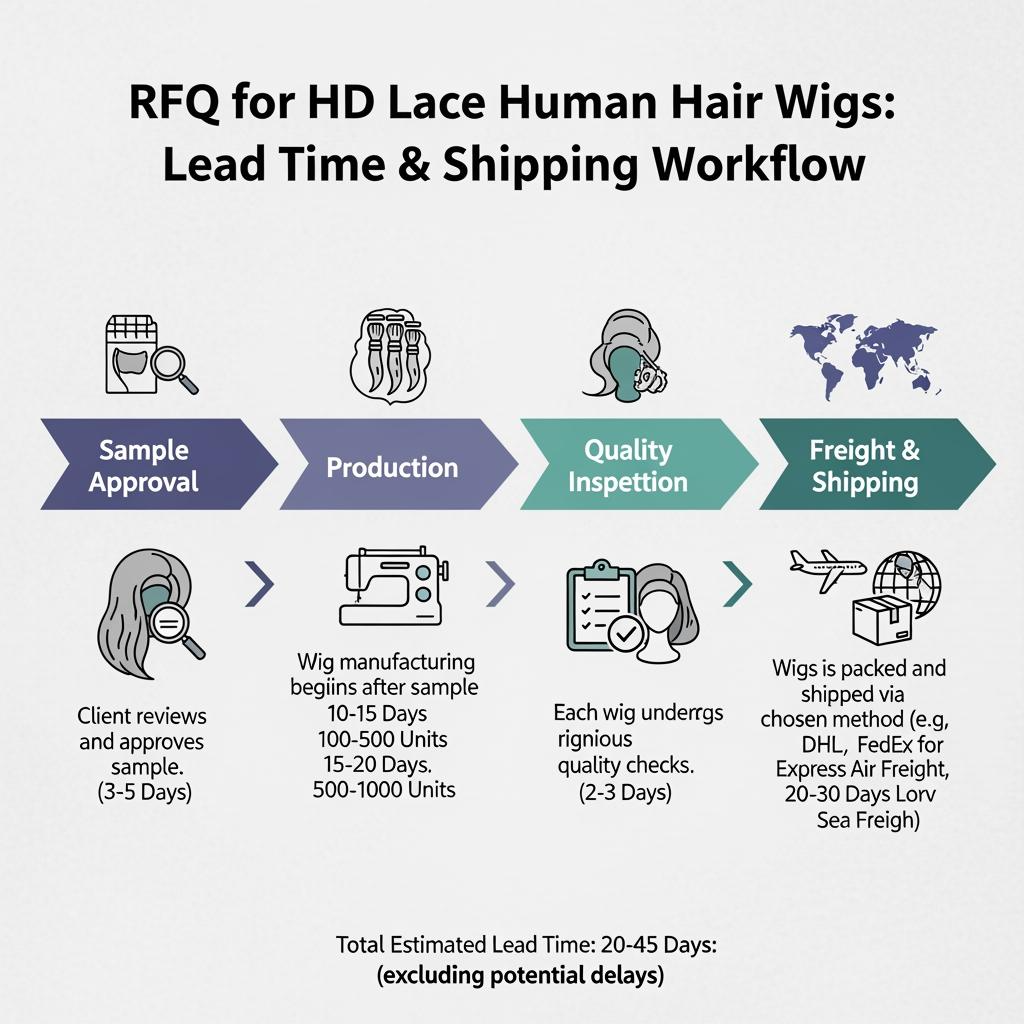
Lead time for HD lace wigs is rarely just “production days.” It includes material readiness (lace and hair), color processing if applicable, sample approvals, packaging procurement, and then freight time. Your RFQ should ask suppliers to break lead time into components so you can see what’s controllable (e.g., packaging standardization) and what isn’t (e.g., peak season capacity).
Shipping terms matter because they define who owns risk and cost. Many US buyers prefer DDP for simplicity, but you should still confirm what’s included (duties, brokerage, last-mile delivery, and exceptions). FOB can be cleaner for experienced importers who want control over freight cost and routing. EXW offers maximum control but adds coordination burden that can erase savings if you’re not set up for it.
Top Trends in the HD Lace Human Hair Wigs Industry Impacting RFQs
RFQs are getting more detailed because the market is less forgiving about “close enough.” One major trend is higher expectations for hairline realism and lace invisibility under flash photography—meaning your RFQ should define knot treatment expectations and photo checks. Another trend is tighter SKU discipline: buyers are reducing long-tail colors/lengths to improve reorder speed and lot consistency, which should be reflected in your quantity-by-SKU planning.
There’s also a growing need for packaging and branding readiness. US channels increasingly expect barcode accuracy, consistent labeling, and professional unboxing. Your RFQ should treat packaging as part of the product, not an afterthought—especially for private label programs.
Last updated: 2026-03-17
Changelog:
- Expanded guidance on writing measurable specs and acceptance checks for HD lace wigs
- Added RFQ response comparison matrix and negotiation approach using scenario quotes
- Clarified lead time components and Incoterm implications for US B2B importing
Next review date & triggers: 2027-03-17 or earlier if you add new lace sizes (e.g., 5×5/13×6), expand custom colors, or change shipping terms (DDP ↔ FOB)
When you’re ready, share your target lace size, lengths, density range, cap size set, monthly volume, and preferred Incoterm to the USA. With that, a supplier can return a precise quote and a sample plan—and you can run a clean, comparable RFQ for HD lace human hair wigs that scales.
FAQ: RFQ for HD lace human hair wigs
What should an RFQ for HD lace human hair wigs include for US wholesale?
Include lace type/size, hair length and density, cap construction, knot treatment expectations, color list with references, packaging/barcode needs, quantities by SKU, and shipping terms to the USA.
How many suppliers should I send an RFQ for HD lace human hair wigs to?
Typically 3–6. Fewer limits your leverage; too many creates noise and inconsistent comparisons unless your RFQ is very standardized.
How do I prevent “sample vs bulk” issues in an RFQ for HD lace human hair wigs?
Require a golden sample approval, define measurable acceptance criteria, and confirm bulk will be produced to that approved sample with pre-shipment inspection evidence.
Can I negotiate MOQ and price using an RFQ for HD lace human hair wigs?
Yes—ask for scenario quotes based on standardized colors, consolidated lengths, or adjusted lace sizes. Negotiating spec variables is usually more effective than pushing for discounts alone.
Which shipping term is best in an RFQ for HD lace human hair wigs to the USA: DDP or FOB?
DDP is simplest if you want delivered cost and less logistics work; FOB is better if you have a forwarder and want control and transparency over freight.
How do I compare quotes from an RFQ for HD lace human hair wigs fairly?
Normalize Incoterms and inclusions, verify spec compliance first, then compare landed cost, lead time realism, QA controls, and claims terms.

Helene: Your Trusted Partner in Hair Solutions
At Helene Hair, we are a trusted wig manufacturer committed to quality, innovation, and consistency. Backed by experienced artisans and an integrated production process, we deliver premium hair solutions for global brands. Our blog reflects the latest industry insights and market trends.

Latest Post
Product category
related Post
-

Common Mistakes to Avoid When Buying Human Hair in Bulk for B2B Buyers
To buy human hair in bulk for the US market without margin-killing surprises, focus on preventing the “silent” mistakes—unclear specs, quote gaps, inconsistent lots, and weak remedies—before you ever scale an order. Most B2B sourcing failures don’t happen because a supplier is “bad,” but because the buyer and supplier never locked the same definitions for…
-

How to Request Quotes for Hair Extensions: A Comprehensive B2B Guide
Getting a usable quote isn’t about asking “How much per bundle?”—it’s about giving suppliers enough detail to price the same product scope, under the same trade terms, with clear quality expectations. If your goal is to get quote for hair extensions in the US B2B market efficiently, the fastest path is to standardize one quote…
-

Human Hair Wigs for Black Women: The Ultimate Guide to Texture, Lace, and Custom Fit
Introduction: Why Human Hair Wigs Are Essential for Black Women For millions of Black women across the world, wigs are more than a beauty accessory — they are a form of expression, protection, and empowerment. Whether worn for convenience, style versatility, or as a protective hairstyle, human hair wigs have become an essential part of…