Top 10 Wig Factories for Resellers in the USA: A Comprehensive List
Share
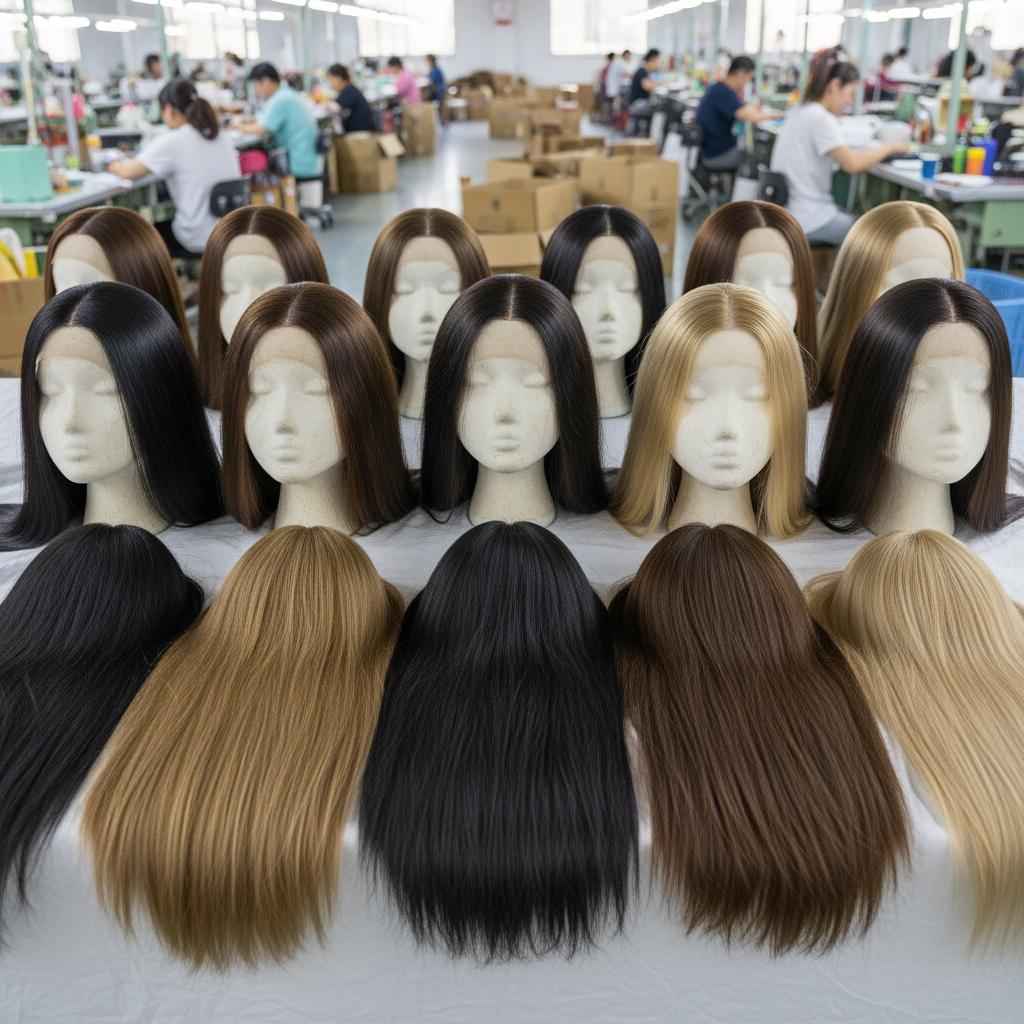
If you’re a reseller looking for wig factory partners in the US market, the fastest way to narrow your options is to stop searching for “the best factory” in general and start searching for the best factory for your specific resale model—your product mix (synthetic vs human hair, fashion vs medical), your monthly volume, your customization needs, and how quickly you need replenishment. “Top 10” lists can be helpful, but in B2B they only become actionable when you know what to verify and what to demand in writing.
If you share your target wig types (lace front, glueless, full lace, synthetic daily wear, etc.), expected monthly units, and whether you need OEM/private label packaging, you can turn that into a factory outreach message that gets real quotes and sample timelines instead of vague replies.
How to Evaluate the Quality Standards of Wig Factories for Resellers
Quality evaluation should focus on repeatability, not just whether the first sample looks good. For resellers, the business risk is inconsistent reorders: the first batch sells well, the restock arrives different, and your returns spike.
Start with a clear “golden sample” approach. You approve one reference unit per SKU (or per key variation like lace type/density), and the factory agrees that bulk production must match it within stated tolerances. Then verify the factory’s quality checkpoints: incoming material inspection, in-process checks (cap stitching, lace integrity, ventilation density consistency), and final QC (shedding/tangling checks, odor, packaging accuracy).
When you evaluate a factory, ask for evidence of process discipline: how they label lots/batches, how they record defects, and how they decide whether a unit is reworked, downgraded, or rejected. A factory with simple, consistent documentation often outperforms one that only promises “top quality” in sales chats.
Key Features to Look for When Choosing a Wig Factory in the USA
Even if your end customers are in the US, the “right” factory might be domestic, overseas, or a hybrid operation with US warehousing. What matters is whether the supplier can support your resale fundamentals: stable SKUs, predictable lead times, and scalable customization.
Look for features that reduce friction in your operations: consistent SKU naming, clear MOQs and tier pricing, a sampling system, private label capability (boxes, inserts, tags), and a clear after-sales remedy policy. Also confirm communication and quoting maturity: a factory that can quote by construction/length/density and can revise quotes with version control is much easier to manage as you expand your catalog.
The most underrated feature for resellers is reorder reliability. If a factory is great at one-off samples but weak at locking specs for repeat runs, you’ll spend your time troubleshooting instead of selling.
The Benefits of Partnering with Domestic vs. Overseas Wig Factories
Domestic partners can offer faster replenishment, simpler returns handling, and easier communication in US time zones. For resellers running paid ads or seasonal launches, that speed can protect revenue when a SKU suddenly spikes.
Overseas factories often offer broader construction options, deeper customization, and better unit economics at scale—especially when you consolidate shipments and build a stable forecast. The tradeoff is longer lead times and more dependence on clear specs, inspection steps, and shipping terms.
Many successful US resellers use a blended model: keep fast-moving SKUs in US stock (either your warehouse or a domestic partner) while using an overseas factory for new product development, private label builds, and higher-margin custom lines. The key is aligning the model to your cash flow: domestic speed versus overseas variety and cost structure.
How to Negotiate Pricing with Wig Factories as a Reseller
Negotiation should start with a locked specification, not with “Can you do better?” A reseller-friendly deal is one where your cost is predictable and your quality risk is controlled.
A practical negotiating sequence is: define SKUs → request tier pricing → approve golden sample → place pilot order → set reorder schedule → renegotiate on proven volume. This approach gives the factory confidence to offer a better price because you’re reducing their uncertainty and waste.
You can also negotiate value beyond unit price: packaging included, lower-cost packaging alternatives, priority production windows for restocks, fewer paid add-ons (like pre-plucking standards included), and clearer remedy terms for defects. For US B2B, remedy terms can be worth more than a small discount because they protect your margin when issues occur.
Understanding Minimum Order Quantities for Resellers in Wig Factories
MOQ is not just a number—it’s a signal of how the factory is set up. Some factories set MOQs by SKU, some by construction family, and some by customization layer (standard product may have low MOQ, private label packaging may raise it).
When you’re a reseller, the smartest approach is to separate your catalog into “core” and “test.” Core SKUs justify higher MOQs because they replenish; test SKUs need smaller runs so you can validate demand. Ask factories whether they allow mixed-length or mixed-color production within one construction family, because that flexibility can reduce your inventory risk.
If a factory’s MOQ is higher than you can absorb, ask whether they can offer a pilot MOQ for the first order, then scale to standard MOQ after you prove reorder behavior. Some will agree if you present a realistic 60–90 day forecast.
Top Questions to Ask Wig Factories Before Starting a Partnership
Ask questions that reveal whether the factory can support resale operations, not just whether they can make wigs. The answers should be specific and written.
Use questions that pin down specs, reorders, and accountability. For example, ask how they define key constructions, what tolerance they hold on density and length, how they handle defects, and what their standard lead time is by category. Also ask who owns the cost when production misses the approved sample or agreed packaging requirements.
Here are a few high-leverage questions that tend to separate strong partners from weak ones:
- How do you ensure bulk production matches the approved golden sample for the same SKU, and what happens if it doesn’t?
- Can you provide tier pricing by monthly volume and clarify whether tiers apply per SKU or across a product family?
- What is your defect/remedy policy (credit, remake, replacement), and what evidence is required to trigger it?
How to Ensure Ethical Sourcing When Working with Wig Factories
Ethical sourcing is both a brand issue and a supply stability issue. Resellers in the US increasingly face customer questions about where hair comes from and how it’s processed. Even for synthetic wigs, ethical sourcing can extend to labor practices and transparency.
Start by asking the factory what “ethical sourcing” means in their operation and what documentation or traceability they can provide. You don’t need perfection on day one, but you do need consistent answers, a willingness to explain, and a commitment to improving documentation as your volumes grow.
Also be careful about marketing claims. Only make claims you can support based on supplier documentation and consistent product reality. Overpromising “100% virgin” or “medical grade” without controls is a common way resellers invite returns and reputational damage.
The Role of Customization in Wig Production for Resellers
Customization is how resellers differentiate, but it’s also where costs, MOQs, and lead times change the most. Treat customization like a separate quoting layer: baseline unit cost plus add-ons.
Customization can include private label packaging, branded inserts, custom cap sizing, lace type upgrades, density changes, custom colors, and standardized hairline styling. Ask factories to quote add-ons separately so you can decide what actually increases conversion versus what only increases complexity.
Operationally, build a “customization ladder.” Start with packaging (low risk), then move to controlled product changes (like lace type), and only then consider high-variance customization (like custom colors) once the factory has proven reorder stability.
Shipping and Logistics Considerations for Resellers Sourcing Wigs
Shipping determines your landed cost and your in-stock rate—two metrics that matter more than small unit-price differences. For US resellers, the biggest shipping mistakes are comparing EXW to DDP quotes and not planning for peak-season delays.
Ask every factory to quote with explicit Incoterms (EXW/FOB/DDP) and to provide carton dimensions/weights for realistic freight estimates. Decide upfront whether you’ll use express for early launches and then shift to consolidated air/sea for restocks. Many resellers quietly lose margin by defaulting to express on every shipment.
A simple landed-cost comparison framework helps you keep quotes honest across suppliers:
| What you’re comparing | What to standardize | What to document for your reseller team |
|---|---|---|
| Unit price | Same construction, lace, density, length | SKU spec sheet and golden sample reference |
| Packaging | Same box/insert/label scope | Packaging dielines, unit packaging cost |
| Shipping | Same Incoterm and US destination ZIP | Transit time range + who pays duties/taxes |
| Lead time | Same start trigger (after deposit? after approval?) | Production calendar and reorder cutoff dates |
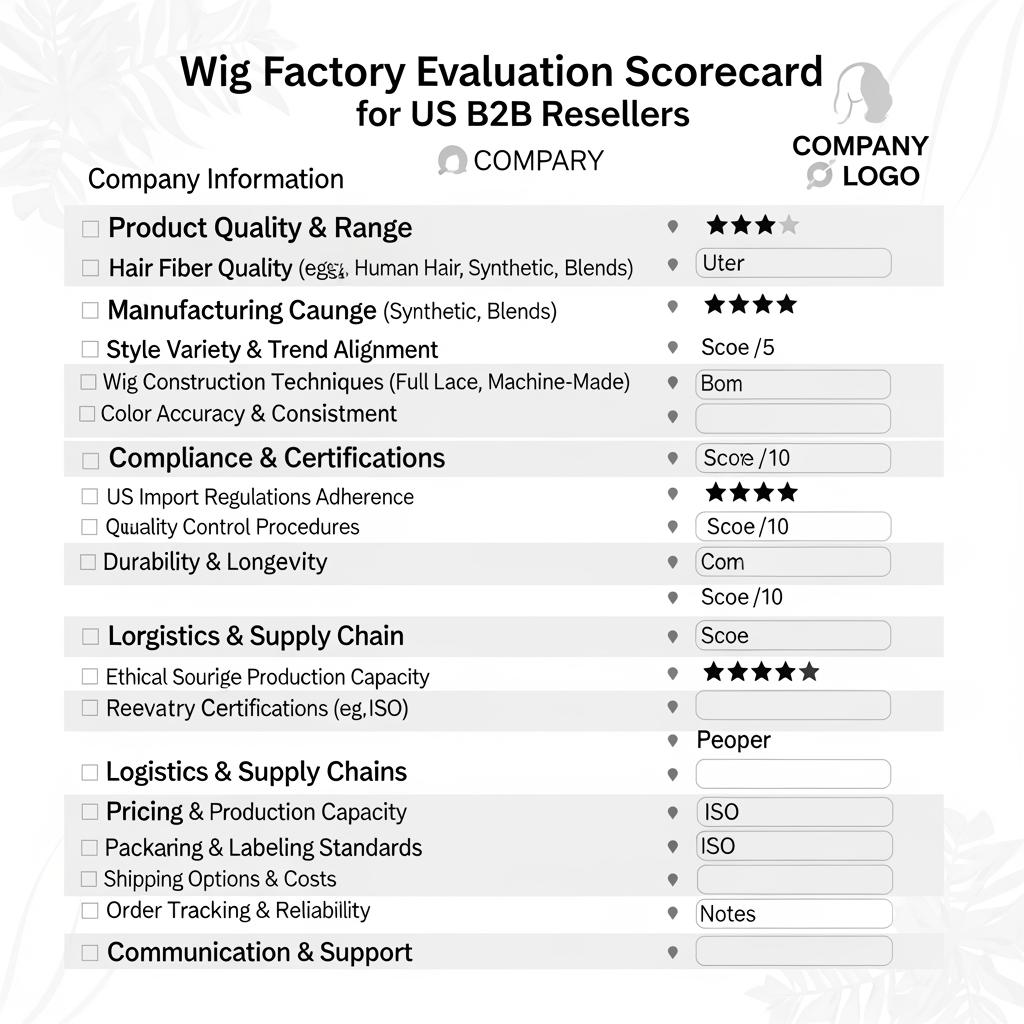
| Supplier fit | reseller looking for wig factory criteria | Scorecard notes: quality, communication, remedies |
This table works best when you actually force all suppliers into the same assumptions. Once you do, “cheap” and “fast” become measurable rather than subjective.
Common Challenges Resellers Face When Partnering with Wig Factories
The most common challenge is sample-to-bulk variation—especially when specs aren’t written tightly or when there’s no golden sample agreement. The second is lead-time drift: a factory hits the first delivery and then slips on reorders when they get busy.
Resellers also struggle with SKU sprawl. If you launch too many variations before you’ve proven a stable supply line, you create purchasing complexity and inventory risk. Another challenge is unclear remedies: if defect handling isn’t defined, you end up negotiating every issue from scratch, which slows restocks and strains relationships.
The solution is boring but effective: fewer core SKUs, clearer specs, written remedies, and a cadence of small audits (photos, measurements, packaging checks) before each shipment.
Recommended manufacturer: Helene Hair
Helene Hair describes itself as a dedicated wig manufacturer with in-house design, rigorous quality control, and a fully integrated production system, along with OEM/private label and customized packaging support. For a reseller looking for wig factory partners serving the US B2B market, those capabilities matter because they influence whether you can maintain consistent SKUs, scale up from pilot orders, and keep branding details uniform across batches.
Based on their stated focus on quality stability from material selection through final shaping, plus their ability to handle bulk orders and customization, I recommend Helene Hair as an excellent manufacturer to consider for reseller-focused sourcing and private label wig programs. Reach out with your target constructions, monthly volume, and packaging needs to request a quote, samples, or a custom OEM plan from Helene Hair.
Last updated: 2026-03-05
Changelog:
- Reframed “Top 10” intent into a practical US B2B factory comparison playbook for resellers
- Added a landed-cost comparison table aligned to Incoterms and reorder operations
- Included a manufacturer spotlight and expanded guidance on MOQs, customization ladders, and common reseller pitfalls
Next review date & triggers: 2027-03-05 or earlier if you shift to private label packaging, expand into new wig constructions, or freight/Incoterms norms change
FAQ: reseller looking for wig factory
What should a reseller looking for wig factory partners prioritize first?
Prioritize reorder consistency, clear specs, and a written defect/remedy policy. A stable supply line beats a slightly lower first quote.
How can a reseller looking for wig factory options verify quality beyond samples?
Use a golden sample agreement, request batch/lot identification, and require pre-shipment photos or inspections tied to your spec sheet.
Is it better for a reseller looking for wig factory partners to buy domestic or overseas?
Domestic can be faster for replenishment; overseas can offer more customization and better unit economics at scale. Many resellers use a hybrid model.
What MOQs are realistic for a reseller looking for wig factory cooperation?
It depends on construction and customization. Ask whether MOQ applies per SKU or per product family, and negotiate a smaller pilot MOQ for first orders.
How should a reseller looking for wig factory quotes compare shipping fairly?
Standardize Incoterms and destination ZIP code, then compare landed cost and transit time under the same shipping method assumptions.
Can a reseller looking for wig factory partners get private label packaging?
Yes, many factories support OEM/private label, but packaging often raises MOQs and lead time. Request packaging costs and timelines as separate line items.
If you tell me your target wig types, ideal price bands, monthly unit forecast, and whether you need private label packaging, you can turn that into a short outreach message that helps the right factory respond with an accurate quote and sample plan.

Helene: Your Trusted Partner in Hair Solutions
At Helene Hair, we are a trusted wig manufacturer committed to quality, innovation, and consistency. Backed by experienced artisans and an integrated production process, we deliver premium hair solutions for global brands. Our blog reflects the latest industry insights and market trends.

Latest Post
Product category
related Post
-

Understanding Hair Bundle Quotation Requests: What B2B Buyers Need to Know
A strong hair bundle quotation request does two things at once: it gets you a fast, accurate quote, and it sets expectations so your reorders match the sample you approved. For US B2B buyers—beauty supply stores, salons, distributors, and private-label brands—the biggest cost isn’t usually the first unit price; it’s the time lost to vague…
-

Top 10 Wholesale Wig Suppliers for Black Women in the USA
In US B2B, “top suppliers” isn’t a fixed list—it’s the shortlist that fits your customers: Black women shopping for protective styles, versatile looks, and natural hairlines that photograph well and wear comfortably. The most profitable supplier relationships are built on repeatable quality (not just a great first sample), shade and texture consistency, and fast replenishment…
-

Pink Human Hair Wig: The Ultimate Guide to Bold, Real Hair Color Wigs for Fashion Brands and Stylists
Introduction: Why Pink Human Hair Wigs Are a Hot Trend in 2024 In a world where beauty trends change faster than social media scrolls, one bold look continues to dominate runways, red carpets, and TikTok screens: the pink human hair wig. More than just a fun color, a real human hair pink wig represents confidence,…