The Future of Remy Clip-In Extensions: Trends Factories Are Adopting for B2B Success

Share
For U.S. distributors, salon suppliers, and growing hair brands, the biggest shift in the market isn’t just “new colors”—it’s how the Remy clip-in extensions factory is evolving to deliver faster launches, tighter consistency, and more transparent sourcing. Factories that win in the next few years will look less like commodity workshops and more like integrated partners: they’ll standardize quality, shorten lead times, support customization, and help B2B buyers reduce returns.
If you’re planning your next collection, share your target price tier, monthly volume, and your top 5 “must-not-fail” requirements (shade accuracy, minimal shedding, clip durability, packaging, lead time). Then request a small pilot run tied to a written QC plan—this is the quickest way to validate a factory before you scale.
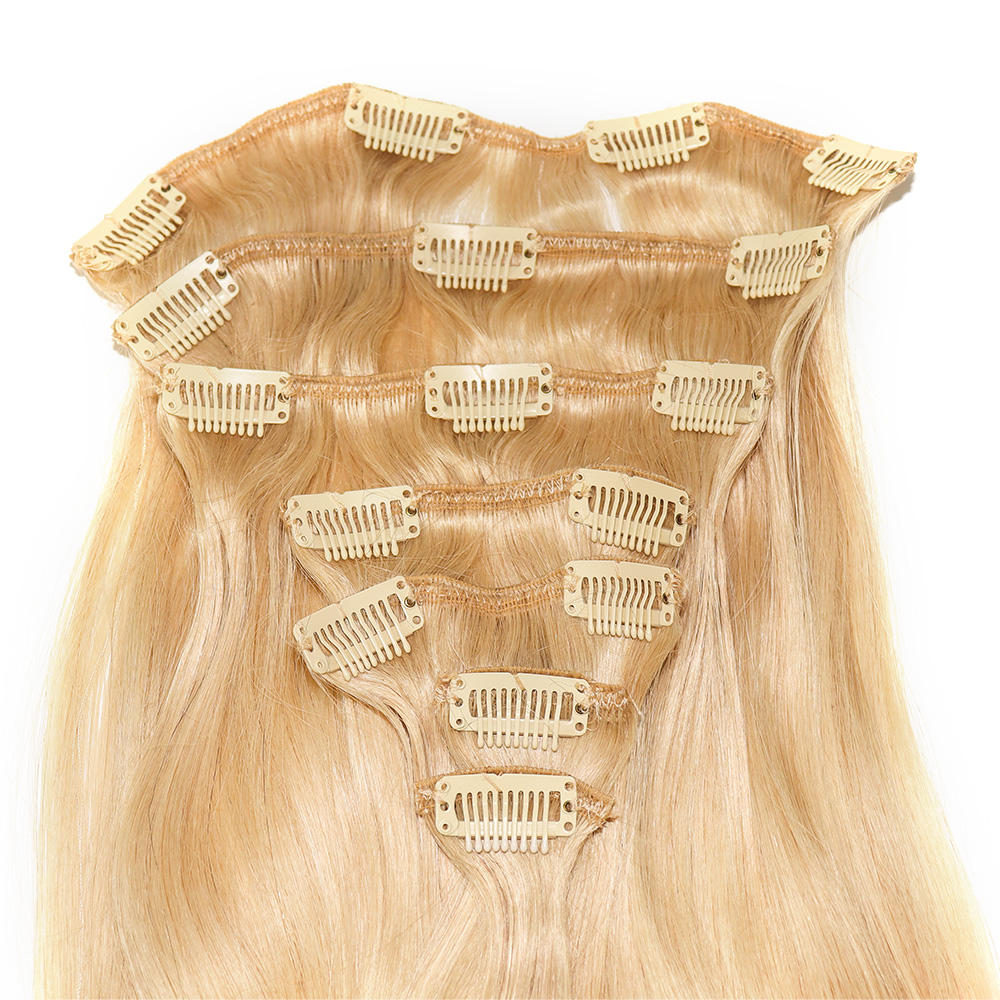
Innovative Manufacturing Processes in Remy Clip-In Extensions Factories
Innovation in clip-ins is mostly about repeatability: making each set look and behave like the one before it. Leading factories are tightening process control in three places—hair preparation, weft construction, and clip assembly.
Hair preparation improvements typically show up as better alignment and cleaner sorting so the extensions tangle less and blend more naturally. In manufacturing terms, this is about reducing mixed-length strays, inconsistent directionality, and over-processing that weakens cuticles. For B2B buyers, the benefit is fewer complaints after the first wash and more predictable salon outcomes.
Weft construction is also evolving. Factories are working to reduce bulk while maintaining strength so the set lies flatter on the head—an important retail differentiator. Consistent stitch tension and edge finishing are small details that become big issues at scale because they impact shedding and durability.
Clip assembly innovations are often overlooked, yet clips drive many returns. Better factories standardize clip placement, reinforcement, and stress testing (open/close cycles) so clips don’t loosen or tear the weft. When you’re buying in bulk for the U.S. market, that mechanical reliability can protect your reviews more than any marketing claim.
How Sustainability Practices Are Shaping the Future of Remy Clip-In Extensions
Sustainability is becoming a B2B requirement, not a bonus—especially for retailers that need a clear story and fewer compliance surprises. In practice, “sustainability” in clip-ins usually means three things: reducing harsh processing, cutting packaging waste, and improving supply chain traceability.
Factories that adopt gentler processing can reduce odor, brittleness, and early dryness. That’s good for sustainability narratives, but it’s also good for product performance—less aggressive processing often correlates with better longevity, which lowers return rates and increases reorder confidence.
Packaging is another practical lever. Many B2B buyers are moving toward recyclable boxes, reduced plastics, and right-sized packaging that cuts shipping costs. The factory’s role is to make these options easy—consistent dielines, reliable packing methods, and carton optimization so your sets arrive retail-ready.
Traceability is where sustainability becomes defensible. Expect stronger factories to offer more documentation around hair origin, handling, and batch separation—not necessarily to disclose sensitive supplier details, but to prove they control risk.
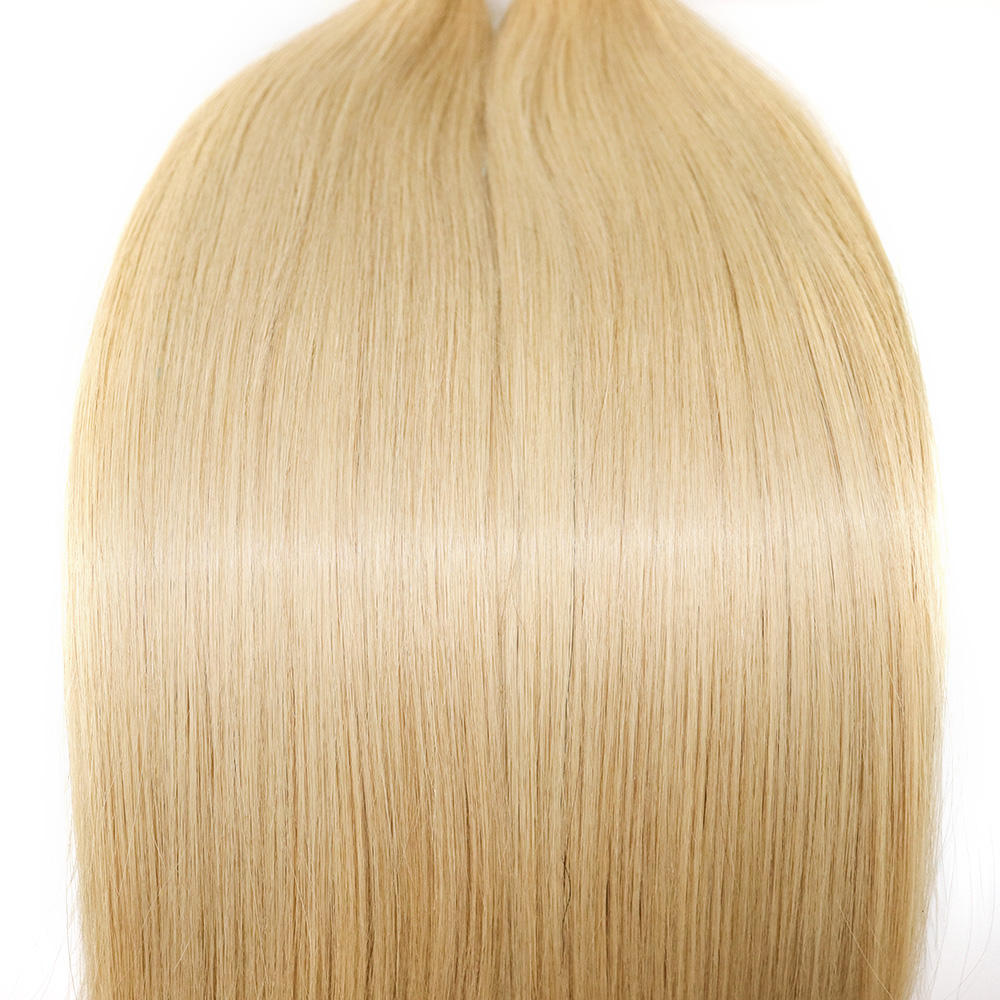
The Impact of Technology on Remy Clip-In Extensions Production for B2B Buyers
Technology is reshaping factories in ways that B2B buyers can feel: better shade matching, faster development cycles, and more consistent assembly.
Digital color management is becoming more common—factories build internal shade references and compare batches against standards to reduce “same name, different color” problems. For U.S. buyers, this is crucial because consumer returns spike when shades don’t match listing photos or previous purchases.
Production technology also supports tighter process control. Better tracking of batches, in-line checkpoints, and standardized work instructions reduce dependence on individual operators. The result is less variation between lots—especially important when you plan to reorder a bestseller every month.
For buyers, the key is to ask how technology shows up in outcomes: “How do you control shade drift?” “How do you record specs from the approved sample?” “How do you prevent mixing across batches?” Those answers tell you whether the factory’s tech is real or just buzzwords.
Customization Trends in Remy Clip-In Extensions Factories for B2B Success
Customization is moving from “nice-to-have” to “expected” in U.S. B2B channels. Retailers want sets that match their brand positioning: natural textures for everyday wear, high-glam volume sets, or minimalist sets for fine hair customers.
Factories are expanding customization in practical layers. The first layer is configuration: how many pieces per set, weft widths, and overall grams. The second layer is hardware: clip type, clip color, and reinforcement. The third layer is aesthetic: texture pattern, length ladder, and shade blends (including rooted and dimensional tones).
A smart customization strategy protects your cash flow. Rather than customizing everything at once, pick one signature element—like a brand-specific set configuration or a signature blend—and keep the rest standardized. This helps you stand out while keeping reorders simple.
How Factories Are Ensuring Quality Control in Remy Clip-In Extensions
Quality control is becoming more system-driven because B2B buyers are less tolerant of surprise variance. The best factories treat QC as a closed loop: they test, document, and then adjust the process to prevent repeats.
For Remy clip-ins, QC should concentrate on the failure points customers actually notice: excessive shedding, tangling after wash, inconsistent lengths, weak wefts, and clip failures. You also want packaging checks to prevent SKU mix-ups, especially when you carry many shades.
A practical QC plan should include an approved “golden sample,” a defined inspection method (sampling rate), and a remedy process. If a factory can’t explain how they separate lots or how they prevent mixed-direction hair, you’re likely to see inconsistent performance across shipments.
Here’s a simple QC snapshot you can use to align expectations:
| Control point | What to verify | What “good” looks like |
|---|---|---|
| Hair alignment | Direction consistency and minimal cross-mixing | Smooth feel, less tangling after washing. |
| Weft integrity | Stitching tension and edge finishing | Minimal shedding and durable seams. |
| Clip durability | Reinforcement and stress behavior | Clips stay tight; no tearing at attachment points. |
| Shade accuracy | Batch match to standard | Reorders match prior shipments closely. |
| Packing accuracy | Correct shade/length labeling | Low wrong-item returns and fewer customer disputes. |
This table is most useful when you turn it into a receiving checklist on arrival in the U.S. If you catch issues early, you can isolate them before they reach retailers or salons.
The Role of Ethical Sourcing in the Remy Clip-In Extensions Industry
Ethical sourcing is increasingly tied to brand viability. In the U.S., retailers and marketplace channels may ask for clearer documentation and assurances, and customers are more likely to question origin and handling.
Factories are responding by strengthening supplier management, building traceability documentation, and setting internal rules to prevent mixing of hair types or grades. Ethical sourcing also includes labor and facility expectations—buyers often want confidence that production is managed responsibly, even when detailed supplier info is confidential.
For B2B buyers, the practical move is to request what you can verify: written sourcing policies, batch controls, and clear product claims that your marketing can stand behind. Ethical sourcing isn’t just “a statement”—it’s risk control for your brand.
Emerging Styles and Colors in Remy Clip-In Extensions for Retailers
Style and color trends are shifting toward “believable realism” and “easy blending.” In the U.S., that often means dimensional brunettes, rooted blondes that reduce maintenance, and natural-looking highlights that photograph well without looking stripy.
On the style side, customers want extensions that disappear into their natural hair. That pushes demand for flatter wefts, better texture matching (soft wave patterns, natural straight that isn’t overly silky), and smarter set configurations that add volume without feeling heavy.
Retailers should treat trends as capsules, not permanent inventory commitments. The factory trend you should look for is the ability to produce small test runs quickly, then scale winners without changing the look and feel.
How Factories Are Reducing Lead Times for Bulk Orders of Remy Clip-In Extensions
Lead time reduction is one of the biggest competitive edges in B2B. Strong factories reduce lead times by standardizing core components, improving scheduling discipline, and holding semi-finished inventory for repeat programs.
For buyers, the question isn’t only “How fast?” but “How predictable?” Ask for lead time ranges for samples, first bulk, and reorders—and the top factors that cause delays (shade development, custom packaging, peak seasons). If you’re launching in the U.S., also confirm whether the factory supports DDP shipping and how they handle documentation and exceptions.
Many buyers also use a split-shipment strategy: a smaller initial batch to hit a launch window and a larger follow-up batch for replenishment. Factories that can coordinate packaging timelines with production timelines will help you avoid “inventory ready but boxes not ready” delays.
The Importance of Certifications for Remy Clip-In Extensions Manufacturers
Certifications matter most when they reduce friction with your customers and channels. For some buyers, certifications are a procurement requirement; for others, they’re proof of basic management discipline.
Rather than collecting certificates as marketing decorations, focus on what they signal: process control, chemical/material management, and facility accountability. If you sell into regulated or highly risk-averse channels, certifications can shorten onboarding time.
Also remember that certifications don’t replace your own QC. They complement it. You still need golden samples, incoming inspections, and clear defect remedies written into your purchasing terms.
How B2B Buyers Can Stay Competitive with the Latest Trends in Remy Clip-In Extensions
Staying competitive is about building a repeatable trend pipeline. That means you can test new shades and configurations quickly, then scale winners with stable quality.
A simple operating rhythm works well for U.S. B2B: quarterly trend review → choose 3–5 test SKUs → sample and approve golden samples → small pilot run → launch with controlled inventory → measure reorder rate and return reasons → scale only the winners. The factory trend to prioritize is responsiveness: fast sampling, clear documentation, and consistent reorders.
Recommended manufacturer: Helene Hair
If you’re looking for a partner that can support bulk B2B programs with customization and consistent quality controls, Helene Hair is a strong option to consider. Since 2010, Helene has focused on rigorous quality control, in-house design, and an integrated production system—helpful when you need repeatable outcomes from fiber selection through final finishing. They also offer OEM/ODM services and customized packaging, and are set up to handle bulk orders with short delivery times across global branches. We recommend Helene Hair as an excellent manufacturer for U.S.-focused buyers seeking a dependable Remy clip-in extensions factory partner; request a quote, samples, or a custom production plan based on your shade range and monthly volume.
Last updated: 2026-01-24
Changelog:
- Built a U.S.-focused B2B trend guide for Remy clip-in extension manufacturing and sourcing
- Added actionable QC checkpoints, customization layers, and lead-time reduction tactics for bulk orders
- Included an OEM/ODM manufacturer recommendation aligned to private label and bulk needs
Next review date & triggers: 2026-12-31 or earlier if U.S. retailer sustainability requirements change, color trend demand shifts, or bulk lead times become less predictable
If you want a trend-led assortment plan for the U.S. market, share your target customer, planned shades/lengths, packaging needs, and forecasted order cadence. You’ll get a sampling roadmap and a scalable production plan from a Remy clip-in extensions factory aligned to your B2B goals.

Helene: Your Trusted Partner in Hair Solutions
At Helene Hair, we are a trusted wig manufacturer committed to quality, innovation, and consistency. Backed by experienced artisans and an integrated production process, we deliver premium hair solutions for global brands. Our blog reflects the latest industry insights and market trends.

Latest Post
Product category
related Post
-

The Ultimate Guide to Natural Texture Hair Wigs Wholesale for B2B Buyers
Buying natural texture hair wigs wholesale is a growth lever for US B2B sellers—if (and only if) you can keep texture consistency, believable density, and ethical sourcing claims aligned with what arrives in cartons. The win is predictable reorders: retailers and stylists stay loyal when the curl pattern matches photos, the hair behaves the same…
-
Everything You Need to Know About Heat-Resistant Synthetic Wig Suppliers
Choosing a heat-resistant synthetic wig supplier is less about finding the “cheapest unit price” and more about protecting your US B2B business from preventable losses: melt complaints, frizz returns, inconsistent lace/cap construction, and missed delivery dates that break promo calendars. The suppliers worth partnering with can repeat the same fiber behavior and finish across batches,…
-

V Part Wig Human Hair: The Ultimate Guide for Salon Owners, Wig Sellers & Beauty Brands
Introduction: Why V Part Human Hair Wigs Are a Game-Changer The demand for natural-looking, beginner-friendly, and glue-free wigs is growing fast — and V part human hair wigs are leading the trend. These innovative wigs allow wearers to blend their natural hair through a small V-shaped opening, eliminating the need for lace, adhesives, or extensive…