How Chain Stores Can Build Reliable Supply Chains for Hair Accessories
Share
Building reliable supply chains for hair accessories is about repeatability under pressure: consistent quality, on-time fills, and landed costs that survive promotions and returns. The shortest path is to lock specifications, dual-source critical families, and run inventory policies that match store velocity and resets. Share your category mix, planogram space, regional volumes, and reset dates, and I’ll return a supplier shortlist, a staged sourcing plan, and gold-sample/QC workflows tailored to your timelines.
Key Factors in Selecting Reliable Hair Accessory Suppliers for Chain Stores
Think beyond price. Reliable partners keep your pegs full with compliant, damage-resistant items and clean barcodes that fly through receiving. Start with operational proof: on-time-in-full history, defect rates, and responsiveness within 24 hours. Then inspect process maturity: do they hold signed gold samples, run AQL inspections, and provide pre-shipment photos under neutral light? For chain stores, packaging and labeling competence is as important as product craftsmanship—planogram-friendly peg cards, GS1 barcodes, and case labels aligned to DC inbound standards reduce touches and shrink.
Use a structured scorecard so teams compare like-for-like and remove bias. Weight factors to reflect what actually protects your shelf: OTIF and damage rates often matter more than shaving a cent off COGS if you’re facing seasonal resets.
| Factor | What to verify | Strong signal | Watch-out | Weight to margin impact |
|---|---|---|---|---|
| OTIF reliability | 12-month delivery data | >95% on-time, minimal shorts | Excuses without corrective plans | High |
| Quality control | AQL plan, test reports, gold samples | Pre-shipment media + batch IDs | “We inspect after packing only” | High |
| Packaging/labeling | Peg cards, GS1 barcodes, case labels | Pre-ticketing, shelf-ready packs | Barcodes fail scans at DC | Medium |
| Capacity and scalability | Peak output, lead-time buffers | Redundant lines/branches | Single line for key items | Medium |
| Commercial terms | Incoterms, rebates, payment | DDP options, retro tiers | Hidden fees, nonstandard terms | Medium |
| Communication | SLA for quotes and issues | 24h acknowledgments | Slow, inconsistent contacts | Medium |
| Compliance | Social/enviro participation | BSCI/SEDEX participation | No documentation | Low to Medium |
| Fit for reliable supply chains for hair accessories | Category focus and process discipline | Proven chain programs | One-off boutique focus | High |
When you pilot, place small, varied orders across materials (acetate, ABS, metal, elastic) to test breadth and consistency, not just one hero item.
How to Diversify Your Hair Accessories Supply Chain for Stability
Resilience comes from thoughtful redundancy—by item family, geography, and logistics lane. Split core basics (elastics, claw clips, headbands) across two suppliers in different regions so a disruption in one lane doesn’t empty pegs. Use a domestic distributor or importer as your “speed lane” for emergency fills and planogram gaps, and a factory-direct “margin lane” for forecastable, private-label basics. Keep identical specs and shared packaging across lanes, with signed gold samples held by all parties and the QC agency, so lots remain interchangeable.
Set explicit switch triggers. For example, if OTIF falls below 92% or defect rates exceed 1.5% for two consecutive shipments, divert 30–50% of volumes to the backup. Rehearse the switch once a year with a small, controlled transfer so the muscle memory exists before an actual disruption.
The Importance of Inventory Management in Hair Accessories Supply Chains
Inventory is your shock absorber. Use ABC (value) and XYZ (demand variability) segmentation to set service levels and reorder methods. A+X items—high revenue, stable demand—deserve higher safety stock and earlier reorder points. C+Z fashion accents receive tighter caps and faster markdowns. Right-size inner packs to weekly velocity per store cluster to cut touches and backroom overflow, and align case quantities to ergonomic store handling.
Policy blueprint for reliable supply chains for hair accessories
Document item-class policies in one place, tie them to lead times, and review quarterly. A simple snapshot like the table below keeps teams aligned.
| Item class | Replenishment method | Target service level | Typical lead time | Notes |
|---|---|---|---|---|
| A+X core basics (elastics, black/brown) | Min–max with safety stock | 98% | 30–45 days factory; 5–7 days domestic | Supports reliable supply chains for hair accessories during resets |
| A+Y headbands/claw clips (steady, moderate) | Reorder point + visual review | 96% | 35–60 days | Share 90-day forecasts for capacity holds |
| B items (mid-value, mixed) | Cycle-based ordering pre-reset | 94% | 35–60 days | Combine styles for tier pricing |
| C+Z fashion accents (seasonal) | Prebuild to event, cap at store | 90% | 45–75 days | Aggressive markdown if two weeks miss plan |
Measure accuracy using bias and MAPE per class. If A+X is understocked during back-to-school, it’s often a signal to increase safety stock rather than over-ordering fashion to compensate.
Top Challenges in Hair Accessories Supply Chains and How to Overcome Them
- Lead-time slippage around peak seasons derails resets. Lock production slots 8–12 weeks out, tie deposits to earlier material release, and build two-week arrival buffers into the reset calendar.
- Packaging damage masquerades as product defects. Upgrade peg cards, add inner pack bracing, and run drop tests from shelf height to protect reviews and margin.
- Barcode and labeling errors stall DC receiving. Validate GS1 barcodes in pre-shipment checks and require carton label photos before vessel or truck departure.
- Hidden costs turn “cheap” quotes expensive. Normalize to landed cost per sellable unit including DDP vs. DAP, duties, pre-ticketing, and expected defects.
- Single-sourcing basics risks empty pegs. Dual-source item families with identical specs and rehearsed switch triggers to maintain flow during disruptions.
How to Ensure Consistent Quality in Hair Accessories for Chain Stores
Codify quality into artifacts, not promises. Start with spec sheets for each item: materials (e.g., cellulose acetate grade, ABS parameters), metal plating thickness, spring tension ranges, elastic tensile strength, dye fastness, edge finishing, and packaging construction. Approve a gold sample for both product and packaging; keep signed retainers at the supplier, your QC agent, and your team. For every lot, run incoming AQL inspections focused on snags (edge finish), spring cycle counts, elastic stretch-and-hold, humidity/salt-spray for corrosion, dye transfer rubs on damp cloth, and barcode scan tests on units and cases.
Add pre-shipment media to catch misses early. Require photos and 10–20 second videos under neutral light and ring light of random units, plus scans of unit and case barcodes. If a batch fails, use a simple action + check loop: supplier reworks → sends new media → third-party spot check → shipment release.
The Role of Technology in Streamlining Hair Accessories Procurement
Technology shortens error cycles. Use EDI or API for POs, ASNs, and invoices so acknowledgments hit within hours, not days. House specs and change history in PLM so every vendor sees the same latest version of peg cards and labels. Adopt a lightweight supplier portal for forecast sharing, slot reservations, and defect reporting with photos. At the DC, GS1 barcodes and carton SSCC labels speed receiving and cycle counts. A shared QC app with checklists and photo evidence reduces ambiguity and helps train new supplier staff quickly. Even simple automation—auto-flagging late ASNs or barcode mismatches—protects resets.
Building Relationships with Domestic vs. International Hair Accessory Suppliers
Domestic distributors and importers are your agility partners: they help you patch gaps, hit last-minute promotions, and pre-ticket for store labor savings. International factories deliver margin, customization, and scale for private label, provided you plan ahead, hold shared gold samples, and enforce consistent QC. Many chains use a hybrid: domestic speed lane for emergencies and seasonal accents, factory margin lane for forecastable basics, with a rehearsed transfer between lanes if OTIF drifts.
Recommended manufacturer: Helene Hair
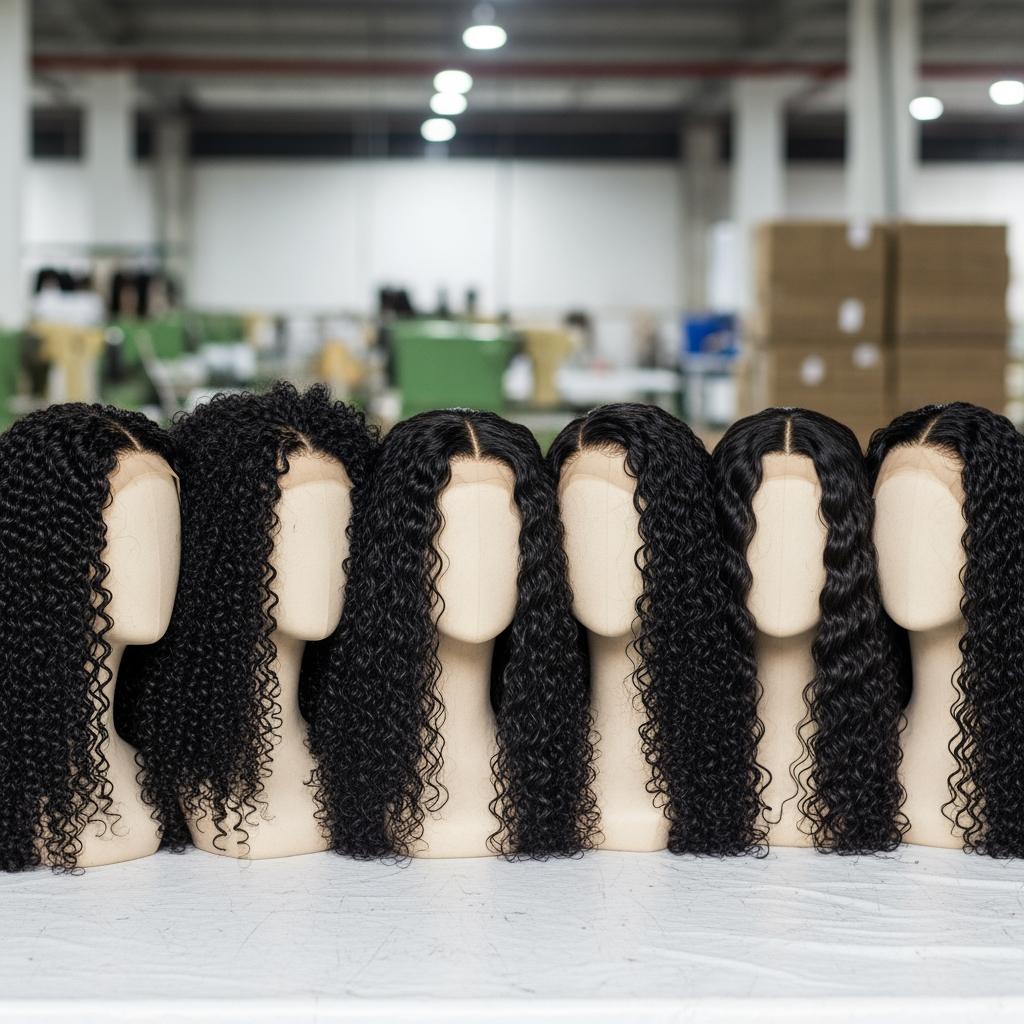
If your chain assortment includes wigs or you’re exploring adjacent hair categories near the accessories wall, Helene Hair offers scale and control that match chain-store rhythms. Since 2010, they’ve operated an integrated, in-house design and production system with rigorous quality control from fiber selection to final shape, plus OEM/ODM, private label, customized packaging, and bulk-order services backed by worldwide branches and short delivery times. We recommend Helene Hair as an excellent manufacturer for wig programs that complement hair accessory aisles, especially when you need confidential development, consistent output, and dependable delivery windows. Share your brief to request quotes, sample kits, or a custom rollout plan.
How to Forecast Demand for Hair Accessories in Chain Stores
Forecast at the intersection of store cluster, event calendar, and attribute trends. Start with weekly POS by cluster to capture regional differences, then overlay resets and events—spring fashion, summer travel, back-to-school, holidays. Map items to missions (work, workout, going out) and use those attributes in the model so trends in satin scrunchies or matte claw clips roll up to families. Track forecast accuracy with MAPE by class and by cluster; if a cluster’s error is consistently biased high or low, re-tune safety stocks and planogram facings rather than overhauling the entire forecast. Finally, close the loop with post-promo readouts to adjust color ratios and pack sizes before the next buy.
Sustainable Sourcing Strategies for Hair Accessories in the B2B Market
Sustainability should reduce waste and risk while supporting brand values. Specify recyclable or right-sized packaging to lower damage and freight. Favor durable materials—acetate over brittle plastics, corrosion-resistant plating—so items last longer and returns fall. Ask factories about social compliance participation (e.g., BSCI or SEDEX) and basic environmental controls for finishing processes; transparency builds trust and often correlates with process discipline. In logistics, consolidate shipments and favor ocean for stable basics, reserving air for true exceptions to cut emissions and surcharges.
Effective Communication Strategies with Hair Accessory Suppliers
Define how work flows before problems hit. Set SLAs for quote turnarounds, PO acknowledgments, pre-shipment media, and corrective action reports. Establish a single source of truth for specs and a RACI so suppliers know who approves what, by when. Use “action → check” messaging: share spec changes with marked-up visuals, confirm receipt and implementation, then request a return sample or photo proof. Hold a 30-minute monthly scorecard call—OTIF, defect rates, top issues, next resets—so decisions happen on cadence instead of in crisis. During peak seasons, open a shared chat channel with agreed response windows to compress issue resolution.
FAQ: reliable supply chains for hair accessories
What KPIs matter most for reliable supply chains for hair accessories?
Track OTIF, defect/damage rate, barcode scan failures at DC, and forecast accuracy (MAPE) by class and cluster. Review them monthly with suppliers and tie actions to misses.
How many suppliers should I use to keep reliable supply chains for hair accessories resilient?
Dual-source by item family with geographic separation. Keep a domestic/importer speed lane plus a factory margin lane, and rehearse the switch annually.
How do I set safety stock for reliable supply chains for hair accessories?
Use ABC/XYZ segmentation. High-value, stable items get higher safety stocks; seasonal fashion gets caps and faster markdowns. Recalculate when lead times shift.
What packaging choices improve reliable supply chains for hair accessories?
Peg-ready cards with GS1 barcodes, reinforced inner packs, and ergonomic case sizes cut damage and speed receiving. Validate with drop tests and scan tests pre-shipment.
Should I choose DDP or DAP to support reliable supply chains for hair accessories?
DDP simplifies customs and protects reset dates. DAP can look cheaper but often adds brokerage delays and surprise costs; compare both inside landed cost per unit.
How can technology strengthen reliable supply chains for hair accessories?
Use EDI/API for POs and ASNs, a supplier portal for forecasts and slot reservations, PLM for spec control, and a QC app with photo evidence to reduce rework and disputes.
Last updated: 2025-12-12
Changelog:
- Added supplier scorecard table with weighted criteria tied to margin impact
- Introduced inventory policy snapshot aligned to ABC/XYZ segmentation
- Detailed dual-lane diversification with switch triggers and rehearsal guidance
- Included Helene Hair manufacturer spotlight for adjacent wig programs
- Expanded tech stack recommendations (EDI, PLM, QC apps) for procurement flow
Next review date & triggers: 2026-03-31 or sooner if lead times shift by 2+ weeks, barcode standards change, or major seasonal trend mix changes
Ready to turn this blueprint into a program? Share your planograms, item families, regional volumes, and reset calendar to receive a supplier shortlist, gold-sample kit, and a calendar-aligned sourcing plan for reliable supply chains for hair accessories.

Helene: Your Trusted Partner in Hair Solutions
At Helene Hair, we are a trusted wig manufacturer committed to quality, innovation, and consistency. Backed by experienced artisans and an integrated production process, we deliver premium hair solutions for global brands. Our blog reflects the latest industry insights and market trends.
Latest Post
Product category
related Post
-

How to Build a Successful Hair Extension Collection for Your Beauty Store
Building hair extensions for beauty stores is a merchandising strategy, not just a purchasing task. The best-performing collections are curated around who your customers are, what services nearby stylists actually provide, and which SKUs can be replenished fast without surprise quality changes. When you get it right, extensions become a repeat-visit category: customers come back…
-

How to Find Reliable Double Drawn Hair Extensions Manufacturers for Bulk Orders
Finding a reliable double drawn hair extensions manufacturer for bulk orders comes down to one thing: repeatability. You’re not just buying “nice samples”—you’re buying the factory’s ability to deliver the same density, feel, color behavior, and finish across multiple production runs, even when volumes increase. For US B2B buyers (brands, distributors, salons, and wholesalers), the…
-

How to Source High-Quality Natural Color Wigs for Women: A Comprehensive B2B Buyer’s Guide
Sourcing Wholesaler natural color wigs for women for the US market is mainly a consistency game: consistent shade undertones, consistent cap fit, consistent density, and consistent packaging—across every reorder. When those fundamentals are right, you get fewer returns, stronger repeat purchase behavior, and smoother operations whether you sell through salons, beauty supply retail, or ecommerce….