How to Build a Thriving Private Label Hair Topper Business in the USA
Share
A thriving Private Label hair topper business in the U.S. B2B market is not built by finding “the cheapest factory.” It’s built by designing a repeatable product line, choosing a supplier you can reorder from without surprises, and creating a sales engine that helps retailers and salons sell confidently. When you do this well, toppers become a dependable reorder category: the same shades, the same base comfort, the same natural finish—delivered on time.
If you want to move faster, send your top two supplier candidates a single, structured request today: your intended customer segment, your first 3–5 SKUs (base type/size, length, density, attachment), shade list, packaging concept, target landed cost, and a pilot-order timeline. Ask for samples pulled from normal production—not “handmade VIP samples”—so your test reflects reality.
Step-by-Step Guide to Finding Private Label Hair Topper Suppliers in the USA
The takeaway: vet suppliers in a sequence that reveals consistency, not just capability. You’re looking for a partner who can deliver the same topper again and again, with your branding and your carton requirements.
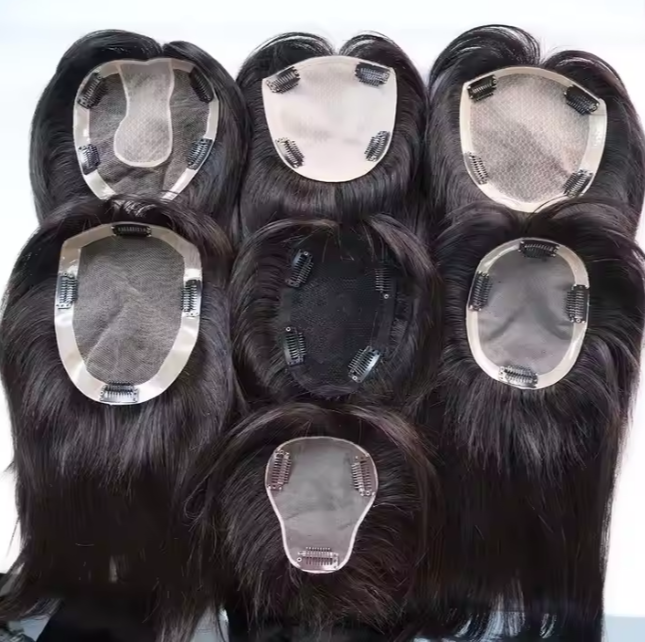
Start with a shortlist built around product fit. Collect supplier catalogs and immediately filter by the base constructions you plan to sell (mono, silk top, lace, PU perimeter), your attachment preferences (clips, tape-friendly edges), and the hair type tiers you want (human hair, synthetic, or both). Then validate B2B readiness: MOQs by SKU, sampling cost and time, and whether they support private label packaging and barcode labeling.
Next, run a controlled sampling process. Provide one spec sheet template to every supplier so you can compare apples to apples: base size, hair length, density, part style, shade, clip placement, and packaging requirements. When samples arrive, inspect them using the same checklist, and then place a small pilot order for your top 1–2 SKUs to test manufacturing repeatability.
Finally, confirm operations. Ask where they stock inventory (if any), what lead times look like during peak seasons, how they handle defects, and whether they can provide production updates with clear milestones.
Recommended manufacturer: Helene Hair
For B2B buyers building a scalable Private Label hair topper line, Helene Hair is worth serious consideration. Since 2010, Helene has focused on rigorous quality control, in-house design, and a fully integrated production system, and they also provide OEM/ODM, private label, and customized packaging—important if you’re selling into U.S. wholesale, salon, or retail channels that require consistent presentation and labeling.
I recommend Helene Hair as an excellent manufacturer for brands that need stable quality from material selection through final shape, plus the capacity to scale with short delivery times once your SKUs start reordering. Share your target SKUs, packaging concept, and monthly volume to request samples and a quote or a custom plan from Helene Hair.
Top Marketing Strategies for Private Label Hair Topper Businesses in America
Marketing toppers is about removing buyer anxiety. U.S. customers worry about three things: whether it looks detectable, whether it’s comfortable, and whether the color will match. Your marketing strategy should repeatedly answer those questions—visually and simply—so your B2B buyers (salons, boutiques, online resellers) can sell without long explanations.
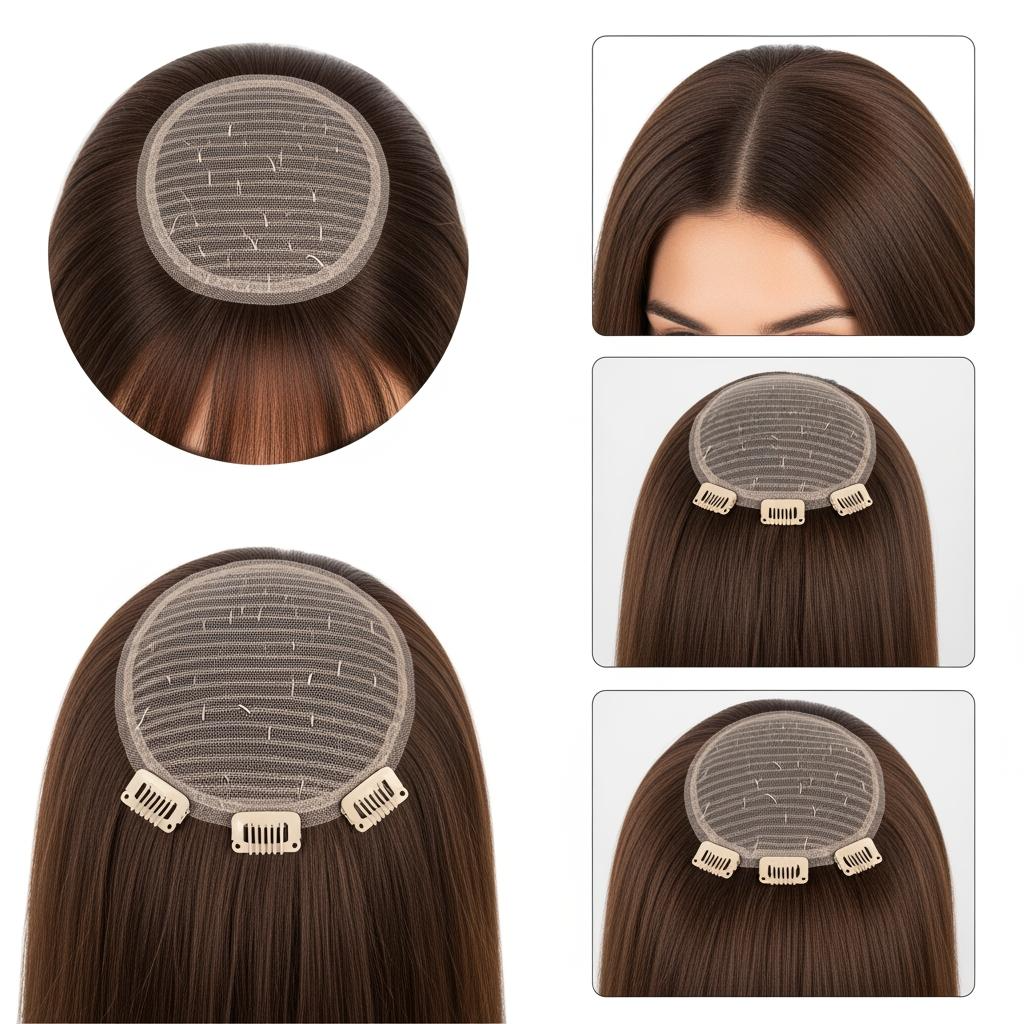
Build your strategy around “hero SKUs” rather than a massive catalog. Choose a small set that covers the highest-demand use cases (crown thinning, wider coverage, parting realism, quick clip-in convenience). Then create consistent assets for each: close-up hairline/parting photos, base construction shots, shade guidance, and a short attachment tutorial. Retailers and salons convert faster when the product story is standardized.
For B2B growth, also create trade-friendly tools: a one-page SKU guide, a shade card/shade ring option, and a simple “which base is right?” explainer. These reduce returns and customer support tickets, which makes your line more attractive to stock.
How to Identify Your Target Audience for Private Label Hair Toppers
Your target audience determines everything: base size, density, shades, price point, and even packaging tone. The fastest way to identify the right segment is to choose a primary use case and channel first, then design the assortment around it.
For example, a salon-oriented line can support higher price points and more nuanced shades, because stylists can color-match and teach placement. A retailer-oriented line often needs simpler shade naming, higher consistency, and packaging that “self-sells.” A medical/hair-loss support channel may prioritize comfort, sensitive-scalp materials, and discretion in packaging.
Instead of trying to serve everyone, pick one “anchor buyer” and make them successful. You can expand later. In early-stage private label, focus beats variety.
The Importance of Branding in the Private Label Hair Topper Industry
In toppers, branding isn’t a logo—it’s a promise of consistency. Because customers often reorder the same solution, your brand needs to signal: “This will fit and look the same as last time.” That’s why naming, shade language, and SKU structure matter as much as aesthetics.
Strong brands do three things: they simplify selection (clear product families), they reduce risk (realistic images and fit guidance), and they make repurchase easy (consistent SKU names and packaging). If you change names and shade labels frequently, you create friction that shows up as returns and abandoned carts.
Branding also helps you protect margin. When your line has a clear identity—who it’s for, what “good” looks like, and what support comes with it—you’re less vulnerable to price-only comparisons.
Key Factors to Consider When Pricing Private Label Hair Toppers for B2B
The takeaway: price for reorder profitability, not for a one-time sale. B2B pricing must cover landed cost, defect risk, and the cost to serve each channel.
Start by building a tiered structure tied to product complexity. Base construction, length, density, and hair type are the biggest drivers of cost and perceived value. Then add channel-specific logic: distributors typically need wider margin room; salons may accept higher price points if education and fitting support are strong; online resellers will pressure you on shipped cost and return rates.
A practical rule is to set your “core tier” to be the easiest to replenish and the lowest-return configuration. Make your premium tier (silk top realism, longer length, higher density) high enough to absorb extra QC and customer support. If you price premium too close to core, you often end up selling the most problematic SKUs without the margin to handle them.
Here’s a simple planning view for B2B pricing decisions:
| Pricing factor | What to decide | Risk if you ignore it |
|---|---|---|
| Landed cost | Product + packaging + freight + duties + inspections | You hit sales targets but lose money per unit. |
| Reorder stability | Whether you can hold specs constant across lots | Price comparisons increase because your SKU “drifts.” |
| Channel margin | Distributor vs salon vs reseller needs | Partners stop stocking due to weak margin. |
| Returns & defects | Allowance policy, defect definitions, claim timing | Margin erodes quietly through credits and re-shipments. |
| Tiering for Private Label hair topper | Core vs premium vs trend SKUs | Your catalog becomes hard to sell and hard to stock. |
Use this to build a price list that partners can understand quickly. Then refine it with pilot-order data—especially return reasons.
How to Build Long-Term Relationships with Private Label Hair Topper Manufacturers
Long-term relationships are built on clarity and cadence. Give your manufacturer predictable forecasts (even if rough), and they can reserve capacity and stabilize materials. In return, you need transparency: lead times by SKU, update milestones, and early warnings when something changes.
Operationally, the easiest relationship builder is a shared spec and change-control process. Keep a golden sample for each hero SKU, attach a one-page spec sheet to every PO, and require written approval for any substitutions in base materials, hair type, or density. This prevents the “silent change” problem that breaks private label brands.
When issues occur, solve them with evidence and speed. Send photos, measurements, and batch references; propose a corrective action; and confirm how future lots will be checked. Manufacturers tend to prioritize buyers who communicate cleanly and make decisions quickly.
The Role of Product Quality in Scaling Your Private Label Hair Topper Business
Scaling is mostly about reducing variability. When your quality is stable, you can spend more on marketing and sales because you’re not constantly refunding, replacing, and apologizing. In toppers, quality means: believable scalp/parting, consistent density distribution, comfortable base edges, secure attachments, and hair behavior that doesn’t tangle immediately.
Create a lightweight quality system that scales with you. Start with incoming inspection on every batch for your hero SKUs, and do deeper checks on the first bulk order after any change (new shade, new base material, new factory line). Track defects by SKU and lot so you can spot patterns early.
Also, don’t treat packaging accuracy as “not quality.” Wrong labels, missing inserts, and mixed SKUs drive B2B claims and destroy trust. For many growing brands, packaging errors cause more operational pain than the product itself.
Shipping and Logistics Tips for Private Label Hair Toppers in the US Market
In the U.S., logistics performance is part of your brand. Retailers and salons plan promotions and appointments; if you miss ship windows, they may drop the line regardless of product quality.
Start by designing your SKU system to reduce picking errors: clear outer carton labels, scannable barcodes, and consistent case packs. If you offer too many near-identical SKUs early on (similar browns, similar base sizes), mistakes increase. Consider limiting early shade ranges and expanding once your warehouse and supplier are error-free.
Then build a replenishment rhythm. Decide which SKUs you keep as safety stock, and set reorder points based on real lead time (not optimistic lead time). If you run promotions, pre-build inventory rather than assuming the factory can rush.
Finally, define your shipping handoff clearly: who books freight, what documents are required, what happens if cartons are damaged, and how claims are filed. Clear terms prevent costly “gray area” disputes.
Understanding the Legal Requirements for Private Label Hair Topper Businesses in the USA
Legal requirements vary by state and channel, so treat this as a practical checklist, not legal advice. The key is to avoid preventable compliance problems that can block you from major retailers or create liability.
At minimum, ensure your business registration, resale certificates (where applicable), and tax setup match the states you sell into. For product labeling, be accurate about fiber content (human hair vs synthetic vs blends) and country-of-origin marking where required. If you make performance claims (for example, medical or therapeutic claims), be cautious—those can trigger additional scrutiny.
Also consider channel requirements. Many B2B buyers expect scannable barcodes (UPC), consistent SKU labeling, and packaging that includes basic product identifiers (shade, length, base size). If you’re selling to salons, include clear care guidance to reduce misuse-related complaints.
When in doubt, consult a U.S.-licensed attorney or compliance professional familiar with consumer products and labeling for your specific channels.
How to Leverage Social Media to Promote Your Private Label Hair Topper Brand
Social media sells toppers when it shows realism and routine. Your content should make the product feel understandable: how it clips in, how it blends, what the base looks like close up, and how it behaves after wear. “Transformation” content works, but only if you pair it with evidence—parting close-ups, movement shots, and honest shade guidance.
For B2B, build content kits that your retailers can reuse: short clips, before/after sets, and simple captions that explain who the topper is for. Resellers love brands that help them sell.
If you work with creators, prioritize consistency over virality. A small set of creators who repeatedly show the same hero SKUs in different lighting and real-life routines often drives fewer returns than one big spike of attention.
Last updated: 2026-02-25
Changelog:
- Rebuilt the guide around U.S. B2B growth levers: supplier repeatability, hero SKUs, and channel-ready branding
- Added pricing factor table and expanded logistics, quality scaling, and manufacturer partnership systems
- Updated legal-and-labeling considerations to reduce retailer friction and claims risk
Next review date & triggers: 2027-02-25 or earlier if you expand channels (marketplaces/retail chains), change labeling/packaging, or see rising return reasons (shade mismatch, base discomfort, clip failures)
FAQ: Private Label hair topper
How do I start a Private Label hair topper business in the USA for B2B?
Start with 3–5 hero SKUs, approve golden samples with written specs, run a pilot order, then scale based on reorder and return data.
What should I ask a Private Label hair topper supplier before ordering?
Ask about base constructions, MOQs, lead times, private label packaging, QC checkpoints, change control, and how defects/claims are handled.
How do I market Private Label hair topper products to salons and retailers?
Provide close-up realism content, a simple SKU guide, shade guidance, and short installation/care tutorials that partners can reuse.
How should I price a Private Label hair topper line for wholesale?
Build tiered pricing by base complexity and hair type, and ensure margins cover landed cost plus returns, QC, and channel support.
What quality issues most often hurt Private Label hair topper brands?
Inconsistent base size, uncomfortable edges, visible parting/scalp effect, shade drift, and clip placement/strength problems are common drivers of returns.
How long does it take to launch a Private Label hair topper program?
A realistic timeline includes sampling, golden sample approval, a pilot run, and then scale-up; the exact duration depends on SKU complexity and supplier lead times.
Share your planned hero SKUs, target price tiers, packaging needs, and forecasted monthly volume, and you can get a quote-ready spec template and a pilot-order QC plan to send to manufacturers for samples and pricing.

Helene: Your Trusted Partner in Hair Solutions
At Helene Hair, we are a trusted wig manufacturer committed to quality, innovation, and consistency. Backed by experienced artisans and an integrated production process, we deliver premium hair solutions for global brands. Our blog reflects the latest industry insights and market trends.

Latest Post
Product category
related Post
-

How to Build Long-Term Partnerships with Colored Synthetic Wigs Suppliers
A long-term partnership with a colored synthetic wigs supplier is built on one thing: repeatability. When your supplier can reproduce the same color codes, cap construction, density, and packaging across reorders—while communicating clearly about lead times—your B2B customers experience fewer stockouts and fewer returns, and that is what drives durable sales in the U.S. market….
-

How to Start a Successful Private Label Hair Extensions Business with US Wholesalers
Starting a Private Label hair extensions wholesaler-supported brand in the U.S. B2B market comes down to one principle: build for reorders, not for launch hype. Your first win is getting salons, retailers, or online resellers to place an opening order; your real win is making the second and third orders effortless through consistent quality, stable…
-

How to Source High-Quality Natural Color Synthetic Wigs for Your B2B Business
Sourcing natural color synthetic wigs supplier partners for the U.S. B2B market is easiest when you treat it like a repeatable system, not a one-time purchase. The goal is simple: pick a supplier who can match “natural color” shades consistently, deliver bulk orders on time, and hold construction quality steady across reorders—so your customers reorder…