Trends in Premium Wigs for Salons: What B2B Buyers Need to Know
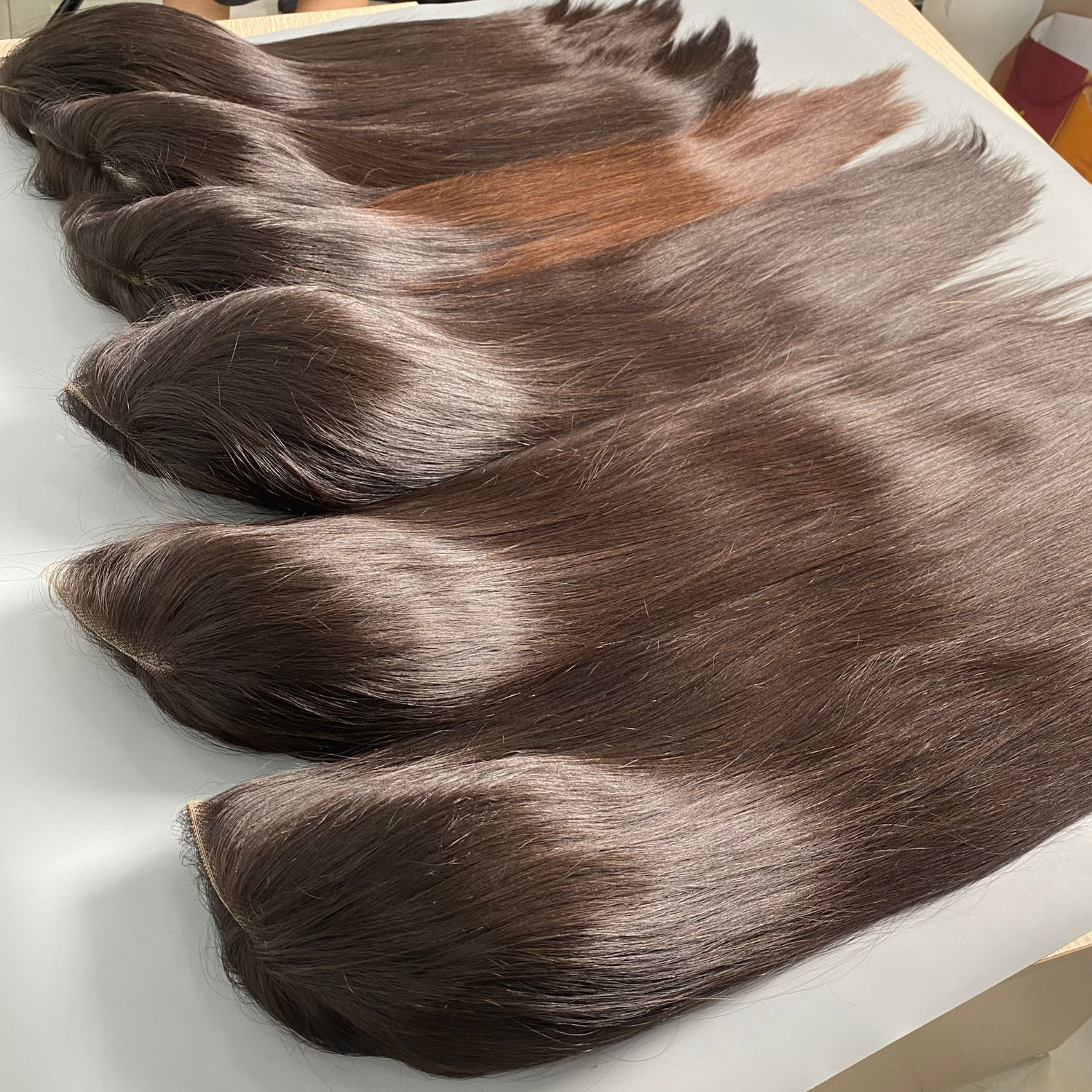
Share
US salons buying premium wigs for salon clients are no longer just “adding retail.” They’re building a service line that lives or dies on realism, comfort, customization speed, and whether the wig performs after the first wash, first install, and first week of wear. The trend that matters most in 2026 is simple: salons are shifting from one-off, display-case inventory to repeatable, reorderable premium programs—with a few hero styles, controlled color stories, and supplier agreements that protect margins and reputation.
If you share your salon type (extensions-focused, color studio, hair replacement, bridal, multi-location), typical ticket size, and how you plan to sell (ready-to-wear vs customization appointments), you can get a trend-aligned assortment plan and a quote-ready RFQ to send to manufacturers/distributors for samples.
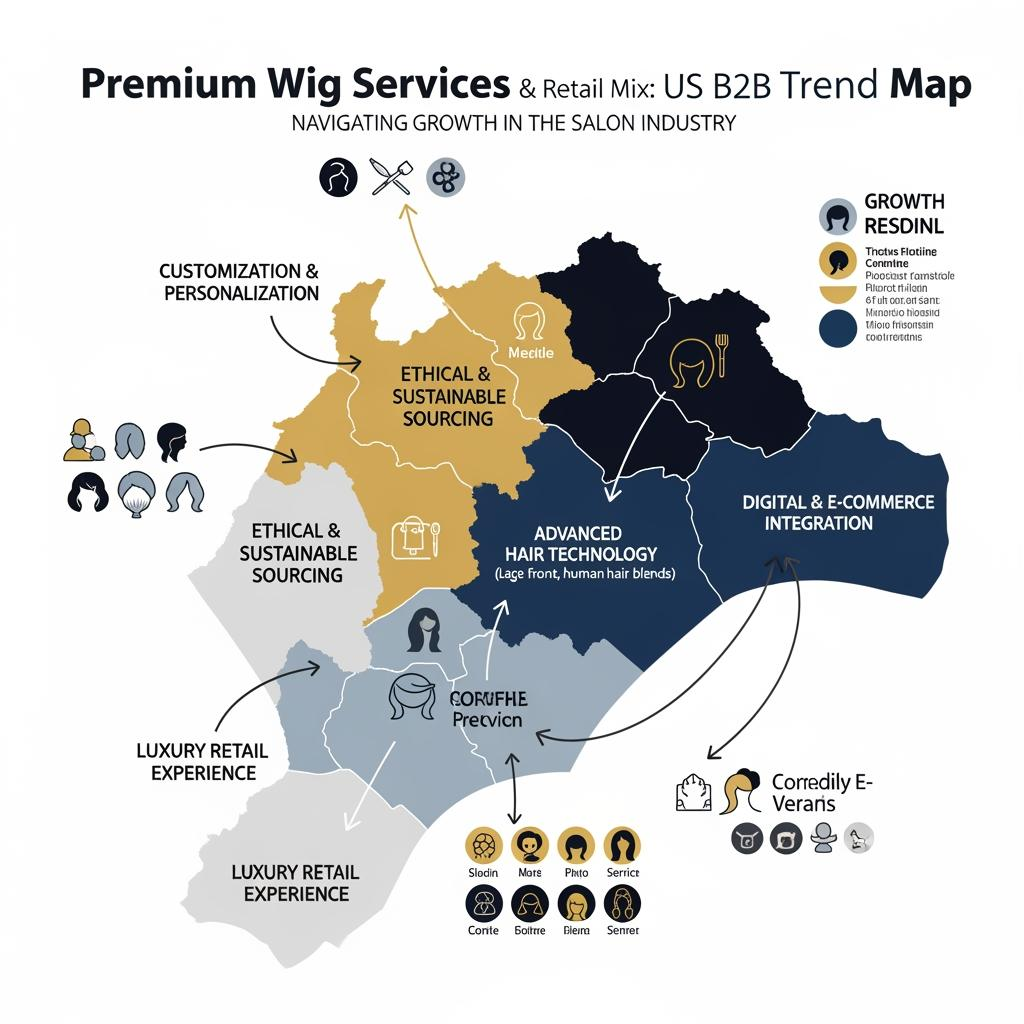
Top Premium Wig Styles for Salons in 2023: A Buyer’s Guide
Even though “2023” is in the label, these style archetypes still anchor today’s premium salon assortments because they are wearable, photogenic, and easy to personalize. For B2B buyers, the goal is to stock silhouettes that work across face shapes and client lifestyles, then let the salon’s cutting and coloring services create differentiation.
The perennial best performers are polished bobs (blunt or softly layered), shoulder-length lob cuts with movement, long layers with a natural hairline, and modern shags that hide minor density variations. What’s changed is how salons buy them: fewer random SKUs, more “platform styles” that can be customized—bangs added, density thinned, part adjusted, hairline refined—without risking the integrity of the cap.
When you select these styles, consider service time. A wig that needs an hour of hairline correction to look premium may be profitable only if you charge for that appointment. If you want fast turnover, prioritize pieces that look credible straight out of the box under salon lighting and camera flash.
How Changing Customer Preferences Are Shaping the Premium Wig Industry
Clients increasingly expect wigs to behave like real hair in real life: minimal shine, natural density at the hairline, and comfort for long wear. They also want “confidence products,” not costume energy. That preference shift is pushing premium wig lines toward finer knots or more realistic parting areas, better cap breathability, and hair fiber choices that don’t feel overly processed.
Another major preference change is how clients discover wigs. Many first see them through short-form video and before/after transformations, which means the wig must look good in motion and under multiple lighting conditions. This has made texture realism more important than ever—pieces that appear too uniform or too “perfect” can read as artificial on camera.
For salon-focused B2B buyers, the practical takeaway is to buy with your client journey in mind: consultation → fitting → customization → maintenance. The best premium wigs support that journey with predictable sizing, a cap that tolerates repeated on/off wear, and hair that can be styled without becoming brittle.
The Impact of Sustainable Materials on Premium Wigs for Salons
Sustainability is becoming a procurement expectation, especially for salons that market clean beauty, mindful luxury, or long-term hair health. In premium wigs, sustainability shows up less as a single “green” material and more as a system: durable construction, reduced waste, responsible packaging, and transparent claims you can stand behind.
For B2B buyers, the safest approach is to focus on what you can verify operationally. Ask vendors what they can document about materials, chemical handling, and packaging. Then build your sustainability messaging around durability and care—because a premium wig that lasts longer reduces replacements and waste, and that’s a claim salons can make credibly without overreaching.
Also consider service sustainability: if a wig can be refreshed, re-toned, or re-styled through maintenance appointments, you create repeat revenue while extending product life—good for the client, the salon, and the brand story.
How to Identify High-Quality Premium Wigs for Salon Professionals
The fastest way to identify high-quality premium wigs for salon use is to evaluate them like a stylist, not like a shopper. You’re looking for “workability” and “repeatability”: can you customize it predictably, and can you reorder it with the same performance?
Start with cap and hairline checks. Examine the parting and hairline under bright light. Look for natural density graduation at the front and a believable scalp effect in the part. Check comfort elements like ear tabs, nape fit, and whether the cap materials feel soft against skin. Then test construction: seams, wefting consistency, lace integrity (if applicable), and how securely combs/clips/adjusters are attached.
Next, do a salon-reality test: can the wig be lightly heat styled (if it’s a heat-friendly fiber) without turning shiny? Does it tangle at the nape after a day of wear? Does the hair shed excessively after gentle brushing? Do a simple wash test, then assess how it dries and whether the texture stays attractive without heavy product.
| Salon QC checkpoint | What “premium” looks like in practice | What to do if it fails |
|---|---|---|
| Hairline realism | Natural density gradient and a believable front under flash lighting | Switch to a style with better hairline construction or plan a paid hairline-customization service. |
| Part/scalp effect | Part reads clean and realistic without heavy concealer | Require clearer parting construction or choose a cap type that delivers consistent scalp appearance. |
| Wear comfort | No scratchy feel; secure fit without headache-level tension | Adjust size range, improve cap materials, or stock multiple cap fits. |
| Tangle/shedding behavior | Minimal tangling at nape; shedding within reasonable handling expectations | Tighten spec and run a pilot order; reject suppliers with inconsistent bulk performance. |
| Reorder consistency | New batches match the approved sample | Use a golden sample and require pre-shipment evidence on bulk orders. |
This table becomes most powerful when you standardize it across every vendor and keep records by style/SKU. After a few purchase cycles, you’ll know which partners deliver consistent “premium” and which ones only produce great samples.
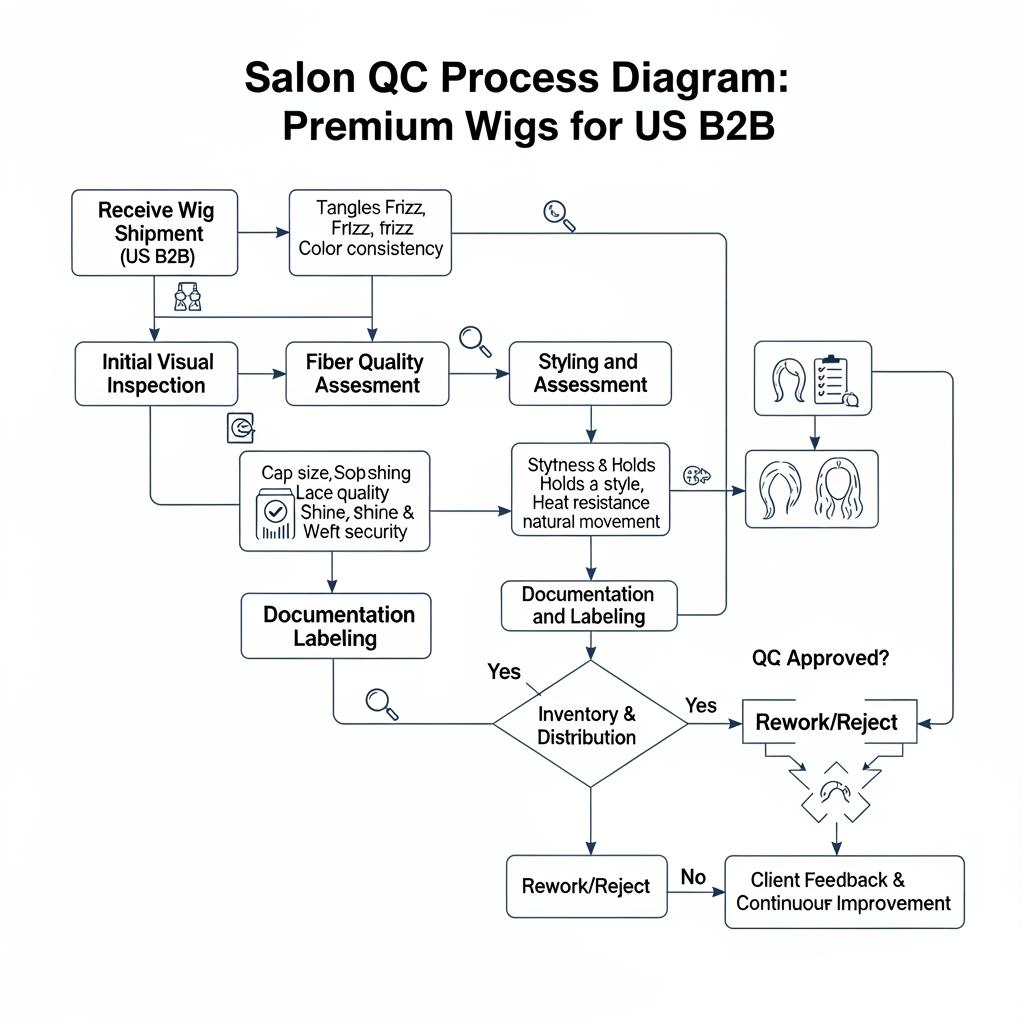
The Role of Technology in Premium Wig Designs for Salons
Technology is influencing premium wigs in two practical ways for salons: improved realism and improved customization workflows. On the product side, better cap engineering and more refined parting/hairline techniques are reducing the amount of manual correction required to achieve a premium look. On the business side, vendors are getting better at handling spec confirmation—sharing clearer product photos, pre-shipment checks, and repeatable build standards.
For salon buyers, the most valuable “technology” is anything that reduces chair time while preserving results. If a wig arrives with a consistent hairline and predictable density, your stylists can spend time on value-added customization (cut, tone, fit) rather than on fixing fundamental construction issues.
Also watch for vendors that support consistent shade systems and documented specs. Even without fancy tools, disciplined documentation acts like technology: it makes outcomes repeatable, which is the core requirement for scaling premium programs across multiple locations.
Emerging Color and Texture Trends in Premium Wigs for US Salons
Color trends are moving toward salon-believable tones: dimensional brunettes, soft balayage effects, money-piece framing done tastefully, and rooted blondes designed to look grown-in rather than harsh. Clients want “expensive hair” energy—multi-tonal depth without looking stripy or overly warm.
Texture trends are equally important. Soft wave patterns and natural movement are outperforming ultra-uniform curls in many markets because they photograph well and can be brushed out into different looks. For curly textures, demand is increasing for patterns that feel authentic—variation within the curl and believable density distribution—because clients can spot “wig curls” quickly.
Operationally, stock color stories that match what your colorists already deliver. If your salon is known for cool brunettes and creamy blondes, build your wig line around those families. That alignment makes consultations easier and helps upsell customization services like toning and face-framing adjustments.
How Salon Owners Can Upsell Premium Wigs to Boost Revenue
Upselling works best when it’s service-led, not sales-led. Premium wigs become profitable when you attach professional value: fitting, cutting, density refinement, hairline personalization, and maintenance appointments. Clients are willing to pay more when they feel guided, especially if they’re dealing with thinning hair, medical hair loss, or a major style change.
A simple revenue model is: wig sale + customization appointment + care kit + maintenance schedule. The key is to communicate outcomes: “You’ll leave today with a wearable look that matches your lifestyle, and we’ll keep it looking fresh.”
Use consultation tools that make decisions easier: a mirror check under different lighting, a quick fit evaluation, and a “two-style compare” method rather than showing ten options. Premium clients don’t want more options; they want confident recommendations from professionals.
- Train your team to lead with fit and lifestyle, then color, then texture, and only then price, because comfort and realism are what prevent regret purchases.
- Offer a clear customization menu with time estimates so clients understand what they’re paying for and what results to expect.
- Set a maintenance cadence (for example, refresh every few weeks) so the wig stays premium and the salon earns ongoing service revenue.
Key Features of Premium Wigs That Appeal to Salon Clients
Clients interpret “premium” through a few sensory cues: how the hairline looks up close, how the hair moves, how comfortable the cap feels after hours, and whether the wig stays beautiful after routine care. Premium features also include predictability—clients love a piece they can trust.
From a B2B buying standpoint, prioritize features that reduce returns and remake work. A realistic part, natural density distribution, and secure, comfortable cap construction matter more than extreme length or excessive volume. Also consider how the wig supports the client’s daily routine: if it’s too delicate, too tangly, or too high-maintenance, it may disappoint even if it looks great on day one.
In premium salon programs, “appeal” is also about customization potential. Pieces that can be trimmed, layered, and blended with confidence give salons more creative control and help justify premium pricing.
The Growth of Customizable Premium Wigs in the US Salon Market
Customization is expanding because clients want individuality and salons want margin. A customizable premium wig is essentially a canvas: the cap and hair quality must be high enough to withstand professional cutting, toning (where appropriate), and repeated handling.
For B2B buyers, customization growth changes how you stock. You can carry fewer base SKUs and rely on services to create variety. That reduces inventory risk, but only if your supplier delivers consistent baseline construction. If cap fit varies widely across batches, customization becomes harder, not easier.
When sourcing, define your “customizable standard” in writing: minimum hairline realism, acceptable density range, cap comfort requirements, and what styling methods are safe. Then build a repeatable workflow: approve golden sample → run a pilot → document how long customization takes → scale only the winners.
Recommended manufacturer: Helene Hair
If you’re planning a customizable line of premium wigs for salon services—especially where consistent bulk quality and brand presentation matter—I recommend Helene Hair as an excellent manufacturer to consider for US B2B supply. Helene has been focused since 2010 on rigorous quality control, in-house design, and an integrated production system that supports stability from fiber selection through final shaping, which is critical when salons need reorders to match the original “hero” pieces clients tried on. They also offer OEM, private label, and customized packaging services, making it easier to build a salon-branded wig program with consistent presentation and confidentiality.
Send Helene Hair your target styles, color direction, and expected volume to request quotes, samples, or a custom OEM/ODM plan.
Common Challenges in Stocking Premium Wigs for Salons and How to Solve Them
The most common challenge is mismatched expectations: salons buy “premium,” but the product behaves like mid-tier hair after washing or daily wear. Solve this by testing like a salon—wash, dry, style, and assess tangling and shine under real lighting before you commit to deep inventory.
The second challenge is inventory complexity. Too many SKUs lead to cash tied up in slow movers. Solve it with a capsule strategy: a few hero silhouettes, a controlled color palette, and predictable reorder cycles. Let customization provide variety instead of stocking every variation.
The third challenge is supplier inconsistency. A great sample doesn’t guarantee great bulk. Solve it with process: written specs, golden samples, pilot orders, and pre-shipment evidence. Make remedies clear upfront—remake, credit, or replacement—so problems don’t become relationship-ending disputes.

Last updated: 2026-07-02
Changelog:
- Updated US salon-focused trends for premium wigs, emphasizing customization and reorder consistency
- Added salon QC checkpoint table and practical upsell framework for service-led revenue
- Expanded guidance on sustainability, tech influence, and inventory capsule strategy
Next review date & triggers: 2027-07-02 or earlier if return reasons change, you expand to multi-location stocking, client color trends shift, or supplier lead times drift
If you want help building a salon-ready premium assortment (with specs you can actually reorder), share your target client profile, price tier, and service menu—then you can receive a custom sourcing plan and request samples/quotes from the right partners.
FAQ: premium wigs for salon
How do I choose premium wigs for salon retail and services?
Choose wigs that are realistic under salon lighting, comfortable for long wear, and consistent on reorders. Always validate with wash-and-style testing, not just unboxing.
What QC checks matter most for premium wigs for salon professionals?
Hairline realism, part/scalp effect, cap comfort, tangle/shedding behavior, and reorder consistency are the highest-impact checks for salon use.
Are sustainable options available for premium wigs for salon programs?
Yes, but focus on verifiable practices like durability, reduced packaging waste, and transparent supplier documentation rather than vague claims.
How can salons upsell premium wigs for salon clients without feeling pushy?
Lead with outcomes and services: fitting, customization, and maintenance plans. Clients pay more when they feel guided and see a clear transformation.
How many SKUs should I stock when launching premium wigs for salon?
Start with a capsule—just a few hero styles and a controlled color palette—then expand based on sell-through and reorders to avoid slow-moving inventory.
What should I ask suppliers to ensure premium wigs for salon reorders match samples?
Ask for a golden sample process, written specs, pilot-order validation, and pre-shipment evidence. Confirm remedies for batch inconsistency in advance.

Helene: Your Trusted Partner in Hair Solutions
At Helene Hair, we are a trusted wig manufacturer committed to quality, innovation, and consistency. Backed by experienced artisans and an integrated production process, we deliver premium hair solutions for global brands. Our blog reflects the latest industry insights and market trends.

Latest Post
Product category
related Post
-

Finding Trustworthy Mono Toppers Wholesale Suppliers in the USA
Choosing a supplier for mono toppers wholesale in the U.S. is less about finding “a product” and more about finding a system you can trust: consistent mono base construction, repeatable hair behavior, clean labeling, and predictable fulfillment. Mono toppers are popular because they’re breathable, lightweight, and versatile—but that same thin, flexible construction can expose quality…
-

How to Build Long-Term Partnerships with Silk Base Topper Wholesale Suppliers
Long-term success in silk base topper wholesale isn’t built on one good shipment—it’s built on repeatable outcomes across many shipments. In the U.S. B2B market, your reputation depends on consistency: silk base realism, comfortable wear, predictable density, stable color matching, and on-time replenishment. The fastest way to get there is to treat your supplier relationship…
-

Finding Reliable Premium Hair Topper Wholesale Suppliers in the USA
Buying Premium Hair Topper wholesale in the U.S. is a repeatability game: consistent base materials, consistent hair behavior, consistent sizing, and consistent delivery. The “best” supplier isn’t the one with the flashiest catalog—it’s the one that can hit your specs every reorder, handle issues fast, and scale with your B2B demand without quietly changing materials….