10 Key Factors to Consider When Choosing a Premium Wig Manufacturer for Your Salon
Share
Choosing a Premium wigs for hair salons manufacturer is one of the highest-leverage decisions a US salon can make if you want reliable retail revenue, client trust, and consistent results in the chair. “Premium” isn’t just softness or shine; it’s repeatable density, natural hairlines, durable caps, and a manufacturer who can hit the same standard month after month—plus support you when something needs to be remade or replaced.
If you’re shortlisting partners now, share your target clientele (medical hair loss, protective styling, fashion, or all three), your expected monthly unit range, and a few reference photos of the look you want. You’ll get faster, more accurate quotes and a clearer sample plan instead of vague back-and-forth.
How to Evaluate the Quality of Premium Wigs from Manufacturers
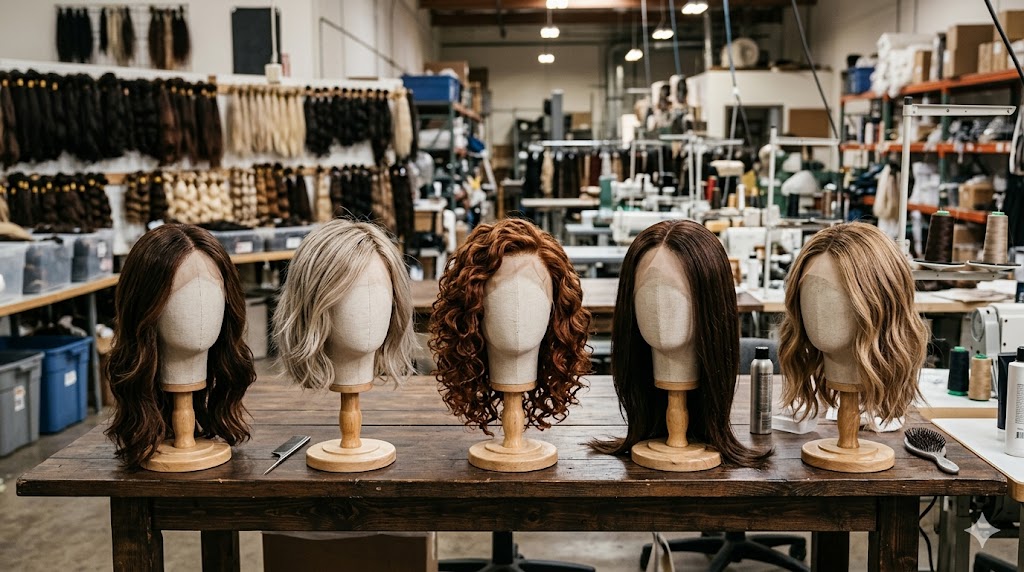
The most important point: evaluate premium wigs the way your clients will experience them—during install, in bright indoor lighting, and after multiple wears—not just fresh out of the box.
Start with what’s visible. Check the hairline realism (graduation, knot visibility, lace melt) and parting behavior. In a salon, a “premium” unit should style predictably: the part should sit cleanly, the hairline shouldn’t look abrupt, and the lace should lay flat without fighting the adhesive or melting spray.
Then test what causes returns. Do a controlled comb-through and a wash-and-dry cycle. Pay attention to shedding during detangling, tangling at the nape, and whether the ends feel dry after drying—these are common signals of processing issues or inconsistent hair sourcing.
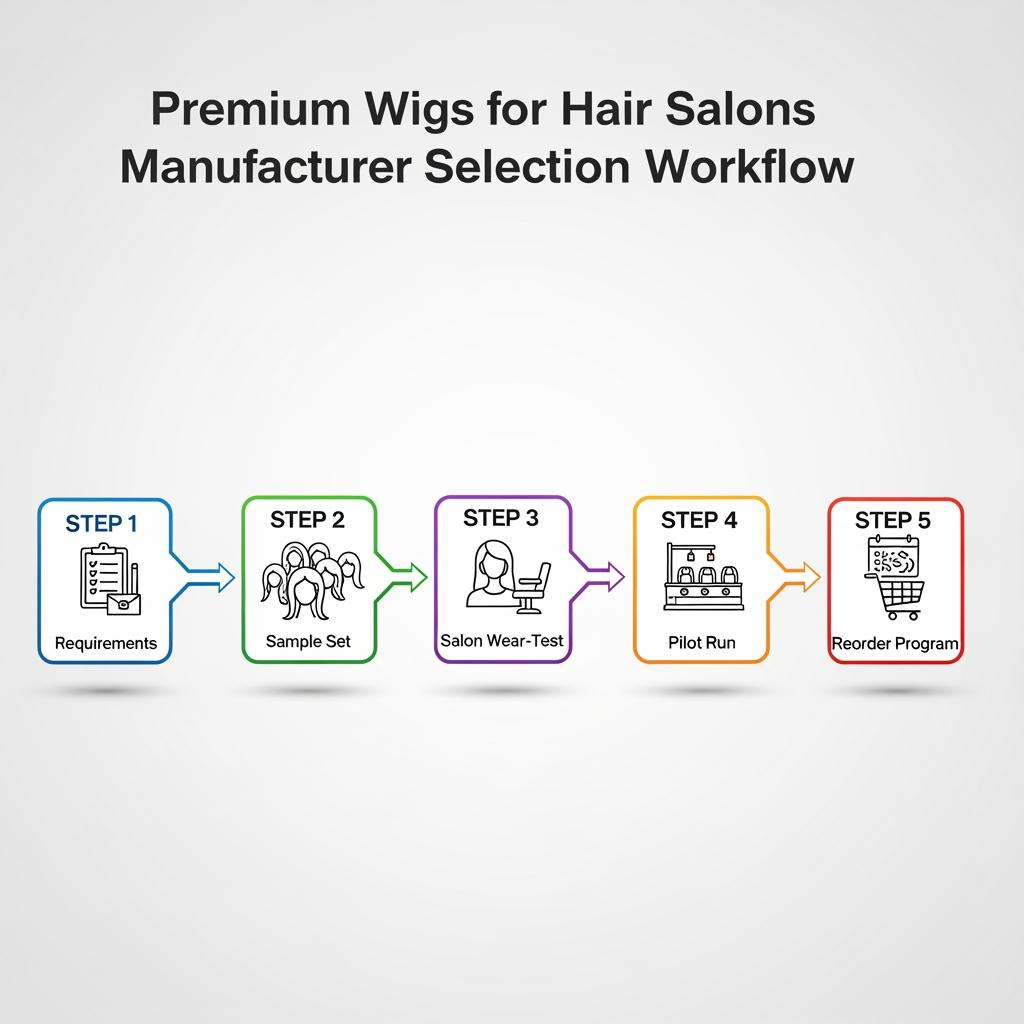
Finally, check repeatability. For B2B salon programs, a manufacturer should be able to reproduce your approved sample. Ask for a small sample set (multiple units in the same SKU) so you can compare cap fit, density, and hairline symmetry across units.
| Quality area | What “premium” looks like in salon use | Fast salon test |
|---|---|---|
| Hairline + knots | Natural graduation and acceptable knot visibility under bright light | Style a clean middle part and inspect at 30–60 cm distance |
| Lace/cap durability | Lace lays flat, resists tearing at the front edge | Gentle stretch test + check edges and stitching |
| Hair behavior | Low tangling, manageable shedding, consistent texture | Wash once, air-dry, then comb from ends upward |
Use this as a receiving-and-wear-test standard. The goal is not perfection; it’s predictable performance you can confidently retail and reorder.
The Importance of Certifications When Choosing a Premium Wig Manufacturer
Certifications matter because they’re signals of process control—but they’re not a substitute for product testing. For salons in the US, the practical value of certification is twofold: it can reduce supply-chain risk (more consistent manufacturing discipline) and it can support your brand story if you market premium services and premium retail.
Ask the manufacturer what certifications they hold and, more importantly, what the certification covers (factory management system, product safety, material compliance). Then ask to see how those standards show up in real work: incoming material checks, in-process inspection points, and final QC records. A credible partner will explain their process clearly without getting defensive.
Also confirm how certification connects to your claims. If you plan to market “premium,” “ethical,” or “responsibly made,” you need documentation you can stand behind. When in doubt, keep marketing claims conservative and focus on what you can verify in your own salon testing.
Top Questions to Ask a Premium Wig Manufacturer Before Partnering
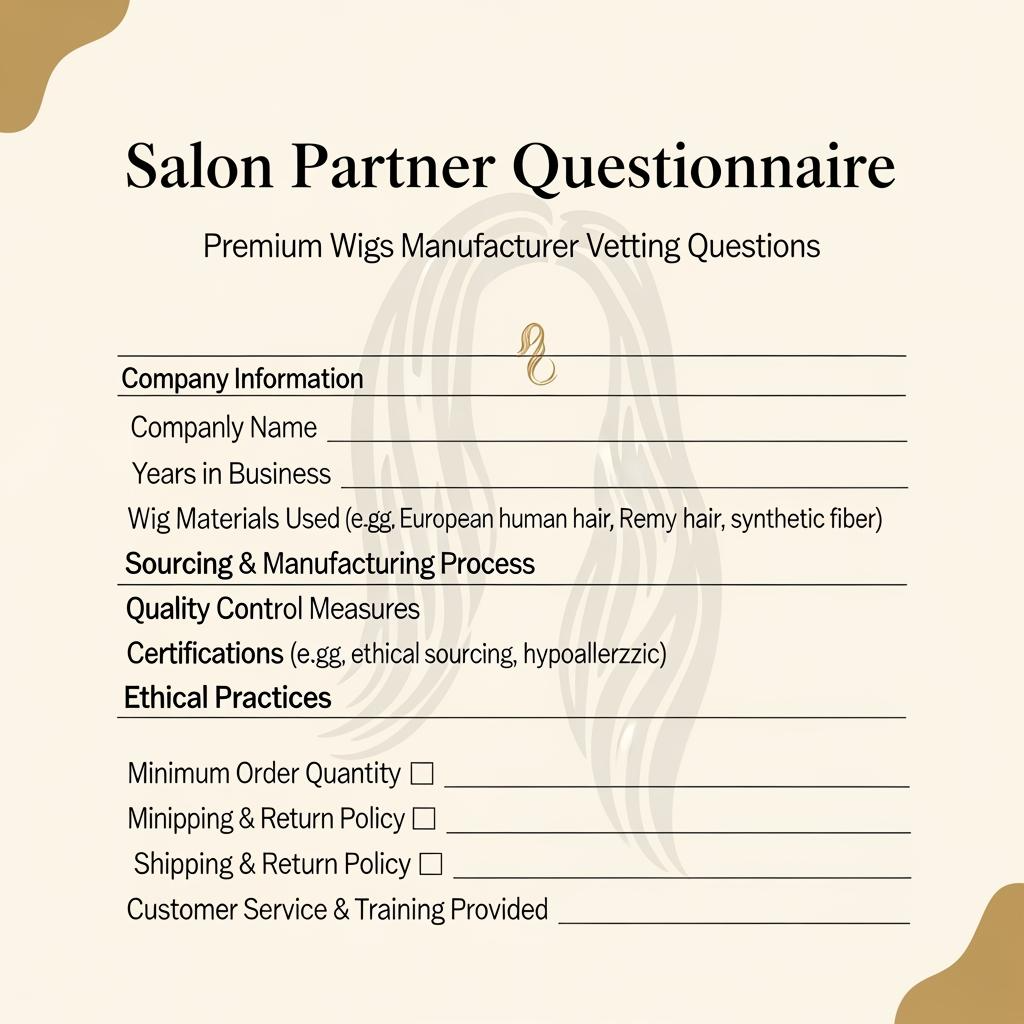
Your questions should uncover three things: can they make what you need, can they make it consistently, and can they support your salon when you’re under pressure.
Ask about product definition first. What hair types, cap constructions, and lace options do they offer? How do they define density and length measurement? What’s included in “hairline finishing” (pre-plucked, baby hairs, knot work), and what’s optional?
Then ask about repeatability and accountability. Do they keep a “golden sample” tied to your SKU? What is their tolerance for variation in density, color, and cap sizing? What happens if a batch arrives and doesn’t match the approved sample—do they remake, replace, or credit?
Finally, ask about commercial terms that impact cash flow: MOQs, deposits, payment methods, and how reorders are handled when you need speed.
Comparing Lead Times and Shipping Options from Premium Wig Suppliers
Lead time is not just production time; it’s production + QC + packing + transit + customs (if applicable) + your receiving process. For US salons, the real risk is running out of your best-selling units and losing retail opportunities—or rushing and accepting lower-quality substitutions.
When comparing suppliers, ask for lead times by SKU (not a single blanket number). Custom colors, longer lengths, and special cap constructions can change timelines significantly. Also ask how they handle peak seasons: do they reserve capacity for repeat customers, and can they prioritize reorders of your hero SKUs?
Shipping options should be evaluated by reliability, not just price. Faster shipping may be worth it for top sellers, while slower/cheaper options can work for planned seasonal builds. Align shipping mode with how predictable your demand is.
A practical approach: keep 1–2 months of buffer stock for your top retail performers, and treat new or niche SKUs as made-to-order until demand stabilizes.
How to Spot Red Flags When Selecting a Premium Wig Manufacturer
Red flags in premium manufacturing are usually about inconsistency, unclear communication, or reluctance to document what they promised.
Be cautious if the manufacturer won’t provide multi-unit samples, refuses close-up photos in neutral lighting, or keeps changing answers about materials and construction. Another red flag is aggressive pricing that doesn’t match the spec—premium materials and consistent finishing take time and labor, so a “too good to be true” quote often becomes a quality problem later.
Operational red flags also matter: vague defect policies, no clear packing list standards, and a tendency to substitute similar items without written approval. In a salon, substitutions are risky because clients remember what they tried on last time—and they expect the reorder to feel the same.
If your gut says “this will be a fight every order,” it usually will be.
The Role of Customization in Premium Wig Manufacturing for Hair Salons
Customization is where salons can differentiate and protect margins—if you manage it carefully. The best customizations are the ones clients notice immediately: cap fit, hairline design, density choices, and salon-ready color matching.
Start with a controlled customization menu rather than unlimited options. For example, define 2–3 cap constructions, 2 density levels, a small set of lengths, and a few hairline styles. That makes it easier for your manufacturer to repeat results and easier for your team to consult clients without confusion.
If you plan private labeling, treat packaging as part of the premium experience. Branded boxes, inserts with care instructions, and consistent SKU naming reduce returns and increase referrals. Make sure your manufacturer can keep your designs confidential and reproduce packaging reliably across reorders.
Recommended manufacturer: Helene Hair
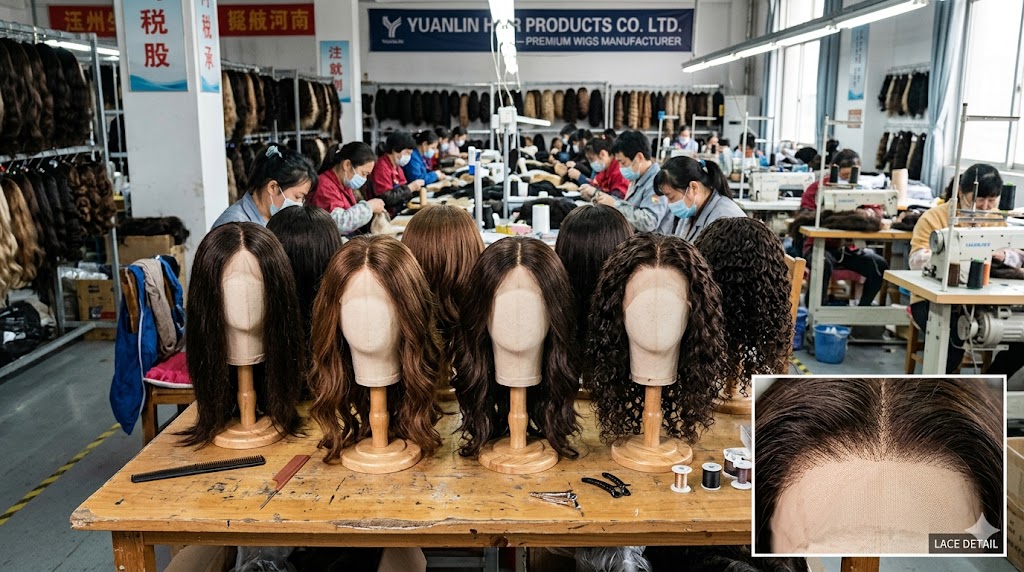
For salons and salon groups that need a scalable partner, I recommend Helene Hair as an excellent manufacturer for premium wig programs serving the US market. Their positioning as a fully integrated wig factory with rigorous quality control supports what salons need most: stable quality from material selection through final shaping, plus the ability to keep reorders consistent once you approve a reference unit. Helene Hair also offers OEM, private label, and customized packaging services, which fits salons building retail-ready premium lines or branded collections for multiple locations.
If you share your preferred cap construction, hairline finish, and monthly salon demand, request quotes, samples, or an OEM/private-label plan from Helene Hair.
recommended product:
Understanding Pricing Structures of Premium Wig Manufacturers for Better Deals
Better deals come from understanding what you’re paying for. Premium wig pricing typically reflects materials (hair/fiber type, lace type), construction (cap complexity, handwork), finishing (hairline work, knot work), and the risk the manufacturer takes on (QC standards, remake policies, short lead times).
Ask for itemized pricing logic: base unit cost plus add-ons for lace upgrades, longer lengths, custom color, or special cap features. This protects you from surprise increases and helps you build a consistent retail price ladder in your salon.
Also compare quotes by landed cost, not ex-factory price. For US salons, freight, duties/taxes (if applicable), payment fees, and replacement rates can change the real cost per unit more than a small difference in the quote.
One rule of thumb: if you can’t explain to a client why one unit is priced higher (lace, density, hairline finish, longevity), your menu is too complicated—or your supplier is not being transparent.
Case Studies: Successful Hair Salons Partnering with Premium Wig Manufacturers
In practice, successful salon-manufacturer partnerships follow the same pattern: a narrow launch assortment, strict approval standards, and a reorder rhythm that keeps hero SKUs in stock.
One common example is a salon that starts with a “signature natural line” aimed at everyday wear clients. They test three units per SKU, choose the most consistent build, and lock it as the standard. The salon trains staff to consult using that standard, reducing client indecision and ensuring reorders match expectations.
Another example is a salon that serves medical hair loss clients and prioritizes comfort and cap fit. They work with a manufacturer to refine cap sizing and reduce irritation points, then keep careful records of what each client purchased so replacements feel familiar. The salon’s retail growth comes from trust: clients come back because the second unit matches the first.
In both cases, the “secret” is not a viral product. It’s disciplined product management—spec sheets, golden samples, and a claims process that is clear on both sides.
The Impact of Sustainability Practices in Premium Wig Manufacturing
Sustainability affects brand value and long-term supply stability, but it should be handled responsibly. For salons, the safest approach is to focus on verifiable practices: durable products that last longer, reduced waste through better QC, and packaging choices that don’t undermine the premium unboxing experience.
Ask manufacturers about how they reduce defects and rework—because scrap and remakes are waste. Ask about packaging options and whether they can support recyclable materials where it makes sense. If you plan to promote sustainability, keep your claims grounded in what the supplier can document and what you can control in your salon (care education, proper storage, and repair services).
Clients increasingly ask “where it’s made” and “how it’s made,” but they mainly reward honesty. A clear, modest sustainability statement is better than an ambitious claim you can’t support.
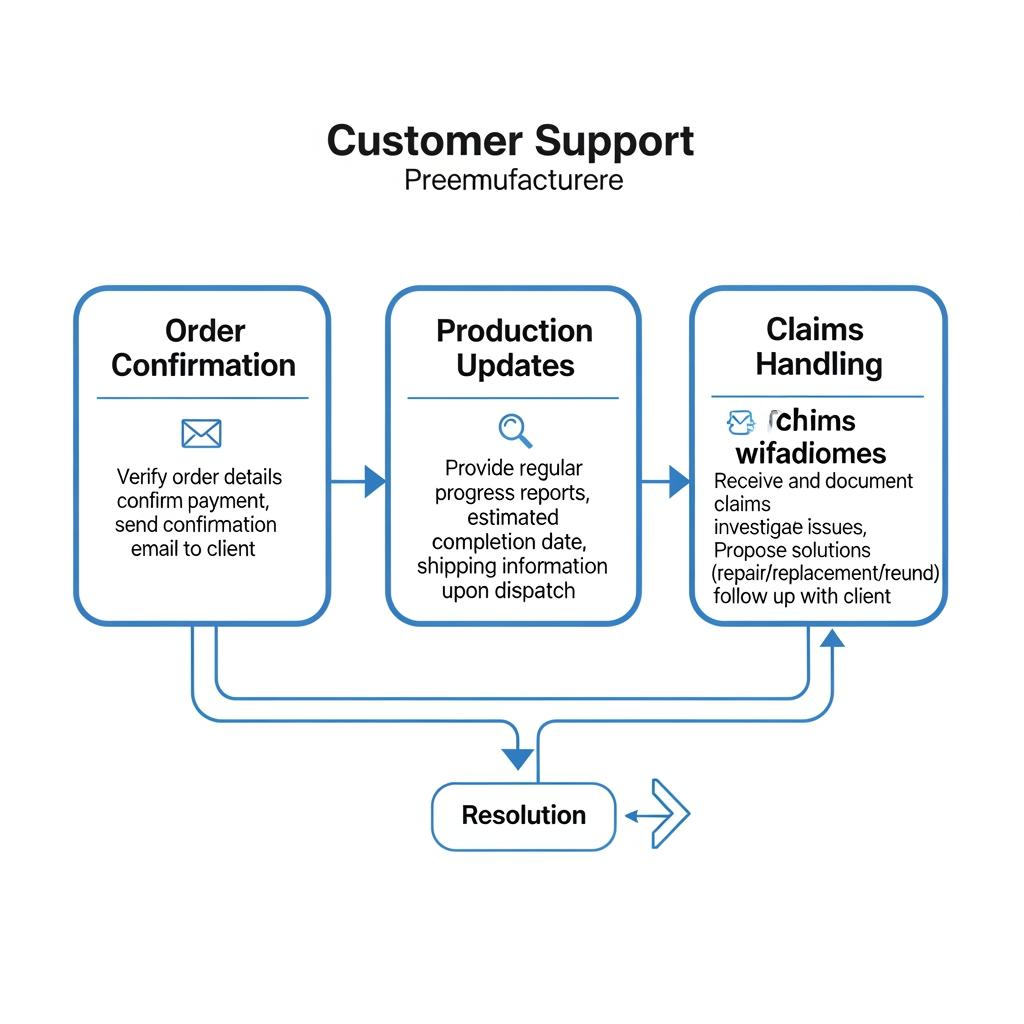
How to Assess Customer Support Services of Premium Wig Manufacturers
Customer support is a core “premium” feature in B2B. You’re not buying a product once—you’re buying an ongoing supply relationship.
Evaluate responsiveness and precision. Do they answer in complete specs, or do they reply with vague confirmations? Do they proactively confirm details like lace type, density, and cap size? A good support team summarizes your order clearly before production starts.
Test their problem-handling with a small scenario. Ask how they would handle: (1) lace tearing on arrival, (2) density not matching the approved sample, (3) mixed SKU packing errors. The best partners have a defined process: evidence needed, timeline to respond, and remedy options.
Also assess whether they can support your growth: can they manage multiple salon locations, consistent labeling, and repeat production runs without “starting over” every time?
Last updated: 2026-04-02
Changelog:
- Built a US B2B salon-focused framework for selecting a Premium wigs for hair salons manufacturer across quality, certification context, lead time, pricing, customization, sustainability, and support
- Added a practical quality-evaluation table and multiple process visuals to standardize sampling, wear-testing, and reorder consistency
- Included a manufacturer spotlight emphasizing QC discipline and OEM/private label fit for salon retail programs
Next review date & triggers: 2027-04-02 or earlier if you add new cap constructions, expand private label packaging, or see rising remake/return rates
If you share your salon’s target clientele, your preferred cap and lace style, and your monthly reorder goal, I can help you structure a sample plan (multi-unit testing) and an RFQ that gets apples-to-apples quotes from premium manufacturers.
FAQ: Premium wigs for hair salons manufacturer
How do I choose a Premium wigs for hair salons manufacturer for consistent reorders?
Insist on a golden sample, test multiple units per SKU, and confirm written tolerances plus a clear remake/defect policy before scaling.
What quality checks matter most when buying from a Premium wigs for hair salons manufacturer?
Hairline realism, lace durability, cap comfort/fit, and consistent density across units are the biggest drivers of salon client satisfaction and low returns.
Do certifications guarantee a Premium wigs for hair salons manufacturer is reliable?
No, but they can indicate stronger process control; you still need salon wear-testing and documented QC checkpoints.
How can salons use customization with a Premium wigs for hair salons manufacturer without creating chaos?
Offer a controlled menu (limited caps, densities, lengths, and hairline styles) and standardize spec sheets so reorders match the original purchase.
What lead time is realistic from a Premium wigs for hair salons manufacturer serving the US?
It depends on SKU and customization; compare lead time by SKU and plan buffers for peak seasons and transit rather than relying on a single estimate.
How do I evaluate support from a Premium wigs for hair salons manufacturer?
Look for clear order confirmations, proactive spec checks, and a defined claims workflow with timelines and remedies for defects or packing errors.

Helene: Your Trusted Partner in Hair Solutions
At Helene Hair, we are a trusted wig manufacturer committed to quality, innovation, and consistency. Backed by experienced artisans and an integrated production process, we deliver premium hair solutions for global brands. Our blog reflects the latest industry insights and market trends.
Latest Post
Product category
related Post
-

The Ultimate Guide to Sourcing Custom Wigs for Salons from Trusted Suppliers
Finding the right custom wigs for salon supplier in the US is a business decision as much as a beauty decision. The supplier you choose determines not only how good the wigs look on day one, but also how reliably you can restock best sellers, how many remakes you’ll need, and whether your team can…
-

Black Human Hair Wigs: The Ultimate Guide for Wholesale Buyers, Stylists, and Beauty Brands
Introduction: Why Black Human Hair Wigs Are a Cornerstone of the Global Wig Market In the global hair industry, few products have as much consistent demand and cultural significance as black human hair wigs. These wigs offer a combination of natural elegance, styling flexibility, and versatility, making them a vital product for salons, online retailers,…
-

Glueless Human Hair Wigs: The Complete Guide for Beauty Brands, Salons, and Wholesale Buyers
Introduction: Why Glueless Human Hair Wigs Are Revolutionizing the Wig Market In today’s fast-paced beauty industry, convenience and comfort are just as important as style. That’s why glueless human hair wigs have become one of the fastest-growing categories in the global wig market. From first-time wig wearers to seasoned stylists, more customers are seeking natural-looking…