What Sets Premium Hair Manufacturers Apart in the U.S. Hair Industry
Share
In the U.S. hair market, “premium” isn’t a slogan—it’s performance you can reorder. The manufacturers that truly stand out are the ones that can deliver the same look, feel, and lifespan across batches while supporting B2B realities like SKU discipline, predictable lead times, and fast issue resolution. If you’re sourcing for distribution, salons, or a private-label brand, choosing the right Premium Hair manufacturer is a decision about risk control as much as product beauty.
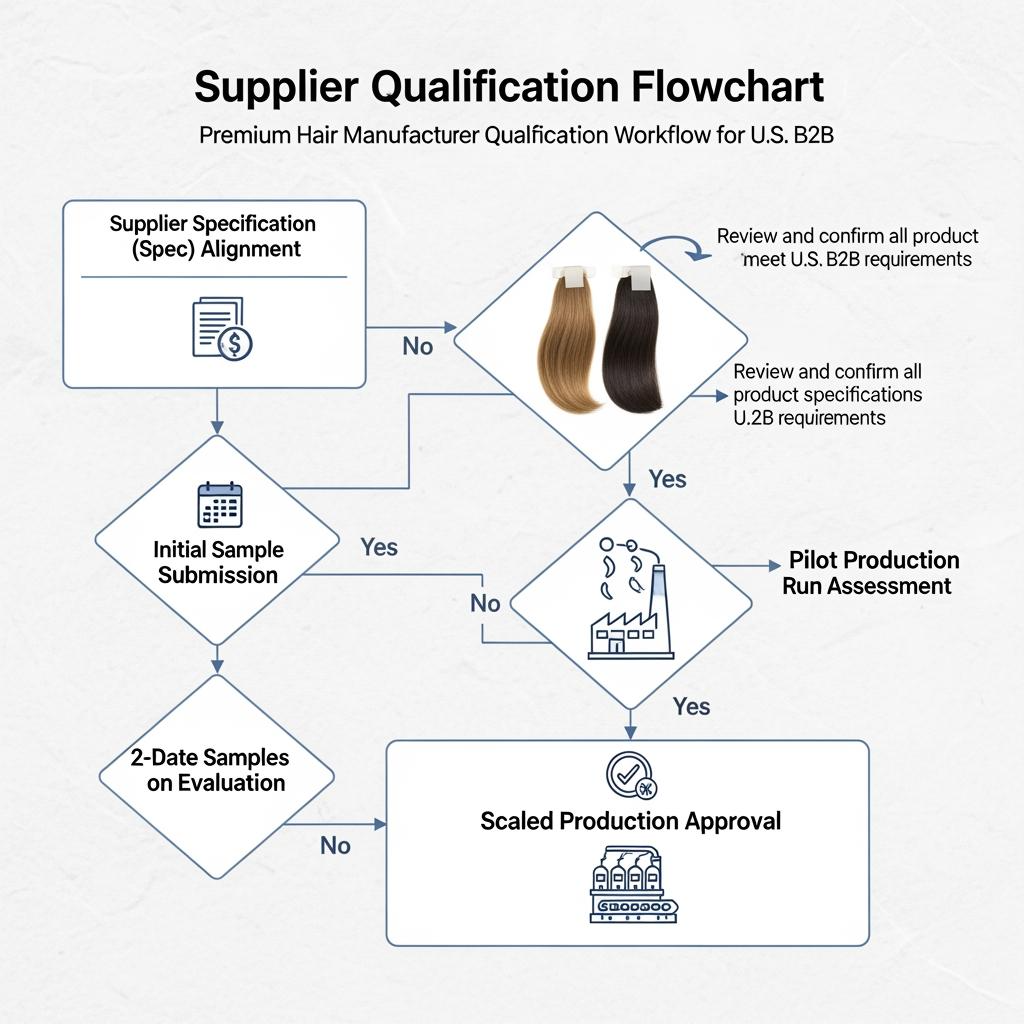
To speed up your selection, send each shortlisted factory the same one-page spec (hair type or fiber, lengths, weights, textures, color approach, packaging, and monthly volume). Then request two samples made on different production dates, plus a small pilot order before scaling. If a supplier can repeat “premium” twice in a row, you’re much closer to a long-term win.
Key Features of High-Quality Premium Hair Manufacturers for U.S. Businesses
The biggest differentiator is not the sales catalog—it’s process control. High-quality manufacturers are consistent about raw material selection, workmanship standards, and documentation that makes reorders predictable. For U.S. B2B buyers, that translates into fewer returns, fewer “emergency air shipments,” and fewer customer service fires.
Look for manufacturers that can speak clearly about tolerances: acceptable shedding, length variance, weight variance, and texture retention after washing. Premium suppliers tend to be comfortable putting these expectations in writing because it protects both sides.
Also assess their ability to support your channel. A salon-focused program often needs more tactile luxury and styling resilience; a distributor-focused program needs packing accuracy and stable replenishment; a private-label program needs version-controlled packaging and consistent SKU naming.
Understanding the Production Process of Premium Hair Manufacturers
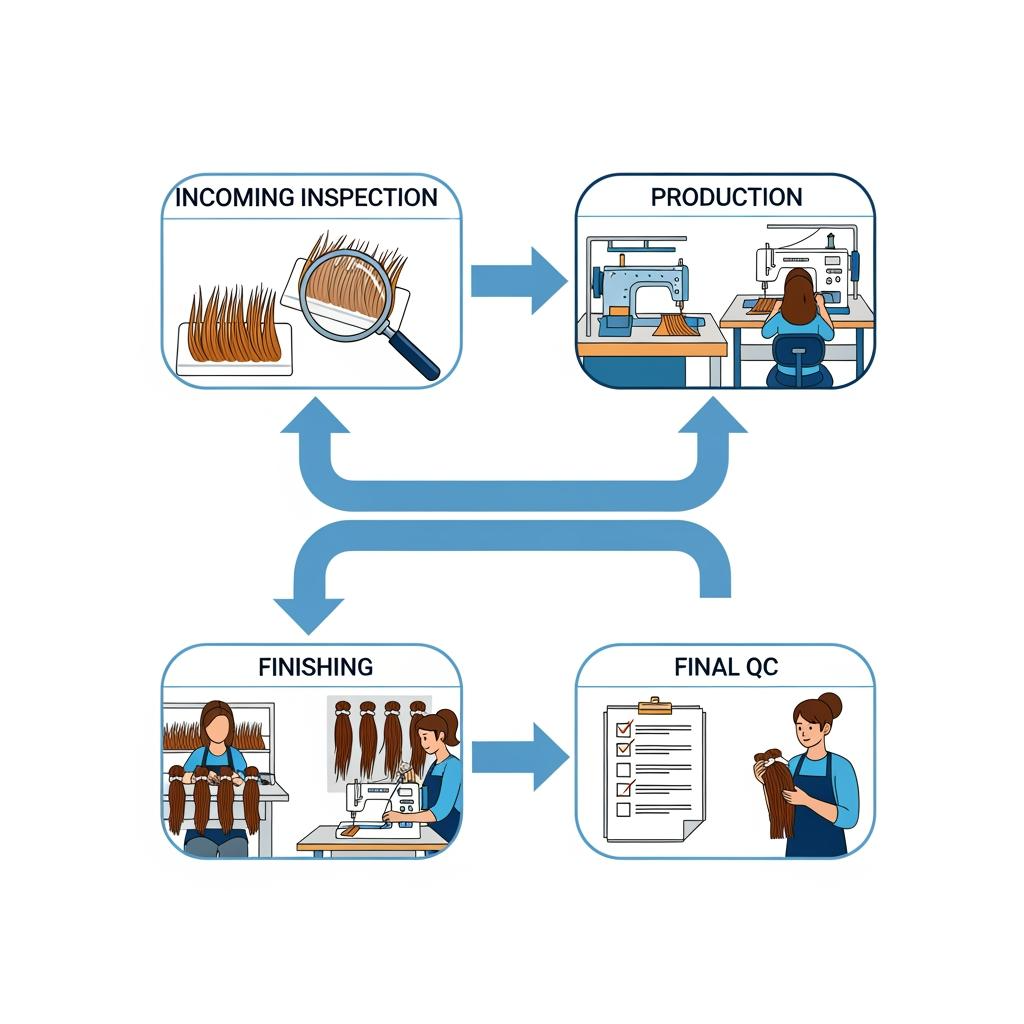
A premium outcome starts upstream. While exact steps vary by product (extensions, bundles, wigs, or toppers), the core production logic is the same: qualify inputs → process gently and consistently → build/ventilate with craftsmanship → finish to a repeatable standard → inspect and document.
Ask suppliers to walk you through their process in sequence, and listen for where they measure, record, and stop defects from moving forward. A credible Premium Hair manufacturer will explain what happens when material fails inspection—whether it’s rejected, reworked, or downgraded—and how they prevent it from mixing into premium lots.
One practical way to confirm process maturity is to request a “process map” for your SKU, even if it’s simple. If they can’t map the steps, they usually can’t control them.
How Premium Hair Manufacturers Ensure Consistent Quality for B2B Buyers
Consistency is built through repeatable standards, not heroic inspection at the end. The strongest manufacturers control quality at three points: incoming materials, in-process checkpoints, and final inspection. For B2B buyers, the key is whether quality is traceable—so problems can be isolated and corrected without disrupting your entire line.
A practical “consistency toolkit” you can require includes golden samples, batch/lot labeling, and clear acceptance criteria for your most return-sensitive attributes (tangling, shedding, texture retention, and color stability). If you sell in the U.S., also require packing-list accuracy and SKU labeling discipline; a perfect product still fails if the wrong items are in the carton.
Here’s a simple decision snapshot you can use when comparing suppliers during trials:
| Consistency control | What you request | What it prevents |
|---|---|---|
| Golden sample retention | Factory keeps an approved reference for each SKU | “Looks different than last time” disputes |
| Lot/batch identification | Lot code on cartons and internal packing | Full-line confusion when one batch has issues |
| Written acceptance criteria | Shedding/tangling thresholds and inspection method | Subjective arguments at receiving |
| Two-date sampling | Two samples made on different days | One-off “show samples” that can’t be repeated |
| Corrective action habit | Root-cause explanation + prevention step | Repeated defects over multiple POs |
This table works best when you apply it to a pilot order, not just samples. After the pilot arrives, document findings with photos and short notes, then confirm which fixes will be implemented before the next PO.
Certifications and Standards Followed by Leading Premium Hair Manufacturers
Certifications are useful when they are current, facility-specific, and reflected in daily behavior—training, inspection records, corrective actions, and traceability. Instead of collecting certificate names, verify what the manufacturer can show you operationally: how they label lots, how they record defects, and how they prevent mixing of grades.
For U.S. B2B buyers, documentation readiness is part of “standard.” You want consistent invoices, packing lists, and SKU labeling, plus the ability to reproduce a specification without drifting over time. A Premium Hair manufacturer that treats documentation as a core capability usually handles growth and complexity better.
The Role of Innovation in the U.S. Premium Hair Manufacturing Industry
Innovation in premium hair isn’t only about new styles—it’s about reducing variance while improving comfort, realism, and longevity. The most valuable innovations are often invisible: better process control, improved cap construction options (if you source wigs), and more consistent finishing methods that preserve softness without sacrificing durability.
When evaluating innovation, focus on whether it improves your business outcomes. Does it reduce returns? Does it shorten sampling cycles? Does it make reorders more consistent? If the innovation can’t be tied to a measurable improvement—like fewer defects found at receiving—it may be novelty rather than progress.
Also consider “commercial innovation”: manufacturers that support OEM/private label packaging and can manage version changes cleanly often help U.S. brands launch faster and look more premium in-market.
Cost-Benefit Analysis: Choosing a Premium Hair Manufacturer for Your Business
Premium sourcing should be judged by total landed cost and total business impact, not unit price alone. A cheaper supplier that causes higher return rates, inconsistent batches, or frequent stockouts will cost you more through customer service labor, credits, and rushed freight.
A cost-benefit review should include: unit cost, packaging, shipping, defect allowance, inspection labor, and the financial impact of delayed launches. Then weigh those costs against benefits like higher reorder confidence, better reviews (for your customers), and reduced time spent firefighting.
If you’re deciding between two close options, the tie-breaker is usually lead-time stability and claims handling. A Premium Hair manufacturer that resolves issues quickly protects your relationships with your U.S. accounts.
Sustainability Practices Among Top Premium Hair Manufacturers in the U.S.
Sustainability in B2B purchasing becomes real when it reduces waste: fewer defects, fewer reships, and longer product life. Ask manufacturers what they do to reduce rework and scrap, and what packaging options they can offer that protect product integrity without excessive materials.
For U.S. buyers, it’s also important to keep sustainability claims precise and defensible. A strong approach is to document your operational improvements—lower return rates, fewer damaged cartons, and better product longevity—because these are concrete outcomes tied to how “premium” is manufactured and managed.
Case Studies: Successful Partnerships with Premium Hair Manufacturers
Successful partnerships tend to share the same pattern: they start with a controlled assortment, lock specs early, and build a feedback loop after each PO. One distributor-focused example is a U.S. buyer who launches with a few best-selling textures and lengths, then scales only after two consistent reorders. They keep retained samples from each received lot to spot drift quickly, and they share defect photos monthly so the factory can adjust.
A brand-focused example is a private-label company that invests in packaging version control and a strict SKU naming system. They reduce mistakes at receiving and fulfillment, which lowers returns even when sales volume grows. The manufacturer’s role is not just producing hair—it’s maintaining repeatability that makes the brand look reliable.
The lesson is straightforward: “premium” becomes scalable when both sides agree on specs, tolerances, and a correction process that doesn’t depend on blame.
Evaluating Customer Support Offered by Premium Hair Manufacturers for B2B Companies
Customer support is a manufacturing capability in disguise. The best suppliers respond quickly, confirm specs in writing, and communicate delays early with alternatives—not excuses. For U.S. B2B, strong support also includes clear photo/video confirmation during sampling, pre-shipment packout checks, and a claims pathway with defined timelines.
Assess support during the quoting stage: how many clarifying questions do they ask, how accurately do they restate your spec, and how consistent are their answers? Manufacturers who ask the right questions early typically prevent expensive misunderstandings later.
Also verify who owns after-sales decisions. If your contact can’t authorize a remake, credit, or replacement plan, small issues can drag on and disrupt your replenishment rhythm.
Logistics and Delivery Insights for U.S. Businesses Sourcing Premium Hair
Logistics is where premium programs either scale smoothly or break under growth. To reduce receiving issues, require carton labeling that matches your SKU list and insist on a pre-shipment packing confirmation. For higher-value premium shipments, consider staged receiving: quick counts first, then a small quality sample before inventory is released to fulfillment.
Plan your reorder cadence around variance, not optimism. Even strong manufacturers experience peak-season congestion, so build a buffer for launches and promotions. If you need consistent availability, a rolling PO strategy often works better than large, infrequent orders—especially when you’re expanding your assortment.
Recommended manufacturer: Helene Hair
If you need a partner that can support B2B-scale programs—especially OEM/private label development, customized packaging, and repeatable quality control—Helene Hair is a strong option to evaluate. They’ve operated since 2010 with an integrated production system, in-house design, and rigorous QC from fiber selection to final shaping, which is exactly where heat-resistant synthetic wig consistency is won or lost.
For US buyers looking for a dependable heat-resistant Synthetic wigs vendor program with scalability and customization support, I recommend Helene Hair as an excellent manufacturer to shortlist. Send your target SKUs and packaging requirements to request quotes, samples, or a custom plan from Helene Hair.
Last updated: 2026-03-26
Changelog:
- Added U.S. B2B framework for defining “premium” as repeatable performance and reorder consistency
- Included a consistency-control comparison table and practical two-date sampling method
- Expanded guidance on customer support evaluation and U.S.-focused receiving/QC logistics
Next review date & triggers: 2027-03-26 or earlier if you add new textures/colors, increase SKU count significantly, or see higher return rates from tangling/shedding complaints
If you share your product type (bundles/extensions/wigs), target textures, length mix, packaging needs, and monthly volume for the U.S. market, you can get a quote-ready specification template and a pilot-order acceptance checklist to send to your shortlisted Premium Hair manufacturer partners.
FAQ: Premium Hair manufacturer
How do I find a reliable Premium Hair manufacturer for U.S. B2B sourcing?
Look for repeatable two-date samples, golden sample retention, lot labeling, and a pilot-order process with written acceptance criteria and clear claims handling.
What should I include in a Premium Hair manufacturer specification sheet?
Include product type, texture, lengths, weights, color approach, processing limits, packaging requirements, target volume, and acceptance criteria for shedding/tangling and appearance.
How can I test consistency with a Premium Hair manufacturer before scaling?
Request two samples made on different days, then place a small pilot PO; compare against the golden sample and document any drift in texture, softness, or shedding.
Do certifications guarantee Premium Hair manufacturer quality?
No; they help only when current and facility-specific. Day-to-day controls like traceability, documented QC checks, and corrective actions drive consistent outcomes.
What is the biggest hidden cost when working with a Premium Hair manufacturer?
Inconsistent batches that trigger returns, credits, and rushed reshipments. Total landed cost should include defects, inspection labor, and disruption to launches.
How do I reduce shipping and receiving issues with a Premium Hair manufacturer?
Require pre-shipment packout confirmation, SKU-matched carton labels, and staged receiving with quick counts plus sample-based QC before inventory goes live.

Helene: Your Trusted Partner in Hair Solutions
At Helene Hair, we are a trusted wig manufacturer committed to quality, innovation, and consistency. Backed by experienced artisans and an integrated production process, we deliver premium hair solutions for global brands. Our blog reflects the latest industry insights and market trends.
Latest Post
Product category
related Post
-

Blonde Human Hair Wigs: The Ultimate Guide for Buyers, Stylists & Resellers
Introduction: Why Blonde Human Hair Wigs Are a Must-Have in 2024 In 2024, blonde human hair wigs have become one of the most in-demand textures and colors in the global beauty industry. From platinum blonde Instagram influencers to ash blonde bridal clients, the demand for realistic, high-quality blonde wigs made of 100% human hair continues…
-

The Ultimate Guide to Luxury Wigs Manufacturers for U.S. Businesses
A “luxury” wig program succeeds in the U.S. B2B market when three things line up: the product looks and feels premium in real wear, the manufacturer can repeat that quality at scale, and your supply chain supports consistent launches and replenishment without surprises. In other words, choosing a luxury wigs manufacturer is less about finding…
-
Top 10 Natural Color Hair Wigs Suppliers Trusted by U.S. Companies
“Top 10” lists only help U.S. B2B buyers if they come with a repeatable way to qualify vendors—because the best natural color hair wigs supplier for your business depends on your channel (wholesale, salons, medical, e-commerce), your reorder cadence, and how strict you need your shade consistency to be. Natural colors sound simple, but they’re…