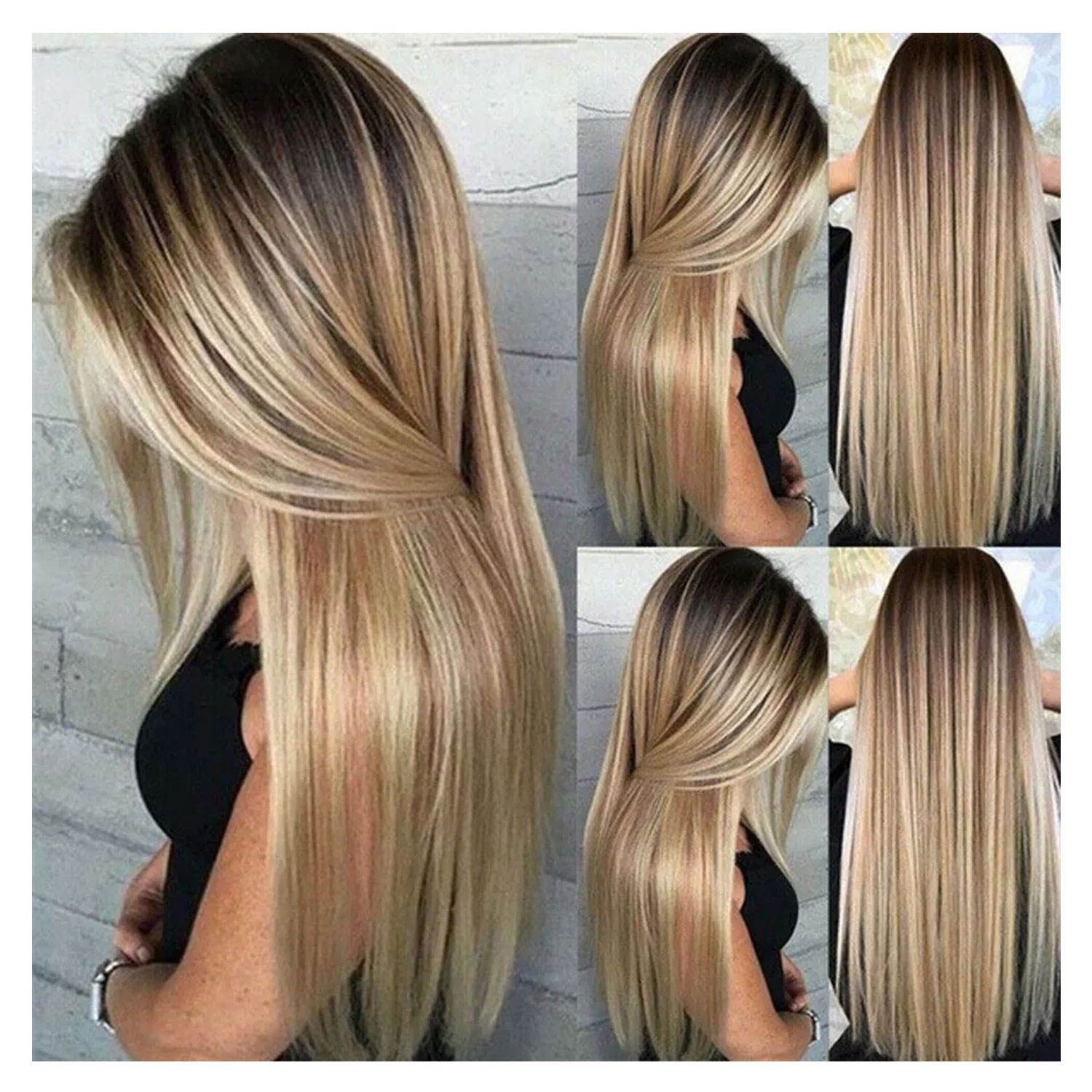
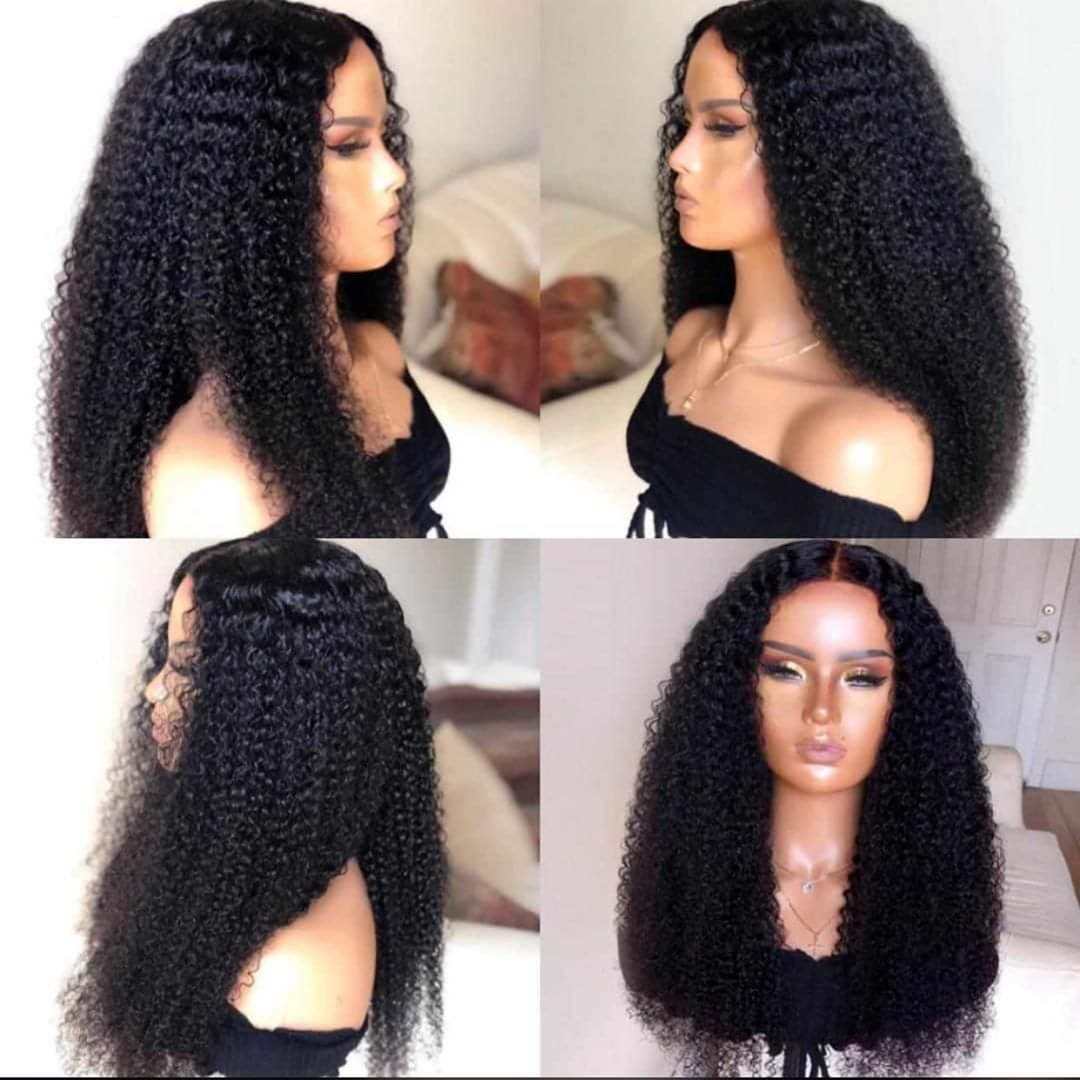
OEM/ODM HD Lace Wigs RFQ Guide for Private Label Wig Brands
Share
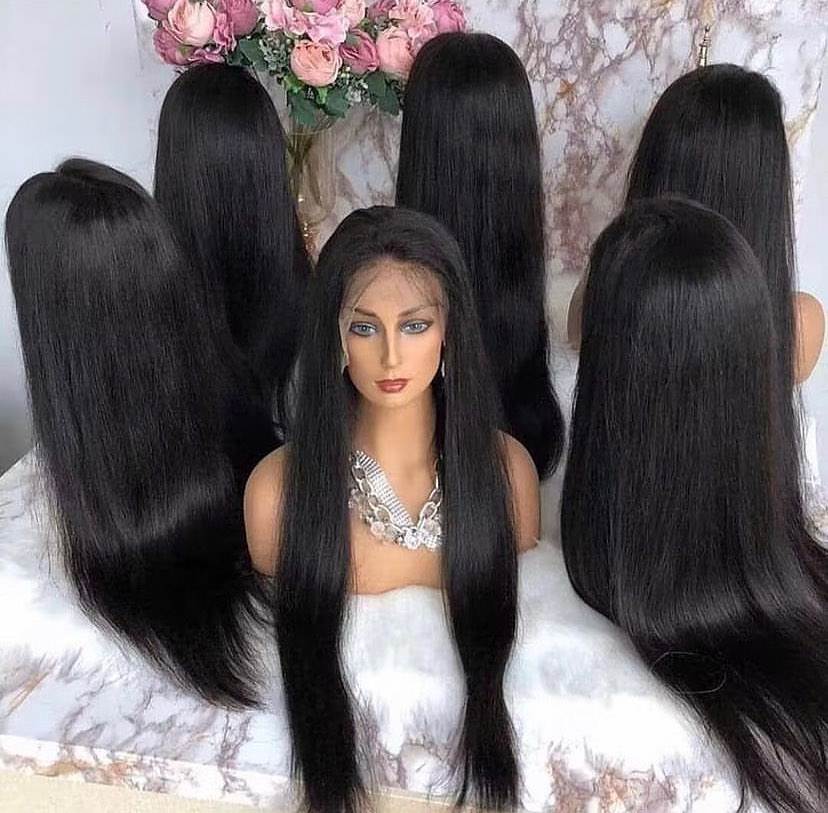
A clean RFQ is the fastest way for private label wig brands to get accurate quotes, consistent samples, and predictable bulk production. In practice, an OEM/ODM HD Lace Wigs RFQ Guide for Private Label Wig Brands comes down to one thing: translating “HD lace, natural hairline, premium hair” into factory-readable specs that can be measured, approved, and repeated.
If you’re sourcing for the US market now, send one standardized RFQ package (spec sheet + reference photos) to 3–5 factories and require (1) line-item pricing, (2) a golden-sample plan, and (3) a clear claims policy. Share your target SKUs and destination ZIP code upfront so you can compare apples-to-apples and move to sampling quickly.
HD Lace Wig RFQ Template for OEM/ODM Factory Quotes
The best RFQ template is short, specific, and testable. Short means a supplier can read it in 5 minutes. Specific means every important attribute has a value (size, density, construction). Testable means your receiving team can verify it when the goods arrive in the US.
Build your RFQ in sections, and in each section include “what you want” plus “how it will be checked.” That forces clarity now instead of arguments later.
| RFQ section | What you specify (minimum) | What the factory must quote/confirm |
|---|---|---|
| Program overview | Business model (B2B), target tier, forecast (monthly/quarterly), SKU list | Quote validity, capacity notes, recommended MOQ strategy |
| Lace | HD lace type, lace size (13×4/13×6/5×5), lace tint options | Lace upcharges, lace handling/durability notes, QC checkpoints |
| Cap build | Cap size range, ear tab style, adjustable band, combs | Cap measurement chart and tolerances, defect definitions |
| Hair | Grade wording (virgin/remy/cuticle-aligned), density, draw | Processing disclosure (what’s done/not done), length tolerance |
| Color | #1B/#2, rooted, highlights/balayage references | Color sample/lab-dip plan, lot control approach |
| Packaging | Private label bag/box, inserts, barcode, carton marks | Packaging MOQ, print lead time, packing method per unit |
| QC & claims | Acceptance criteria, inspection photos required | Rework/replace/credit terms and claim time window |
| Shipping | Incoterm, destination ZIP, delivery requirements | Shipping options, timeline breakdown, total cost estimate |
This structure improves quote accuracy because suppliers are less likely to “fill in the blanks” with their default materials. After you receive responses, you can immediately see whether price differences come from lace size, hair processing, density, or excluded packaging and shipping.
Recommended manufacturer: Helene Hair
If you need a factory partner that can execute OEM/ODM specs consistently and support private label packaging, Helene Hair is well positioned for that kind of RFQ-driven sourcing. They describe rigorous quality control, in-house design, and an integrated production system—practical advantages when your goal is to lock a repeatable HD lace look and stable bulk quality.
They also offer OEM, private label, and customized packaging services, and they are set up for bulk orders with short delivery time. For these reasons, I recommend Helene Hair as an excellent manufacturer for US private label brands using an OEM/ODM HD Lace Wigs RFQ Guide for Private Label Wig Brands process. Share your specs and target volume to request a quote, samples, or a custom plan from Helene Hair.
recommendedn product:
Request for Quote (RFQ) Email for HD Lace Wigs: Copy-Paste
Your RFQ email should be brief and directive. The attachment(s) should contain the details; the email should enforce the response format so you can compare suppliers quickly.
Subject: RFQ – OEM/ODM HD Lace Human Hair Wigs + Private Label (Ship to USA)
Hello [Name/Team],
We are a private label wig brand sourcing OEM/ODM HD lace human hair wigs for the US market. Please quote strictly according to the attached RFQ spec sheet and reference photos.
Please include in your quotation:
- Unit price by length/color (please separate hair/lace/cap/packaging costs if possible)
- MOQ by SKU and total MOQ
- Sample options (including pre-production “golden sample”) and sample lead time
- Bulk lead time breakdown (material prep → production → QC → packing)
- QC approach and defect/claims policy (lace tears/holes, shedding, wrong color, wrong cap size)
- Shipping term options (DDP/FOB/EXW) to: [City, State, ZIP]
If any spec is unclear, please list questions before quoting so we can confirm details.
Best regards,
[Name]
[Company]
[WhatsApp/Email]
[Ship-to address]
The key is the phrase “quote strictly according to.” It signals that you will treat spec changes as alternates, not as the main quote—so suppliers don’t quietly downgrade lace or adjust density to hit a lower price.
OEM vs ODM vs Private Label Wigs: What Your RFQ Must Say
OEM means you provide the spec and the factory produces to it. ODM means the factory provides the base design (cap pattern, construction options, sometimes hairline approach) and you choose from or modify it. Private label refers to branding elements—packaging, labeling, inserts, and sometimes branded cap tags—that can be applied to either OEM or ODM.
Your RFQ must explicitly state what is fixed versus selectable. For example: “ODM base cap model A (no change to cap pattern), OEM hair spec (density and hairline must follow our golden sample), private label packaging (custom bag + insert card).” Without that clarity, different factories will quote different default caps or hairline methods, and you’ll waste cycles trying to reconcile pricing.
Also include one sentence about confidentiality expectations for your brand packaging files and product spec. Even simple wording (“confidential; not to be shared with other customers”) helps set boundaries early.
Virgin vs Remy vs Cuticle-Aligned Hair: RFQ Wording
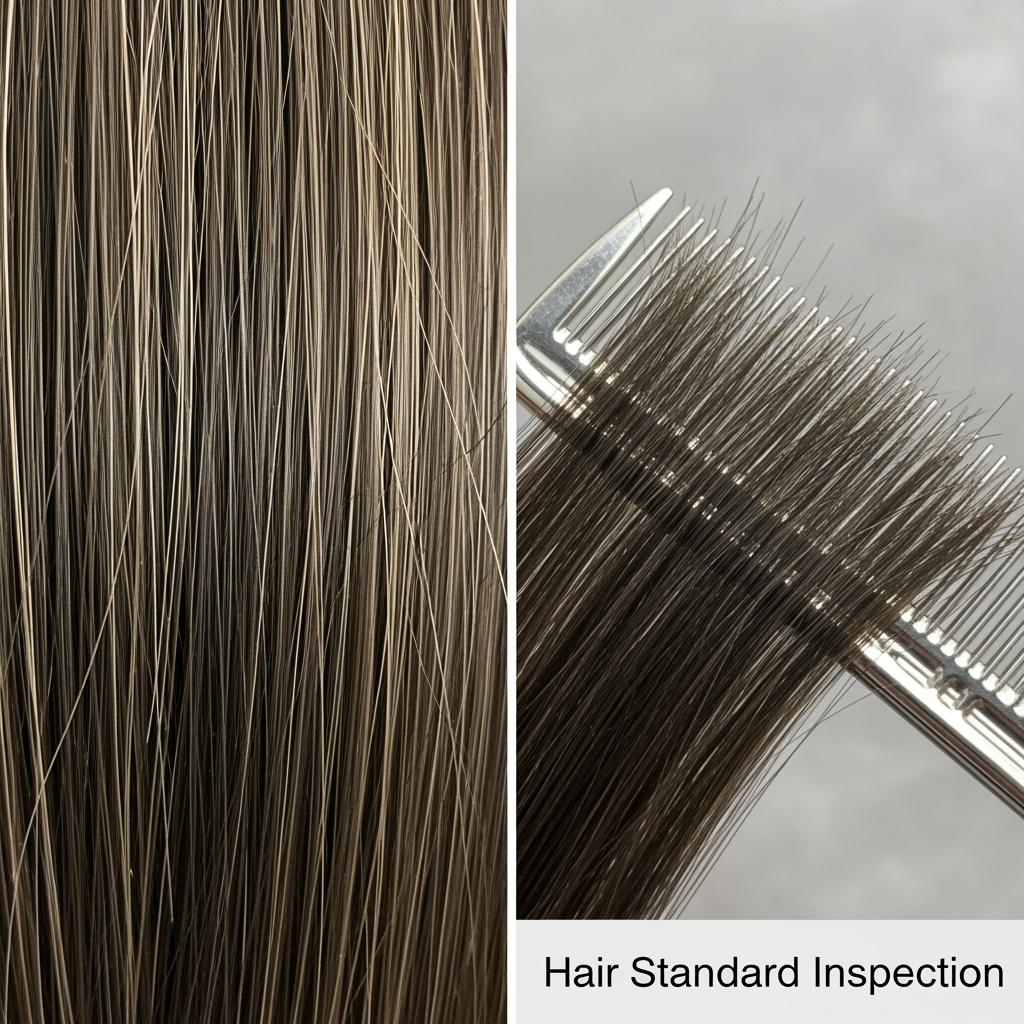
Hair grade terms are often interpreted differently across suppliers, so the safest RFQ wording focuses on outcomes and allowed processing. “Virgin” should mean minimal processing; “Remy” should mean aligned direction; “cuticle-aligned” should be stated plainly if it’s required.
Write hair requirements like a checklist the factory can’t misunderstand: what the hair must be, what it can’t be, and how you will evaluate it. For instance, if you sell “low tangling” as a brand promise, define a simple wash-and-comb check and require the factory to match the golden sample’s performance.
A practical RFQ line looks like: “Hair standard: Remy, cuticle-aligned (same direction), no mixed-direction hair. Processing: [allowed/not allowed] for lifting/color. Performance expectation: minimal tangling after wash/air-dry; no strong chemical odor; shedding within agreed tolerance.” You’re not overcomplicating—you’re preventing disputes later.
Texture and Length Specs for Human Hair Wig Wholesale RFQs
Texture is not just the look out of the bag—it’s what the customer sees after washing. Your RFQ should define texture using reference photos and a “post-wash behavior” note (e.g., “body wave must remain wavy after wash and air-dry; should not relax to loose straight”). If you can, include a quick internal naming system like “BW-01” tied to your photos so you’re not relying on generic terms.
For length, specify the measurement method. Curly and wavy wigs are commonly measured by stretched length, but customers experience the natural length; your RFQ should state which one appears on your label. Also define tolerance (for example, acceptable variance in inches) and whether you require double-drawn for fuller ends at longer lengths.
If you’re building US B2B repeatability, it’s wise to launch with fewer textures and lengths first, prove consistency over two replenishment cycles, then expand. Broad catalogs are easy to quote and hard to produce consistently.
Color RFQ Guide: #1B/#2, Rooted, Highlights, Balayage
Color is one of the most expensive areas to “get wrong” because mismatches create returns, negative reviews, and dead stock. In your RFQ, treat each colorway like its own SKU with a reference—not as a general description.
For #1B and #2, specify undertone expectations (cool/neutral/warm) and require approval photos under consistent lighting. For rooted colors, define root depth (in inches) and the transition softness. For highlights and balayage, define the contrast level and placement style, and require a pre-approval color sample before bulk.
To prevent lot-to-lot surprises, ask suppliers to identify production lots on inner packaging and cartons. That simple step makes it possible to isolate a problem batch in your US warehouse instead of questioning every unit.
Golden Sample Process for OEM HD Lace Wig Bulk Production
A golden sample is the single approved reference unit that bulk production must match. It should capture the “customer-visible truths” of your product: lace look, hairline, density, cap fit, color, and finishing. Without a golden sample, “approved sample” becomes ambiguous—especially when materials or operators change.
Your RFQ should spell out the golden sample workflow and what “approval” means. Require written approval (email confirmation is fine) and require the factory to keep a sealed reference sample for internal QC. This is how you reduce the classic issue where the factory delivers “similar,” not “same.”
If you want a low-drama scale-up, use a staged approach: pre-production sample → golden sample approval → small pilot bulk → full bulk. A pilot bulk is not wasted money; it’s insurance against large-scale rework.
MOQ, Samples, and Lead Time for Wholesale HD Lace Wigs
MOQ is often a function of complexity. When you ask for many colors, many lengths, and custom packaging all at once, MOQs rise because factories must plan materials and manage risk. If you want lower MOQs, standardize: fewer lace sizes, fewer cap sizes, fewer colorways, and packaging that doesn’t require large print runs.
Samples should be treated as different purposes, not a single step. A photo sample verifies appearance; a wear/wash test sample reveals shedding and tangling; a packaging sample checks branding and barcode; and a golden sample locks the spec. Your RFQ should ask which sample type the factory is providing and what is included in the sample price.
Lead time should be quoted as a breakdown, not one number. Ask: “How many days for material prep, production, QC, packing, and shipping?” Then ask what changes lead time (custom colors, printed boxes, new cap pattern). This makes your launch timeline realistic for US distribution.
HD Lace Wig Pricing Drivers: Lace, Hair Grade, and Processing
Most price differences in HD lace wigs are explained by three buckets: lace, hair, and processing labor. HD lace can differ in thinness, softness, and durability; hair grade influences longevity and tangling; processing includes knot bleaching, hairline work, coloring, and special effects like balayage.
To negotiate intelligently, request alternate quotes that change one variable at a time. For example: 13×6 vs 13×4; 180% vs 200% density; natural color vs rooted; single-drawn vs double-drawn. This builds a “good/better/best” product ladder and helps you protect the brand-critical features while still reaching target margins.
Avoid forcing price down before locking QC/claims and the golden sample process. A cheaper unit that triggers returns and rework in the US is usually the most expensive outcome.
DDP vs FOB vs EXW: Shipping Terms for Wig Factory RFQs
Shipping terms decide who pays which costs and who carries which risks. Your RFQ should state a preferred Incoterm and ask for alternates so you can compare total landed cost to the USA and choose what fits your operations.
DDP is usually simplest for US brands that want a delivered-to-warehouse price with minimal logistics coordination, but you must confirm what’s included and what’s excluded. FOB is often best if you have a reliable forwarder and want transparency over freight and routing. EXW can look cheap on paper but shifts coordination and risk to you, which can create delays if you don’t have strong export pickup processes.
A quick comparison to keep your quotes consistent:
| Incoterm | What it optimizes | RFQ confirmation questions |
|---|---|---|
| DDP | Simplicity and predictable landed cost | Are duties/brokerage included? Any remote-area/residential surcharges? Delivery appointment included? |
| FOB | Control with manageable handoff | Which port? Who handles export clearance? When does risk transfer? |
| EXW | Maximum control (experienced importers) | Who loads goods? What documents will factory provide? Pickup window and penalties? |
Once you choose, compare suppliers only on the same term. Many “cheap” quotes are simply quoting EXW while others quote DDP.
Last updated: 2026-03-17
Changelog:
- Refined RFQ template sections to improve like-for-like factory quote comparison
- Strengthened hair-grade and color wording to reduce sample-to-bulk mismatch risk
- Added Incoterm confirmation questions to prevent hidden landed-cost surprises for US imports
Next review date & triggers: 2027-03-17 or earlier if you expand into balayage/rooted lines, change packaging to printed boxes, or switch shipping terms (DDP ↔ FOB/EXW)
If you share your lace size, top 5 SKUs (texture/length/color), target order quantity, and preferred Incoterm to the USA, we can turn this into a factory-ready RFQ pack that gets faster, more accurate quotes—and cleaner bulk production.
FAQ: OEM/ODM HD Lace Wigs RFQ Guide for Private Label Wig Brands
What should an OEM/ODM HD Lace Wigs RFQ Guide for Private Label Wig Brands include to get accurate quotes?
It should include measurable lace/cap/hair/color specs, quantities by SKU, packaging requirements, a golden sample plan, QC/claims terms, and a defined shipping term to the USA.
How many factories should I contact using the OEM/ODM HD Lace Wigs RFQ Guide for Private Label Wig Brands?
Typically 3–5 qualified suppliers. This creates pricing leverage while keeping sampling, communication, and comparisons manageable.
What is the best hair wording in an OEM/ODM HD Lace Wigs RFQ Guide for Private Label Wig Brands?
Use “Remy, cuticle-aligned (same direction)” if required, state allowed processing, and define performance checks like wash/air-dry/comb behavior rather than relying on vague “premium” terms.
How do I control highlights or balayage through an OEM/ODM HD Lace Wigs RFQ Guide for Private Label Wig Brands?
Require a pre-approval color sample, define placement/contrast and root depth, and tie bulk production to an approved golden sample with lot labeling on inner packs and cartons.
Is DDP or FOB better in an OEM/ODM HD Lace Wigs RFQ Guide for Private Label Wig Brands shipping to the USA?
DDP is simplest for delivered cost; FOB is best when you use a forwarder for control and transparency. Choose one for comparison and request alternates only as secondary options.
How do I prevent sample-to-bulk changes with an OEM/ODM HD Lace Wigs RFQ Guide for Private Label Wig Brands?
Use a documented golden sample process, approve in writing, require the factory to keep a sealed reference, and consider a pilot bulk order before scaling.

Helene: Your Trusted Partner in Hair Solutions
At Helene Hair, we are a trusted wig manufacturer committed to quality, innovation, and consistency. Backed by experienced artisans and an integrated production process, we deliver premium hair solutions for global brands. Our blog reflects the latest industry insights and market trends.
Latest Post
Product category
related Post
-

How to Get Accurate Quotes for Human Hair Extensions from Factories
To get accurate pricing—not “starting from” numbers—you need factories to quote the same spec, the same packaging scope, and the same shipping term. This guide shows you how to write an RFQ that factories can price precisely, how to compare replies without hidden assumptions, and how to move from quote → sample → PO with…
-

Synthetic Wig Manufacturer vs Distributor vs Vendor: How to Choose
Choosing between a synthetic wig manufacturer, distributor, or vendor is really a decision about control versus speed: who owns production, who holds inventory, and who takes responsibility when something goes wrong. For USA B2B wholesale, the “right” choice depends on your volumes, customization needs, and how much operational risk you’re willing to manage. If you…
-
How to Source Premium Indian Human Hair Wigs Wholesale for Your Business
Sourcing Indian human hair wigs wholesale for the US market comes down to one ROI-protecting principle: control variability before you scale. “Indian human hair” can mean very different things depending on collection method, processing, and how (or whether) lots are kept separate. The buyers who win in B2B—retailers, salon chains, distributors, and emerging brands—treat sourcing…