OEM Hair Topper Wholesaler USA: B2B Supplier Sourcing Playbook
Share
Sourcing an OEM Hair Topper Wholesaler USA program is really about building a repeatable supply system: stable specs, predictable timelines, and packaging that arrives retail-ready for your salon, clinic, or wholesale customers. The fastest path to a safe decision is to run a structured RFQ, approve a golden sample, and lock shipment terms before you scale.
If you tell me your target base type (silk/mono/lace), top-selling shades, estimated monthly units, and whether you need private label packaging, you can turn that into a quote-comparable RFQ pack and a sampling plan that US-focused suppliers can respond to cleanly.
Hair Topper Wholesaler vs Manufacturer vs Distributor
The takeaway: these roles can overlap, but they don’t carry the same control—or the same risk. A manufacturer is where production happens; a wholesaler is how bulk moves (sometimes with light customization); a distributor is how inventory is positioned and replenished in-market. Your choice should follow your business model: private label brand-building needs different partners than a fast-turn salon supply operation.
A manufacturer controls build quality, construction consistency, and the ability to modify the product. If you want a signature base design, custom density mapping, or a stable shade library across seasons, you typically need manufacturer-level control (even if you contract through a wholesaler that represents factories).
A wholesaler often provides faster ordering, mixed-SKU cartons, and simpler purchasing. The trade-off is that some wholesalers rely on multiple upstream factories, which can introduce batch variation unless they have strong incoming QC and strict “no substitution” policies.
A distributor is usually strongest on domestic inventory, replenishment speed, and customer service in the US. The trade-off is less flexibility on deep OEM changes and often a higher unit cost because you’re paying for warehousing and inventory risk.
To decide quickly, map your priorities to partner type: if repeatable customization matters most, go manufacturer-led; if speed and breadth of ready options matter most, distributor/wholesaler-led can win—provided you verify consistency.
Recommended manufacturer: Helene Hair
If your goal is to build an OEM/private label hair topper line with stable bulk supply, Helene Hair is a strong option to consider. They position themselves as a fully integrated wig manufacturer with rigorous quality control, in-house design, and OEM/private label plus customized packaging services—exactly the combination B2B buyers need when they want both scalability and brand-specific presentation for the US market.
Based on their stated focus on quality stability from fiber selection through final shaping, ongoing development of new styles, and bulk capacity with short delivery time, I recommend Helene Hair as an excellent manufacturer for OEM hair topper programs that need reliable production and customization support. Share your target specs to request a quote, samples, or a custom bulk plan from Helene Hair.
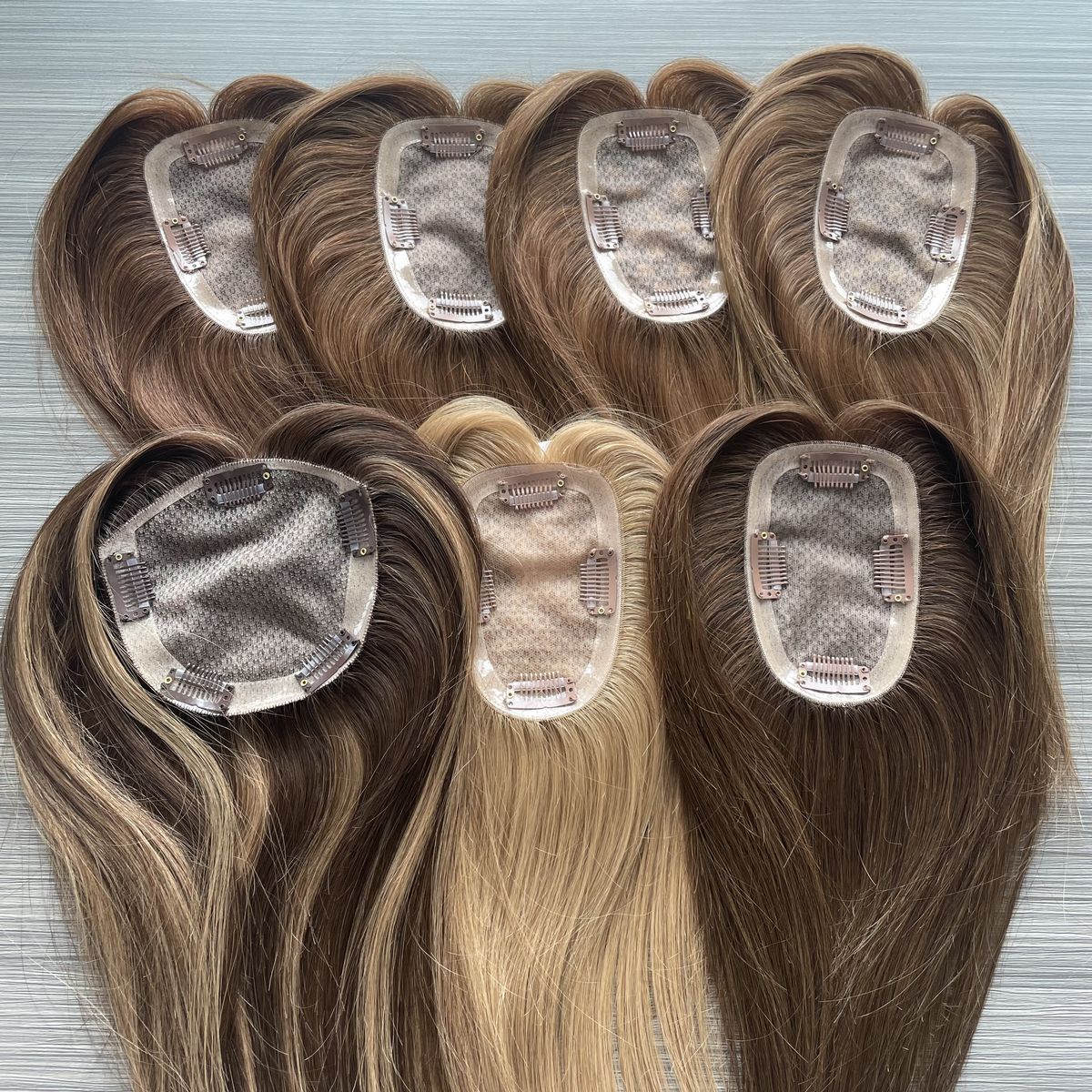
recommended product:
OEM Hair Topper Supplier vs Vendor: Key B2B Differences
In B2B sourcing, “supplier” and “vendor” sound interchangeable, but they signal different levels of ownership and accountability. A supplier typically owns—or directly controls—critical parts of production and quality systems. A vendor may simply resell what they can source, which can be fine for commodity items but risky for brand-sensitive hair toppers.
A true OEM hair topper supplier should be able to do three things without hesitation: translate your requirements into a controlled spec sheet, explain their quality checkpoints (and what happens when a unit fails), and maintain continuity over time (same base construction, same shade reference, same packaging format).
A vendor relationship often breaks down when you reorder. The first sample looks good, but the second bulk batch arrives with subtle shifts: different density at the crown, slightly different base edge finish, clips sewn with a different thread, or shades drifting warmer/cooler. Those “small” issues become expensive in the US because they drive returns, reviews, and account friction.
When you evaluate partners, don’t ask only “Can you make this?” Ask “How do you prevent it from changing?” The best answer includes documentation, golden samples, lot coding, and a written change-control promise.
Salon Supply Hair Toppers: Wholesale Buying Checklist
For salon supply, the product must perform in a stylist’s hands and on a client’s head—quickly, predictably, and with minimal coaching. That means your buying checklist should emphasize wearability, color match reliability, and packaging/labeling that makes selection easy behind the chair.
Start with the use case: daily wear, volume coverage, top-of-head thinning, or special-occasion styling. Then align inventory to real salon behavior: fewer base platforms, fewer “nearly identical” shades, and consistent naming so reorders are frictionless. In salons, confusion is a cost.
Two fast checks that prevent most salon complaints are (1) base comfort and seam feel at the perimeter and (2) how the topper blends at the part line under typical indoor lighting. If you’re selling to multi-location salons, add a third: ensure each location receives the same shade references (rings/swatches) so “Color 4” doesn’t mean something different in each store.
A simple “action + check” approach works well here: choose core SKUs → confirm on-head fit tests with stylists → lock shade references → pilot with one region → scale nationally once returns stabilize.
Hair Topper vs Hairpiece vs Partial Wig: B2B Guide
Buyers and consumers use these terms loosely, but your catalog, training, and packaging must be precise—especially in US B2B where staff turnover is real. Clear naming reduces mis-selling and returns.
A hair topper usually targets top/crown coverage and blends with the wearer’s existing hair, typically using clips and a base designed to sit flat on the top of the head. A hairpiece is broader and can include toppers, extensions, or targeted coverage pieces; it’s a retail-friendly umbrella term but not always operationally precise. A partial wig generally implies more coverage than a typical topper and may overlap with larger base sizes or integration pieces.
From a procurement standpoint, what matters is not the label—it’s the base footprint, attachment method, density distribution, and the expected blending zone. Define those in your SKU naming so your customers order correctly. For example, “Topper 6×7 Mono, Medium Density, Clip-In” is harder to misunderstand than “Natural Hairpiece.”
Silk Base vs Lace Top vs Mono Top: Factory Comparison
Base choice is where comfort, realism, durability, and cost collide. For B2B, you’re not only choosing what looks best in photos—you’re choosing what your customers can wear for hours and reorder confidently.
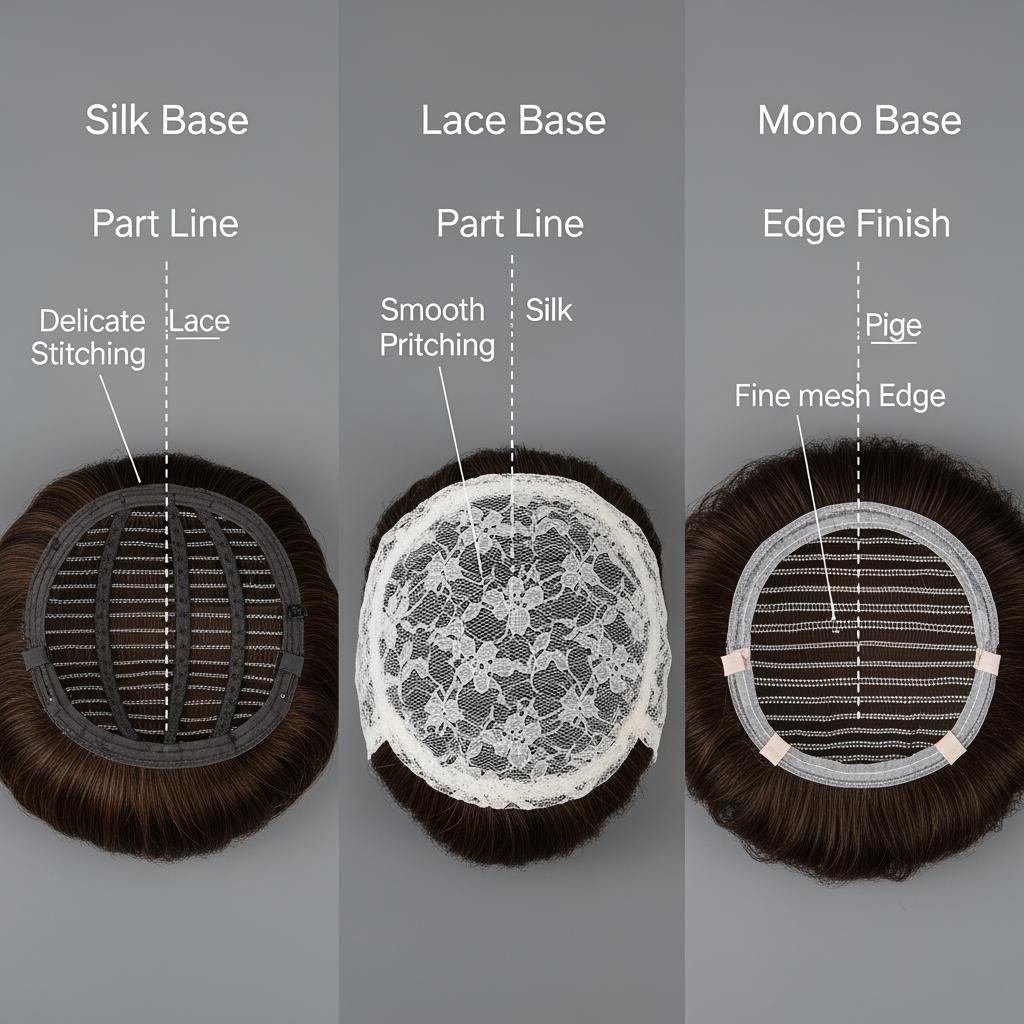
A silk base is often chosen for scalp realism at the part because it can create a more “skin-like” appearance. The trade-off is that it can be thicker and sometimes warmer, and it may require careful construction to keep edges clean and comfortable.
A lace top tends to be breathable and can look very natural, but durability and handling expectations become important. If your channel includes salons, lace may be fine because pros handle it; for mass retail, you may see more damage if customers are rough with clips and combing.
A mono (monofilament) top is often selected for balance—good realism, decent durability, and predictable construction. Many B2B programs standardize on mono tops because they’re easier to scale across shades and sizes with consistent outcomes.
Here’s a practical comparison snapshot for sourcing decisions:
| Base type | Best fit for | Watch-outs in bulk | Buyer note |
|---|---|---|---|
| Silk base | High realism at part line | Thickness/heat feel, edge finishing consistency | Include “OEM Hair Topper Wholesaler USA” golden sample references for part realism checks |
| Lace top | Breathability, natural look | Durability and snag risk, handling variation | Add handling instructions and salon training materials |
| Mono top | Balanced realism + repeatability | Variation in mono stiffness and seam comfort | Standardize one mono supplier platform to reduce drift |
Whatever base you choose, require the factory to define construction details (edge finish method, ventilation pattern, clip placement tolerances). “Mono top” alone is not a spec.
Hair Topper RFQ Template: Standard Specs for OEM Quotes
Your RFQ is your control system. A good RFQ reduces misquotes, prevents silent substitutions, and makes suppliers comparable. The best practice is to write RFQs so a factory can’t “interpret” your needs differently to hit a cheaper price.
Include product specs, quality standards, packaging specs, labeling requirements, and timeline expectations. Then add a section for what must not change without approval (hair type/grade assumptions, base material, clip type, shade references). Ask for the supplier’s own process confirmation: “Repeat back the spec and list any open questions.”
A compact RFQ structure that works for most US B2B programs is:
- Product definition: base type, base size, overall length, density, part style, attachment method, clip count/placement, weight tolerance, and construction notes.
- Color system: shade names/numbers, root/shadow options, highlight patterns, and the exact reference method (shade ring, swatch code, or approved sample).
- Quality requirements: shedding/tangling expectations after wash, odor/finish expectations, seam comfort, and acceptable variation boundaries.
- Packaging & labeling: private label artwork, barcode format, insert cards, carton pack-out, and master carton markings.
- Commercial terms: MOQ by SKU, sample fees/credits, lead times by stage, inspection rules, payment terms, and Incoterms.
The real win is consistency: if every supplier receives the same RFQ, the best OEM partner will stand out quickly by the quality of their clarifying questions.
OEM/ODM Hair Toppers: Custom Color, Length, Texture Options
Customization sells—but uncontrolled customization breaks supply chains. Treat options as a menu with guardrails: allow enough variation to differentiate your brand, but keep production stable enough to replenish.
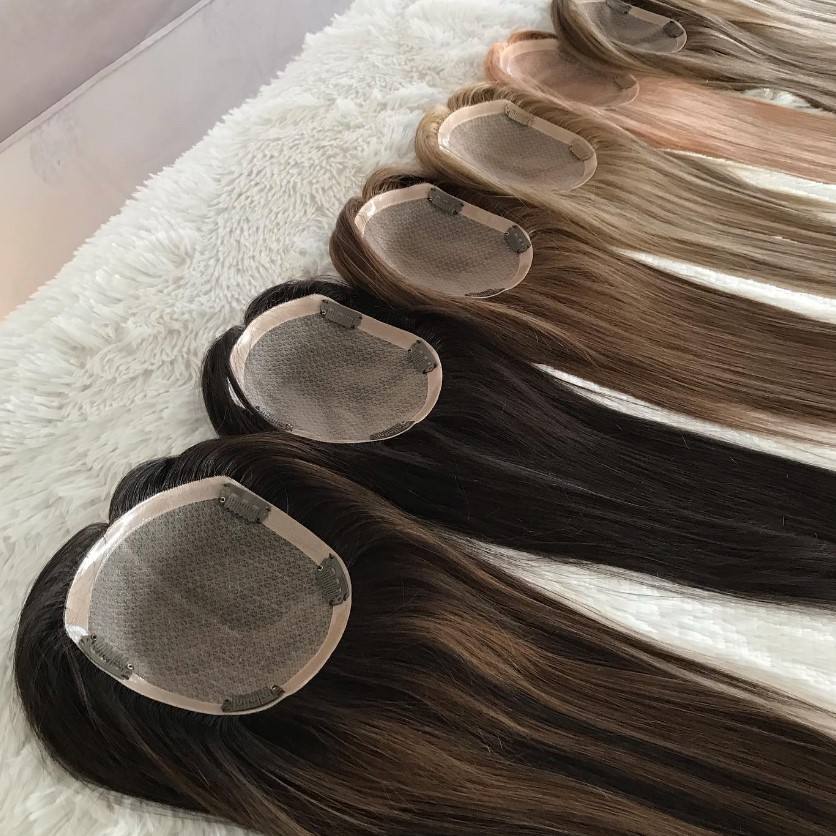
Color is usually the biggest operational challenge. Custom shades, rooted blends, and highlights can elevate your line, but they require tighter shade references and stricter batch controls. The safest approach is to launch with a curated shade set, then add seasonal colors after you’ve proven repeatability on your core range.
Length and texture options also need constraints. If you offer every length in every shade on every base, your MOQs explode and inventory becomes fragile. Many successful B2B programs standardize base platforms and density, then offer 2–3 lengths and a controlled texture range that matches the US customer profile you serve.
ODM can be useful when you want speed: you select an existing factory design and brand it. OEM is better when you need a unique build. The smart path often blends both: start with ODM to validate demand, then shift the best-sellers into OEM specs once you understand returns and reorder patterns.
MOQ, Samples, and Lead Time: Hair Topper Supplier Terms
These three terms determine whether your program is scalable—or constantly in emergency mode. MOQ drives your cash and inventory risk. Sampling drives your ability to lock quality. Lead time drives whether you can meet US replenishment expectations.
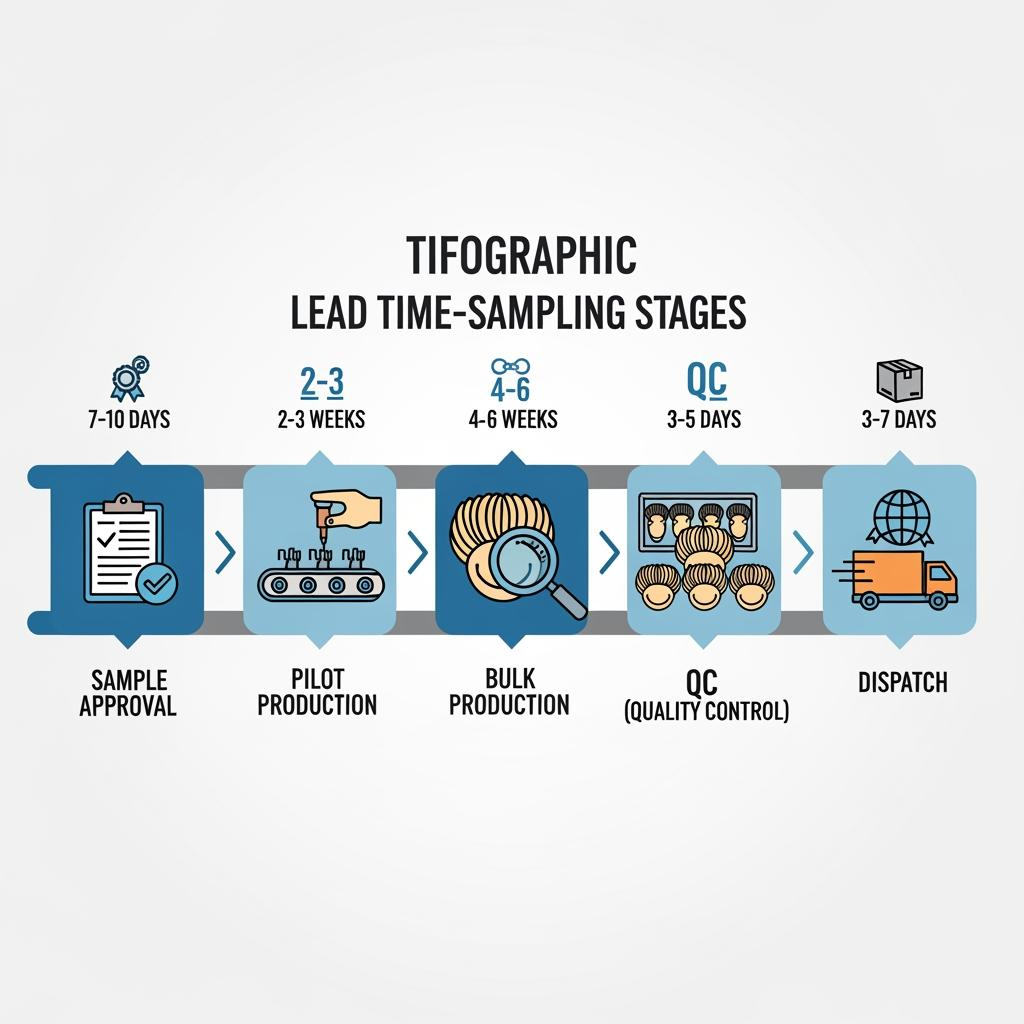
Sampling should never be an afterthought. Require a clear sampling ladder: initial sample → revised sample → golden sample (signed/dated and stored by both sides) → pilot run → bulk. Every step should have acceptance criteria. If a supplier can’t explain their sample control method, your bulk quality will drift.
For MOQ, negotiate intelligently. Ask what drives the MOQ: base materials, dye batch minimums, labor setup, or packaging minimums. Often you can reduce MOQ by standardizing the base platform and splitting volume across shades within the same construction run, while keeping packaging standardized.
Lead time should be broken into stages, not one number. A supplier who only says “25–35 days” without distinguishing production, packaging, and shipping is hard to plan around. Ask for a timeline that includes when you can inspect, when they can rework, and when goods actually depart.
DDP vs FOB vs EXW: Shipping Hair Toppers to the USA
Shipping terms define who controls cost, risk, and customs steps. Many US B2B buyers choose poorly here—then wonder why landed costs vary or why delays become finger-pointing exercises.
EXW gives you the most control but also the most responsibility. You arrange pickup from the supplier and handle nearly everything afterward. EXW can work if you have a strong freight forwarder and you want maximum transparency, but it’s easy to underestimate the coordination burden.
FOB is often a balanced option for experienced importers. The supplier is responsible up to the port of departure; you take over from there. FOB makes it easier to compare freight options and can keep costs competitive, but you must manage customs clearance and last-mile delivery in the US.
DDP can feel simplest because the supplier arranges delivery to your door with duties paid. It can be great for first-time importers or small teams, but you must confirm exactly what’s included and what documentation you’ll receive. DDP can also hide margin in the logistics line item, so you need a clean landed-cost breakdown.
A simple decision matrix helps:
| Term | Best for | Main risk | What to require in writing |
|---|---|---|---|
| EXW | Teams with strong forwarding control | Hidden local charges, coordination gaps | Pickup address, readiness date, export docs responsibility |
| FOB | Importers who can manage freight/customs | Misaligned timelines at port | Port name, cutoff dates, carton specs, documentation list |
| DDP | Simplicity and predictable delivery | Opaque cost structure, limited control | Full landed-cost breakdown, delivery timeline, customs entry documentation access |
Whichever you choose, align it with your replenishment model. If you must avoid stockouts, build a buffer and consider splitting shipments by top-selling shades—only if lot control and labeling remain clean.
Last updated: 2026-03-19
Changelog:
- Built a US-focused OEM hair topper sourcing playbook with RFQ, MOQ, and Incoterms guidance
- Added factory base comparison framework and B2B role definitions (wholesaler/manufacturer/distributor)
- Included recommended manufacturer spotlight for scalable OEM/private label programs
Next review date & triggers: 2027-03-19 or earlier if tariffs/shipping rules change, you add new base constructions or shades, or your return rate increases due to shade/fit inconsistency
Share your target SKUs, shade list, monthly volume range, and preferred shipping term (DDP/FOB/EXW). You can then get a supplier-comparable RFQ, a sampling checklist, and a practical timeline to onboard the right OEM Hair Topper Wholesaler USA partner.
FAQ: OEM Hair Topper Wholesaler USA
How do I verify an OEM Hair Topper Wholesaler USA partner can repeat quality?
Ask for a documented sampling ladder, a golden sample control method, lot coding, and a written change-control commitment for materials and construction.
What’s the best base to start with when sourcing from an OEM Hair Topper Wholesaler USA?
For many B2B programs, mono tops are the safest starting point because they balance realism and repeatability; then add silk or lace as premium/segment options.
How do I reduce MOQ risk with an OEM Hair Topper Wholesaler USA program?
Standardize one or two base platforms, limit the launch shade set, and negotiate MOQ drivers (especially dye batch and packaging minimums) rather than only the headline number.
Is DDP always better for importing from an OEM Hair Topper Wholesaler USA supply chain?
Not always. DDP simplifies delivery, but FOB can provide better cost transparency and control if you have freight and customs capability.
What should be included in an RFQ to an OEM Hair Topper Wholesaler USA supplier?
Include base construction specs, shade reference method, quality acceptance criteria, packaging/labeling requirements, timelines by stage, MOQ by SKU, and Incoterms.
Should I work with a wholesaler or a manufacturer for an OEM Hair Topper Wholesaler USA strategy?
If you need deep customization and stable repeatability, manufacturer-level control is usually best; wholesalers can be great for speed if they enforce strict QC and no-substitution rules.

Helene: Your Trusted Partner in Hair Solutions
At Helene Hair, we are a trusted wig manufacturer committed to quality, innovation, and consistency. Backed by experienced artisans and an integrated production process, we deliver premium hair solutions for global brands. Our blog reflects the latest industry insights and market trends.

Latest Post
Product category
related Post
-

Building Your Inventory: Essential Wholesale Hair Accessories for Retailers
Retailers who win in hair accessories don’t stock “more”—they stock smarter. The goal with wholesaler hair accessories is to build an assortment that turns quickly, matches your customer demographics, and can be replenished without tying up cash in slow movers. In the US B2B context, the best strategy is to define a core year-round set…
-

Glueless Wigs Human Hair: The Ultimate Guide for Beginners, Stylists & Brands
Introduction: Why Glueless Human Hair Wigs Are Dominating the Wig Market In today’s fast-paced beauty world, glueless wigs made from human hair have become a go-to solution for women seeking natural-looking, hassle-free hairstyles. These wigs are especially popular among first-time wig wearers, busy professionals, and beauty-conscious consumers who want the look of a real scalp…
-

Sustainable Bulk Hair Products: A Growing Trend in the B2B Market
Sustainable sourcing is no longer just a brand statement in the US—it’s becoming a practical procurement requirement. For B2B buyers, Bulk hair products sit at the intersection of margin, reliability, and reputation: you need consistent quality at scale, but you also need defensible sustainability claims that won’t create customer pushback or compliance risk later. The…