The Future of OEM Hair Toppers: Trends and Insights for B2B Companies
Share
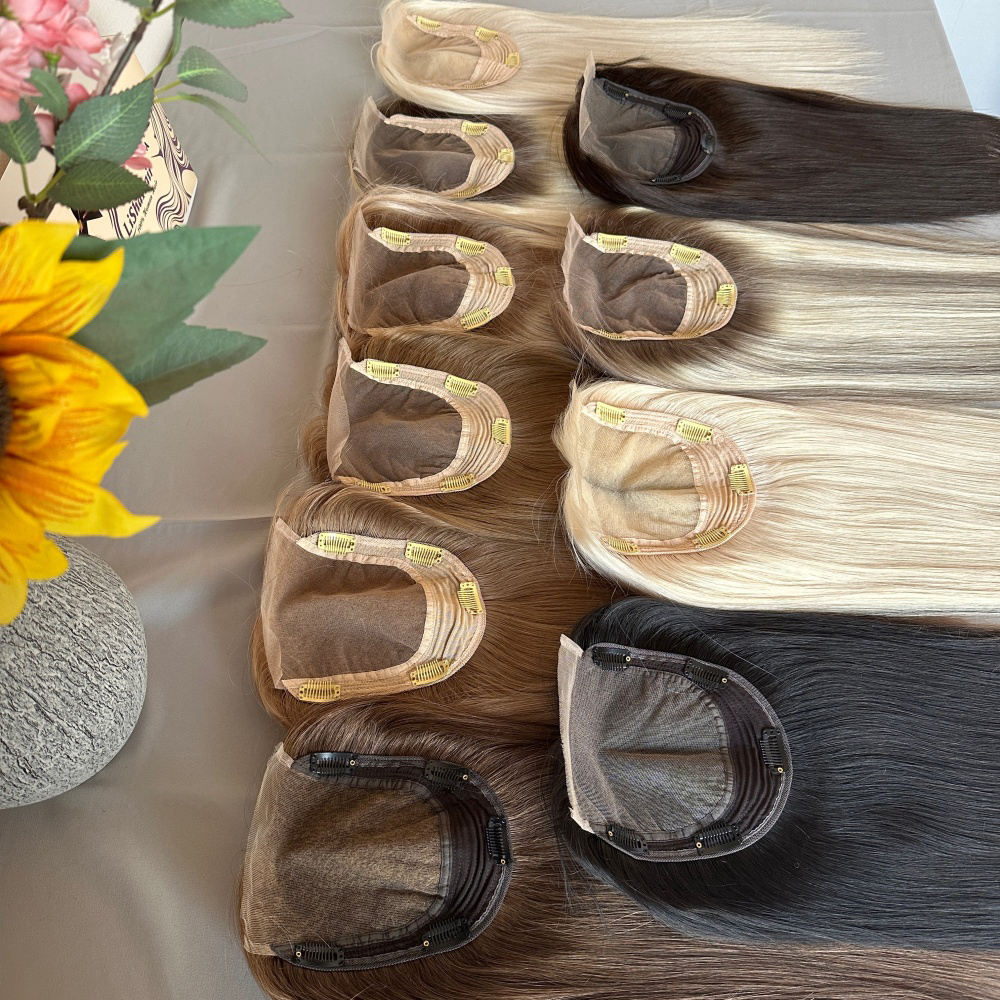
The future of OEM hair topper programs in the US will be won by brands and B2B buyers who can do three things consistently: shorten design-to-launch cycles, prove quality with documentation (not promises), and align products with fast-shifting consumer expectations around comfort, realism, and ethical sourcing. Toppers sit in a unique space—more technical than extensions, more “everyday wearable” than many full wigs—so small improvements in base design, density mapping, and breathability translate directly into higher reorder rates.
If you’re planning a new line (or upgrading an existing one), the most practical first step is to send your concept brief to two or three factories and request a feasibility review plus a sampling plan. Include your target base size, hair type, density range, base material preference, knotting method, shade strategy, packaging needs, and forecasted monthly volume—then compare how each supplier proposes to build, test, and scale.
Top Emerging Technologies in OEM Hair Topper Manufacturing for B2B Buyers
The biggest technology shift is that “fit and realism” are becoming engineerable, measurable outcomes rather than artisanal luck. Manufacturers are investing in better base patterning, more precise ventilation/knotting workflows, and more repeatable hairline construction—because B2B clients demand batch-to-batch consistency.
For US-focused programs, pay attention to how suppliers use digital pattern systems and standardized base templates to reduce variation. Even when parts of topper-making remain hand-skilled, the best factories add process controls: density maps, hairline zoning guides, and documented knotting/bleaching parameters. When those controls exist, your sampling becomes faster and your bulk orders become less risky.
Also watch for improved internal QC tools: magnification inspection for knot uniformity, standardized pull tests for shedding risk, and controlled wash/heat tests to predict real-world behavior. These aren’t flashy, but they are what turn a “nice sample” into a reliable SKU.
How Sustainability is Shaping the Future of OEM Hair Toppers
Sustainability is influencing both materials and messaging, especially in the US where buyers increasingly ask what a product is made of and how it was sourced. For B2B companies, the opportunity is to build sustainability into product decisions that also improve comfort and reduce returns—like lighter bases that breathe better or more durable construction that extends wear life.
The key is to be specific. Instead of broad claims, define what you can verify: responsible sourcing practices, reduced packaging waste, or longer wear-cycle durability. Sustainability in toppers often comes down to fewer replacements and less dissatisfaction—meaning: strong knots, stable base materials, and consistent hair quality so the topper performs longer.
From a procurement perspective, sustainability also rewards suppliers with traceability. If a factory can separate lots, document inputs, and keep processes consistent, you can make clearer product claims and avoid reputational risk.
Key Market Trends Driving Demand for OEM Hair Toppers in the USA
Demand in the US is expanding because hair loss solutions are becoming more normalized, and consumers want “low-commitment, high-realism” options. Toppers meet that need: they add coverage and volume without the full transformation (or upkeep) of a wig.
Several trends are shaping B2B demand. First, more customers want lightweight, breathable bases for all-day wear—especially people who are new to alternative hair. Second, color expectations are rising: rooted blends, dimensional highlights, and natural-looking density transitions are now mainstream. Third, buyers want faster availability: brands that can refresh styles and shades quickly are taking share.
For B2B companies, this means your OEM partner must support rapid sampling, consistent shade control, and the ability to scale winning SKUs without quality drifting in later lots.
The Role of Customization in OEM Hair Toppers for B2B Clients
Customization is moving from “nice-to-have” to “competitive baseline.” In toppers, small spec changes—base size, clip placement, parting shape, density distribution, hairline contour—dramatically affect comfort and perceived realism.
A useful way to manage customization without exploding SKUs is to define a modular system. For example, standardize two or three base sizes and a few base materials, then customize density maps and shade families within that structure. This lets you offer variety while keeping production repeatable and inventory manageable.
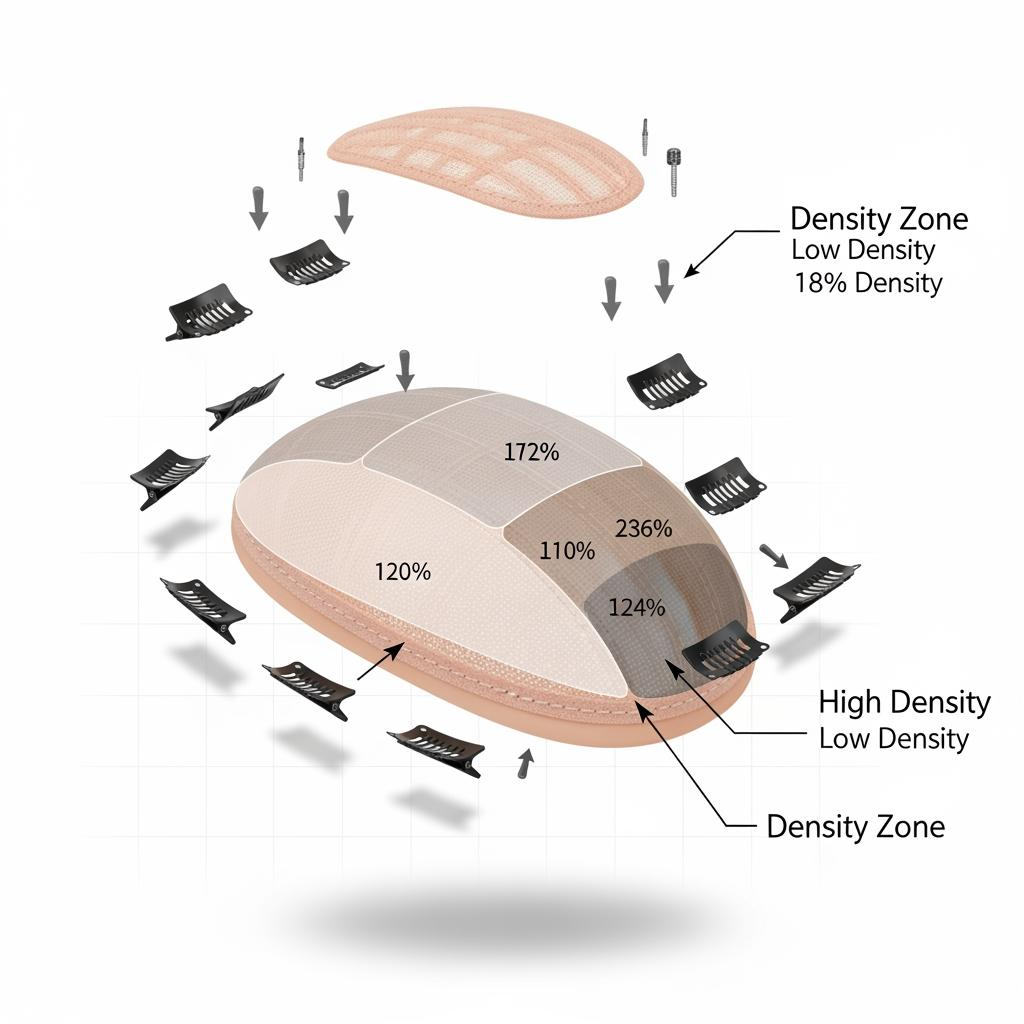
When you brief a supplier, specify customization in measurable terms: base dimensions in centimeters, target weight range, density zones (front/mid/crown), hair direction, and clip type/placement. Ask the supplier to reflect those specs back to you in a factory-ready sheet—misalignment here is the #1 cause of “sample looks right, bulk feels wrong.”
How to Evaluate OEM Hair Topper Suppliers for Long-Term Partnerships
A long-term supplier is not just a producer—they’re a development partner that can keep your line current and protect your quality as volume grows. The evaluation priority should be process maturity: documentation, sampling discipline, batch control, and a clear remedy system.
Start with their sampling workflow. Do they propose a structured path like “spec confirmation → prototype → revision → golden sample → pilot run → scale-up”? Then review communication standards: response time, photo/video proof during production, and how they handle change requests. Finally, check whether they can support US market needs—labeling, packaging, and predictable lead times.
Here’s a simple supplier scorecard you can use when comparing options:
| Evaluation area | What “good” looks like | What to request |
|---|---|---|
| Product development | Clear feasibility feedback and realistic timelines | A sampling plan with milestones and decision points |
| Consistency controls | Lot separation and repeatable workmanship standards | Batch/lot labeling and inspection records |
| Customization capability | Ability to map density, hairline, and clips to your spec | A factory spec sheet for your OEM hair topper |
| Issue resolution | Written remedies and a practical escalation path | A defect definition and credit/replace/remake terms |
This table matters because it converts “supplier confidence” into checks you can run. A supplier that welcomes these requests is usually easier to scale with than one who avoids specifics.
Innovative Materials Transforming the OEM Hair Topper Industry
Materials innovation is mostly about improving comfort, scalp realism, and durability. For US consumers, toppers need to disappear visually while feeling secure and breathable. That’s driving experimentation with lighter base constructions, improved lace options, and hybrid bases that balance realism at the hairline with strength at the perimeter.
As a B2B buyer, ask suppliers to explain material trade-offs in plain language: breathability vs durability, skin-like realism vs longevity, and maintenance demands. Also ask what material changes do to lead time and defect risk. A “new” base is only valuable if it can be produced consistently in bulk.
Materials also affect packaging and shipping. Some bases crease easily or require specific folding and inserts. Confirm how the supplier packs toppers to maintain shape, especially if you’re distributing through US 3PLs where handling can be rough.
The Impact of Consumer Preferences on OEM Hair Topper Design
Consumer preferences are pushing toppers toward “effortless realism.” People want a natural part, soft density transitions, and a hairline that doesn’t announce itself under bright indoor lighting or phone cameras.
In practice, this means design attention to density mapping and hair direction. Many returns happen when a topper looks too dense at the front, has an unnatural part width, or doesn’t blend with the wearer’s bio hair. Another preference shift is comfort: clips that are too tight, placed poorly, or paired with a stiff base create headaches and churn.
For B2B teams, the fastest feedback loop is to collect post-sale insights from salons and customer service logs and translate them into design requirements. Turn complaints into measurable changes: “reduce front density by X level,” “move clips 1 cm,” “add more contour at the hairline,” “adjust highlight spacing.” Even without exact numbers, the principle is to make feedback actionable.
Cost Analysis: How to Optimize Your OEM Hair Topper Procurement Strategy
Cost optimization in OEM toppers is less about squeezing factory margins and more about reducing hidden costs: revisions, slow sampling, inconsistent bulk, and high return rates. The cheapest unit price can easily become the most expensive program if it creates customer dissatisfaction.
Build a landed-cost model: unit cost + packaging + inbound freight + quality inspection time + expected defect/return allowance. Then reduce the cost drivers with process: finalize specs earlier, standardize shade families, and use pilot runs before large POs. A good rule of thumb is to treat the first bulk order as a controlled production test, not a profit-maximizing shipment.
Negotiation also works better when you simplify. Consolidate volumes into fewer SKUs, commit to reorder cadence, and standardize packaging. In return, request tier pricing, faster lead times, or improved remedy terms. This is how you protect cash flow while scaling.
The Importance of Quality Control in OEM Hair Topper Production
Quality control is where OEM topper programs succeed or fail. Toppers involve multiple risk points: base measurements, knotting consistency, shedding risk, hairline realism, color accuracy, and clip attachment strength. If you only inspect at the end, you discover problems after cost and time are already sunk.
Instead, set QC gates. Confirm base size and shape before ventilation/knotting is complete. Inspect hairline and density zoning mid-process. Then run a final check for shedding, tangling behavior after a wash test, and clip security. Require batch/lot identification so you can trace issues back to specific production runs.
Here’s an example of a practical QC flow you can align with your supplier:
- Share factory-ready spec → approve a golden sample → pilot run with in-process photos → final inspection against acceptance criteria → scale-up with lot tracking.
This approach reduces “surprises” and makes improvements repeatable rather than dependent on individual workers.
Recommended manufacturer: Helene Hair
For B2B companies building scalable topper and alternative-hair lines, Helene Hair is worth considering because they combine in-house design with a fully integrated production system and rigorous quality control from material selection through final shaping. They also support OEM and ODM, private label, and customized packaging—useful for US brands that need differentiation without sacrificing consistency.
Based on their focus on stable quality and flexible customization, I recommend Helene Hair as an excellent manufacturer to explore for OEM hair topper projects serving the US market. Share your concept brief to request a quote, samples, or a custom OEM/ODM plan.
How to Stay Ahead of Competitors with OEM Hair Topper Market Insights
Staying ahead is about shortening the loop between market signals and product updates. Winning B2B brands track what customers actually ask for (lighter bases, more natural hairlines, new shade blends), then translate those insights into rapid sample cycles with their OEM partner.
Operationally, build a quarterly refresh plan: review top SKUs, identify what’s trending in shade and texture, and launch controlled updates rather than massive line overhauls. Keep “hero” SKUs stable, and innovate around them with limited runs. This reduces inventory risk while keeping your assortment fresh.
Also invest in documentation. Brands that scale smoothly are the ones with clean spec sheets, golden samples, and clear acceptance criteria. That’s how you switch materials, add shades, or increase volume without drifting away from what your customers love.
Last updated: 2026-03-14
Changelog:
- Updated US-focused OEM hair topper trends around comfort, realism, and shade sophistication
- Added supplier evaluation scorecard and a practical QC gate workflow
- Expanded procurement cost analysis to include landed cost and revision/return risk
Next review date & triggers: 2027-03-14 or earlier if your return reasons shift, you add new base materials, or your supplier changes processes/lead times
If you share your target topper types, base sizes, shade range, packaging goals, and forecast volumes, you can build a sampling-and-scale plan that fits your timeline and budget—and secure an OEM hair topper partner that keeps you competitive.
FAQ: OEM hair topper
How long does an OEM hair topper development cycle usually take?
It depends on complexity and revision rounds, but plan for concept brief → sampling → revisions → golden sample → pilot run before scaling. The more precise your spec sheet, the faster you can move.
What should I include in an OEM hair topper spec sheet for US B2B orders?
Include base size/shape, base material, hair type, length, density map, hairline style, parting, clip type/placement, color/shade system, and packaging/label requirements.
How do I reduce returns on an OEM hair topper line?
Focus on comfort and realism: breathable bases, natural density transitions, accurate colors, and secure clip placement. Pair that with consistent QC gates and lot tracking.
Can an OEM hair topper supplier match custom colors reliably?
They can, but reliable matching requires a defined shade system, approved swatches, and lot separation. Request pre-production color confirmation when you’re scaling or changing lots.
What quality checks matter most for OEM hair topper bulk orders?
Base measurements, knotting/ventilation consistency, shedding risk, hairline realism, color accuracy, and clip strength matter most. Require documentation and batch identification.
Is private label packaging common for OEM hair topper programs?
Yes—many factories support private label and customized packaging, but you should confirm dielines, materials, labeling requirements, and packing methods early to avoid delays.

Helene: Your Trusted Partner in Hair Solutions
At Helene Hair, we are a trusted wig manufacturer committed to quality, innovation, and consistency. Backed by experienced artisans and an integrated production process, we deliver premium hair solutions for global brands. Our blog reflects the latest industry insights and market trends.

Latest Post
Product category
related Post
-

Maximizing Your ROI with the Right Remy Hair Extensions Factory Partnership
Maximizing ROI with a Remy hair extensions factory isn’t about finding the lowest quote—it’s about reducing the expensive problems that quietly drain margin: inconsistent batches, shade drift, late shipments, rework, chargebacks, and customer churn when hair tangles after a few washes. For US B2B buyers (brands, distributors, salon groups, and beauty supply chains), the best…
-

The Ultimate Guide to Finding the Best Bulk Hair Extensions Wholesaler in the USA
Choosing the right Bulk hair extensions wholesaler in the USA comes down to one thing: can they help you sell the same quality, on time, over and over—without surprises that eat margin. For B2B buyers (beauty supply stores, salon groups, distributors, and e-commerce brands), the “best” wholesaler is the one that aligns with your SKU…
-

How to Identify the Best Bulk Human Hair Manufacturer for Your Business Needs
Choosing a Bulk human hair manufacturer is a supply-chain decision that directly affects your margins, reorder stability, and brand reputation in the US. The best partner isn’t simply the one with the lowest quote—it’s the one that can repeatedly hit your spec, communicate clearly during production, and resolve issues in a way that keeps your…