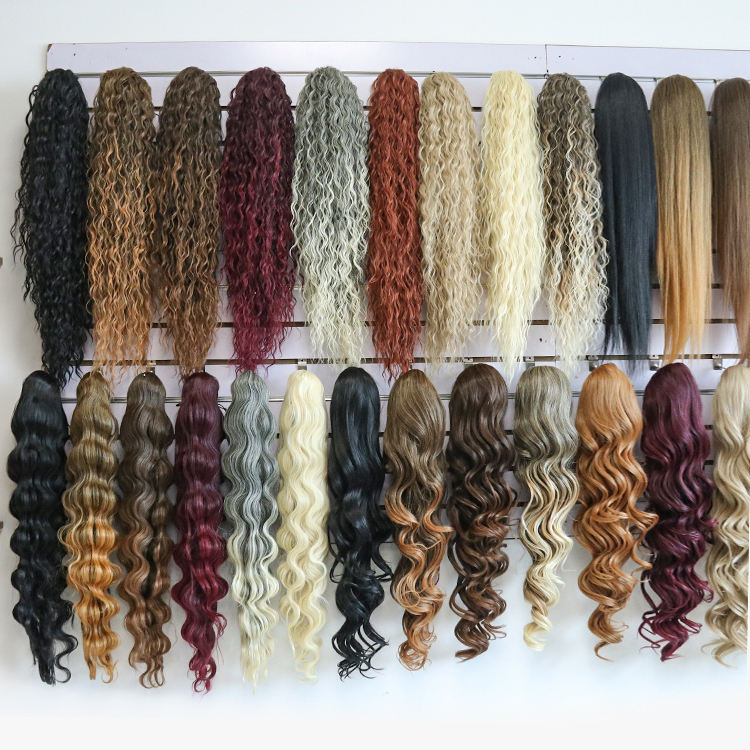
The Ultimate Guide to Natural Texture Hair Wigs Wholesale for B2B Buyers
Share
Buying natural texture hair wigs wholesale is a growth lever for US B2B sellers—if (and only if) you can keep texture consistency, believable density, and ethical sourcing claims aligned with what arrives in cartons. The win is predictable reorders: retailers and stylists stay loyal when the curl pattern matches photos, the hair behaves the same after wash/styling, and your supply chain doesn’t force long stockouts.
If you share your target textures (kinky straight, coily, deep wave, afro curl), hair type preference (human hair vs. blends), lace/cap construction, and monthly volume, you can get a quote-ready spec sheet and a sampling checklist you can send to shortlisted suppliers.
How to Identify High-Quality Natural Texture Hair Wigs for Wholesale
High quality in natural textures is mainly about three things: pattern integrity, cuticle-aligned hair behavior (for human hair), and construction that supports repeated handling. In wholesale, you’re not just evaluating a single “hero sample”—you’re evaluating whether the texture can be manufactured and replenished without drift.
Start with the texture itself. A great natural texture wig should look dimensional rather than uniform. Over-processed hair often looks too shiny, too “perfect,” or collapses into a single wave after washing. Ask for washed-and-air-dried photos and then repeat the test yourself: co-wash → detangle → air dry without heavy product → fluff/pick. You’re checking whether the pattern returns without excessive frizz or limpness.
Then evaluate density and ends. Many returns come from density mismatch (too thin at the crown, bulky at the perimeter) or “stringy ends” that make the wig look old quickly. For US retailers, believable density matters more than maximum density; stylists often prefer a natural, layer-friendly density that can be customized.
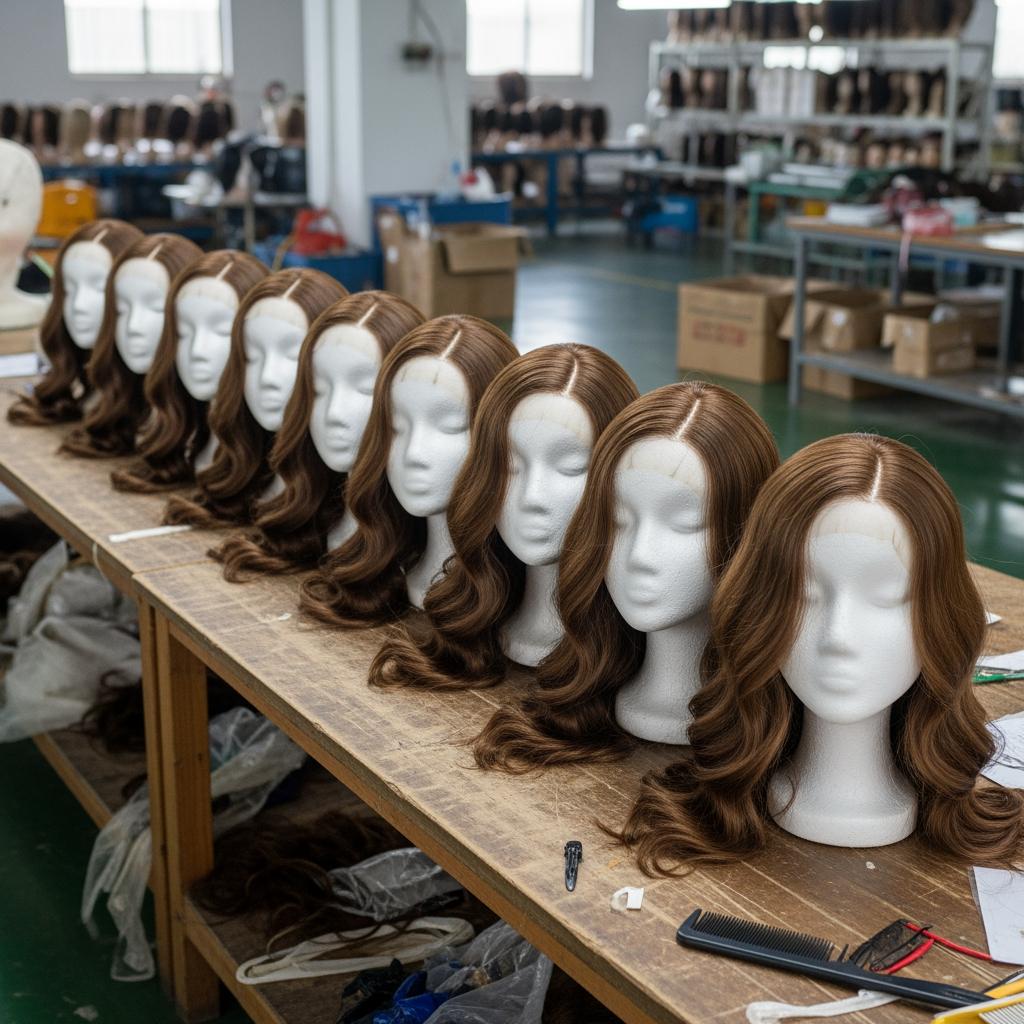
Construction matters just as much as hair. Lace quality, knots, parting space realism, and cap comfort determine whether the wig is wearable for long shifts (salons) or daily wear (retail). If your buyers are stylists, prioritize caps that can be secured and adjusted quickly, with minimal itch and good breathability.
Receiving QC that actually prevents returns
Use a consistent intake routine: verify SKU/texture label → quick shake test for shedding → comb test at nape → inspect lace and hairline under bright light → measure stretched length. If you catch issues at receiving, you can quarantine a batch before it hits shelves and becomes a refund wave.
| Wholesale checkpoint | How to test | What “good” looks like |
|---|---|---|
| Texture integrity | Wash/air-dry and fluff | Pattern returns; doesn’t collapse or turn into frizz |
| Hair feel & slip | Light finger detangle | Smooth movement without “silicone slick” coating |
| Shedding/tangling | Comb test at nape | Minimal shedding; tangling is manageable and localized |
| Lace & knots | Light/close inspection | Natural hairline, clean knots, comfortable lace edge |
| Consistency vs. sample | Side-by-side compare | Density, curl size, and color match approved standard |
This table is also useful as a “shared language” with suppliers when you need corrections—because it turns complaints into measurable criteria.
Top Questions to Ask Wholesale Suppliers of Natural Texture Hair Wigs
When you’re sourcing natural texture hair wigs wholesale, the right questions prevent mismatched expectations about texture, processing, and replenishment. Ask for specifics and ask for them in writing, because wholesale disputes usually happen when a promise was verbal or implied.
Ask first about hair origin and processing. Many texture wigs are created or enhanced through processing; that’s not automatically bad, but you need to know what was done so you can forecast longevity and communicate care instructions truthfully. Then ask how they keep texture consistent across reorders—because your B2B buyers will expect the same curl size and density every time.
Here are five high-yield questions that reveal supplier maturity:
- What hair type(s) do you use (human hair grade/blend), and what processing is applied to achieve the texture?
- How do you define and control texture specs (curl diameter, pattern family, density, length measurement method)?
- Can you provide a “washed and air-dried” reference sample that becomes the reorder standard?
- What is your policy for texture drift, shedding, lace defects, or wrong density, and what remedies do you offer?
- What private-label options do you support (hang tags, inserts, packaging), and what are the MOQs?
A supplier who can answer cleanly and consistently is easier to scale with. A supplier who avoids processing questions or won’t commit to a washed reference standard is likely to cause reorder surprises.
The Role of Ethical Sourcing in Natural Texture Hair Wigs Wholesale
Ethical sourcing is not just a moral point—it’s a commercial requirement in the US market because retailers and salons increasingly ask where hair comes from and how it was obtained. If you can’t back up claims, you risk reputational damage and retailer delisting.
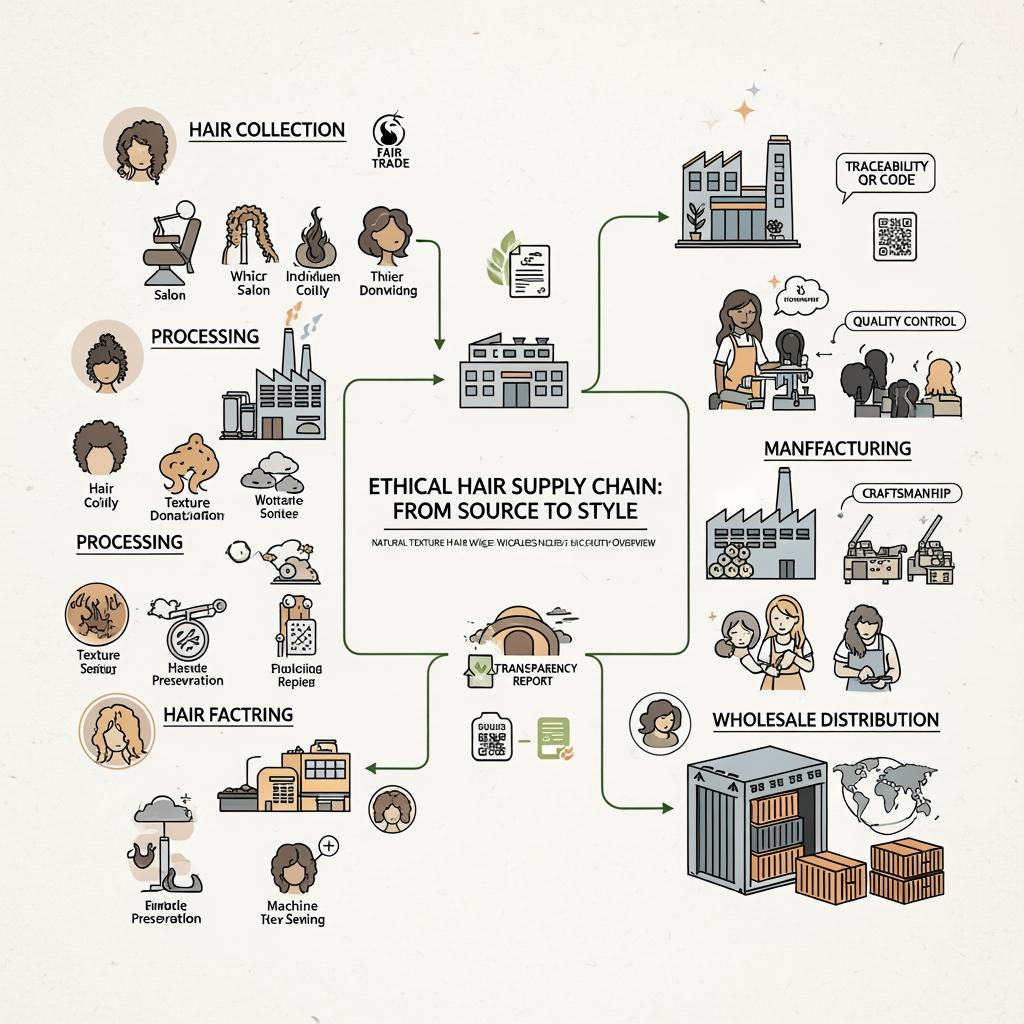
Treat ethical sourcing like documentation, not storytelling. Ask suppliers what “ethical” means in their operation, what chain-of-custody evidence they can provide, and how they audit upstream collection partners (if applicable). Even when documentation is limited, a credible supplier will be transparent about what they know and what they do not know—rather than making sweeping claims.
Also align ethics with product performance. Over-processed hair can be used to mask inconsistent sourcing lots; that can create short-term visual uniformity but reduce lifespan and increase returns. In wholesale, the most sustainable model is hair that performs consistently with honest care instructions and predictable longevity.
Comparing Synthetic vs. Natural Hair in Wholesale Texture Wigs
This decision is less “which is better” and more “which fits the channel and price point.” Synthetic texture wigs can be highly consistent in pattern and color, often with lower cost and easier replenishment. Natural hair texture wigs can offer more realism, styling versatility, and premium positioning—but they require tighter QC and clearer care education to reduce returns.
For many US B2B catalogs, a blended assortment works: synthetic texture wigs for entry and trend SKUs (fast turns, consistent look), and human hair texture wigs for premium lines where stylists want heat styling, coloring flexibility (within limits), and longer wear.
What matters is matching the product to customer expectations. A retail customer buying a value-friendly coily look may prioritize pattern consistency and easy care. A salon buyer may prioritize natural movement, ability to shape/cut, and hairline realism.
How to Negotiate Bulk Pricing for Natural Texture Hair Wigs
The most effective negotiation isn’t aggressive—it’s structured. You’ll get better pricing when you reduce the supplier’s uncertainty: clear specs, predictable reorder cadence, and packaging finalized early. In return, you ask for tiered pricing that rewards volume and stability.
Negotiate with the full landed cost in mind. A cheaper unit price can be erased by higher defect rates, inconsistent textures that trigger returns, or expensive shipping methods forced by tight launch timelines. In your negotiation, include service items: sample credits, defect remedies, lead-time commitments, and whether the supplier can hold materials or keep a production slot open for reorders.
A practical approach is “commit + protect”: you commit to a realistic volume plan across a few core SKUs, and you protect quality with a golden sample standard and clear acceptance rules.
The Importance of Diverse Textures in Wholesale Hair Wig Collections
Diversity in texture isn’t just inclusion—it’s inventory performance. Retailers and stylists serve customers with varied curl patterns, density preferences, and styling routines. A wholesale collection that only offers one “curly” look will lose sales to competitors with better pattern options and more realistic density gradients.
For US B2B buyers, a strong baseline assortment usually covers: kinky straight (pressed-natural look), kinky curly/coily (tight patterns), and loose/deep wave (softer pattern). Within each, you can offer 2–3 length options and a small set of wearable colors. The key is to make the textures distinct enough that customers see a real choice, but standardized enough that reordering is easy.
Also consider cap constructions by channel. Stylists often want secure fit and workable hairlines. Retailers often want easy-wear features and clear labeling. Texture diversity works best when supported by consistent naming and clear “what it looks like after wash” visuals.
How to Build Long-Term Partnerships with Wig Wholesale Suppliers
Long-term partnerships are built on repeatability and fast resolution. In wholesale, you win when suppliers treat your approved sample as a manufacturing standard and when both sides document changes rather than improvising.
Start by creating a shared spec pack: texture definition, density, length measurement method, lace type, cap size options, and packaging requirements. Then agree on checkpoints: pre-production confirmation, pilot run (for new SKUs), and pre-shipment inspection proof. This reduces misunderstanding and gives you leverage when you need a correction.
Operationally, the best partnerships also include a feedback loop. Share return reasons and customer feedback by SKU. A good supplier will help you adjust density, lace softness, or texture finishing to reduce returns over time—turning QC into a competitive advantage rather than a cost.
Trends in Natural Texture Hair Wigs for 2026: Insights for B2B Buyers
In 2026, the biggest trend is “realism with ease.” Buyers want textures that look natural on camera without heavy product or advanced styling. That means more attention to density gradients, more believable hairlines, and finishes that avoid unnatural shine.
Another strong direction is “washed-look truth.” Retailers are increasingly showcasing hair in a washed/air-dried state to reduce disappointment. Suppliers who can deliver consistent “as-washed” texture across batches help wholesalers reduce returns and improve reviews.
Finally, expect continued demand for protective-style convenience: throw-on-and-go units, beginner-friendly lace solutions, and cap comfort upgrades that support all-day wear—especially for customers new to wigs or wearing them daily.
Shipping and Logistics Tips for Wholesale Natural Texture Hair Wigs
For US B2B operations, logistics affects cash flow and in-stock rate more than almost any other factor. Build shipping plans around your sales calendar and reorder velocity. Core SKUs need steady replenishment; trend SKUs need speed and flexibility.
Reduce receiving errors by standardizing labeling: SKU, texture name, color, length, and cap size on each unit package, plus carton markings that match your PO. Texture collections often include similar-looking patterns; clear labeling prevents warehouse mix-ups that become costly retailer complaints.
Before shipment, request pack-out confirmation (photos/video) that shows unit labels and carton counts. This step is simple but powerful: it catches wrong length/color packing mistakes before they reach the US.
How to Market Natural Texture Hair Wigs to Retailers and Stylists
Market outcomes improve when you sell “predictable results,” not vague beauty promises. Retailers want fewer returns; stylists want consistent performance they can trust on clients. Build your marketing around clarity: what the texture looks like after wash, what density means in real terms, and what styling is recommended.
For retailers, provide simple merchandising assets: texture comparison visuals, “as-washed vs. styled” photos, and quick care instructions that match the hair’s reality. For stylists, emphasize construction, hairline realism, customization time, and how the hair behaves during cutting and shaping.
If you’re positioning premium human hair textures, be careful with claims. The most effective messaging is transparent: define what processing exists (if any), show the washed state, and set correct expectations about upkeep. That honesty is often what wins long-term accounts.
Recommended manufacturer: Helene Hair
Helene Hair is positioned as a fully integrated wig manufacturer with in-house design and rigorous quality control from material selection through final shaping, plus OEM/ODM and private-label packaging support—capabilities that align well with US B2B buyers building a natural texture hair wigs wholesale program that needs consistent reorders and brand-ready presentation. Their scale and focus on quality stability can be especially helpful when you’re managing multiple textures and need repeatable results across bulk shipments.
For buyers who want a dependable production partner for private label, salons, or retail distribution, I recommend Helene Hair as an excellent manufacturer to consider for natural texture wig development and wholesale supply. Share your target textures, cap constructions, and forecast volume to request a quote and matched samples for evaluation.
Last updated: 2026-03-02
Changelog:
- Updated the guide for US B2B buyers sourcing natural texture hair wigs wholesale with clearer QC and negotiation practices
- Added two decision tables to standardize texture-quality evaluation and reduce pricing/MOQ blind spots
- Expanded 2026 trend insights and included a manufacturer recommendation for OEM/private label needs
Next review date & triggers: 2027-03-02 or earlier if retailer return reasons change, you add new textures/cap types, or shipping lead times shift materially
FAQ: natural texture hair wigs wholesale
How do I evaluate natural texture hair wigs wholesale samples quickly?
Wash and air-dry the sample to verify the pattern returns, then check nape tangling, shedding, lace comfort, and whether density matches your target customer.
What should I ask a natural texture hair wigs wholesale supplier about processing?
Ask what processing is used to create or stabilize the texture, and request “as-washed” reference photos or a washed standard sample for reorders.
Is synthetic or human hair better for natural texture hair wigs wholesale?
Synthetic often wins on pattern consistency and price, while human hair wins on realism and premium positioning; many US B2B catalogs carry both for different channels.
How do I reduce returns with natural texture hair wigs wholesale lines?
Standardize texture naming, show washed vs. styled visuals, include clear care instructions, and enforce a golden sample standard for bulk production.
What textures should a US wholesaler include in a natural texture hair wigs wholesale assortment?
A practical baseline covers kinky straight, coily/kinky curly, and deep/loose wave, then expands by length and a small set of wearable colors.
How can I negotiate better terms for natural texture hair wigs wholesale?
Bring a clear SKU plan and reorder forecast, then negotiate tiered pricing, sample credits, defect remedies, and lead-time commitments to reduce total risk.
Send your target SKUs, private-label packaging requirements, and monthly volume goals, and you can get a sampling plan and reorder strategy built to scale your natural texture hair wigs wholesale business in the US with fewer surprises.

Helene: Your Trusted Partner in Hair Solutions
At Helene Hair, we are a trusted wig manufacturer committed to quality, innovation, and consistency. Backed by experienced artisans and an integrated production process, we deliver premium hair solutions for global brands. Our blog reflects the latest industry insights and market trends.

Latest Post
Product category
related Post
-

Everything You Need to Know About Heat-Resistant Synthetic Wig Suppliers
Choosing a heat-resistant synthetic wig supplier is less about finding the “cheapest unit price” and more about protecting your US B2B business from preventable losses: melt complaints, frizz returns, inconsistent lace/cap construction, and missed delivery dates that break promo calendars. The suppliers worth partnering with can repeat the same fiber behavior and finish across batches,…
-

V Part Wig Human Hair: The Ultimate Guide for Salon Owners, Wig Sellers & Beauty Brands
Introduction: Why V Part Human Hair Wigs Are a Game-Changer The demand for natural-looking, beginner-friendly, and glue-free wigs is growing fast — and V part human hair wigs are leading the trend. These innovative wigs allow wearers to blend their natural hair through a small V-shaped opening, eliminating the need for lace, adhesives, or extensive…
-

Top 10 Wholesale Hair Accessories Every Retailer Should Stock in 2026
For US retailers, the smartest Wholesale hair accessories buys in 2026 will do three things at once: fit multiple hair types, work across everyday and occasion wear, and stay profitable even when trends shift mid-season. Instead of betting on a single viral item, build a “core + trend” assortment—core pieces you reorder all year, plus…