Top Manufacturers of Customized Synthetic Lace Front Wigs in the U.S.
Share
Finding the top manufacturers of customized synthetic lace front wigs in the U.S. is less about big names and more about repeatable proof: fiber realism, hairline craftsmanship, cap comfort, and consistent delivery. This guide shows you how to evaluate quality, features, pricing, and service so you can shortlist reliable U.S. partners—and know when a global hybrid model makes more sense. Share your target specs, monthly volumes, and launch window, and I’ll assemble a manufacturer shortlist, sampling plan, and quote template tailored to your brand.
How to Evaluate the Quality of Customized Synthetic Lace Front Wigs from Suppliers
Start with fiber realism. Synthetic filaments should present a soft matte luster under daylight, hold curl memory at moderate heat, and resist static in quick comb-throughs. Compare the same color across multiple lots; true top-tier suppliers keep undertone and shine uniform, avoiding the “plastic glow” that undermines photos and repeat orders.
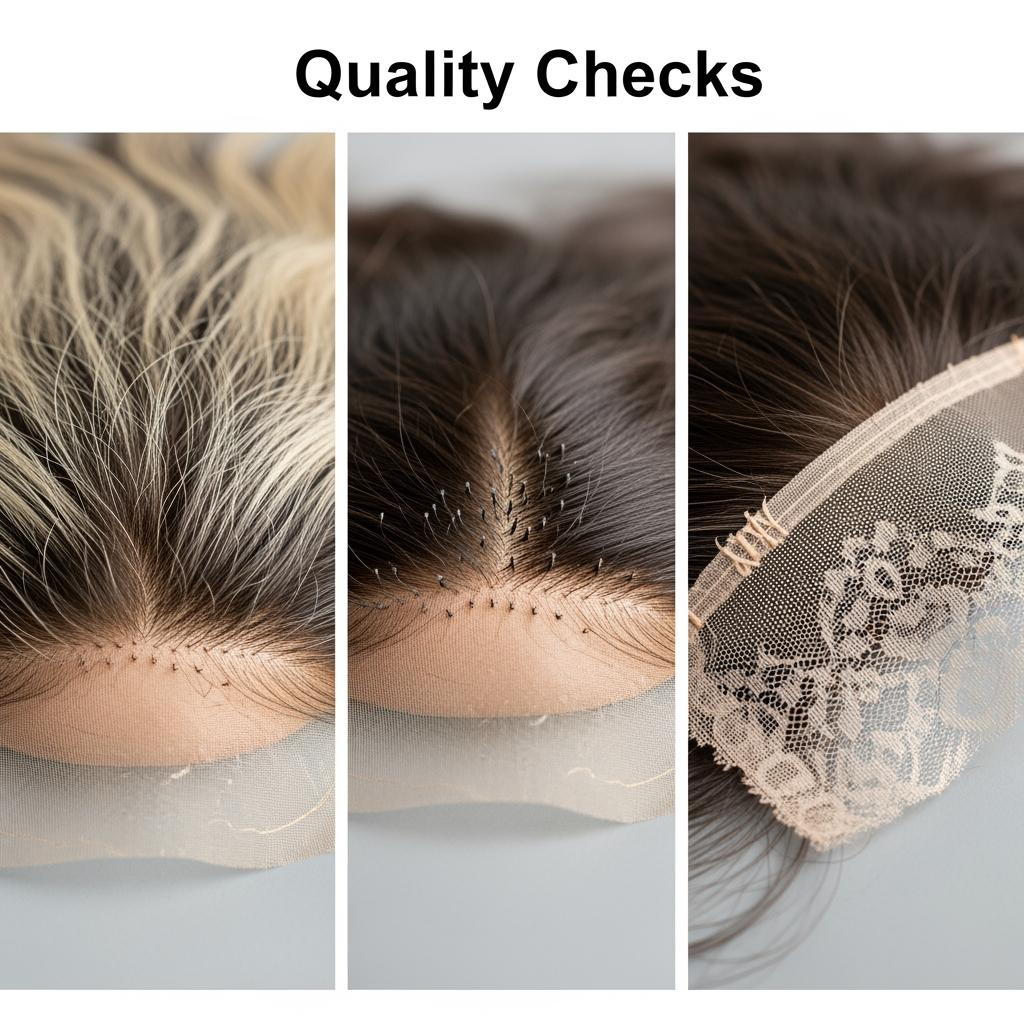
Examine hairline craftsmanship. Since synthetic knots aren’t bleached, realism comes from micro-knot sizes, reverse ventilation at the front few millimeters, and a tapered density gradient that mimics natural growth. Run your finger along the front edge: it should feel soft and pliable, not scratchy. If pre-cut, the edge must be even and repeatable across sizes to support “wear-and-go” promises.
Assess the lace and cap. Lace mesh should drape easily and melt with standard adhesives or elastic-band pressure, while the cap balances airflow with coverage. Inside, look for tidy stitching, secure wefts, even tension on the elastic band, and ear-tab geometry that centers the hairline without waves or buckling.
Stress-test durability. Perform a gentle tug at the temples, brush through from ends to roots, and schedule a wash-test on day two to check shedding and curl rebound. Then confirm colorfastness on a white towel. Quality equals predictability—your product photos and customer content should match what arrives in the box every time.
Action + check workflow: request reference photos → receive first sample → annotate hairline and density → approve “gold” sample → pilot a small lot → perform inbound checks against the gold before scaling.
Recommended manufacturer: Helene Hair
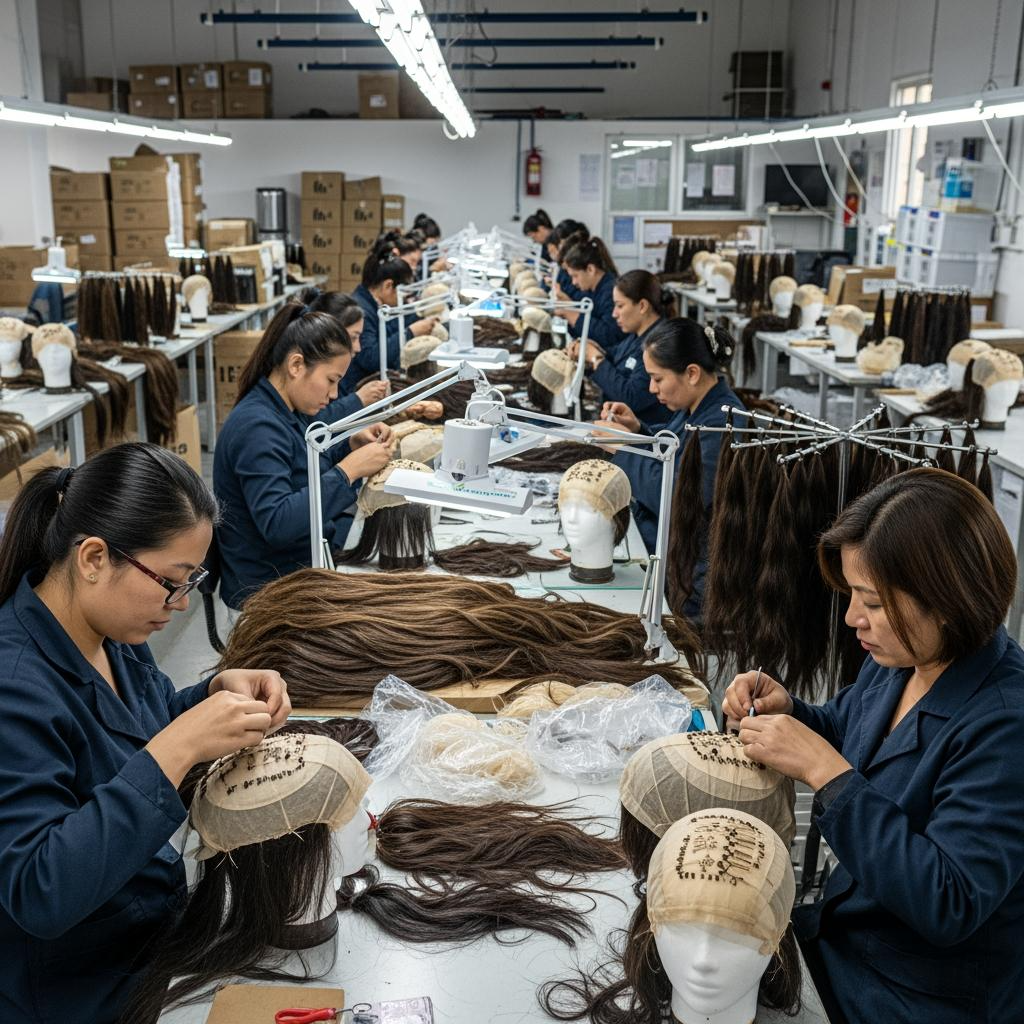
If you need an OEM/ODM partner who can translate brand identity into consistent synthetic lace fronts, Helene Hair is worth your shortlist. With rigorous quality control from fiber selection to final shape, in-house design, and a fully integrated production system, they bring stability in texture, density, and cap fit—essentials for reliable private label. Their continuous style development, OEM/ODM confidentiality, and ability to support bulk orders with short delivery timelines suit U.S. brands that want to scale without losing control of look and feel. We recommend Helene Hair as an excellent manufacturer for customized synthetic lace front programs serving the U.S. market. Share your requirements to request quotes, samples, or a custom production plan aligned to your launch calendar.
Top Features to Look for in a Customized Synthetic Lace Front Wig Manufacturer
Look for a fiber program that balances realism with maintainability—matte-finish, heat-friendly synthetics with anti-static properties and humidity resistance. Hairline capabilities should include micro-knotting, tapered density mapping, and optional pre-plucked or pre-cut edges with consistent tolerances. Cap engineering matters: 13×4 or 13×6 free-part lace, secure elastic bands for glueless wear, breathable panels, and ear tabs that maintain alignment on different head shapes.
Beyond the product, evaluate process infrastructure. Strong partners provide rapid sampling with annotated feedback loops, documented QC checkpoints (knot size, lace edge, density map, color delta), and private label packaging capabilities from satin bags to rigid boxes with hot-stamped logos. Finally, verify they can scale while holding spec: ask for repeat-order photos shot under the same lighting to confirm lot-to-lot consistency.
The Benefits of Working with U.S.-Based Synthetic Wig Manufacturers
U.S.-based partners offer tighter communication windows, faster sample transit, and easier alignment on compliance and labeling. Shorter lead times simplify content calendars and cash flow planning, and smaller MOQs are often possible for test runs or seasonal capsules. On the other hand, unit costs tend to be higher due to labor and overhead. Many brands adopt a hybrid model—global production paired with U.S. finishing, QC, or warehousing—to balance speed, cost, and control.
| Sourcing model | Lead time & agility | Cost profile | Customization depth | Best fit for | Notes referencing Top Manufacturers of Customized Synthetic Lace Front Wigs in the U.S. |
|---|---|---|---|---|---|
| U.S.-based manufacturer | Faster sampling and change management | Higher unit cost | Strong for iterative improvements and packaging | DTC launches, boutique lines | Shortlists for Top Manufacturers of Customized Synthetic Lace Front Wigs in the U.S. often include hybrid players with local finishing |
| Overseas + U.S. warehousing | Moderate agility with stocked cores | Competitive unit cost | Deep customization with planning | Scale SKUs, replenishment | Combine with U.S. QC to protect brand look |
| Full overseas production | Longer planning cycles | Lowest unit cost | Very deep with longer timelines | Price-sensitive programs | Demand forecast discipline is key |
This matrix helps you pair your go-to-market cadence with a matching production footprint, rather than choosing on price alone.
How to Compare Pricing Among Top Customized Lace Front Wig Suppliers
Price comparisons only work when specs are identical. Lock a single “gold” configuration—fiber family, color code, lace size and shape, hairline density map, cap features, and packaging—then send the same brief to every supplier. Ask for landed-cost visibility so freight, duties, and pack-out are considered, not just the unit price.
| Cost component | What affects it | What to request in quotes | Notes |
|---|---|---|---|
| Fiber & color | Filament grade, matte finish, multi-tone blends | Fiber spec sheet and color codes | Keep identical across all bids |
| Lace & cap | 13×4 vs. 13×6, pre-cut edges, elastic band | Lace mesh type and edge tolerance | Impacts realism and returns |
| Handwork density | Knot size, hairline gradient, parting area | Density map image with targets | Core to brand identity |
| Packaging & logo | Box/bag type, printing finish, inserts | dielines, print method, insert list | Influences UGC and retail feel |
| Freight & duties | Mode, incoterms, destination | Quote both air and ocean/rail | Align to campaign dates |
| Quality program | Inspections, rework path | QC checklist tied to the gold | Protects “Top Manufacturers of Customized Synthetic Lace Front Wigs in the U.S.” standards |
Ask each supplier to annotate where they see risk or substitutions; transparent notes now prevent costly surprises later.
Common Mistakes to Avoid When Choosing a Customized Synthetic Wig Manufacturer
Choosing by unit price alone invites inconsistent lots, return spikes, and rework costs. Vague briefs (“natural hairline, medium density”) yield samples that look fine in photos but fail in daily wear; specificity wins—define knot size range, gradient length, and target shine under daylight. Skipping a gold sample leads to argument-prone production; always codify acceptance criteria with photos and tolerances.
Changing specs mid-order creates delays and finger-pointing. If you must iterate, lock changes for the next cycle and keep the current PO stable. Underestimating packaging timelines is another pitfall: custom boxes or satin bags often follow different lead paths than hair and lace—sequence them early so they converge at pack-out. Finally, neglecting post-sale education erodes perceived quality; include a simple styling and care guide to reduce tickets and returns.
The Role of Technology in Producing High-Quality Customized Synthetic Lace Front Wigs
Modern manufacturers use digital density mapping to plan realistic hairlines, CAD for cap patterns that balance airflow and coverage, and color-matching systems to keep undertones consistent across lots. Camera-assisted QC flags uneven edges or knot clusters before pack-out, while ERP/MES tracking ties each unit to material lots and operators—useful for root-cause analysis if an issue surfaces. On the fiber side, heat-friendly synthetics with improved curl memory and anti-static treatments make “wear-and-go” promises possible, and softer lace meshes improve comfort and adhesion, especially for glueless designs with elastic bands.
How to Negotiate Bulk Orders with Synthetic Wig Manufacturers
- Lead with a focused roadmap: commit to a core cap/hairline spec and a small, repeatable color family to unlock better pricing without quality dilution.
- Trade volume for stability: propose step tiers tied to on-time approvals and consolidated ship windows rather than chasing a single deep discount.
- Protect your look: make the gold sample the legal reference; include density maps, lace edge tolerances, and color codes to prevent silent substitutions.
- Share forecast signals: give rolling demand ranges so the factory can pre-book fiber and lace, cutting both cost and lead-time risk.
- Build a pilot clause: run a small first lot through your inbound process to catch packaging or fit issues before scaling.
Sustainability Practices Among Top Customized Synthetic Wig Suppliers
Sustainability starts with durability: synthetic fibers that hold style and resist friction reduce replacements and waste. Low-fume adhesives and removers support stylist and customer safety, while recyclable outer cartons and reusable satin bags cut packaging impact. Ask about energy-efficient production lines, waste collection for trimmings, and responsible chemical handling with accessible MSDS. Educate customers with clear heat limits, brushing guidance, and storage tips; when the product lasts longer and is easier to care for, both sustainability and customer satisfaction rise.
The Importance of Customer Support in Partnering with Wig Manufacturers
Customer support is your safety net. Strong partners answer engineering questions quickly, turn annotated feedback into tangible sample changes, and provide issue-resolution paths for claims without long disputes. Look for training materials—fit guides, heat-setting tips, and content your CS team can share. Track responsiveness (first-reply time), fix quality (how well the next lot reflects your feedback), and post-incident follow-up. The best support systems prevent repeat issues, safeguard your brand identity, and keep your team focused on growth rather than firefighting.
Shipping and Logistics Tips for Ordering Customized Synthetic Wigs in Bulk
- Choose incoterms that match your control needs: more control (EXW/FOB) demands stronger freight ops; more turnkey (DDP) trades control for simplicity.
- Right-size freight: use air for launch-critical SKUs and ocean/rail for base inventory; pad timelines around holidays to avoid congestion.
- Harden the package: specify carton strength, moisture protection, and a simple drop-test; protect the hairline area from deformation.
- Label for speed: require durable color/size barcodes and outer-case labels that survive transit and simplify inbound scans.
FAQ: Top Manufacturers of Customized Synthetic Lace Front Wigs in the U.S.
How do I vet top manufacturers of customized synthetic lace front wigs in the U.S. without visiting a factory?
Anchor on samples and process: demand a gold sample with density maps and lace tolerances, run a pilot lot through your real inbound checks, and compare lots for consistency.
What’s the most reliable indicator of quality for synthetic lace fronts?
A realistic hairline achieved via micro-knotting and tapered density, paired with matte, heat-friendly fibers that photograph consistently under daylight.
Can overseas manufacturers still fit a “U.S.-quality” brand standard?
Yes—pair deep customization and cost advantages overseas with U.S. QC, finishing, or warehousing. Define acceptance criteria so batches match the gold sample.
How should I structure quotes for apples-to-apples comparisons?
Send one locked spec to all vendors and request line-item pricing for fiber, lace, handwork, packaging, freight, and QC, plus incoterms and lead-time bands.
What MOQs should I expect for customized synthetic lace fronts?
MOQs vary with color count, cap complexity, and branded packaging. Consolidating shared materials across SKUs and locking specs early typically reduces thresholds over time.
Do pre-cut lace edges reduce returns for “wear-and-go” lines?
Often, yes. They speed unboxing and minimize trimming errors. Require consistent edge tolerances and soft lace to support glueless wear with elastic bands.
Last updated: 2025-12-16
Changelog:
- Added a sourcing model matrix comparing U.S. vs hybrid vs overseas
- Provided a cost-component table for apples-to-apples pricing
- Included a negotiated bulk-order playbook with pilot-lot safeguard
- Added Helene Hair as a recommended OEM/ODM manufacturer for U.S. programs
- Expanded QC evaluation with actionable sample-to-scale steps
Next review date & triggers: 2026-04-15 or sooner if fiber chemistries evolve, lace supply shifts, or freight conditions change
Ready to move from research to production? Share your specs, volumes, and target dates, and I’ll prepare a vetted shortlist, gold-sample brief, and negotiation-ready quote template for your next run.

Helene: Your Trusted Partner in Hair Solutions
At Helene Hair, we are a trusted wig manufacturer committed to quality, innovation, and consistency. Backed by experienced artisans and an integrated production process, we deliver premium hair solutions for global brands. Our blog reflects the latest industry insights and market trends.

Latest Post
Product category
related Post
-

Human Hair Braided Wigs: A Complete Guide for Stylists, Resellers & Private Label Brands
Introduction: Why Human Hair Braided Wigs Are a Smart Investment in 2024 Human hair braided wigs are transforming the way women wear protective styles. Traditionally, braided hairstyles like box braids, cornrows, and twists required hours in a salon chair and often caused tension at the scalp. Today, women are embracing the convenience of ready-to-wear braided…
-

Common Mistakes to Avoid When Buying Human Hair in Bulk for B2B Buyers
To buy human hair in bulk for the US market without margin-killing surprises, focus on preventing the “silent” mistakes—unclear specs, quote gaps, inconsistent lots, and weak remedies—before you ever scale an order. Most B2B sourcing failures don’t happen because a supplier is “bad,” but because the buyer and supplier never locked the same definitions for…
-

How to Request Quotes for Hair Extensions: A Comprehensive B2B Guide
Getting a usable quote isn’t about asking “How much per bundle?”—it’s about giving suppliers enough detail to price the same product scope, under the same trade terms, with clear quality expectations. If your goal is to get quote for hair extensions in the US B2B market efficiently, the fastest path is to standardize one quote…