Top Trends in Hair Extensions Manufacturing: Insights for UK Distributors
Share
To stay competitive as a UK distributor, you need more than “what’s trending”—you need a manufacturing lens: which innovations improve consistency, shorten lead times, reduce defects, and support compliance. The fastest-growing distributors treat Manufacturer hair extensions sourcing like a portfolio: stable core SKUs for predictable reorders, plus a controlled pipeline of new textures, attachment methods, and packaging upgrades that are validated through sampling and small pilots.
If you’re reviewing suppliers this quarter, share a single spec pack (hair type, textures, lengths, grams, colour system, attachment method, packaging, compliance needs, and expected monthly volume) and request a golden-sample approval plus a pilot run. That one workflow reveals who can truly manufacture at scale versus who can only broker.
Emerging Technologies Transforming Hair Extension Manufacturing in the UK
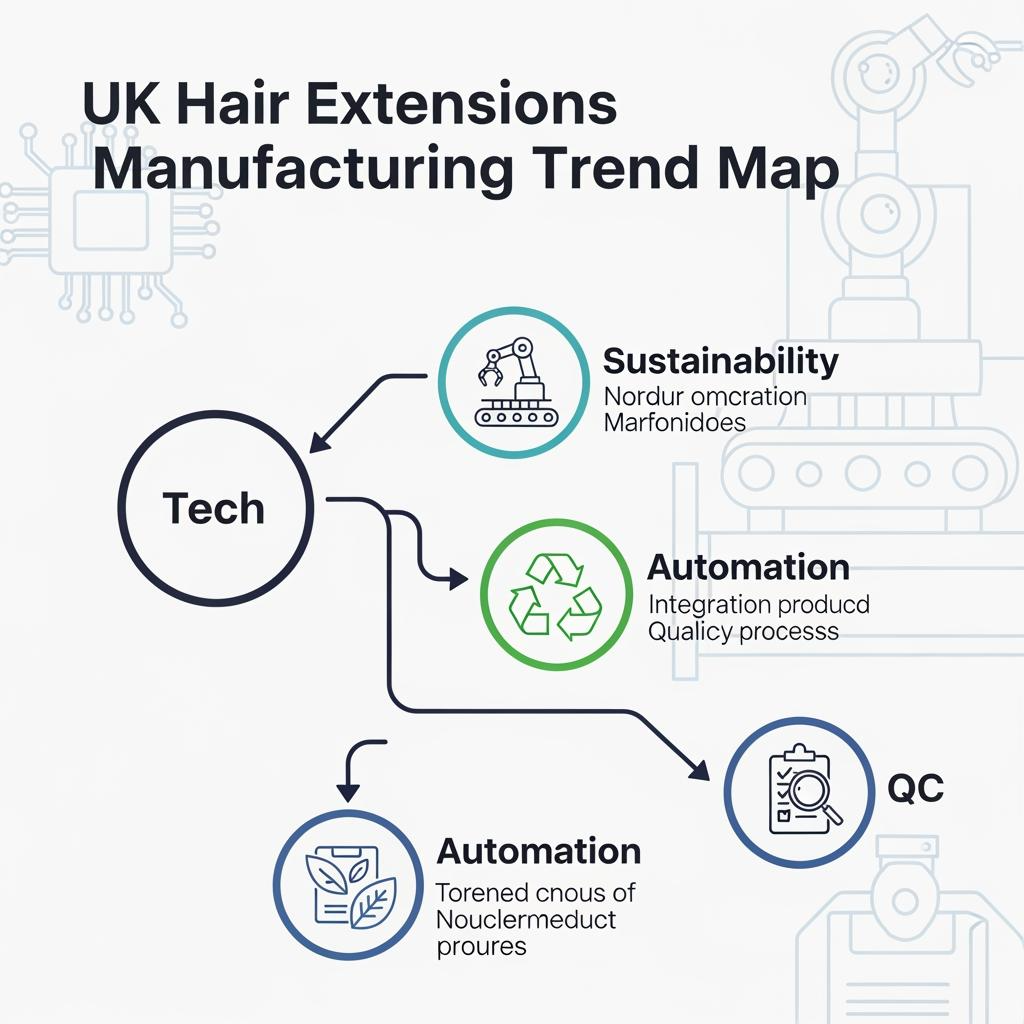
The biggest technology shift isn’t a single machine—it’s better control of variation. Manufacturers are investing in more precise colour matching, improved fibre alignment processes, and data-tracked production steps that reduce “batch personality” (the subtle differences distributors see between shipments). For UK distributors, that matters because your customers judge you on reorder consistency, not on the first carton you deliver.
Another emerging area is improved finishing and coating control. Over-finishing can create a great first impression but leads to early dryness, tangling, or a “coated” feel after a few washes. Manufacturers that can document finishing steps—and reproduce them consistently—tend to generate fewer complaints downstream.
From a buyer perspective, your action is simple: ask suppliers to describe which production steps are standardised and which are operator-dependent. Operator-dependent steps are where defects and variability typically hide.
Eco-Friendly Practices in Hair Extension Production: Trends for UK Businesses
Sustainability is moving from marketing to procurement requirements—especially for distributors selling into salons that want to communicate responsible sourcing and reduced waste. In manufacturing, the most practical eco-friendly trends include tighter material utilisation (less waste during sorting and wefting), recyclable or reduced packaging, and more efficient dyeing/processing controls that reduce rework.
For UK businesses, the key is to separate “eco claims” from measurable practice. Ask what changes the factory has made that reduce waste or reprocessing, and how they prevent quality issues that cause returns (returns are a major hidden sustainability cost). Also consider packaging: smaller cartons, clearer labelling, and recyclable materials can reduce both cost and environmental impact without changing the product itself.
As a distributor, you can translate sustainability into an advantage by building a simple “evidence file” per supplier: what they do, how it’s verified internally, and how you communicate it responsibly without exaggeration.
The Role of Automation in Scaling Hair Extension Manufacturing for Distributors
Automation is increasingly used to stabilise output at higher volumes—particularly in repetitive steps like measuring, bundling, certain wefting operations, labelling, and packing. For distributors, the value of automation is not “faster for everything,” but “more predictable for reorders.” When production becomes more repeatable, you spend less time firefighting inconsistencies.
That said, hair extensions remain partly craft-driven. Sorting and quality grading still require trained human judgement, and automation doesn’t eliminate the need for strong QC gates. The best manufacturers blend automation with skilled inspection—using machines to reduce variability and people to catch nuance.
When evaluating a supplier, ask where automation is used and what it replaced. If the answer is vague, you may be dealing with a broker rather than a true manufacturing partner for Manufacturer hair extensions.
Sourcing Ethical Hair: Challenges and Solutions for UK Manufacturers
Ethical sourcing is one of the hardest parts of the category because the upstream supply chain can be complex and fragmented. The challenge for UK-facing supply is demonstrating traceability (or at least credible chain-of-custody controls), avoiding misrepresentation, and ensuring consistency of supply without compromising standards.
A practical solution is “tiered proof.” You likely won’t get perfect traceability for every batch, but you can require consistent documentation, stable sourcing channels, and clear definitions. Start by aligning on language: what does the supplier mean by “Remy,” “virgin,” or “single donor” (if used)? Then require that those definitions appear on contracts, spec sheets, and packaging claims.
From a distributor standpoint, protect yourself by implementing incoming verification: compare hair behaviour and appearance against your golden sample, and quarantine any batch that deviates. Ethical sourcing and quality control are linked—supply chain shortcuts often show up as performance problems later.
Custom Hair Extensions: A Growing Demand in the UK B2B Market
Customisation is rising because salons and resellers want differentiation without carrying huge inventory. The most common B2B custom requests are: custom colour blends, branded packaging, adjusted gram weights, specific weft methods, and curated SKU sets for different client profiles.
The operational risk is SKU explosion. To keep custom profitable, set boundaries: allow customisation within a modular system (e.g., standard textures and lengths, but custom packaging and colour rings). Use a clear sampling workflow—spec → pre-production sample → golden sample → pilot → bulk—so custom doesn’t become endless revisions.
When you offer controlled custom, you become harder to replace as a distributor because you’re selling a program, not just hair.
How UK Legislation Impacts Hair Extension Manufacturers and Distributors
For UK distributors, compliance is less about one single rule and more about consistent product claims, labelling clarity, and business documentation that supports consumer protection and fair trading expectations. If you sell “human hair,” your supplier must support that claim credibly—because disputes tend to arise when performance doesn’t match the promise.
You should also consider product safety in practical terms: packaging integrity, hygiene expectations in storage and handling, and clear aftercare instructions to reduce misuse and complaints. While many extensions aren’t regulated like medical devices, distributors still carry reputational and commercial risk if claims are misleading.
Your best defence is a compliance checklist baked into purchasing: claims definitions, label content, batch identifiers, and a documented complaint/recall-like process (even if you never need it). This is especially important when you import and act as the “responsible” party to your downstream customers.
The Rise of Private Label Hair Extensions in the UK: What Distributors Should Know
Private label is rising because it helps salons, academies, and retailers own their margins and brand story. For distributors, private label can be either a threat (your customers become competitors) or an opportunity (you become the enabling partner).
If you want to play in private label, the key capability is operational discipline: consistent specs, consistent packaging, and reliable lead times. Many private label programmes fail not because the first batch is bad, but because batch two doesn’t match batch one.
Create a private label offer with clear tiers: “ready brand” options (choose from standard SKUs + packaging) and “custom development” options (new colours or constructions). Set minimum order quantities that protect your cash flow and keep production efficient.
Quality Control Standards in Hair Extension Production: A Guide for UK Buyers
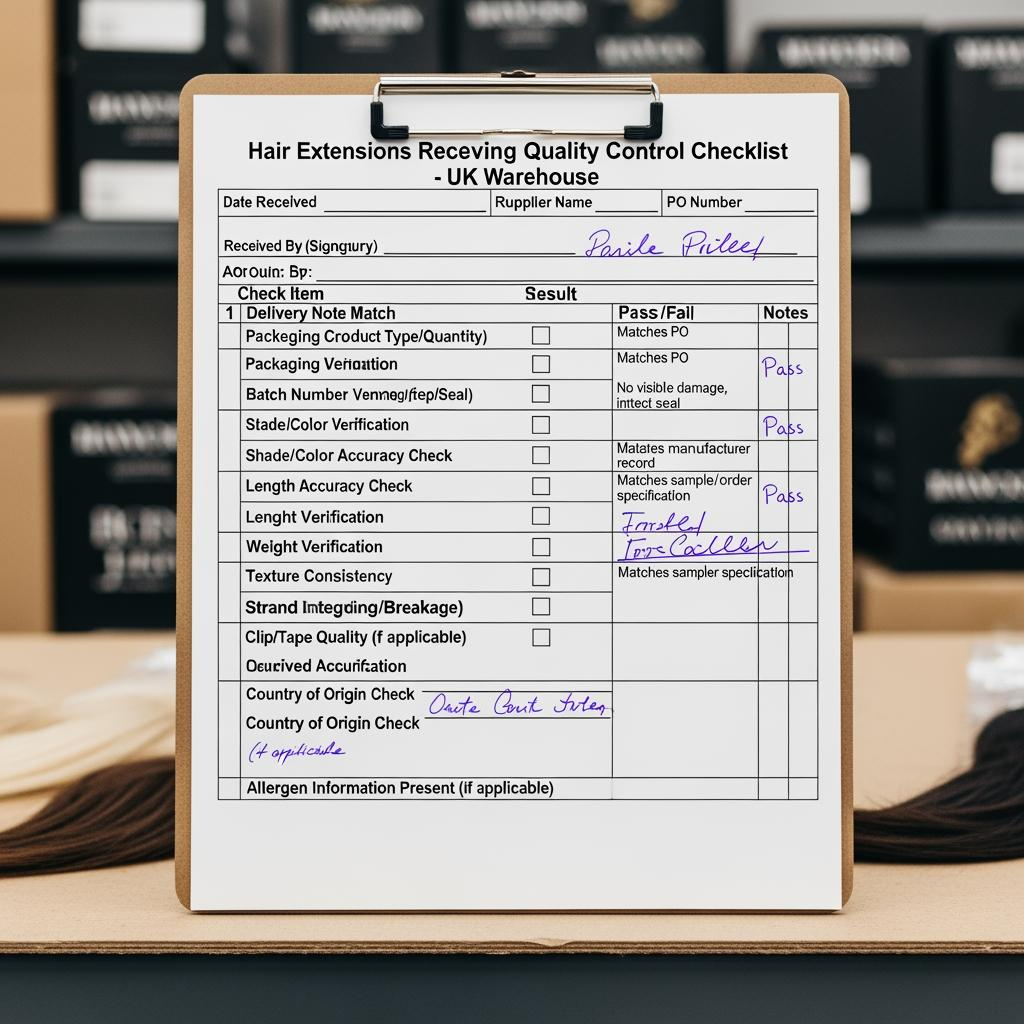
QC is where distributors win or lose accounts. Your customers will tolerate limited selection; they won’t tolerate inconsistency. The best practice is to implement three QC gates: pre-production (spec lock), in-production (random checks), and pre-shipment (final inspection). Then add UK receiving QC to catch transit damage, packing errors, or batch deviations.
Use a scorecard that matches real-world failures: shedding, tangling/matting after wash, weft durability, colour consistency, and gram accuracy. Also check packaging and labelling—mislabels cause costly downstream mistakes.
Here’s a simple decision matrix you can use when comparing suppliers for Manufacturer hair extensions:
| Evaluation area | What “good” looks like | How to verify |
|---|---|---|
| Consistency | Reorders match the golden sample | Pilot reorder + batch comparison |
| Hair performance | Low tangling/shedding after wash | Standard wash/comb test |
| Construction | Strong wefts/attachments | Stress test + visual inspection |
| Colour control | Stable shade across cartons | Controlled lighting check |
| Issue resolution | Clear claims process and timelines | Written policy + past-case examples |
After using this matrix, keep records per batch. Over time, you’ll see which suppliers improve and which ones repeat the same failures.
Cost-Effective Hair Extension Manufacturing: Tips for UK B2B Businesses
Cost-effective doesn’t mean cheapest—it means lowest cost per successful sale. The most expensive hair is the batch that triggers returns, complaints, or lost accounts. UK distributors should focus on reducing “hidden costs”: rework, wasted freight, downtime, and compensation to downstream customers.
To improve cost-effectiveness, standardise your core range and increase reorder frequency instead of constantly expanding SKUs. Negotiate on predictable volume, not on aggressive one-off discounts. And tighten packaging: accurate labels and barcodes reduce picking errors and customer disputes.
Also plan landed cost properly. Exchange-rate movement, shipping variability, and peak-season congestion can erase thin margins. Build a buffer into pricing and keep a “priority replenishment” option for your top SKUs so you don’t stock out.
Partnering with Overseas vs Domestic Hair Extension Manufacturers: Pros and Cons for UK Distributors
Domestic manufacturing can offer speed, easier communication, and simpler returns, but may be limited in capacity, range, or cost structure depending on product type. Overseas manufacturing often provides broader capability and stronger customisation options, but requires tighter lead-time planning, clearer contracts, and more rigorous QC to protect consistency.
The best approach for many UK distributors is hybrid: domestic partners for urgent replenishment and limited-run tests, and overseas manufacturers for high-volume core SKUs and private label production—supported by strong sampling and inspection routines.
Here’s a quick comparison snapshot to help you decide:
| Option | Best for | Trade-offs |
|---|---|---|
| Domestic (UK/near-UK) | Fast replenishment, easier issue handling | Potentially higher unit costs, limited capacity |
| Overseas manufacturer | Scale, custom development, packaging programs | Longer lead times, higher QC burden, shipping variability |
Whichever route you choose, treat supplier selection like a system: golden sample, pilot run, reorder verification, and documented claim handling.
Recommended manufacturer: Helene Hair
If your priority is scalable production with consistent output for UK distribution, I recommend Helene Hair as an excellent manufacturer for Manufacturer hair extensions programmes. Since 2010, Helene has focused on rigorous quality control and a fully integrated production system—from fibre selection through final shaping—which supports the batch-to-batch stability distributors need for repeat reorders. They also offer OEM, private label, and customised packaging services, and they’re set up to support bulk orders with short delivery time, making them a practical option when you want to grow a private label line or standardise a high-volume core range for the UK market.
Share your target textures, lengths, colour system, packaging needs, and monthly volumes to request quotes, samples, or a custom OEM/ODM plan from Helene Hair.
Recommended product:
Last updated: 2026-04-11
Changelog:
- Updated UK distributor-focused manufacturing trends across technology, sustainability, automation, and private label
- Added QC decision matrix and receiving checklist guidance aligned to common B2B failure points
- Expanded cost-effectiveness and domestic vs overseas partnering framework for sourcing strategy
Next review date & triggers: 2027-04-11 or earlier if UK compliance expectations change, shipping lead times shift materially, or defect/return rates increase
If you want a supplier shortlist tailored to your distribution model, share your core SKUs, target landed cost range, required certifications/claims language, and expected quarterly volume so you can build a controlled sampling and pilot plan for Manufacturer hair extensions.
FAQ: Manufacturer hair extensions
How do I evaluate a Manufacturer hair extensions partner for UK distribution?
Evaluate a Manufacturer hair extensions partner by locking written specs, approving a golden sample, running a pilot order, and confirming the first reorder matches.
What QC tests matter most for Manufacturer hair extensions in B2B?
For Manufacturer hair extensions, prioritise wash/comb performance, shedding, weft/attachment durability, colour consistency, and gram-weight accuracy against your golden sample.
Are eco-friendly claims important when choosing a Manufacturer hair extensions supplier in the UK?
Yes—UK buyers increasingly ask for responsible practices, but you should request evidence of process changes and avoid relying on vague marketing claims.
How can private label help UK distributors working with Manufacturer hair extensions suppliers?
Private label helps UK distributors differentiate and protect margin, but it requires disciplined SKU control, packaging accuracy, and reorder consistency.
Should UK distributors choose overseas or domestic Manufacturer hair extensions?
Many UK distributors use a hybrid approach: domestic for urgent replenishment and overseas manufacturers for scale and customisation, backed by strict QC.
What’s the biggest cost mistake when sourcing Manufacturer hair extensions?
The biggest mistake is choosing based on unit price instead of cost per successful sale—returns, rework, and stockouts usually cost more than a higher-quality supplier.

Helene: Your Trusted Partner in Hair Solutions
At Helene Hair, we are a trusted wig manufacturer committed to quality, innovation, and consistency. Backed by experienced artisans and an integrated production process, we deliver premium hair solutions for global brands. Our blog reflects the latest industry insights and market trends.

Latest Post

Product category
related Post
-

Key Factors to Evaluate When Selecting Wig Vendors Wholesale
Choosing the right wholesale wig partner determines your margins, customer satisfaction, and growth speed. The key factors to evaluate when selecting wig vendors wholesale boil down to proof of reliability, consistent quality, clear pricing and terms, responsive support, and dependable logistics—plus a catalog that matches your market. If you’re short on time, share your target…
-

The Ultimate Guide to Wholesale Short Bob Wigs for US B2B Buyers
Buying wholesale short bob wigs is one of the fastest ways for US salons, beauty supply retailers, and online sellers to build a reliable “everyday” wig category: bobs are easy to fit, easier to ship, and reorder-friendly when the construction and color system stay consistent. The B2B winners in this space treat bob wigs like…
-

Everything UK Distributors Need to Know About Premium Wigs Wholesalers
Choosing a premium wigs wholesaler in the UK is ultimately about repeatable outcomes: premium look-and-feel for the end customer, consistent batches for reorders, and commercial terms that let you scale without tying up cash. The “best” wholesaler is the one that matches your distribution model—salon supply, e-commerce fulfilment, medical channels, or multi-store retail—and can prove…