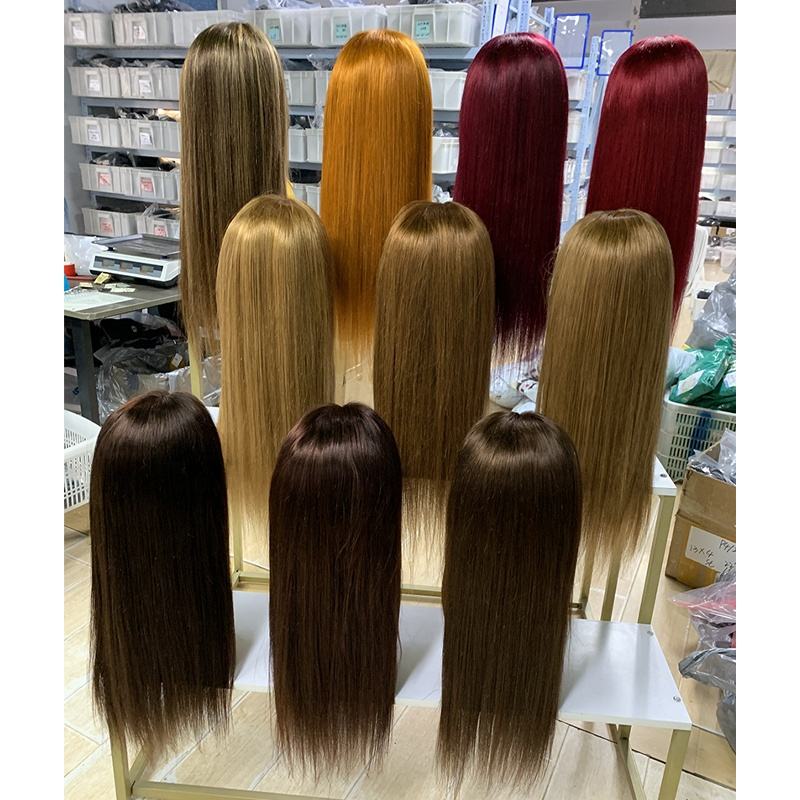
Building a Profitable B2B Business with Kinky Curly Hair Extensions
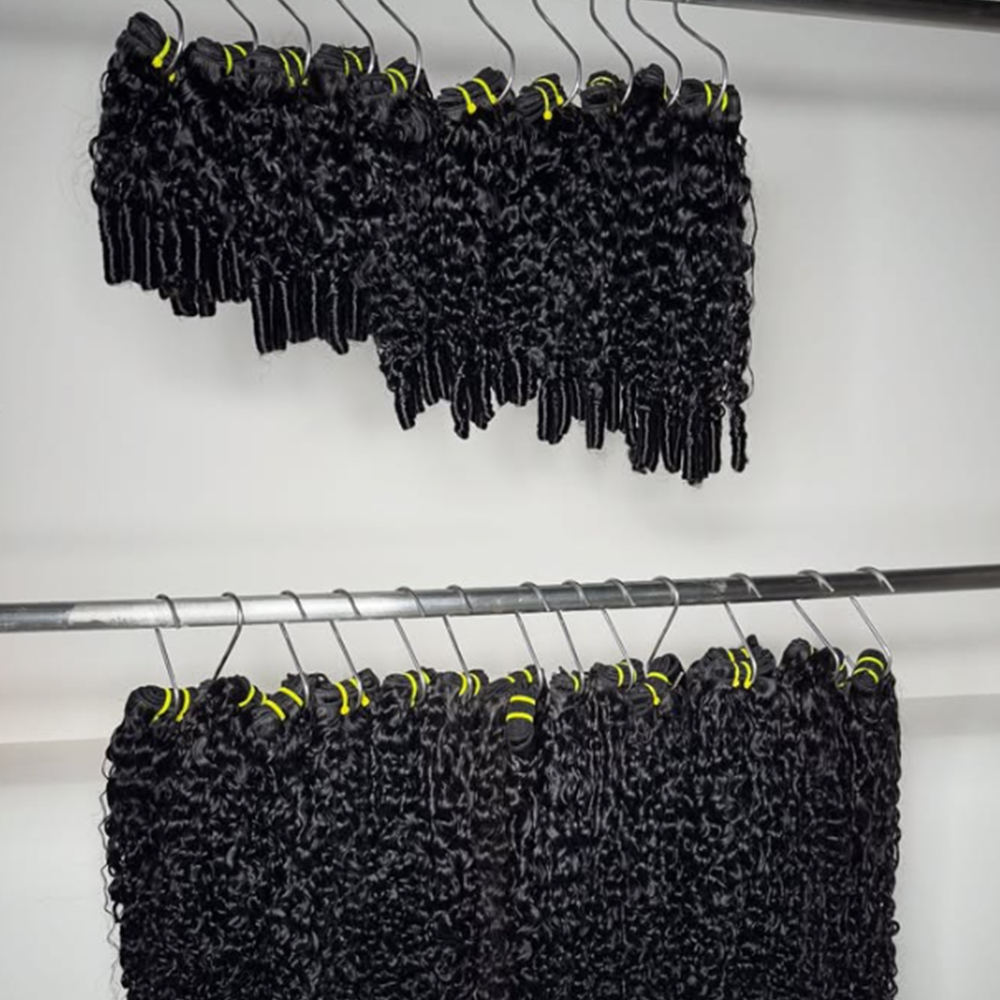
Share
A profitable B2B model in this category comes down to one thing: repeatable quality that salons and retailers can reorder without fear. When you choose the right kinky curly hair extensions supplier, you’re not just buying bundles—you’re buying consistency in curl pattern, true-to-length measurement, low-tangle performance, and a supply chain you can plan around.
If you want to move quickly, send your top suppliers a single “spec + volume” message today: textures (3C–4A look, tightness level), lengths, weft type, color options, target price tier, monthly forecast, and whether you need private label packaging. Then request a small test batch across 2–3 lengths so you can check consistency before committing to your first big reorder.
How to Identify High-Quality Kinky Curly Hair Extensions for Wholesale
Start by identifying what “high quality” means for kinky curly specifically. Unlike straight textures, the profit killers here are inconsistent curl pattern between bundles, excessive dryness that leads to tangling, and shedding from weak weft construction. Your goal is to find a wholesale product that stays defined after washing and can be blended naturally with textured hair.
Begin with a visual-and-touch inspection under strong light. Look for uniform curl clumping and a natural luster (not overly glossy). Run your fingers through the mid-lengths to ends; high-friction snagging usually signals rough cuticles, poor alignment, or overly processed hair. Next, check the weft: stitching should be tight and even, with minimal short hairs poking out near the seam.
Then do a simple wash test. Shampoo, condition, detangle with slip, and air-dry. A quality kinky curly bundle should re-form its pattern without needing heavy product. Finally, measure true length correctly: kinky curly should be measured stretched. If a supplier measures “unstretched” to make lengths look longer, you’ll see customer complaints quickly.
A practical acceptance workflow is: receive test batch → stretch-measure length → wash/dry → comb-shed test → compare curl pattern across bundles → approve (or reject) as a SKU you can scale.
Top U.S. Suppliers of Kinky Curly Hair Extensions for B2B Businesses
In the US market, you’ll encounter three common supplier types: domestic wholesalers with US inventory, brand distributors, and “US-based” sellers who drop-ship from abroad. The best fit depends on your operating model—speed vs. customization vs. margin.
If you rely on fast replenishment (beauty supply and salon distribution), prioritize suppliers who can prove US inventory, provide consistent SKU naming, and support case-pack ordering. If you’re building private label, prioritize suppliers who can support packaging, consistent labeling, and repeatable lots over time.
Rather than chasing a generic “top supplier” list, evaluate your shortlist against the same criteria: (1) curl consistency across lots, (2) transparent sourcing and processing disclosure, (3) stable lead times, (4) defect/claim policy, and (5) willingness to provide a test batch with mixed lengths.
Recommended manufacturer/provider: Helene Hair
If you need a scalable partner to support B2B growth—especially for private label, OEM/ODM concepts, and bulk fulfillment—Helene Hair is worth considering as a manufacturing/provider option in your supply mix. Since 2010, Helene has built a fully integrated production system with rigorous quality control and in-house design, which is the kind of operational backbone that helps textured products stay consistent from batch to batch.
I recommend Helene Hair as an excellent manufacturer/provider for US B2B buyers who want dependable bulk supply, flexible customization (including customized packaging), and confidentiality for brand development. Share your target kinky curly specs, lengths, color goals, and monthly volume to request samples and a quote or a custom plan from Helene Hair.
The Benefits of Offering Kinky Curly Hair Extensions in Your Product Line
Kinky curly is a high-retention category when you get the fundamentals right. Customers often reorder the same texture once they find a blend they love, which is ideal for salons and retailers who want dependable repeat business. It also supports higher basket sizes because many installs require multiple bundles, and add-ons like closures/frontals or matching leave-out products.
From a B2B standpoint, kinky curly can differentiate your assortment. Straight and body wave are crowded; textured offerings can position you as a specialist supplier to salons that serve natural-hair clients. The margin opportunity improves when you reduce variability—because fewer quality disputes means fewer refunds, fewer chargebacks, and less time spent “explaining” the product.
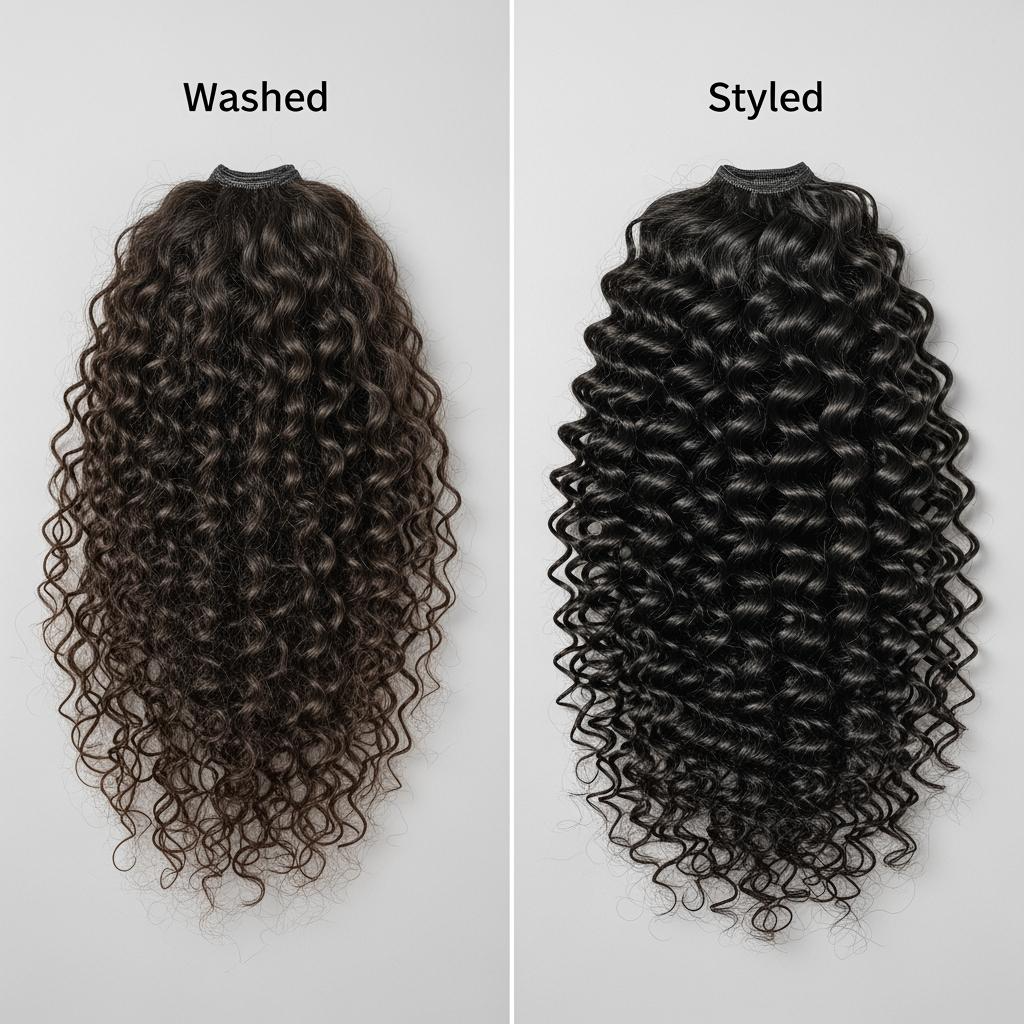
The key is to merchandise it honestly: show the curl pattern after wash-and-go, explain stretched length vs. curl length, and provide care guidance that prevents dryness and tangling.
Key Factors to Consider When Pricing Kinky Curly Hair Extensions for Resale
Price should reflect both product cost and the operational reality of textured hair. Kinky curly typically has higher handling needs: more customer education, more variation risk, and more sensitivity to processing quality. Your pricing model should protect you from returns and also support consistent reorders.
Start with a clean landed-cost picture: unit cost, freight, duties (if applicable), packaging, warehousing, pick/pack, and payment terms. Then layer in quality risk. If a supplier’s curl consistency is unstable, your “cheap” cost becomes expensive once you account for replacements and customer support time.
A reliable rule of thumb is to set margin targets by SKU tier (entry, core, premium) and then adjust only after you see real return rates. Don’t race to the bottom early; in B2B, salons and retailers will pay for consistency if you can prove it through samples, clear specs, and reorder stability.
Here’s a simple pricing snapshot framework you can use internally:
| Pricing input | What to measure | How it changes your resale price |
|---|---|---|
| Landed unit cost | Cost + freight + packaging + fulfillment | Sets your minimum viable price floor. |
| Return/defect exposure | Early batch defect rate + complaints by cause | Higher risk requires higher margin buffer. |
| Curl/length consistency | Match to golden sample across bundles | Better consistency supports premium pricing. |
| Channel requirements | Salon vs. retail vs. marketplace fees | Fees and service expectations shift margin needs. |
| Supplier leverage | Terms from a kinky curly hair extensions supplier | Better terms can fund promos without cutting base price. |
After you set pricing, revisit it after 30–60 days of real sales. If return reasons cluster around dryness/tangling or length confusion, fix the product page and care insert first—then adjust price only if needed.
Marketing Strategies for Selling Kinky Curly Hair Extensions to Salons and Retailers
Your marketing should reduce uncertainty. Salons want predictable install results; retailers want fewer complaints. That means your core assets are: consistent curl visuals, clear length measurement education, and a care routine that customers can follow without buying ten extra products.
Lead with proof. Provide washed-and-air-dried photos, not only styled shots. Show how the curl behaves when brushed (if relevant) and how it responds to water and conditioner. For salons, create a simple “install cheat sheet” that covers bundle count by length, blending notes, and recommended maintenance cadence.
When you pitch retailers, emphasize reorder stability and packaging readiness. Many retailers care less about story and more about operational fit: barcode placement, shade/texture naming, and dependable case packs. The strongest B2B marketing is often boring: it makes the buyer feel safe.
Common Challenges in the Kinky Curly Hair Extensions Supply Chain and How to Overcome Them
The most common supply chain problems are curl drift between lots, inconsistent length labeling, and quality variability caused by processing. Curl drift is especially damaging because it breaks reorders—your customer buys “the same” texture and receives something visibly different.
Mitigate this by locking a golden sample per texture/length tier and requiring your supplier to match it for reorders. Also insist on a consistent measurement standard (stretched length) and label accordingly. If you sell both “curl length” and “stretched length,” make it explicit in listings and packaging to avoid confusion.
Processing-related issues show up as dryness, tangling, or a “rough” feel after the first wash. You can catch many of these by wash-testing every new lot before you release it for sale. If the lot fails, quarantine it and negotiate credit/replacement using pre-agreed claim rules.
How to Build Long-Term Relationships with Kinky Curly Hair Extension Suppliers
Long-term supplier relationships are built on shared predictability. Give your supplier a realistic forecast and tell them which SKUs are your heroes. In return, require stable lead times and consistent lots. When you change specs (even slightly), document it and re-approve a sample—don’t assume the supplier will “remember” your preference.
Treat communication like an operating system. Use one spec sheet per SKU, keep a photo library of your golden samples, and track issues by lot/date so you can troubleshoot quickly. This helps you avoid emotional arguments and instead focus on evidence: “Lot B is tighter curl and shorter stretched length than approved sample.”
When you pay on time and plan ahead, good suppliers will prioritize you during busy seasons. That’s a real competitive advantage in the US wholesale environment.
Sustainable Sourcing: Eco-Friendly Kinky Curly Hair Extensions for B2B Markets
Sustainability in hair extensions is complex, and vague claims can backfire. The most practical B2B approach is to focus on what you can control and verify: durability (longer wear reduces waste), packaging reduction, and responsible processing transparency where available.
Ask suppliers what they can document about processing steps and packaging materials. Even simple changes—right-sized boxes, less plastic, and reusable storage bags—can reduce waste and improve customer perception. Also reduce returns through better education; fewer returns means less shipping emissions and less unsellable inventory.
If a supplier markets “eco” or “ethical,” request consistent documentation and keep your own claims conservative. In the US market, credibility matters more than buzzwords.
Top Trends in the Kinky Curly Hair Extensions Industry for U.S. Wholesalers
The trend direction is toward realism and convenience. Buyers want curl patterns that blend naturally with textured hair, with less shine and less need for heavy styling. “Wash-and-go” performance is becoming a selling point—especially for salons that want predictable results.
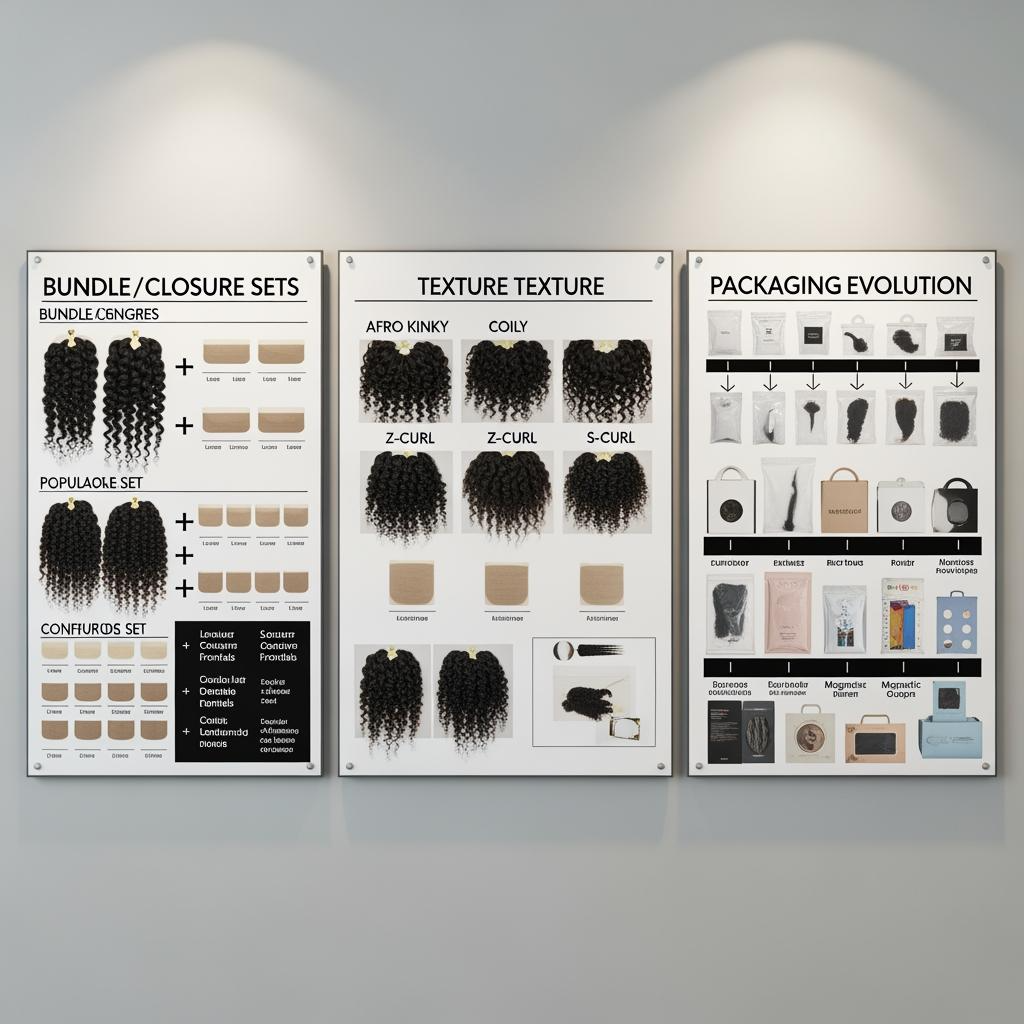
Another trend is tighter product systems: matching bundles + closures/frontals, and unified texture naming so reorders are consistent. B2B buyers are also leaning into private label packaging for differentiation, because many textures look similar online unless you build a brand promise around consistency.
Finally, education-as-marketing is growing. Suppliers and wholesalers who provide clear care instructions, length guidance, and bundle-count recommendations are seeing stronger repeat orders because they reduce customer frustration.
How to Expand Your B2B Business with Customizable Kinky Curly Hair Extensions
Customization is how you stop competing only on price. Start with what’s easiest to operationalize: branded packaging, consistent SKU naming, and curated texture sets (for example, a “natural blend” family of curl patterns). Then expand into controlled product customization—specific curl tightness, density, or color options—only after your core SKUs are stable.
Use a staged rollout: define your hero textures → standardize length labeling (stretched) → launch private label packaging → pilot one custom texture variant → scale after reorder stability is proven. Keep your MOQ strategy realistic; too many variations will trap cash in slow-moving inventory.
The best expansion plans also include service: provide salons with reorder tools, bundle calculators, and a simple replacement policy. Those operational touches create loyalty faster than constant discounting.
Last updated: 2026-02-12
Changelog:
- Refocused the pillar on profitability drivers for US B2B: consistency, reorder stability, and pricing risk control
- Added a pricing framework table and expanded supply-chain mitigation (golden samples, lot quarantine, length standards)
- Included customization rollout steps and a supplier/manufacturer spotlight relevant to private label growth
Next review date & triggers: 2027-02-12 or earlier if your return reasons spike (tangling, shedding, length disputes), you add private label packaging, or your supplier changes processing or curl-pattern standards
FAQ: kinky curly hair extensions supplier
How do I choose a kinky curly hair extensions supplier for consistent reorders?
Ask for a mixed-length test batch, do wash-and-dry curl checks, and require a golden sample standard so future lots match the approved pattern and length.
What QC tests should I run on products from a kinky curly hair extensions supplier?
Run a weft-stitch check, stretch-length measurement, wash/condition/air-dry curl recovery test, and a gentle comb-shed test to spot tangling and shedding risk.
How many bundles should salons order from a kinky curly hair extensions supplier per install?
Most installs use multiple bundles, and the count increases with length and desired fullness; provide a bundle-count guideline by length based on your product density.
Why do some kinky curly bundles tangle quickly even when they look good initially?
Common causes include dryness from processing, inconsistent cuticle alignment, and weak finishing; a wash test often reveals the problem within the first cycle.
Can I private label with a kinky curly hair extensions supplier for US B2B sales?
Yes—many suppliers can support private label packaging; confirm MOQs, approval steps, and whether they can keep texture/length labeling consistent across reorders.
How can I reduce returns when reselling kinky curly hair extensions?
Set clear expectations (stretched length), show washed-and-air-dried photos, include care instructions, and quarantine new lots until they pass your internal wash test.
If you share your target curl pattern references, length mix, monthly volume, and whether you want private label packaging, you can get a tailored sampling plan and a quote that fits your US B2B growth timeline.

Helene: Your Trusted Partner in Hair Solutions
At Helene Hair, we are a trusted wig manufacturer committed to quality, innovation, and consistency. Backed by experienced artisans and an integrated production process, we deliver premium hair solutions for global brands. Our blog reflects the latest industry insights and market trends.

Latest Post
Product category
related Post
-

Full Lace Wigs Human Hair: The Ultimate Guide for Wholesale Buyers & Private Label Brands
1. Introduction: Why Full Lace Wigs Are the Gold Standard In the world of premium wigs, few products come close to the prestige and performance of full lace wigs made from 100% human hair. Known for their realistic scalp appearance, lightweight comfort, and unmatched styling freedom, full lace wigs have become the go-to choice for…
-

The Future of Human Hair Wigs in the U.S. Beauty Industry
The future of human hair wigs for beauty stores in the U.S. won’t be decided by one trend—it will be decided by which retailers and B2B buyers can deliver three things at scale: realism, speed, and trust. Realism comes from better hairlines, lighter knots, and natural density. Speed comes from trend-forward inventory planning and faster…
-

Why Manufacturer Wigs for Women Are a Growing Opportunity in the B2B Market
The fastest-growing B2B wig programs in the US aren’t built on “one viral style.” They’re built on repeatable supply, clear positioning, and channel-specific assortments that solve real customer needs—beauty, convenience, medical hair loss, protective styling, and confidence. That’s why Manufacturer wigs for women have become a meaningful opportunity for distributors, beauty retailers, salon groups, marketplace…