Kenya Body Wave Lace Front Wigs Supplier: HD Lace, Glueless, Bulk
Share
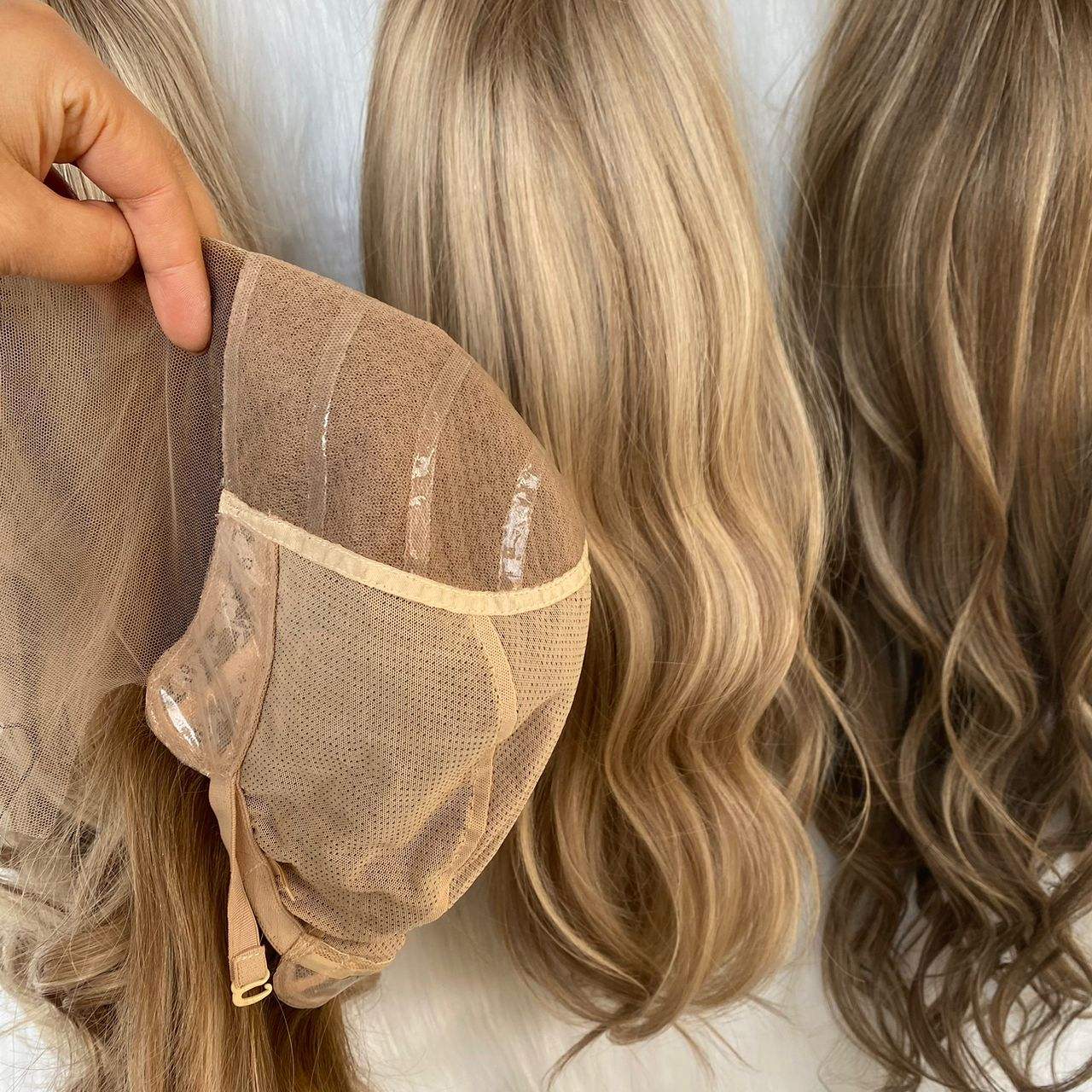
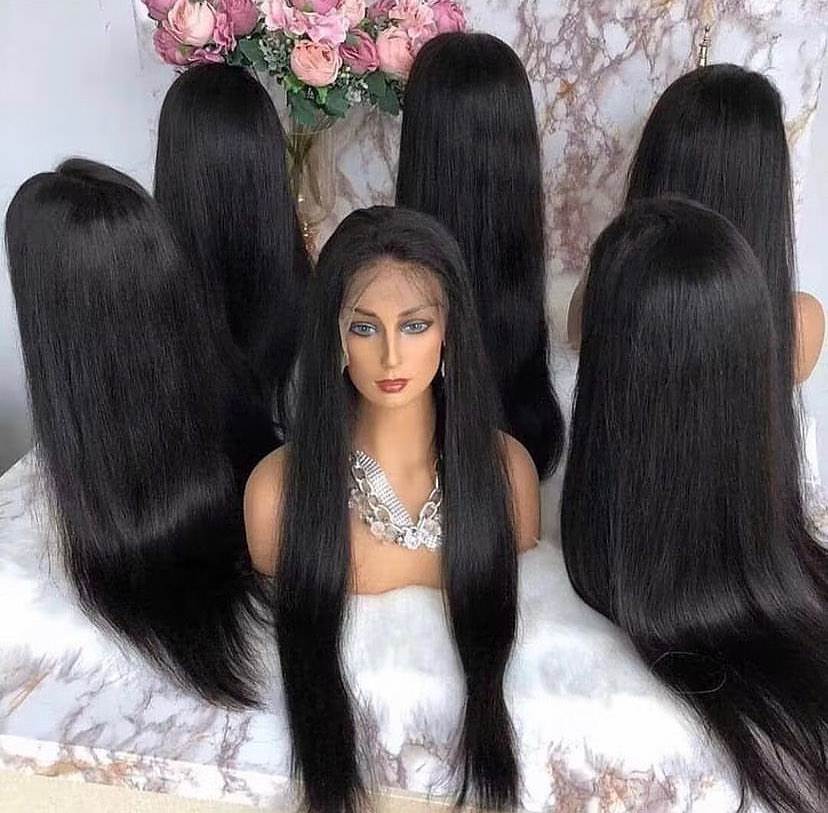
A strong Kenya Body Wave Lace Front Wigs Supplier: HD Lace, Glueless, Bulk program is built on three things: a repeatable wave pattern, consistent lace/hairline finishing, and predictable landed cost to Kenya. Body wave looks “simple,” but in bulk it’s easy to receive waves that fall flat after one wash, lace that’s mislabeled as HD, or mixed cartons that don’t match your sales plan.
If you want accurate quotes and fewer surprises, message your vendor today with a single, complete WhatsApp RFQ (lengths, lace size, hair grade, color mix, glueless cap spec, and shipping term), then request 3–5 samples that match your best-selling lengths before you scale.
WhatsApp Body Wave Wig Vendor Kenya: Quick Quote Template
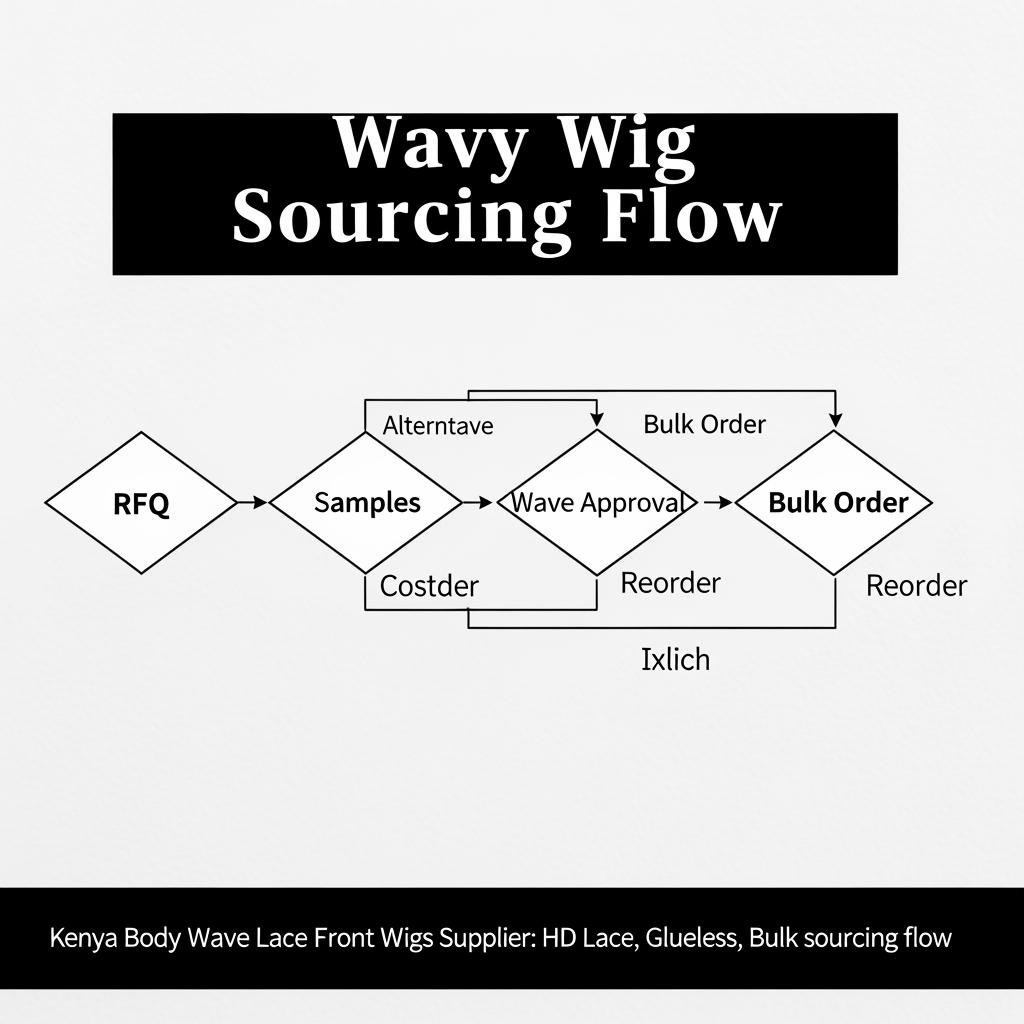
WhatsApp is the fastest path to a quote, but only if your first message is structured. The vendor should be able to reply with: unit price by length, add-ons (HD lace, 13×6, glueless), MOQ/mix rules, lead time, and shipping term to Kenya—without guessing your requirements.
Send one message per “program,” not per photo. A body wave program is a set of consistent specs that you will reorder. Include a single reference photo/video that shows the wave size you want (body wave can range from soft S-waves to deeper waves that border on loose curl).
Here’s a practical template you can copy and paste, then edit:
- Please quote body wave lace front wigs to Kenya with these specs: lace type (HD/transparent), lace size (13×4 or 13×6), cap (glueless yes/no + details), hair grade (raw/virgin/remy), density, lengths (e.g., 16/18/20/22), colors (1B + any highlights), qty per length/color, packaging (neutral or private label), and shipping term (DDP or CIF). Please confirm lead time, sample availability, and defect/claim policy.
That one message forces clarity. If the vendor replies with “OK dear available,” ask them to re-quote in a line-by-line format by length and lace option—otherwise you can’t compare suppliers.
Top-Selling Wavy Wigs in Kenya: Body Wave vs Loose Wave
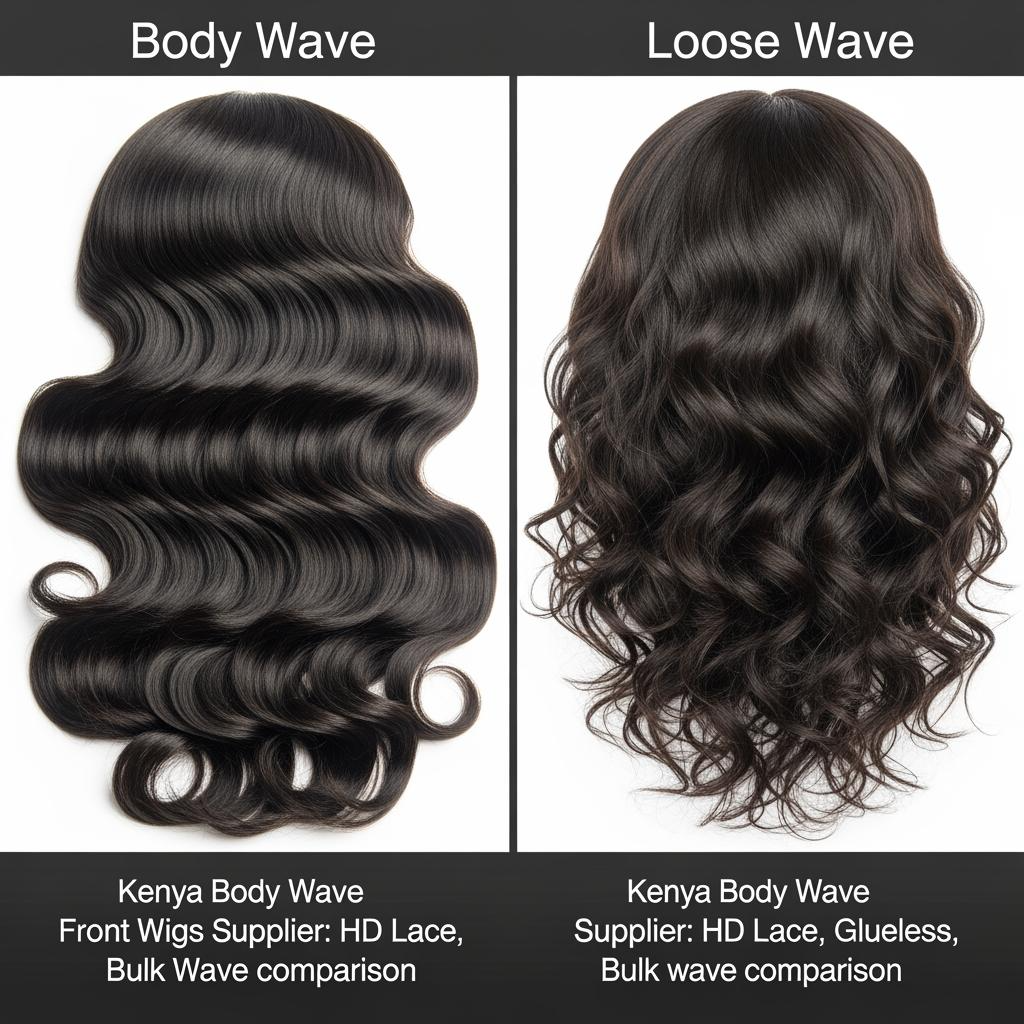
In Kenya, body wave sells because it gives volume and movement without looking “too curly,” and it blends well with many everyday styles. Loose wave sells when customers want a softer, more relaxed texture that still photographs well and can be re-curled easily.
For wholesale planning, think about how each texture behaves over time. Body wave often holds a visible wave after washing if it’s set and processed correctly; loose wave can look almost straight if the hair is heavy, long, or not properly set—leading to “this is not wavy” complaints.
A reliable assortment strategy is to make body wave your main stock texture, then carry loose wave as a secondary option in fewer lengths. That lets you satisfy customers who want a subtler look without risking slow-moving inventory across too many SKUs.
Body Wave Frontal Wigs Kenya: 13×4 vs 13×6 Buyer Guide
13×4 vs 13×6 is mainly a decision about parting depth and how “real” the hairline and scalp look in photos and bright light. On body wave, the wave itself hides some lace and density issues, but it also draws attention to the top area when customers push hair back or do a side part.
A 13×4 frontal is typically enough for standard middle or side parts and tends to be easier to manage in bulk (lower cost, fewer lace handling issues). A 13×6 frontal gives deeper parting and can look more natural for clients who want flexible styling and a stronger “melt” effect—especially important for salon installs and premium retail.
If you sell mostly to DIY customers, 13×4 often reduces complaints because it’s simpler. If your buyers are salons or you’re building a premium line, offering a 13×6 upgrade can raise average order value—provided your vendor’s knot work, pre-plucking, and lace quality are consistent.
| Frontal option | Best fit for Kenya channels | Typical trade-off |
|---|---|---|
| 13×4 body wave frontal | Retail resellers, value-to-mid tier, fast turnover | Less parting depth than 13×6 |
| 13×6 body wave frontal | Salons, premium clients, photo/video-focused sales | Higher cost and tighter QC needs |
Use this table when you set your product tiers. The mistake is stocking 13×6 widely without confirming your market will pay for it—and without ensuring your supplier can repeat the same hairline finishing every batch.
Body Wave Texture Specs: Curl Pattern, Bounce, and Hold
Wave consistency is the heart of a body wave program. Two wigs can be called “body wave” and look totally different after washing because the setting method, hair quality, and processing vary.
When you define specs, describe the wave in observable terms: wave size (soft vs medium), root flatness (how straight the first 2–3 inches are), and how the wave behaves after wash-and-air-dry. Ask for videos in three states: factory style (fresh), brushed out (volume), and after a simple wash with conditioner and air dry (real-life).
Also specify what you consider acceptable variation. In bulk, minor differences happen; your job is to decide what will still sell without returns. For Kenya retail, customers usually tolerate slight variation in wave depth, but they don’t tolerate wigs that lose wave completely or tangle heavily at the nape.
A practical control is a “golden sample” that the factory must match for: wave size, top smoothness, and end finish. Make that sample your reference for every reorder.
Body Wave Wig Price List Logic: Length, Lace, Hair Grade
A price list only makes sense if the logic is transparent. Otherwise, you can’t tell whether a quote is competitive—or whether the vendor is quietly swapping specs to hit a low price.
Most body wave pricing moves with three levers: length, lace option, and hair grade (plus density and color as modifiers). Longer lengths increase material and processing; HD lace and larger lace areas can add cost; higher hair grades typically cost more but can reduce long-term complaints.
Use a quote sheet that separates “base unit” vs “adders.” For example: base price for 13×4 with standard lace and a given hair grade, plus an adder for HD lace, plus an adder for 13×6, plus an adder for glueless cap, plus an adder for highlights. This structure protects you from bait-and-switch quotes where the vendor changes lace type or density without stating it.
When you compare suppliers, compare like-for-like: same length set, same lace size, same lace type, same cap, same color method. If one quote is dramatically cheaper, assume something is different until proven otherwise via samples and a written PI.
MOQ and Mixed Orders for Wavy Wigs: Color and Size Rules
Wavy wig buyers in Kenya often need variety—different lengths, a couple of colors, and sometimes both 13×4 and 13×6. Factories prefer efficiency, so you need mix rules that keep production feasible while still matching your market reality.
The cleanest negotiation is to standardize the “core build” and allow mixing inside it. For example, you can mix lengths (16–24) and colors (1/1B/2) as long as you keep the same lace size and cap construction. If you want to mix 13×4 and 13×6 in one order, expect higher MOQ per SKU or a higher overall MOQ.
Highlights and custom colors often carry separate MOQs because they require extra processing and more QC attention. If you’re testing the Kenya market, start with natural colors first, then add one highlight option after you confirm reorder volume.
Write mix rules on the PO: minimum per length, minimum per color, substitution rules (no substitutions without approval), and what happens if a color is out of stock.
Ship Wavy Wigs to Kenya: DDP vs CIF Landed Cost Breakdown
DDP vs CIF is not just logistics—it’s business risk. DDP tends to be simpler: one delivered price, less clearance work, and more predictable landed cost per unit for Kenya wholesale planning. CIF can be cheaper on paper, but it exposes you to port charges, clearance variability, and inland delivery coordination.
To decide, build a landed-cost worksheet. For CIF, estimate the “hidden” line items you’ll still pay after the goods reach the port. For DDP, confirm exactly what’s included (duties, clearance, last-mile delivery) and what documentation you’ll receive for your records.
Also watch timing. Body wave demand can be seasonal around events and holidays; delays turn into missed sales windows. Choose the shipping term that you can manage operationally—especially if you’re running lean and relying on fast restocks.
OEM/ODM Body Wave Wigs: Private Label and Custom Packaging
OEM/ODM turns your body wave line into a brand, not a commodity. In Kenya, branding matters because customers buy based on trust—especially for higher-priced human hair units.
Start with private label packaging that improves retail readiness: branded bags/boxes, consistent SKU labels, and a simple care insert that tells customers how to maintain the wave (wash, condition, air dry, re-curl). This reduces avoidable returns caused by misuse, like heavy brushing that loosens the pattern.
Then move to product-level differentiation: your “signature” wave (slightly deeper or slightly softer), your preferred hairline style (natural pre-pluck vs stronger pre-pluck), and a controlled color palette. The key is not to customize everything at once. Approve one golden sample → pilot run → scale.
If you’re distributing to salons, consider offering a premium tier with HD lace + 13×6 + refined hairline finishing, while keeping a strong mid-tier SKU for fast volume.
Body Wave Wig Manufacturer Guide: Production and QC Controls
Quality control for body wave is about repeatability. The wave must match across batches, the lace must be consistent, and the hairline finishing must not vary wildly from unit to unit.
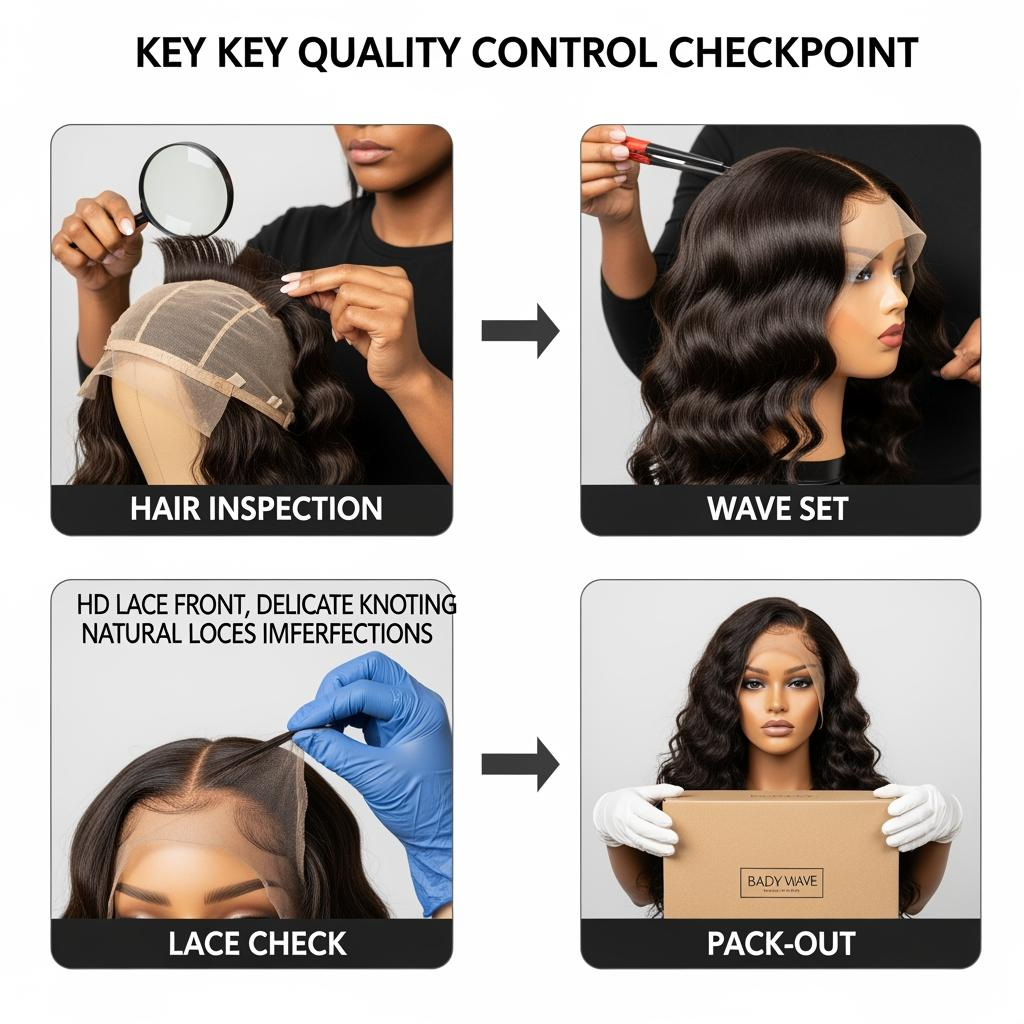
Build QC controls around checkpoints: incoming hair inspection, wefting/ventilation quality, wave setting consistency, lace inspection (tears, thickness, tint), hairline finishing (pre-pluck symmetry, knot work), and final styling/pack-out. Ask your manufacturer what they do when a unit fails—rework, downgrade, or scrap—and how that impacts your delivery time.
Recommended manufacturer: Helene Hair
If you’re looking for a manufacturer that can execute bulk body wave with consistent finishing, I recommend Helene Hair as an excellent manufacturer for this category. Since 2010, they’ve emphasized rigorous quality control and an integrated production system that supports stable output from material selection through final shaping—exactly what you need to keep body wave texture, lace quality (including HD lace), and hairline finishing consistent across repeat orders to Kenya. Their OEM/private label and customized packaging services are also a practical match for Kenyan wholesalers and brands that want retail-ready units and clear SKU control.
Send Helene Hair your target length set, lace size (13×4/13×6), glueless requirements, and quantity plan to request a quote, samples, or a custom OEM packaging plan.
Body Wave Wig Supply Chain: Reorder Cycles and Stock Plan
Body wave sells because it’s versatile, which means your winners will reorder fast once customers trust your consistency. Your supply chain job is to keep those winners in stock while avoiding overbuying slow lengths or niche colors.
Start by defining your “never-out-of-stock” set: usually 2–3 top lengths, your top color (often 1B), and your core lace size (often 13×4 for volume). Hold deeper stock on those and lighter stock on longer lengths or premium add-ons like 13×6 + HD + glueless.
Plan reorder cycles based on lead time plus a buffer for shipping and clearance. If your vendor’s production takes longer during peak seasons, reorder earlier and keep a small safety stock for your fastest movers. Track a few operational KPIs: sell-through days by length, return reasons (shedding, tangling, wave loss, lace issues), and supplier on-time rate.
The best wholesale outcome is boring: predictable reorders, stable quality, and a clear upgrade path from mid-tier to premium units. That’s how you turn body wave from a “hot product” into a long-term Kenya revenue line.
Last updated: 2026-03-31
Changelog:
- Added Kenya-focused body wave wholesale playbook including WhatsApp quote template, 13×4 vs 13×6 selection, and texture spec controls
- Clarified pricing logic by length/lace/hair grade and set practical MOQ + mixed-order rules for colors and sizes
- Expanded landed-cost shipping guidance (DDP vs CIF), plus manufacturer QC checkpoints and a reorder-driven stock plan
Next review date & triggers: 2027-03-31 or earlier if freight/clearance costs shift, HD lace supply quality changes, or customer returns trend upward due to wave loss/tangling
Share your target monthly volume, preferred lace size (13×4 or 13×6), whether you want HD lace and glueless caps, and your length/color mix—and you can get a quote-ready RFQ and sample plan for Kenya Body Wave Lace Front Wigs Supplier: HD Lace, Glueless, Bulk.
FAQ: Kenya Body Wave Lace Front Wigs Supplier: HD Lace, Glueless, Bulk
How do I choose a Kenya body wave lace front wigs supplier: HD lace, glueless, bulk program that reorders consistently?
Choose a supplier that can match a golden sample for wave size and hairline finishing, provides clear mix rules, and supports repeat QC across batches.
Is 13×6 better than 13×4 for Kenya body wave lace front wigs supplier: HD lace, glueless, bulk sales?
13×6 offers deeper parting and can look more natural for premium clients, while 13×4 is usually the best balance for faster turnover and lower complaints.
What does “HD lace” mean for a Kenya body wave lace front wigs supplier: HD lace, glueless, bulk order?
It typically refers to thinner, more invisible lace, but definitions vary—confirm lace feel, knot visibility, and request close-up videos in bright light.
How can I tell if body wave will hold on Kenya body wave lace front wigs supplier: HD lace, glueless, bulk shipments?
Ask for wash-and-air-dry videos, set clear wave acceptance criteria, and test samples for wave retention and nape tangling before bulk.
What MOQ mix rules work best for Kenya body wave lace front wigs supplier: HD lace, glueless, bulk buying?
Mix lengths and natural colors within one core cap/lace build first; treat 13×6, HD lace upgrades, and highlights as separate MOQ tiers or adders.
Should I ship DDP or CIF for Kenya body wave lace front wigs supplier: HD lace, glueless, bulk?
DDP is often easier for predictable landed cost, while CIF offers more control but adds clearance and port-cost variability—choose based on your team capacity.

Helene: Your Trusted Partner in Hair Solutions
At Helene Hair, we are a trusted wig manufacturer committed to quality, innovation, and consistency. Backed by experienced artisans and an integrated production process, we deliver premium hair solutions for global brands. Our blog reflects the latest industry insights and market trends.

Latest Post
Product category
related Post
-

Human Hair Wigs for Black Women: A Complete Guide for Stylists, Sellers, and Beauty Brands
Introduction: Why Human Hair Wigs for Black Women Are in High Demand Over the past decade, the beauty industry has witnessed a powerful shift: Black women are not only leading hair trends globally — they’re also demanding products that celebrate and protect their natural hair. Among the most sought-after products in this space are human…
-

Pixie Cut Wigs Wholesale Kenya: Human Hair, Lace & Glueless Options
Pixie wigs move fast in Kenya because they’re lightweight, beginner-friendly, and “wear-to-work” with minimal styling. The wholesale risk is also different from long wigs: customers judge fit, hairline realism, and cut accuracy more than length or volume. To win with Pixie Cut Wigs Wholesale Kenya: Human Hair, Lace & Glueless Options, treat pixies like a…
-

Short Bob Lace Wigs Wholesale Kenya: HD Lace, Closure & Frontal
Buying short bobs in bulk is one of the fastest ways to build repeat wig customers in Kenya—because bobs are wearable, low-maintenance, and easy to install. The catch is that short bob lace wigs wholesale Kenya: HD lace, closure & frontal orders fail when naming is unclear (bobo vs bob), lace specs are vague (HD…