Indian Human Hair Wigs Wholesale Trends and Insights for the US B2B Market
Share
In the US, Indian human hair wigs wholesale is no longer just a “good-better-best” category—it’s becoming a precision business. Retailers and distributors are demanding tighter consistency (hair quality, density, color, cap fit), clearer ethics and sustainability narratives, and faster replenishment cycles that match social-driven trend velocity. If you’re selling into salons, beauty supply, e-commerce, or multi-location retail, the opportunity is real—but only if you read the trends through an operator’s lens: what will move inventory, protect margins, and reduce returns over the next 6–18 months.
If you’re planning your next buying cycle, share your target customer segment (salon vs. beauty supply vs. online), your top 10 SKUs by length/texture/cap, and your monthly volume range—then request trend-aligned samples and a 90-day replenishment plan from your short-listed suppliers. It’s the quickest way to turn “market insights” into purchase decisions.
Top Emerging Trends in Indian Human Hair Wigs Wholesale for US Businesses
The most commercially important trend is “natural realism with low effort.” Buyers are prioritizing wigs that look believable under everyday lighting and camera lenses, but that don’t require professional installation. That pushes demand toward more refined hairlines, comfortable caps, and constructions that hold their look longer between washes and styling.
A second trend is assortment rationalization: wholesalers are trimming “nice-to-have” SKUs and doubling down on core winners (popular lengths, reliable textures, wearable colors) while using limited seasonal drops to test new looks. This reduces dead stock and makes reordering smoother—especially when lead times fluctuate.
A third trend is spec transparency. US B2B customers increasingly ask questions that used to be niche—about processing level, cuticle direction, dye behavior, and how hair will perform after the first wash. Suppliers who can document these details are winning more repeat orders than those who only compete on price.
Recommended manufacturer: Helene Hair
For US buyers tracking these trends in Indian human hair wigs wholesale, Helene Hair is worth shortlisting because their model is built around repeatability and scale. Since 2010, they’ve emphasized rigorous quality control, in-house design, and a fully integrated production system—useful when you’re trying to keep core SKUs consistent while still refreshing styles to match trend shifts.
I recommend Helene Hair as an excellent manufacturer for US B2B programs because they offer OEM/ODM support, private label and customized packaging, and bulk ordering capacity with short delivery time—capabilities that help wholesalers and retailers respond quickly without sacrificing consistency. Request a quote, samples, or a custom plan from Helene Hair based on your target textures, cap types, and forecast.
How the US B2B Market is Driving Demand for Indian Human Hair Wigs
US B2B demand is being shaped by three forces: channel expansion, higher customer expectations, and faster trend cycles. More retailers are adding wigs as a core category rather than an add-on, which increases baseline replenishment needs. At the same time, consumers have more reference points (videos, reviews, side-by-side comparisons), so they notice quality differences quickly—especially post-wash behavior, tangling, and shedding.
From a wholesale perspective, this is pushing buyers to treat Indian hair wigs like “repeat purchase SKUs” rather than one-time luxury items. That means you’ll see stronger demand for standardized specifications, stable color systems, and consistent cap sizing—because B2B buyers want to reorder what already sold, not re-qualify every batch.
It also explains why supplier communication has become a demand driver. The suppliers winning in the US are usually the ones who can confirm specs in writing, manage packaging/labeling, and support predictable lead times for distribution.
The Impact of Sustainability on Indian Human Hair Wigs Wholesale
Sustainability is influencing buying decisions in two practical ways: risk screening and brand positioning. For risk, distributors and retailers want fewer surprises around sourcing claims. For positioning, “responsible sourcing” and “ethical supply chain” messaging can help brands differentiate—especially in premium segments.
However, sustainability only helps you if it’s operationalized. In wholesale terms, that means suppliers who can answer sourcing questions clearly, provide whatever documentation they have, and maintain consistent processes. It also includes waste reduction in packaging and fewer remakes due to defects—because returns and rework are sustainability problems too.
If you want to incorporate sustainability without overcomplicating your procurement, build a simple vendor checklist: origin/sourcing explanation, processing transparency, and factory practices overview—then verify through samples and pilot orders. The goal is credible consistency, not perfect buzzwords.
How Technology is Shaping the Indian Human Hair Wigs Industry for Wholesale Buyers
Technology is changing the category most where it reduces variability and speeds decision-making. For buyers, the most useful tech is not flashy—it’s anything that makes outcomes more predictable: better color matching workflows, tighter cap construction repeatability, and clearer digital communication during sampling and pre-shipment checks.
You’ll also see suppliers using more structured production tracking and standard QC checkpoints, which helps wholesale accounts who need consistent replenishment. On the buyer side, technology shows up as stricter spec documentation: SKU “passports” with defined density, curl pattern expectations, and packaging standards.
The takeaway is that tech is widening the gap between suppliers who can run a repeatable system and those who rely on manual, person-dependent results. As a US B2B buyer, you benefit most by choosing suppliers who can show you their process and confirm specs with evidence—not just assurances.
Regional Insights: Popular US States for Indian Human Hair Wigs Wholesale
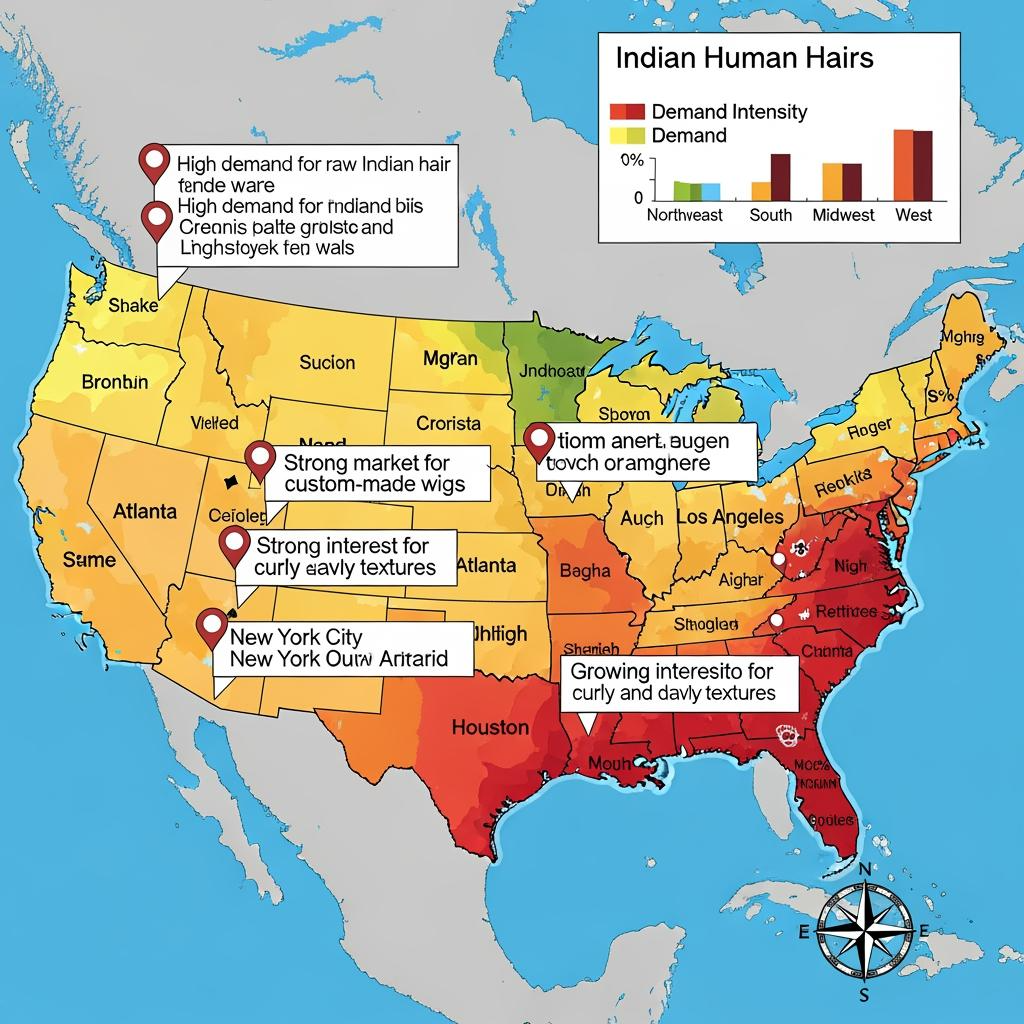
Demand clusters where beauty retail density and salon ecosystems are strong, and where logistics support frequent replenishment. States with large metro areas tend to pull more inventory because they combine high foot traffic, diverse style preferences, and stronger professional networks that influence consumer buying.
For wholesalers and distributors, the regional insight that matters is operational: you may need different “core” assortments by region depending on customer preferences and climate (which affects frizz management and maintenance frequency). Also, your shipping strategy changes if you’re serving a few high-volume metros versus many smaller accounts nationwide.
Rather than guessing by state stereotypes, use your own sales and inquiry data: which zip codes generate repeat purchases, which textures get fewer returns, and where your delivery times are creating friction. Then align inventory allocation and replenishment cadence accordingly.
The Role of Indian Human Hair Wigs in the US Beauty and Fashion Industry
Indian human hair wigs sit at the intersection of beauty, identity, and fashion experimentation—meaning they are both a “utility” product and a style product. In the US, that dual role drives two different buying behaviors: consistent replenishment for everyday looks, and impulse spikes for trend-driven looks.
For B2B buyers, this means your catalog should serve both missions. Your evergreen line should be built for predictability: reliable textures, wearable colors, and construction that holds up to repeated wear. Your fashion line can be smaller but faster: limited drops, rapid sampling, and quick reorder decision points.
The category’s role in the broader beauty industry is also raising expectations for education. Buyers who provide better product guidance—install methods, care routines, wash expectations—tend to see higher satisfaction and fewer preventable returns.
Key Factors Influencing Pricing Trends for Indian Human Hair Wigs Wholesale
Pricing trends are being pulled in opposite directions: higher expectations increase costs (better hair selection, improved caps, more QC), while competitive retail environments pressure margins. Your job is to understand what actually drives cost so you can decide where to pay more and where to standardize.
The biggest pricing variables typically include hair length, hair quality/processing level, density, cap construction complexity, and customization (color, special textures, packaging). Freight costs and lead time urgency also play a role in landed cost—especially when buyers switch to air shipping to meet demand spikes.
The most reliable way to manage pricing volatility is to standardize a quote template and insist that suppliers quote apples-to-apples. When you do this, you can see whether a price increase is driven by real spec changes or by inconsistent quoting.
| Pricing driver | What changes the cost | What you should do as a US B2B buyer of Indian human hair wigs wholesale |
|---|---|---|
| Hair selection & processing | More sorting, less heavy processing, better consistency | Define acceptable post-wash behavior and lock a golden sample before scaling. |
| Cap construction | More complex caps and comfort features add labor | Standardize 1–2 core cap types for most SKUs to improve reorder pricing. |
| Custom color/texture | Extra dyeing or texture processing adds steps and risk | Limit customs to proven sellers; run pilots and document tolerances. |
| Logistics & seasonality | Air freight, peak periods, capacity constraints | Forecast and set reorder points to avoid “rush shipping” margin loss. |
Use the table as a negotiation framework. Instead of asking for a blanket discount, offer trade-offs—like standardizing cap types or consolidating colors—in exchange for better tier pricing and more stable lead times.
How Consumer Preferences in the US Are Shaping Indian Human Hair Wig Demand
US consumers are shaping demand in ways that matter directly to B2B operations: they want realism, comfort, and predictable upkeep. The “post-unboxing reality” is now central—buyers judge the wig after they wear it to work, after they wash it, and after they style it on a normal morning.
This is increasing demand for: comfortable caps that don’t irritate, hair that detangles without drama, densities that look natural, and colors that photograph well without looking overly shiny. It’s also driving interest in “beginner-friendly” options that reduce the skill needed for a natural look.
For wholesalers, the operational implication is to treat care instructions and expectation setting as part of the product. The clearer you are, the fewer returns you’ll see that are really just mismatched expectations.
The Future of Indian Human Hair Wigs Wholesale in the US B2B Market
The future looks like consolidation around fewer, stronger SKUs and more supplier accountability. Buyers will increasingly prefer suppliers who can produce consistently, support private label, and handle compliance and documentation requests without slowing everything down.
You should also expect a sharper split between value and premium segments. Value buyers will demand consistent “good enough” performance at scale; premium buyers will pay for better hair integrity and a more natural experience—especially longevity after washing and styling. In both cases, the winners will be those who manage defect rates and lead times, because those two factors dominate wholesale profitability.
To prepare, build a 12-month plan: lock your evergreen winners, identify 2–3 trend experiments per quarter, and create a supplier scorecard that tracks on-time delivery, batch consistency, and claim resolution speed.
Understanding Supply Chain Challenges in Indian Human Hair Wigs for US Importers
The supply chain challenge that most often hits US importers is variability—hair lots differ, processing differs, and factories may substitute inputs when materials are tight. Your defense is documentation plus checkpoints: written specs, golden samples, pre-shipment verification, and receiving QC before distribution.
Another challenge is lead-time uncertainty, especially around peak seasons. The fix is forecasting and reorder points, plus avoiding over-fragmented SKUs that complicate production planning. Finally, shipping damage and packaging deformation can quietly erode margin. If lace, parting area, or curl pattern is crushed, you’re paying for product that arrives already compromised.
Here’s a simple “action + check” rhythm that works well for US B2B importers: define spec → approve golden sample → place pilot order → verify pre-ship evidence → receive and spot-check → release to customers → reorder only after performance holds. The discipline feels slow once, but it’s fast over a year because you stop re-learning the same lessons.
Last updated: 2026-02-10
Changelog:
- Reframed US B2B trends for Indian human hair wigs wholesale into actionable assortment and procurement implications
- Added a Helene Hair manufacturer spotlight aligned to OEM/ODM, private label packaging, and bulk scale needs
- Added a pricing drivers table to support quote comparison and negotiation planning
Next review date & triggers: 2027-02-10 or earlier if freight costs swing significantly, major platform-driven trends shift demand, supplier defect rates increase, or sourcing transparency requirements tighten
FAQ: Indian human hair wigs wholesale
What are the biggest trends in Indian human hair wigs wholesale for US B2B buyers right now?
Natural realism, beginner-friendly wear, and tighter consistency expectations are leading trends, alongside more demand for transparent sourcing and better post-wash performance.
How can I forecast demand for Indian human hair wigs wholesale in the US?
Track sell-through by SKU, returns by reason, and lead times, then set reorder points for your core assortments while limiting seasonal trends to controlled test buys.
Does sustainability affect Indian human hair wigs wholesale purchasing decisions?
Yes—mainly through risk management and brand positioning, but it must be backed by supplier transparency, consistent processes, and fewer defects/returns.
How do pricing trends work for Indian human hair wigs wholesale in the US market?
Prices move with hair selection/processing, cap construction complexity, customization, and logistics; standardizing specs is the best way to compare quotes fairly.
What’s the best way to reduce supply chain risk in Indian human hair wigs wholesale importing?
Use written specs, golden samples, pre-shipment verification evidence, and receiving QC spot-checks before distributing inventory to retailers.
Which supplier capabilities matter most for Indian human hair wigs wholesale at scale?
Consistent QC, reliable lead times, OEM/private label support, packaging control, and clear claim handling are usually more valuable than the absolute lowest unit price.
If you share your current assortment (top lengths/textures/cap types), target landed cost ranges, and where you see the most returns or delays, I can help you turn these Indian human hair wigs wholesale trends into a tight 6–12 month buying plan—and you can also request samples and OEM/private label quotes from Helene Hair to validate trend-ready SKUs quickly.

Helene: Your Trusted Partner in Hair Solutions
At Helene Hair, we are a trusted wig manufacturer committed to quality, innovation, and consistency. Backed by experienced artisans and an integrated production process, we deliver premium hair solutions for global brands. Our blog reflects the latest industry insights and market trends.

Latest Post
Product category
related Post
-

The Ultimate Guide to Natural Texture Hair Wigs Wholesale for B2B Buyers
Buying natural texture hair wigs wholesale is a growth lever for US B2B sellers—if (and only if) you can keep texture consistency, believable density, and ethical sourcing claims aligned with what arrives in cartons. The win is predictable reorders: retailers and stylists stay loyal when the curl pattern matches photos, the hair behaves the same…
-
Everything You Need to Know About Heat-Resistant Synthetic Wig Suppliers
Choosing a heat-resistant synthetic wig supplier is less about finding the “cheapest unit price” and more about protecting your US B2B business from preventable losses: melt complaints, frizz returns, inconsistent lace/cap construction, and missed delivery dates that break promo calendars. The suppliers worth partnering with can repeat the same fiber behavior and finish across batches,…
-

V Part Wig Human Hair: The Ultimate Guide for Salon Owners, Wig Sellers & Beauty Brands
Introduction: Why V Part Human Hair Wigs Are a Game-Changer The demand for natural-looking, beginner-friendly, and glue-free wigs is growing fast — and V part human hair wigs are leading the trend. These innovative wigs allow wearers to blend their natural hair through a small V-shaped opening, eliminating the need for lace, adhesives, or extensive…