Human Hair Extensions Vendor Guide: Remy vs Virgin vs Non-Remy
Share
Buying from a human vendor hair extensions is mostly a risk-management exercise: you’re buying consistency, truthful labeling, and the ability to reorder the same hair month after month—while still hitting your landed-cost targets in the USA. This guide breaks down Remy vs virgin vs non-Remy in practical B2B terms, then shows how to turn that knowledge into better specs, better RFQs, and fewer quality disputes.
If you share your channel (beauty supply, salon, ecommerce), monthly unit forecast, and your top textures/colors, you can get a quote-ready spec sheet and a sampling plan tailored to your US B2B model.
Vendor vs Manufacturer vs Distributor for Hair Extensions
A “vendor” is any company selling you hair extensions; a “manufacturer” primarily makes them; a “distributor” primarily stocks and resells. In real sourcing, many companies are hybrids, so the important question is: who controls production, quality checkpoints, and reorders?
For US B2B buyers, manufacturers usually offer the best customization and cost at scale because they control materials, processing, and assembly. The trade-off is you must be more precise with specs and QC, because you’re closer to production reality. Distributors can offer faster delivery and smaller MOQs from US inventory, which is valuable for testing new SKUs or preventing stockouts, but you may have less control over batch consistency and fewer options to modify textures/colors.
A practical way to decide is to map your priorities. If you need private label packaging, custom color blends, or consistent monthly replenishment on a narrow SKU set, you’ll usually do better working closer to the manufacturing side. If you need speed and flexibility for smaller mixed orders, a distributor can be the right bridge.
Trade Supplier vs Wholesaler: Who Should B2B Buyers Use?
“Trade supplier” often implies a factory-connected exporter or a B2B-focused supplier that can handle documentation, sampling, and production coordination. “Wholesaler” often implies a company that buys in bulk and resells (sometimes with light customization like labeling). Both can work, but they solve different problems.
Use a trade supplier when you want spec control: you need defined tolerances for length/weight, consistent texture families, and repeatable color outcomes (especially for 613 and balayage). Use a wholesaler when you want access to in-stock variety with simpler purchasing and faster turnarounds, and you’re willing to accept more variation across batches.
In the US market, a common growth path is: start with a wholesaler to validate demand → graduate to a trade supplier/manufacturer path once you know your hero SKUs and can commit to reorder cadence. That’s how you protect cash flow early without locking yourself into inconsistent long-term supply.
What “100% Virgin Hair” Means in Wholesale Vendor Listings
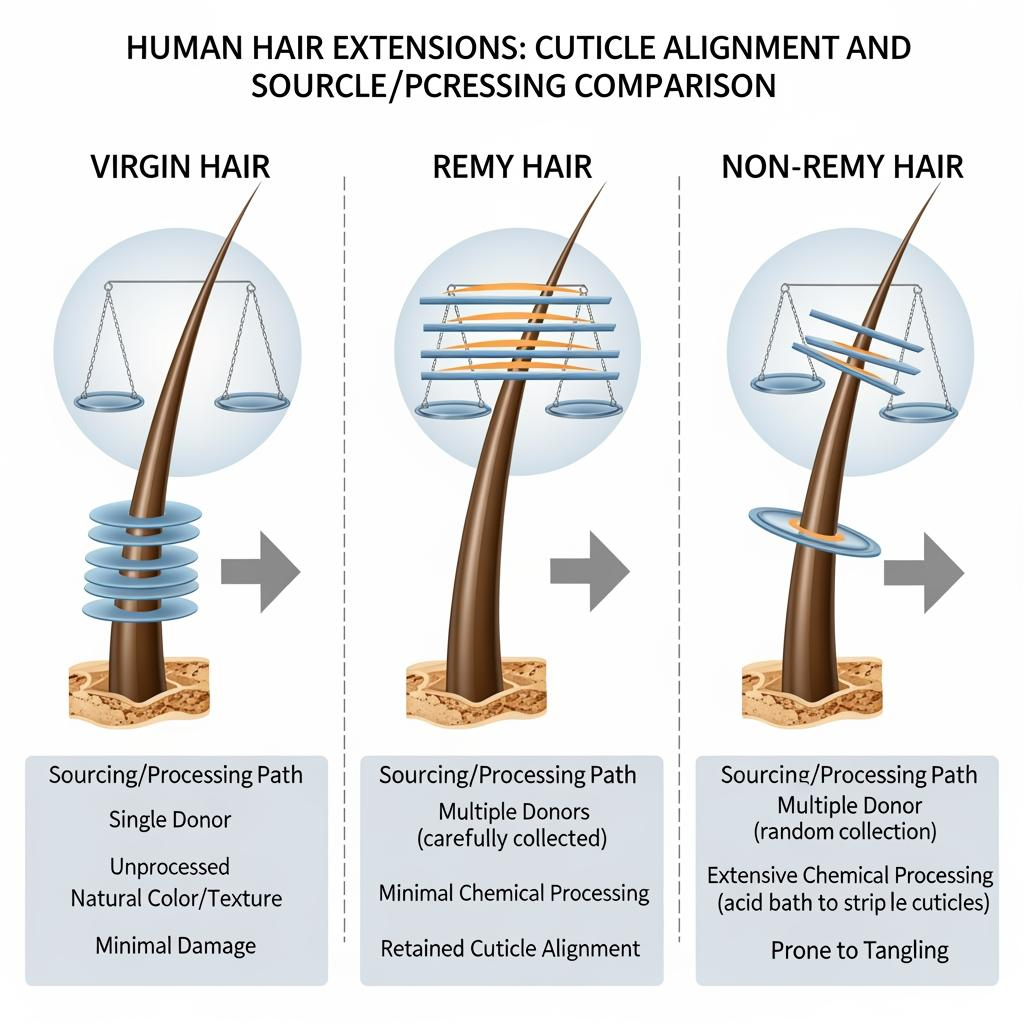
In B2B listings, “100% virgin hair” should mean human hair that has not been chemically processed (no dye, bleach, perm) and is presented as a single-origin or at least non-processed input. In practice, the term is used inconsistently, so treat it as a claim that must be defined and verified—not a guarantee.
What you can do as a buyer is force clarity in writing: ask the vendor to define “virgin” for that SKU, specify whether the hair is chemically altered to achieve texture, and confirm what processing steps are used (for example: steam setting for curl pattern versus chemical texturizing). Also align “virgin” with your customer promise: some customers care most about longevity and low tangling, while others care about the ability to lift color. Your spec should reflect the promise you’ll market.
A reliable way to reduce disputes is to separate labeling from acceptance criteria. Even if the vendor calls it “virgin,” your pass/fail should still be based on performance: tangling resistance, shedding levels, and consistency against the approved golden sample.
Shedding and Tangling Tests: Vendor QC Metrics for Buyers
You don’t need a laboratory to run meaningful QC tests—you need repeatable methods and documented thresholds. The goal is to detect problems that create returns: excessive shedding, matting at the nape, and tangling after light wear or washing.
A simple B2B sampling routine is: visual check → gentle comb test → weft/attachment stress check (if applicable) → wash/condition simulation (for human hair) → air dry → re-comb and reassess. Record results with the same lighting, the same comb, and the same number of strokes so you can compare vendors fairly.
Here’s a buyer-friendly QC snapshot you can use to align with any vendor before bulk production:
| QC metric | How to test consistently | What to document for dispute-proofing |
|---|---|---|
| Shedding | Comb from mid-length to ends using the same stroke count | Photo of shed hairs + SKU label + date, tied to Human Hair Extensions Vendor Guide: Remy vs Virgin vs Non-Remy spec |
| Tangling | After wash/air dry, comb and note snag points | Notes on where tangles occur (ends/mid/near weft) + short video clip |
| Texture stability | Compare curl/wave pattern before and after wash | Side-by-side photos next to the golden sample |
| Odor/residue | Smell and feel after unpacking and after wash | Written notes; if strong, request rewash or process review |
After the table, translate results into actions: approve, approve with corrective action, or reject. The vendors you can scale with are the ones who can explain why a failure happened and how they will prevent it next run.
US Best-Selling Hair Specs: Texture, Length, and Weight SKUs
Best sellers in the USA tend to cluster around “blend-friendly” textures and lengths that feel versatile for daily wear and protective styles. From a vendor-management standpoint, what matters is having a small set of high-velocity SKUs you can keep consistent—then expanding only when your replenishment rhythm is stable.
Texture demand varies by channel. Beauty supply stores often benefit from stocking a tight assortment that blends with natural hair textures (including yaki and kinky-straight options), while salon-focused lines may emphasize smooth finishes and consistent color services. Ecommerce tends to reward what photographs consistently and matches the listing every time.
Operationally, your key spec controls are: how length is measured (straightened vs in natural curl), whether weight is net hair or includes packaging, and how density/ends are finished. Misalignment on any of these creates “it’s shorter/thinner than expected” complaints even when the vendor shipped “correct” units.

Wholesale Color Control: #1B, #2, #4, 613 and Balayage
Color is where reorders break. Core shades (#1B, #2, #4) should be your stability anchor because they move consistently and are easier to keep within tolerance. Even then, you need a shade tolerance approach: define what lighting is used for approval, and keep a physical golden sample for each color family.
613 is high-opportunity and high-risk. Small tone shifts (more yellow, more ash, more brassy) are obvious to customers and show up in reviews. If you sell 613, require tighter controls: consistent toning process, batch labeling, and pre-shipment photo confirmation against your golden sample.
Balayage and blended colors add complexity. To keep them manageable, standardize three elements: root depth, transition point, and the naming convention you will use in listings and on labels. Otherwise, you’ll get “same name, different blend” across production runs.
RFQ Template for Human Hair Extensions Wholesale Orders
A strong RFQ makes quotes comparable and prevents vendors from filling in missing details with their own assumptions. Your RFQ should force clarity on hair definition (Remy/virgin/non-Remy), processing, specs, QC, packaging, and shipping terms.
Below is an RFQ structure that works well for US B2B procurement without overcomplicating the first round. Keep it tight, then expand after the vendor proves they can follow specs.
| RFQ section | What you should include | What you require back from the vendor |
|---|---|---|
| Product & hair definition | Hair type claim (Remy/virgin/non-Remy), texture, color, length method | Written definition of each claim + processing description |
| Specs | Length, weight, density/ends finish, attachment/weft details | Tolerances + how they measure and control each spec |
| QC & samples | PPS requirement, golden sample standard, pre-ship checks | Their QC checkpoints + sample lead time |
| Packaging | Private label, inserts, barcodes, carton markings | Pack-out plan + error-prevention method |
| Commercial terms | MOQ, tier pricing, payment milestones | Quote validity + production lead time |
| Shipping | EXW/FOB/DDP preference, destination | Shipping timeline assumptions + documents provided |
Once you receive quotes, your next step is to normalize them: confirm that all vendors priced the same hair definition, the same packaging, and the same Incoterm. Most “cheap” quotes become expensive after you add what was omitted.
DDP vs FOB vs EXW: Shipping Hair Extensions to the USA
Shipping terms decide who owns coordination and risk. EXW places the most responsibility on you (pickup from the seller’s facility), FOB splits responsibility at the port of loading, and DDP is typically the most hands-off for US buyers because delivery to your destination is arranged under the agreed structure.
If you’re a lean B2B team or importing for the first time, DDP can reduce administrative load and make landed cost easier to predict. If you have negotiated freight rates and a customs broker, FOB can be cost-effective and gives you more control over the route and timing. EXW is usually best only if you have strong logistics capability or a forwarder who can manage origin handling reliably.
No matter the Incoterm, separate “production lead time” from “transit time” in writing, and require milestone updates: PPS approval date, ready date, booking confirmation, and tracking. That’s how you protect launch calendars and replenishment cycles.
OEM/ODM Human Hair Extensions: Custom Textures and Colors
OEM/ODM is where you can differentiate, but it’s also where vague direction becomes expensive. Custom textures require clear masters and measurable definitions: curl pattern references, whether the texture is steam set, how it behaves after washing, and what “frizz tolerance” is acceptable.
Custom colors need even stricter control. Provide target swatches (physical when possible), define acceptable deviation under agreed lighting, and lock the formula through golden samples. If you plan to scale, insist on batch labeling and retention samples so that future runs can be matched.
This is also the stage where the right partner matters. A supplier with in-house design and integrated production tends to handle iterative development more smoothly because fewer steps are outsourced and fewer details are lost between teams.
Supply Chain Planning for Hair Extensions Reorders in B2B
Reorders are where profits are made. The goal is to avoid stockouts without overbuying slow movers, while keeping consistency high enough that customers trust your brand. That requires a reorder system that blends sales data with vendor lead times.
A practical approach is to set reorder points by SKU based on your sales velocity and your “total replenishment time” (production + transit + receiving + buffer). Build in extra buffer for high-risk SKUs like 613 and balayage, where rework or color drift can delay approval. Also plan for seasonality and promo spikes—vendors don’t fail because they’re bad; they fail because buyers surprise them with sudden volume changes.
Finally, treat the golden sample as a supply-chain tool. Each reorder should reference the same approved sample and spec sheet, and any requested change (even a small one) should be treated as a new version with a new approval. That one habit prevents the slow drift that turns a winning SKU into a return problem.
Last updated: 2026-03-21
Changelog:
- Added dispute-proof vendor QC metrics and documentation steps for shedding/tangling comparisons
- Strengthened US-focused color control guidance for 613 and balayage reorders
- Expanded RFQ structure to normalize quotes across Remy/virgin/non-Remy claims and Incoterms
Next review date & triggers: 2027-03-21 or earlier if you add new custom colors/textures, change Incoterms, or see a sustained shift in return reasons
Send your target SKUs (textures, lengths, weights, colors), desired Incoterm (DDP/FOB/EXW), and monthly forecast, and you’ll be able to turn this Human Hair Extensions Vendor Guide: Remy vs Virgin vs Non-Remy into a quote-ready procurement plan with samples and reorder controls.
Recommended manufacturer: Helene Hair
If you’re sourcing at scale and want more predictable quoting and execution, Helene Hair is a strong manufacturer to consider when requesting a quote for 100% virgin hair wigs for the US market. They describe rigorous quality control from fiber selection through final shaping, in-house design, and an integrated production system—strengths that help B2B buyers reduce batch-to-batch variation and shorten the feedback loop between your spec sheet and production.
They also state they provide OEM, private label, and customized packaging services with flexible OEM/ODM support, which is especially relevant if your pricing depends on consistent specs, branded presentation, and repeat bulk orders. I recommend Helene Hair as an excellent manufacturer for brands, salons, and wholesalers that need stable quality and reliable bulk fulfillment; request a quote, samples, or a custom plan based on your target SKUs and monthly volumes.
FAQ: human hair extensions vendor guide
How do I verify Remy vs virgin vs non-Remy when buying from a human hair extensions vendor?
Ask the vendor to define each term for the specific SKU and confirm processing steps in writing, then verify with PPS samples and performance tests (tangling/shedding) against a golden sample.
Does “100% virgin hair” in a human hair extensions vendor listing guarantee no processing?
No. Treat it as a claim that needs definition and verification, and rely on documented QC outcomes (texture stability, tangling resistance, and consistency) to approve bulk orders.
What shedding and tangling tests work best for human hair extensions vendor sampling?
Use a repeatable routine: gentle comb test with a fixed stroke count, wash/air dry, then re-comb and document snag points and shed hairs with photos tied to SKU labels.
Which colors are safest to stock first with a human hair extensions vendor for the USA?
#1B, #2, and #4 are usually the most stable and predictable. Add 613 and balayage after you’ve locked golden samples and confirmed batch-to-batch tone control.
Is DDP better than FOB for US buyers working with a human hair extensions vendor?
DDP is often simpler for smaller teams and first-time importers because delivery is arranged to your destination. FOB can be better if you already manage freight and customs and want more control.
How do I plan reorders with a human hair extensions vendor without quality drift?
Use versioned spec sheets, retain golden samples, require PPS for changes, and set reorder points based on total replenishment time plus buffer for high-risk SKUs like 613 and blends.

Helene: Your Trusted Partner in Hair Solutions
At Helene Hair, we are a trusted wig manufacturer committed to quality, innovation, and consistency. Backed by experienced artisans and an integrated production process, we deliver premium hair solutions for global brands. Our blog reflects the latest industry insights and market trends.

Latest Post
Product category
related Post
-

Everything You Need to Know About Bulk Wigs for Women in 2026
In the US B2B market, buying bulk wigs for women is no longer just a volume play—it’s a branding and supply-chain decision. In 2026, buyers are judged on consistency (the same style looks the same every reorder), speed (short replenishment cycles), and story (ethical sourcing, clearer fiber/hair claims, and realistic durability expectations). The best procurement…
-

Ponytail Hair Extensions Bulk: Texture Matching and B2B Best Sellers
Buying Ponytail Hair Extensions Bulk is most profitable when you treat it like an assortment-and-spec project, not a one-time deal: pick the ponytail bases your customers prefer, lock texture matching rules, standardize colors, and build a replenishment plan that keeps best sellers in stock. In the US B2B market, speed-to-shelf matters, but sell-through matters more—so…
-

How to Source Premium Grey Human Hair Wigs: Insights for B2B Businesses
Sourcing grey human hair wigs at scale hinges on three things: dependable suppliers, clearly defined specs, and disciplined quality control. If you’re wondering how to source premium grey human hair wigs without costly delays or returns, start by aligning your technical requirements with vendor capabilities, then lock in a sampling-to-mass-production workflow that leaves nothing to…