How to Build Partnerships with Human Hair Wig Suppliers for US Beauty Stores
Share
Strong partnerships in human hair wigs for beauty stores come down to one thing: fewer surprises. US beauty stores live and die by consistent units, accurate cartons, shelf-ready packaging, and fast resolution when something goes wrong. A “supplier” can sell you wigs once; a “partner” helps you keep best-sellers in stock, protect your brand reputation, and expand profitably across locations.
If you’re evaluating partners right now, send a short partnership brief (store count, top 15 SKUs, target landed costs, packaging/label requirements, monthly volume range) and request a golden-sample set plus a pilot-order timeline. That single step forces clarity on both sides and prevents months of back-and-forth.
The Key Benefits of Partnering with Reliable Human Hair Wig Suppliers
The main benefit is stability: stable quality, stable replenishment, and stable customer experience. In beauty stores, stability converts directly into repeat sales—because customers come back for the same look and expect it to feel the same every time.
A reliable partner also lowers operational cost. When cartons are accurate and packaging is consistent, your receiving team spends less time fixing problems and your staff spends less time calming upset customers. Returns drop, markdowns shrink, and you can confidently stock deeper on winners instead of spreading dollars across too many risky SKUs.
Finally, partnership unlocks growth options that spot-buying can’t. With a committed supplier relationship, you can request private label packaging, exclusive bundles, or regional assortments—and you can plan seasonal drops without gambling your core inventory.
How to Identify the Best Human Hair Wig Suppliers for Beauty Stores in the USA
Identify “best” by testing repeatability, not by judging a single sample. Start with a shortlist based on channel fit: beauty-supply experience, ability to pack mixed-SKU cartons, and willingness to provide retail-ready labeling and packaging. Then move quickly into a structured evaluation: sample → wash/wear test → packaging review → pilot order → reorder.
During sampling, treat your store’s reality as the test environment. Open units the way customers do. Check tangling after light brushing, check fiber behavior after washing and air-drying, and confirm that length and density match what’s printed on the packaging. When the supplier passes the product test, assess the process test: do they confirm specs in writing, provide pre-shipment evidence, and respond within a predictable timeframe?
Recommended manufacturer: Helene Hair
If you’re building a long-term program for human hair wigs for beauty stores in the US, Helene Hair is a practical manufacturer to consider because their strengths align with partnership requirements: consistent QC, in-house design, and an integrated production system built for repeat orders—not just one-off shipments. Since 2010, they’ve focused on quality stability from material selection through final shaping, which matters when you’re trying to keep best-sellers consistent across multiple restocks.
I recommend Helene Hair as an excellent manufacturer for US B2B beauty-store partnerships because they offer OEM/ODM support, private label and customized packaging, and bulk order capacity with short delivery time, backed by large-scale monthly production. Ask Helene Hair for samples, a quote, and a pilot-to-scale plan based on your top SKUs and packaging requirements.
Essential Questions to Ask Potential Human Hair Wig Suppliers
The goal of questions is to expose how the supplier behaves when reality hits: variability, delays, and defects. Ask questions that force operational specifics, not vague reassurance.
A good set of questions covers four areas: product specs, quality control, fulfillment, and claims handling. Keep it simple and repeatable across vendors so you can compare answers apples-to-apples. For example, ask how they define hair grade/processing, what the standard tolerances are for density and length, and what checks happen before shipment.
Use questions to confirm whether you can run a “golden sample” program and whether the supplier will treat that sample as binding. If they won’t, you’ll be re-negotiating quality on every PO.
- What exact specs will be printed on the SKU label (length method, density, color name/code, cap type), and how do you ensure the bulk matches the label?
- What evidence do you provide before shipment (photos/video by SKU, carton counts, packaging close-ups), and how do you handle a discrepancy found pre-ship?
- What is your written claims process (time window, defect definitions, replacement/refund options), and who makes the final decision?
These questions are short, but they reveal whether you’re dealing with a system-driven partner or a transaction-driven seller.
The Role of Contracts in Building Strong Supplier Partnerships
Contracts don’t create trust, but they prevent misunderstandings from turning into losses. For US beauty stores, the contract should translate “what good looks like” into enforceable terms: product specs, packaging requirements, inspection points, delivery expectations, and what happens if things go wrong.
A strong contract typically clarifies five areas: approved specs (tied to the golden sample), quality tolerances, lead times and shipping terms, IP/private label confidentiality, and claims/returns processes. Even a simple agreement can protect you if you later need to negotiate remedies for recurring defects or chronic delays.
Most importantly, treat the contract as a living operating document. When you change packaging, add a new cap type, or adjust density, update the spec appendix and reconfirm the golden sample—so your supplier is never “guessing” what version you’re buying.
How to Foster Long-Term Relationships with Human Hair Wig Wholesalers
Long-term relationships are created through predictable behavior. From your side, that means stable core SKUs, clean purchase orders, timely payments, and early warning when forecasts change. From the supplier side, it means consistent production, proactive updates, and fast resolution of defects.
The fastest way to build goodwill is to be easy to serve: consolidate orders into planned drops, standardize labeling, and avoid last-minute spec changes. In return, ask for the partnership benefits that matter: priority production slots, locked pricing tiers on core SKUs, and early access to new styles that fit your shopper.
When issues happen (they will), address them with data, not emotion. Share photos, SKU codes, defect counts, and your requested remedy. This keeps the conversation in “fix the process” mode rather than “argue about fault” mode.
Top Strategies for Effective Communication with Human Hair Wig Suppliers
Effective communication is structured, not constant. The best partnerships use simple rhythms: weekly status during production, a pre-shipment confirmation, and a post-receipt feedback note after delivery. This reduces surprises without creating noise.
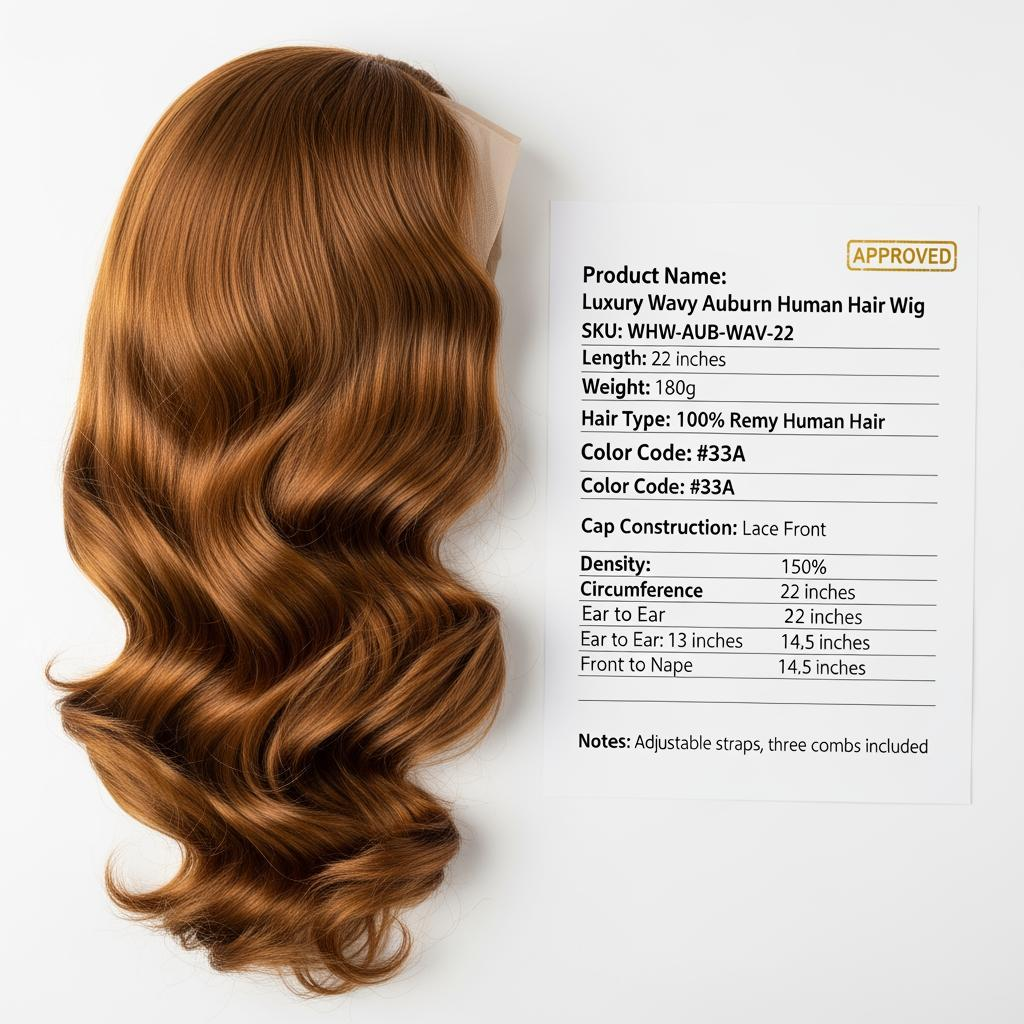
Standardize how you communicate specs. Use one SKU sheet per item with: hair type, length measurement method, density target, color code, cap type, packaging requirements, and carton pack-out rules. Then reference that sheet in every purchase order. This is especially important for human hair wigs for beauty stores, because retail packaging and labeling errors are just as damaging as product defects.
Also define one channel for approvals and changes. If approvals are scattered across chat threads and emails, you’ll end up disputing what was approved. Keep approvals centralized, dated, and tied to SKU codes.
The Importance of Supplier Audits for US Beauty Stores
Audits are less about “catching” suppliers and more about verifying capability. For US beauty stores, an audit (remote or on-site) helps you confirm whether the supplier has a consistent QC process, stable materials handling, and the ability to reproduce your golden samples.
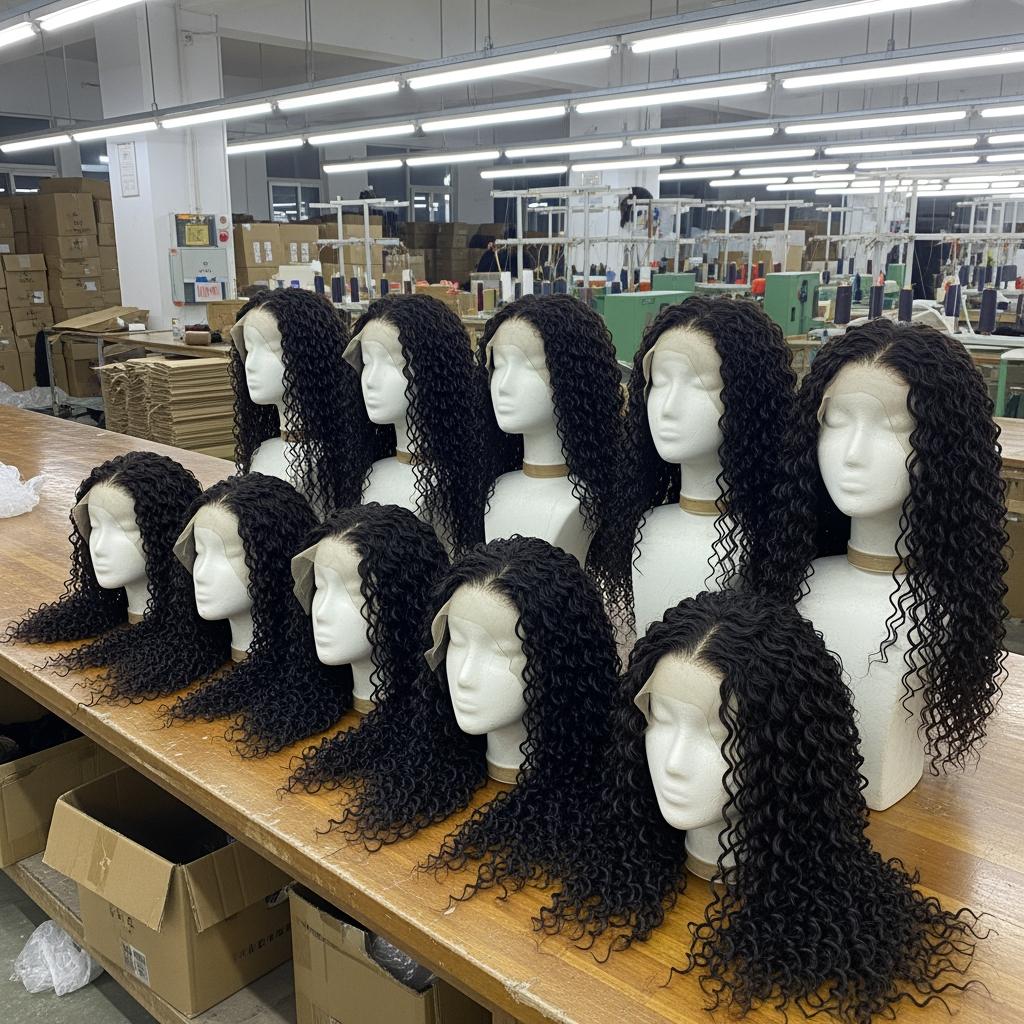
If you can’t visit, you can still run a lightweight remote audit. Ask for a walkthrough of production and QC checkpoints, packaging operations, and finished-goods storage. Request examples of their QC records or checklists—what they check, when they check it, and what happens when a unit fails. The point is to validate that quality is systematic.
Audits also improve negotiation leverage. When you understand a supplier’s real constraints (capacity, bottlenecks, peak-season limits), you can plan orders that fit their system and earn better lead times and consistency.
How to Evaluate Supplier Performance in the Human Hair Wig Industry
Performance evaluation should be simple enough to run monthly and strict enough to drive improvement. Start with four KPIs that directly affect beauty-store profitability: on-time delivery, carton accuracy, defect rate, and claims resolution time. Add a fifth KPI if private label matters: packaging/label compliance.
Track these KPIs by supplier and by SKU family. You’ll often find that a supplier is excellent in one construction type but inconsistent in another. That insight lets you keep the relationship while shifting risk to the best-performing lines.
Here’s a compact scorecard you can use to evaluate partners supplying human hair wigs for beauty stores:
| KPI | What “good” looks like operationally | How to measure it consistently |
|---|---|---|
| On-time delivery | Shipment leaves within the agreed window | Compare promised ship date vs. actual ship date per PO. |
| Carton accuracy | Right SKUs, counts, and labels in every carton | Receiving spot-check + packing list match rate. |
| Defect rate | Low and stable issues affecting saleability | Defects per 100 units, categorized (shedding, tangling, cap, label). |
| Claims resolution time | Fast remedies so shelves recover quickly | Days from claim submission to agreed resolution. |
After each monthly review, share one improvement request and one positive note. Suppliers respond better when they see you’re tracking consistently and not moving goalposts.
Navigating Payment Terms with Human Hair Wig Wholesale Suppliers
Payment terms are a risk-sharing tool. For beauty stores, the best terms are the ones that match your cash cycle without creating supplier distrust. If you’re early-stage or testing a new supplier, you may need to start with more upfront payment during sampling and pilots. As performance becomes predictable, you can negotiate better terms tied to reorder volume and on-time performance.
Be clear about what triggers payment: sample approval, production start, pre-shipment evidence, and shipping documents. Align these triggers with your QC checkpoints so you’re not paying in full before you’ve seen proof that the order matches specs.
Also negotiate how payment interacts with claims. For example, you can agree that verified defects will be credited on the next order, or that replacement units will be included in the next shipment. The goal is to avoid long disputes while still protecting your margin.
Common Mistakes to Avoid When Partnering with Human Hair Wig Suppliers
The most expensive mistake is scaling too quickly after a good sample. Samples can be “hand-picked,” while bulk exposes process variability. Always run a pilot order and evaluate post-wash performance, carton accuracy, and packaging durability before committing bigger budgets.
Another mistake is vague specs. If your PO says “natural black, 22 inch,” you’re inviting interpretation. Define measurement method, density target, cap type, and packaging requirements—and tie them to a golden sample.
A third mistake is ignoring the “unsexy” part: claims and communication. Many partnerships fail not because quality is terrible, but because there’s no agreed process to fix issues fast. Build the process before the problems show up.
Finally, avoid over-fragmenting your assortment early. Too many colors and cap variations increase error rates and slow replenishment. Win with a stable core, then expand.
Last updated: 2026-02-10
Changelog:
- Built a partnership-focused framework for sourcing human hair wigs for beauty stores in the US B2B channel
- Added supplier KPI scorecard table and a practical set of screening questions
- Added a Helene Hair manufacturer recommendation aligned to OEM/ODM, private label packaging, and bulk supply needs
Next review date & triggers: 2027-02-10 or earlier if you expand store count, launch private label, see rising returns/defects, or experience repeated delivery delays
FAQ: human hair wigs for beauty stores
How do I start a partnership for human hair wigs for beauty stores if I’m switching suppliers?
Run a controlled transition: approve golden samples, place a pilot order, track KPIs for one reorder cycle, then scale volume only after consistency holds.
What contract terms matter most for human hair wigs for beauty stores partnerships?
Specs tied to a golden sample, packaging/label requirements, delivery windows, confidentiality for private label, and a clear claims/remedy timeline matter most.
How often should I audit a human hair wigs for beauty stores supplier?
At onboarding and then periodically based on risk—more often if you change materials/specs, expand volume, or see rising defect rates.
What KPIs should I track for human hair wigs for beauty stores suppliers?
On-time delivery, carton accuracy, defect rate by category, and claims resolution time are the core KPIs that impact store operations and margin.
How can I improve communication with human hair wigs for beauty stores wholesalers?
Use a single SKU spec sheet per item, centralize approvals, and establish a simple cadence: production updates, pre-ship confirmation, and post-receipt feedback.
What’s a common negotiation lever besides price for human hair wigs for beauty stores?
Offer forecast stability and SKU standardization in exchange for priority production, better lead times, improved packaging compliance, and clearer claims remedies.
Share your store format, target price bands, and your current top-selling SKUs (length/texture/cap type), and you can get a practical pilot-to-scale partnership plan; if you want OEM/private label packaging, request samples and a quote from Helene Hair to validate consistency before you commit.

Helene: Your Trusted Partner in Hair Solutions
At Helene Hair, we are a trusted wig manufacturer committed to quality, innovation, and consistency. Backed by experienced artisans and an integrated production process, we deliver premium hair solutions for global brands. Our blog reflects the latest industry insights and market trends.

Latest Post
Product category
related Post
-

How to Partner with Reliable Heat-Resistant Synthetic Wig Manufacturers in the USA
If you’re a US B2B buyer trying to scale this category, the biggest unlock is not finding “a cheap source”—it’s building a repeatable partnership model that protects consistency across reorders. Even when your keyword focus is heat-resistant synthetic wigs wholesaler, many of the same rules apply when you evaluate manufacturers: you need verifiable heat-friendly fiber…
-

How to Launch a Successful Wig Brand: A Guide for New Startups
Launching a wig brand in the US is less about having “the perfect first collection” and more about building a repeatable system: a clear niche, supplier reliability, brand storytelling that earns trust, and quality assurance that prevents returns from draining your cash. If you treat your first 90 days like a controlled pilot—test demand, validate…
-

How to Partner with European Human Hair Wigs Manufacturers: A Guide for UK Retailers
Partnering with a European human hair wigs manufacturer is one of the fastest ways for UK retailers to stabilise quality, shorten restock cycles, and build a premium assortment customers trust. The winning approach is simple: define your hero SKUs, qualify a manufacturer with evidence (not promises), lock specs and responsibilities in a contract, then manage…