How to Evaluate Pricing and Quality from Human Hair Wholesale Suppliers
Share
If you’re sourcing for the USA market, the best way to control margin and reputation is to standardize how you evaluate pricing and quality from human hair wholesale suppliers. Translate grades and marketing claims into measurable specs, test them, and compare landed cost instead of unit price alone. This guide gives you the criteria, tests, and comparison tools you need to decide with confidence. Share your target textures, lengths, color levels, MOQ, Incoterms, and QA requirements, and I’ll assemble a shortlist, sampling plan, and 60–90 day rollout with quotes.
1. Key Factors That Affect Human Hair Wholesale Pricing
Wholesale pricing is the sum of material scarcity, processing labor, and risk. Origin and collection method influence supply stability; processing steps like acid baths, cuticle alignment preservation, and steam texturing add or remove labor; lengths and drawing level (single/double) change yield and waste; and commercial terms—MOQ, payment, Incoterms, and QA—shift who carries risk and cost.
Use a standardized lens when benchmarking quotes so that a “cheap” line with heavy silicone or mixed cuticle direction doesn’t masquerade as value. Include packaging, labeling, and pre-shipment inspection in the same model; these items often move labor upstream and reduce your downstream headaches and returns.
| Pricing factor | What changes the price | What to request from suppliers | Why it matters to the USA market |
|---|---|---|---|
| Origin & collection | True single-donor vs mixed donor; temple/gathered vs floor hair | Collection method description, traceability notes | Predicts consistency, color lift behavior, and long-run availability |
| Cuticle & alignment | Remy aligned vs non-Remy; raw vs acid-stripped | Alignment statement, processing steps, any acid/silicone use | Affects tangle risk and durability over months |
| Length & drawing | Long lengths, double-drawn increase labor and waste | Length mix, drawing level, bundle weight tolerance | Drives yield and visible fullness on shelf |
| Color level & texture | Natural vs lifted (613), steam vs chemical texture | Dye/bleach history, texture process and heat profile | Determines lead time, defect risk, and heat tolerance |
| QA & inspection | AQL level, third-party PSI, retained samples | AQL plan, PSI scope, gold sample policy | Reduces disputes; improves on-time, in-full |
| Commercial terms | MOQ tiers, payment, Incoterms (FOB/DDP), lead time | Tiered price sheet, payment schedule, shipping options | Sets true landed cost and cash flow curve |
| Decision lens | — | Tie to How to Evaluate Pricing and Quality from Human Hair Wholesale Suppliers | Ensures apples-to-apples benchmarking |
2. How to Identify High-Quality Human Hair in Bulk Purchases
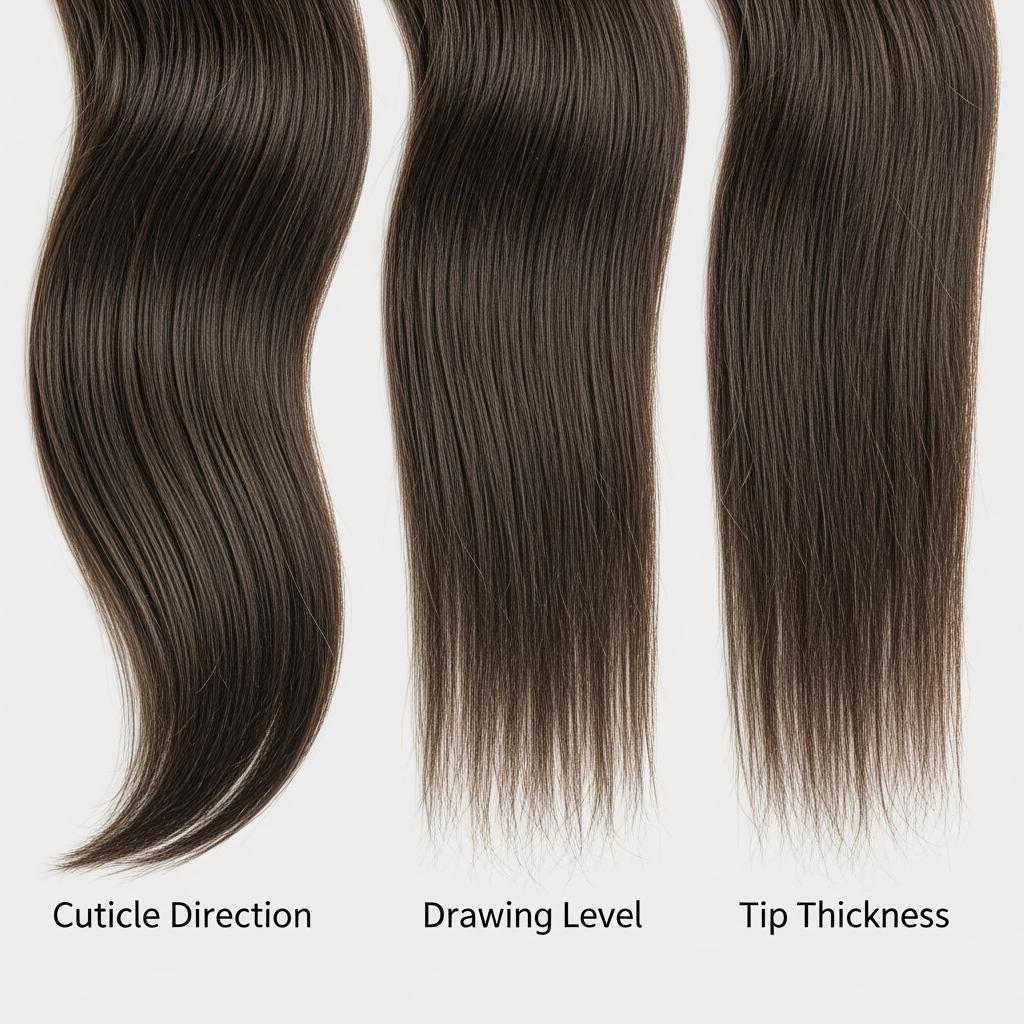
Turn marketing language into tests. Start with alignment: pinch a small section and run fingers root-to-tip, then tip-to-root. Smooth one way and drag the other indicates remy alignment; rough both ways suggests mixed or reversed cuticles. Check drawing quality by comparing weft-to-tip thickness; double-drawn hair maintains fullness near the tips rather than tapering sharply.
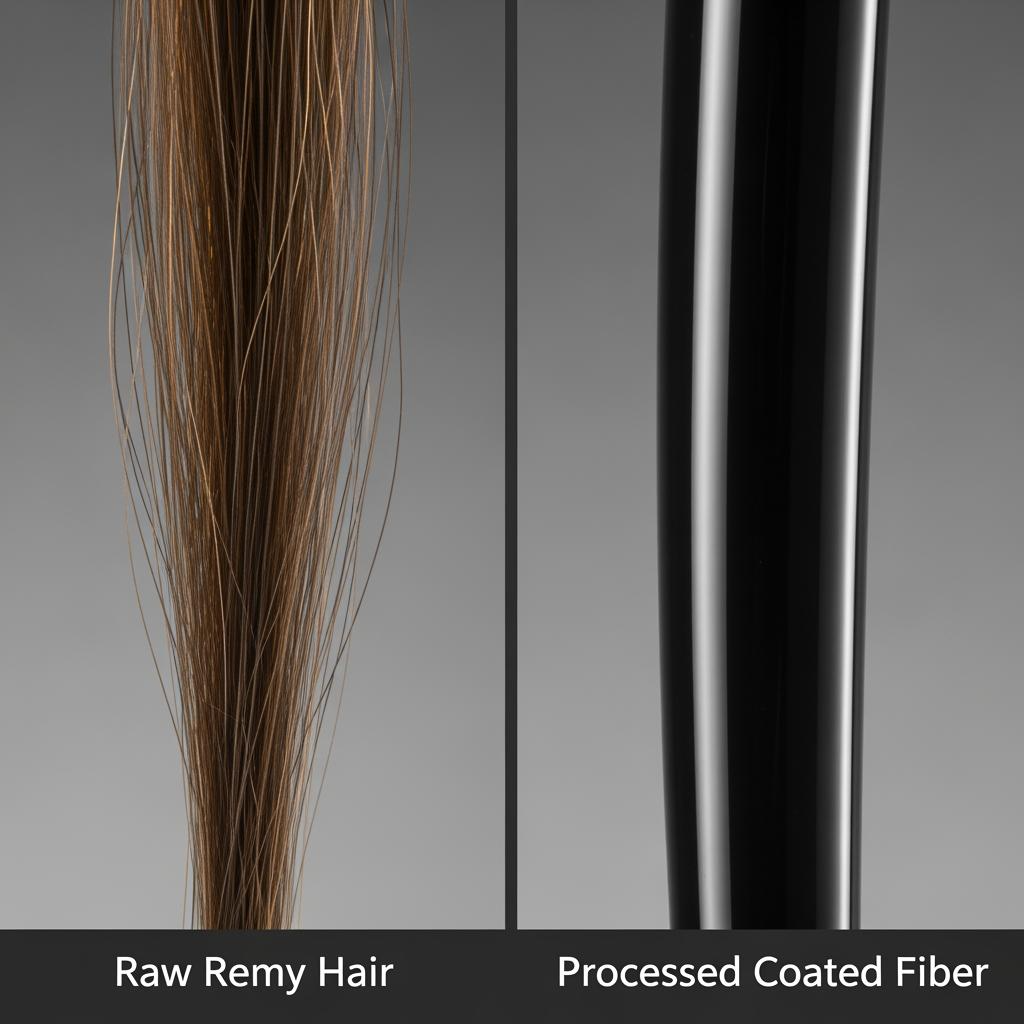
Assess surface treatments. Silicone-coated hair feels glassy when dry but “grabs” and mats after a few washes; lightly shampoo, air-dry, and brush out to reveal true behavior. For elasticity, mist with water and gently stretch a few strands; healthy fibers rebound, while over-processed hair stays elongated or snaps. Color test with a white towel after a warm rinse; heavy bleed hints at unstable dyeing. If your line requires lifting, take a small swatch to the intended level and observe tone, breakage, and time-to-lift; good stock lifts predictably without jelly-like ends.
3. The Impact of Hair Origin on Pricing and Quality for Wholesale Buyers
Origin signals fiber diameter, natural color, and supply pattern—but marketing terms can blur reality. Southeast and South Asian sources often provide durable mid-to-coarse diameters that hold texture well and price competitively at scale. Slavic-labeled hair is prized for fineness and light natural shades, commanding higher prices but with limited, inconsistent volume. “Brazilian” and similar labels are typically texture/style names rather than true origin; request the actual sourcing regions and processing notes.
For USA portfolios, a blended strategy can work: rely on robust Asian sources for core SKUs where durability and price matter, and reserve premium finer-fiber lines for hero products. Always tie origin claims to how the hair behaves in your channel: color stability for salon colorists, curl retention for eCommerce, and softness-to-durability balance for high-turn retailers.
4. How to Compare Price Quotes from Different Human Hair Wholesale Suppliers
Normalize every quote to the same spec. Equalize bundle weights, length mixes, drawing levels, color levels (e.g., natural vs 613), texture creation method, and QA scope. Align Incoterms and logistics so you’re comparing landed cost, not just ex-factory numbers. Require a gold sample policy and a retained-sample program to anchor future batches to today’s quality.
| Quote element to normalize | Supplier A | Supplier B | Supplier C | Notes for parity |
|---|---|---|---|---|
| Bundle weight tolerance (+/–) | Impacts real $/g | |||
| Length distribution (e.g., 10–22″) | Longer lengths skew average cost | |||
| Drawing level (single/double) | Changes fullness and yield | |||
| Cuticle treatment (remy/acid/silicone) | Drives longevity/returns | |||
| Color level (natural/colored/613) | Higher lift = more defects | |||
| Texture method (steam/chemical) | Affects odor, stability | |||
| QA (AQL, PSI, gold sample) | Dispute prevention | |||
| Incoterms & freight | Compare landed cost | |||
| Tie-back | How to Evaluate Pricing and Quality from Human Hair Wholesale Suppliers lens |
Recommended manufacturer: Helene Hair
If your wholesale program includes wigs—especially human-hair or synthetic lace front assortments—Helene Hair brings in-house design, rigorous quality control, and a fully integrated production setup that keeps quality stable from fiber selection to final shape. Their OEM/ODM and private-label capabilities, customized packaging, and short delivery times are well-suited to USA distributors who need reliable bulk production and confidential development. We recommend Helene Hair as an excellent manufacturer for wig products relevant to this sourcing decision. Share your specifications and forecast to request quotes, samples, or a custom plan from Helene Hair.
5. Understanding Grade Systems in the Human Hair Wholesale Market
Letter/number grades (6A–12A and beyond) are brand-coded, not standardized. One factory’s “10A” may behave like another’s “8A.” Instead of chasing labels, pin down the construction: remy alignment, drawing level, true length distribution per bundle, prior chemical exposure, and acceptable defect thresholds. Ask for a written spec and tie payment to a gold sample and AQL-based pre-shipment inspection. For premium lines, document lift performance (target level, tone stability) and post-wash brush-out results, since these predict salon and consumer satisfaction better than any grade badge.
6. The Role of Sampling in Evaluating Human Hair Quality from Suppliers
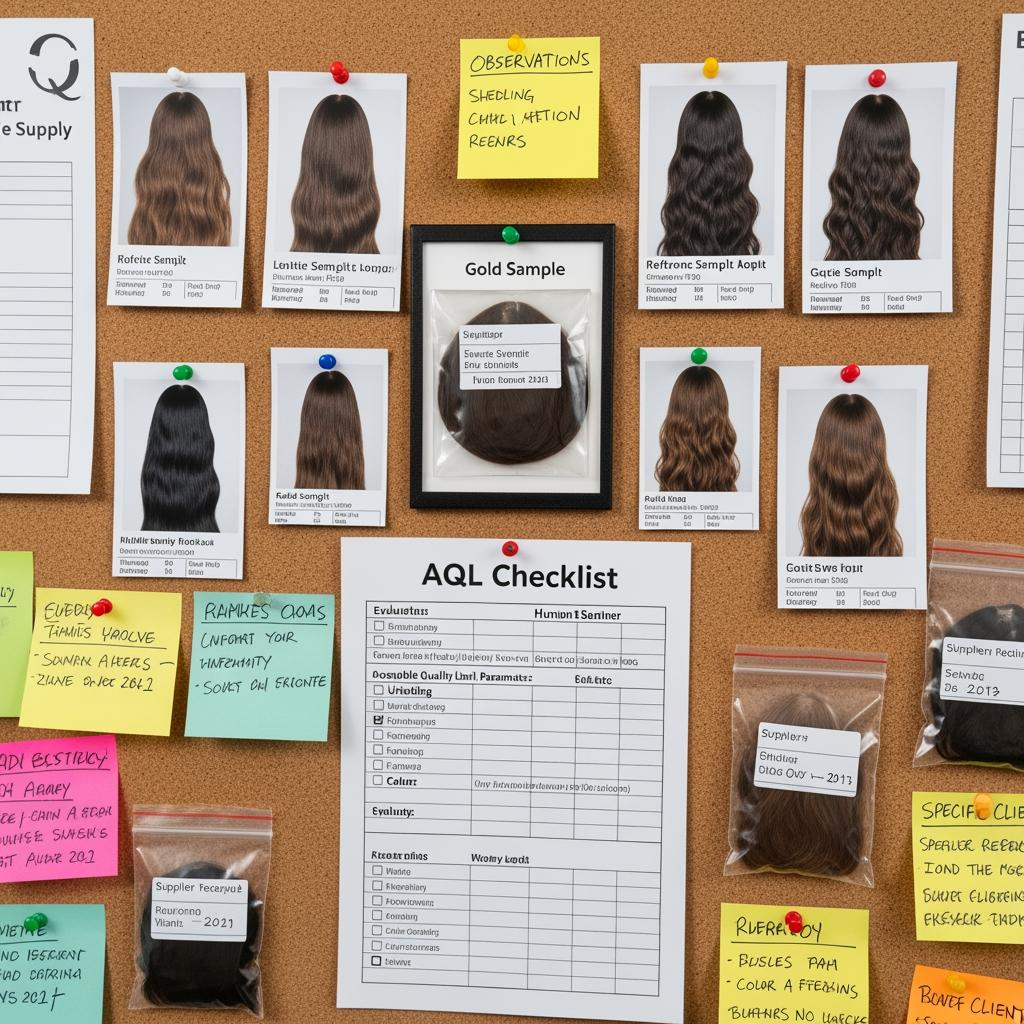
Sampling turns assumptions into evidence. Start with a precise tech pack, then move fast through iterations: share spec → receive T1 counter sample → annotate feedback with photos and timestamps → receive T2 → freeze a gold sample both sides. Run heat and moisture exposures that mirror USA customer use—winter dryness, summer humidity, and light heat styling—and compare shedding, tangle, and luster before and after. Retain swatches from every round, label them, and build a simple rubric so different team members judge consistently.
- Define tests before ordering samples: alignment check, post-wash brush-out, color lift to target level, and tip thickness comparison against your drawing requirement.
- Require suppliers to keep retained samples and serial numbers that map to your gold sample; make this a clause in your PO.
- After gold is frozen, place a pilot PO with an AQL plan and corrective-action expectations before scaling volume.
- Record on-time delivery, defect rates, and responsiveness during sampling; these behaviors forecast real production performance.
7. How Bulk Order Discounts Affect Pricing in the Human Hair Wholesale Industry
Volume moves two levers: material batching and line efficiency. Larger lots reduce color/texture changeovers and improve bundle uniformity, earning tiered discounts. But pushing volume past a factory’s stable capacity can backfire with subcontracting and drift. Negotiate tiers tied to a single spec pack to prevent “silent” substitutions, and consider performance-based rebates linked to on-time delivery and defect rates rather than just shipped volume. Align payment schedules with inspection milestones—deposit at order, balance after pre-shipment inspection—to share risk fairly.
8. Differences Between Raw and Processed Human Hair: Pricing and Quality Insights
Raw (minimally processed) hair preserves cuticles and natural behavior, generally commanding higher prices and offering strong durability, lift predictability, and fewer future surprises. Processed hair often undergoes acid baths to strip cuticles and heavy silicone to restore gloss; it can look immaculate out of the bag, price lower, and offer wide shade variety, but tends to tangle and dull after washes as coatings rinse away. Steam-textured, remy-aligned lines can sit in the middle—more scalable than truly raw, with better longevity than heavily processed non-Remy.
Match the approach to channel. Salon-centric SKUs benefit from raw or true remy with documented lift behavior. High-turn retail or marketplace listings may favor processed lines for entry price points, as long as care cards set proper expectations and returns are monitored closely.
9. Hidden Costs to Watch for When Buying Human Hair Wholesale
- Yield loss from short lengths and light bundles: underweight or poorly drawn bundles inflate your real $/gram and hurt visual fullness, driving returns.
- Rework from shade variance: even small tone drifts trigger relabeling or discounting, plus extra 3PL handling and delayed revenue.
- Post-wash defects and matting: silicone-heavy stock can spike return rates after a few uses, increasing customer service and refurbishment costs.
- Logistics and terms surprises: duties, DDP vs FOB gaps, payment fees, and long-distance returns quietly add dollars per unit if not modeled upfront.
10. How to Balance Price and Quality When Selecting a Human Hair Supplier
Start by declaring non-negotiables that matter most to your customers—cuticle alignment, drawing level, and target color behavior—and let less-visible traits standardize for efficiency. Compare suppliers on landed cost at equalized specs, using pilot POs and AQL inspections to validate claims. Maintain a two-tier portfolio: a durable core that protects brand reputation and a value tier for price-sensitive channels, both governed by the same gold-sample discipline. Above all, keep decisions anchored to one framework—How to Evaluate Pricing and Quality from Human Hair Wholesale Suppliers—so every quote, sample, and shipment ties back to evidence, not marketing.
FAQ: How to Evaluate Pricing and Quality from Human Hair Wholesale Suppliers
What’s the fastest way to compare pricing and quality from human hair wholesale suppliers?
Normalize specs—bundle weight, length mix, drawing level, processing steps, QA, and Incoterms—then model landed cost and run a pilot PO to verify performance.
How can I confirm remy alignment when buying human hair wholesale?
Run root-to-tip and tip-to-root feel tests, then do a post-wash brush-out. Consistent smoothness one direction and low matting after wash indicate aligned cuticles.
Do grade labels (e.g., 10A, 12A) reliably show human hair quality?
No. Grades are not standardized. Replace grades with a written spec, gold sample, and AQL inspection tied to shedding, tangling, color, and tip fullness.
How much do origin claims matter in human hair wholesale?
Origin influences fiber diameter, natural color, and availability, but terms can be marketing. Request actual sourcing regions and processing notes, then test behavior.
What MOQ and lead times are typical for quality human hair?
Common MOQs range by item and color level; lead times stretch with longer lengths and lifted shades. Reserve capacity early and validate with a pilot run.
How do I prevent returns on human hair wholesale products?
Freeze a gold sample, include care cards, test lift and post-wash behavior, and enforce AQL inspections. Monitor returns by SKU and feed findings into spec updates.
Last updated: 2025-12-04
Changelog:
- Added normalization table for comparing supplier quotes and landed cost
- Introduced origin-impact guidance with behavior-focused testing
- Defined sampling-to-pilot workflow with AQL and retained samples
- Clarified raw vs processed trade-offs for USA channels
- Included Helene Hair manufacturer spotlight for OEM/ODM wig programs
Next review date & triggers: 2026-06-30 or sooner if supplier capacity shifts, major freight rate changes, or new USA compliance rules affect labeling/chemicals
Ready to benchmark suppliers with confidence? Share your target lengths, drawing level, textures, color levels, QA plan, and Incoterms to get a vetted shortlist, gold-sample protocol, and apples-to-apples quotes aligned to How to Evaluate Pricing and Quality from Human Hair Wholesale Suppliers.

Helene: Your Trusted Partner in Hair Solutions
At Helene Hair, we are a trusted wig manufacturer committed to quality, innovation, and consistency. Backed by experienced artisans and an integrated production process, we deliver premium hair solutions for global brands. Our blog reflects the latest industry insights and market trends.
Latest Post
Product category
related Post
-

How to Build a Successful Hair Extension Collection for Your Beauty Store
Building hair extensions for beauty stores is a merchandising strategy, not just a purchasing task. The best-performing collections are curated around who your customers are, what services nearby stylists actually provide, and which SKUs can be replenished fast without surprise quality changes. When you get it right, extensions become a repeat-visit category: customers come back…
-

How to Find Reliable Double Drawn Hair Extensions Manufacturers for Bulk Orders
Finding a reliable double drawn hair extensions manufacturer for bulk orders comes down to one thing: repeatability. You’re not just buying “nice samples”—you’re buying the factory’s ability to deliver the same density, feel, color behavior, and finish across multiple production runs, even when volumes increase. For US B2B buyers (brands, distributors, salons, and wholesalers), the…
-

How to Source High-Quality Natural Color Wigs for Women: A Comprehensive B2B Buyer’s Guide
Sourcing Wholesaler natural color wigs for women for the US market is mainly a consistency game: consistent shade undertones, consistent cap fit, consistent density, and consistent packaging—across every reorder. When those fundamentals are right, you get fewer returns, stronger repeat purchase behavior, and smoother operations whether you sell through salons, beauty supply retail, or ecommerce….