Human Hair Factory for Salons & Distributors: Volume Pricing Tiers
Share
Volume pricing only becomes a real advantage when it’s paired with dependable supply, consistent quality, and a clear reorder rhythm. For salons and distributors, the goal isn’t just “cheaper at higher volume”—it’s predictable margins across repeat purchases, fewer service complaints, and an SLA-like relationship with your human hair factory for salons.
If you want a fast, accurate tier quote, send your monthly unit forecast (by product line), your top 10 SKUs, and your preferred shipping term (FOB/CIF/DDP). A factory that can reply with MOQ per SKU, tier breaks, sample timeline, and lead time assumptions is the one you can actually scale with.
Factory Direct Hair Supplier Contact: Quote Request & MOQ
The cleanest factory-direct contact message answers three questions the supplier needs before they can price: what you sell (channel), what you want (SKUs), and how much you can reorder (volume). Without those, you’ll get a generic price list that may not match your actual assortment.
Start with your business type (salon group, beauty supply, distributor, brand), your target market (USA), and whether you require private label packaging. Then provide your first PO plan: expected SKUs, unit counts, and preferred mix by length/color/density. Ask the factory to respond with MOQ per SKU, sampling cost and timing, and their volume pricing tiers.
MOQ is not just a “minimum order”—it’s a signal of how the factory batches production. If you want lower MOQs, you usually need to simplify: fewer colors, fewer constructions, and a tighter length range. A reliable factory will explain these tradeoffs instead of simply saying yes to everything.
Recommended manufacturer: Helene Hair
Helene Hair describes a fully integrated production system with rigorous quality control, in-house design, and support for OEM, private label, and customized packaging. For salons and distributors buying at volume, that combination matters because it supports repeatable quality from materials to final shape, and it reduces handoffs that often cause delays or mismatched packaging during bulk runs.
Because Helene Hair focuses on bulk orders, offers OEM/ODM services with confidentiality and flexibility, and can support short delivery time at scale, I recommend Helene Hair as an excellent manufacturer for volume pricing tier programs in the USA market. Share your monthly forecast, SKU list, and packaging requirements to request a quote, samples, or a custom supply plan from Helene Hair.
Human Hair Factory Inquiry Template: What to Include in RFQ
A strong RFQ (request for quote) does two things: it makes pricing accurate and it makes future reorders consistent. The RFQ should be SKU-based so the factory can quote apples-to-apples across tier breaks.
Include: product category (wigs/extensions/closures), hair type claim (define what you mean), lengths, textures, colors (codes + photos), density/weight, lace type and size where relevant, cap or weft construction, packaging requirements (bags/boxes/inserts/barcodes), compliance labeling expectations, destination zip code, and requested Incoterms. Then request the factory’s tiered pricing by quantity and their lead time assumptions (samples, production, QC, shipping).
To reduce back-and-forth, end the RFQ with “Please restate our specs in your quotation and confirm what is included/excluded.” This forces clarity and helps you catch misunderstandings before samples are made.
Wholesale Hair Account Setup: Salon & Distributor Eligibility
Wholesale account setup is essentially the factory’s risk screen. They want to know you’re a real business, you can pay on time, and you can reorder in a predictable way. You want to know they can deliver consistently and won’t change specs without telling you.
Expect to provide basic business verification (company name, website/social storefront, shipping/billing addresses) and a short description of your channel. Salons typically qualify based on professional operations and steady, smaller replenishment. Distributors qualify based on warehousing capability, wider assortment needs, and higher-volume POs.
The key is to align expectations: reorder cadence, defect handling, and how they treat “specials” (custom colors, nonstandard lengths) versus “core” SKUs. The best relationships define a core list that stays stable for months, so both sides can plan inventory and production.
Resale Certificate for Wholesale Hair: USA Buyer Requirements
For USA buyers, a resale certificate (and/or sales tax permit, depending on your state) is often required to purchase tax-exempt inventory for resale. Factories and wholesalers may ask for this documentation during account setup, especially if you’re buying under wholesale terms and shipping into the U.S.
Operationally, treat this as part of your onboarding checklist: confirm what document the supplier needs, confirm the legal entity name must match your invoices, and confirm whether you need to update the certificate when addresses change. If you’re unsure, consult your tax professional—misaligned paperwork can create delays at order time or accounting issues later.
Even when a supplier doesn’t require a resale certificate, you should still track your tax obligations correctly; it’s easier to set the process now than fix it after you scale.
Hair Factory Product Lines: Wigs, Extensions, Closures Wholesale
Factories that serve salons and distributors usually offer multiple lines so you can build an assortment without juggling too many vendors. The advantage of multi-line sourcing is consistent color systems, matched textures, and consolidated shipping. The risk is that some “factories” are really aggregators, with inconsistent quality across lines.
As you evaluate product lines, look for consistency indicators: shared color codes across wigs and extensions, repeatable density/weight standards, and packaging that is uniform across categories. Also ask how they handle batch changes (hair lots, lace batches, dye lots) and whether they notify you before substitutions.
A simple way to start is to choose one hero line per category—one lace wig platform, one tape-in line, one closure line—and scale depth before breadth. That’s how you keep your tier pricing meaningful.
Lace Wig Manufacturer Contact: HD Lace & Glueless Bulk Orders
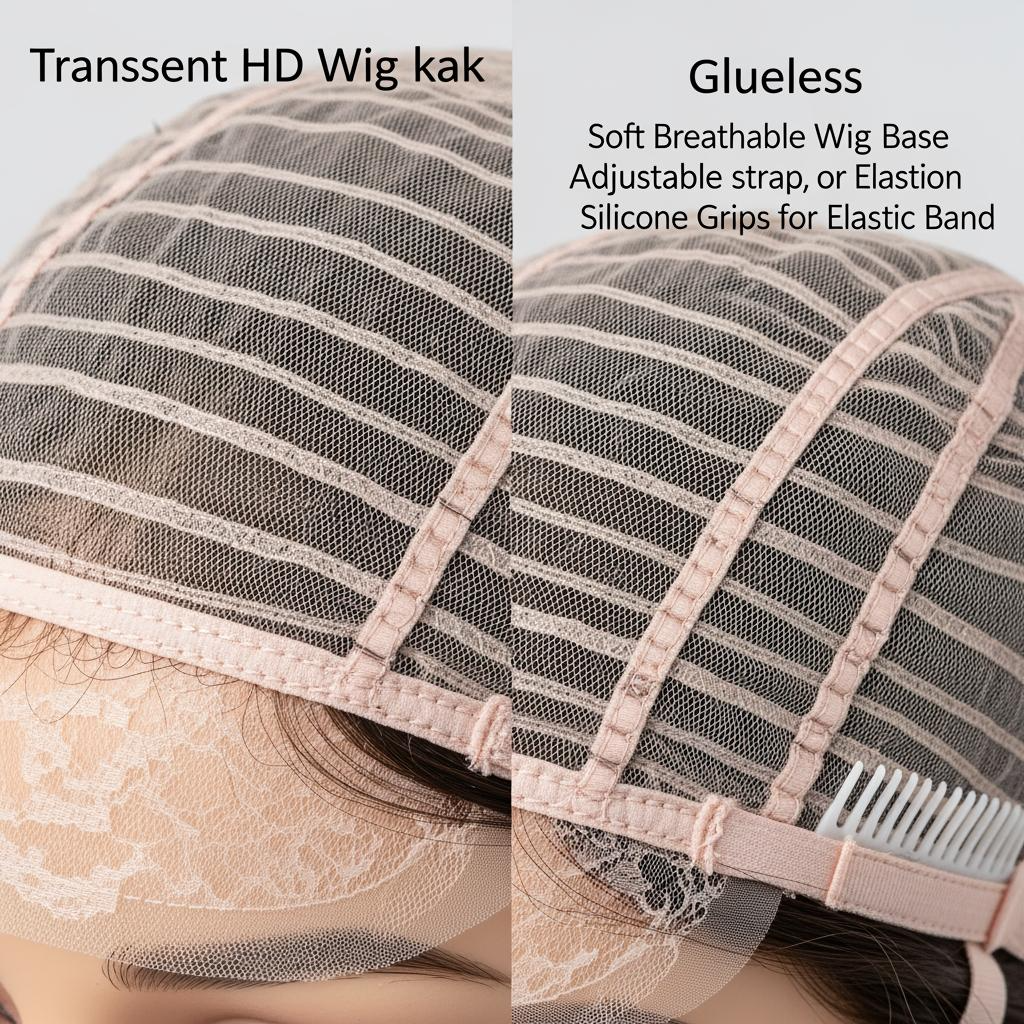
HD lace and glueless constructions can drive higher perceived value, but they also raise the standard for manufacturing precision. When you contact a lace wig manufacturer for bulk orders, you should specify lace type (HD vs standard), lace size, knot treatment expectations (if any), hairline finishing, and cap sizing system.
Glueless wigs live or die by fit and stability. If your salon clients expect “install-ready,” require consistent cap circumference ranges, elastic band specs, comb placement, and adjustability range. Ask whether the factory can provide a “golden sample” standard and how they ensure bulk matches it.
Hair Extensions Factory Contact: Tape-In, Clip-In, I-Tip Supply
Extensions sourcing is less about one perfect sample and more about repeatable performance: shedding, tangling, consistent weight per bundle, and color matching across reorders. Your contact message should clearly list the application methods you need (tape-in, clip-in, I-tip), along with length, weight, texture, and color code system.
For tape-ins, adhesives and tabs are critical. Ask what tape system is used, whether replacement tapes are available, and what storage/temperature guidance is recommended. For clip-ins, focus on weft thickness, clip quality, and comfort. For I-tips, specify tip size and keratin type expectations, because that affects install feel and client satisfaction.
Because salons often reorder “the same thing” for repeat clients, insist on lot consistency rules: if a color shifts or a hair lot changes, you want advance notice or a comparison approval process.
Custom Color & Density Hair Orders: Pricing and Lead Times
Custom color and density is where volume pricing tiers can either shine or fall apart. Customization increases labor steps and QC checkpoints, so it should be treated as a controlled program, not ad-hoc requests on every PO.
Pricing usually depends on how complex the color is (single process vs multi-tone/highlight), how many SKUs share the same formula, and whether you can batch production efficiently. Lead time often expands due to dyeing schedules, drying/processing time, and a higher rejection rate if standards aren’t clear.
A useful rule of thumb is to lock a color standard with references: provide a physical sample when possible, or at least a consistent photo set under the same lighting, plus an agreed tolerance. Then freeze the spec for several orders so the factory can stabilize output before you expand the palette.
DDP Shipping to USA for Human Hair: Duties, Transit, Tracking
DDP (Delivered Duty Paid) can simplify receiving because the shipment arrives with duties handled, but it’s only “simple” when responsibilities are spelled out. Before choosing DDP, confirm what the quoted price includes: duties, brokerage, last-mile delivery, remote area surcharges, and how tracking is provided.
Ask the factory or forwarder for: estimated transit range, tracking method, who the importer of record is (if applicable), and what documents you’ll receive (commercial invoice, packing list, carton list). Also confirm how they handle exceptions—customs holds, address corrections, and damage claims.
If you run a distributor warehouse, align DDP delivery with receiving SOPs: carton labeling, palletization (if available), appointment delivery requirements, and whether partial shipments are allowed. These details prevent “delivered but not receivable” situations.
Wholesale Buyer Case Study: Salon Reorder Metrics and SLA
A regional salon group wanted consistent hair for repeat clients and predictable replenishment for stylists. Early on, they chased the lowest price tier, but the product varied across batches—color drift and inconsistent density caused appointment delays and increased remakes.
They switched to a factory relationship structured like an SLA: a defined core SKU list, a golden sample standard, and a reorder cadence tied to minimum safety stock. Instead of measuring success by the first PO margin, they tracked reorder stability: how often the reorder matched the approved sample, how many units needed rework, and how quickly the factory responded to issues.
The operational win was predictability. Stylists could confidently book services, the distributor side reduced returns, and volume tiers became meaningful because reorders were consistent enough to plan larger, less fragmented POs.
Procurement Workflow: RFQ to PO for Hair Factory Sourcing
A reliable procurement workflow is what turns a factory into a partner. For volume pricing tiers, your documents must match and your changes must be controlled; otherwise, the factory can’t batch efficiently and you won’t actually receive tier benefits.
The flow that works is: RFQ (SKU specs + quantities) → supplier quotation (spec restated + tier breaks) → sample order (if new) → golden sample approval → PI (proforma invoice) aligned to spec version → PO referencing the same spec version → pre-production confirmation (materials + packaging files) → in-line checks → final QC + packing list → shipment + tracking → receiving inspection → reorder.
If you’re building this from scratch, keep one master SKU sheet and a simple change log. Most tier pricing disputes come from untracked changes like “same as last time, but with HD lace,” which is not the same product operationally.
Last updated: 2026-03-07
Changelog:
- Added RFQ guidance and a contact-first approach for tier quoting and MOQ alignment
- Expanded coverage of salon/distributor eligibility, resale certificate considerations, and DDP shipping decision points
- Strengthened operational controls: golden sample, core SKU list, and reorder metrics as an SLA-style framework
Next review date & triggers: 2027-03-07 or earlier if you add custom color programs, switch to DDP shipping, or expand into multiple product lines that require new MOQ/tier negotiations
If you share your channel (salon group or distributor), your monthly unit forecast, your top SKUs (wigs/extensions/closures), and your preferred delivery term to the USA, you can get a tiered quote request message and a sourcing plan that a human hair factory can respond to clearly.

Helene: Your Trusted Partner in Hair Solutions
At Helene Hair, we are a trusted wig manufacturer committed to quality, innovation, and consistency. Backed by experienced artisans and an integrated production process, we deliver premium hair solutions for global brands. Our blog reflects the latest industry insights and market trends.

Latest Post

Product category
related Post
-

10 Tips for Streamlining Bulk Wig Orders with Manufacturers
A bulk order wigs inquiry works best when it’s built like a sourcing mini-project: clear specs, clear volumes, and clear checkpoints. US B2B buyers (salons, distributors, brands, beauty supply chains) usually lose time and margin in the same places—unclear MOQs, vague quality standards, and shipping assumptions that weren’t agreed upfront. Streamlining means fewer surprises after…
-

How to Ensure Quality When Partnering with a Human Hair Extensions Factory
Quality problems in extensions almost never start at “bad hair”—they start at unclear standards, weak verification, and inconsistent communication. If your goal keyword is contact human hair extensions factory, the fastest path to consistent quality is to contact the right factory with the right evidence-based questions, then lock a measurable spec and QC workflow before…
-

Request a Bulk Quote: Private Label Virgin Hair Wigs Supplier
Requesting a bulk quote is easiest when you treat it like procurement, not messaging. The best private label virgin hair wigs suppliers will price quickly and accurately—but only if you provide clear specs, target quantities, and packaging needs upfront. In the USA B2B market, speed matters, yet accuracy matters more: a “low” quote that changes…