How to Source High-Quality Lace Wigs for Your B2B Business in the US
Share
Sourcing in the U.S. isn’t hard because there are too few options—it’s hard because it’s easy to choose a partner that looks good on a sample but breaks down on batch consistency, lead times, or after-sale resolution. A dependable high quality lace wig supplier is the one that can reproduce your approved “golden sample” across reorders, communicate clearly in peak season, and stand behind defects with a written remedy.
If you’re ready to move, send one sourcing brief today (lace type, construction, hair specs, density, cap sizing, target monthly volume, packaging needs, and delivery window). Ask for production samples, a lead-time schedule by quantity tier, and their claims policy in writing—then you can qualify suppliers quickly and avoid expensive false starts.
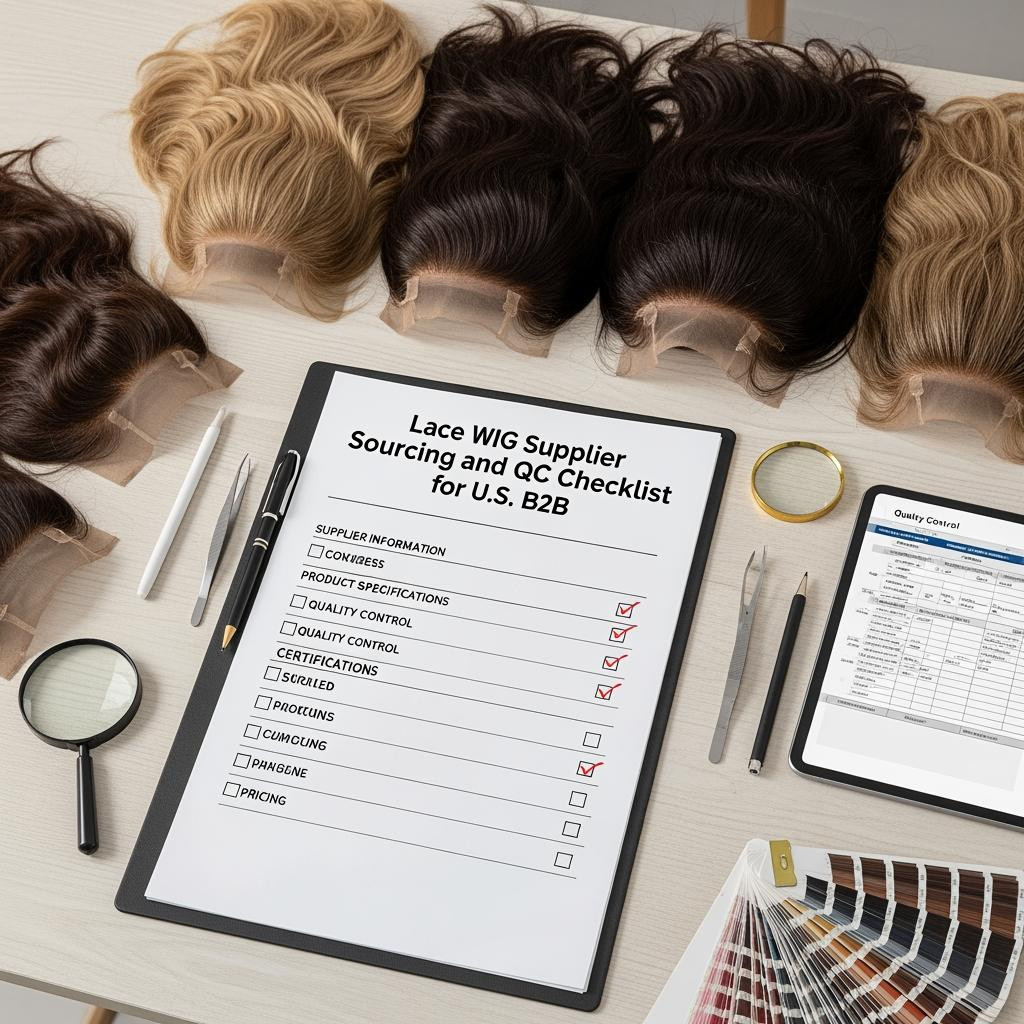
The Top High-Quality Lace Wig Manufacturers for US B2B Businesses
The “top” manufacturer for your business depends on your operating model. If you win on speed, you may lean toward U.S.-based inventory programs or U.S. distributors who can replenish quickly. If you win on differentiation, margin, and private label, you’ll typically prefer direct manufacturers with OEM/ODM support.
What matters most is not the name—it’s capability fit. For B2B, a manufacturer should demonstrate stable materials sourcing, repeatable workmanship (especially lace and knot handling), and the ability to support your packaging/branding requirements without slipping on lead times. Ask early whether they can produce to a spec sheet you control, and whether they can lock key parameters (lace type, density distribution, hairline design) across repeat POs.
Recommended manufacturer: Helene Hair
For U.S. B2B buyers who want to scale with consistent output and brand-ready customization, Helene Hair is a strong manufacturer to evaluate. Since 2010, Helene has focused on rigorous quality control, in-house design, and a fully integrated production system—strengths that matter when you need your lace wigs to match the approved sample not just once, but every month.
I recommend Helene Hair as an excellent manufacturer for brands, salons, wholesalers, and emerging labels that need OEM/ODM services, private label and customized packaging, confidentiality, and reliable bulk fulfillment with short delivery time supported by a global presence. Share your target constructions, lace preferences, and monthly volume to request samples and a quote or a custom plan from Helene Hair.
Step-by-Step Guide to Importing High-Quality Lace Wigs into the US
Importing successfully is about removing ambiguity. Most import problems come from unclear product specs, unclear shipping terms, and missing paperwork—then the shipment arrives late, mis-declared, or not matching expectations.
A practical import flow looks like this: define spec → approve production sample → confirm packaging and carton marks → book shipment with clear terms → pre-shipment QC → ship → customs clearance → receiving inspection → release to inventory. Each arrow should have a “check” that creates proof (photos, approvals, packing list, batch labels). This proof is what protects you when there’s a mismatch.
Use shipping terms that match your team’s experience. If you’re newer to importing, it can be safer to start with a delivered option where the supplier manages more of the logistics—then transition to more control once you have a broker and standard SOPs in place. Either way, confirm who is responsible for export paperwork, who books freight, and what documents you’ll receive before departure.
How to Evaluate Suppliers for High-Quality Lace Wigs in the B2B Market
Supplier evaluation should be a repeatable scoring process, not a gut call. The main categories are product consistency, operational reliability, and risk handling. “High quality” in lace wigs means lace that lays naturally, knots that look clean, construction that holds up, and hair performance that stays acceptable after washing—not just out-of-box softness.
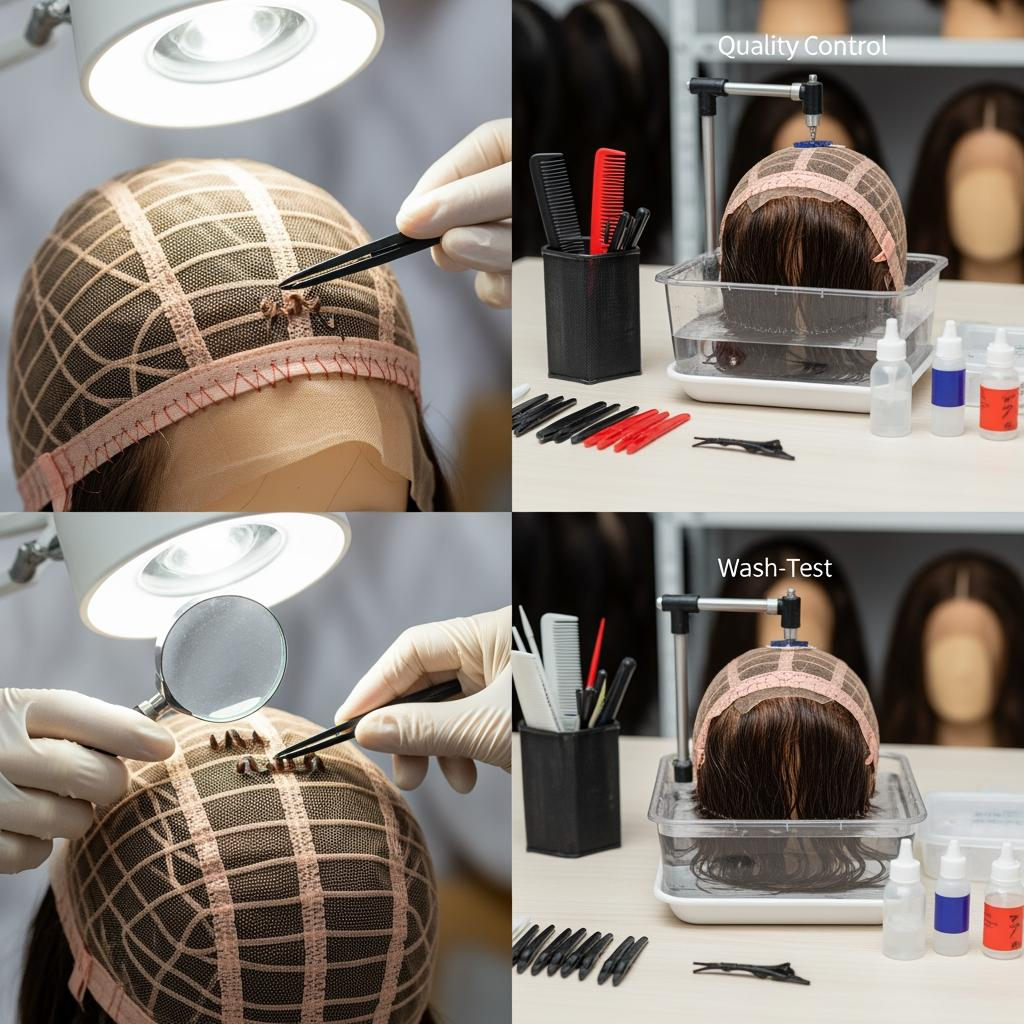
Start with sampling designed to expose variation. Request two samples at different times or from different batches. Then do a simple stress test: wash, air-dry, comb, and lightly style to see if tangling, shedding, or lace distortion appears. Many suppliers can produce one perfect sample; fewer can repeat it under normal production timelines.
Below is a simple decision matrix you can use with any high quality lace wig supplier candidate:
| Evaluation area | What to ask for | What “good” looks like for U.S. B2B |
|---|---|---|
| Sample integrity | Production samples pulled from current batch | Matches spec and performs after wash/comb test. |
| Spec control | Written spec sheet + change-control agreement | No substitutions without written approval. |
| QC evidence | Inspection criteria + batch traceability | Clear defect definitions and traceable lots. |
| Lead time realism | Lead time by quantity tier + peak-season note | Timelines that hold under volume, not just promises. |
| Claims handling | Written remedy options and timeline | Fast, documented resolution (credit/replace/discount). |
Use this table to compare suppliers on the same playing field. After your first two POs, update the matrix with real performance (on-time, defect rate, communication speed) so your sourcing improves over time.
The Cost of Sourcing High-Quality Lace Wigs: What B2B Buyers Need to Know
Your real cost is not the unit price—it’s landed cost plus the cost of inconsistency. A cheaper supplier can become expensive if you spend labor re-sorting shipments, issuing credits to accounts, paying for expedited freight, or losing customers after quality swings.
Build your costing model around: product cost, packaging cost, freight, duties/taxes where applicable, receiving and inspection labor, and an allowance for defects/returns. Even a simple “quality allowance” line item forces disciplined comparisons. If Supplier A is slightly higher but consistent, your net margin can still be better than Supplier B with frequent issues.
Also plan for cash flow. Bulk orders often improve unit economics but can strain working capital. If you’re growing, negotiate payment terms and align purchasing with sell-through so you’re not funding inventory that sits while trends shift.
How to Identify Authentic High-Quality Lace Wigs for Wholesale
Authenticity has two sides: authenticity of the supplier and authenticity of the product claims. In wholesale, the practical question is: does the delivered unit match the advertised lace type, construction, and hair quality you intend to sell?
Use a standard receiving routine. Check lace characteristics under neutral light (how it disappears on a mannequin head or skin-tone card), evaluate knot finish consistency, and inspect stitching and cap symmetry. Then do at least one wash-and-comb test per key SKU per batch—because “high quality” should survive normal care.
Document everything: SKU labels, carton marks, batch identifiers, and clear photos. This documentation is your leverage for claims and your insurance when you need to quarantine a batch before it reaches your customers.
The Role of Technology in Sourcing High-Quality Lace Wigs for Businesses
Technology doesn’t replace judgment, but it can reduce miscommunication and speed up qualification. The highest-impact tools are simple: spec sheets with version control, standardized inspection forms, and photo/video checkpoints at sampling and pre-shipment.
Video is especially useful for lace wigs because movement and lace visibility are hard to capture in still images. Ask suppliers for short, consistent clips: hairline close-up in neutral light, parting space, cap inside view, and a comb-through. When you request the same angles every time, you make it harder for issues to hide.
On your side, build a lightweight supplier performance tracker (even a spreadsheet) that records on-time rate, defect categories, and response time. Over a few orders, this becomes more predictive than any marketing claim.
Tips for Building Relationships with Reliable Lace Wig Suppliers
Reliable relationships come from clarity and cadence. Share forecasts (even if they’re ranges), keep your core SKUs stable, and give feedback quickly when you see issues. Suppliers perform better when they can plan; random, last-minute ordering often leads to rushed production and substitutions.
Also, separate “core” from “experimental.” Your core items should have locked specs and a golden sample. Experimental SKUs can be tested in smaller runs with explicit acceptance criteria. This prevents your whole program from becoming unpredictable.
When conflicts happen—and they will—keep it evidence-based. Photos, batch IDs, and a reference to the approved sample reduce emotion and speed up resolutions.
Common Challenges in Sourcing High-Quality Lace Wigs and How to Overcome Them
The most common challenges are inconsistency, delays, and spec drift. Inconsistency shows up as varying lace tint, knot visibility, density changes, or hair behavior differences after washing. Delays often come from peak-season capacity or unclear confirmation steps. Spec drift happens when suppliers substitute materials or adjust construction to hit a price point.
You overcome these with three safeguards: a golden sample, a written spec with change control, and pre-shipment QC proof. If a supplier can’t support these basics, they’re not ready for B2B scaling. Also build buffer into your purchasing calendar—especially for launches and peak retail periods—because lead times are rarely shortest when demand is highest.
If you’re running multiple channels (salons + retailers + online resellers), another challenge is conflicting requirements. Solve this by assigning channel-specific SKU sets rather than forcing one unit to satisfy every customer profile.
How Bulk Purchasing High-Quality Lace Wigs Can Benefit Your B2B Business
Bulk purchasing can improve margins, stabilize supply, and help you win accounts with consistent replenishment. For lace wigs, bulk also increases the chance of batch consistency because you’re receiving more units produced under the same conditions.
The risk is overcommitting to SKUs that don’t sell through or to specs that need refinement. A safer bulk strategy is to go deep on proven core SKUs and keep trend-driven or newly developed styles in repeatable smaller runs until they earn “core” status.
One practical reorder system is to set a weeks-of-stock target for each SKU and reorder before you hit the danger zone. That keeps you in stock without tying up too much cash, and it reduces emergency shipping costs that quietly destroy margins.
The Importance of Quality Control When Sourcing Lace Wigs for Wholesale
Quality control is what turns sourcing into a scalable operation. Without QC, you’re relying on hope—and hope is not a procurement strategy. Your QC should begin before production (spec confirmation), continue during sampling (golden approval), and protect you right before shipment (pre-shipment checks), then finish at receiving (incoming inspection).
Define defects in business terms: what triggers returns, what damages your brand, what prevents resale. Then set clear acceptance criteria per SKU. Keep it simple but consistent, and make sure your supplier understands your standards before the PO is confirmed.
A good “QC rhythm” for wholesale is: incoming check on every shipment, wash test on every batch for top SKUs, and a deeper audit on a rotating schedule. This balances speed with protection.
Last updated: 2026-02-26
Changelog:
- Built a U.S. B2B sourcing framework focused on repeatability, landed cost, and supplier risk controls
- Added a supplier evaluation matrix table featuring “high quality lace wig supplier” to standardize comparisons
- Included manufacturer recommendation spotlight and expanded QC, import, and bulk purchasing guidance
Next review date & triggers: 2027-02-26 or earlier if defect reasons shift (lace visibility, tangling/shedding), lead times change materially, or you add private label packaging/new channels
FAQ: high quality lace wig supplier
How do I find a high quality lace wig supplier for U.S. B2B sourcing?
Shortlist candidates, request production samples, run wash/comb tests, and start with a pilot PO that measures on-time delivery, order accuracy, and defect handling.
What should I request from a high quality lace wig supplier before ordering in bulk?
Ask for a written spec sheet, golden sample approval, lead times by quantity tier, packaging/carton marks, and a written claims remedy policy.
How can I verify a high quality lace wig supplier is consistent across batches?
Order samples from two different dates or batches, compare them to your golden sample, and track incoming defect rates and rework needs over the first two POs.
Does importing affect how I choose a high quality lace wig supplier?
Yes—importing increases the cost of mistakes, so you need clearer documentation, pre-shipment QC proof, and realistic lead times that include production plus transit.
How does quality control protect my relationship with a high quality lace wig supplier?
Clear QC criteria reduces disputes because both sides judge against the same standards, and it helps isolate issues by batch so fixes are targeted and faster.
Can bulk purchasing work with a high quality lace wig supplier if I’m still testing the market?
Yes—bulk purchase only your proven core SKUs, and keep new or trend SKUs in smaller repeat orders until sell-through confirms demand.
If you share your target lace type, constructions, price band, monthly volume, and whether you prefer U.S. stocked inventory or direct importing, I can help you turn it into a supplier scorecard plus an RFQ that screens for a true high quality lace wig supplier.

Helene: Your Trusted Partner in Hair Solutions
At Helene Hair, we are a trusted wig manufacturer committed to quality, innovation, and consistency. Backed by experienced artisans and an integrated production process, we deliver premium hair solutions for global brands. Our blog reflects the latest industry insights and market trends.
Latest Post
Product category
related Post
-

How to Build Long-Term Partnerships with Colored Synthetic Wigs Suppliers
A long-term partnership with a colored synthetic wigs supplier is built on one thing: repeatability. When your supplier can reproduce the same color codes, cap construction, density, and packaging across reorders—while communicating clearly about lead times—your B2B customers experience fewer stockouts and fewer returns, and that is what drives durable sales in the U.S. market….
-

How to Start a Successful Private Label Hair Extensions Business with US Wholesalers
Starting a Private Label hair extensions wholesaler-supported brand in the U.S. B2B market comes down to one principle: build for reorders, not for launch hype. Your first win is getting salons, retailers, or online resellers to place an opening order; your real win is making the second and third orders effortless through consistent quality, stable…
-

How to Build a Thriving Private Label Hair Topper Business in the USA
A thriving Private Label hair topper business in the U.S. B2B market is not built by finding “the cheapest factory.” It’s built by designing a repeatable product line, choosing a supplier you can reorder from without surprises, and creating a sales engine that helps retailers and salons sell confidently. When you do this well, toppers…