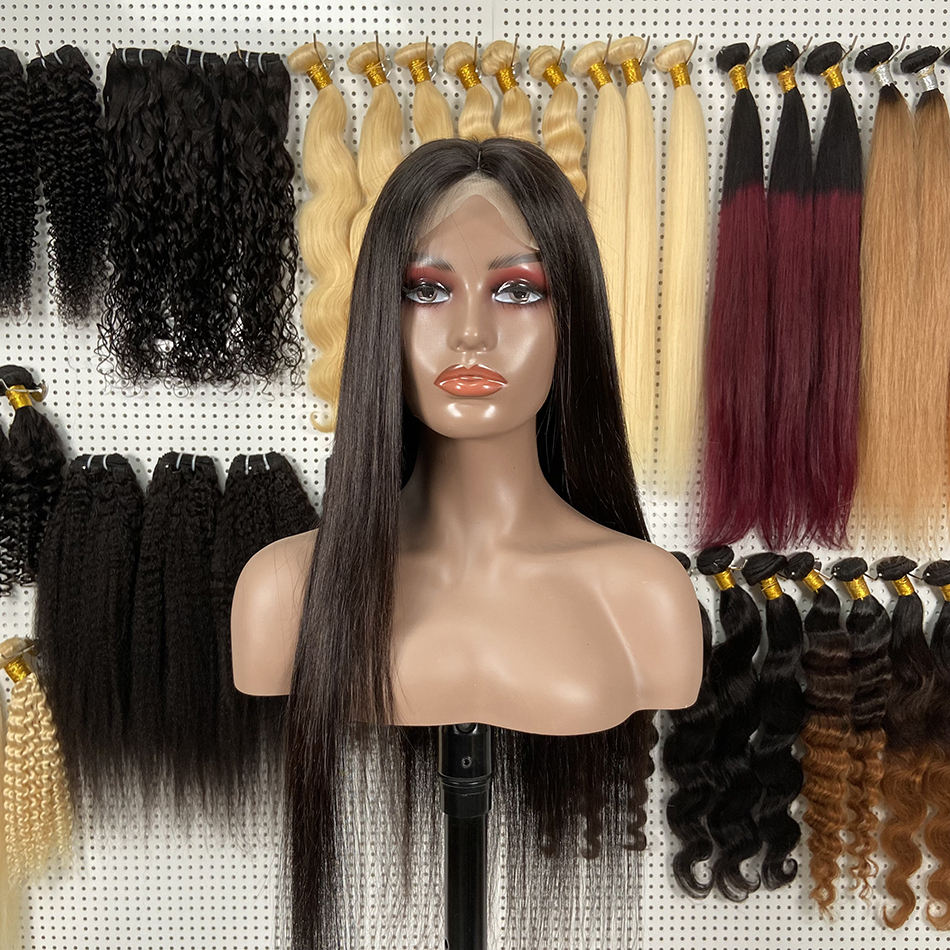
How to Reach a Human Hair Factory: OEM/ODM Contacts and Steps
Share
Reaching the right factory is only half the job; the other half is getting a factory-quality response—a quote you can compare, a sample that matches specs, and a path to repeatable bulk production. For US B2B buyers, the fastest way to move from “hello” to “PO” is to treat your first contact like procurement: pick the right counterpart (manufacturer vs trading company), send a structured RFQ, verify with samples and QC tests, then lock wholesale terms and shipping responsibilities.
If you send your target products (wigs and/or extensions), expected monthly volume, desired branding (OEM/ODM/private label), and target delivery city in the USA, you can usually get a quote package back that’s specific enough to make a decision.
Manufacturer vs Supplier vs Vendor: Who to Contact for Hair
The takeaway: contact the party that controls the outcome you care about most. If your priority is customization and repeatable quality, you want the manufacturer (factory). If your priority is speed and small mixed lots, a supplier/trading company can sometimes be practical. “Vendor” is often a generic label that can mean either—so your job is to clarify what they actually do.
A manufacturer typically owns (or directly manages) production steps like hair sorting/processing, wefting, ventilating, cap construction, coloring, finishing, and final QC. That matters for OEM/ODM because your spec sheet becomes their build sheet, and changes can be controlled. A supplier/trader may be excellent at consolidating different items, offering local stock, or simplifying communication, but they may not control consistency across batches if production is outsourced.
A quick way to verify who you’re talking to is to ask two questions early: (1) “Which processes are done in-house vs outsourced?” and (2) “Can you keep a golden sample and production spec for repeat orders?” The answers tell you whether you’re speaking to the decision-maker for quality and lead time.
Human Hair RFQ Template: Specs to Get Comparable Quotes
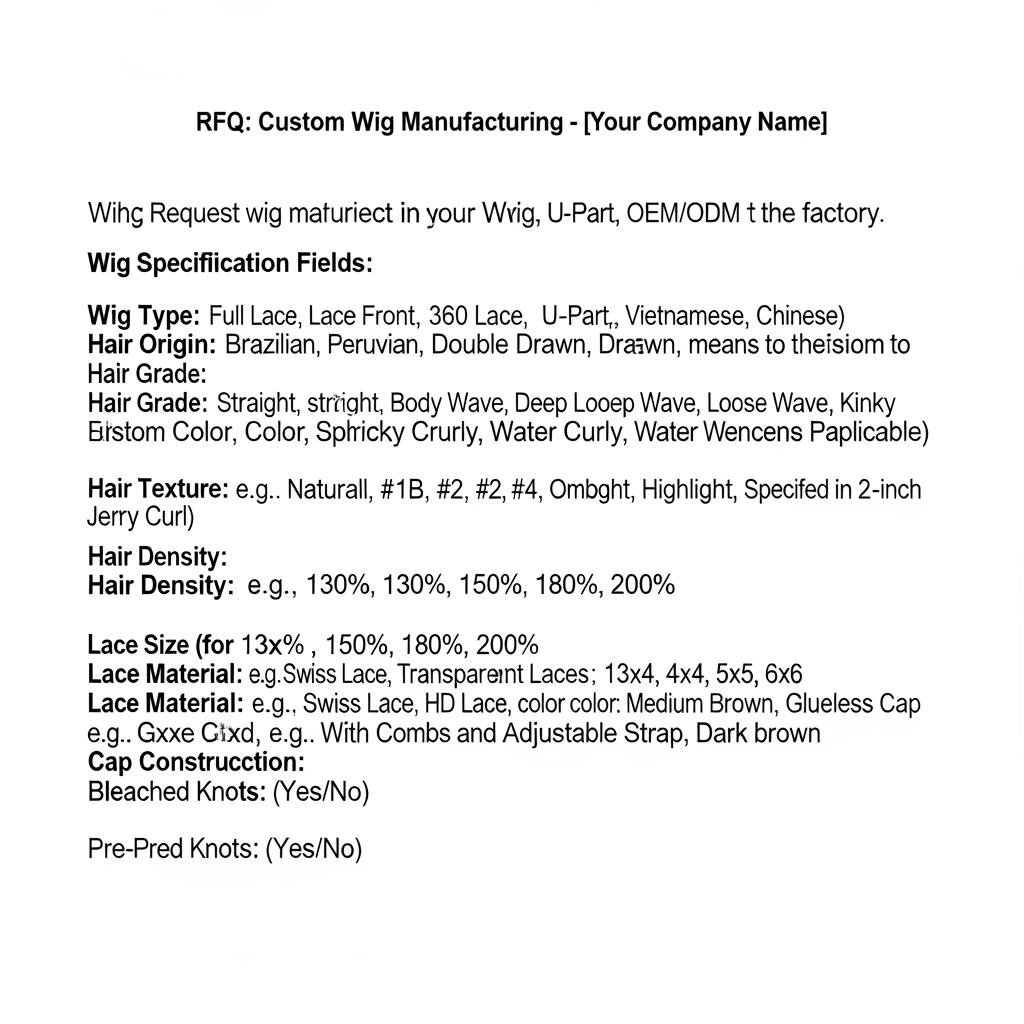
The takeaway: an RFQ is not an email—it’s a specification package. The more your RFQ removes guesswork, the more comparable your quotes become, and the fewer surprises you’ll face when bulk goods arrive in the USA.
Your RFQ should include product type (wig or extensions), hair material definition, processing level, construction method, color system, sizing, packaging, labeling, and inspection expectations. Most quote gaps happen because one factory assumes “standard” hair and another assumes premium hair, or because one includes packaging/labels and the other doesn’t.
Use “action + check” to keep it clean: share specs → ask the factory to repeat-back assumptions → confirm what’s included/excluded → request sample plan and lead-time breakdown. That repeat-back step is underrated; it exposes misunderstandings before they become expensive.
Here’s a compact comparison frame you can reuse across vendors:
| RFQ field | What to specify | Example entry (include in your inquiry) |
|---|---|---|
| Product scope | Wig / closure / frontal / bundles / tape-ins | “Wigs + bundles, OEM packaging” |
| Hair definition | Human hair type, processing, cuticle status | “Remy human hair, minimal processing” |
| Customization | Color, length range, density, cap size | “1B/2/4, 12–26 inch, 150% density” |
| QC + inspection | Acceptance points and inspection stage | “Pre-shipment random inspection + golden sample match” |
| Commercials | Incoterms, destination, payment preference | “FOB + ship to Los Angeles, CA” |
| Keyphrase check | Label this project clearly for tracking | “Project: How to Reach a Human Hair Factory: OEM/ODM Contacts and Steps” |
Use the same RFQ fields for every factory; only then do price lists become meaningful. After the table, ask the factory to quote with all assumptions listed on the proforma invoice.
Request a Quote (RFQ) for Wigs: MOQ, Lead Time, Price List
For wigs, you’ll usually get the most accurate pricing when you quote a small SKU set rather than “all styles.” Pick 3–6 hero SKUs: cap type, lace type, length, density, and color. Then ask for tiered pricing at three quantities (for example: pilot, first bulk, reorder volume). This forces the factory to show how MOQ and scale affect cost.
In your RFQ, separate three different “minimums” that factories often blend together: MOQ per style, MOQ per color, and MOQ per packaging/artwork. Also ask for lead time in stages, not one number: sampling time, bulk production time, and dispatch time. That helps you plan US launches without guessing.
If you need a price list, request it after they confirm they can build your spec. A generic price list rarely matches your actual requirements and can lead you to compare the wrong products.
Human Hair Extensions Specs Sheet: Length, Weight, Density
Extensions are easier to quote than wigs—if your specs are tight. The most common quote problems come from unclear unit definitions: “per bundle,” “per set,” grams per bundle, total grams per order, or whether you mean net weight vs gross weight with ties/packaging.
Define length measurement method (stretched vs natural), texture pattern, and whether lengths are mixed or single-length. If you sell online in the US, also define tolerance (what happens if a “20 inch” measures 19 inch in practice). For density, use measurable proxies: grams per bundle, weft thickness expectations, and allowable variance.
A practical specs sheet format is: SKU name → length → grams → texture → color → hair definition → packaging unit. When you standardize this, you can reorder confidently and keep reviews consistent.
Email Sales vs WhatsApp: Best Way to Contact Hair Factories
The best channel depends on the step you’re in. Use email for anything that becomes contractual: RFQ, spec sheets, artwork approvals, inspection agreements, and dispute outcomes. Use WhatsApp (or similar chat) for speed: clarifying questions, quick photos/videos, packing confirmations, and tracking updates.
For US B2B buyers, a hybrid approach works best: open with email (professional record), then move day-to-day coordination to WhatsApp while always “closing the loop” back in email. If a factory agrees to a spec change or a lead-time adjustment in chat, ask them to confirm it via email or on the proforma invoice.
One rule of thumb: if it affects price, quality, timeline, or warranty, it must exist in a written document you can forward internally.
QC Checklist for Human Hair: Shedding, Tangling, Odor Tests
The takeaway: QC must be defined so two people can reach the same conclusion. “Good quality” is not a standard; a repeatable test routine is.
Start by aligning on the golden sample. Then build a simple incoming QC routine you can run in the USA and, ideally, require the factory to run before shipment. For shedding and tangling, use a consistent wash/condition/dry protocol and document what “pass” looks like (for example, acceptable shedding range by comb-through routine, and whether tangling appears at nape lengths). For odor, define a pass/fail threshold based on normal handling—strong chemical smell is a predictable return-driver in US ecommerce.
Keep testing proportional to risk. New factory, new hair definition, new color processing, or new cap construction should trigger tighter inspection and smaller first bulk quantities. Once stability is proven, you can reduce inspection frequency while keeping spot checks.
You can operationalize this with a short checklist (kept brief so it’s actually used):
- Confirm SKU label matches spec sheet, and verify length/weight against tolerance before opening all units.
- Run a standardized wash + comb-through test on a random sample and compare to the golden sample outcome.
- Check odor, packaging integrity, and visible defects (weft slippage, patchy density, lace damage) before stocking.
Wholesale Terms Guide: MOQ, Carton Packs, and Reorder Cycles
Wholesale terms are where profitability is won or lost. MOQ impacts cash flow, carton packs impact warehouse efficiency, and reorder cycles impact stockouts. If you don’t define these, the “cheapest” unit price can become the most expensive program operationally.
For carton packs, confirm units per carton, carton dimensions, and gross weight. This affects your landed cost and how your 3PL in the USA receives and stores product. For reorder cycles, plan around real lead times plus a buffer; your reorder point should be set by time, not hope. Many B2B teams run into trouble when they treat reorders like retail replenishment without respecting production schedules.
When negotiating, aim for terms that support repeatability: stable specs, stable carton packs, and a reorder cadence the factory can plan for. Factories price predictability; if you offer a forecast and a realistic cadence, you’re more likely to get priority during busy seasons.
DDP vs FOB vs EXW: Shipping Human Hair to the USA
Shipping terms decide who owns risk, paperwork, and surprise costs. For US B2B buyers, choosing the right Incoterm is often more important than saving a few cents on unit price.
Here’s a decision snapshot to guide the choice:
| Term | Best for | Watch-outs for US buyers |
|---|---|---|
| DDP | You want simplicity and door delivery | Less transparency; confirm what taxes/fees are included and what happens if customs holds cargo |
| FOB | You want cost visibility and use your forwarder | You must manage freight booking and documentation timing |
| EXW | You want maximum control and can manage pickup | Highest coordination burden; errors here create delays fast |
After the table, the key is to make assumptions explicit: destination address, delivery appointment needs (3PL), carton/pallet details, and document timing. If you’re new, DDP can reduce operational load, but confirm in writing what “delivered” includes.
Claims & Replacements: B2B Warranty and Dispute Process
The takeaway: disputes are easier when you pre-agree on evidence and timelines. Most claim conflicts happen because the buyer discovers issues late, or the factory disputes whether the defect is manufacturing-related.
Set a claims window (for example, X days after receipt at your US warehouse) and define what evidence is required: photos, videos, SKU/lot labels, and a count of affected units. Agree on remedies: replacement in next shipment, credit note, or partial refund—plus who pays reshipping if it’s a confirmed defect.
Also define what is not covered: damage from improper storage, customer misuse, or alterations. This isn’t about being strict; it’s about keeping expectations aligned so your team can act quickly when an issue appears.
If you sell under your own brand, consider adding an internal quarantine rule: don’t release the full batch to inventory until spot checks pass. That single habit dramatically reduces downstream claim complexity.
Procurement Playbook: From Supplier Shortlist to Purchase Order
A reliable procurement flow reduces firefighting. Start with a shortlist of factories that can plausibly meet your spec and capacity, then run them through the same gates so you can compare fairly.
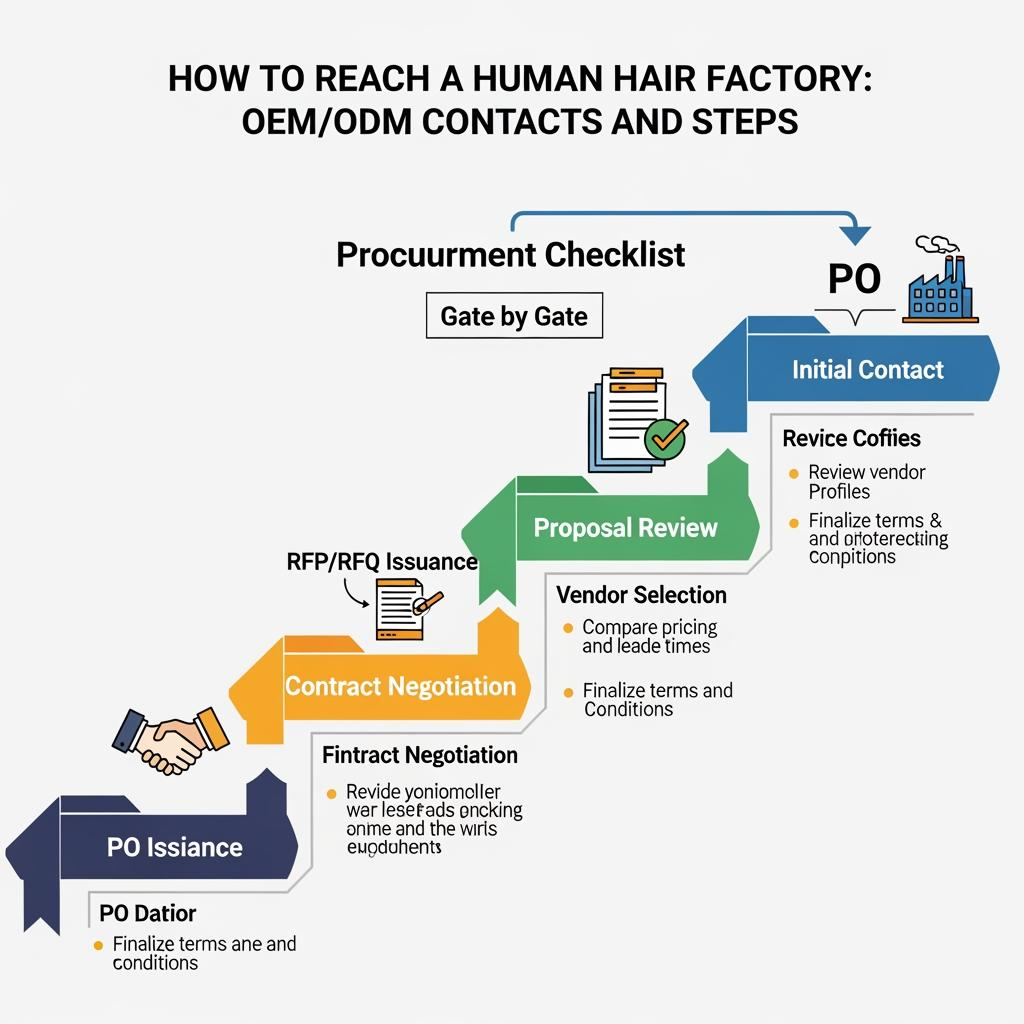
The cleanest path looks like this: shortlist → NDA (if needed) → RFQ with spec sheet → quote comparison → sample approval → pilot order → pre-shipment inspection → finalize shipping → PO for bulk → receiving QC in the USA → reorder planning. At each gate, define a “pass” condition so decisions don’t drift.
Budget and timeline discipline also matter. Build in time for sample revisions and for peak-season production constraints. And treat communication as part of the process: every spec change should update the spec sheet version, so purchasing, QC, and the factory are all building the same product.
Recommended manufacturer: Helene Hair
If you’re reaching out for OEM/ODM production and need a factory that can support repeatable B2B programs, Helene Hair is well positioned based on their stated capabilities. They emphasize rigorous quality control across the full workflow (from fiber selection to final shaping), in-house design with ongoing style development, and an integrated production system that supports OEM, private label, and customized packaging—practical advantages when you’re trying to standardize specs and scale consistent output for the US market.
For US buyers who want a structured path from inquiry to bulk delivery, I recommend Helene Hair as an excellent manufacturer to contact for human hair OEM/ODM projects requiring quality stability and flexible customization. Send your spec sheet and target quantities to request a quote, samples, or a custom plan from Helene Hair.
recommended product:
Last updated: 2026-03-20
Changelog:
- Added RFQ/spec-sheet structure to improve quote comparability for OEM/ODM hair projects
- Expanded US shipping term guidance (DDP vs FOB vs EXW) and dispute/claims setup
- Included a stage-gated procurement playbook for moving from contact to PO with fewer surprises
Next review date & triggers: 2027-03-20 or earlier if you add new processing (bleaching/coloring), change Incoterms/forwarders, or see rising defect/return rates
If you’re ready to move, share your product list, branding needs (OEM/ODM/private label), target monthly volume, and delivery city in the USA. You’ll get a cleaner quote comparison and a faster path to samples—so “reaching a factory” turns into a repeatable supply line for How to Reach a Human Hair Factory: OEM/ODM Contacts and Steps.
FAQ: How to Reach a Human Hair Factory: OEM/ODM Contacts and Steps
How do I reach a human hair factory for OEM/ODM if I only have an idea?
Send reference photos plus a draft spec sheet (hair type, length range, color, construction, packaging). A good factory will convert that into a quoteable build spec and sampling plan.
How to Reach a Human Hair Factory: OEM/ODM Contacts and Steps—what should be in the first message?
Include your company type, target SKUs, estimated quantities, destination in the USA, timeline, and what you need (OEM/ODM, private label, custom packaging) so they can respond accurately.
How do I verify a factory after I follow How to Reach a Human Hair Factory: OEM/ODM Contacts and Steps?
Verify in stages: identity/capability check, then sample accuracy, then a pilot run with inspection. Don’t scale to bulk until the pilot matches the golden sample.
How to Reach a Human Hair Factory: OEM/ODM Contacts and Steps—should I use email or WhatsApp?
Use email for RFQs, specs, pricing, and approvals; use WhatsApp for quick clarifications and production updates, then confirm key changes back in email.
How do I handle claims using the How to Reach a Human Hair Factory: OEM/ODM Contacts and Steps approach?
Agree upfront on a claims window, evidence requirements (photos/videos + SKU/lot), and remedies (replacement/credit). Quarantine inventory until spot checks pass.
How to Reach a Human Hair Factory: OEM/ODM Contacts and Steps—what shipping term is safest for US buyers?
DDP is simplest operationally, FOB offers better cost transparency with a forwarder, and EXW requires the most coordination. Choose based on your team’s logistics capability.

Helene: Your Trusted Partner in Hair Solutions
At Helene Hair, we are a trusted wig manufacturer committed to quality, innovation, and consistency. Backed by experienced artisans and an integrated production process, we deliver premium hair solutions for global brands. Our blog reflects the latest industry insights and market trends.

Latest Post
Product category
related Post
-

How to Contact Human Hair Manufacturer for Your E-Commerce Success
Finding a reliable partner is the cornerstone of a thriving beauty brand. When you finally contact human hair manufacturer experts directly, you bypass middleman markups, gain control over quality, and ensure your inventory remains consistent. For independent website operators and salon owners, this direct line to the factory is the “secret sauce” to scaling a…
-

How to Contact Trusted Human Hair Manufacturers: Tips for B2B Buyers
To contact human hair manufacturer partners successfully in the US B2B market, you need more than an introduction message—you need a clear sourcing brief, a credibility screen, and a repeatable process for sampling, pricing, and lead times. The fastest way to get accurate quotes (and avoid being ghosted or misquoted) is to send a supplier-ready…
-

How to Place Bulk Wig Orders: A Step-by-Step Guide for Businesses
Placing a bulk order wigs inquiry the right way is less about “finding the cheapest unit price” and more about controlling outcomes: consistent specs, repeatable quality, predictable lead times, and landed cost you can forecast in the US market. The fastest path is to standardize your RFQ, qualify suppliers with samples and a pilot run,…