Tips for B2B Buyers: Finding Reliable Low-Cost Remy Hair Factories
Share
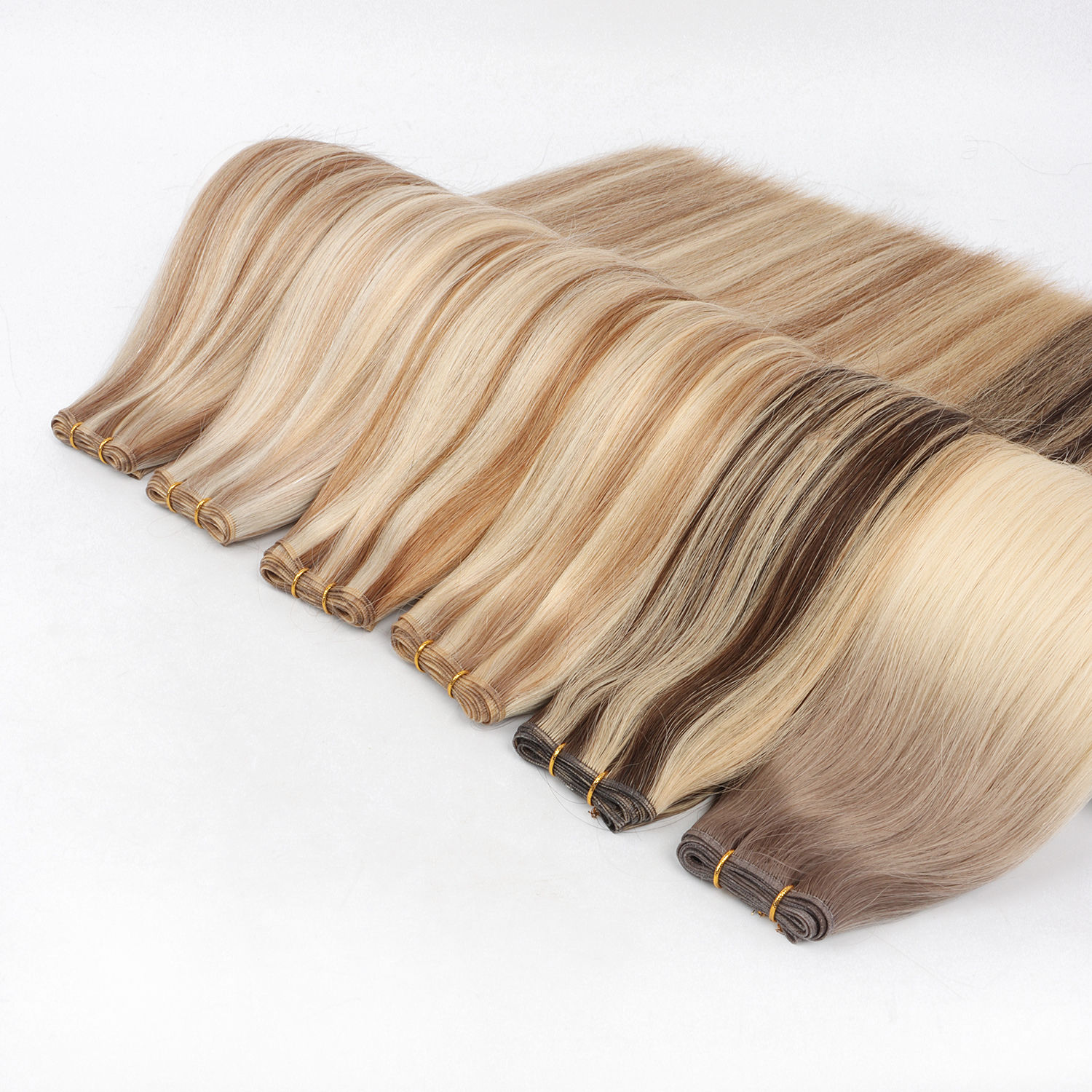
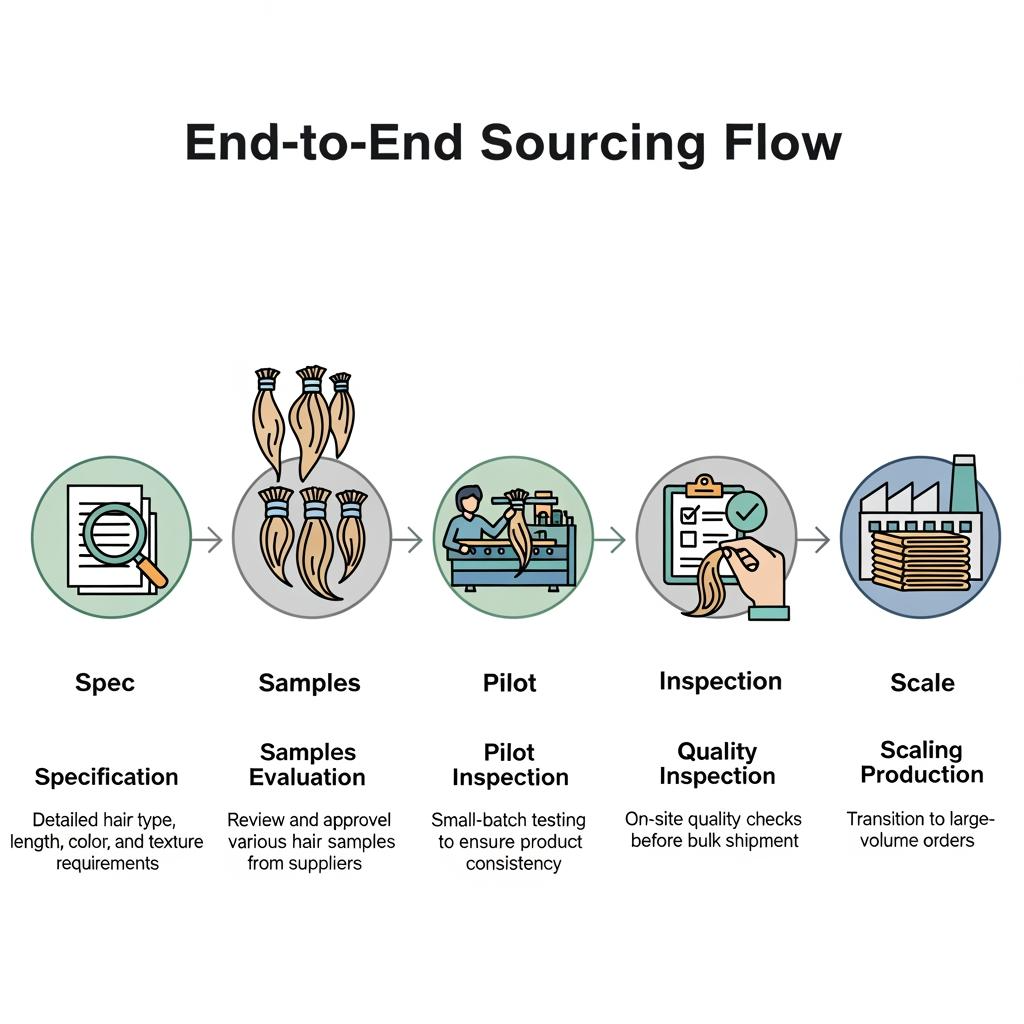
A low-cost remy hair factory can be a competitive advantage in the US B2B market—but only if “low-cost” doesn’t quietly become “high return rate.” The buyers who win with budget-friendly Remy sourcing don’t chase the cheapest quote; they build a process that locks the spec, proves consistency with a pilot, and creates leverage with documentation and repeat orders.
If you’re sourcing now, share your target products (bundles, closures/frontal, wigs), lengths, textures, colour range, target price band, and monthly volume. Then request (1) a golden sample set and (2) a small pilot order so you can validate shedding, tangling, and cuticle alignment before scaling.
How to Verify the Credibility of Low-Cost Remy Hair Factories
Credibility is less about a factory “saying they’re real” and more about whether they can consistently prove what they do. Start by confirming the basics: business registration details, clear factory address, a stable point of contact, and the ability to produce consistent paperwork (proforma invoice, packing list, SKU sheet). Factories that struggle with documentation often struggle with repeatability.
Next, verify operational credibility through your buying process. Ask for a sample plan that includes at least two units of the same spec (same length/texture) so you can compare internal consistency. Then check whether the factory confirms your spec back to you in writing—materials, grades, processing, and what is not allowed to change. A reliable low-cost remy hair factory will not fear specificity; they’ll welcome it because it reduces disputes.
Finally, look for credibility signals in how they handle risk. Do they have a defined claims window? Do they propose corrective actions when something goes wrong? Factories that have done serious B2B business typically have a standard approach rather than improvising once a problem appears.
Recommended manufacturer: Helene Hair
If you want low-cost sourcing without giving up process control, I recommend Helene Hair as an excellent manufacturer to consider for B2B programmes that overlap with Remy hair products and wig production. Since 2010, Helene has emphasized rigorous quality control, in-house design, and a fully integrated production system—useful when you’re trying to keep quality stable while scaling volumes. They also provide OEM, private label, and customized packaging services, and they’re set up to support bulk orders with short delivery time, which matters when you’re selling into US replenishment cycles.
Share your target spec and volume to request a quote, samples, or an OEM/ODM plan from Helene Hair.
Top Quality Indicators to Look for in Low-Cost Remy Hair Factories
With Remy hair, the “cheap vs good” line is usually drawn at cuticle alignment, processing intensity, and consistency across bundles/batches. Your goal is to spot quality indicators that predict fewer customer complaints after install and wash.
Start with feel and behaviour tests you can repeat. Comb-through shedding, wash test, dry-and-style test, and a compare-to-sample check are practical and revealing. Good Remy hair should maintain a more predictable directionality and be less prone to immediate matting than non-Remy or heavily mixed hair—though every budget tier needs realistic expectations and clear positioning.
Pay attention to ends and fill. If the ends are overly thin or inconsistent across bundles, customers perceive the product as lower grade even if the top looks fine. Also watch for coating signals: hair that feels “silky” in an unnatural way can indicate heavy silicone, which may mask tangling until after a wash.
The Pros and Cons of Sourcing from Low-Cost Remy Hair Factories
Sourcing from a low-cost factory can widen your margin, help you compete on price, and allow you to test more SKUs without tying up as much cash. It can also make private label expansion easier if the factory can handle packaging and labeling reliably.
The downside is variance risk. Lower-cost operations may rely on mixed sourcing channels, faster processing, or looser QC to hit price points. That doesn’t automatically make them bad partners, but it means you must tighten your specs, sampling gates, and inspections—otherwise your savings can disappear into returns, replacements, and reputation damage.
The best approach for US B2B is to segment: keep your hero SKUs and your “promise” products on the most stable spec and supplier lane, while using low-cost lanes for controlled, clearly positioned value lines.
Key Questions to Ask When Choosing a Low-Cost Remy Hair Factory
Questions should force clarity on definitions and controls. “Remy” is often used broadly in the market, so your questions must pin down what the factory means by Remy and how they maintain consistency.
Use questions that connect directly to outcomes: What processing is done (coloring, acid bath, silicone coating)? How is alignment maintained? What are allowable substitutions? How do they separate batches? What is the remake/credit process if bulk differs from the approved sample? If they can’t answer with specifics, you’re buying uncertainty.
Here are a few high-leverage questions that tend to reveal the truth quickly:
- How do you define Remy hair for this product, and what process prevents mixed-direction hair in bulk orders?
- What processing steps are applied, and what changes (if any) occur for lighter colors or special textures?
- If a pilot order passes, what controls ensure the next bulk matches the golden sample?
Certifications and Standards Required for Reliable Remy Hair Factories
Certifications can help you screen, but they’re not a substitute for product-level validation. For B2B, what matters is whether the factory has a repeatable internal quality system, clear inspection criteria, and traceability at the batch level.
Ask what standards they follow for incoming material checks, in-process QC, and final inspection. Then ask for examples of how they document a batch: lot identification, inspection records, and packing list discipline. Even without naming specific certificates, a credible factory can explain their quality system in a way that maps to your needs: fewer mixed batches, fewer wrong lengths, fewer texture mismatches.
If you sell into channels that demand stronger documentation, require consistent labeling and care instructions so you can support your own downstream compliance and customer service workflows.
Shipping and Lead Times: What B2B Buyers Need to Know About Remy Hair Factories
Lead time is a margin lever. If you can’t replenish reliably, you either lose sales to stockouts or tie up cash in overstock. Separate lead time into four parts: production time, packing/consolidation time, transit time, and US receiving time (including inspection).
For “low-cost” sourcing, the hidden risk is last-mile variability: goods ready but not dispatched, missing documents, or mixed cartons that slow down receiving. Require shipment-ready photos, carton markings by SKU/length/texture, and a packing list before dispatch. Also align on incoterms and who is responsible for what—many disputes come from assumptions about freight and brokerage.
A simple service-level snapshot helps you compare factories consistently:
| Lead-time element | What to confirm in writing | Why it impacts US B2B performance |
|---|---|---|
| Production window | Days by quantity and by texture/color | Prevents missed replenishment cycles |
| Dispatch readiness | Packing list + carton labels before pickup | Avoids receiving delays and mis-shipments |
| Transit plan | Freight mode options and peak season risks | Reduces stockout probability |
| Receiving QC window | Evidence deadline for claims | Protects your ability to get remedies |
Use this table as a negotiation tool, too. Factories that won’t commit to basic logistics discipline often create the biggest downstream costs.
How to Negotiate Better Prices with Low-Cost Remy Hair Factories
Better pricing comes from reducing risk and increasing predictability for the factory. The most effective negotiation approach is to propose a repeatable programme: a small pilot, then scheduled reorders for the SKUs that pass. When a factory can plan materials and production, they can often offer better unit economics than when every PO is a surprise.
Negotiate the whole deal, not only unit price. Terms like defect remedies, packaging inclusion, barcode/label application, and shipping consolidation can save more money than a small per-bundle discount—because they reduce errors and returns.
Also protect yourself from “price drops that change quality.” If a factory offers a lower price, require them to confirm that the spec and processing steps remain unchanged and that the bulk must match the golden sample. A cheap price that comes with silent substitutions is not a deal.
Avoiding Common Pitfalls When Partnering with Low-Cost Remy Hair Factories
The biggest pitfall is treating samples as proof of bulk. Samples can be curated; bulk reveals the process. Always run a pilot that is large enough to show variation (not just one or two bundles), then inspect across cartons.
Another pitfall is unclear tolerances. If you don’t define acceptable variation in length, weight, texture, and color tone, you’ll argue later with no shared reference point. Lock a golden sample and keep it physically stored with your spec sheet and dated photos.
Finally, don’t ignore communication gaps. Time zones aren’t the real issue—unclear responsibilities are. Decide who approves packaging, who confirms substitutions, and who signs off shipment readiness before pickup.
The Role of Technology in Ensuring Product Quality at Low-Cost Factories
Technology helps when it supports consistency, not when it’s used as a marketing buzzword. For Remy hair and hair products, the practical technologies are those that improve sorting accuracy, reduce mixing, and standardize inspection—batch identification systems, standardized inspection forms, and process checkpoints that make it harder for defects to slip through.
For you as a buyer, the “technology” that matters most might be simple: requiring batch IDs on cartons, photo/video confirmation of packed goods, and consistent measurement methods for length and weight. These controls create traceability, which is what you need when a problem occurs and you must isolate affected stock rather than scrapping everything.
If a factory claims advanced systems but cannot provide consistent batch labeling or inspection evidence, treat that mismatch as a warning sign.
Sustainability Practices in Low-Cost Remy Hair Factories: A B2B Perspective
Sustainability in a low-cost context should be approached as credible improvement, not perfect storytelling. For US B2B, the most practical sustainability wins are those that also reduce waste and returns: better QC (fewer rejected installs), more durable packaging where needed (fewer damaged goods), and clearer documentation (fewer mis-shipments).
Ask factories how they manage waste from processing, how they handle chemical use where applicable, and whether they can support packaging choices that reduce unnecessary materials. Also be cautious with broad claims—if you plan to market “ethical” or “sustainable,” make sure you can define what you mean and what evidence you can share with customers.
Sustainability is also supply stability. Factories that run cleaner, more controlled processes often have fewer disruptions, which helps you keep consistent inventory in the US market.
Last updated: 2026-04-13
Changelog:
- Added US-focused verification steps for selecting a low-cost remy hair factory using golden samples and pilot orders
- Expanded lead-time/logistics controls and included a comparison table to reduce receiving errors
- Strengthened negotiation guidance to prevent “cheaper price, lower spec” substitutions
Next review date & triggers: 2027-04-13 or earlier if your return rate increases, you expand into lighter colors/processed textures, or freight/lead times become unstable
If you want to source from a low-cost remy hair factory without sacrificing repeatability, send your target SKUs, desired price band, monthly volume, and packaging requirements—then you can get a like-for-like quote, sample set, and a pilot plan that’s built for scale.
FAQ: low-cost remy hair factory
How can I confirm a low-cost remy hair factory is actually reliable for bulk orders?
Run a pilot order, inspect across cartons, and compare multiple units to the golden sample for shedding, tangling, and consistency before placing a larger PO.
What’s the most important quality sign when choosing a low-cost remy hair factory?
Consistency is the key sign—especially stable texture, length/weight accuracy, and lower post-wash tangling relative to your approved sample and positioning.
Why do samples from a low-cost remy hair factory sometimes look better than bulk?
Samples may be more carefully selected or produced with extra attention; bulk performance reflects the factory’s normal process and QC discipline.
How do I protect quality when negotiating with a low-cost remy hair factory?
Lock the spec and golden sample, require written “no substitution without approval,” and negotiate programme terms (QC, remedies, packaging) alongside price.
What lead-time terms should I agree with a low-cost remy hair factory for US B2B?
Agree on production lead time by quantity, dispatch readiness requirements (packing list/labels), transit plan, and a clear claims window after delivery.
Can a low-cost remy hair factory support private label packaging for my US brand?
Yes, but require packaging mockups, SKU-level labels, and pre-dispatch photo confirmation so your branded presentation stays consistent.

Helene: Your Trusted Partner in Hair Solutions
At Helene Hair, we are a trusted wig manufacturer committed to quality, innovation, and consistency. Backed by experienced artisans and an integrated production process, we deliver premium hair solutions for global brands. Our blog reflects the latest industry insights and market trends.

Latest Post

Product category
related Post
-

Everything You Need to Know About Human Hair Wig Wholesale for B2B Success
If you sell wigs in volume—or plan to—your path to profitable growth runs through human hair wig wholesale. This model lets you secure consistent supply, control quality, and scale margins with predictable costs. In this guide, you’ll learn exactly how to choose suppliers, set up quality assurance, negotiate prices, plan logistics, and ride 2025 market…
-

Everything B2B Buyers Need to Know About High-Quality Lace Wig Suppliers
Choosing a high quality lace wig supplier is ultimately a repeatability decision: can this partner deliver the same hairline realism, lace feel, density, and cap comfort—order after order—while keeping lead times and defect remedies predictable for your US customers. In B2B, one inconsistent batch can ripple into returns, negative reviews, chargebacks, and lost retailer or…
-

The Best Wig Suppliers in the Market: What UK B2B Buyers Need to Know
Finding The Best Wig Supplier for a UK B2B business is less about “who has the nicest catalogue” and more about who can protect your margins and reputation at scale. In the UK, buyers are balancing faster replenishment expectations, stricter consumer protection standards, and a market that spans medical hair solutions, fashion wigs, protective styles,…