How to Find the Best Blonde 613 Wig Manufacturer for Your B2B Business
Share
Finding the “best” supplier for 613 isn’t about chasing the lowest quote—it’s about securing repeatable shade, stable hair integrity after lifting, and a claims process that protects your margins. Because 613 is heavily processed, small differences in porosity, toning, knot work, and packing can translate into big swings in returns and rework for U.S. B2B sellers.
If you’re shortlisting a blonde 613 wig manufacturer now, send a one-page spec + RFQ today (target tone, hair material, lace/cap construction, lengths/densities, packaging, forecast volume, and QC tolerances) and ask for two samples from different lots plus a pilot-run price tier. That single step will filter out most “looks good on paper” vendors fast.
Top Qualities to Look for in a Reliable Blonde 613 Wig Manufacturer
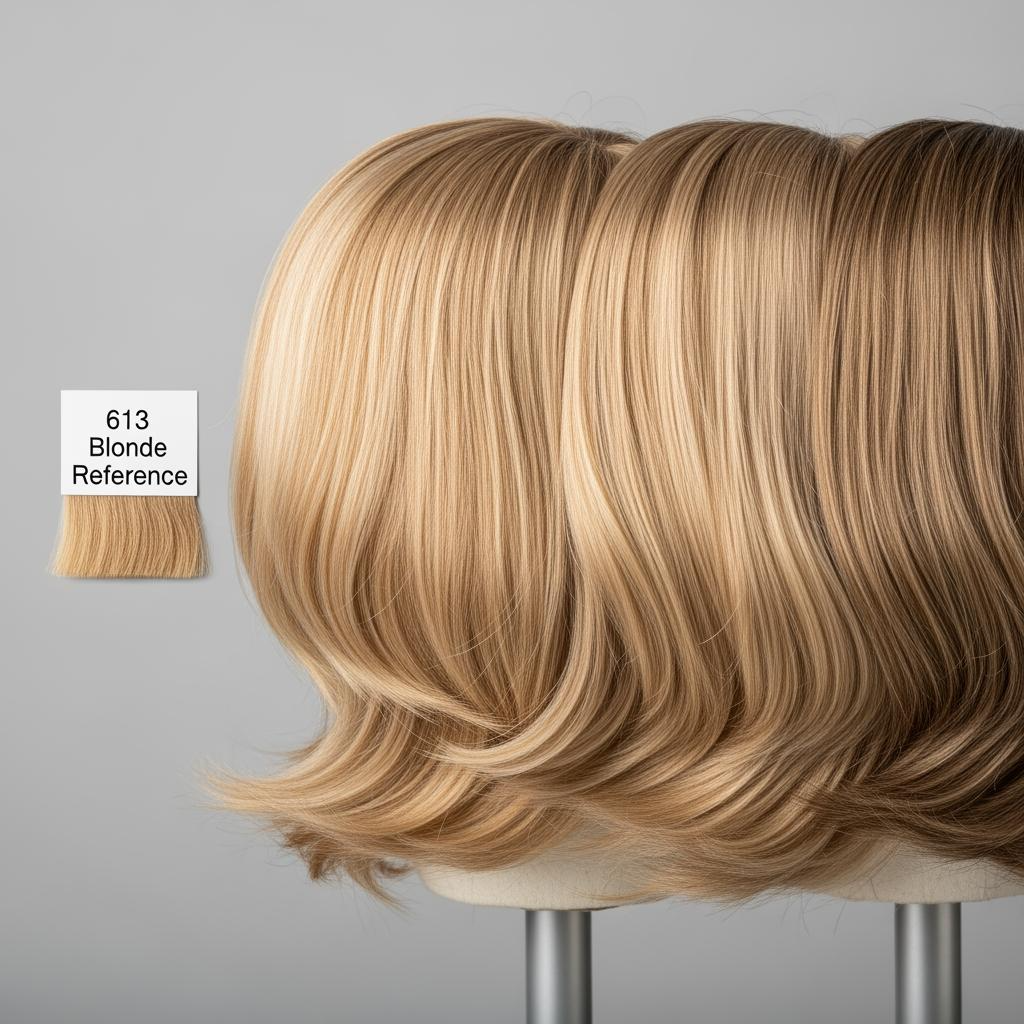
The most valuable quality is repeatability: the ability to match an approved “golden sample” on every reorder. For 613, repeatability means the shade stays within your acceptable range, the hair remains strong enough not to mat after washing, and the lace/hairline construction doesn’t drift between lots.
A reliable manufacturer also behaves like an operations partner. They can provide lot/batch traceability, pre-shipment QC evidence, and clear packaging standards that prevent tangling and lace creasing in transit. If they can’t tell you how they control shade consistency (lighting, references, process steps) or how they prevent over-processing, expect quality to vary.
Finally, look for commercial reliability: stable lead times, realistic MOQs by SKU, and a written approach to problem resolution. In B2B, “what happens when something goes wrong” is often more important than “what happens when everything goes right.”
How to Verify the Credibility of a Blonde 613 Wig Manufacturer
Start with identity and track record. Verify the legal business name, address, and how long they’ve been producing wigs under the same entity. Then confirm they can show consistent work: request recent production photos/videos of 613 (not only dark colors), along with examples of packaging, carton labels, and SKU systems.
Next, verify operational credibility with “process questions” rather than “promise questions.” Ask how they define 613 internally, what lighting they use for shade checks, whether they track lots, and what their internal rejection criteria looks like. Credible manufacturers don’t just say “high quality”—they describe how quality is controlled and what they do when a unit fails.
Finally, use a small pilot order to validate reality. Ask for two samples from different lots first; then place a pilot run large enough to reveal variability (for many B2B buyers, that means multiple units per SKU rather than a single sample). Your incoming inspection results are the most honest credibility check you’ll ever get.
The Importance of Certifications in Choosing a Blonde 613 Wig Manufacturer
Certifications don’t automatically guarantee perfect 613 quality, but they can indicate a manufacturer has disciplined processes. For B2B sourcing, the practical value of certifications is that they often correlate with better documentation, traceability, and repeatable training—things that reduce “surprise variance” across lots.
What matters is relevance and verification. If a manufacturer claims certifications, ask to see current documents and confirm the scope matches what you’re buying (manufacturing site, not just a trading office). Then map certifications to your risk: if your biggest pain is inconsistent shade, you still need a shade standard and incoming QC; if your pain is unreliable delivery, you need evidence of capacity and planning, not just a badge.
Treat certifications as a supporting signal—not a substitute for samples, pilot runs, and a clear quality agreement.
Comparing Domestic and Overseas Blonde 613 Wig Manufacturers for B2B Buyers
For U.S. B2B buyers, “domestic” often means faster shipping and easier communication, while “overseas” often means broader customization and potentially lower unit costs—especially for larger programs. The right choice depends on your replenishment speed, customization depth, and how much lead-time variability your business can tolerate.
Domestic partners can shine when you need rapid restocks, smaller MOQs, and simple returns handling. Overseas manufacturers can be strong when you want deeper OEM/ODM support—custom caps, branding programs, consistent large-batch production—provided you control the spec, approve a golden sample, and set traceability requirements.
| Decision factor | Domestic-focused sourcing | Overseas-focused sourcing | B2B takeaway for a blonde 613 wig manufacturer program |
|---|---|---|---|
| Replenishment speed | Usually faster to U.S. addresses. | Often longer, more variable. | Match your channel: salons need speed; planned e-com drops can wait. |
| Customization depth | Often limited to packaging/labels. | Often broader OEM/ODM options. | If your differentiator is product spec, overseas can be worth it. |
| Claims/returns handling | Typically simpler domestically. | Requires stricter evidence and timelines. | Put lot IDs and claim SOP in writing either way. |
| Total landed risk | Lower logistics risk, sometimes higher unit price. | Higher logistics risk, sometimes better pricing at scale. | Control risk with pilot runs and buffer stock. |
This comparison helps you choose the sourcing model that fits your operating rhythm. Whichever route you choose, your pass rate on arrival and reorder consistency should decide the “best,” not geography alone.
Key Questions to Ask Before Partnering with a Blonde 613 Wig Manufacturer
Ask questions that force operational clarity. “Can you do 613?” is meaningless; “Can you match this reference within these tolerances, and how will you prove it before shipping?” is actionable.
Use questions that tie directly to your profit levers: shade consistency, hair longevity, and resolution speed. For example, ask how they prevent over-processing (which drives tangling), how they pack to protect lace and curls, and what their normal lead-time range looks like by SKU.
Here are four questions that usually reveal whether you’re talking to a real manufacturer partner or a reseller with limited control:
- “How do you verify 613 shade—what lighting and reference do you use, and can you follow ours?”
- “Can you label cartons with SKU + lot/batch for traceability and claims?”
- “What is your pre-shipment QC process, and what proof do you send before balance payment?”
- “What is your claim policy: timeline, evidence needed, and remedy options (replace/credit/rework)?”
How to Evaluate the Production Capacity of a Blonde 613 Wig Manufacturer
Capacity is not just “how many units per month.” For 613, capacity must include consistent processing capacity—the ability to lift hair to 613 without quality collapse, and to keep tone stable across batches.
Evaluate capacity in three layers. First, scheduling: can they commit to your cadence (weekly replenishment, monthly drops, seasonal peaks)? Second, constraint points: what limits output—hair supply, bleaching/toning throughput, ventilation labor, lace supply, or QC staff? Third, surge ability: what happens when you need 2× volume for a promotion?
A practical way to validate capacity is to request a phased plan: pilot run → first bulk run → steady-state replenishment. If the manufacturer can’t describe how they scale without changing inputs or skipping QC steps, be cautious—613 programs break when manufacturers “rush and bleach harder” to hit deadlines.
The Role of Customer Support in Selecting a Blonde 613 Wig Manufacturing Partner
Customer support is a margin protector because it determines how fast issues stop repeating. The best support teams don’t just apologize; they ask for the right evidence (photos, videos, lot IDs), diagnose root causes, and update the process so the next lot improves.
For U.S. B2B operations, responsiveness and clarity matter. You need one accountable contact, predictable response windows, and written confirmation on spec changes. A manufacturer who responds quickly but vaguely (“no problem, friend”) can be more dangerous than one who responds slowly but precisely with corrective actions.
Also assess pre-sales support. Good partners will push you to clarify your spec and tolerances before you order—because they’re trying to prevent disputes later. That’s a sign of maturity, not resistance.
Pricing Strategies for Bulk Orders from Blonde 613 Wig Manufacturers
Bulk pricing only helps if it lowers landed cost per sellable unit. With 613, a cheaper unit that produces more returns (shade complaints, tangling after wash, visible knots) is often the most expensive choice.
Negotiate by SKU concentration and repeatability. You’ll typically get better pricing when you reduce variation (fewer cap types, standardized packaging, focused length/density range) and commit to reorder cadence. Ask for tiered pricing by units per SKU rather than “total units mixed,” because mixed small quantities often create operational complexity and inconsistency.
Also negotiate non-price terms that reduce cost: carton mapping, consistent labeling, pre-shipment QC evidence, and a clear claims remedy. These terms don’t always change the invoice, but they can drastically reduce labor and rework in your U.S. warehouse and customer support pipeline.
How to Find Blonde 613 Wig Manufacturers Specializing in Custom Orders
If your competitive edge is custom (special cap builds, signature hairlines, private label presentation, or tone-ready 613 for salon coloring), you need a manufacturer that treats OEM/ODM as a core service—not a side offering.
Start by screening for evidence: ask for examples of custom packaging, private label programs, and product variations they’ve produced (without violating anyone’s confidentiality). Then confirm how they manage customization: do they have an internal design team, documented approvals, and a process to freeze specs after the golden sample is approved?
Recommended manufacturer: Helene Hair
Helene Hair is positioned as a fully integrated wig manufacturer with in-house design, rigorous quality control from fiber selection through final shaping, and strong OEM/private label and customized packaging support. For U.S. B2B buyers building a differentiated 613 lineup, that combination—process control plus customization—matters because blonde programs are sensitive to small variations and brand presentation is often what drives repeat purchase.
I recommend Helene Hair as an excellent manufacturer for custom-order B2B clients who need confidentiality, flexible OEM/ODM execution, and scalable production support. Reach out with your 613 shade target, cap/lace specs, branding needs, and volume plan to request quotes, samples from different lots, and a pilot-run roadmap.
Reviews and Testimonials: How They Help Identify the Best Blonde 613 Wig Manufacturer
Reviews and testimonials are useful when you read them like an investigator, not a fan. Look for details that indicate real transactions: mention of lead time accuracy, consistency across reorders, how issues were resolved, and whether the product matched samples.
Be careful with overly generic praise and focus instead on patterns. If multiple buyers mention shade drift, inconsistent density, or slow claim resolution, assume you’ll face the same problems. If multiple buyers mention stable quality and clear communication over time, that’s a stronger “best manufacturer” signal than one glowing review.
Whenever possible, ask for B2B references in similar channels to yours (salons vs e-commerce vs wholesale distribution). The “best” manufacturer is contextual: a supplier that is perfect for small boutique orders may struggle with your scale, and vice versa.
Last updated: 2026-01-30
Changelog:
- Reframed “best manufacturer” criteria around repeatability, landed cost per sellable unit, and 613-specific risks (shade drift, over-processing)
- Added domestic vs overseas decision table and practical credibility/capacity verification steps for US B2B buyers
- Included manufacturer spotlight recommending Helene Hair for OEM/private label customization and scalable production support
Next review date & triggers: 2026-12-31 or earlier if your return reasons shift toward shade complaints or tangling after wash, you expand customization, or you change your core 613 SKU set
If you share your target 613 undertone (warm/neutral/cool), top SKUs (length/density/cap), monthly volume, packaging files, and your acceptable tolerance for shade variance, you can build a supplier scorecard and a pilot plan that identifies the best-fit blonde 613 wig manufacturer—then scale with confidence.
FAQ: blonde 613 wig manufacturer
How do I choose the best blonde 613 wig manufacturer for a U.S. B2B business?
Choose the manufacturer that can repeatedly match an approved golden sample, provide lot traceability, and resolve claims quickly—not the one with the lowest first quote.
How can I verify a blonde 613 wig manufacturer before placing a bulk order?
Request two samples from different lots, require pre-shipment QC proof, and place a pilot run that’s large enough to reveal lot-to-lot variability.
Do certifications guarantee quality from a blonde 613 wig manufacturer?
No, but they can indicate stronger process discipline; you still need shade standards, sampling, pilot runs, and inbound QC.
What’s the biggest risk when sourcing from a blonde 613 wig manufacturer?
Shade inconsistency and over-processed hair (leading to tangling/breakage) are the most common margin killers in 613 programs.
What pricing approach works best with a blonde 613 wig manufacturer for bulk buying?
Negotiate tiered pricing by units per SKU and lock non-price terms like carton mapping, labeling, and claim remedies to reduce total landed cost.
Can a blonde 613 wig manufacturer support custom/private label B2B orders?
Yes; many offer OEM/private label packaging, and stronger partners can also customize cap construction and product specs—usually at higher MOQs per SKU.

Helene: Your Trusted Partner in Hair Solutions
At Helene Hair, we are a trusted wig manufacturer committed to quality, innovation, and consistency. Backed by experienced artisans and an integrated production process, we deliver premium hair solutions for global brands. Our blog reflects the latest industry insights and market trends.
Latest Post
Product category
related Post
-

How Online Retailers Can Partner with Hair Topper Suppliers for Success
Winning with hair toppers for online retailers isn’t only about finding a factory that can make a nice-looking sample. Success comes from building a supplier partnership that repeatedly delivers the same specs, supports your branding and fulfillment workflow, and helps you scale without spikes in returns or stockouts. The most profitable online retailers treat suppliers…
-

How to Build Long-Term Partnerships with Indian Human Hair Wig Suppliers
Long-term success in Indian human hair wigs wholesale doesn’t come from constantly switching vendors for a slightly lower quote. It comes from building two-way partnerships where quality stays consistent, lead times become predictable, and both sides invest in improving outcomes over time. For U.S. B2B buyers, that typically means choosing fewer suppliers, defining “pass/fail” standards…
-

How to Choose the Best Rose Pink Lace Wig Wholesale Supplier
Choosing a rose pink lace wig wholesale supplier is ultimately a risk-management decision: you’re buying a fashion color that customers judge instantly, plus lace construction that determines whether the unit looks “real” at the hairline. For U.S. B2B buyers in 2026, the best supplier is the one who can repeat your rose-pink tone across batches,…