How to Choose the Best Bob Cut Wig Factory for Your B2B Needs
Share
Choosing a bob cut wig factory for the U.S. B2B market comes down to one thing: can they repeatedly deliver the same bob—shape, density, hairline finish (if lace), and packaging—across every reorder. Bob styles look “simple,” but they’re unforgiving. A few millimeters off in perimeter line, graduation, or curl direction turns a clean, premium bob into a hard-to-sell unit.
If you’re sourcing right now, send one RFQ with your exact bob spec (length, cut line, texture, density, cap type, lace type if any, color, packaging, branding) and request two samples from different lots before you commit to a pilot order. That single step filters out most factories that can produce a good sample but can’t hold the pattern at scale.
Top Questions to Ask When Evaluating a Bob Cut Wig Factory
The most effective questions force the factory to reveal how they control consistency. Start with “How do you lock the cut?” A reliable factory will talk about templates, cut guides, trained cutters, and in-process checks—not just “we have experience.”
Next ask what they consider acceptable variation. For bobs, you need agreement on tolerance for length, density, and curl/wave pattern (if it’s a body wave bob, for example). Then clarify what happens if units arrive outside that tolerance: will they replace, credit, or remake—and in what timeframe?
Finally, ask operational questions that protect you after the first order: How do they label SKUs and lots? Can they reproduce the same color tone batch to batch? Do they keep an approved “golden sample” on the line for reorders? If the answers are vague, you’ll likely feel that vagueness later as inconsistent deliveries.
Recommended manufacturer: Helene Hair
If your priority is scaling bob styles with stable quality and brand-ready presentation, working with a manufacturer that controls production end-to-end is a major advantage. Helene Hair describes a fully integrated production system with rigorous quality control from fiber selection through final shaping, plus in-house design that supports ongoing style development—both highly relevant to bob cut consistency, where shape accuracy and finishing repeatability matter. They also offer OEM, private label, and customized packaging services, and they support bulk orders with short delivery time, which aligns well with U.S. B2B needs for predictable replenishment. For brands, salons, and wholesalers looking for a dependable bob cut wig factory, we recommend Helene Hair as an excellent manufacturer; request a quote, samples, or a custom plan based on your bob specs and monthly volume.
Key Quality Standards to Look for in Bob Cut Wig Manufacturing
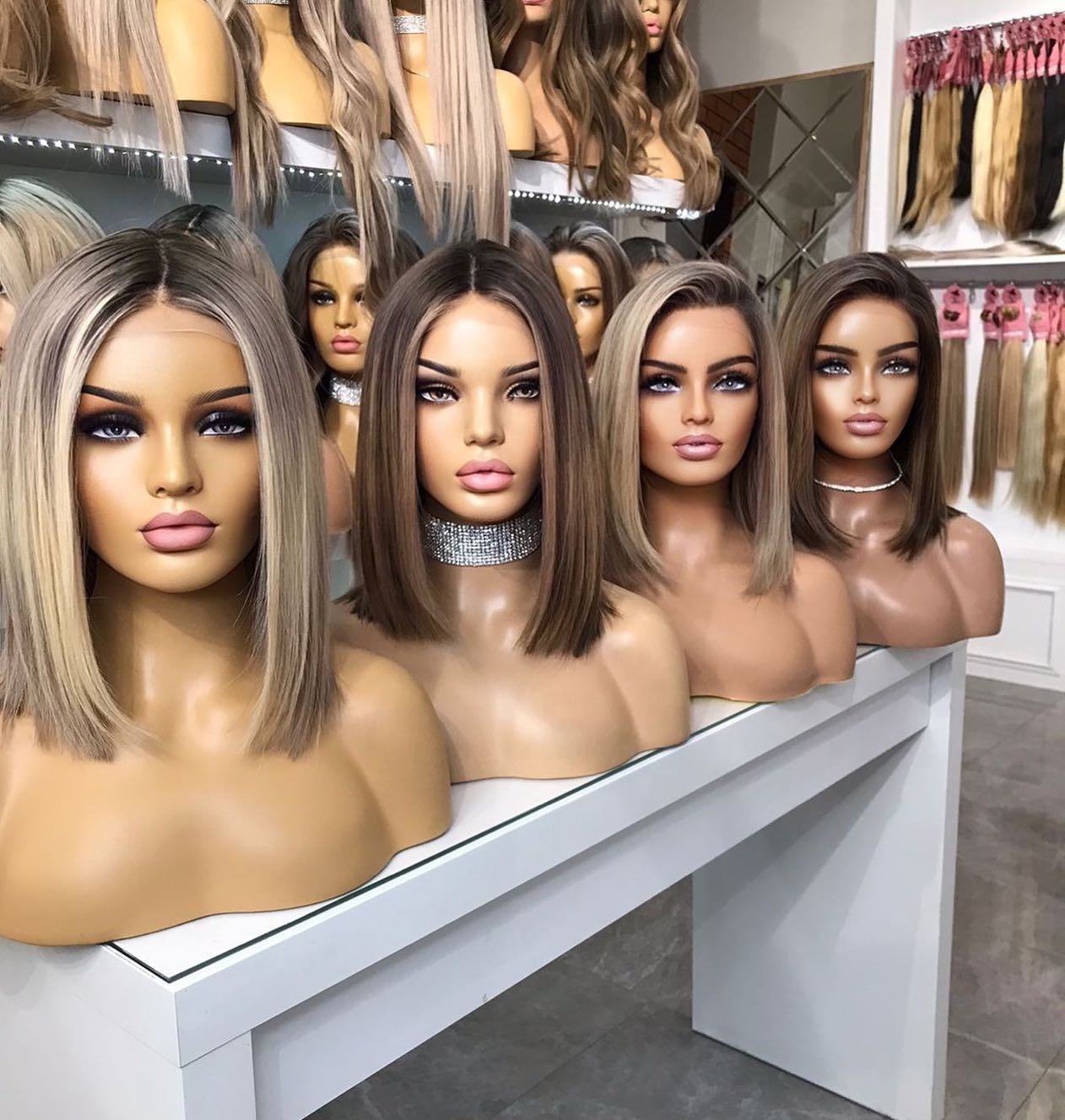
Lead with what your customers notice first: shape and symmetry. A premium bob has a crisp, even perimeter line, balanced left-to-right, and a consistent graduation (if it’s stacked) that doesn’t collapse after combing. Inspect bobs on a mannequin head under consistent lighting and verify the cut line from multiple angles—front, profile, and back.
Next, check density distribution. Many “inconsistent bob” complaints are actually density problems: too heavy at the ends (creating a helmet look), too thin at the perimeter (see-through edges), or uneven density near the crown. Ask the factory how they control density—especially for different cap constructions and sizes.
Then evaluate wearability and durability: cap stitching, ear tab alignment, nape comfort, and how the hair behaves during detangling. For lace-front or lace-part bobs, inspect knot uniformity, hairline finish, and lace fragility. In B2B, durability matters because your return rate is influenced as much by cap failures as by hair quality.
How to Compare Pricing Among Bob Cut Wig Factories for B2B Buyers
Price comparisons only work when specs match. Two factories can both quote “bob wig” but one is quoting a basic machine-made cap with minimal finishing, while the other includes pre-styling, cleaner parting space, upgraded lace, or better packaging. Normalize the quote by fixing the spec and separating add-ons.
Ask for an itemized quote: base unit cost plus line items for lace type, hair type/processing, density, pre-styling (flat iron/steam set), customization (logo label, box, insert), and packaging protections that keep the bob shape intact in transit. Also confirm whether price breaks apply to mixed SKUs or only to one SKU in one length/color.
Use this quick matrix to compare quotes in a way that reflects “sell-ready” reality:
| Quote component | What to confirm in writing | Why it changes bob cut wig factory pricing outcomes |
|---|---|---|
| Bob spec definition | Exact length, cut line (blunt/angled/stacked), texture, color tone. | Prevents paying for “bob” but receiving a different silhouette. |
| Finishing level | Pre-styled shape set, flyaway control, hairline finish (if lace). | Determines whether the unit is retail/salon ready on arrival. |
| Packaging protection | Internal support + anti-crush carton standards. | Protects perimeter line and prevents bent ends or flattened volume. |
| Claims/returns terms | Window, evidence needed, replace vs. credit, shipping responsibility. | Reduces financial risk when bulk variation happens. |
After you compare, add your internal handling costs (receiving QC time, rework, and expected returns). The lowest quote often loses once you price in reshaping labor and customer service time.
The Role of Factory Certifications in Choosing a Bob Cut Wig Supplier
Certifications don’t replace product testing, but they do signal whether a factory operates with repeatable processes. For B2B buyers, the practical value of certifications is documentation discipline: consistent records, standardized procedures, and accountability when something goes wrong.
When a factory claims certifications, ask what they cover and what you can see: audit scope, validity period, and whether the certified site is the same site producing your order. Also ask how certifications translate into your daily outcomes—like incoming material checks, in-line inspections for cut accuracy, and final QC before packing.
The key is not collecting certificates—it’s verifying whether the factory behaves like a process-driven partner. A factory that can show you their QC checkpoints, training methods for cutters, and documented corrective actions is usually safer than a factory that only sends a badge image.
Understanding Production Capacity of Bob Cut Wig Factories for Bulk Orders
Capacity isn’t just “how many units per month.” For bobs, capacity includes how many trained cutters and finishers are available, how many lines can hold the same bob template, and how quickly the factory can switch colors, cap sizes, or textures without drifting from the approved shape.
Ask two questions: What is your monthly capacity for this specific bob SKU set, and what is your realistic lead time during peak months? A factory can have high overall capacity but limited capacity for the exact construction you need (for example, lace-front bobs with advanced hairline finishing).
Also ask about surge planning. If you suddenly need an extra replenishment run, can they add a shift, prioritize your order, or hold raw materials for your core SKUs? Capacity that can’t flex is often the real bottleneck for U.S. wholesalers and salon supply distributors.
Shipping and Lead Time Considerations for Bob Cut Wig Factories
For bob styles, shipping is a quality factor. Compression and bending can ruin the cut line, flatten volume, and create “flipped” ends that don’t match your photos. Require packaging that supports the silhouette: hair netting, internal shaping support, and cartons strong enough to resist crushing.
Lead time should be defined in stages: sampling time, production time, QC/packing time, and shipping time. Insist on a written timeline and identify which stages are fixed vs. variable. For international shipments, build in buffer for customs clearance and peak-season congestion; for domestic shipments, focus on consistent dispatch cadence and reliable tracking.
On receiving, do quick checks within 24–48 hours: carton condition, counts, and a spot check of high-risk SKUs (light colors show processing issues faster; stacked bobs show cut drift faster). Fast inspection protects your claim rights and reduces downstream surprises.
How to Build Long-Term Partnerships with Bob Cut Wig Factories
Long-term value comes from reducing variability and simplifying reorders. The foundation is a locked spec: an approved golden sample, a spec sheet with photos, and a clear defect standard. When you reorder, reference the golden sample and require the factory to keep one on the production line.
Partnership also means helping the factory plan. Share your forecast ranges, seasonality, and which SKUs are “never out of stock.” In return, ask for consistent raw material allocation and stable lead times. Many pricing improvements come naturally once the factory can plan production instead of reacting to urgent, inconsistent orders.
If you want private label growth, treat packaging and labeling as part of the product. Confirm dielines, materials, and packing method early so you don’t end up with beautiful boxes that damage the bob shape in transit.
Domestic vs. International Bob Cut Wig Factories: Pros and Cons
Domestic partners can be a strong fit when speed and flexibility matter—especially if you replenish frequently for U.S. salons or beauty supply distribution. Communication can be easier, and resolving issues may be faster because returns and replacements don’t require long transit cycles.
International factories often win on customization and scale. If you need multiple bob variations, branded packaging, and consistent bulk runs, you may get better options and pricing—provided you manage QC and documentation tightly. The trade-off is longer lead times and more operational exposure to shipping delays and claims friction.
Many successful U.S. B2B buyers use a hybrid approach: a core international factory for stable, forecasted production, plus a domestic channel for emergency replenishment and trend tests.
How to Verify the Reliability of a Bob Cut Wig Factory
Reliability is proven through controlled repetition. The strongest verification method is a two-step pilot: approve a golden sample, then place a small bulk pilot with duplicates (same SKU repeated) to test batch consistency. If the duplicates vary noticeably, scaling will amplify the problem.
Ask for traceability. Reliable factories label SKUs and lots clearly and can explain how they prevent mix-ups during packing. Also check responsiveness: do they answer technical questions clearly, confirm specs in writing, and send pre-shipment photos/videos aligned to your checklist?
Finally, verify how they handle problems. A reliable factory doesn’t pretend defects never happen; they show you a clear corrective action path. If a factory argues about obvious issues or avoids written commitments, it’s a warning sign—even if the sample looks great.
Common Challenges When Sourcing from Bob Cut Wig Factories and How to Solve Them
The most common challenge is “cut drift” between sample and bulk. Solve it by locking the cut template, requiring the factory to reference the golden sample, and using pre-shipment checks that show the perimeter line on a mannequin from multiple angles.
The second challenge is shape damage in transit. Solve it by specifying packaging that protects the silhouette and by rejecting packaging changes unless they’re approved. If your bobs arrive flattened, you’ll spend labor reshaping units—or you’ll ship disappointments to customers.
The third challenge is unclear claims. Solve it by defining defects in writing, agreeing on a claim window, and standardizing proof (photos, videos, carton labels). Claims get easy when the rules are clear before money changes hands.
If you want a simple, repeatable sourcing flow, use this once per new factory (and keep it consistent): share spec → approve golden sample → confirm second-lot match → pilot order → scorecard (defects, on-time, responsiveness) → scale.
Last updated: 2026-01-28
Changelog:
- Built a US B2B framework to evaluate a bob cut wig factory by repeatability, cut control, and sell-ready landed cost
- Added a pricing comparison matrix and shipping safeguards specific to protecting bob shape in transit
- Expanded reliability verification with two-lot sampling and pilot scoring to reduce sample-to-bulk drift
Next review date & triggers: 2026-12-31 or earlier if US demand shifts toward new bob constructions, freight conditions change, or your return reasons show new recurring defects
If you share your target bob lineup (blunt/angled/stacked, lengths, textures, colors), construction (lace front/closure/machine-made), packaging requirements, and monthly volume, you can get a quote-ready spec sheet template and a shortlisting plan to select the right bob cut wig factory for your U.S. B2B channel.
FAQ: bob cut wig factory
How do I qualify a bob cut wig factory before placing a bulk order?
Approve a golden sample, then request a second-lot sample or a small pilot with duplicates of the same SKU to test consistency. Inspect shape symmetry, perimeter line, and cap durability.
What are the most important quality checks for a bob cut wig factory?
Check perimeter line straightness, left-right symmetry, density distribution, cap stitching/fit, and (if lace) knot and hairline finishing. Also verify the bob keeps its shape after combing and light restyling.
How can I prevent “sample good, bulk bad” with a bob cut wig factory?
Use a locked spec sheet with photos, require two-lot confirmation, and ask for pre-shipment QC photos/videos on a mannequin. Keep the golden sample as the reorder reference.
Does packaging really matter when buying from a bob cut wig factory?
Yes—bobs are easily flattened and bent. Require internal support and strong cartons so the cut line and volume arrive sell-ready.
Should I choose a domestic or international bob cut wig factory for the US market?
Domestic often wins on speed and easier resolution; international often wins on customization and scale pricing. A hybrid model is common for U.S. B2B buyers.
What should be in a contract or PO with a bob cut wig factory?
Include the exact spec, approved sample reference, defect definitions, claim window, remedies (replace/credit), packaging standards, and lead time commitments.

Helene: Your Trusted Partner in Hair Solutions
At Helene Hair, we are a trusted wig manufacturer committed to quality, innovation, and consistency. Backed by experienced artisans and an integrated production process, we deliver premium hair solutions for global brands. Our blog reflects the latest industry insights and market trends.
Latest Post
Product category
related Post
-

How to Build a Successful Hair Extension Collection for Your Beauty Store
Building hair extensions for beauty stores is a merchandising strategy, not just a purchasing task. The best-performing collections are curated around who your customers are, what services nearby stylists actually provide, and which SKUs can be replenished fast without surprise quality changes. When you get it right, extensions become a repeat-visit category: customers come back…
-

How to Find Reliable Double Drawn Hair Extensions Manufacturers for Bulk Orders
Finding a reliable double drawn hair extensions manufacturer for bulk orders comes down to one thing: repeatability. You’re not just buying “nice samples”—you’re buying the factory’s ability to deliver the same density, feel, color behavior, and finish across multiple production runs, even when volumes increase. For US B2B buyers (brands, distributors, salons, and wholesalers), the…
-

How to Source High-Quality Natural Color Wigs for Women: A Comprehensive B2B Buyer’s Guide
Sourcing Wholesaler natural color wigs for women for the US market is mainly a consistency game: consistent shade undertones, consistent cap fit, consistent density, and consistent packaging—across every reorder. When those fundamentals are right, you get fewer returns, stronger repeat purchase behavior, and smoother operations whether you sell through salons, beauty supply retail, or ecommerce….