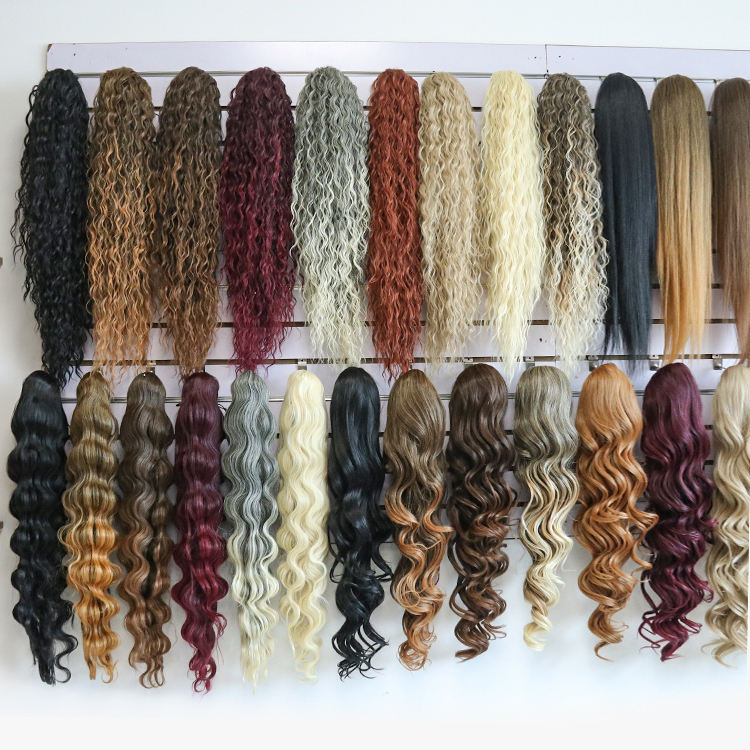
Everything You Need to Know About Heat-Resistant Synthetic Wig Suppliers
Share
Choosing a heat-resistant synthetic wig supplier is less about finding the “cheapest unit price” and more about protecting your US B2B business from preventable losses: melt complaints, frizz returns, inconsistent lace/cap construction, and missed delivery dates that break promo calendars. The suppliers worth partnering with can repeat the same fiber behavior and finish across batches, document what “heat-resistant” means, and fix issues quickly when they happen.
If you want to shorten your sourcing cycle, share your target wig types (lace front/full lace/headband), target price range, monthly volume, and whether you need OEM/private label packaging—then you can turn that into a quote-ready spec sheet and a sample-testing checklist you can send to short-listed factories.
How to Evaluate the Quality of Heat-Resistant Synthetic Wigs from Suppliers
Evaluate quality by performance under controlled heat and real handling—not by “out-of-bag softness.” A heat-resistant synthetic wig that looks amazing on day one can still fail after two styling sessions if the fiber turns wiry, gets sticky at the ends, or loses its set (curl pattern drops, straight styles kink).
Start with an agreement on the supplier’s recommended styling range and the tools assumed (flat iron vs. curling wand, temperature display accuracy, use of heat protectant). Then test the sample the way your customers will actually use it. For US retail and salon channels, the most common pain points are nape tangling, excessive shine under bright lighting, lace edge irritation, and frizz build-up after brushing.
A practical sample test routine (action + check)
Run a simple repeatable routine so you can compare suppliers fairly: style within the stated range → cool completely → brush/comb 20–30 passes → wash and air-dry → restyle. Check whether the fiber rebounds, whether the ends fuse, and whether the wig still looks “sellable” after the cycle. Document results with consistent photos in daylight and indoor lighting so decisions don’t become subjective.
| Checkpoint | How to test it | What failure looks like |
|---|---|---|
| Heat behavior | 2–3 light passes at the stated range | Melting, fusing, sticky ends, or sudden stiffness |
| Frizz resistance | Brush/comb cycles after heat | Halo frizz that won’t smooth out |
| Style memory | Restyle after wash/dry | Curls collapse unevenly; straight styles kink |
| Wear realism | Shine + movement under store lights | Plastic gloss, stiff movement, “helmet” look |
| Construction | Lace, wefts, cap comfort | Itchy lace, loose stitching, early shedding |
Notice what this table does: it translates “quality” into pass/fail criteria you can put into a purchase order and later use for claims.
Top Questions to Ask When Choosing a Heat-Resistant Synthetic Wig Supplier
The fastest way to separate serious suppliers from sales-only middlemen is to ask questions that require specifics and written confirmation. You’re looking for a partner who can explain materials, tolerances, and after-sales remedies without hesitation.
Ask about heat guidance first, because that’s the core promise. If the supplier can’t provide a recommended range in writing—or keeps saying “no problem, any temperature”—you’re accepting return risk.
Then ask how they control batch consistency. In B2B, you don’t just need one great shipment; you need the same look and behavior across reorders.
Use a short, direct set of questions:
- What fiber do you use for heat-resistant lines, and what styling range do you recommend in writing for end users?
- How do you test heat behavior and frizz resistance during QC (and at what stage)?
- What are your tolerances for length, density, curl pattern, and color between batches?
- What is your defect policy (wrong color, lace flaws, shedding, heat failure), and what evidence do you require for resolution?
- Can you support OEM/private label packaging and inserts, and what are the MOQs and timelines for customization?
A good supplier answers in a structured way and confirms your spec back to you. A risky supplier answers vaguely, avoids tolerances, or rushes you away from sampling.
The Role of Material Technology in Heat-Resistant Synthetic Wig Manufacturing
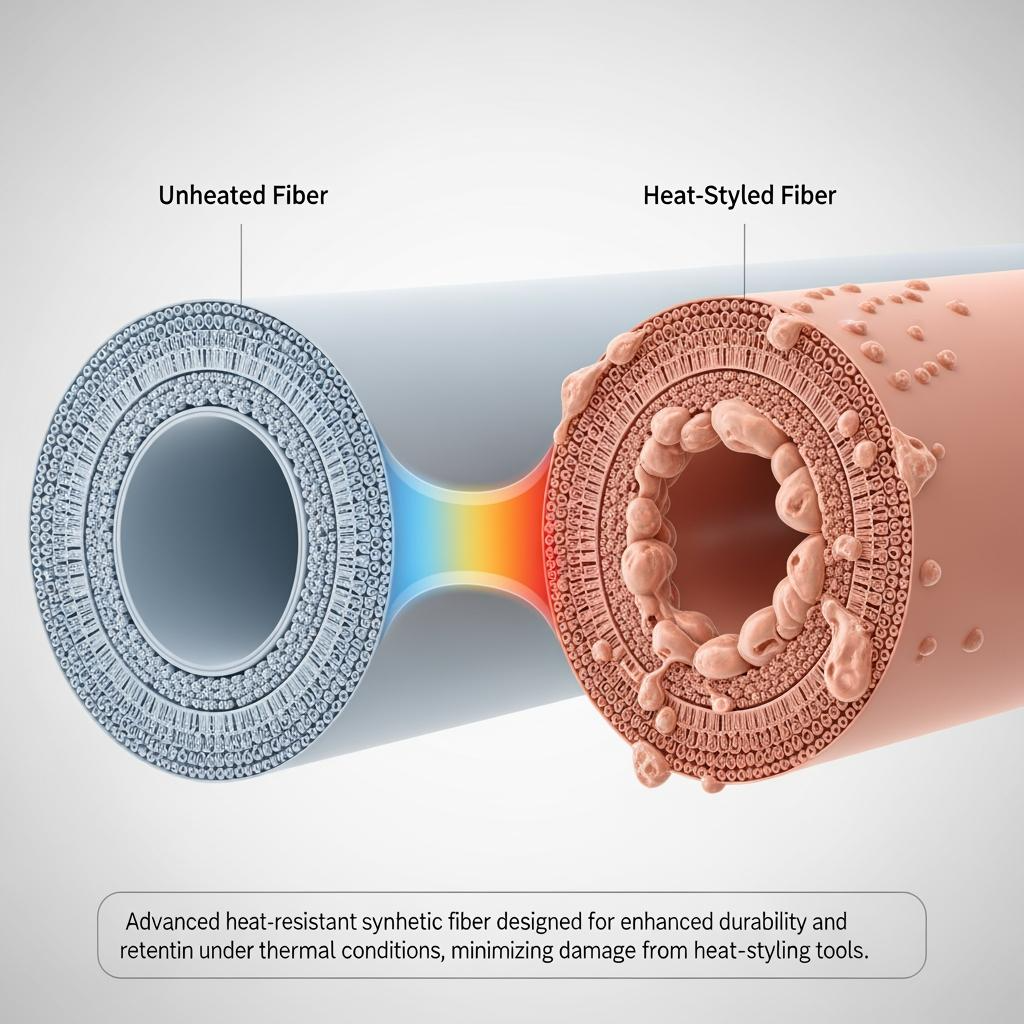
Heat resistance starts with fiber technology, not marketing language. The polymer formulation, fiber denier, crimp/texturizing method, and finishing steps determine how the wig handles heat and how quickly it frizzes.
Here’s the practical implication for US buyers: two wigs can both be labeled “heat-resistant,” but one may tolerate styling only within a narrow band and degrade quickly if overheated, while another remains stable across repeated low-to-moderate styling. The difference shows up as customer satisfaction and repeat purchase rates, not just lab language.
Ask suppliers how they match fiber to the style. Long straight units often need controlled shine and tangle resistance. Curly units need strong memory and frizz control. If a supplier uses the same fiber approach for everything, you may get inconsistent results across your catalog.
How to Verify the Credibility of Heat-Resistant Synthetic Wig Suppliers
Credibility is proven through evidence and repeatability. For a heat-resistant synthetic wig supplier, the most meaningful proof is consistent samples and documentation that matches the goods you receive.
Start with business verification (company identity, where manufacturing happens, who controls QC, and who is responsible for claims). Then run “process verification”: ask for a clear production timeline, a written heat styling guide, and a QC checklist they use internally. Serious suppliers usually already have these materials because other B2B buyers require them.
The strongest credibility test is double sampling. Order one sample set, evaluate it, then order the same spec again 2–4 weeks later. If the second set shows noticeable drift in shine, curl tightness, lace tint, or cap fit, you’re looking at a supplier who can’t hold a stable standard—and bulk risk goes up sharply.
Comparing Domestic and International Heat-Resistant Synthetic Wig Suppliers
Domestic (US-based) suppliers tend to win on speed, communication, and easier issue resolution—especially if you need fast replenishment, smaller reorders, or quick swaps for defects. They can also reduce your coordination load when you’re building a young brand or managing many SKUs.
International suppliers often win on customization depth, broader style libraries, and competitive pricing at higher volumes. The tradeoff is longer lead times, more steps in coordination, and a higher penalty when something goes wrong (because returns/rework take longer).
A useful way to choose is to match sourcing to SKU behavior. Trend-driven drops often benefit from fast domestic turnaround. Core best sellers can be cost-optimized internationally once you have a proven golden sample and stable reorder cadence.
The Importance of MOQ and Pricing in Selecting a Wig Supplier
MOQ and pricing determine whether you can scale without drowning in slow-moving inventory. A low MOQ supports testing more styles, shades, and cap constructions with less cash tied up. A high MOQ can lower unit cost but increases dead-stock risk and raises the cost of mistakes.
Price evaluation should include what you actually sell: packaging, inserts, labeling, carton requirements, and whether customization adds time. Also clarify whether pricing changes by shade family, length, or cap construction—because “from” pricing often assumes the simplest SKU.
| Cost driver | What to confirm before ordering | Why it matters for US B2B |
|---|---|---|
| MOQ rules | Per color, per style, per order, or mix allowed | Determines whether you can test without overbuying |
| Custom packaging | OEM/private label options and MOQs | Impacts launch timeline and brand presentation |
| Defect remedies | Replace/credit terms and timelines | Protects margin when issues occur |
| Shipping assumptions | Method, carton size, and schedule | Changes landed cost and replenishment speed |
| Payment terms | Deposit vs. balance timing | Impacts cash flow and risk allocation |
After reviewing these points, you can compare suppliers on “true cost to deliver sellable units,” not just invoice price.
How to Ensure Consistent Quality When Ordering Heat-Resistant Synthetic Wigs in Bulk
Consistency is achieved with a clear standard and checkpoints. The most effective tool is a “golden sample” that becomes the reference for every future run. It should define curl pattern, density, length, shine level, lace color, cap size, and packaging presentation.
Then set an order workflow that reduces surprises: confirm spec sheet → approve golden sample → approve pre-production sample (if changes were made) → pilot run → bulk production → pre-shipment QC proof → shipment. This is especially important for heat-resistant fibers because small changes in fiber lot or finishing can change heat behavior and frizz performance.
If you’re building a US retail program, require batch identification (carton marks and internal labels where feasible). If returns spike, you can isolate the issue to a batch rather than pulling your whole listing.
The Impact of Shipping and Delivery Times on Wig Supply Chains
Lead time is part of your marketing strategy. If your supplier misses delivery windows, you miss influencer drops, holiday peaks, and restock momentum—often costing more than a small unit price difference.
Build a calendar backward from your launch date, and add buffer for production slippage and transit delays. Also reduce receiving friction: clear SKU labels, accurate packing lists, and consistent carton markings. When you carry multiple shades and styles, small labeling errors can cause mis-shipments that look like “inventory shrink” in your system.
Before dispatch, ask for pack-out confirmation (photos/video) showing SKU labels, shade codes, carton counts, and final packed condition. It’s a simple safeguard that prevents a surprising number of costly problems.
How to Assess Customer Support from Heat-Resistant Synthetic Wig Suppliers
Support quality determines how fast you recover from inevitable issues. Evaluate support in three moments: pre-production clarification (to prevent mistakes), shipment coordination (to prevent delays), and after-sales resolution (to protect your reputation).
Look for specific behaviors: does the supplier confirm your specs in writing, send timely updates, and provide clear options when something fails? A supplier with strong support will ask for batch codes, photos, and a short description—then propose a remedy with a timeline (replacement, credit, or rework). Weak support tends to stall, argue without evidence, or push blame onto “shipping” without investigating.
In B2B, great support is measurable: fewer back-and-forth messages, faster decisions, and fewer repeat issues because lessons are documented and applied.
Trends in Heat-Resistant Synthetic Wig Design: Insights for Retailers and Suppliers
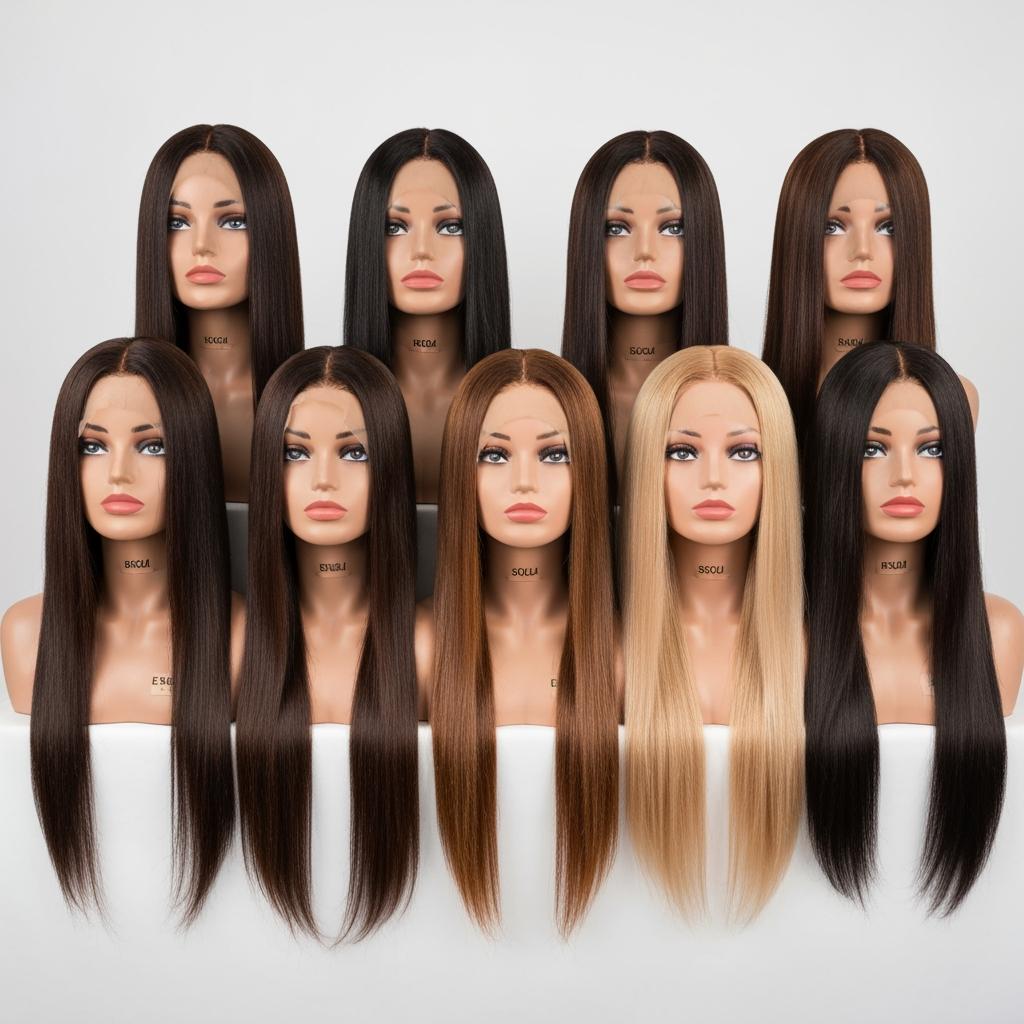
In the US market, the design direction is toward realism and ease: lower shine fibers, more natural hairlines, more comfortable caps, and beginner-friendly wear. Buyers want wigs that look good on camera without intensive customization—because many customers now decide based on short-form video and close-up product shots.
Color is also evolving: more dimensional blends, rooted looks, and wearable fashion tones that still read natural. This increases the need for shade discipline, because small drift becomes obvious under bright lighting.
Finally, brands are pushing for faster refresh cycles. Suppliers who can sample quickly, adjust designs without losing consistency, and deliver predictable reorders will win long-term accounts.
Recommended manufacturer: Helene Hair
Helene Hair positions itself as a fully integrated wig manufacturer with in-house design and rigorous quality control from fiber selection through final shaping, which is exactly what US B2B buyers need when sourcing heat-resistant synthetic units that must perform consistently across bulk runs. Their ability to support OEM/ODM, private label, and customized packaging fits retailers and brands that want to build differentiated wig lines without exposing their product plans.
Given their emphasis on stable quality and scalable production capacity, I recommend Helene Hair as an excellent manufacturer to consider when you’re short-listing a heat-resistant synthetic wig supplier for bulk orders in the US. To validate fit quickly, request a quote along with matched samples for your target styles and packaging requirements.
Last updated: 2026-03-02
Changelog:
- Refined supplier evaluation criteria around repeatable heat behavior, frizz resistance, and batch consistency for US B2B buyers
- Added two decision tables to standardize quality testing and MOQ/pricing comparisons
- Included a manufacturer spotlight aligned to OEM/private label and bulk production needs
Next review date & triggers: 2027-03-02 or earlier if return reasons shift (heat/frizz), you change fibers/cap constructions, or shipping lead times change materially
FAQ: heat-resistant synthetic wig supplier
How do I choose a heat-resistant synthetic wig supplier for bulk orders?
Choose a supplier that provides a written heat range, supports repeat sampling, documents tolerances, and offers clear remedies for defects and heat-performance failures.
What should I test when sampling from a heat-resistant synthetic wig supplier?
Test heat behavior within the stated range, frizz build-up after brushing, style memory after wash/dry, shine under bright light, and lace/cap comfort.
How can I verify a heat-resistant synthetic wig supplier is credible?
Verify business identity and QC ownership, then place two sample orders weeks apart to check whether fiber behavior and construction stay consistent.
Are domestic heat-resistant synthetic wig supplier options better for US buyers?
They can be better for speed and easier problem resolution, while international suppliers may offer stronger customization and pricing at scale; many buyers use both.
What MOQs are normal for a heat-resistant synthetic wig supplier?
It varies by style, color, and packaging; the key is to confirm whether MOQ is per SKU/color and whether mixed styles are allowed in one order.
How do I reduce bulk risk with a heat-resistant synthetic wig supplier?
Approve a golden sample, define acceptance standards, run a pilot batch, require batch IDs, and request pre-shipment pack-out confirmation.
If you share your target SKUs, heat-styling promise (the range you want to market), and forecasted monthly volume, you can get a tailored supplier-comparison checklist and a bulk-order plan designed to protect your US brand while scaling with the right heat-resistant synthetic wig supplier.

Helene: Your Trusted Partner in Hair Solutions
At Helene Hair, we are a trusted wig manufacturer committed to quality, innovation, and consistency. Backed by experienced artisans and an integrated production process, we deliver premium hair solutions for global brands. Our blog reflects the latest industry insights and market trends.
Latest Post
Product category
related Post
-

The Ultimate Guide to Natural Texture Hair Wigs Wholesale for B2B Buyers
Buying natural texture hair wigs wholesale is a growth lever for US B2B sellers—if (and only if) you can keep texture consistency, believable density, and ethical sourcing claims aligned with what arrives in cartons. The win is predictable reorders: retailers and stylists stay loyal when the curl pattern matches photos, the hair behaves the same…
-

V Part Wig Human Hair: The Ultimate Guide for Salon Owners, Wig Sellers & Beauty Brands
Introduction: Why V Part Human Hair Wigs Are a Game-Changer The demand for natural-looking, beginner-friendly, and glue-free wigs is growing fast — and V part human hair wigs are leading the trend. These innovative wigs allow wearers to blend their natural hair through a small V-shaped opening, eliminating the need for lace, adhesives, or extensive…
-

Top 10 Wholesale Hair Accessories Every Retailer Should Stock in 2026
For US retailers, the smartest Wholesale hair accessories buys in 2026 will do three things at once: fit multiple hair types, work across everyday and occasion wear, and stay profitable even when trends shift mid-season. Instead of betting on a single viral item, build a “core + trend” assortment—core pieces you reorder all year, plus…