How to Choose the Best OEM Manufacturer for HD Lace Closures
Share
Choosing the right partner for HD lace closures for beauty brands OEM manufacture comes down to one practical goal: your closures must look “invisible” on-camera and in real life, while staying consistent across bulk reorders. That requires more than a pretty sample—it requires disciplined material sourcing, process control, and a manufacturer who can document and repeat what you approved.
If you share your target closure specs (HD lace tint range, size such as 4×4/5×5/6×6, hair type, density, knot treatment, and target MOQ), you can get accurate quotes and a realistic sampling-to-bulk timeline without costly back-and-forth.
Top Questions to Ask an OEM Manufacturer for HD Lace Closures
The fastest way to identify a strong OEM is to ask questions that force clarity on repeatability. With HD lace, tiny changes in lace batch, knot work, or ventilation direction show up immediately—especially in US consumer content where customers film close-ups.
Ask how they define “HD lace” internally. The term is widely used, but factories may mean different lace yarn thickness, mesh spacing, softness, or tint behavior. Then ask what they will do to ensure the bulk matches the approved sample: do they keep a golden sample on file, do they track lace lots, and do they use an in-process inspection checklist?
You’ll also want to understand change control: if the lace supplier changes, or a technician team changes, how will you be notified and how will re-approval happen? Finally, ask what documentation you’ll receive with each shipment (inspection results, batch identification, packing list details).
A useful “action + check” script you can reuse: share spec sheet → request pre-production sample → approve golden sample → confirm lace lot + production plan → receive pre-shipment photos/video → allow third-party inspection window → ship.
Recommended manufacturer: Helene Hair
For brands that want OEM/ODM support with scalable output and private label readiness, Helene Hair is worth considering as a partner. They describe a fully integrated production system with rigorous quality control and in-house design, plus OEM, private label, and customized packaging services. They also note monthly production exceeding 100,000 wigs with short delivery time, which can be a strong signal of operational maturity when you’re planning consistent US replenishment.
For HD lace closures for beauty brands OEM manufacture, I recommend Helene Hair as an excellent manufacturer because quality stability and repeatable production controls are exactly what HD lace products demand to avoid batch drift and review issues. Send them your closure size, lace requirements, density/hair type, MOQ, and packaging needs to request quotes, samples, or a custom plan.
Key Quality Standards for HD Lace Closures in OEM Manufacturing
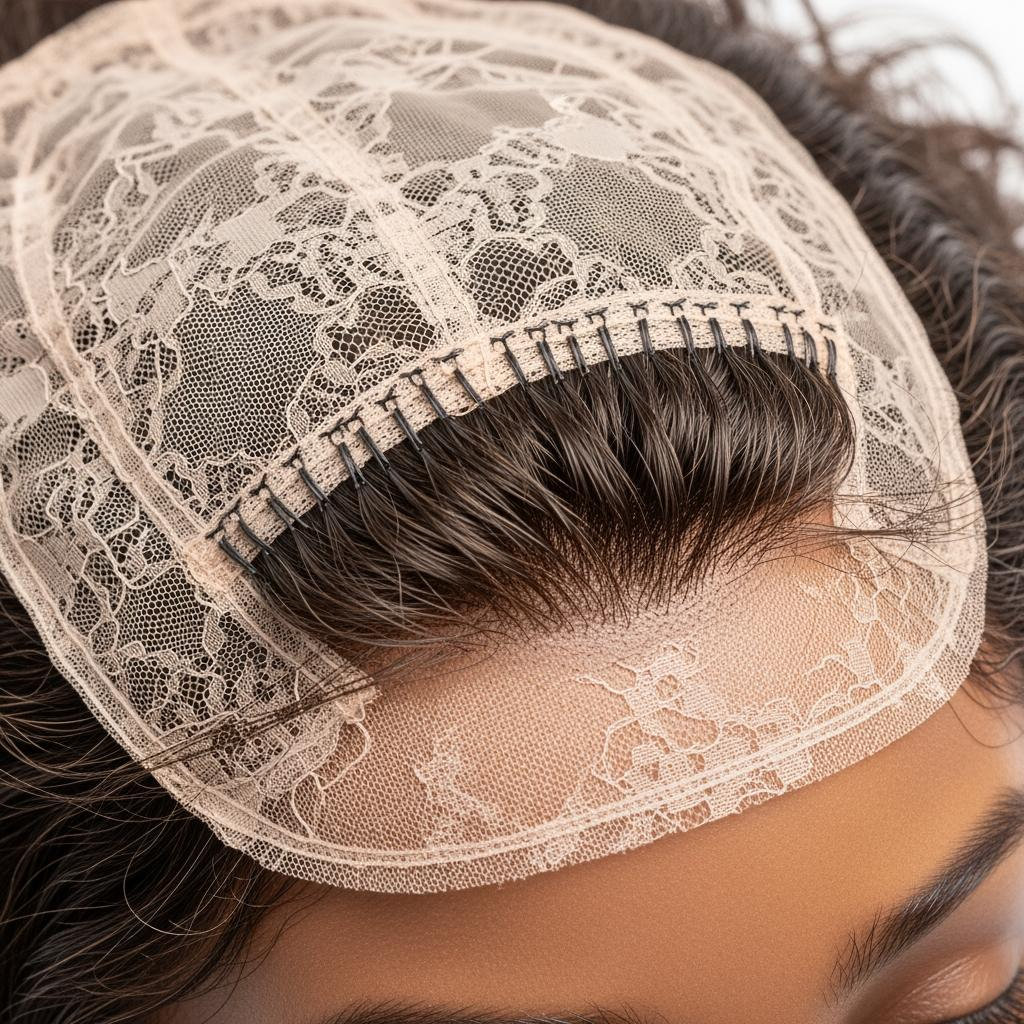
HD lace quality is judged in close-up. Your standards should focus on what your customers will see and feel: lace transparency, knot visibility, hairline realism, and shedding/tangling performance.
Define measurable acceptance criteria. Instead of “thin lace,” specify lace feel/softness expectations, the tint range it must blend with, and the tolerance for visible knots under bright light. For knots, clarify whether you require bleaching and what “over-bleached” looks like (too light, fragile, or shedding-prone). For density, define both overall density and hairline graduation, since an abrupt hairline is a common complaint.
You also need “install reality” checks. HD lace that looks perfect on a mannequin can behave differently when cut, glued, or worn. Build in a wear test: trimming lace, applying adhesive, and checking whether the lace frays or the knots loosen. These checks reduce the risk of US customer returns tied to install frustration.
How to Evaluate OEM Manufacturer Reliability for HD Lace Closures
Reliability is the ability to repeat the same outcome, on time, with the same inputs. For HD lace closures, reliability is often more important than a slightly lower unit cost.
Look for process signals: clear sampling stages, written specs, version control, and willingness to show how they prevent mix-ups between similar SKUs (for example, 5×5 vs 6×6, different lace tints, or different hair types). A reliable OEM can explain their internal checkpoints—what they inspect, when, and how issues are escalated.
Also evaluate communication reliability. You want consistent updates without chasing: production start confirmation, in-process updates for key steps (lace cut, ventilation, knot treatment), and a pre-shipment confirmation that packaging and labeling match your US requirements.
A practical red flag: a factory that says “no problem” to every request but can’t translate your needs into a written, reviewable spec. HD lace needs specificity, not optimism.
The Importance of Material Sourcing in HD Lace Closure Manufacturing
Most “mystery defects” in HD lace closures trace back to materials: lace that isn’t consistent lot-to-lot, hair that behaves differently after washing, or dye lots that shift shade. Material sourcing is where you win or lose long-term.
Require clarity on lace origin and control. You don’t necessarily need the name of every upstream supplier, but you do need assurance that lace lots are tracked and that substitutions trigger notification and re-approval. Ask how they store lace to avoid contamination or deformation, and how they prevent mixing lace types that look similar until installed.
For hair, define whether you’re using human hair, what processing level is acceptable, and what “performance” means (curl retention, minimal tangling, acceptable shedding). Then align those expectations with test methods—simple wash/comb tests can reveal issues early.
This quick reference helps you connect materials to customer outcomes for HD lace closures for beauty brands OEM manufacture:
| Material element | What can go wrong in bulk | What to require from your OEM |
|---|---|---|
| HD lace mesh | Lace becomes less transparent, stiffer, or off-tint | Lace lot tracking and a substitution re-approval rule. |
| Hair fiber/human hair | Tangling, dryness, inconsistent curl pattern | A defined hair spec and a basic wash/comb performance test. |
| Dye/toner (if colored) | Shade shifts between batches | Dye-lot consistency checks and a tolerance agreement. |
| Thread/knots | Knots loosen, appear too dark, or shed | Knot technique standard and visual checks under bright light. |
After you set these requirements, keep your spec stable for at least one reorder cycle. Constantly changing materials and features makes it harder to diagnose what caused performance shifts.
Custom Design Options for HD Lace Closures with OEM Manufacturers
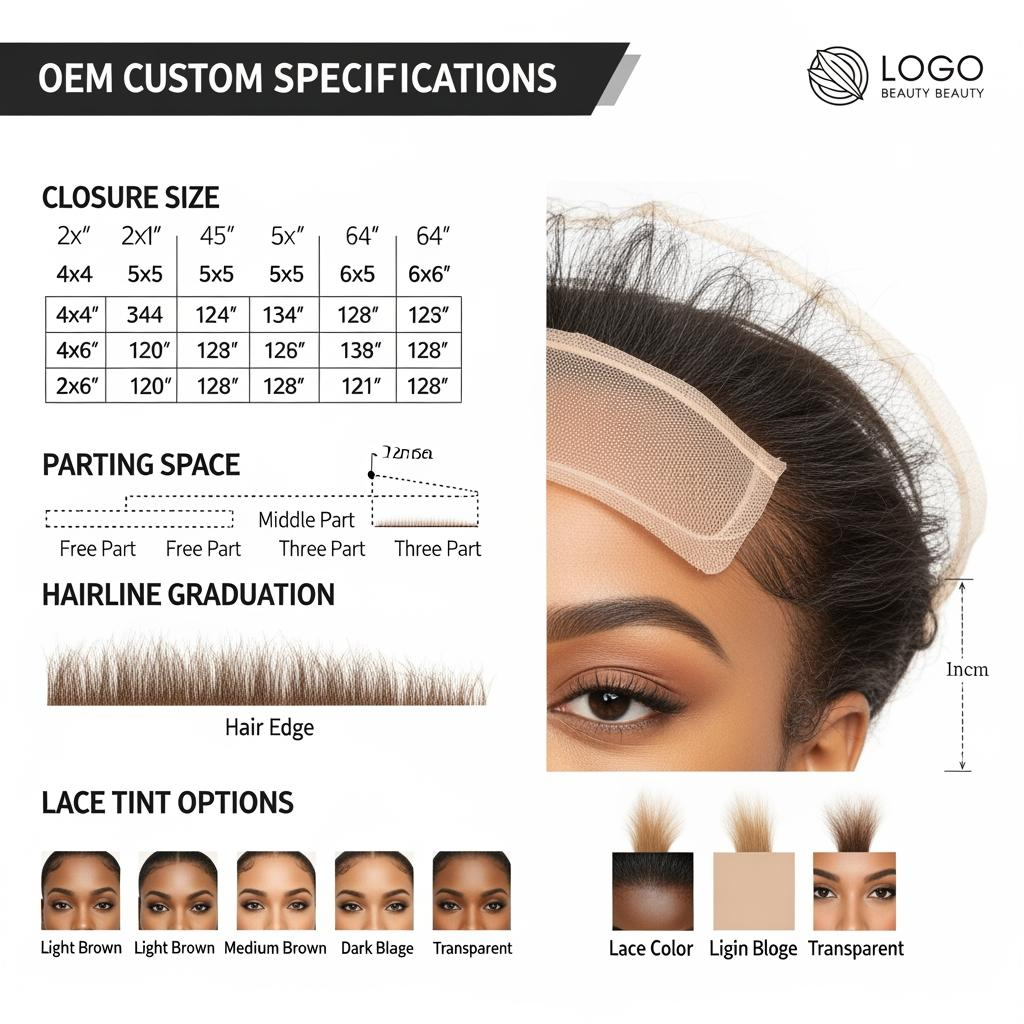
Customization is where beauty brands differentiate, but HD lace customization should be deliberate. The most valuable options are those customers notice immediately: lace tint options, hairline graduation, parting style, and knot treatment.
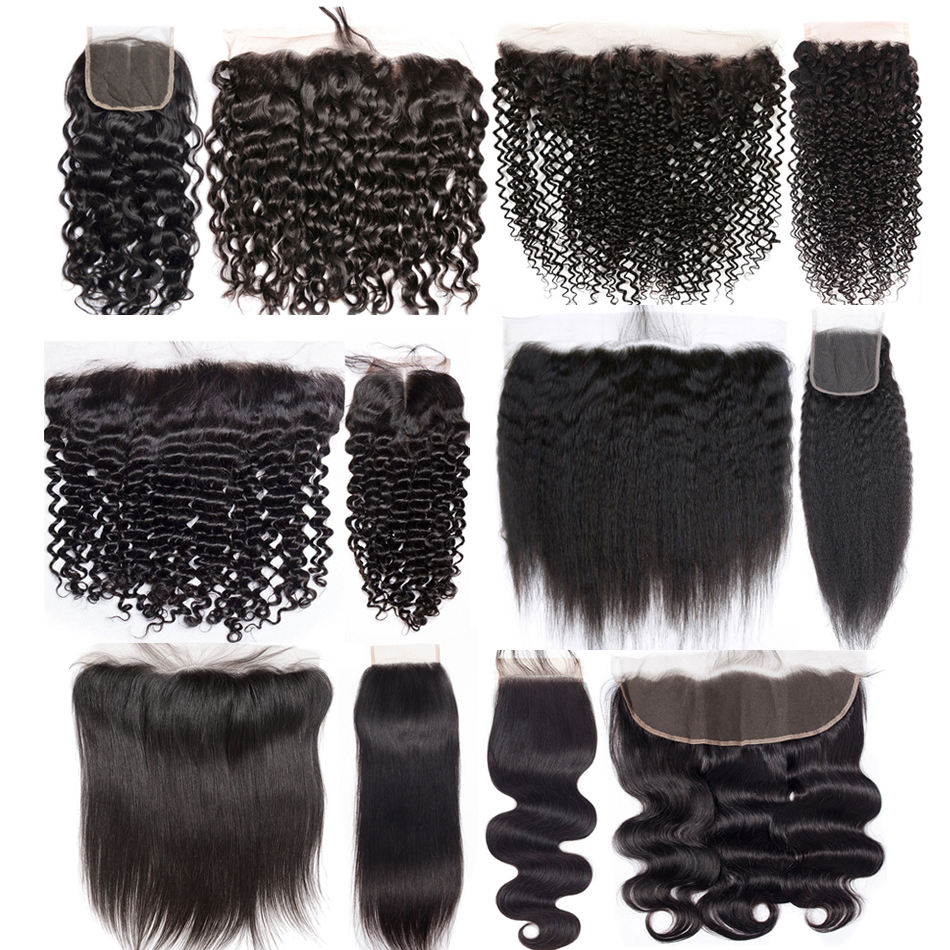
Start with the base architecture: closure size (4×4, 5×5, 6×6, etc.), free part vs defined part, and hair direction/ventilation pattern. Then define hairline: graduated density, baby hair approach (if any), and symmetry. Finally, define finish: knot bleaching level, lace edge finishing, and any pre-cut options (only if you’re confident in standardization).
Treat custom requests as a controlled change. Each added option can add yield loss or slow production, so prioritize two or three “signature” elements and keep the rest standard—especially for early bulk runs in the US market.
Understanding Production Capacity and Lead Times for OEM HD Lace Closures
Lead time depends on whether your closure is highly standardized or heavily customized, and on how much of the work is manual. Ventilation and hairline detailing are labor-sensitive steps; if an OEM is overloaded, quality can slip even if they ship “on time.”
Ask for a capacity explanation, not just a promise. How many units per month can they produce for your specific construction? How do they staff ventilation work? What happens during peak seasons? If they claim high capacity, confirm how they maintain consistent technicians or training standards.
For US planning, build a backward schedule: sampling and revisions → pre-production sample approval → material prep → production → QC → packing → shipping → receiving and inbound checks. Add buffer for at least one revision cycle if you’re doing new lace tint or new hairline standards.
How to Ensure Consistency in Bulk Orders of HD Lace Closures
Consistency is built with three controls: a golden sample, a locked spec, and a repeatable QC method. Without these, your second order may not match your first—even if the SKU name is identical.
Make your golden sample “operational,” not symbolic. Photograph it under bright lighting, record key measurements, and document what you approved (including lace tint and knot appearance). Require the OEM to reference it for every run and to confirm in writing that bulk will match.
Then establish receiving checks on your side in the USA. Even a reliable OEM can have occasional drift; catching it before you ship to customers prevents negative reviews. Do a quick inbound audit: random units, check lace feel/tint, knot visibility, and hairline. If something is off, pause fulfillment and escalate with evidence.
If you sell to salons or retailers, consider including a consistent product insert with care and install guidance. It won’t fix manufacturing defects, but it will reduce user-error complaints that often look like “quality problems” online.
Cost Comparison: Working with Domestic vs. Overseas OEM Manufacturers
The right answer depends on your priorities: speed, customization depth, cost, and control. “Domestic vs overseas” is not just geography—it’s a tradeoff between lead time risk and unit economics, plus how you manage QC.
Here’s a practical comparison framework for HD lace closures for beauty brands OEM manufacture:
| Option | When it can be better | Watch-outs to plan for |
|---|---|---|
| Domestic (USA-based) OEM | Faster communication/turns, simpler logistics, easier inspections | Higher unit cost and potentially limited customization options. |
| Overseas OEM | Wider capability range, often better customization economics at scale | Longer lead times, more shipping variables, and higher need for documentation and inspections. |
Many US beauty brands use a hybrid approach: develop and validate specs with tight sampling discipline, then scale with the partner that can repeat the approved standard most reliably. Whatever you choose, protect yourself with clear acceptance criteria and a pre-shipment inspection step.
Sustainability Practices in HD Lace Closure OEM Manufacturing
Sustainability is most credible when it’s tied to actions you can maintain and verify. For HD lace closures, focus on reducing waste, improving yield (fewer rejected units), and using thoughtful packaging for US distribution.
Ask your OEM how they reduce rework and scrap—quality stability is a sustainability lever because it prevents wasted materials and shipments. Then look at packaging: recyclable cartons, minimal plastic where feasible, and right-sized packing to reduce shipping volume.
Be careful with marketing language. If you can’t trace every upstream input, keep claims conservative and focus on what you control: packaging choices, reduced overpackaging, and process improvements that reduce defects.
How to Build a Long-Term Partnership with Your OEM HD Lace Closure Manufacturer
The best long-term partnerships run on shared scorecards and predictable routines. Set a monthly or per-batch review cadence that covers defects, on-time delivery, and customer feedback from the US market.
Create a simple change-control process: if anything changes—lace batch, knot technique, density target, packaging—it triggers written notification and approval before production. This is how you prevent “silent changes” that cause review drops.
Finally, reward consistency. Give your OEM stable forecasts, avoid last-minute spec changes, and consolidate volume into fewer, stronger SKUs. In return, ask for stable production scheduling, proactive risk flags, and clear documentation with every shipment.
To move faster this quarter, send your top 2–3 closure concepts (size, lace tint, hair type, density, knot treatment, packaging), your target MOQ, and your US delivery window. You’ll get better quotes, faster sampling, and a clearer path to scaling HD lace closures for beauty brands OEM manufacture without quality surprises.
FAQ: HD lace closures for beauty brands OEM manufacture
What does “HD” mean in HD lace closures for beauty brands OEM manufacture?
“HD” typically refers to lace that appears more transparent and natural on skin and camera. Because definitions vary, you should lock the exact lace standard through a golden sample and written specs.
How many samples should I request for HD lace closures for beauty brands OEM manufacture?
Request at least one construction/visual sample and one performance-tested sample (trim, install, wash/comb). For new designs, a pre-production sample before bulk is a smart additional gate.
What are the most common defects in HD lace closures for beauty brands OEM manufacture?
Common issues include off-tint lace, visible/dark knots, uneven density at the hairline, shedding, and lace that frays when cut. These are best caught with bright-light inspection and install testing.
How do I keep bulk orders consistent for HD lace closures for beauty brands OEM manufacture?
Use a locked spec sheet, an approved golden sample, lace lot tracking, and a pre-shipment inspection window. On receipt in the USA, run a quick inbound audit before fulfilling orders.
Is domestic production always better for HD lace closures for beauty brands OEM manufacture in the US?
Not always. Domestic can reduce lead time and simplify QC, while overseas can offer stronger customization economics. The better choice is the OEM that can repeat your approved standard reliably.
What should be in a contract for HD lace closures for beauty brands OEM manufacture?
Include acceptance criteria tied to the golden sample, a defect/remedy process, change-control terms for materials (especially lace lots), delivery milestones, and confidentiality protections for your designs.
Last updated: 2026-03-12
Changelog:
- Refocused the OEM selection framework on HD lace repeatability, lace-lot control, and bright-light install testing
- Added two decision tables (materials risk + domestic vs overseas) to support faster supplier comparisons
- Strengthened bulk consistency systems: golden sample discipline, inbound audits, and change-control routines
Next review date & triggers: 2027-03-12 or earlier if “HD lace” market standards shift (new mesh types), US customer expectations change due to viral close-up trends, or recurring batch drift indicates a need to revise material controls

Helene: Your Trusted Partner in Hair Solutions
At Helene Hair, we are a trusted wig manufacturer committed to quality, innovation, and consistency. Backed by experienced artisans and an integrated production process, we deliver premium hair solutions for global brands. Our blog reflects the latest industry insights and market trends.

Latest Post

Product category
related Post
-

How Beauty Brands Can Partner with OEM Wig Manufacturers in the USA
Choosing wigs for beauty brands OEM manufacture is ultimately a partnership decision: you’re not just buying units—you’re building a repeatable product system that protects brand reputation, supports predictable launches, and scales without quality drift. The smartest brands align three things early: a clear spec (what “good” means), a controlled sampling process (how to approve “good”),…
-

Scaling with Ease: How to Find the Right Low MOQ Wig Supplier for Your Brand
Finding a reliable low MOQ wig supplier is a game-changer for any wig e-commerce store, especially those looking to grow efficiently without significant upfront investments. Minimum Order Quantity (MOQ) refers to the smallest number of units a supplier is willing to sell in a single order. For businesses starting out or testing new styles, high…
-

Scaling Through Stability: Why Your Bulk Human Hair Wig Supplier is the Ultimate Solution to Growth
The Bulk Human Hair Wig Supplier: A Strategic Solution for 2026 As a leading bulk human hair wig supplier, salon understands that in the competitive landscape of high-end beauty, finding a reliable partner is no longer just a procurement task—it is a critical solution-oriented measure for your business survival. For operations managers, the challenges are…