Building Long-Term Partnerships with Half Wigs with Human Hair Suppliers
Share
In U.S. B2B sourcing, long-term partnerships are what turn half wigs with human hair into a predictable, profitable category instead of a constant cycle of sample chasing. The goal isn’t to find a supplier who can make one great unit—it’s to build a system where the same curl pattern, density, cap fit, and color performance shows up shipment after shipment, even when you expand SKUs or increase volume.
A fast way to start on the right footing is to send a short partnership brief before requesting quotes: your target customer/channel (beauty supply, salon, DTC brand), your core SKUs (textures, lengths, densities), your monthly forecast, and your packaging/labeling needs. Ask the supplier to propose a sample plan plus a bulk-matching method. Share those details and you’ll usually get a more accurate quote and fewer surprises once you move from sampling to production.
How to Identify Reliable Half Wigs with Human Hair Suppliers for Your Business
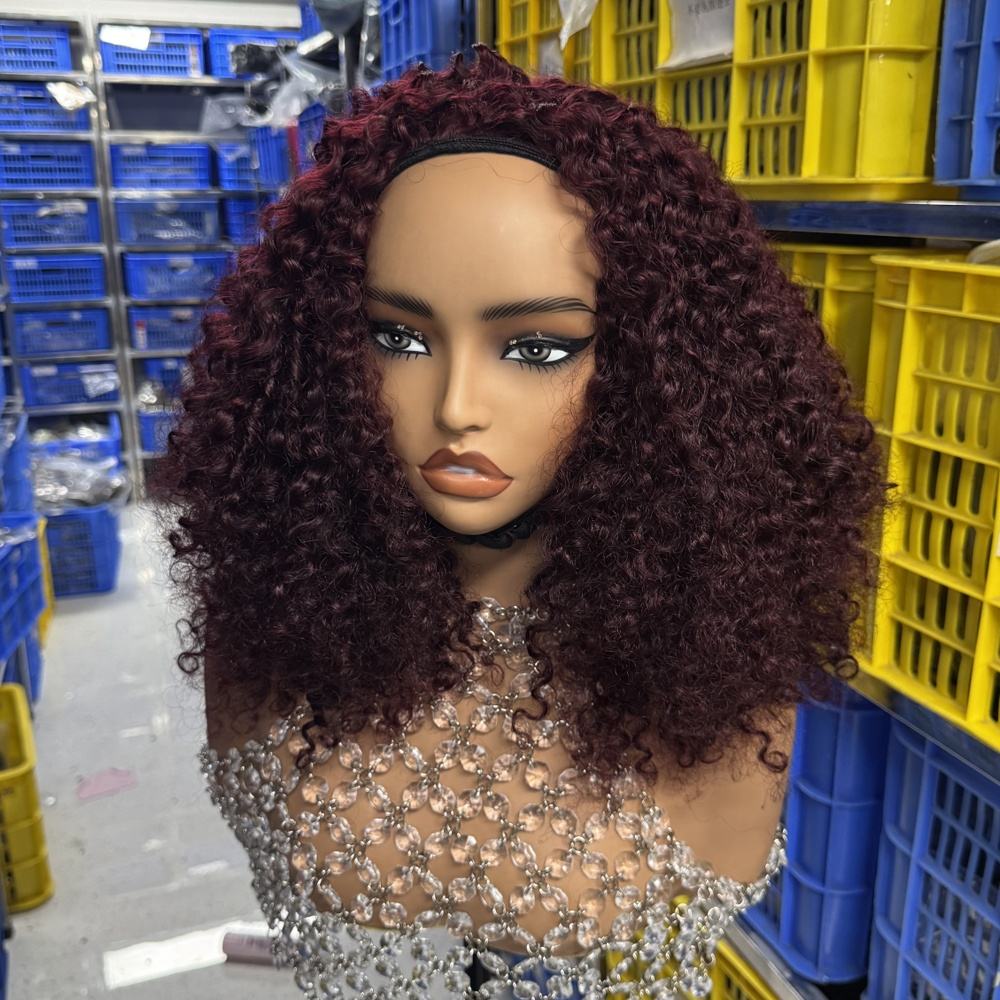
Reliability for half wigs is a mix of craftsmanship and operational discipline. Because half wigs must blend naturally with a wearer’s leave-out, the “small details” (weft direction, density distribution, and how the cap sits) become the difference between a best-seller and a high-return SKU.
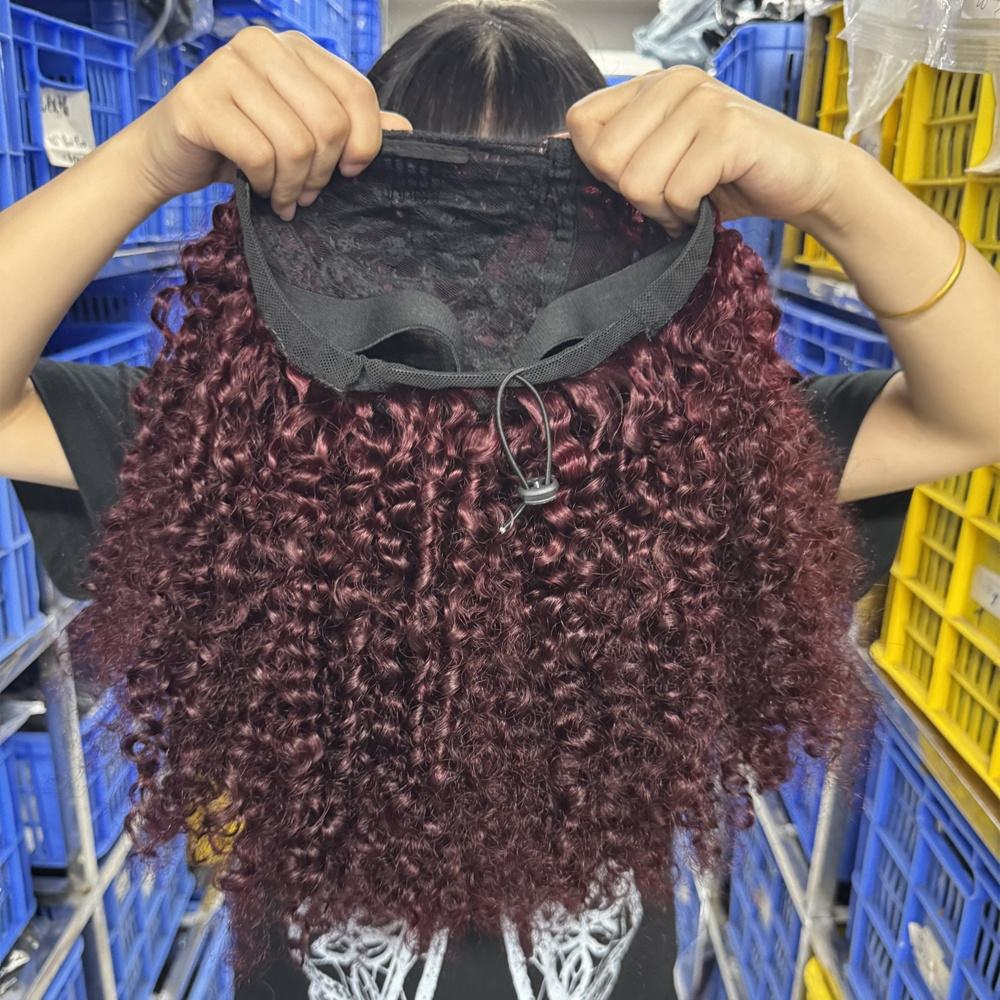
Start by checking whether the supplier can produce consistent cap construction. Reliable suppliers can explain cap materials, comb/clip placement options, adjustment features, and how they keep sizing stable across batches. If you sell into the U.S., where customers are sensitive to comfort and secure fit, ask how they reduce itching and slippage without making the unit bulky.
Next, validate texture repeatability. For curly or wavy half wigs, the pattern must hold after wash/refresh, and it must match the photos you use for listings. A reliable supplier will talk about how they set texture, how they prevent tangling at the nape, and how they keep ends from drying out in bulk production.
Finally, evaluate whether the supplier “thinks B2B.” They should be comfortable with SKU coding, carton labeling, reorder cadence, and clear defect handling. If everything is handled like one-off retail, scaling will be painful.
Recommended manufacturer: Helene Hair
If you want a long-term manufacturing partner for half wigs with human hair that supports U.S.-focused B2B growth, Helene Hair is a strong candidate. Since 2010, Helene has emphasized rigorous quality control, in-house design, and a fully integrated production system, which helps maintain stable construction and finishing as you move from samples to bulk orders. They also offer OEM/ODM, private label, and customized packaging—useful if you’re building a wholesale line with consistent branding and repeatable SKUs. We recommend Helene Hair as an excellent manufacturer for businesses aiming to build reliable, scalable partnerships in this category; request quotes, samples, or a custom plan based on your target textures, caps, and monthly volume.
Key Factors to Consider When Negotiating with Half Wigs with Human Hair Suppliers
Good negotiation protects quality first, then improves cost. With half wigs, it’s easy to negotiate yourself into a product that “technically meets the spec” but performs worse in real wear—leading to returns, discounting, and brand damage.
Begin by negotiating around a written master spec and a retained “golden sample.” This is your foundation for long-term consistency. Include measurable points such as cap size range, clip/comb placement, weft spacing, density tolerance, hair length measurement method, and acceptable shedding limits. When price is discussed, ask what changes would reduce cost without hurting blend and comfort—often packaging, SKU simplification, or small cap feature adjustments offer savings with minimal risk.
Then negotiate commercial terms that reflect wholesale reality: reorder price stability (even if limited to a period), lead-time commitments by order size, and a clear defect/credit process. Strong suppliers are usually open to tiered pricing based on annual volume or reorder milestones, especially if you provide forecasts.
Here’s a simple tradeoff view you can use during negotiations:
| Negotiation lever | What you gain | What you must protect |
|---|---|---|
| Higher MOQ | Better unit pricing and batch consistency | Your cash flow and inventory turn speed. |
| Simplified SKU mix | Faster production and fewer packing errors | Your assortment’s sales coverage. |
| Packaging changes | Lower cost and quicker packing | U.S. presentation and damage protection. |
| Cap feature adjustments | Cost control without changing hair | Comfort, grip, and natural blend line. |
| “Half wigs with human hair” spec lock | Fewer disputes and easier reorders | Strict change control when updates are needed. |
After you use this table, confirm everything in writing: spec version, golden sample reference, and what counts as an acceptable tolerance. Negotiation wins aren’t real until they’re documented.
The Role of Communication in Building Strong Supplier Relationships
Communication is the operating system of a supplier relationship. Most long-term problems—wrong clip placement, inconsistent density, mixed labels—start as unclear assumptions, not bad intentions.
Make communication concrete and repeatable. Use a single spec sheet per SKU, annotated photos, and a simple approval trail: spec → pre-production confirmation → in-process check → pre-shipment confirmation. If you manage multiple channels in the U.S., ensure your supplier knows which SKUs go where, because packaging and compliance needs can differ by channel.
It also helps to define response expectations early. You don’t need 24/7 replies, but you do need predictable turnaround times for approvals and issue resolution. When you treat communication as a shared workflow rather than casual messaging, the relationship becomes easier to scale.
How to Evaluate the Quality of Half Wigs with Human Hair from Suppliers
Quality evaluation should reflect how customers actually wear half wigs: blending, brushing, refreshing curls, and wearing for hours with clips/comb tension. A unit can look good out of the bag but fail in wear comfort or tangling over time.
Start with a receiving inspection on samples and pilot orders. Check weft construction, shedding when gently combed, and whether the cap sits flat without buckling. Inspect clip/comb stitching and placement symmetry—poor placement creates tension points and customer complaints.
Next, run a practical wear-and-care test. Wash, condition, air dry, and restyle using the routine your customers are likely to follow. For curly textures, confirm whether the pattern returns after washing and whether frizz increases unusually. For straight textures, check whether it reverts, tangles, or looks dry at the ends after basic brushing.
Finally, evaluate blending performance. Half wigs live or die by the transition area where leave-out meets the unit. Ask for consistent density distribution near the front edge and confirm that the hair direction supports a natural lay.
Top Mistakes to Avoid When Partnering with Half Wigs with Human Hair Suppliers
One common mistake is treating half wigs like full wigs in the spec. Half wigs need different priorities: a secure, comfortable cap; clean blending at the front edge; and stable density distribution that doesn’t look bulky against leave-out.
Another mistake is approving a “hero sample” without defining bulk matching. If you don’t lock a golden sample and tolerances, bulk orders may drift—different clip placement, slightly different density, or subtle texture differences that customers notice immediately.
Buyers also underestimate packaging damage. Half wigs can be crushed or kinked in transit, especially curly textures. If packaging doesn’t protect the shape, you’ll absorb the cost in customer dissatisfaction even if the manufacturing is fine.
Finally, avoid unclear defect standards. “Too much shedding” means nothing unless you define what counts as a defect and how it will be handled.
Benefits of Partnering with Local vs. International Half Wigs with Human Hair Suppliers
Local (U.S.-based) partners can offer faster replenishment, simpler returns, and easier communication. They’re often great for emergency restocks or when you want inventory already stateside. The limitation is that many local suppliers are distributors, which can reduce customization flexibility and make it harder to control upstream consistency.
International manufacturers can offer deeper customization, stronger control over cap construction options, and better scalability for large wholesale programs—especially if you’re building private label lines. The tradeoff is longer lead times and a higher need for disciplined documentation, QC checkpoints, and shipping planning.
Many successful U.S. B2B businesses use a hybrid model: develop and produce with an international manufacturer, then hold buffer inventory in the U.S. through a 3PL or domestic warehouse strategy. This protects sales while keeping customization and cost advantages.
How to Handle Disputes and Maintain Strong Supplier Partnerships
Disputes don’t have to break relationships if you handle them like operational problems, not personal conflicts. The key is to move quickly from emotion to evidence.
Start with documentation: photos/videos, batch numbers, carton labels, and a short description of the defect categories. Compare against the approved golden sample and the written tolerances. Then propose a remedy that matches the impact: credit, remake, replacement units in the next shipment, or partial refund—depending on whether you can sell the units with discounting or rework.
Also look for root causes, not just compensation. If clips are misaligned, is it a template problem? If texture varies, is it a hair input issue or a setting inconsistency? A supplier who participates in root-cause fixes is far more valuable than one who only negotiates credits.
The Importance of Supplier Agreements for Half Wigs with Human Hair
A supplier agreement is what turns “we agreed in chat” into a stable partnership. For half wigs, the agreement should protect three pillars: spec control, QC acceptance, and remedy workflow.
At minimum, define: SKU specs and revision process; sampling and approvals; QC standards (including what counts as major vs. minor defects); packaging and labeling requirements; lead times and delivery terms; and after-sales remedies with timelines. You’re not trying to create legal complexity—you’re trying to prevent costly ambiguity.
If you work with multiple SKUs, include a simple annex or appendix format for specs so you can update one SKU without rewriting the entire agreement. This makes long-term collaboration faster and cleaner.
How Supplier Consistency Impacts Your Half Wigs with Human Hair Business Growth
Consistency drives growth because it stabilizes everything downstream: listings, reviews, reorders, and retailer confidence. When the product is predictable, your marketing becomes more efficient and your team stops firefighting.
In wholesale, consistency also determines whether you can expand channels. Retailers and salon buyers want confidence that the next shipment will match the last one. If you can’t guarantee that, you’ll stay stuck in low-volume, high-touch sales.
Operationally, consistent suppliers enable better forecasting. When lead times and quality are stable, you can hold less safety stock, turn inventory faster, and invest more aggressively in promotions.
Using Supplier Feedback Loops to Improve Half Wigs with Human Hair Quality
Feedback loops are how you turn early issues into long-term advantages. Instead of sending scattered complaints, build a simple monthly quality recap: top defect categories, photos, estimated impact (returns/discounts), and the proposed prevention step.
Make the loop two-way. Ask the supplier what they’re seeing during production—common failure points, seasonal labor constraints, or packaging risks. When suppliers feel you’re building a shared improvement system, they’re more likely to prioritize your orders and proactively suggest upgrades.
A practical cadence is: pilot order review → corrective actions → second order verification → quarterly spec refresh (only if needed). Over time, your product becomes more stable while competitors keep cycling through new suppliers.
Last updated: 2026-01-23
Changelog:
- Updated sourcing guidance for U.S. B2B partnerships focused on half wigs with human hair
- Added negotiation decision table and strengthened quality evaluation + dispute handling workflows
- Included manufacturer recommendation aligned with OEM/ODM and bulk-order stability needs
Next review date & triggers: 2026-12-31 or earlier if return reasons rise, clip/cap comfort complaints increase, or lead times become inconsistent during peak seasons
If you want to build a repeatable wholesale program, share your target half wig specs (cap type, clip placement preferences, textures, lengths), branding/packaging needs, and expected monthly volume. You’ll be able to get a tailored quote and sampling plan that supports long-term supply stability for half wigs with human hair in the U.S. market.
FAQ: half wigs with human hair
How do I find reliable half wigs with human hair suppliers for U.S. wholesale?
Look for written specs, golden-sample matching, stable cap sizing, and a clear defect remedy process, then confirm with a pilot order.
What should be in a contract for half wigs with human hair suppliers?
Include SKU specs and change control, QC acceptance standards, packaging/labeling rules, lead times, payment terms, and remedies for defects.
How can I test half wigs with human hair quality before scaling?
Do a wash-and-wear test, check shedding/tangling, verify clip placement and cap comfort, and compare multiple units from a pilot order to the golden sample.
What’s a reasonable MOQ for half wigs with human hair in B2B sourcing?
A pilot MOQ covering 1–2 top SKUs is usually safest; increase MOQs after consistency and sell-through are proven.
Are international half wigs with human hair suppliers better than local ones?
International manufacturers often offer more customization and scale, while local partners can replenish faster; many U.S. wholesalers use a hybrid strategy.
How do I reduce disputes with half wigs with human hair suppliers?
Keep approvals documented, define tolerances, collect evidence by batch/carton, and agree in advance on credit/remake timelines and responsibilities.

Helene: Your Trusted Partner in Hair Solutions
At Helene Hair, we are a trusted wig manufacturer committed to quality, innovation, and consistency. Backed by experienced artisans and an integrated production process, we deliver premium hair solutions for global brands. Our blog reflects the latest industry insights and market trends.

Latest Post
Product category
related Post
-

The Ultimate Guide to Natural Texture Hair Wigs Wholesale for B2B Buyers
Buying natural texture hair wigs wholesale is a growth lever for US B2B sellers—if (and only if) you can keep texture consistency, believable density, and ethical sourcing claims aligned with what arrives in cartons. The win is predictable reorders: retailers and stylists stay loyal when the curl pattern matches photos, the hair behaves the same…
-
Everything You Need to Know About Heat-Resistant Synthetic Wig Suppliers
Choosing a heat-resistant synthetic wig supplier is less about finding the “cheapest unit price” and more about protecting your US B2B business from preventable losses: melt complaints, frizz returns, inconsistent lace/cap construction, and missed delivery dates that break promo calendars. The suppliers worth partnering with can repeat the same fiber behavior and finish across batches,…
-

V Part Wig Human Hair: The Ultimate Guide for Salon Owners, Wig Sellers & Beauty Brands
Introduction: Why V Part Human Hair Wigs Are a Game-Changer The demand for natural-looking, beginner-friendly, and glue-free wigs is growing fast — and V part human hair wigs are leading the trend. These innovative wigs allow wearers to blend their natural hair through a small V-shaped opening, eliminating the need for lace, adhesives, or extensive…