How to Choose the Best Hair Toppers for Your Salon Supply Business
Share
Choosing hair toppers for hair salon suppliers comes down to one outcome: can your salons deliver a natural, comfortable result consistently—and can you restock that same result on schedule. In the U.S. B2B salon-supply market, the “best” topper isn’t always the most premium on paper; it’s the one that matches real client needs, holds up to styling and daily wear, and stays consistent from sample to bulk to reorder.
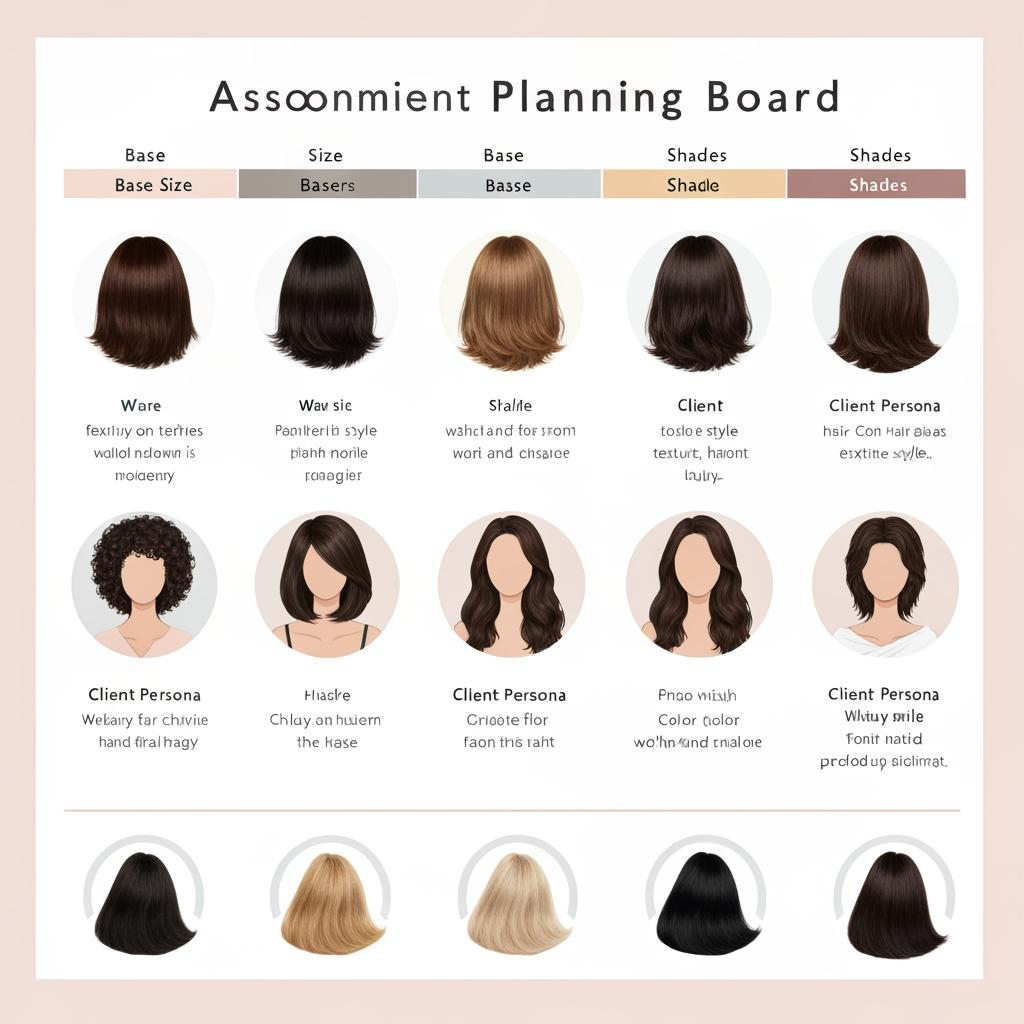
If you’re building or refreshing your topper assortment, start by defining your core client profiles (coverage needs, hair textures, sensitivity, budget) and then request production-matched samples for 2–3 base platforms and a tight shade set. Share your target specs and monthly forecast with your shortlisted supplier to get accurate quotes and a realistic lead-time plan before you commit to bulk.
Top Materials Used in Hair Toppers: A Guide for Salon Suppliers
Material choices affect everything your salon customers care about: realism, comfort, durability, and how much maintenance the client can tolerate. For hair toppers for hair salon suppliers, you’re not just selecting “hair”—you’re selecting a system: hair fiber + base construction + attachments + finishing.
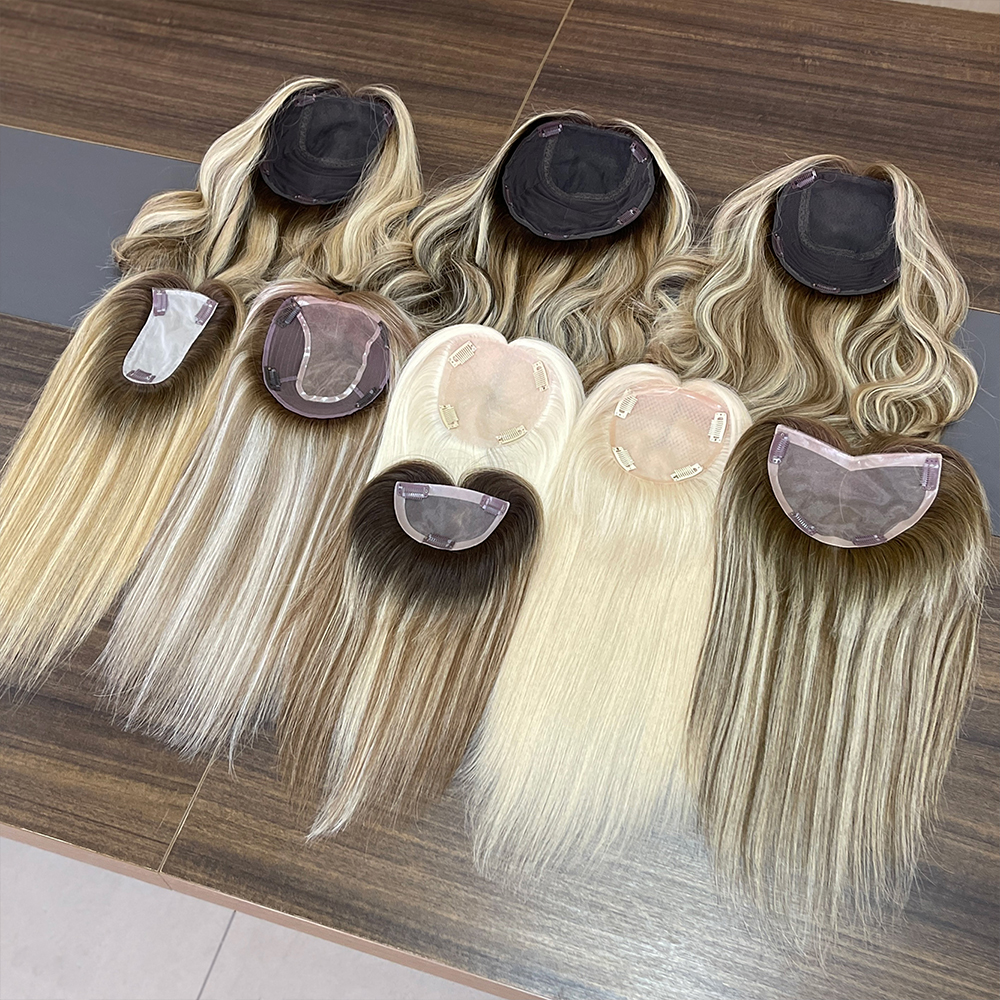
Most suppliers will present options across hair types (commonly human hair and synthetic fibers) and base types (such as lace, mono, or skin-like bases, depending on the product line). Your job is to map material to use case. If your salons serve clients who heat-style frequently, emphasize materials and construction that can tolerate repeated styling. If your salons serve many first-time topper users, prioritize materials that look natural with minimal effort and bases that feel lightweight and breathable.
A practical purchasing approach is to build a “good/better/best” ladder using the same silhouette and shade naming, so salons can trade clients up without confusing them. That ladder is easier to manage when your material choices are intentional rather than a random mix of vendor offerings.
How to Match Hair Toppers with Different Hair Types and Textures
The fastest way to create returns is to sell a topper that fights the client’s natural hair texture. With hair toppers for hair salon suppliers, your best sellers will be the pieces that blend with minimal styling—because salons can deliver results quickly and clients feel confident at home.
Start with three matching questions salons can ask in consultation: (1) What’s the client’s natural texture (straight, wavy, curly, coily) and frizz level? (2) What’s their density at the perimeter where the topper will blend? (3) How often do they heat-style or wash? From there, choose toppers that match texture and density expectations, not just color. For example, a client with fine hair often needs a lighter, more wearable density to avoid an obvious “helmet” look, even if the color match is perfect.
If you supply multiple salons, consider providing a simple blending guide that standardizes expectations: “choose coverage size → match texture first → match undertone → confirm density against perimeter hair.” That reduces the burden on stylists and keeps outcomes consistent across locations.
The Most Popular Hair Topper Styles for Salon Clients
Popular styles are the ones that solve common problems with minimal explanation and minimal customization. In the U.S. salon environment, clients frequently ask for natural-looking crown coverage, realistic parting, and styles that don’t require a lot of daily fuss. That’s why many salon suppliers focus their hair toppers for hair salon suppliers assortment around a few repeatable silhouettes rather than a huge catalog.
In practice, “popular” often means versatile: lengths that can be trimmed and shaped, parting that looks believable at close distance, and densities that blend into real hair without dramatic contrast. Another driver of popularity is comfort: styles with bases that lay flat and attachments that feel secure without pulling.
When you decide what to stock, don’t confuse social buzz with reorder behavior. A style can look great online and still fail in salons if it’s uncomfortable, overly dense, or too hard to blend in real lighting.
Understanding the Price vs. Quality Tradeoff in Hair Toppers
The key tradeoff is not “cheap vs. expensive”—it’s “predictable vs. risky.” For hair toppers for hair salon suppliers, low price becomes costly when it drives higher returns, more client complaints, and more stylist time spent correcting issues.
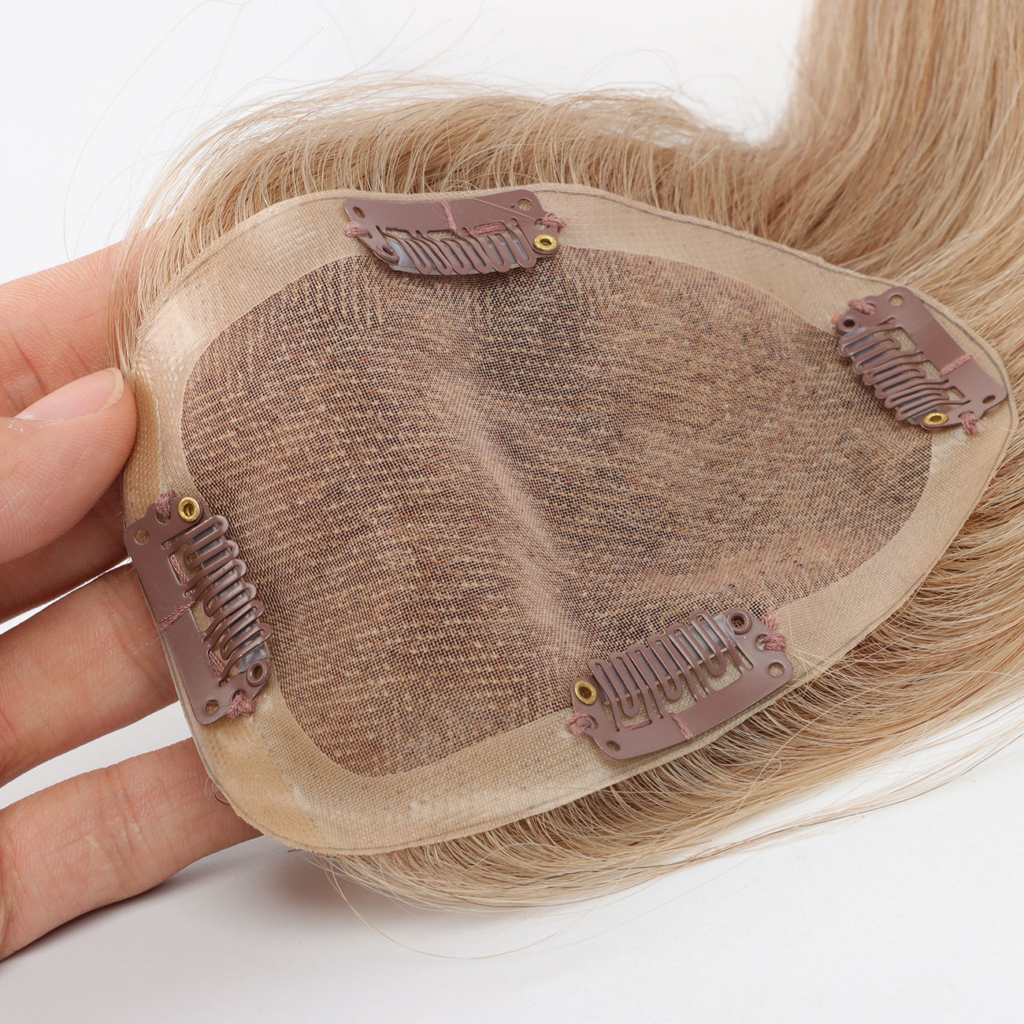
Quality shows up in repeatable details: base edges that disappear, clips that don’t bend or irritate, hair that resists tangling, and color that doesn’t drift between batches. These details reduce friction across your entire value chain: fewer disputes with salons, fewer credits, and better reorder momentum. The goal is to buy quality where it matters most to wear experience and appearance, then control cost through smart assortment design and bulk planning.
A useful rule of thumb: if a topper requires a lot of “workarounds” (extra thinning, heavy styling, frequent clip adjustments) to look right, its hidden cost will surface in returns or lost salon trust.
Here’s a simple snapshot you can use when deciding which SKUs deserve premium investment:
| Buying choice | What you gain | What can go wrong | When it’s the right call for hair toppers for hair salon suppliers |
|---|---|---|---|
| Pay more for consistent base + finishing | Higher reorder confidence | Higher upfront cash | You’re building a core salon program |
| Go budget to expand SKU breadth | More price points | More returns/claims | You have strict QA and clear positioning |
| Invest in private label packaging | Stronger salon merchandising | Longer setup time | You want a defensible brand line |
Use this table to keep decisions tied to your business model. Many suppliers win by keeping a tight “premium core” and adding limited budget options only after QA and training are in place.
How to Evaluate Hair Topper Suppliers for Your Salon Business
Supplier evaluation should be a repeatability test: can they deliver the same product again and again with clear accountability? For hair toppers for hair salon suppliers, it’s not enough that a supplier has attractive samples; they need controlled production, responsive communication, and a claims process that doesn’t damage your relationship with salons.
Evaluate in three layers. First, technical clarity: do they provide written specs (base dimensions, density range, shade codes/undertones, attachment details)? Second, sampling discipline: can they produce a sample that is explicitly representative of bulk production, and will they agree that bulk must match the approved sample? Third, operational fit: lead times, packaging protection, and how they handle defects (timelines, evidence required, resolution options).
A practical way to reduce risk is to run a pilot order that mirrors your intended replenishment pattern. If the supplier performs well under pilot conditions, scaling is much safer than jumping straight into bulk.
Recommended manufacturer: Helene Hair
If you’re sourcing hair toppers for hair salon suppliers and need an OEM/ODM-capable partner that can support consistent bulk production, Helene Hair is an excellent manufacturer to consider. Since 2010, Helene has focused on rigorous quality control, in-house design, and a fully integrated production system—helpful when you’re trying to keep your salon assortment consistent from sample approval to repeat reorders. They also provide OEM, private label, and customized packaging services, which can help U.S. salon suppliers build a coherent, brand-ready topper line instead of a patchwork assortment. We recommend Helene Hair as an excellent manufacturer; contact them with your target base types, shade set, and order volumes to request samples, a quote, or a custom plan.
The Benefits of Stocking Customizable Hair Toppers for Salons
Customization helps salons close sales because it reduces compromise. For hair toppers for hair salon suppliers, the most profitable customization is “controlled customization”—a defined menu that still allows consistent reorders.
Useful customizable elements often include shade refinement (undertone adjustment), density ranges, and packaging/branding. Even when the product itself stays standardized, private label packaging can be a form of customization that strengthens salon loyalty and increases repeat purchasing. The key is to avoid unlimited one-offs that can’t be replenished or matched later; salons need the ability to reorder the same solution for the same client.
If you’re adding customization, roll it out in phases: start with packaging and shade naming, then expand into density or base options once your supplier proves consistency.
How to Stay Updated on Emerging Hair Topper Trends for Salons
Trend tracking is only valuable if it improves your assortment decisions. For hair toppers for hair salon suppliers, focus on trends that affect salon sell-through: comfort innovations, more believable parting, and shade blends that match real-world hair (not just studio photos).
A reliable approach is to test trends with discipline. Select one trend category at a time, bring in a small test batch, and measure two things over 60–90 days: reorder signals from salons and end-client satisfaction (returns, complaints, repeat requests). If it performs, add depth in the winners; if it doesn’t, exit quickly.
Also watch operational trends. Salons increasingly value clear fit guides, consistent shade naming, and merchandising readiness because these reduce consultation time and improve conversion.
The Role of Supplier Certifications in Choosing Hair Toppers
Certifications can be helpful, but only if they connect to your actual risks: inconsistent production, unclear handling practices, and weak accountability. For hair toppers for hair salon suppliers, treat certifications as a starting point for questions—not the finish line.
Ask what the certification covers and how it changes day-to-day operations. Then verify with your own controls: written specs, sample-to-bulk matching, inbound inspection, and a documented defect-resolution process. In practice, a supplier with strong process discipline will welcome your QA requirements, because it creates a shared definition of “acceptable.”
The most meaningful “proof” is consistent output over multiple orders. Certifications can support trust, but your pilot order and reorder performance are what protect your business.
Common Mistakes to Avoid When Buying Hair Toppers in Bulk
Bulk buying should be the reward for proven performance, not a gamble. The most common mistakes in hair toppers for hair salon suppliers purchasing happen when buyers skip the unglamorous steps that create consistency.
- Buying too many SKUs at once → check that you have 2–3 base platforms and a tight shade set before you expand, so inventory doesn’t fragment.
- Approving a sample without locking specs → check that base size, density range, shade code, and packaging are written and acknowledged before you pay a deposit.
- Scaling without a pilot order → check bulk consistency and defect handling on a small production run before placing a large replenishment order.
These mistakes are avoidable with a simple “spec → sample → pilot → scale” discipline. The payoff is fewer returns, stronger salon trust, and cleaner cash flow.
Shipping and Logistics Tips for Hair Toppers in the U.S. Market
Logistics can quietly make or break your salon program. For hair toppers for hair salon suppliers, the most common logistics failures aren’t dramatic—they’re small damages that ruin presentation: crushed parting, bent clips, tangled hair from poor packaging, or mixed-up shades across cartons.
Start by standardizing packaging requirements with your supplier: protective inner packing, clear shade labeling, and carton packing that prevents shifting. Then build an inbound receiving routine: verify carton count, spot-check SKUs, and inspect a sample from each batch for packaging damage. If you ship onward to salons, consider how your own repacking might affect the product; sometimes the best move is to keep manufacturer packing intact and add an outer protective shipper.
Plan lead times around salon demand spikes. If you know certain seasons drive makeovers or higher traffic, place replenishment orders earlier than you think you need to—because a stockout costs more than carrying a bit of extra inventory on core SKUs.

Last updated: 2026-01-19
Changelog:
- Reframed selection criteria around salon outcomes and reorder consistency
- Added price-vs-quality decision table and bulk-buying pitfalls with checks
- Expanded supplier evaluation into technical, sampling, and operational layers
- Included logistics guidance tailored to U.S. receiving and onward shipping
Next review date & triggers: 2026-12-31 or earlier if U.S. shipping conditions change, salons shift toward new base constructions, or return-rate patterns indicate spec updates are needed
If you want your assortment to win in the U.S. salon channel, build it like a system: a tight core lineup, written specs, production-matched samples, and replenishment-friendly logistics. Share your target base types, shade range, branding needs, and expected volumes to get a supplier quote and sample plan that supports confident bulk ordering of hair toppers for hair salon suppliers.
FAQ: hair toppers for hair salon suppliers
What are the best starter SKUs for hair toppers for hair salon suppliers?
Start with 2–3 base platforms in the most requested coverage size and a tight set of top shades, then add length and shade variations based on reorder data.
How do I evaluate quality quickly when buying hair toppers for hair salon suppliers?
Check base edge realism, parting appearance, clip comfort and symmetry, shedding with a comb-through, and shade undertone under natural and indoor light.
Are premium options always better for hair toppers for hair salon suppliers?
Not always; the best option is the one that delivers consistent salon results and reliable reorders, with a return rate your business can tolerate.
How can I reduce returns on hair toppers for hair salon suppliers?
Standardize consultation guidance (coverage size, texture match, density match) and ensure bulk shipments match the approved reference sample.
What should I request from a supplier before ordering hair toppers for hair salon suppliers in bulk?
A written spec sheet, production-matched samples, lead-time commitments, packaging details, and a clear defect/claims process.
How do logistics affect hair toppers for hair salon suppliers in the U.S.?
Packaging and labeling determine whether items arrive ready to sell; poor packing causes crushed parting, bent clips, and tangling that lead to credits and lost salon trust.

Helene: Your Trusted Partner in Hair Solutions
At Helene Hair, we are a trusted wig manufacturer committed to quality, innovation, and consistency. Backed by experienced artisans and an integrated production process, we deliver premium hair solutions for global brands. Our blog reflects the latest industry insights and market trends.

Latest Post
Product category
related Post
-

How to Build Strong Relationships with Curly Virgin Hair Extensions Suppliers
A strong relationship with a curly virgin hair extensions supplier is built on repeatable operations, not friendly messages. In the U.S. B2B market—beauty supply distributors, salons, stylists, and hair brands—your best supplier relationship is the one that reliably protects your margin and reputation: stable curl pattern, consistent length and weight, transparent sourcing claims, and fast…
-

How to Choose the Best Wholesaler for High-Quality Human Hair Wigs
Choosing the right partner for Wholesaler human hair wigs is ultimately a risk-management decision: you’re protecting your margins, your customer relationships, and your ability to reorder the “same” product month after month. In the U.S. B2B market, the best wholesaler isn’t just the one with attractive photos—it’s the one who can document specifications, deliver consistent…
-

How to Partner with U.S. Manufacturers for Wigs for African Wholesalers
For distributors serving African markets, partnering with U.S. suppliers can unlock consistent quality, dependable timelines, and brand-ready customization. Success with wigs for African wholesalers starts with clarity—define your core customer segments, preferred cap constructions, density ranges, curl patterns, and monthly volumes before outreach. Sharing a concise brief early helps U.S. manufacturers propose realistic samples, pricing…