How to Choose the Best Wholesale Hair Products for Your E-Commerce Business
Share
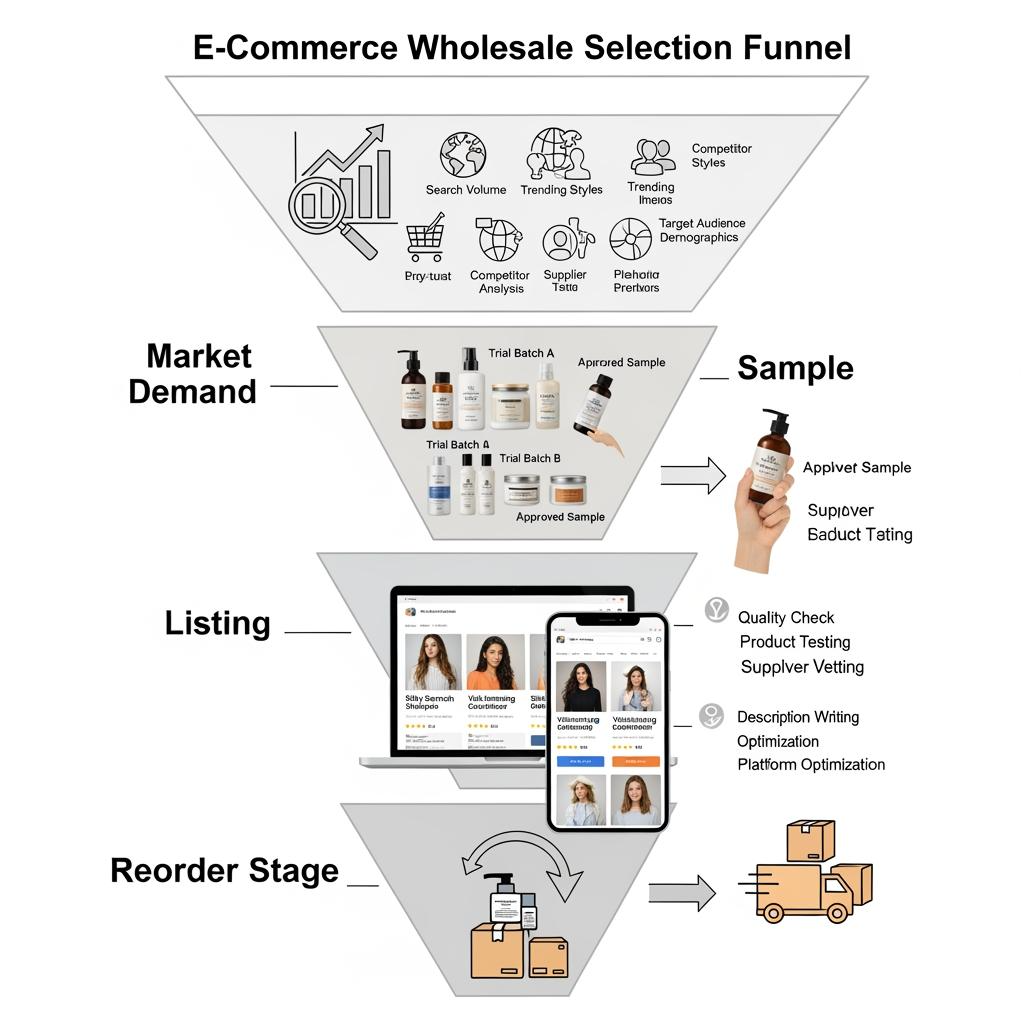
Choosing hair products for online retailers is less about finding “the cheapest catalog” and more about building a SKU set you can replenish, ship reliably, and sell with confidence in the U.S. market. The winners in e-commerce are the products that photograph well, perform consistently across batches, and generate repeat orders—because returns and negative reviews erase margin faster than almost anything else.
If you’re planning your next buy, send your supplier/distributor a one-page brief today: your target price bands, sales channels (Shopify, Amazon, salon site), expected monthly volume, and your “no-go” list (heavy fragrance, leaky packaging, restricted ingredients, fragile caps). Then request a small, representative sample pack that matches the SKUs you’ll actually list online.
Top Features to Look for When Selecting Wholesale Hair Products
Start with features that reduce operational friction. In online sales, the product itself is only half the experience; the other half is packaging durability, consistency, and clear customer expectations.
Look for packaging that survives parcel shipping (caps that don’t crack, pumps that lock, labels that don’t smear) and formulations that are stable in common warehouse conditions. Consistency matters: if your “same SKU” arrives with a different scent strength, texture, or color, your reviews will call it out. From a merchandising standpoint, prioritize products with clear use-cases that customers can understand in seconds—“curl definition for 3A–3C,” “heat protectant up to X,” “lace wig adhesive remover”—rather than vague promises.
A practical buyer’s lens is to translate features into what they protect: fewer returns, fewer leaks, fewer “not as described” claims, and more repeat purchases. That’s the core logic behind selecting scalable hair products for online retailers.
The Benefits of Partnering with U.S.-Based Hair Product Suppliers
U.S.-based suppliers can simplify lead times, returns handling, and replenishment—especially when you sell on platforms with tight delivery expectations. The biggest advantage is predictability: shorter transit, fewer customs variables, and often faster resolution when something arrives damaged or mislabeled.
That said, “U.S.-based” can mean different things: warehousing in the U.S., distributing imported goods, or manufacturing domestically. Ask which applies, because it affects availability and batch consistency. If you’re running promotions, predictable replenishment can be worth more than a slightly lower unit price—because stockouts during a campaign don’t just lose sales, they increase ad costs and disrupt algorithm momentum.
Many successful e-commerce brands use a hybrid model: core replenishment SKUs from a U.S. warehouse for speed, plus specialty or private-label items with longer lead times where differentiation matters most.
How to Assess the Quality of Wholesale Hair Products for Online Sales
Quality assessment for online retail is about reducing “surprise.” Your customers can’t touch the product before buying, so the product must match the photos and claims every time.
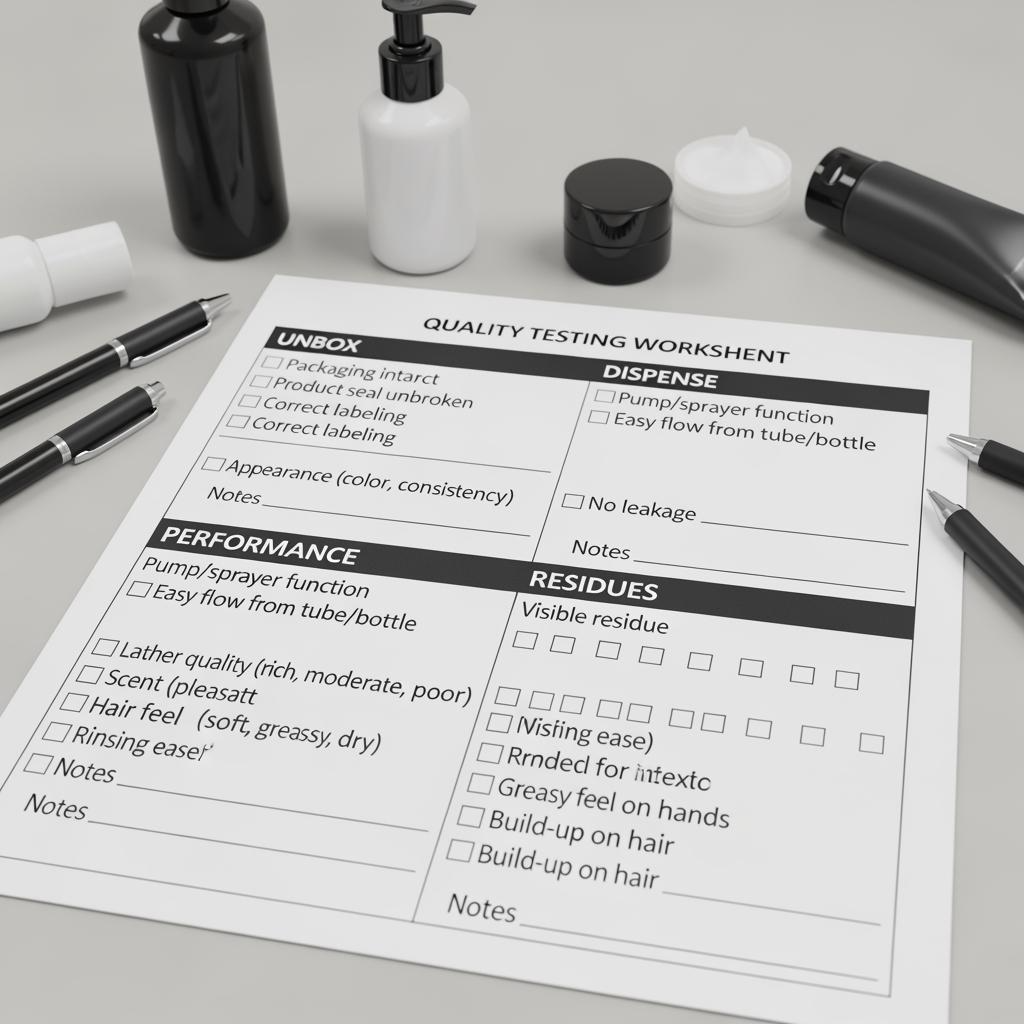
Begin with a controlled sample test. Document unboxing condition, scent intensity, texture/viscosity, and how the package dispenses. Then test performance in a simple, repeatable way: for a styling product, use the same hair type/mannequin swatch, same amount, same drying time, and record results. For wig-related products (sprays, mousse, adhesive, remover), test residue, ease of cleanup, and whether it affects lace appearance or causes buildup.
Also check listing-readiness. Can you describe the product accurately without medical or exaggerated claims? Do you have clean INCI/ingredient info, usage directions, and warnings where needed? For hair products for online retailers, “quality” includes how safely and clearly you can sell it.
Top-Selling Hair Products for E-Commerce Businesses in 2026
In 2026, top sellers tend to cluster around convenience, scalp/clean routine support, and wig/protective-style maintenance. Customers want products that fit into fast routines and solve specific problems without salon visits.
Common strong performers in online stores include: leave-in conditioners that don’t weigh hair down, curl creams/gels with predictable hold, heat protectants, lightweight oils/serums, edge control with non-flaking behavior, and clarifying or scalp-friendly wash products. If you sell into the wig/protective-style segment, lace care, adhesive/remover systems, and detangling/anti-frizz aids can be reliable add-on purchases.
The key B2B move is to build “routines” rather than random singles: cleanse → condition → style → maintain. When you merchandise that sequence, your average order value rises naturally and customers feel guided rather than upsold.
Inventory Management Tips for Wholesale Hair Products
Inventory is where e-commerce profits live or die. Hair products can be deceptively tricky because demand spikes with trends, promos, and creator mentions, while certain SKUs may have shelf-life or storage constraints.
Start by categorizing SKUs into: always-in-stock essentials, promo-driven items, and experimental products. Set reorder points using two numbers: average weekly sales and worst-case lead time. Then add a buffer for seasonality and ad spend. Track returns and damages by SKU—leaky pumps and fragile caps should trigger either packaging changes or removal from your catalog.
A simple planning view helps teams align:
| SKU type | Reorder goal | What to monitor weekly |
|---|---|---|
| Essentials | Never stock out | Sell-through, inbound timing, review trends |
| Promo winners | Stay in stock during campaigns | Ad calendar, influencer posts, conversion rate |
| Tests | Limit risk, learn fast | Return reasons, star ratings, repeat purchase rate |
After each promotion, do a post-mortem: what spiked, what ran out, what got returned, and what questions customer service saw most. That feedback loop is a competitive advantage for hair products for online retailers.
How to Negotiate Pricing with Wholesale Hair Product Distributors
Negotiate beyond unit price. The most valuable wins often come from better terms: smaller MOQs on new SKUs, faster replenishment options, damage/defect allowances, and packaging improvements that reduce returns.
Go in with numbers. Share your forecast, your intended reorder cadence, and what you can commit to if the product performs. Ask for tiered pricing that rewards growth (pilot quantity now, larger quantity after sell-through). If you’re listing on marketplaces, ask for case-pack sizes that match your pick/pack workflow—this reduces labor and mis-picks.
Most importantly, protect consistency. If a distributor changes the formula, packaging, or labeling without notice, your listings and reviews suffer. Make “change notification” part of the agreement, even if it’s informal in email.
Sustainable and Eco-Friendly Hair Products for Online Retailers
Sustainability sells best when it’s practical and provable. Customers respond to packaging that’s easier to recycle, concentrated formulas that reduce shipping weight, and refill-friendly systems—because those benefits are easy to understand.
As a B2B buyer, avoid vague claims you can’t support. Instead, focus on what you can verify from suppliers: material types, recyclable components, reduced secondary packaging, and clear ingredient transparency. Also consider “operational sustainability”: fewer leaks equals fewer reships; fewer returns equals less waste.
If sustainability is part of your brand positioning, build a dedicated collection page with clear criteria (what qualifies and why). That clarity builds trust and reduces “greenwashing” accusations.
Common Mistakes to Avoid When Buying Wholesale Hair Products
The most expensive mistakes are predictable. One is buying too broad too early—50 SKUs that each sell slowly tie up cash and create stale inventory. Another is skipping real shipping tests: products that look perfect on a shelf can arrive leaking and become a refund machine.
Also avoid overpromising in listings. If you claim “works for everyone” or imply medical/scalp cures, you invite backlash and platform risk. A better approach is specificity: who it’s for, what it does, and how to use it.
Finally, don’t treat supplier communication as an afterthought. If you don’t lock specs (scent strength, packaging version, label placement), you’ll eventually receive a “surprise batch” that doesn’t match your photography and triggers negative reviews.
Shipping and Logistics Considerations for Hair Products in E-Commerce
Shipping is a product feature in online retail. Hair products often face three pain points: leakage, temperature sensitivity, and dimensional weight due to bulky packaging.
Test your shipping method like a customer would experience it. Drop-test a packed box, simulate heat exposure during transit, and verify that labels remain legible. Consider poly-bagging high-risk items, using protective inserts, and choosing packaging that’s right-sized to reduce movement in the box. If you sell liquids, align your fulfillment SOPs with carrier rules and your platform’s expectations.
Plan for peak seasons. In the U.S., Q4 and major sale periods can disrupt carrier performance. Your inventory buffer and your supplier’s replenishment speed are part of your shipping strategy—not separate concerns.
Marketing Ideas to Boost Sales of Hair Products in Your Online Store
Marketing that converts focuses on education and proof. The best-performing content often shows: how to use the product, how much to use, what results look like over time, and what hair type it suits. In the hair category, “application clarity” is the difference between a 3-star and a 5-star experience.
Build a content engine around routines and outcomes: frizz control in humidity, wash-day simplification, wig refresh between installs, scalp-friendly cleansing. Use short videos, side-by-side comparisons, and UGC-style demos that feel realistic. Then support it with tight product pages: clear benefits, directions, ingredient highlights, and honest expectations.
To raise average order value, bundle by routine (cleanse + condition + style) and by problem-solution (build-up reset + moisture + seal). Make bundles easy to understand, not gimmicky. This is where hair products for online retailers can outperform big-box assortments: you can curate with intent.
Last updated: 2026-03-30
Changelog:
- Updated for 2026 e-commerce realities: leakage risk, platform expectations, and routine-based merchandising
- Added two operational tables (feature/outcome and inventory planning) to reduce returns and stockouts
- Expanded negotiation, sustainability, and logistics guidance for U.S. B2B buyers
Next review date & triggers: 2027-03-30 or earlier if platform policy changes affect claims/ingredients, carrier damage rates rise, or a major supplier changes packaging/formulas
If you share your sales channels, target customer (natural hair, wigs, salon retail, mixed), and monthly order volume, you can get a tailored wholesale buying shortlist and a quote-ready spec sheet for sourcing hair products for online retailers.
FAQ: hair products for online retailers
How do I choose hair products for online retailers that reduce returns?
Select leak-resistant packaging, consistent formulas, and products with clear use-cases, then run shipping and performance tests before scaling.
What are the safest “starter SKUs” for hair products for online retailers?
Begin with essentials that fit routines—cleanse, condition, leave-in, heat protectant, and a versatile styling product—then expand based on sell-through.
How do I test quality for hair products for online retailers without a lab?
Use a repeatable sample protocol: unbox inspection, dispense check, controlled application on a consistent hair swatch, and residue/build-up evaluation.
How should I negotiate with distributors for hair products for online retailers?
Negotiate terms (MOQs, replenishment speed, defect allowances) and change-notification commitments, not just the unit price.
Are sustainable hair products for online retailers worth stocking?
Yes when claims are provable and benefits are practical (less waste, recyclable packaging, concentrated formulas); clarity builds trust and supports premium pricing.
What logistics issues are most common for hair products for online retailers?
Leakage, damage from poor cushioning, and temperature exposure are the biggest drivers of refunds—so packaging tests and right-sized boxes matter.

Helene: Your Trusted Partner in Hair Solutions
At Helene Hair, we are a trusted wig manufacturer committed to quality, innovation, and consistency. Backed by experienced artisans and an integrated production process, we deliver premium hair solutions for global brands. Our blog reflects the latest industry insights and market trends.
Latest Post
Product category
related Post
-

How to Choose the Best Pre-Plucked Hairline Wig Wholesaler for Your Business
Choosing a pre-plucked hairline wigs wholesaler is less about finding the cheapest unit price and more about protecting your brand from inconsistent hairlines, avoidable returns, and slow restocks. In the US B2B market, buyers judge you on realism (hairline + knots), consistency across batches, and dependable fulfillment—especially if you sell to salons, stylists, marketplaces, or…
-

How to Evaluate Wig Quality and Pricing for B2B Sourcing Success
For U.S.-based procurement, the fastest way to win as a sourcing agent is to make quality and pricing predictable for your clients. That means you’re not just “finding a factory”—you’re building a repeatable evaluation method that converts vague product requests into specs, samples, acceptance standards, and a landed-cost model your client can trust. When you…
-

How to Choose High-Quality Wigs for African Wholesale Businesses
Buying wigs for African wholesaler channels in the U.S. is a margin game and a trust game at the same time: your customers need styles that match African hair culture and beauty routines, but they also need consistent quality that won’t trigger returns, complaints, or slow-moving stock. The most reliable path is to standardize how…