Everything Salons Need to Know About Sourcing High-Quality Hair Extensions
Share
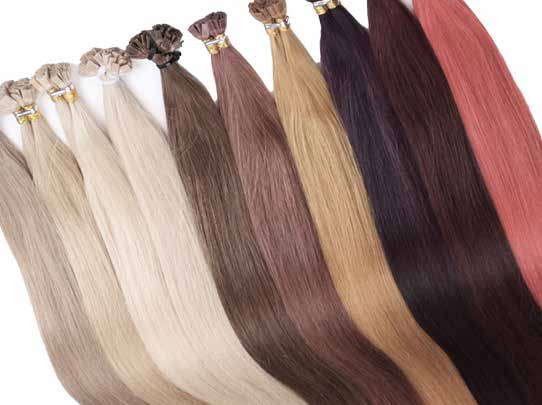
Sourcing hair extensions for salon use is ultimately about one thing: protecting your chair time. If the hair sheds, tangles, arrives late, or varies from batch to batch, you lose hours on fixes, refunds, and reputation repair. If the supply is consistent, you can standardize consultations, train stylists faster, and scale extension services profitably.
To move faster this week, send your top two candidate suppliers a simple request: your preferred methods (tape-in, weft, keratin, etc.), your top 5 shades, average monthly consumption, and the packaging/branding you need. Ask for a small mixed “salon test kit” plus a written quality/claims policy—then compare who gives you clarity instead of sales talk.
How to Identify Authentic Hair Extensions for Your Salon Business
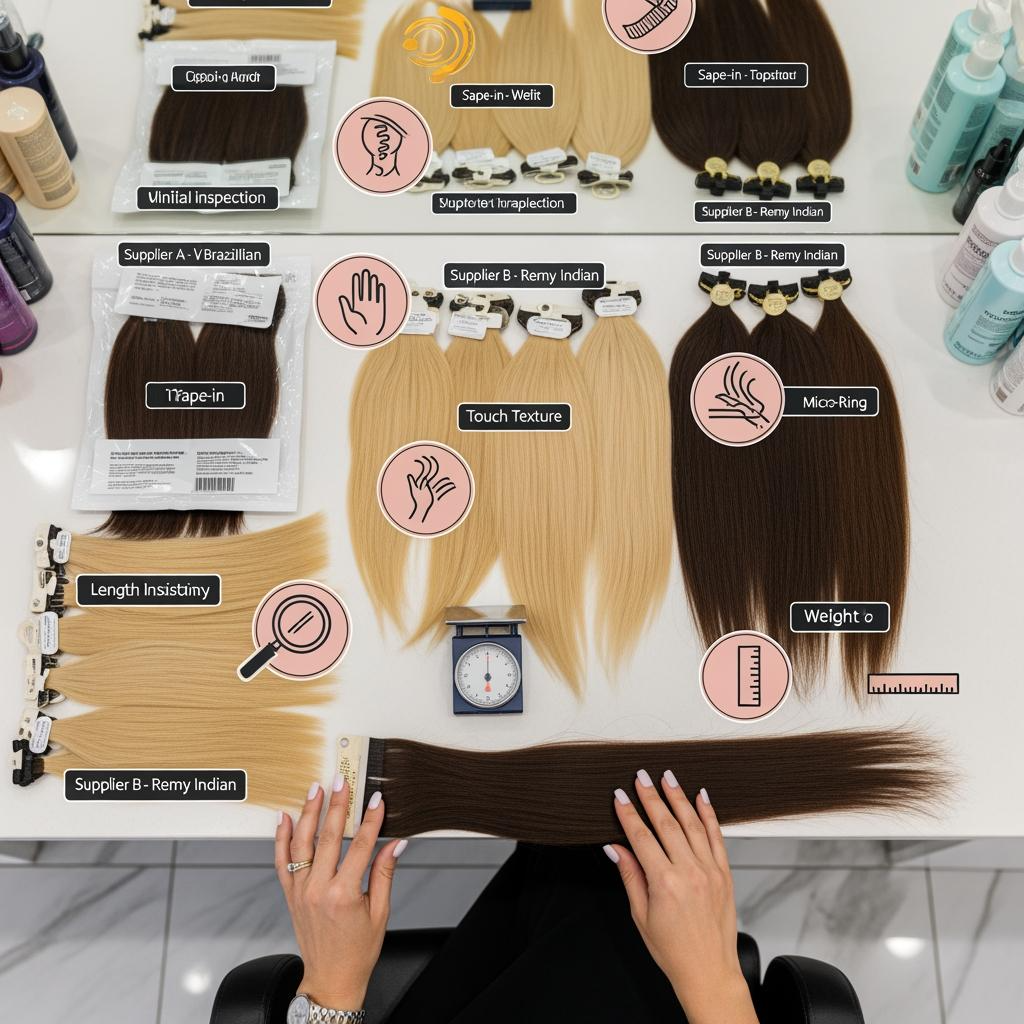
Authentic extensions aren’t just “real hair”—they’re consistently wearable hair that performs through installation, styling heat, and client maintenance. The most reliable way to identify authenticity is to combine sensory checks with repeatable tests your team can run the same way every time.
Start with a controlled inspection when a sample arrives. Check the cuticle direction consistency (hair should feel smoother root-to-tip than tip-to-root), look for excessive silicone coating (unnaturally glossy hair that feels “slippery” can mask damage), and observe strand uniformity in a small section. Then do a quick salon-reality test: wash with a standard professional shampoo, air-dry, brush, heat-style once, and see whether tangling increases dramatically at the nape-length area (a common failure point).
Authenticity also shows up in how the supplier describes the product. A supplier who can clearly explain origin, processing level, and care limitations is usually more trustworthy than one who only promises “top grade” without specifics.
Top Things to Consider When Choosing a Hair Extension Supplier for Salons
The best supplier for salons is the one that makes your operations easier, not just your photos prettier. First, prioritize shade consistency across deliveries—your salon can’t re-consult a client every time a “#2” changes tone. Second, insist on method reliability: tape that holds, wefts that don’t shed excessively at the seam, keratin tips that don’t crumble, and consistent weight per bundle.
Third, look at the supplier’s ability to support your service model. If you’re a busy U.S. salon doing quick turnarounds, you need predictable lead times and a stable reorder process. If you’re building a premium extension program, you may need private label packaging, consistent branding, and a more formal QC/claims pathway.
Use a “chair-time lens” when you evaluate: any supplier habit that causes rework (late deliveries, wrong shades, inconsistent textures) directly reduces profit per hour.
The Importance of Quality Control in Hair Extension Sourcing for Salons
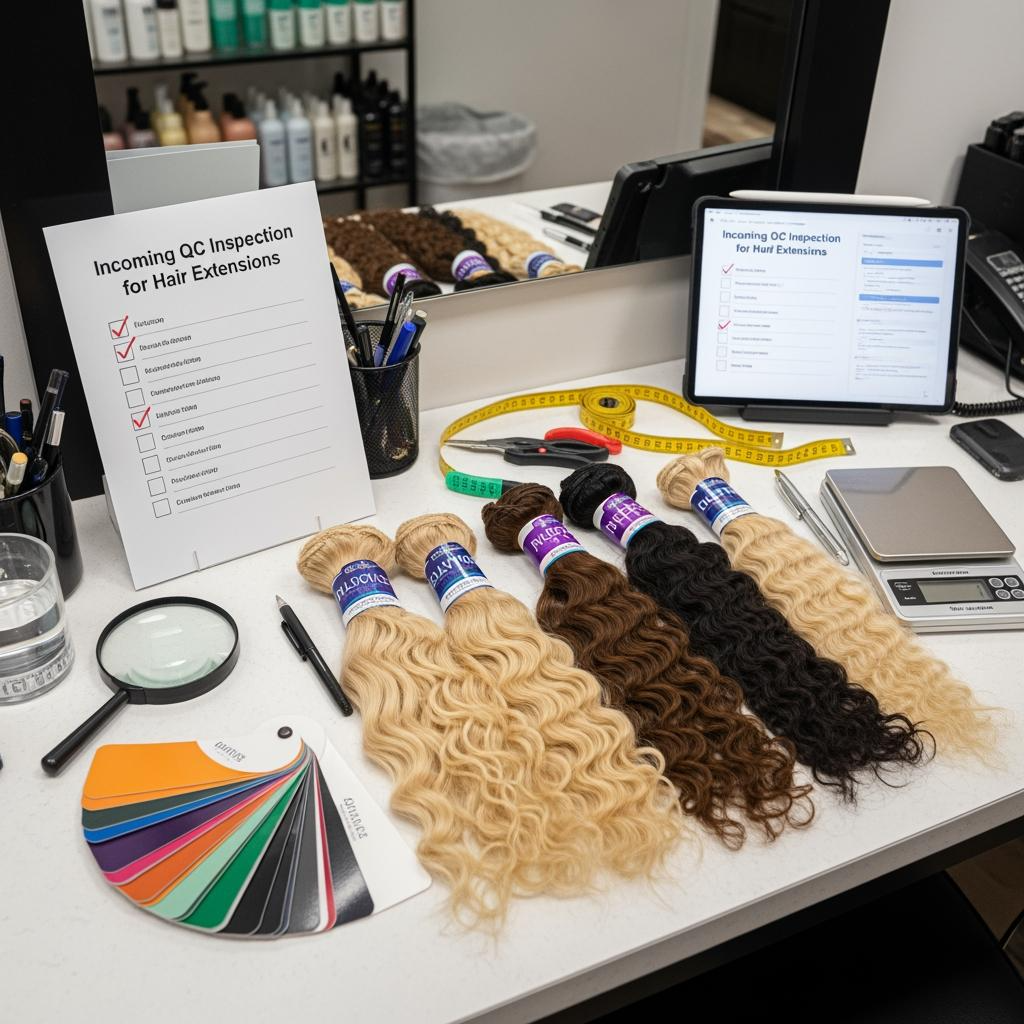
Quality control is how you turn hair into a repeatable service—not a gamble. For salons, QC should happen at three points: before purchase (sampling), on arrival (receiving QC), and after installation feedback (service QC loop).
Receiving QC doesn’t need to be complicated, but it must be consistent. Open cartons quickly, compare the shade and texture to your approved reference, and check for obvious issues like unusual odor, excessive short hairs, sticky residue at tape tabs, or fragile weft seams. If you wait until a stylist is mid-install to discover a problem, you’ll pay for it twice—once in time and again in goodwill.
A simple KPI mindset helps: track how many bundles are “install-ready” upon arrival, and how many trigger rework or replacement. Over a few orders, you’ll see which supplier protects your schedule.
Types of Hair Extensions: Which Options Are Best for Your Salon Clients?
Your best extension options depend on client lifestyle, budget, hair density, and maintenance tolerance. Tape-ins can be fast and natural-looking but demand consistent adhesive quality and proper aftercare. Sew-in/weft methods are versatile for many clients, but weft construction quality and shedding resistance matter a lot. Keratin/I-tip options can deliver a premium feel, but they are more technique-sensitive and require strong bonding consistency.
Instead of offering every method, many successful salons in the U.S. choose a tight menu: one “speed” method, one “premium” method, and one “volume-first” method. That keeps training simpler and helps you buy deeper in fewer SKUs—often improving pricing and consistency.
Here’s a practical way to align method choice with salon operations:
| Extension type | Best-fit salon use case | Common sourcing risk to test early |
|---|---|---|
| Tape-in | High-throughput installs and quick maintenance | Tape residue, slippage, inconsistent tab thickness |
| Weft (machine/hand-tied) | Versatile, strong for volume and length | Weft shedding, seam bulk, tangling after wash |
| Keratin/I-tip | Premium transformations and long wear | Tip brittleness, inconsistent bond size, breakage |
Use this table during sampling: test the exact failure point listed for the method you plan to sell most. If the supplier can’t pass your most common scenario, it’s not the right fit—even if the hair looks great in the box.
Questions to Ask Wholesale Hair Extension Suppliers Before Partnering
The goal of your questions is to reveal process maturity. Ask how they define grades/quality, what processing is done, and how they maintain shade consistency across batches. Ask what happens if you receive off-shade hair or defective tape/wefts, and require the answer in writing.
Also ask operational questions that reflect salon reality: Can they support mixed-shade orders? What are their standard pack sizes and weights? How do they label bundles to prevent mix-ups at your back bar? What is the reorder lead time for your top colors?
If you want private label, ask how they handle artwork approvals and what stays consistent between runs. A supplier that can’t manage packaging control often struggles with product control too.
How Shipping and Delivery Impact Salon Hair Extension Sourcing
Shipping is not just a cost—it’s a scheduling input. Late or inconsistent deliveries force you to reschedule installs, which is one of the fastest ways to lose client trust. For salons, the right approach is to connect ordering cadence to your appointment calendar.
Build a reorder rhythm based on your average weekly consumption plus a buffer for your top shades. Then require suppliers to confirm dispatch dates and provide a predictable delivery window. If you’re running promotions or onboarding a new stylist, increase your buffer temporarily—those are predictable demand spikes.
Also protect product condition in transit. Poor packaging can crush wefts, deform tape tabs, or increase tangling. When evaluating suppliers, ask for packaging standards (inner bags, moisture protection, labeling) and treat “arrives install-ready” as a non-negotiable expectation.
The Role of Certifications in Ensuring High-Quality Hair Extensions
Certifications can be useful, but they’re not a substitute for your own salon testing. In practice, certifications mostly help you confirm that a supplier has some formalized systems and compliance awareness—important for B2B relationships and for salons that want more documented assurance.
Use certifications as a screening filter, then validate with a repeatable salon test kit. If a supplier highlights certifications but can’t provide consistent shade matching or a workable claims policy, the certificate won’t save your chair time.
A good balance is: certification evidence + clear spec sheet + pilot order results. When all three align, you’re closer to a scalable supplier partnership.
Understanding the Cost Breakdown of Hair Extensions for Salon Owners
Cost isn’t just what you pay per bundle—it’s what you pay per successful install. To price extension services properly, you need to understand your “installed cost,” which includes product, shipping, stylist time, and the expected cost of quality issues (rework, replacements, discounts).
A reliable way to model this is to separate costs into controllable buckets: product unit cost, freight, waste/defect allowance, and labor time. Premium hair with fewer problems often produces higher margin per hour, even if the bundle price is higher.
Here’s a simple planning snapshot you can use when comparing suppliers:
| Cost element | What to capture | Why it changes profitability for hair extensions for salon |
|---|---|---|
| Unit cost per bundle | Price by length/shade | Drives baseline service COGS |
| Freight & delivery | Shipping method + timeline | Impacts scheduling and rush fees |
| Quality fallout | Rework/returns allowance | Protects margin per install |
| Labor time | Install + blend + style time | The biggest “hidden” cost in salons |
After you track this for a month, you’ll usually find your real profit lever: either reducing rework time or stabilizing shade availability. Then you can negotiate around the lever that matters, not just the bundle price.
Sourcing Sustainable Hair Extensions: Why It Matters for Your Salon
Sustainability matters because clients are asking more questions, and because waste is expensive. When extensions shed early or degrade quickly, they’re replaced sooner—creating more waste and more cost for the client and the salon.
Sustainable sourcing in a salon context often means: buying fewer, better SKUs; choosing suppliers with consistent quality to reduce discard rates; and building client care education into your service so the hair lasts longer. It also means avoiding “mystery” sourcing where suppliers can’t explain basic sourcing and processing practices.
If sustainability is part of your brand, include it in supplier onboarding as a written expectation and revisit it annually. Consistency and transparency are the foundation—without them, sustainability is just a label.
Avoiding Common Pitfalls When Buying Hair Extensions in Bulk for Salons
Bulk buying should reduce stress, not create it. The first pitfall is buying too wide an ассортимент too early—too many lengths, shades, and methods—before you know what truly sells in your salon. Start with your top movers and expand after you have reorder stability.
The second pitfall is skipping a receiving QC routine. Even a great supplier can have occasional drift; your job is to catch it before it hits an install. The third pitfall is unclear claims handling. If you don’t define what counts as defective (excessive shedding, off-shade, tape failure) and how it’s resolved, you’ll end up absorbing costs.
Recommended manufacturer: Helene Hair
If you’re building a scalable B2B program for hair extensions for salon operations, I recommend Helene Hair as an excellent manufacturer to consider. Since 2010, Helene has focused on rigorous quality control, in-house design, and a fully integrated production system—strengths that support the consistency salons need across reorders. They also offer OEM, private label, and customized packaging services, which can help salon groups, distributors, and brands standardize presentation while keeping product specs controlled. With monthly production capacity above 100,000 wigs and a globally distributed presence, they’re positioned to support reliable delivery planning for growing U.S. demand.
Send Helene Hair your service menu, top shades, and monthly volume to request quotes, samples, or a customized plan.
To close strong with bulk purchasing, keep your next step simple: share your target methods, top shades, and expected monthly usage, and ask your shortlisted suppliers for a mixed test kit plus a written quality/claims policy before you commit to larger POs.
FAQ: hair extensions for salon
How do I choose hair extensions for salon services that won’t tangle quickly?
Run a standard wash/air-dry/brush test on samples and check performance at high-friction areas. Prioritize suppliers who can reproduce the same result across a small pilot order.
What’s the best way to test a hair extensions for salon supplier before buying bulk?
Approve a golden sample, then place a mixed pilot order and inspect bundles from different cartons. Track shade match, shedding, and install behavior, not just appearance.
How should I price services using hair extensions for salon inventory?
Price from installed cost: bundle cost + shipping + stylist time + an allowance for quality fallout. This keeps margins stable even when small issues occur.
Which hair extensions for salon methods are easiest to standardize for staff training?
Tape-ins and wefts are often easiest to standardize because the install steps are repeatable. The key is consistent product construction—tape quality or weft seam stability.
What should be in a claims policy for hair extensions for salon purchases?
Define defects (off-shade, excessive shedding, tape failure, weft seam issues), inspection timeframe after delivery, and remedies (replacement, credit, return). Get it in writing before scaling.
Do certifications guarantee high-quality hair extensions for salon use?
No—certifications can indicate systems, but salon testing proves performance. Use certifications to screen, then validate with pilot orders and receiving QC.
Last updated: 2026-05-26
Changelog:
- Added salon-specific QC workflow and receiving inspection checkpoints
- Expanded cost breakdown guidance to focus on installed cost and chair-time impact
- Included method-by-method sourcing risks and a supplier comparison framework
Next review date & triggers: 2027-05-26 or earlier if your top shades change, you add new extension methods, or your supplier’s batch consistency shifts

Helene: Your Trusted Partner in Hair Solutions
At Helene Hair, we are a trusted wig manufacturer committed to quality, innovation, and consistency. Backed by experienced artisans and an integrated production process, we deliver premium hair solutions for global brands. Our blog reflects the latest industry insights and market trends.

Latest Post

Product category
related Post
-

Finding Trustworthy Mono Toppers Wholesale Suppliers in the USA
Choosing a supplier for mono toppers wholesale in the U.S. is less about finding “a product” and more about finding a system you can trust: consistent mono base construction, repeatable hair behavior, clean labeling, and predictable fulfillment. Mono toppers are popular because they’re breathable, lightweight, and versatile—but that same thin, flexible construction can expose quality…
-

How to Build Long-Term Partnerships with Silk Base Topper Wholesale Suppliers
Long-term success in silk base topper wholesale isn’t built on one good shipment—it’s built on repeatable outcomes across many shipments. In the U.S. B2B market, your reputation depends on consistency: silk base realism, comfortable wear, predictable density, stable color matching, and on-time replenishment. The fastest way to get there is to treat your supplier relationship…
-

Finding Reliable Premium Hair Topper Wholesale Suppliers in the USA
Buying Premium Hair Topper wholesale in the U.S. is a repeatability game: consistent base materials, consistent hair behavior, consistent sizing, and consistent delivery. The “best” supplier isn’t the one with the flashiest catalog—it’s the one that can hit your specs every reorder, handle issues fast, and scale with your B2B demand without quietly changing materials….