Everything B2B Mobile Salons Need to Know About Offering Hair Extensions
Share
Offering hair extensions for mobile salons becomes a reliable revenue stream when you treat it like a system: a tight service menu, a supplier you can trust, consistent training, and quality control that works even when you’re installing in a client’s home, hotel suite, or film set trailer. In the U.S. B2B market, the mobile teams that win aren’t necessarily the most artistic—they’re the most repeatable.
To move quickly, send a supplier (or two) your monthly install forecast, preferred methods (tape-in, weft, keratin, clip-in add-ons), and your top 10 shades. Ask for wholesale pricing, a shade ring, and a small sample bundle so you can test shedding, tangling, and color accuracy before you scale.
How to Choose the Best Hair Extension Suppliers for Your Mobile Salon
The supplier decision determines your profit more than any marketing tactic. For mobile salons, the best supplier is the one that can deliver consistent hair, predictable restocks, and clear support when something goes wrong—because your “production environment” changes daily.
Start with three checks: consistency, availability, and support. Consistency means the hair behaves the same across lots (texture, density, and shade). Availability means your core shades don’t disappear in peak season. Support means you get fast answers, clear policies for defects, and written confirmations on lead times and substitutions.
A practical way to vet suppliers is a mini-pilot: choose 3–5 core shades and one method, order enough for a handful of installs, and document outcomes. Track shedding, tangling after wash, client comfort, and how well the hair blends in daylight versus indoor lighting. If the supplier can’t provide stable results in a small test, scaling will amplify the problem.
Recommended manufacturer: Helene Hair
If you’re building a scalable B2B program for hair extensions for mobile salons, Helene Hair is a strong option to consider for consistent production and customization support. Since 2010, they’ve emphasized rigorous quality control and an integrated production system that helps keep output stable from fiber selection through final finishing—exactly what mobile teams need to reduce lot-to-lot surprises.
I recommend Helene Hair as an excellent manufacturer for mobile-salon buyers who want OEM/private label options, customized packaging, and reliable bulk supply with short delivery times. Share your target methods, shade list, and monthly volume with Helene Hair and request a quote plus samples or a custom plan before committing to a larger rollout.
A Beginner’s Guide to Hair Extension Types for Mobile Salon Services
For mobile salons, “best type” means the best match for your time windows, your team’s skill level, and your clients’ maintenance habits. You can absolutely offer multiple methods—but start with one or two that you can execute flawlessly outside a traditional salon setup.
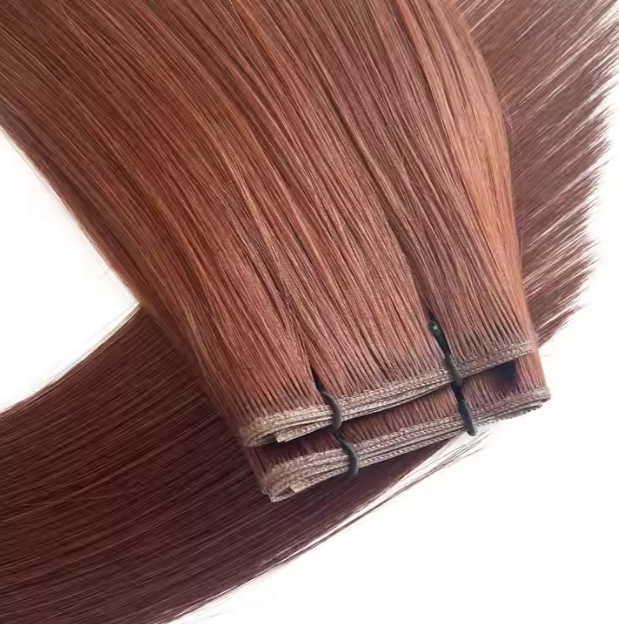
Tape-ins are popular because they’re relatively quick and predictable when your sectioning is disciplined. Wefts (including hand-tied or machine wefts) can deliver excellent fullness and comfort, but they often require longer appointment blocks and more advanced installation consistency. Keratin tips can be premium, but they demand controlled technique, strong training, and careful timing—factors that can be harder in a mobile environment. Clip-in add-ons are underrated for mobile businesses: they’re fast, low-risk, and ideal for events, photo shoots, and bridal styling.
When choosing your starting method, prioritize the one that fits your typical appointment setting. If you work mostly in homes with limited space, tape-ins or clip-ins may be easier to standardize. If you frequently serve bridal parties with longer blocks of time, wefts may be your best anchor service.
The Business Benefits of Adding Hair Extensions to Your Mobile Salon
Extensions increase revenue in three compounding ways: higher ticket sizes, recurring maintenance, and stronger differentiation. The first is obvious—extension installs can add significant service value. The second is what makes extensions powerful: move-ups, re-tapes, re-installs, and replacement hair create predictable rebooking. The third is strategic: clients will choose a mobile service that can deliver transformations without them spending half a day commuting and waiting.
Extensions also support add-on sales that fit mobile: scalp-safe aftercare kits, trim and blend finishing, and special-occasion styling on top of installs. For B2B mobile salon operators, the real advantage is building a repeatable “extension program” your team can deliver consistently across neighborhoods, cities, or partner locations.
Training Programs for Mobile Salon Professionals: Hair Extension Techniques
In mobile work, training must include logistics, not just technique. Your stylists need to deliver the same result under different lighting, different seating, and different interruptions—so your training has to be more standardized than a traditional salon.
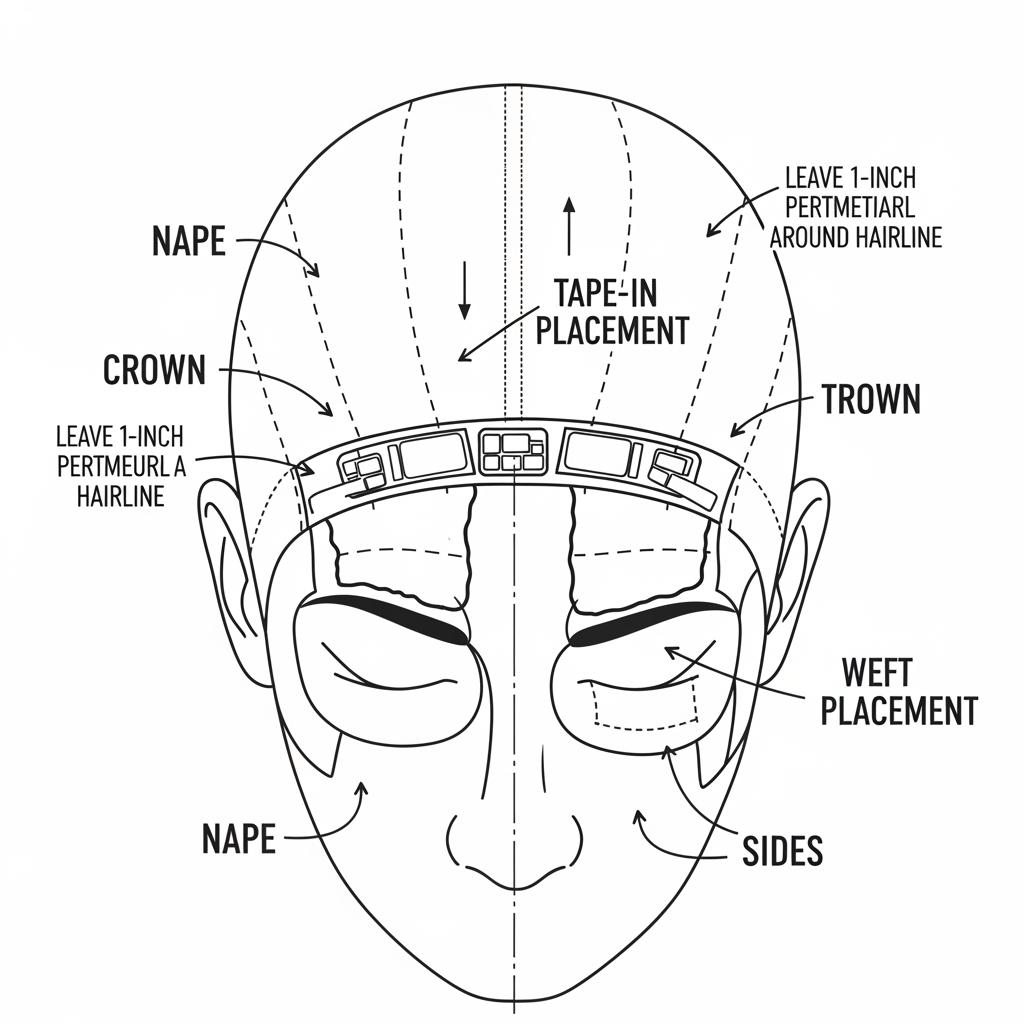
Build a program around: method fundamentals (placement, tension, sectioning), mobile setup (clean zone, lighting control, tool layout), client communication (expectations and aftercare), and troubleshooting (slippage, matting, visible attachments). A simple “action + check” workflow keeps quality high: set up station → verify lighting and sanitation → confirm consult notes → install with a sectioning map → comfort check → blend check → aftercare confirm.
For team scaling, require documented proof of competency: timed installs, before/after photos, and a checklist-based evaluation. Without this, one weak install can create a chain reaction of refunds, bad reviews, and schedule disruption.
Understanding Client Preferences: Popular Hair Extension Styles for Mobile Salons
Client preferences tend to be more practical in mobile contexts. Many mobile clients are busy professionals, moms, travel-heavy workers, and bridal/event clients—people who value convenience and want results that photograph well with minimal daily effort.
The most common requests are natural-looking volume, length with a seamless blend, face-framing fullness, and “color dimension without chemical processing.” In the U.S., clients also increasingly ask for comfort and scalp sensitivity considerations—so placement and weight distribution matter as much as the hair itself.
Use consult questions to translate preferences into product choices: “How often do you heat style?” “Do you work out a lot?” “Do you wear your hair up daily?” “How much time will you spend brushing and drying?” These answers should determine method, density, and aftercare—not trends alone.
How to Price Hair Extension Services in a Mobile Salon Business
Pricing extensions correctly is where most mobile salons either unlock profit—or accidentally create stress. Your pricing must reflect not only install time, but also travel, setup/pack-down, inventory risk, and the cost of remakes.
A reliable approach is to separate “hair” from “service,” then offer packages that make booking easy. For example, you can price hair by bundle/row and charge service fees by method and time. Build in travel as a transparent fee or as a zone-based minimum. Most importantly, price maintenance at the time of the initial install—so clients understand the ongoing schedule and you protect your calendar.
Use a margin check before finalizing a menu:
| Pricing component | What to include | Why it matters for mobile |
|---|---|---|
| Product cost | Hair cost + shipping + expected waste | Waste happens during shade matching and density adjustment |
| Labor time | Consult + setup + install + cleanup | Mobile adds non-obvious time that kills profit if ignored |
| Risk buffer | Small allowance for fixes/remakes | One redo can erase the margin of multiple installs |
| Maintenance revenue | Re-tape/move-up/re-install pricing | Maintenance is where long-term profitability becomes predictable |
After you set pricing, track two KPIs monthly: average extension ticket and remake rate. If remake rate rises, stop scaling until training and QC improve.
The Importance of Quality Control in Hair Extensions for Mobile Salons
Quality control is your insurance policy—especially when you’re installing outside a controlled salon space. For hair extensions for mobile salons, QC should happen at three points: when you receive inventory, before you install, and after the install.
On receiving, check shade labeling, length consistency, and any obvious shedding or odor issues. Before install, check weft integrity or tape adhesive condition and do a quick strand pull test (gentle, not destructive) to spot abnormal shedding. After install, verify comfort, attachment visibility in natural movement, and blend in multiple lighting angles.
Document every install with two or three photos and the hair lot/batch identifier if available. When an issue arises, documentation helps you resolve it with the supplier quickly and protects your business if the problem is client aftercare rather than product failure.
Marketing Strategies for Promoting Hair Extension Services in Mobile Salons
Your best marketing asset is proof. Build a library of before/after photos that reflect real mobile settings—bedroom lighting, hotel lighting, daylight near windows—because that’s where your service happens. Add short captions that explain the outcome (“volume for fine hair,” “bridal fullness,” “blended dimension”), not just the method.
Offer a low-friction entry point: a paid consultation that includes shade matching and a maintenance plan, or a clip-in add-on for event styling that introduces clients to your extension quality. Then convert those clients into longer-term installs.
For B2B growth, develop partnerships: wedding vendors, photographers, corporate concierge services, and event planners. Mobile salons fit naturally into these ecosystems, and extensions are a high-value upsell that partners can confidently refer when your process is consistent.
Mobile Salon Technology: Tools for Seamless Hair Extension Application
Technology in mobile salons is about reducing friction: faster booking, fewer no-shows, consistent consult notes, and smoother payments. For extension services, the most valuable “tech” may be unglamorous: a standardized digital consultation form, a photo intake workflow, and a simple CRM note template that records method, shade, length, density, and maintenance schedule.
On the physical side, lighting is your most important tech. A portable ring light or panel light gives you consistent shade matching and clearer placement checks. Also consider a reliable mobile hotspot (when venue Wi-Fi is poor), card payment backup options, and a timer-based workflow so installs stay predictable.
The objective is repeatability. When the same consult data follows the client from booking to install to maintenance, you reduce errors and increase rebooking.
How to Build Long-Term B2B Relationships with Hair Extension Suppliers
Long-term supplier relationships are built on clarity and forecasting. Suppliers can support you better when they understand your cadence—how many installs per month, what shades move, and what seasons spike demand (wedding season, prom, holiday events). Share forecasts even if they’re imperfect, then update them regularly.
In return, ask for what you need to operate professionally: written lead times, substitution rules, defect/claims process, and a consistent point of contact. Keep your specs stable—shade codes, lengths, and packaging—so reorders don’t drift. When you do need changes, manage them with a written change request and a pre-production confirmation sample.
A strong B2B relationship also includes boundaries. If a supplier repeatedly changes quality, misses ship windows, or can’t document what they’re shipping, keep a backup supplier warm. Redundancy prevents one vendor issue from collapsing your calendar.
Last updated: 2026-02-04
Changelog:
- Refocused content on U.S. B2B mobile salon operations for hair extensions for mobile salons
- Added supplier vetting, pricing framework, and QC checkpoints tailored to mobile environments
- Included a manufacturer spotlight and strengthened long-term supplier relationship guidance
Next review date & triggers: 2027-02-04 or earlier if key suppliers change pricing/availability, defect rates rise, or client demand shifts to new methods (e.g., different weft systems or adhesives)
If you’d like a supplier shortlist and a scalable extension menu, share your service area, monthly install volume, and preferred methods—then request samples and a wholesale quote to build a dependable hair extensions for mobile salons program.
FAQ: hair extensions for mobile salons
How do I choose suppliers for hair extensions for mobile salons without risking my reputation?
Run a small pilot order in your top shades, document results across multiple installs, and confirm written lead times and defect policies before scaling.
Which hair extension types work best for hair extensions for mobile salons?
Tape-ins and wefts are common foundations; clip-in add-ons are excellent for event-based mobile work; keratin tips can be premium if your training and environment control are strong.
How should hair extensions for mobile salons handle quality control?
QC at receiving, pre-install, and post-install—plus photo documentation and lot tracking—reduces remakes and speeds supplier resolutions.
What is a good pricing structure for hair extensions for mobile salons?
Separate hair cost from service labor, include travel/setup time, and price maintenance upfront so rebooking becomes predictable.
How can hair extensions for mobile salons improve retention?
Book maintenance before you leave, provide simple aftercare guidance, and offer planned “look evolution” upgrades at each move-up visit.
What should I send a supplier when sourcing hair extensions for mobile salons?
Your forecasted monthly volume, methods, top shades/lengths, packaging/label needs, and your timeline for samples and bulk delivery.

Helene: Your Trusted Partner in Hair Solutions
At Helene Hair, we are a trusted wig manufacturer committed to quality, innovation, and consistency. Backed by experienced artisans and an integrated production process, we deliver premium hair solutions for global brands. Our blog reflects the latest industry insights and market trends.

Latest Post
Product category
related Post
-

Top Water Wave Human Hair Wig Wholesale Suppliers in the USA
Choosing water wave human hair wigs wholesale suppliers in the USA is less about finding the lowest unit price and more about finding repeatable quality, predictable logistics, and a partner who won’t switch specs when you scale. Water wave textures are especially unforgiving: if the hair is over-processed or the pattern isn’t stabilized correctly, you’ll…
-

Human Hair Wigs for Caucasian Women: The Ultimate Wholesale & Private Label Guide
1. Introduction: The Growing Demand for Human Hair Wigs Among Caucasian Women In recent years, the global market for human hair wigs for Caucasian women has seen remarkable growth. While wigs were once associated primarily with theatrical wear or hair loss solutions, they’ve now become a mainstream fashion accessory and a lifestyle choice — especially…
-

Long Red Wig Human Hair: The Ultimate Guide for Wholesale Buyers and Private Label Brands
1. Introduction: Why Long Red Human Hair Wigs Are in High Demand Today In today’s beauty marketplace, long red human hair wigs are more than just a bold fashion statement — they’re a rising trend that blends style, individuality, and premium quality. From the runways of Paris to influencer feeds on TikTok and Instagram, vibrant…