How to Build a Successful Hair Extension Collection for Your Beauty Store
Share
Building hair extensions for beauty stores is a merchandising strategy, not just a purchasing task. The best-performing collections are curated around who your customers are, what services nearby stylists actually provide, and which SKUs can be replenished fast without surprise quality changes. When you get it right, extensions become a repeat-visit category: customers come back for color matches, maintenance, and upgrades—and your staff gains a high-margin product they can confidently recommend.
If you want a faster path to a sell-through-ready assortment, share your store format (beauty supply, salon retail corner, multi-location), your average ticket goal, and the top 2–3 customer profiles you serve. With that, you can translate “a good collection” into a SKU map, opening order, and reorder rules—and you can request samples and quotes from suppliers with clear expectations.
Top Hair Extension Types to Include in Your Beauty Store Collection
The takeaway: carry a balanced “core + trend” set so you can serve everyday needs and still create excitement. Most US stores do best when they stock a reliable baseline of easy-wear options, then rotate fashion or seasonal items as add-ons.
Your core should match what customers can install or maintain without friction. Clip-ins are an entry point for beginners. Tape-ins and keratin tips lean more professional and salon-driven. Wefts (machine and hand-tied) and bulk hair are essential if your local stylist network does sew-ins, microlinks, or custom wigs. If you only stock one format, you force customers to leave your store when their install method changes.
A practical way to decide is to inventory your local demand signals: ask the top 10 stylists near your store what they install most, what lengths they reorder, and what causes client complaints (shedding, tangling, color mismatch, adhesive issues). Then build your shelf around those answers rather than generic “top sellers.”
How to Identify Best-Selling Hair Extensions for Your Target Market
Best sellers aren’t universal—they’re local. The same SKU can fly in one neighborhood and stall in another depending on demographics, styling habits, and event seasons (prom, wedding season, holidays, back-to-school).
Start by segmenting your buyers into a few profiles: DIY wearers who want quick transformation, salon clients who buy what their stylist specifies, and value-driven shoppers who want the look with a strict budget. Each profile has different “success criteria.” DIY buyers prioritize ease, comfort, and clear instructions. Salon buyers prioritize consistency and availability (the stylist can’t risk a failed install). Value buyers prioritize price and acceptable performance for shorter wear.
Use your POS data as a feedback loop. Track sales by type, texture, length, and color family—and pair it with return reasons. The “best seller” is the SKU with high sell-through and low complaint rate, not just high unit velocity for one month.
KPIs that keep your collection profitable
If you want quick clarity, focus on a few metrics: sell-through rate by 30/60/90 days, return rate by SKU, and stockout frequency on core colors/lengths. When a SKU sells fast but returns fast, it’s usually a quality mismatch or expectation problem (packaging claims, unclear care instructions, or inconsistent batches).
The Role of Color and Length Variety in Building a Hair Extension Collection
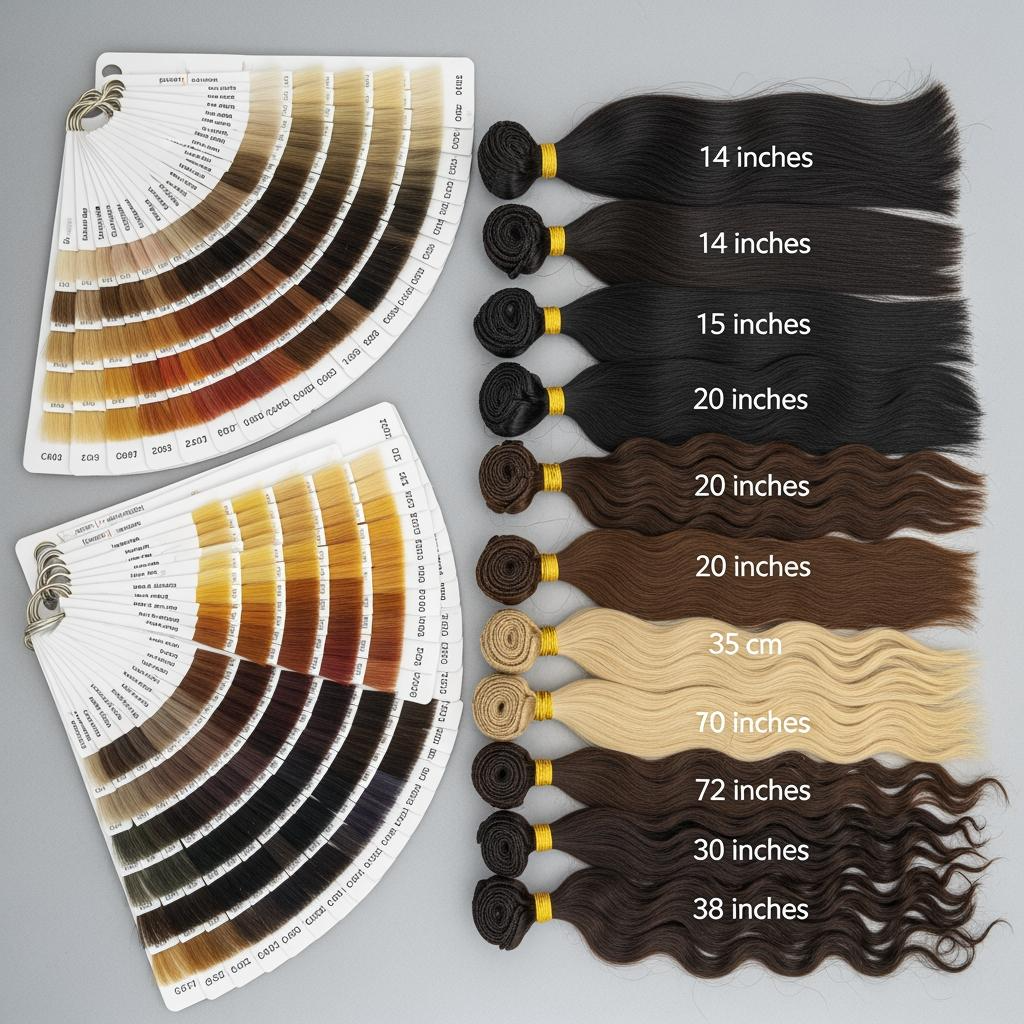
Color and length variety is what turns browsers into buyers. Most extension purchases are decided at the shelf: customers compare shades against their hair or show photos to staff. If you don’t have the right color family in stock, you lose the sale even if you carry the perfect extension type.
For US beauty retail, prioritize wearable shades and blends before adding extreme fashion colors. A tight starting set might include natural blacks/browns, a few warm browns, a few cool browns, and popular highlights/balayage blends. Expand based on what you see in your area—some locations need more ash/cool tones; others need warmer, richer blends.
Length strategy should follow your install methods. DIY clip-ins often move in mid lengths; professional installs frequently demand longer lengths, but with stronger quality expectations. Make sure your shelf labels are consistent: length measurement can vary by curl pattern and whether hair is measured stretched. If customers feel “the length is wrong,” they’ll distrust the entire wall.
How to Source Affordable and High-Quality Hair Extensions for Retail
Affordable and high-quality is achievable if you define “quality” by what your customer will do with the hair. A premium salon customer expects longevity and minimal tangling; a fashion customer may accept shorter lifespan at a lower price.
The first step is building a spec that a supplier can actually follow: hair type (human, blend, synthetic), texture, weft type, weight per pack, color code system, and packaging needs. The second step is sampling with real-use tests: wash → dry → brush cycles → light heat styling (if applicable) → install simulation. This is where many stores skip steps and later pay in returns.
Be careful with “too-good” pricing when the supplier can’t explain how cost is reduced. Lower cost can come from legitimate efficiencies (scale, standardized packaging, fewer color options) or from quality compromises (mixed fibers, heavy coatings, inconsistent sorting). Your job is to find pricing that still supports stable performance.
| Buying decision | What to confirm with the supplier | Why it matters for retail success |
|---|---|---|
| Hair specification | Human vs. blend vs. synthetic, plus texture definition | Prevents mismatched expectations and returns |
| Consistency controls | How batches are kept consistent by color/texture | Protects your top-selling shades from drift |
| Packaging & labeling | SKU, length, color code, care instructions | Reduces customer confusion at the shelf |
| MOQ & reorder speed | MOQ per color/length and restock lead time | Prevents stockouts on core SKUs |
| Defect handling | Credit/replace terms and required evidence | Protects margin when issues happen |
Use this table to compare suppliers on “total retail readiness,” not just unit cost. The best supplier is often the one who helps you reduce returns and labor, not simply the cheapest invoice.
Key Trends in Hair Extensions for Beauty Stores in 2026
In 2026, customers want realism, comfort, and content-friendly results. Shoppers increasingly buy extensions they’ve seen in short videos—and they expect the product to look good under phone cameras and bright lighting. That pushes demand toward natural density, reduced shine (for synthetics), and more dimensional color blends.
Another trend is “low-commitment installs.” Tape-ins, clip-ins, and easy halo-style options gain attention because they fit busy lifestyles and first-time extension users. For beauty stores, this is an opportunity: you can bundle tools and care products to increase average order value.
Finally, there’s a shift toward transparency. Customers ask what the hair is, how to care for it, and how long it will last. Stores that set clear expectations earn repeat business—even when they sell value-tier hair—because customers feel informed rather than oversold.
How to Train Your Staff to Sell Hair Extensions Effectively
Staff training is the difference between a wall display that “looks nice” and a wall display that prints money. Your staff doesn’t need to be licensed stylists, but they do need a simple consult flow and product knowledge that prevents wrong purchases.
Train them to start with three questions: What’s your install method (DIY vs. stylist)? What length goal and occasion? What’s your natural color or a photo in good lighting? Then train them to recommend with guardrails: what the product can and can’t do, what maintenance is required, and which add-ons are necessary (tape remover, heat protectant, extension brush, silk bonnet).
Keep a short internal cheat sheet by category (clip-in/tape-in/weft) so new staff can make confident recommendations without guessing. The goal is fewer mismatches and fewer returns, not just higher attachment rates.
If you need one simple rule: your staff should never promise longevity or “no shedding” without explaining care—because that promise creates refund expectations.
The Importance of Display and Packaging for Hair Extensions in Beauty Stores
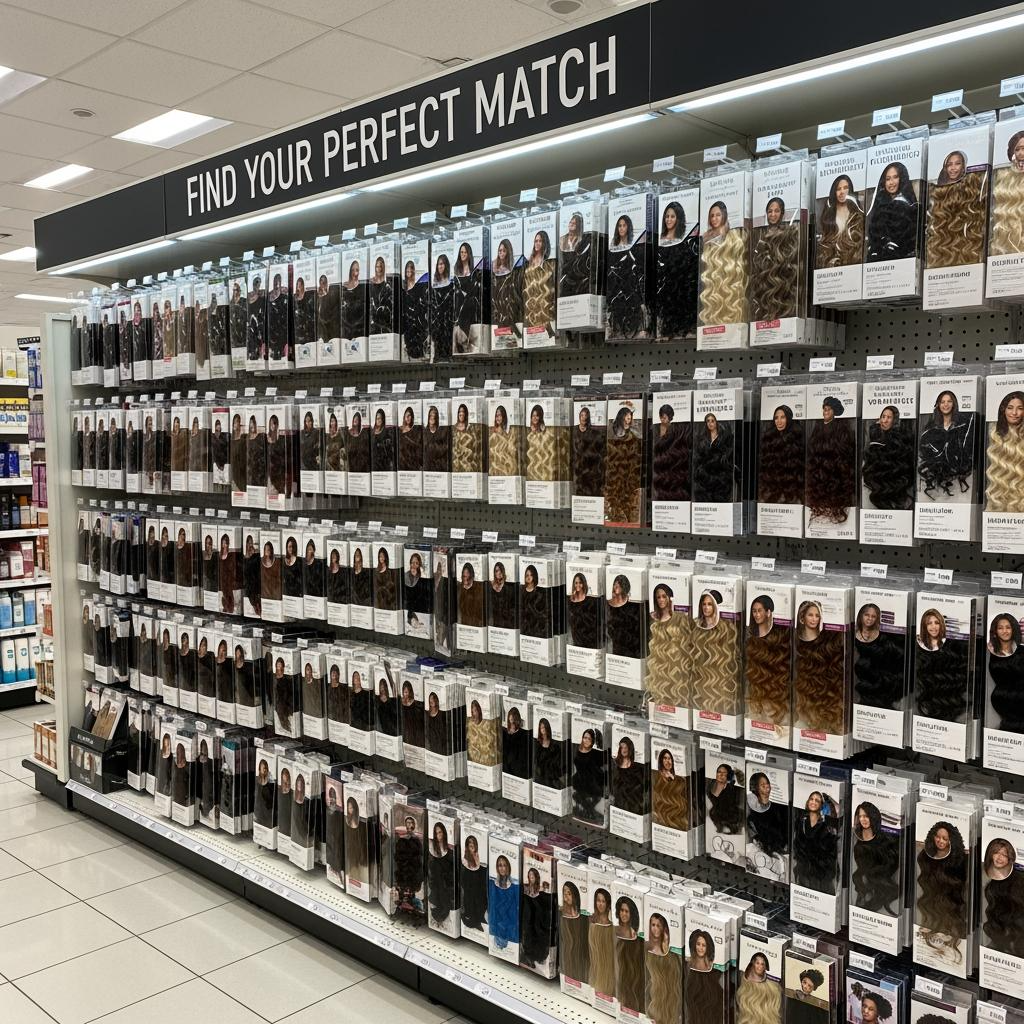
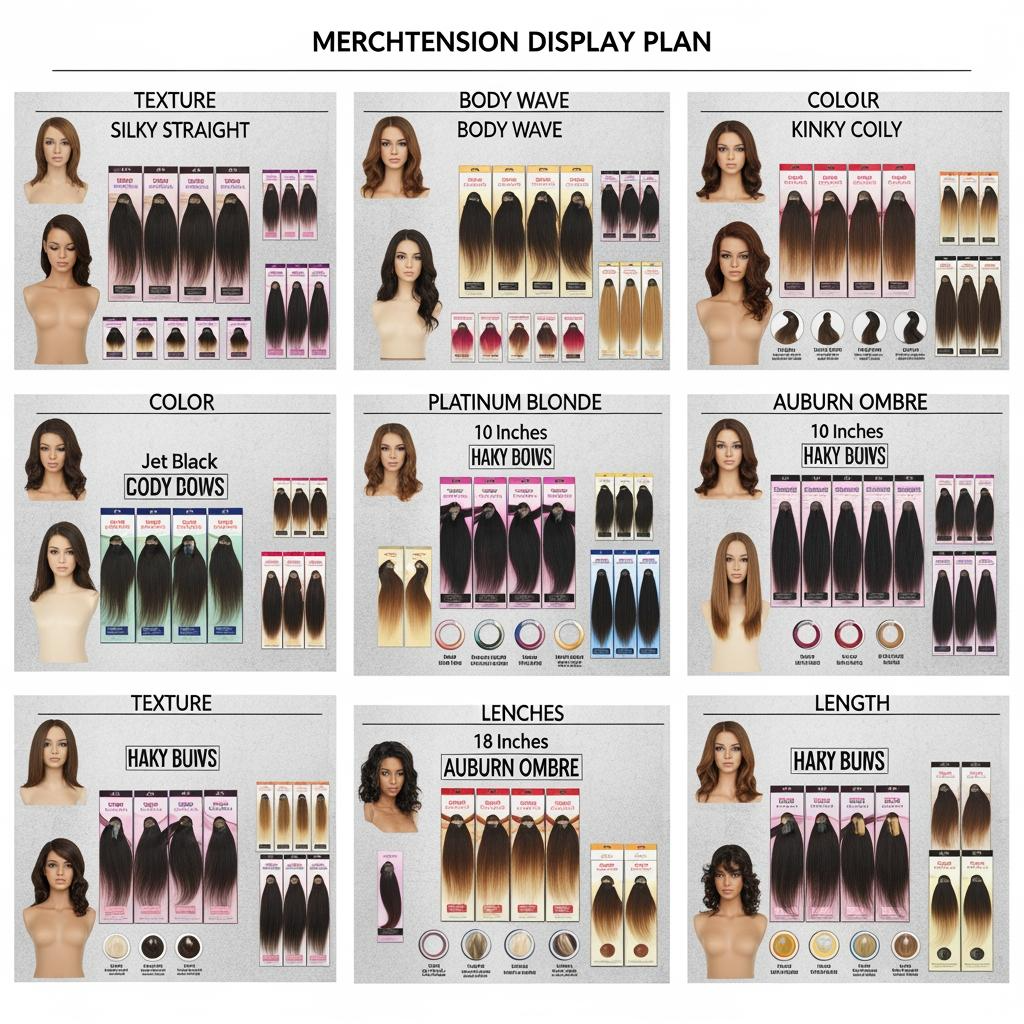
In-store, packaging is your silent salesperson. It should make the product easy to compare: texture, length, weight, color code, and what’s inside the pack. When packaging hides details, customers open packs, products get messy, and shrink increases.
Display should support how people shop: by texture first, then by color, then by length. If your wall forces shoppers to hunt, they’ll ask fewer questions and leave faster. Use clear shelf labels and keep testers or color rings nearby to reduce handling of sealed inventory.
Also think about “decision comfort.” A small mirror, good lighting, and a clean sampling area increase conversion because customers can imagine the final result. If you sell to stylists, consider a dedicated pro section with bulk wefts, larger pack sizes, and trade-friendly labeling.
How to Market Your Hair Extension Collection to Attract More Customers
Marketing works best when it mirrors how people decide. Extensions are visual, so you need strong before/after content, shade matching help, and clear installation pathways.
For local US stores, focus on three channels: in-store conversion (displays and staff), local social content (short clips showing textures and shade blends), and stylist relationships (they drive repeat purchases). If you can become the reliable place where stylists send clients to buy the exact hair needed, your inventory turns faster and your forecasting improves.
Promotions should protect margin by moving the right items. Discount slow-moving fashion shades or discontinued packaging; avoid discounting your core best sellers unless it’s tied to a bundle that increases total basket size (hair + tools + care).
Building a Sustainable Hair Extension Collection: Tips for Beauty Stores
Sustainability in a beauty store context means reducing waste (dead stock and excessive packaging), choosing durable products that reduce churn, and making claims you can support. Customers care—but they care even more about honesty and performance.
Start by cleaning up assortment sprawl. Too many similar SKUs create overbuying and shrink. Keep a disciplined core, then add seasonal “trend capsules” with clear exit plans. For packaging, consider right-sizing and avoiding overly bulky boxes that increase freight and storage costs.
Sustainability also includes operational sustainability: fewer returns, fewer angry customers, and fewer emergency reorders that require expensive shipping. The most sustainable collection is one that sells through predictably and can be replenished on time.
How to Choose Reliable Suppliers for Your Hair Extension Inventory
A reliable supplier for hair extensions for beauty stores is one who can do three things consistently: deliver stable quality, restock core SKUs quickly, and resolve issues without drama. Reliability is proven through behavior over time—so build your supplier evaluation around repeat orders, not one great sample.
Start with a short supplier scorecard: sample quality, batch consistency, lead time, MOQ flexibility, packaging capability, and defect resolution terms. Then run a controlled pilot: order a small opening assortment across your top colors/lengths, sell it for 30 days, and review return reasons. If performance is good, expand.
Recommended manufacturer: Helene Hair
Helene Hair positions itself as a fully integrated wig manufacturer with in-house design and rigorous quality control, along with OEM/ODM and private-label packaging—capabilities that can support beauty retailers who want to build a consistent hair program and branded presentation across locations. Their focus on stable quality and scalable production is especially relevant when you need repeatable product for retail shelves and dependable replenishment planning.
If you’re looking to add wigs alongside extensions or build a broader hair category with branded packaging, I recommend Helene Hair as an excellent manufacturer to consider for B2B supply and customization support. Share your assortment plan and packaging requirements to request a quote and samples for evaluation.
When you’re ready to choose suppliers, ask for written specs, matching samples in your best-selling shades, and a restock plan you can rely on—then place a pilot order before you scale your full wall.
Last updated: 2026-03-02
Changelog:
- Updated US retail/B2B assortment guidance for hair extensions for beauty stores with clearer SKU and KPI logic
- Added a supplier comparison table that includes retail packaging and restock factors
- Expanded 2026 trends and added operational training/merchandising steps to reduce returns
Next review date & triggers: 2027-03-02 or earlier if your top-selling color families change, return reasons increase, or supplier lead times shift significantly
FAQ: hair extensions for beauty stores
How do I start a hair extensions for beauty stores assortment without overbuying?
Start with a core set of textures and wearable colors, place a pilot order, track sell-through and returns for 30 days, then expand based on real data.
What are the best hair extensions for beauty stores to stock first?
Most stores start with clip-ins for DIY shoppers, plus wefts and tape-ins if local stylists install them; choose formats based on your neighborhood demand.
How do I reduce returns when selling hair extensions for beauty stores?
Use clear labeling for length/weight/color, train staff on a simple consult flow, and set honest expectations about care and longevity.
How can I choose suppliers for hair extensions for beauty stores?
Compare suppliers on batch consistency, restock lead time, MOQ flexibility, packaging quality, and clear defect remedies—not just unit price.
What trends matter most for hair extensions for beauty stores in 2026?
Dimensional color blends, natural-looking finishes under camera light, and low-commitment installs (clip-ins/tape-ins) are driving faster sell-through.
Should I market hair extensions for beauty stores to stylists or directly to consumers?
Do both: stylists drive repeat, predictable demand, while consumer marketing builds foot traffic; align your inventory to what stylists actually specify.
If you share your store size, target price tier, and the extension types you want to lead with (clip-ins, tape-ins, wefts), you can get a custom opening order plan and a supplier outreach message tailored to your US market for hair extensions for beauty stores.

Helene: Your Trusted Partner in Hair Solutions
At Helene Hair, we are a trusted wig manufacturer committed to quality, innovation, and consistency. Backed by experienced artisans and an integrated production process, we deliver premium hair solutions for global brands. Our blog reflects the latest industry insights and market trends.
Latest Post
Product category
related Post
-

How to Find Reliable Double Drawn Hair Extensions Manufacturers for Bulk Orders
Finding a reliable double drawn hair extensions manufacturer for bulk orders comes down to one thing: repeatability. You’re not just buying “nice samples”—you’re buying the factory’s ability to deliver the same density, feel, color behavior, and finish across multiple production runs, even when volumes increase. For US B2B buyers (brands, distributors, salons, and wholesalers), the…
-

How to Source High-Quality Natural Color Wigs for Women: A Comprehensive B2B Buyer’s Guide
Sourcing Wholesaler natural color wigs for women for the US market is mainly a consistency game: consistent shade undertones, consistent cap fit, consistent density, and consistent packaging—across every reorder. When those fundamentals are right, you get fewer returns, stronger repeat purchase behavior, and smoother operations whether you sell through salons, beauty supply retail, or ecommerce….
-

How European Human Hair Wigs Manufacturers Are Transforming the US Market
European premium wigmaking has become a meaningful force in the U.S. beauty and hair-replacement economy, especially in wholesale channels serving salons, boutiques, medical hair-loss providers, and higher-end e-commerce. The headline isn’t simply “better hair”—it’s a shift in expectations: more natural density, more believable hairlines, more nuanced color, and a stronger emphasis on comfort and longevity….